Tag: SciFi

  • The CYGNUS 2022 CIBAs Long List for Science Fiction

    The CYGNUS 2022 CIBAs Long List for Science Fiction

    Cygnus Award for Science Fiction

    The Cygnus Book Awards recognize emerging new talent and outstanding works in the genre of Science Fiction, Steampunk, Alternative History, and Speculative Fiction. The Cygnus Awards is a genre division of Chanticleer International Book Awards and Novel Competitions (The CIBAs).

    Chanticleer International Book Awards is looking for the best books featuring space, time travel, life on other planets, parallel universes, alternate reality, and all the science, technology, major social or environmental changes of the future that author imaginations can dream up for the CYGNUS Book Awards division. Hard Science Fiction, Soft Science Fiction, Apocalyptic Fiction, Cyberpunk, Time Travel, Genetic Modification, Aliens, Super Humans, Interplanetary Travel, Climate-Fiction, and Settlers on the Galactic Frontier, Dystopian, our judges from across North America and the U.K. will put them to the test and choose the best among them.

    These titles have moved forward in the judging rounds from all 2022 CYGNUS Science Fiction entries  to the 2022 Cygnus Book Awards LONG LIST. These entries are now in competition for the 2022 Cygnus Short List. The Short Listers will compete for the Semi-Finalists positions. FINALISTS will be chosen from the Semi-Finalists and recognized at the Chanticleer Authors Conference, CAC23.
    a Wreath surrounds CAC 2023 for the Chanticleer Authors Conference
    Save the Date! CAC23 is April 27-30, 2023 at the Hotel Bellwether

    These titles are in the running for the SHORT LIST of the 2022 Cygnus Book Awards novel competition for Science Fiction!

    Join us in cheering on the following authors and their works!

    • Jay Hartlove – The Insane God
    • Timothy S. Johnston – An Island of Light
    • Melissa Diyab – Crossing Over
    • Charles Ross – The Future is a Memory
    • Sebastian Dax – Grasp of Erebus
    • J. N. Johnson – Pig
    • Annie Williams – Maximized Entropy: Death of the Internet
    • Dana Dargos, Said Al Bizri – Einstein in the Attic
    • D. H. Ford – Rogue Reborn
    • O.E. Tearmann – Deuces Are Wild
    • Lou Dischler – Mona’s Odyssey
    • Ash Bishop – Intergalactic Exterminators, Inc.
    • S.G. Blaise – The Last Lumenian
    • S.G. Blaise – True Teryn
    • Steven Paul Terry – Star Revelations
    • Michael Simon – Extinction
    • Nik Frank-Lehrer – Future Show
    • Sydney Raeburn-Power – The Sleepers
    • Dimple Desai – The Lambda Factor
    • Isaac Petrov – The Advent of Dreamtech
    • PA Vasey – Harbinger
    • Sandra J. Jackson – Dancing in the Wind, Book 3 Escape Series
    • Dana Hayward – Entropy
    • John J. Spearman – Pike’s Passage
    • Steve Ramirez – The Great Migration
    • E. R. Harris – Surf the Milky Way
    • U.W. Leo – ARKO: The Dark Union (A Sci-fi Adventure Series)
    • Fulmer/Proto Dagg – Terminus
    • J. B. Christensen – Dylan McLeod-Vexor City
    • Lucien Telford – The Sequence
    • Kristopher Clewell – The Penrose Triangle
    • Wilson Whitlow – Consent, Vol. 1: Erdos
    • Chris Black – NORAD’s Ghost
    • Joanna Evans – Sinai Unhinged
    • James McGill Jr – The Alien Agenda: The Earth is a Garden
    • Prescott Harvey – In Beta
    • Alex Usher – The Age Of Obsidian
    • Bryn Smith – Magnus Nights: The Helios Incident

    Good luck to all as your works move on to the next rounds of judging.

    PROMOTING OUR AUTHORS! 

    This post has been posted on the Chanticleer Facebook Page. We try to tag all authors listed here in the FB post. However, for FB to allow us to tag an author, that author must LIKE our page and Follow Chanticleer Reviews. FB rules — not ours.

    Please click here to visit our page to LIKE, COMMENT, and SHARE on Facebook.

    Additionally, we also post on Twitter. Chanticleer Twitter’s handle is @ChantiReviews

    Or click here to go directly to Chanticleer’s Twitter feed.
    Click here to see the 2021 CYGNUS Book Award Winners for Science Fiction.

    We are now accepting submissions into the 2023 CYGNUS  Book Awards for Science Fiction.

    Please click here for more information.

    Winners will be announced at the 2022 CIBA Awards Ceremony that is sponsored by the 2023 Chanticleer Authors Conference.

    IN-Person – April 27 – 30, 2023! Register Today!

    Seating is Limited. The esteemed WRITER Magazine (founded in 1887)  has repeatedly recognized the Chanticleer Authors Conference as one of the best conferences to attend and participate in for North America.

    Join us for our 11th annual conference and discover why!
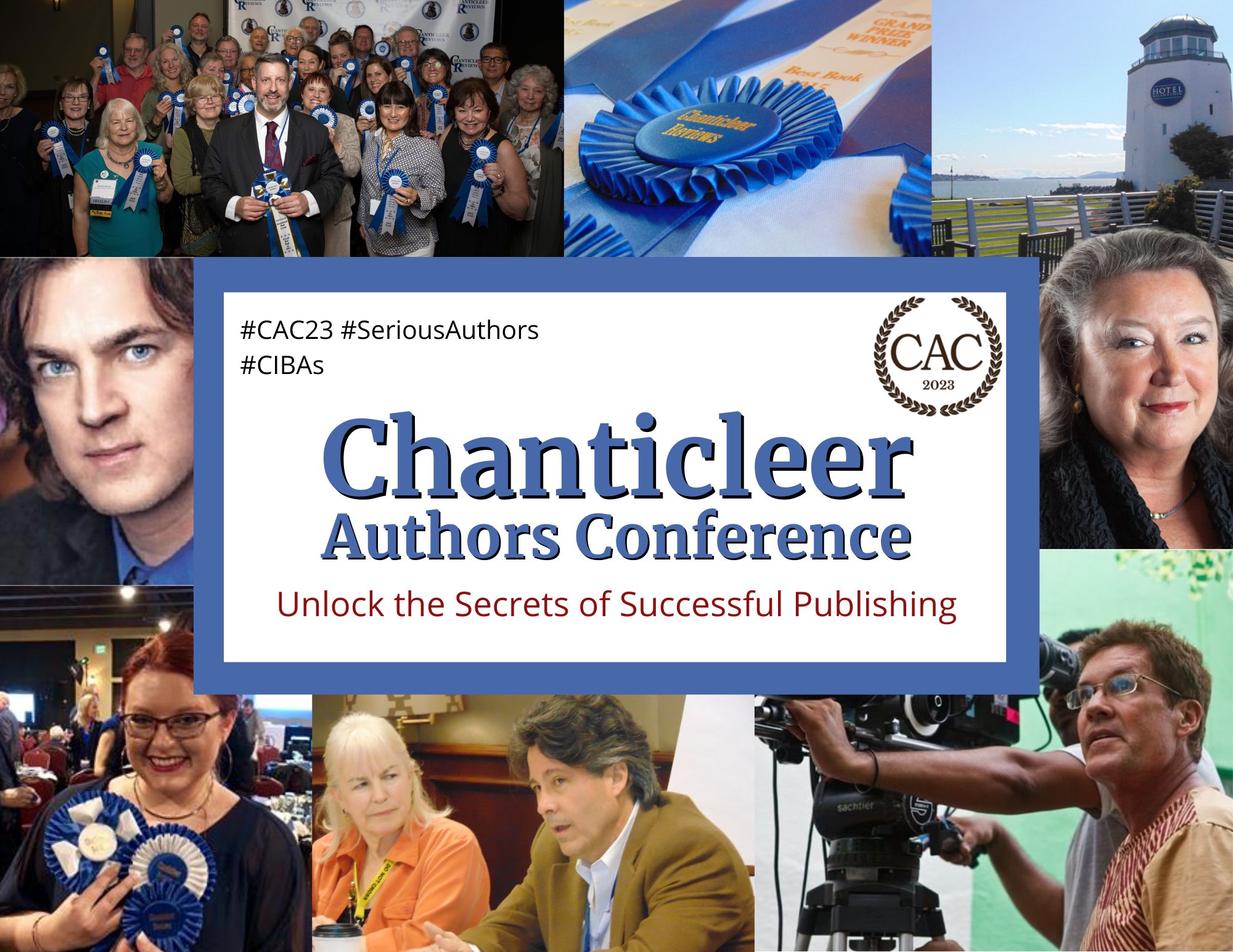
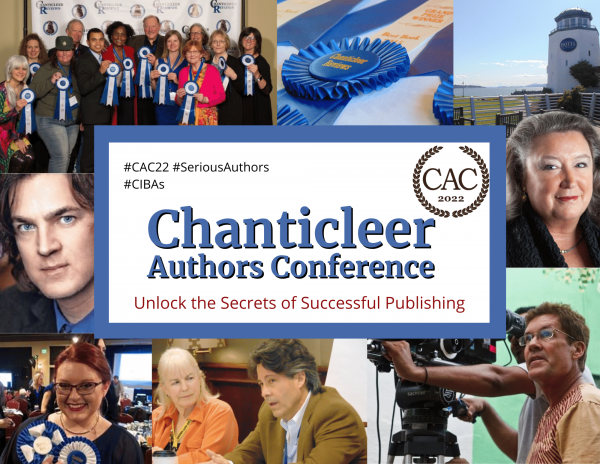
    A Collage of Speakers and Blue Ribbon Winners for CAC23

  • The CYGNUS 2021 CIBA WINNERS for Science Fiction

    The CYGNUS 2021 CIBA WINNERS for Science Fiction

    Cygnus Award for Science Fiction

    The Cygnus Book Awards recognize emerging new talent and outstanding works in the genre of Science Fiction, Steampunk, Alternative History, and Speculative Fiction. The Cygnus Awards is a genre division of Chanticleer International Book Awards and Novel Competitions (The CIBAs).

    Chanticleer International Book Awards is looking for the best books featuring space, time travel, life on other planets, parallel universes, alternate reality, and all the science, technology, major social or environmental changes of the future that author imaginations can dream up for the CYGNUS Book Awards division. Hard Science Fiction, Soft Science Fiction, Apocalyptic Fiction, Cyberpunk, Time Travel, Genetic Modification, Aliens, Super Humans, Interplanetary Travel, Climate-Fiction, and Settlers on the Galactic Frontier, Dystopian, our judges from across North America and the U.K. will put them to the test and choose the best among them.

    The 2021 CYGNUS Book Awards First Place Category Winners and the CYGNUS  Grand Prize Winner were announced by Wendy Kendall on Saturday, June 25, 2022 at the Hotel Bellwether and broadcast via ZOOM webinar.

    This is the OFFICIAL 2021 LIST of the CYGNUS BOOK AWARDS First Place Category Winners and the CYGNUS Grand Prize Winner.

    Cygnus Science Fiction 1st Place Blue and Gold CIBA Badge


    • J.W. Zarek – The Devil Pulls the Strings 
    • Sarah Lahey – Nostalgia Is Heartless, Book Two
    • Akosua Sankofa – Monmouth Deep
    • Rhett C. Bruno – Vicarious  
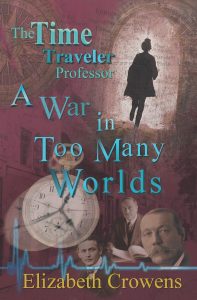
    • Elizabeth Crowens – A War in Too Many Worlds  
    • Steven Seril – The Destroyer of Worlds: ‘An Answer to Every Question’
    • Charlene Newcomb – Echoes of the Storm

    The Grand Prize Winner for the CIBA 2021 CYGNUS Awards is:

    A War in Too Many Worlds

    By Elizabeth Crowens

    PROMOTING OUR AUTHORS! 

    Attn CIBA Winners! More goodies and prizes will be coming your way along with promotion in our magazine, website, and advertisements in Chanticleer Int’l Book Awards long-tail marketing strategy. Welcome to the CIBA Hall of Fame for Award Winners.

    This post has been posted on the Chanticleer Facebook Page. We try to tag all authors listed here in the FB post. However, for FB to allow us to tag an author, that author must LIKE our page and Follow Chanticleer Reviews. FB rules — not ours.

    Please click here to visit our page to LIKE, COMMENT, and SHARE on Facebook.

    Additionally, we also post on Twitter. Chanticleer Twitter’s handle is @ChantiReviews

    Or click here to go directly to Chanticleer’s Twitter feed.

    The 2022 CYGNUS Book Awards winners will be announced at CAC23 on April 29, 2023. Save the date for CAC23, scheduled April 27-30, 2023, our 10 year Conference Anniversary!

    Submissions for the 2022 CYGNUS Book Awards are open until the end of June. Enter here!

    Don’t delay! Enter today! 

    A Note to ALL the WINNERS: The coveted CIBA Blue Ribbons will be mailed out starting in August. We will contact you with an email to verify your mailing address and other items. We thank you for your patience and understanding.

  • The 2021 Finalists for the CYGNUS Book Awards for Science Fiction – a Division of the 2021 CIBAs

    The 2021 Finalists for the CYGNUS Book Awards for Science Fiction – a Division of the 2021 CIBAs

    Cygnus Award for Science Fiction

    The Cygnus Book Awards recognize emerging new talent and outstanding works in the genre of Science Fiction, Steampunk, Alternative History, and Speculative Fiction. The Cygnus Awards is a genre division of Chanticleer International Book Awards and Novel Competitions (The CIBAs).

    Chanticleer International Book Awards is looking for the best books featuring space, time travel, life on other planets, parallel universes, alternate reality, and all the science, technology, major social or environmental changes of the future that author imaginations can dream up for the CYGNUS Book Awards division. Hard Science Fiction, Soft Science Fiction, Apocalyptic Fiction, Cyberpunk, Time Travel, Genetic Modification, Aliens, Super Humans, Interplanetary Travel, Climate -Fiction, and Settlers on the Galactic Frontier, Dystopian, our judges from across North America and the U.K. will put them to the test and choose the best among them.

    These titles have moved forward in the judging rounds from all 2021 CYGNUS Science Fiction Semi-Finalists to the 2021 Cygnus Book Awards FINALISTS. All FINALISTS will be recognized at the Chanticleer Authors Conference. First Place and Grand Prize Winners will be chosen from the 24 Division Categories. 

    Congratulations to the 2021 CYGNUS Book Awards for Science Fiction Semi-Finalists!

    • J.W. Zarek – The Devil Pulls the Strings  
    • Sarah Lahey – Nostalgia Is Heartless, Book Two 
    • Spaulding Taylor – Last Star Standing
    • Akosua Sankofa – Monmouth Deep   
    • Rhett C. Bruno – Vicarious   
    • Peter Greene – Light of Ganymede   
    • Kristie Clark – Dragon Gold
    • Charlene Newcomb – Echoes of the Storm   
    • D.H. Ford – Cosmic Swap    
    • William M. Hayes – Save Him   
    • William X. Adams – Alien Dream Machine   
    • PA Vasey – Trinity Evolution    
    • Daniel C. McWhorter – Revival: The Gaia Origin, Book Two     
    • Jenn Lees – Restoring Time: Community Chronicles Book 4         
    • William X. Adams – Alien Panic     
    • Elizabeth Crowens – A War in Too Many Worlds   
    • Sandra J. Jackson – Catching Butterflies
    • Dana Claire – The Connection      
    • Gina Detwiler – Forgiven       
    • Sam Stea – The Edge of Elsewhere   
    • Steven Seril – The Destroyer of Worlds: ‘An Answer to Every Question’

    We will announce the 1st Place Category winners and Grand Prize Division Winners at the CIBAs Banquet and Ceremony on Saturday, June 25th, 2022 at the luxurious Hotel Bellwether in Bellingham, Wash. sponsored by the 2022 Chanticleer Authors Conference

    These titles are in the running for the FIRST PLACE WINNERS positions of the 2021 Cygnus Book Awards novel competition for Science Fiction!

    Cygnus Science Fiction 1st Place Blue and Gold CIBA Badge

    Good luck to all as your works compete on the next rounds of judging.

    The next round of judging will decide which books move on to the Finalist positions for the 2021 CYGNUS Book Awards for Science Fiction novels.

    PROMOTING OUR AUTHORS! 

    This post has been posted on the Chanticleer Facebook Page. We try to tag all authors listed here in the FB post. However, for FB to allow us to tag an author, that author must LIKE our page and Follow Chanticleer Reviews. FB rules — not ours.

    Please click here to visit our page to LIKE, COMMENT, and SHARE on Facebook.

    Additionally, we also post on Twitter. Chanticleer Twitter’s handle is @ChantiReviews

    Or click here to go directly to Chanticleer’s Twitter feed.

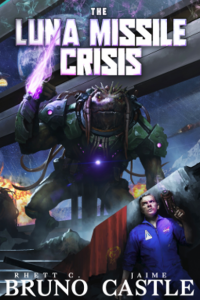
    The Grand Prize Winner for the CIBA 2020 CYGNUS Awards is Rhett C. Bruno & Jaime Castle for The Luna Missile Crisis

    Cover of The Luna Missile Crisis by Rhett C. Bruno and Jaime Castle

    Click here to see the 2020 CYGNUS Book Award Winners for Science Fiction.

    We are now accepting submissions into the 2022 CYGNUS  Awards writing competition.

    Please click here for more information.

    Winners will be announced at the 2021 CIBA Awards Ceremony that is sponsored by the 2022 Chanticleer Authors Conference.

    VIRTUAL and IN-Person –  June 23 – 26, 2022! Register Today!

    FLEXIBLE REGISTRATIONS ARE AVAILABLE for these challenging times.

    Seating is Limited. The  esteemed WRITER Magazine (founded in 1887)  has repeatedly recognized the Chanticleer Authors Conference as one of the best conferences to attend and participate in for North America.

    Join us for our 10th annual conference and discover why!
    Featuring: International Best Selling Author Cathy Ace along with A+ list film producer Scott Steindorff.


  • The 2021 CYGNUS Book Awards for Science Fiction – The Short List – CIBAs 2021

    The 2021 CYGNUS Book Awards for Science Fiction – The Short List – CIBAs 2021

    Cygnus Award for Science Fiction Badge of a bright star shining out of a galaxy

    The Cygnus Book Awards recognize emerging new talent and outstanding works in the genre of Science Fiction, Steampunk, Alternative History, and Speculative Fiction. The Cygnus Book Awards is a genre division of Chanticleer International Book Awards and Novel Competitions (the CIBAs).


    Chanticleer International Book Awards is looking for the best books featuring space, time travel, life on other planets, parallel universes, alternate reality, and all the science, technology, major social or environmental changes of the future that author imaginations can dream up for the CYGNUS Book Awards for Science Fiction. 

    Hard Science Fiction, Soft Science Fiction, Apocalyptic Fiction, Cyberpunk, Time Travel, Genetic Modification, Aliens, Super Humans, Interplanetary Travel, Climate Fiction (Cli-Fi), and Settlers on the Galactic Frontier, Dystopian, our judges from across North America and the U.K. will put them to the test and choose the best among them.

    These titles have moved forward in the judging rounds from all 2021 CYGNUS Science Fiction Long List to the 2021 Cygnus Book Awards SHORT LIST. These entries are now in competition for 2021 Cygnus Semi-Finalists. FINALISTS will be announced and recognized at the Chanticleer Authors Conference (CAC22).

    The 2021 CYGNUS FINALISTS will be selected from the CYGNUS Semi-Finalists.

    The First Place Category Winners, along with the CIBA Division Grand Prize winners, will be selected from the 24 CIBA divisions’ Finalists.

    We will announce the 1st Place Category winners and Grand Prize Division Winners at the CIBAs Banquet and Ceremony on Saturday, June 25th, 2022 at the luxurious Hotel Bellwether in Bellingham, Wash. sponsored by the 2022 Chanticleer Authors Conference

    These titles are in the running for the SEMI-FINALS of the 2021 Cygnus Book Awards novel competition for Science Fiction!

    Short Listed for the 2021 CIBAs

    Join us in cheering on the following authors and their works!

    • J.W. Zarek – The Devil Pulls the Strings  
    • Sarah Lahey – Nostalgia Is Heartless, Book Two 
    • Joe Butler – Of All Possibilities   
    • Michael Hicks Thompson – Clouds Above    
    • Spaulding Taylor – Last Star Standing
    • Dale Renton – DART   
    • S. W. Lawrence, MD – Earth Dragon     
    • Max Mason – Novastrom: Adventures from the Zrax Wars    
    • Mark D. Owen – Impact    
    • Steven Seril – The Destroyer of Worlds: ‘An Answer to Every Question’   
    • Akosua Sankofa – Monmouth Deep   
    • John Teton – The Book of Geezer      
    • Gary Clark – The Given   
    • Rhett C. Bruno – Vicarious   
    • Timothy S. Johnston – Fatal Depth     
    • Peter Greene – Light of Ganymede     
    • Kristie Clark – Dragon Gold
    • Dimple Patel Desai – The Lambda Factor   
    • John J Spearman – Pike’s Potential     
    • Charlene Newcomb – Echoes of the Storm    
    • D.H. Ford – Cosmic Swap    
    • William M. Hayes – Save Him   
    • William X. Adams – Alien Dream Machine   
    • Michael J Metroke – The Masada Affair   
    • PA Vasey – Trinity Evolution    
    • Daniel C. McWhorter – Revival: The Gaia Origin, Book Two     
    • Robert C Littlewood – Deviance     
    • Jenn Lees – Restoring Time: Community Chronicles Book 4      
    • Bernie Koenig – B.R.A.I.N.   
    • Daniele Kasper – Cut Her Out In Little Stars    
    • William X. Adams – Alien Panic     
    • Elizabeth Crowens – A War in Too Many Worlds   
    • Sandra J. Jackson – Catching Butterflies
    • Dana Claire – The Connection      
    • Gina Detwiler – Forgiven       
    • Sam Stea – The Edge of Elsewhere     

    Good luck to all as your works move on the next rounds of judging.

    PROMOTING OUR AUTHORS! 

    This post has been posted on the Chanticleer Facebook Page. We try to tag all authors listed here in the FB post. However, for FB to allow us to tag an author, that author must LIKE our page and Follow Chanticleer Reviews. FB rules — not ours.

    Please click here to visit our page to LIKE, COMMENT, and SHARE on Facebook.

    Additionally, we also post on Twitter. Chanticleer Twitter’s handle is @ChantiReviews

    Or click here to go directly to Chanticleer’s Twitter feed.

    The Grand Prize Winner for the CIBA 2020 CYGNUS Awards is Rhett C. Bruno & Jaime Castle for The Luna Missile Crisis

    Cover of The Luna Missile Crisis by Rhett C. Bruno and Jaime Castle

    Click here to see the 2020 CYGNUS Book Award Winners for Science Fiction.

    We are now accepting submissions into the 2022 CYGNUS  Awards writing competition.

    Please click here for more information.

    Winners will be announced at the 2021 CIBA Awards Ceremony that is sponsored by the 2022 Chanticleer Authors Conference.

    VIRTUAL and IN-Person –  June 23 – 26, 2022! Register Today!

    FLEXIBLE REGISTRATIONS ARE AVAILABLE for these challenging times.

    Seating is Limited. The  esteemed WRITER Magazine (founded in 1887)  has repeatedly recognized the Chanticleer Authors Conference as one of the best conferences to attend and participate in for North America.

    Join us for our 10th annual conference and discover why!
    Featuring: International Best Selling Author Cathy Ace along with A+ list film producer Scott Steindorff.

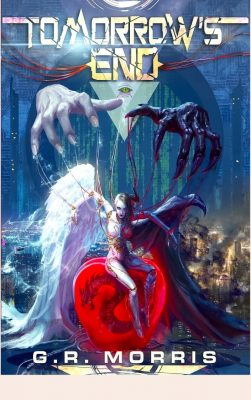
  • TOMORROW’s END (Book One) by G.R. Morris – Cyberpunk Sci-fi, Horror Literature & Fiction, Philosophy

    TOMORROW’s END (Book One) by G.R. Morris – Cyberpunk Sci-fi, Horror Literature & Fiction, Philosophy

    A cosmic force of evil is rising, come to consume whole worlds and plunge them into darkness. Earth is next, and the only chance for humanity to survive is a pair of young, destined heroes who have no idea what dangers lurk in their future.

    Kevin Knight is a sixteen-year-old savior, the warrior foretold in an alien prophecy who will combat the Dragon. He’s also afraid of the dark and suffers the routine abuse of his stepdad. Though his mother Sara insists her son will have a bright future, Kevin refuses to believe it until the day his life is shattered. Kevin comes face to face with aliens, monsters, and a staggering truth about humanity. He must follow Robert’s teachings, an alien Changeling who reveals just as much as he keeps hidden. Oh, Kevin must also face down the very forces of Hell.

    At the same time, an orphaned Changeling girl named Daren tries to find her place amongst the children who shun her and the adults in her life who have anything but her best interests at heart. As Daren grows and stumbles into the powers of her species, her desires are simple: to protect her only friend, Thomas, and find a mysterious figure whose destiny is bound to hers. But the more powerful she becomes, the more significant her trials, and the danger surrounding her surrounds the orphanage as well. Can she muster her strength fast enough to keep the powers of darkness at bay?

    The characters of Tomorrow’s End are vibrant, each one driven by their own desires and philosophies. Kevin and Daren’s stories are focused on their internal struggles, with the fate of the world resting on their shoulders. Kevin must decide who to trust when he’s surrounded by mysterious people and morally dubious mentors. Daren must make do with no teachers at all. In time, both Kevin and Daren fight against bombastic, over-the-top enemies with ties to demonic power.

    G.R. Morris fills this story with fantastic descriptions. The aliens and monsters are painted with inventive designs, creating visuals that are wholly unique and distinctive. The creatures, in particular, and the places they come from are visceral depictions of roiling, hellish things, all cast in darkness. The villains of Tomorrow’s End are intensely evil characters who commit graphic violence against nearly everyone around them—even innocent children, which Morris never shies away from showing.

    The characters create and break illusory worlds, intricately shown in displays of light and color. These surreal mindscapes help illustrate the thoughts and desires of those meeting within them. Despite all of the otherworldly imagery in this dark science fictionthe regular lives from which Kevin and Daren originate are built with just as much care. Within the settings, expansive action scenes stretch for pages on end, mixing advanced technology with dangerous supernatural power, creating fight scenes larger than life.

    Tomorrow’s End sets up its bizarre settings quickly, giving the characters space to breathe and ask questions ─ and their questions abound. This story’s world is full of mysterious societies and convoluted plans that stretch back and forth through time, involving cosmic beings, societal control, and Matrix-like technological constructs. Morris painstakingly develops the storyline, and, at times, the pacing of the novel seems to slow a bit. Things pick back up when the villains make their appearance. Morris shows the turmoil of individual characters as they understand what they should do and who they should choose to be.

    Tomorrow’s End centers on a philosophy of free will and choice in every conflict. Evil and good are chosen rather than innate, and situations that appear random are always driven by earlier choices. Kevin must choose truth and have faith in his own purpose if he will have any chance to win the battle against the darkness. Daren learns that she’ll have to fight, to be defiant if she wants to keep those around her safe. And they both will have to understand that belief can change reality, that the choice to suffer could teach them the lessons they need, and that it’s not always so easy to pick light over darkness. All in all, readers will more than likely line up for Book II!


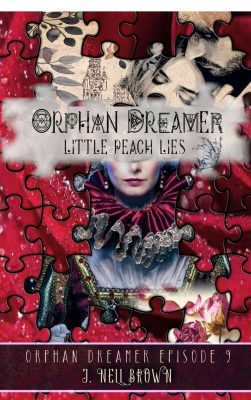
  • ORPHAN DREAMER: Little Peach Lies, She Laughs Last, and The Missing Arrowhead (Books 1, 3, 9) by J Nell Brown – Black & African American Sci-fi, Black & African American 90-minute Sci-fi & Fantasy Short Reads, Teen & Young Adult Time Travel

    ORPHAN DREAMER: Little Peach Lies, She Laughs Last, and The Missing Arrowhead (Books 1, 3, 9) by J Nell Brown – Black & African American Sci-fi, Black & African American 90-minute Sci-fi & Fantasy Short Reads, Teen & Young Adult Time Travel

    The Missing Arrowhead

    Daniela Rose Cavanaugh is the Orphan Dreamer, destined to travel time and space and to protect the world from a demon who’s already set his sights on her. But as a young black girl in the American south, all she wants is a friend who understands her well enough to be called a kindred spirit. J. Nell Brown paints a vivid picture of Daniela’s alienation from her peers; her thoughts are clear as she questions God’s choice of her as the Orphan Dreamer, as Daniela’s depression, guilt, and sense of inferiority clash with her divine mission. Daniela desires to be “normal” and love herself with the help of a friend she hasn’t met yet. Her strong character voice carries the story forward, under the crushing weight of the world and the fate of her best friend on her shoulders. When she loses an arrowhead on a journey to the past, Daniela faces disbelief from those around her. What if others label her as ill and lock her away? Orphan Dreamer and the Missing Arrowhead is an impeccably paced story, full of the complex thoughts of a girl who yearns for connection.


    She Laughs Last

    Gertrude Smith rides a Greyhound bus to meet her soon-to-be-born granddaughter. She reads about the science of dimensions and muses on the destiny waiting for her granddaughter, Daniela Rose Cavanaugh. The past haunts her ride, as she remembers the murder of her son at the hands of a racist mob in a Greyhound station years ago; grief, love, and fear for her family mingle while she wears a false smile, hiding the turmoil inside her from the other passengers. She Laughs Last explores how false happiness can eat at someone and how much the social obligation to appear good-natured is worth. Can truth and trust be buried by lies and doubt? But surrounded by people—one of whom is the fancy scientist who wrote her book on dimensions—the isolation of being judged presses on Gertrude, adding only more reason to wear a mask. The scenes of Gertrude riding the bus are intimate and filled with emotion, dwelling on her thoughts and memories. Elsewhere, in the cosmos, the demon Nomad plots against the world and the Orphan Dreamer, planning to drown Daniela in depression. Gertrude speaks to her granddaughter, as the story’s themes of truth and faith come together in her words.

    Little Peach Lies

    Charlotte Cairstine McDonald’s research intrudes on her dreams. She sees the ghostly story of Mary, Queen of Scots, and feels a strange connection between herself and the long-dead monarch. In her waking life, Charlotte is embroiled in her own royal drama. She intends to marry Charles Darbyshire, grand-nephew of Queen Elizabeth, but the secret of her pregnancy threatens to throw both of them into a devastating scandal. Charlotte rides the highs and lows of joy and fear at the prospect of her new family, while the phantom visions of Mary grow darker. Charlotte is a lively protagonist whose chemistry with the other characters—particularly Charles—makes Little Peach Lies a delight to read. The descriptions are flavorful and quickly set each scene, giving space for the story to explore the pull between freedom and obligation, independence, and family legacy. The past repeats itself, as secrecy leads to danger.


    All three stories, connected over space and time, are powerful portraits of three women trying to move into new stages of life—whether that be grandmother, mother, or hero. The past follows them; fear and guilt are clear to see in their internal monologues and hampers their connection to the people around them at every step.

    Nell Brown illustrates the divide between how the world sees her protagonists and how they want to be seen. The descriptions show what these characters love about the world, what makes them happy and interests them, while complex emotions swirl in their heads. Orphan Dreamer and the Missing Arrowhead, She Laughs Last, and Little Peach Lies are all united by the central theme of family, trying to connect with and do right by the people one loves, the need to have faith in one’s self before that faith can genuinely extend to others. These characters’ unbearable yearning to find someone who understands them, truth and all, will resonate with all readers. Highly recommended.


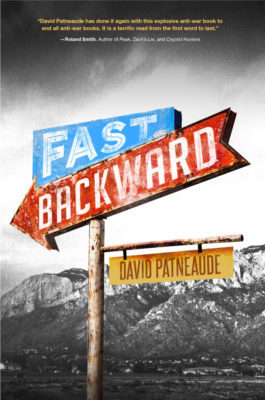
  • FAST BACKWARD by David Patneaude – Y/A Time Travel Fiction, Y/A Apocalyptic & Post Apocalyptic Fiction, Y/A Coming of Age Fiction

    FAST BACKWARD by David Patneaude – Y/A Time Travel Fiction, Y/A Apocalyptic & Post Apocalyptic Fiction, Y/A Coming of Age Fiction

    In Fast Backward, David Patneaude’s most recent YA novel, fifteen-year-old Bobby sets out on his morning newspaper route, but what happens next blows his shorts off, literally. First, he witnesses a blinding light that grows into a mushroom cloud, but no one on the military base where he delivers papers will talk about it. Then, on his ride home, a dot in the distance takes on the shape of a girl, a naked girl in the middle of the desert at the side of the road. Thus begins Patneaude’s novel that brings WWII to life through the eyes of a young man torn by his father’s anti-war sentiments, and his uncle’s military patriotism.
    Bobby realizes that this girl, Cocoa, is somehow tied to the blinding explosion. What does Bobby do? He offers the girl his carrier bag, his shorts, and a ride home. After some preliminary conversation, Cocoa realizes where she is, and what she must do.

    She has knowledge she must deliver a message to those in charge in the hope of stopping nuclear bombs that decimated her world.

    Are we concerned yet? Bobby is. He can hardly believe Cocoa’s crazy story, but Cocoa’s knowledge of dates, towns, and ship names make him a believer. They convince his parents and, with some effort, Bobby’s Uncle Pete. Cocoa has enough knowledge to capture the attention of some high-ranking military officials, but she also receives serious skepticism. When a bombing that she’d predicted actually happens, the Generals start listening.

    Cocoa’s premonitions are a torment to her, and when she remembers something that involves Robert’s dad, a journalist and pacifist and conscientious objector, Robert’s world is turned upside down. His ideas of the world are forever changed by Cocoa, Future Girl, the girl who will save the world.

    Award-winning YA author, David Patneaude effectively suspends our disbelief as he deftly crafts a world where nuclear bombs, Nazi submarines, the bombing of US cities, with two kids coming of age stuck in the middle, becomes a reality. Patneaude’s world explodes on the page in this post-apocalyptic war story that is plausible, terrifying, and quite satisfying to the spectacular end.

    Fast Backward is highly recommended for young and old alike – and won First in Category in the CIBA 2019 Dante Rossetti Awards for Young Adult fiction.


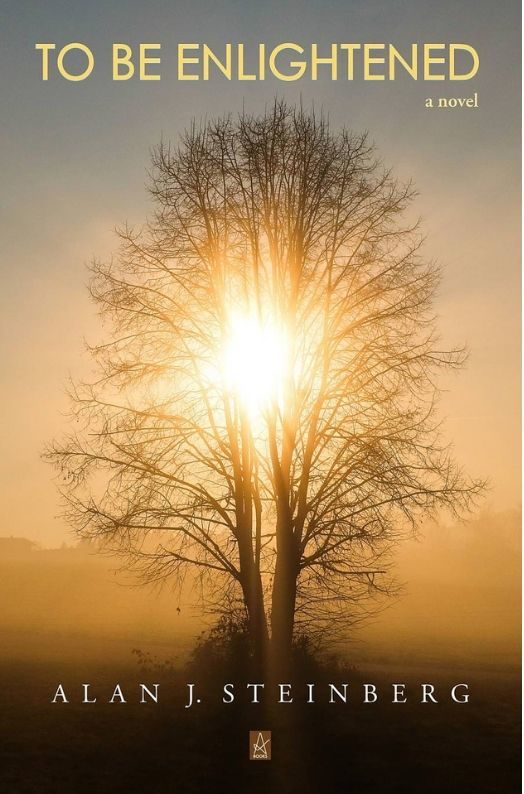
  • TO BE ENLIGHTENED by Alan J. Steinberg, MD – Metaphysical Science Fiction, Magic Realism, Metaphysical and Visionary

    TO BE ENLIGHTENED by Alan J. Steinberg, MD – Metaphysical Science Fiction, Magic Realism, Metaphysical and Visionary

    If you have never read a work of philosophical fiction, be prepared—it’s not fluff.

    Dr. Alan J. Steinberg’s latest work in some ways echoes other works with similar themes, e.g., Nietzsche’s Thus Spoke Zarathustra, or Siddhartha by Herman Hesse. But To Be Enlightened provides a distinctive, twenty-first-century take on setting and characters, giving it a uniquely California flavor.

    In a tale of ambivalence and obsession that would captivate a Freudian psychologist, Steinberg uses the main character, Abe Levy, a conflicted philosophy professor at a Southern California college, as a vehicle to recount the philosophical underpinnings of Transcendental Meditation, relating the tenets of Indian Vedic philosophical beliefs to those of Western and Middle Eastern civilizations over the ages.

    Abe’s conflict is both spiritual and mundane, affecting every aspect of his life.

    When he was fifteen, Abe experienced an inexplicable, life-altering event. At that time, two strangers transported him to another plane of existence—heaven, if you will—on another planet. There he lived a joyful, perfect life without the complications of sex, avarice, or any of the seven deadly sins, with a soul mate whom he had known forever. One day, when he was very old, the same two strangers returned him to his previous adolescent existence on earth.

    From that time, Abe’s obsession has been to return.

    Stuck in 21st century California, he is ambivalent toward his wife, Sarah, whose anxiety and panic attacks, along with her healthy libido, both distract from and interfere with the meditations that will transport him back. Abe is happiest when teaching The Insider’s Guide to Our Self, which allows him to escape his worldly concerns and responsibilities and focus on enlightenment. When Sarah masters the technique and joins him in advanced night meditations, Abe is delighted. However, he doesn’t anticipate what comes next.

    A well-crafted book, To Be Enlightened is weighted with philosophical thought from multiple sources, documented with citations and footnotes worthy of a doctoral dissertation. Most of this, presented in classroom scenes, slows the pace—only the repartee between/among the students and professor save it from a complete stall. However, quirky characters and unexpected events, while stretching credulity, keep it alive.

    Worthy of finishing—the reader should be prepared to set aside the time and patience it demands. To Be Enlightened is sure to illuminate the unenlightened readers, expanding their understanding of eastern philosophy and religion.


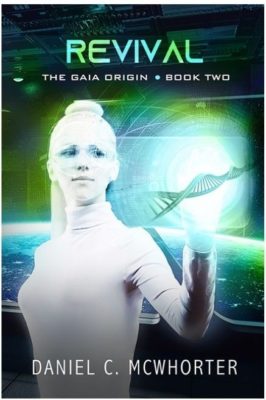
  • REVIVAL (Gaia Origin, Book 2) by Dan McWhorter – Colonization Sci-fi, Genetic Engineering Sci-fi, Artificial Intelligence Sci-fi

    REVIVAL (Gaia Origin, Book 2) by Dan McWhorter – Colonization Sci-fi, Genetic Engineering Sci-fi, Artificial Intelligence Sci-fi

    Artificial intelligence (AI) is an increasingly crucial technological development in human affairs, both for its enabling and disruptive powers. Revival, the second volume in the Gaia Origin series, gives us an astonishing glimpse of what role AI could play in the future of the human race. It’s both scary and exhilarating.

    A small group of people have escaped a near-dead Earth and traveled lightyears to reach a new Earth-like planet named Gaia by its human visitors. Chief among them is Evan Feldman, his wife, daughter, granddaughter, and a few Feldman extended family members. All of them were the masters of an Earth-bound corporation called Tel­­ogene, a multi-billion-dollar megacorporation dedicated to extending the possibilities of human life with revolutionary medical science and technology. Their transportation across the universe on board the Kutanga. The spaceship is large enough to contain some four thousand humans in suspended animation awaiting the day when the human race can establish a new home now that the home planet was all but destroyed by a disastrous and deadly plague.

    But here’s where the book takes an unexpected, radical turn. It seems that the passengers, as we would generally think of them, are all dead – that is, their biological, physical bodies are all gone. Instead, an AI super-intelligent computer named Aneni cares for and keeps the essence of these humans alive. Instead of natural bodies, they have become androids in humanoid form. Virtually all human functions have been duplicated except for the need to eat. The most remarkable is their brain functions, all of which have been “recorded” to function in their new bodies. Who they were as humans, their ability to think, feel, remember, love, hate all remain intact. Every function, including their thoughts, is monitored and potentially controlled by Aneni. Including the ability to modify their thoughts and feelings if the computer believes it would contribute to their well-being. If they become too troubled, they can be digitally “rolled back” and the troubled portion of their lives eliminated.

    So, are they still human? And what happens when they realize the computer Aneni is more akin to them than human beings? And who can tell when even their memories are not reliable, and, instead, a composite of other people’s memories kludged together to reconstruct a human being whose brain was too damaged when their earthly body died? What happens when they realize their essence is as editable as any other digital data: able – like any other data – of being backed up, or erased altogether?

    Before the story ends, readers will experience a fully imagined, detailed alternate world. Eyes will be opened up to an exploration of DNA and brain science, and even the theories of relatively obscure writers such as Zecharian Sitchin and Erich von Daniken, both of whom hypothesized that we, the homo sapiens of Earth were created or planted there by alien astronauts.

    Some sci-fans may see echoes of the book Altered Carbon by Richard K. Morgan, a novel that allowed a human’s essence to move from body to body. The recording and manipulation of that same essence in Gaia: Revival takes that manipulation a significant step further in its creation not only of digital humanity but in a benevolent AI responsible for protecting that humanity at a cost measured by the very concept of what is a human being.

    Don’t expect this book to deliver a collection of sci-fi shootouts. Only a few characters stand out, notably Evan, the founder of Telogene, who yearns for decades to see his long-dead wife brought to life, and their daughter Lily. She best expresses the anguish of trying to come to terms with this extreme version of being human. If you enjoy a thinking person’s science fiction, more in the tradition of Isaac Asimov than Robert Heinlein, this is a book for you.

    McWhorter has pulled off something original and rare. This is science fiction at its speculative best. The issues it raises will remain with you long after you’ve finished reading the book. Highly recommended.

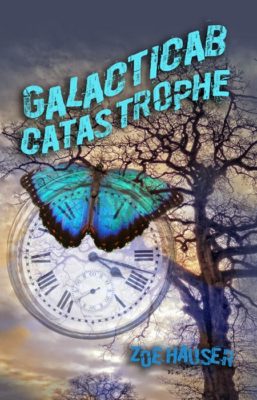
  • GALACTICAB CATASTROPHE by Zoe Hauser – Young Adult Fantasy, Sci-Fi, Time Travel

    GALACTICAB CATASTROPHE by Zoe Hauser – Young Adult Fantasy, Sci-Fi, Time Travel

    Time travel isn’t just for Dr. Who! When four teens try to solve the puzzle of the mysterious wormhole at their school, friendships are tested, reality is checked, and danger is never far away. Hauser delivers a fast, fun debut novel for the YA crowd.

    Something extraordinary is going on at the Cuniculum Performing Arts Middle School. Well beyond the emotions of the artistic kids trying to find their own direction as artists and performers, far beyond the raging hormones of kids falling in, out and through the throes of first love, some other-worldly happenings are making life at the St. Augustine, Florida school more than a bit weird.

    For example, circus animals abruptly appear in the school’s hallways. A 17th Century French courtesan, smelling like a skunk, slaps a student in front of the girl’s horrified mother. Let’s not forget the disappearance of the school’s beloved principal. Then, to top it off, the Bubonic Plague sweeping out of the school’s science labs and forcing the school to close for a month to be disinfected.

    To four students, Sephie, Zander, Rori and Iggy, the events are not only abnormal but super-normal, a situation that could only be explained as a wrinkle in time, or more appropriately a wormhole, that allows these strange figures from the past to travel in time to their school. Even more exciting, and perhaps a bit disturbing, the students go back in time using one of the wormholes buried in the school. But can they return to the present, or will they be trapped in the past? Will they ever get home?

    This Y/A novel is a clever mixture of facts, fantasy, and teenage angst, plus a healthy dollop of Greek mythology. As strange events keep the school on high alert, the four students plus a teacher travel through time. Some loop to the site of a 1942 circus disaster in Cleveland; others are held hostage in a 1915 entrapment by a nefarious group of astrophysicists. The scientists know the students are from the future but want to keep time travel to themselves.

    Sephie, short for Persephone, the Greek goddess of the spring, more or less narrates the book, infusing the novel with her deep attachment to mythology. Her personal story ties the book together. It’s complicated by the complexity of her love life—she loves a boy who loves someone else—but even more pressing is her desire to use the wormhole to go back in time and try to prevent her mother’s death.

    Y/A readers will admire this book on several levels. One is the sheer audacity of a book that ties puppy love angst with time travel. Another side is the insertion of historical events and an ongoing treatise about the lives of the ancient Greek gods.

    Part of the fun in reading this novel is its inventive characters and locations. Many readers will find their Internet browsers heating up as they check out whether certain situations were authentic and characters were real. (Hint: This reviewer especially liked a character named Alfred Ulixes. Look it up!)

    Enjoy reading Galacticab Catastrophe – but watch out for the snakes in Morocco.