When you start researching a project? Where do you begin? What should you include?
Doing research for your stories isn’t just for creative Non-Fiction, though we do have 7 Non-Fiction Book Awards ready to discover new books year round. The other categories that we think benefit most from research are the Lab Lit section of our Global Thriller Awards here, hard SciFi as seen in our Cygnus Awards here, and of course our pre-1750s Chaucer Awards here, and post-1750s Goethe Awards here, both in historical fiction.
Speaking of our Chanticleer International Book Awards, remember that the 2023 CIBAs will be announced at our 12th Anniversary Conference on April 18-21, 2024! Seating is limited, so register today!

In this article, we’ll look through different types of research, including interviews, ethnographies, and place-based research. You can learn more from Carol M. Cram’s article here on tapping experts for your book.
1. Interview for Research
This is a simple and reliable option to learn more about the subject at hand. For example, one of our favorite Chanticleerians, Janet Oakley (interviewed here), is no stranger to tracking down people to talk to in order to complete her novels. In writing her book, The Jøssing Affair (read the review here) set in occupied Norway during WWII, Oakley interviewed people who lived through the occupation to better understand what they went through.
In giving an interview, you often want to start out with the easier questions, warming your subject up and giving them a chance to relax into the easy rhythm of responding. This gives you a chance to form a connection with a real person that might even last beyond the interview, and it lets you warm up to more difficult questions.
2. Ethnography for Research

Ethnography refers to observing people from the outside to better understand how they work. If you’re writing a police procedural (as one might for the Clue Awards) and want to capture the atmosphere in a police station, you might ask to sit in one for a while and take notes.
In conducting good ethnographic research, you want to record the day of the week, the time, and a basic standard for how you take notes. If it’s quiet, how do you interpret the quiet and why? Is it the end of the day when people are ready to go off shift or has something bad happened that’s set a pall over the precinct? How do those quiets look different to you?
You’ll record the day of the week and the time because places look different at different times. There’s a Friday feel, even at places that work through the weekend, and any obstetrician will tell you the difference between a normal workday and a full moon.
3. Place-Based Research
This is similar to ethnography except you are going and spending time in the location where your work takes place – whether Non-Fiction or Fiction. You can bet that Janet Oakley also went to Norway to better understand what living there would be like and see what changes have taken place since WWII. Plus, it’s always easier to find people to interview in the country that you’re writing about.
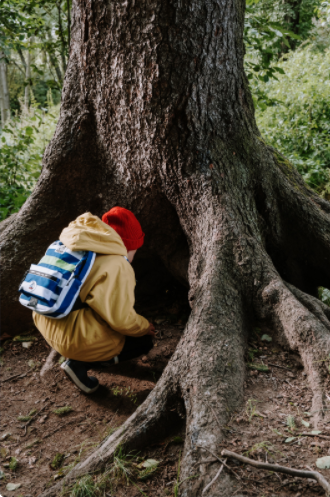
The question to ask here is how does the setting become a character for you in a way that will let your reader believe that the place is real. And remember, just because it is real or what you’re describing really happened a certain way, that doesn’t mean the way you’ve described it is believable to the reader. Having the extra experience of actually lived or visited the place that you’re writing about adds that extra touch of veracity.
4. Research Map
As you embark on your research you can begin your research map. We recommend starting with your central question. Oakley’s question for The Jøssing Affair was “What would it be like to be a couple in occupied Norway?”
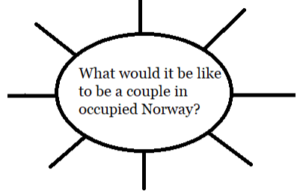
From this point she can begins to expand into other interests as she goes through the story. As you start your research map, you might end up finding out that your central question, while great for generating research, might not end up being the focus of the story. Be open, let the ideas take you where they need to go in the story.
5. Find a Second Pair of Eyes

Once you’ve put everything together it’s easy to be so close to your work that you can’t be objective about it in a regular novel, but once you start using research it can fall into many pitfalls. Maybe your historical novel starts to sound too much like a travelogue, or your lab lit begins to like a textbook instead of a thriller. Inviting someone from outside your area of the specialized novel is a great way to find out how your readers will react to your text.
We always recommend a Manuscript Overview that does a deep dive into the general strokes of your book followed by our Editorial Services to move step by step through your book and really make it sing.
No matter where you are in your story, you should be proud of the work you have put in so far! Research is difficult, and we know you’re on your way to great things!

Writer’s Toolbox
Thank you for reading this Chanticleer Writer Toolbox article.
Writer Toolbox Helpful Links:
TAPPING the EXPERTS – Researching for Your Works in Progress by Carol M. Cram
10 QUESTION INTERVIEW WITH MULTI-AWARD WINNING AUTHOR JANET OAKLEY
An Editorial Book Review of The Jøssing Affair by J.L. Oakley
The traditional publishing tool that indie authors can use to propel their writing careers to new levels? https://test.chantireviews.com/2016/05/15/the-seven-must-haves-for-authors-unlocking-the-secrets-of-successful-publishing-series-by-kiffer-brown/
Got a great book?
The 2023 CIBAs are open now!

View all awards and upcoming deadlines here. Over 30,000 in Cash and Prizes are given away annually!
When you’re ready, did you know that Chanticleer offers editorial services? We do and have been doing so since 2011.
Our professional editors are top-notch and are experts in the Chicago Manual of Style. They have and are working for the top publishing houses (TOR, McMillian, Thomas Mercer, Penguin Random House, Simon Schuster, etc.).
If you would like more information, we invite you to email Kiffer or Sharon at KBrown@ChantiReviews.com or SAnderson@ChantiReviews.com for more information, testimonials, and fees.
We work with a small number of exclusive clients who want to collaborate with our team of top-editors on an on-going basis. Contact us today!
Chanticleer Editorial Services also offers writing craft sessions and masterclasses. Sign up to find out where, when, and how sessions being held.
A great way to get started is with our manuscript evaluation service, with more information available here.
And we do editorial consultations for $75. Learn more here.
If you’re confident in your book, consider submitting it for a Editorial Book Review here or to one of our Chanticleer International Awards here.