The Mark Twain Book Awards recognize emerging new talent and outstanding works in Humor and Satire. The Mark Twain Book Awards is a division of the Chanticleer International Book Awards (The CIBAs).
Chanticleer International Book Awards is looking for the best books featuring satire, humor, political ideology, parody, fantasy, and allegory or fable. These books have advanced to the next judging rounds. We will put them to the test and choose the best among them.
The 2021 MARK TWAIN Book Awards First Place Category Winners and the MARK TWAIN Grand Prize Winner were announced by Lisa Dailey on Saturday, June 25, 2022 at the Hotel Bellwether and broadcast via ZOOM webinar.
This is the OFFICIAL 2021 LIST of the MARK TWAIN BOOK AWARDS First Place Category Winners and the MARK TWAIN Grand Prize Winner.
Join us in celebrating the following authors and their works in the 2021 CIBAs.
Anne Pfeffer – Binge
Charlie Suisman – Hot Air
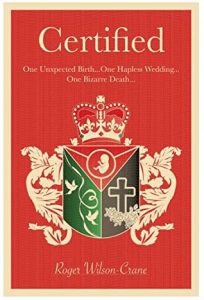
Roger Wilson-Crane – Certified
Andy Becker – The Kissing Rabbi: Lust, Betrayal, and a Community Turned Inside Out
Elizabeth Crowens – Babs and Basil, and the Hounds of the Hollywood Baskervilles
Lou Dischler – My Only Sunshine: Getting Straight with the Bomb
The Grand Prize Winner for the CIBA 2021 MARK TWAIN Awards is:
Certified
by Roger Wilson-Crane
PROMOTING OUR AUTHORS!
Attn CIBA Winners: More goodies and prizes will be coming your way along with promotion in our magazine, website, and advertisements in Chanticleer Int’l Book Awards long-tail marketing strategy. Welcome to the CIBA Hall of Fame for Award Winners!
This post has been posted on the Chanticleer Facebook Page. We try to tag all authors listed here in the Facebook post. However, for Facebook to allow us to tag an author, that author must LIKE our page and Follow Chanticleer Reviews.
Additionally, we also post on Twitter. Chanticleer Facebook and Twitter handle is @ChantiReviews
Or click here to go directly to Chanticleer’s Twitter feed.
The 2022 MARK TWAIN Book Awards winners will be announced at CAC23 on April 29, 2023. Save the date for CAC23, scheduled April 27-30, 2023, our 10 year Conference Anniversary!
Submissions for the 2022 MARK TWAIN Book Awards are open until the end of November. Enter here!
A Note to ALL the WINNERS: The coveted CIBA Blue Ribbons will be mailed out starting in August. We will contact you with an email to verify your mailing address and other items. We thank you for participating in the 2021 Chanticleer International Book Awards!
The Mark Twain Book Awards recognize emerging new talent and outstanding works in Humor and Satire. The Mark Twain Book Awards is a division of the Chanticleer International Book Awards (The CIBAs).
Chanticleer International Book Awards is looking for the best books featuring satire, humor, political ideology, parody, fantasy, and allegory or fable. These books have advanced to the next judging rounds. We will put them to the test and choose the best among them.
These titles have moved forward in the judging rounds from the 2021 Mark Twain Humor and Satire Fiction Short List to the 2021 Mark Twain Book Awards FINALIST. All FINALISTS will be announced and recognized at the Chanticleer Authors Conference (CAC22).
The First Place Category Winners, along with the CIBA Division Grand Prize winners, will be selected from the 24 CIBA divisions’ Finalists.
We will announce the 1st Place Category winners and Grand Prize Division Winners at the CIBAs Banquet and Ceremony on Saturday, June 25th, 2022 at the luxurious Hotel Bellwether in Bellingham, Wash. sponsored by the 2022 Chanticleer Authors Conference–which will be VIRTUAL and IN-person.
These titles are in the running for the FIRST PLACE WINNERS of the 2021 Mark Twain Book Awards novel competition for Humor and Satire!
Join us in cheering on the following authors and their works in the 2021 CIBAs.
Linda Stewart Henley –Waterbury Winter
Anne Pfeffer –Binge
Chief John J. Mandeville –The Admiral of Bolivia
Charlie Suisman –Hot Air
Roger Wilson-Crane –Certified
Barry Robbins –Oh Daddy Chronicles
Pamela Hamilton –Lady Be Good: The Life and Times of Dorothy Hale
Andy Becker –The Kissing Rabbi: Lust, Betrayal, and a Community Turned Inside Out
Elizabeth Crowens –Babs and Basil, and the Hounds of the Hollywood Baskervilles
Lou Dischler –My Only Sunshine: Getting Straight with the Bomb
David Perlmutter –Orthicon
John Prather– The Jesus Nut
PROMOTING OUR AUTHORS!
This post has been posted on the Chanticleer Facebook Page. We try to tag all authors listed here in the FB post. However, for FB to allow us to tag an author, that author must LIKE our page and Follow Chanticleer Reviews. FB rules — not ours.
We are now accepting submissions into the 2022 Mark Twain Book Awards for Humor and Satire Fiction. The 2022 CIBA winners will be announced at CAC 2023.
FLEXIBLE REGISTRATIONS ARE AVAILABLE for these challenging times.
Seating is Limited. The esteemed WRITER Magazine (founded in 1887) has repeatedly recognized the Chanticleer Authors Conference as one of the best conferences to attend and participate in for North America.
The Mark Twain Book Awards recognize emerging new talent and outstanding works in Humor and Satire. The Mark Twain Book Awards is a division of the Chanticleer International Book Awards (The CIBAs).
Chanticleer International Book Awards is looking for the best books featuring satire, humor, political ideology, parody, fantasy, and allegory or fable. These books have advanced to the next judging rounds. We will put them to the test and choose the best among them.
These titles have moved forward in the judging rounds from the 2021 Mark Twain Humor and Satire Fiction Long List to the 2021 Mark Twain Book Awards SHORT LIST. The Short Listers will compete for the Finalist positions.All FINALISTS will be announced and recognized at the Chanticleer Authors Conference (CAC22).
The First Place Category Winners, along with the CIBA Division Grand Prize winners, will be selected from the 24 CIBA divisions’ Finalists.
We will announce the 1st Place Category winners and Grand Prize Division Winners at the CIBAs Banquet and Ceremony on Saturday, June 25th, 2022 at the luxurious Hotel Bellwether in Bellingham, Wash. sponsored by the 2022 Chanticleer Authors Conference–whether virtual, hybrid, or in-person.
These titles are in the running for the FINALISTS of the 2021 Mark Twain Book Awards novel competition for Humor and Satire!
Join us in cheering on the following authors and their works in the 2021 CIBAs.
Linda Stewart Henley –Waterbury Winter
Murray Richter –Fishing for Luck
David Bush –General Jack and the Battle of the Five Kingdoms
Anne Pfeffer –Binge
Chief John J. Mandeville –The Admiral of Bolivia
Charlie Suisman –Hot Air
Roger Wilson-Crane –Certified
Barry Robbins –Oh Daddy Chronicles
Pamela Hamilton –Lady Be Good: The Life and Times of Dorothy Hale
Andy Becker –The Kissing Rabbi: Lust, Betrayal, and a Community Turned Inside Out
Elizabeth Crowens –Babs and Basil, and the Hounds of the Hollywood Baskervilles
John Prather– The Jesus Nut
Lou Dischler –My Only Sunshine: Getting Straight with the Bomb
M. Funk –The Book of True Believer
David Perlmutter –Orthicon
PROMOTING OUR AUTHORS!
This post has been posted on the Chanticleer Facebook Page. We try to tag all authors listed here in the FB post. However, for FB to allow us to tag an author, that author must LIKE our page and Follow Chanticleer Reviews. FB rules — not ours.
We are now accepting submissions into the 2022 Mark Twain Book Awards for Humor and Satire Fiction. The 2022 CIBA winners will be announced at CAC 2023.
FLEXIBLE REGISTRATIONS ARE AVAILABLE for these challenging times.
Seating is Limited. The esteemed WRITER Magazine (founded in 1887) has repeatedly recognized the Chanticleer Authors Conference as one of the best conferences to attend and participate in for North America.
The Mark Twain Book Awards recognize emerging new talent and outstanding works in Humor and Satire. The Mark Twain Book Awards is a division of the Chanticleer International Book Awards (The CIBAs).
Chanticleer International Book Awards is looking for the best books featuring satire, humor, political ideology, parody, fantasy, and allegory or fable. These books have advanced to the next judging rounds. We will put them to the test and choose the best among them.
These titles have moved forward in the judging rounds from all 2021 Mark Twain Humor and Satire Fiction entries to the 2021 Mark Twain Book Awards LONG LIST. Entries below are now in competition for 2021 Mark Twain Shortlist. The Short Listers will compete for the Finalist positions. All FINALISTS will be announced and recognized at the Chanticleer Authors Conference (CAC22).
The First Place Category Winners, along with the CIBA Division Grand Prize winners, will be selected from the 24 CIBA divisions’ Finalists.
We will announce the 1st Place Category winners and Grand Prize Division Winners at the CIBAs Banquet and Ceremony on Saturday, June 25th, 2022 at the luxurious Hotel Bellwether in Bellingham, Wash. sponsored by the 2022 Chanticleer Authors Conference–whether virtual, hybrid, or in-person.
These titles are in the running for the SHORT LIST of the 2021 Mark Twain Book Awards novel competition for Humor and Satire!
Join us in cheering on the following authors and their works in the 2021 CIBAs.
Lisa Angle – Whiskey and Old Stogies
Linda Stewart Henley – Waterbury Winter
Murray Richter – Fishing for Luck
David Bush – General Jack and the Battle of the Five Kingdoms
Anne Pfeffer – Binge
Chief John J. Mandeville – The Admiral of Bolivia
Roy Sparkman – A Pastor’s Pit
Charlie Suisman – Hot Air
Elizabeth Woolsey – The Travels of Dr. Rebecca Harper: A Matter of Time
Roger Wilson-Crane – Certified
Barry Robbins – Oh Daddy Chronicles
Pamela Hamilton – Lady Be Good: The Life and Times of Dorothy Hale
Andy Becker – The Kissing Rabbi: Lust, Betrayal, and a Community Turned Inside Out
Elizabeth Crowens – Babs and Basil, and the Hounds of the Hollywood Baskervilles
John Prather – The Jesus Nut
Lou Dischler – My Only Sunshine: Getting Straight with the Bomb
M. Funk – The Book of True Believer
David Perlmutter – Orthicon
PROMOTING OUR AUTHORS!
This post has been posted on the Chanticleer Facebook Page. We try to tag all authors listed here in the FB post. However, for FB to allow us to tag an author, that author must LIKE our page and Follow Chanticleer Reviews. FB rules — not ours.
We are now accepting submissions into the 2022 Mark Twain Book Awards for Humor and Satire Fiction. The 2022 CIBA winners will be announced at CAC 2023.
FLEXIBLE REGISTRATIONS ARE AVAILABLE for these challenging times.
Seating is Limited. The esteemed WRITER Magazine (founded in 1887) has repeatedly recognized the Chanticleer Authors Conference as one of the best conferences to attend and participate in for North America.
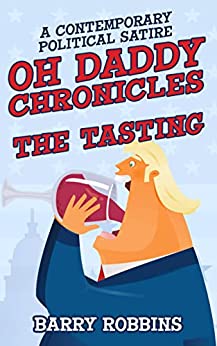
For those of you who still have heartburn from the last administration, Barry Robbins, sharp-as-a-whip satirist, has come to our rescue with his new short work lampooning Donald J. Trump, #45, in his uproarious short story, Oh Daddy Chronicles – The Tasting.
This book draws from two earlier books, Oh Daddy Chronicles and Oh Daddy Chronicles 2: Return of Covfefe. These enlightening and downright hysterical parodies place readers squarely in the Oval Office and at Mar-a-Lago, respectively.
Oh Daddy Chronicles: The Tasting samples each previous book plus some new material. They come together in a hands-down, laugh-out-loud lampooning of #45 – and everyone else in sight. From Ivanka to Jared, Vladimir to White House staffers, Robbins pulls no punches and hits his target every time. Even Elizabeth Warren and Bernie Sanders are fair game along with Fauci and the Cheneys.
Robbins sees the funny everywhere, and thanks to him, so do we.
With episode titles like Hydroxy and Me, Billy Bob and Bobbie Sue, Cheneys vs. Trumps, to name a few, Robbins gives readers material in which we can frame those years and put them in a manageable perspective. We learn how much #45 hates the color blue – and why. Readers also learn why his special relationship with the Russian dictator may be more worrisome than any of us previously thought, and oh so much more.
Robbins’ unique and engaging short work will no doubt drive readers to the first two books.
Another way Robbins engages his readers is via a poll. Readers get to choose which answer they like best from a number of possibilities given by political figures mentioned in the book to the question of, “Why did the chicken cross the road?” Simply brilliant.
It might seem odd, but Franz Kafka and his friends reportedly sat around at bars reading excerpts of The Metamorphosis with tears of laughter streaming down their faces.
Franz Kafka (1883-1924)
While he might not seem like a natural pairing with Mark Twain, Kafka certainly had a sense of humor. We may not quite understand his early 1900s thought process that would cause him to need to stop in the middle of reading “The Trial” due to laughing so hard (read more from The Guardian here), but we definitely can still appreciate a healthy dose of humor.
Fun Fact: Franz Kafka’s writing was known to deal with modernism, existentialism, Surrealism, and is considered a precursor to magical realism. Despite his fame, he never finished a single novel (unless you count The Metamorphosis as a short novel).
The Mark Twain Awards, named after the famous satirist, are still a fairly new division of The Chanticleer Int’l Book Awards. You can see a full write up on Mark Twain’s relationship with Bellingham, WA here.
Do you have a book that features Humor, Satire, or Allegory? Submit it here before the end of November to be entered into the 2021 Mark Twain Book Awards!
Let’s do a quick breakdown on the three main categories of Mark Twain books.
Satire: The Dangerous Tool
Probably one of the most difficult genres to write in, Satire can have trouble with rubbing people the wrong way. One of the most commonly known pieces of satire is “A Modest Proposal” by Jonathan Swift, made ubiquitous by English courses teaching it for decades. You can read the full essay here.
Jonathan Swift is best known as the author of Gulliver’s Travels. Above, Gulliver is restrained by the Lilliputians
The essence of it is that Swift proposes eating Irish children instead of feeding them, as it will save more money for England in the long run, and cause less suffering for the kiddos in the long run. This obvious, garish suggestion highlights the ways in which England may as well be eating the children in a way that both shames those who have acted poorly, and serves as a call to action to offer better care to the poor.
Satire in literature is a type of social commentary. Writers use exaggeration, irony, and other devices to poke fun of a particular leader, a social custom or tradition, or any other prevalent social figure or practice that they want to comment on and call into question.
Contemporary writers have used satire to comment on everything from capitalism (like Brett Easton Ellis’s American Psycho, which uses extreme exaggerations of consumption, concern with social status, and masculine anger and violence to skewer American capitalism) to race (Paul Beatty’s The Sellout, for example, features a young black male protagonist in Southern California who ends up before the Supreme Court for trying to reinstate slavery).
As you can see, satire is a sharp tool that must be wielded carefully to avoid cutting yourself on accident. A good rule of thumb when writing satire to always aim at those who are in power. Trying to poke fun or ridicule people who are already disadvantaged or targeted in some way will often leave a bad taste in your audience’s mouth, and that’s the fastest way to have your book closed.
Here are some classic examples of Satire:
Matt Groening – The Simpsons, Futurama
David Sedaris – Naked, Me Talk Pretty One Day
Chuck Palahniuk – Fight Club
Douglas Adams – The Hitchhiker’s Guide to the Galaxy
Kurt Vonnegut – Slaughterhouse-Five
Evelyn Waugh – Brideshead Revisited
“Get outta my sky!”
Now let’s talk allegory.
Allegory: Not Just for Kids!
When you want to talk around something or use a stand in to describe it you might try allegory.
The word “allegory” comes from the Latin “allegoria,” meaning speaking to imply something else. An allegory is a simple story that represents a larger point about society or human nature, whose different characters may represent real-life figures. Sometimes, situations in the story may echo stories from history or modern-day life, without ever explicitly stating this connection.
Allegories are similar to metaphors in that both illustrate an idea by making a comparison to something else. However, allegories are complete stories with characters, while metaphors are brief figures of speech.
Note: We are not affiliated with MasterClass in any way, we simply believe in sharing our sources, and they do great work with genre definitions.
One popular example of allegory is Aesop’s Fables. As you may know, the fables tend to follow animals as they make decisions regarding moral dilemmas, and then face the consequences – whatever those may be. Of course, those moralistic fables directed at children always run the risk of sounding paternalistic. Here are some great examples of allegory:
Allegory examples
Chaucer’s The Canterbury Tales
George Orwell – Animal Farm, 1984
Frank Baum’s – The Wonderful Wizard of Oz
Arthur Miller – The Crucible
C.S. Lewis – The Chronicles of Narnia
Finally, we have Humor.
Humor Writing
The key to humor writing is simple: it should make you laugh! There are countless different takes on what makes something funny – just try watching someone explain humor to the android Data in Star Trek.
Data experiencing laughter for the first time as a gift from the omnipotent being Q
So rather than go on too long, we’ll share our Editorial Reviews of books that make us laugh!
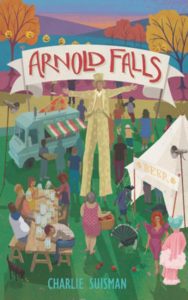
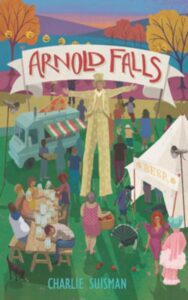
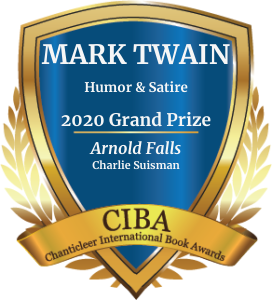
Arnold Falls By Charlie Suisman Grand Prize Winner in Mark Twain Awards
Charlie Suisman’s debut novel is a wonderful escape to a small fictional community in upstate New York. Here a melting pot of quirky residents brings Arnold Falls to life, a town with a unique history and charming inhabitants whose lives are intimately intertwined.
Settled in 1803 by the unscrupulous Hezekiah Hesper, the town for unknown reasons was named after Benedict Arnold. Adding to the oddities, the closest waterfall is twenty miles away. The area is known for sudden bursts of crab apple-size hail pelting the landscape without any scientific explanation. Hence the incentive for “Hail Pail Day,” a neighborly tradition surrounding the distribution of galvanized bucket head-coverings.
Lou Dischler delivers an intricately woven story about one well-meaning boy who tries to make sense of the crazy he’s been born into. Get ready for one belly laugh of an adventure in My Only Sunshine.
Welcome to the Louisiana low country, home of 9-year-old Charlie Boone, a kid growing up in 1962. Charlie, a most unreliable narrator, concerns himself with giant wingless wasps and biting red velvet ants. Combine his critter-concerns with the legend of the giant slugs, the story of his mother taken up by a hurricane, and the episode of the puddle he and his brother dug that grew into a pond, then turned into a lake, and we have one wildly imaginative ride well-worth taking.
A bitingly funny collection of life-stories from Christie Nicholls – stand-up comedian, actor, and writer – made all the more piquant by her repeated insistence that she has no short-term memory. Fortunately for us, her long-term reminiscences more than make up the deficit.
Nicholls has divided the book into four parts. In the first, “A Broad Abroad,” she recalls her experiences of traveling to far-flung places, beginning with a summer in Belém, Brazil as a child. She and her brother, for some reason nicknamed Beluga, slept in hammocks and played in a swimming pool, but much of her cherished time involved a German Shepherd named Ferdinand, from whom she learned dog talk. Raucous family bowling in Bologna, Italy, is contrasted with attendance at a staid English wedding. At a later period, Nicholls and her mother went to Sweden, where the budding comic tried her hand at stand-up in newly acquired Swedish, leading to an amusing mix-up of jargon.
Honey Beaulieu is going to get her man–no matter how many tries it takes. Determined to capture the elusive Boyce McNitt, Honey is off to Deadwood Gulch despite the warnings that the dangerous road is plagued by thieves and natives. But before she can pursue the $500 bounty, she needs to take care of issues at home, including finding a shop for a pregnant seamstress, sixteen-year-old Emma, a home for eight-year-old Myles Cavanaugh, his two younger sisters, and their pregnant mother. Between her do-gooding, denying her blossoming feelings for Deputy US Marshal Sam Lancaster, and a run-in with a herd of escaped pigs determined to destroy Fry Pan Gulch, Honey barely has time to get out of town before she gets trapped by winter. Once on the road, she comes face-to-face with Sean Chaney, the Badger Claw Kid, a bounty worth $400, and is intent on capturing him, as well. With a little otherworldly, albeit not entirely helpful, advice from her ghost guide Roscoe, Honey will have to take down two dangerous fugitives. But, when she runs into a fireball-throwing ghost bent on revenge, her real adventure begins.
Kiffer loves the undercurrent of a Shakespearean slant to Jacquie Rogers’ works. Sublime.
When a banged-up old bus pulls into his family’s driveway, Charlie has no idea that the rattling junker would be his ride to freedom. For years he’d been suffering under the thumb of a cold-hearted mother and a vindictive twin sister, while his father languished behind bars for tax fraud. The only family member with whom the young man held a loving bond was his grandfather, Opa Bill. Since Bill’s recent death, Charlie has been holding it together by listening to the music he and his grandfather loved. That musical thread weaves its way throughout the story as a sort of narrative jukebox.
Now Charlie’s respectable Oma Ruth has careened back into his life in a shocking new incarnation: a freewheeling hippie in kaftan and beads, unafraid to swap barbed words with her appalled daughter, nor to insist that Charlie accompany her on her road trip. He’s dead-set against it – he’d just found his dream job at a record store – and is disgusted when his mother dumps him on her mother without hesitation.
When you’re ready,did you know that Chanticleer offers editorial services?We do and have been doing so since 2011.
Our professional editors are top-notch and are experts in the Chicago Manual of Style. They have and are working for the top publishing houses (TOR, McMillian, Thomas Mercer, Penguin Random House, Simon Schuster, etc.).
If you would like more information, we invite you to email Kiffer or Sharon at KBrown@ChantiReviews.com or SAnderson@ChantiReviews.com for more information, testimonials, and fees.
We work with a small number of exclusive clients who want to collaborate with our team of top-editors on an on-going basis.Contact us today!
Chanticleer Editorial Services also offers writing craft sessions and masterclasses. Sign up to find out where, when, and how sessions being held.
A great way to get started is with our manuscript evaluation service, with more information availablehere.
And we do editorial consultations for $75. Learn morehere.
If you’re confident in your book, consider submitting it for a Editorial Book Reviewhereor to one of our Chanticleer International Awardshere.
Also remember! Our 10th Anniversary Chanticleer Authors Conference (CAC22) will be April 7-10, 2022, where our 2021 CIBA winners will be announced. Space is limited and seats are already filling up, so sign up today! CAC22 and the CIBA Ceremonies will be hosted at the Hotel Bellwether in Beautiful Bellingham, Wash. Sign up and see the latest updates here!
Featuring Cathy Ace and Robert Dugoni!
Writer’s Toolbox
Thank you for reading this Chanticleer Writer’s Toolbox article.
April Fools’ Day is this week! Will you be a prankster or end up with egg on your face?
A surprisingly old tradition, historians trace the April Fools’ Day Celebration to the change in the calendar after the Council of Trent in 1563, moving the start of the New Year to January and beginning to celebrate Spring in late March rather than at the beginning of April. Those who were slow to adapt and celebrated the wrong holidays at the wrong time were knows as April Fools. For those of you who love a deep dive, you can read more here.
Of course, there have been other traditions of dressing up in costumes and pranking people, but the real question we want to look at is what’s funny in writing?
Humor Writing
At first blush, Chanticleer only has The Mark Twain Award that appears to cater to humor writing, but we all know that humor is key for almost any story. What better way to keep the reader engaged than those laugh out loud moments?
Interested in learning more about the Mark Twain Awards? Click here for more information and here to submit!
We can think of a few common times of humor in writing:
Satire (obviously)
Dark Humor
Situational Humor
Self-Deprecating Humor
Let’s go deeper!
Satire
One of the big keys to Satire is to always punch up. Making fun of people who are already having a tough time often leaves a bad taste in the reader’s mouth.
One classic example of Satire is George Orwell’s Animal Farm which critiques the fascist re-envisioning of Communism by Joseph Stalin through the lens of barnyard animals. This is a darkly told satire with the intention of speaking truth to power.
For lighter Satire, you can always look at Saturday Night Live and see their most recent jokes about whoever holds political power in the US.
Satire often ends up with someone adopting a role they don’t actually believe to expose parts of that belief that don’t hold up well, such as Jonathan Swift’s “A Modest Proposal.”
Dark Humor
Also known as Gallows Humor, Dark Humor looks at terrible situations and finds the irony in them.
This often pops up when someone says “Well, at least it can’t get any worse!”
Situational Humor
This happens when the character’s position in a scene happens to be very funny. For example, in Who Mourns for Morn from Star Trek: Deep Space 9, the Ferengi bartender Quark is harangued by 4 different thieves, all looking for a cut of the estate of Quark’s best customer (now deceased). At one point, all four of them, not knowing the others are there, arrive in Quark’s quarters where he hides each of them from the previous until he has a full house!
Quark at the center of attention with 4 phaser pistols pointed at his head
Self-Deprecating Humor
This often can be seen in Non-Fiction work. Self-Deprecation can make people feel less intimidating and put the reader at ease with a speaker. Possibly one of the best examples of this comes from the prologue of a 1910 Calculus Textbook.
Be careful though! A little Self-Deprecating Humor is a lovely introduction, but too much will quickly tire a reader out.
Final Tips:
Be Personal:
You know what’s funny in your own life. Start there with retelling those stories to see how it works out.
Subvert expectations:
We’ve all seen cliches, and those have their place in all stories, but think about times when a scene did not go the way you expected. One great example is in The Last Jedi when Rey returns Luke’s lightsaber and he immediately tosses it.
Such hope immediately dashed
Rule of Three
This is one of the big places to subvert expectations. You offer two regular, expected ideas, and then follow it up with a third option that surprises
Ex: “What are you up to today? Work? Day off? World domination?”
Obviously, there’s often a little more time between the appearances.
Chanticleer Book Reviews to make you laugh and cry
INSYNNIUM by Tim Cole
Grand Prize Winner for the Cygnus Awards
The dramatic premise explored in a new novel,Insynnium, is a wild, immersive leap into a world-changing (but fictional) drug. In other hands, what could be a dystopian thriller goes one step further in author Tim Cole’s capable hands. He focuses on the humans who first discover and use the drug and weaves his story with a devilish charm.
This is somewhat Bill Murray/“Groundhog Day” territory, a film exploring one man’s reliving a day in his life over and over until he learned new behaviors, new skills and came out of it a better man. Unlike “Groundhog,” Max McVista takes multiple doses of the drug against all advice, then somehow expands time itself in what he calls an “AUE” or “Alternative Universe Experience,” enabling him to spend months and sometimes years becoming or experiencing whatever he wishes. When returning real-time, he’s only missed a day or two. (For E=MC squared fans, it’s basically reverse engineering of Einsteinian physics.)
First Place Winner for the Mystery & Mayhem Awards
Who commits a murder in a crowd of a hundred people relaxing in a park, and how did the Agatha Christie Book Club miss the entire thing from only a few feet away? In the trendy Sydney suburb of Balmain, Kat Mumford, social media interior design star, has been murdered during the inaugural Cinema Under the Stars. Her distraught husband, Eliot, is clearly the prime suspect, but at the time of Kat’s strangulation, he is nowhere near her. In fact, no one was sitting near Kat, and the crowd seems to have been so absorbed by the movie, Agatha Christie’s Evil Under Sun, that no one saw a thing out of the ordinary.
When Alicia Finlay and her book club realize the murder occurred right under their noses, there is no way they can just let the police handle it. When Alicia’s boyfriend, Detective Inspector Liam Jackson, actually calls her for information, she and her club decide to do a little investigating of their own. Despite being told to butt out, Alicia, Lynette, Claire, Missy, and Perry go undercover to find the killer, but the twists, in this case, will lead them down a strange path to find a crafty killer. The club must sift through the suspects: a smarmy barman, a detestable reverend, a pregnant domestic abuse victim, a mystery mustached man, a dead junky, and a hipster hubby. With few clues but many dead ends, the club will meet their most challenging mystery yet!
A bitingly funny collection of life-stories from Christie Nicholls – stand-up comedian, actor, and writer – made all the more piquant by her repeated insistence that she has no short-term memory. Fortunately for us, her long-term reminiscences more than make up the deficit.
Nicholls has divided the book into four parts. In the first, “A Broad Abroad,” she recalls her experiences of traveling to far-flung places, beginning with a summer in Belém, Brazil as a child. She and her brother, for some reason nicknamed Beluga, slept in hammocks and played in a swimming pool, but much of her cherished time involved a German Shepherd named Ferdinand, from whom she learned dog talk. Raucous family bowling in Bologna, Italy, is contrasted with attendance at a staid English wedding. At a later period, Nicholls and her mother went to Sweden, where the budding comic tried her hand at stand-up in newly acquired Swedish, leading to an amusing mix-up of jargon.
Chanticleer Editorial Services – when you are ready
Did you know that Chanticleer offers editorial services?We do and have been doing so since 2011.
Tools of the Editing Trade
Our professional editors are top-notch and are experts in the Chicago Manual of Style. They have and are working for the top publishing houses (TOR, McMillian, Thomas Mercer, Penguin Random House, Simon Schuster, etc.).
If you would like more information, we invite you to email Kiffer or Sharon at KBrown@ChantiReviews.com or SAnderson@ChantiReviews.com for more information, testimonials, and fees.
We work with a small number of exclusive clients who want to collaborate with our team of top-editors on an on-going basis.Contact us today!
Chanticleer Editorial Services also offers writing craft sessions and masterclasses. Sign up to find out where, when, and how sessions being held.
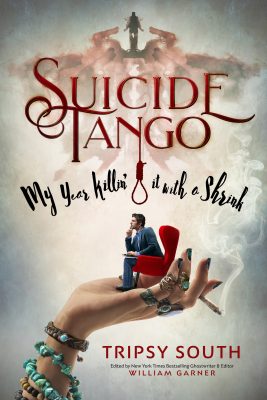
A novelistic look at the serious issue of teen suicide, Suicide Tango walks us through the relationship between a young woman who wants to end it all and the psychiatrist who wants to keep her alive.
Doctor Jon Moore, a-just-okay-psychiatrist considers himself an expert on the issues surrounding teen suicide. One day a tall, beautiful girl, Tripsy South, strolls into his office without an appointment, lights a hooter (a joint) and tells him she has only a year to live. She intends to get rid of herself sometime soon. Her attitude is defiant with the overarching theme apparent: she is sick of her life.
Exploring who South is and who she might become takes one year, 52 sessions all recorded, even the ones South sleeps through. Moore points out that going from infancy to physical adulthood in only fifteen years is a massive endeavor that some may view as cataclysmic. The notion of suicide might provide solace to someone trapped in that maelstrom, especially since, to the young, it’s hard to envision a future beyond the moment. There is much opposition expressed to over-medicating and “big pharma,” and a leaning toward a simpler, more eclectic view of mental deviation through the vexing, ever-changing personality of South.
She is styled as an “indigo child,” more perceptive than her peers and more intelligent. These differences cause her to experience painful social alienation. At times the doctor becomes the student, and the patient becomes the teacher. South suggests, for example, that people like her need to talk to people like her – potentially suicidal peers. And by the time her therapy year has been successfully completed, Moore’s life has been upturned and needs examining.
This is a well-written book that slaps the reader upside the head with the snark of a young woman thinking of doing the most devastating act possible. And while the Suicide Tango is classified as Satire, it must be noted that Tripsy’s longing to commit suicide and her observations about it seem intensely honest and therefore able to speak to teen readers.
South presents a few practical ideas that may resonate with those who are at war with themselves. She is brash, unapologetic, and in-your-face in a way that demands and holds your attention, uncomfortable as that may be.
The best observation is from the dedication page: “…for Every Beautiful Soul who struggles with personal demons and, on occasion, slays the fuck out of ‘em.” Amen, Tripsy South. A-men.
Buster McCaffery wants a family. An orphan from birth, Buster has spent his entire life searching for a forever family in the tiny Western town of Vanadium, population 367. After a tragic birth, Buster is handed from family to family until he reaches his maturity. His only true protector, Sheriff Shep Dudival, ensures Buster stays out of trouble, but when three of Buster’s adopted fathers die in mysterious ways, the town quickly assumes the worst, and Buster becomes a social pariah.
No one trusts Buster until a wealthy New York businessman, Marvin Mallomar, reinvigorates the economy of Vanadium. Buster takes on hero status as foreman and friend of the would-be savior until a catastrophic mudslide wipes out half the town, and Buster is the suspected murderer of Mallomar. Now Buster must convince a jury he never killed anyone, much less his best friend.
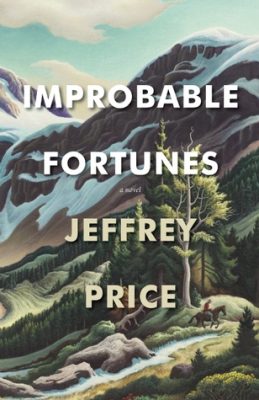
Told as a flashback, Improbable Fortunes by Jeffrey Price is a wild romp! The prolific backstories, like the muskrat burrows that play a role in the novel, create a complex network of tunnels that twist and turn into an ironically stable tale of family, trust, and some flawed, albeit well-meaning, loyalty. This completely satirical read leaves the reader simultaneously laughing while feeling ashamed at finding humor in the pathetic lives of the characters.
From the Busy Bees, the local drug-dealing gang to the defunct uranium mine that gave the town its claim to fame, Lame Horse County will remind the reader of William Faulkner’s Yoknapatawpha County or Mayberry gone awry. Buster McCaffrey, who looks like Howdy Doody and acts like the big-hearted–possible serial killing–buffoon, prays for those who take him in even though they deprive him of an education, use him for hard labor, attempt to molest him, and think he’s a murderer.
Sheriff Shep Dudival (think Andy Griffith with a dark streak) is Buster’s only real father-figure who touchingly gives Buster what is likely his first birthday gift in the form of a restored pickup truck. He’s a shepherd in the truest sense, steering Buster’s life as best he can. Jimmy Bayles Morgan, another important character, is an Old West cowboy with a strange secret and an undeniable affinity to Buster’s suffering.
Buster’s story meanders from a tile-making gangster family to pudgy Teutonic nudists to a rodeo star wife beater to a hen-pecked rancher with a maiden name to a cancer-riddled transvestite to a billionaire tycoon, and the reader will not be able to put it down. His devotion to the aptly named Destiny is touching and sad at the same time, and the petty caginess of his “families” only highlights Buster’s goodness. The reader will be rooting for Buster, Shep, and Jimmy even while feeling guilty for it.
Price’s novel is a bronc-busting ride that will have the reader holding on for the entire book. A clever mix of spaghetti Western and crime novel, Improbable Fortunes is a satirical treasure as “improbable” as the rebirth of the woe-begotten protagonist.
Improbable Fortunes by Jeffrey Price won First Place in the 2016 Laramie Awards!
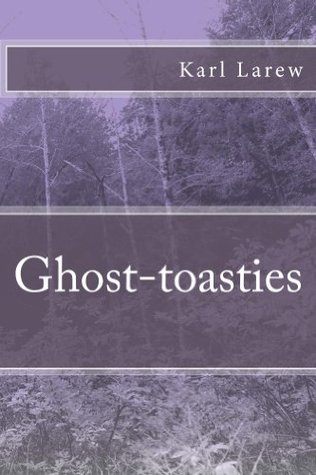
Volume 4 of a trilogy? That’s no typo! It’s just that those Bad Vampires had more mischief up their sleeves—and of course our Good Vampires couldn’t let them get away with it, especially when it seemed the Baddies had a Plot to Destroy Civilization as We Know It! Readers of Volumes 1-3 know that author, Karl Larew couldn’t leave his readers in the dark…he had no choice but to write a Volume 4. Say hello to Ghost Toasties!
You Newbies, who haven’t YET read the first three volumes, need to know that there are, indeed, vampires on our planet. The Bad Vampires engineer criminal plots to get human blood (which they cruelly gorge on, leaving their victims dead), creating really weird sorts of mayhem throughout the globe. Even Good Vampires have a metabolic need for small amounts of blood, but they have good human friends or, in some cases, human spouses who willingly, even lovingly, meet their needs in a sexy way – and sometimes by serving real Bloody Marys!
The Good Vampires do their damnedest to halt the Baddies’ criminal schemes and to extinguish the Bad Vampire population. That’s why the Association of Good Vampires was created. It’s headquartered in New York City, in the Manhattan mansion of their chief, millionaire Mr. Arleigh Granville. The New York Association’s highest-ranking special agents are Mr. Granville’s vampire wife Inge (converted from Bad to Good Vampirism), Lance and his human wife Carol, and Nigerians Nigel and wife Becky, who are aided by bodyguards Gladdy and Dizzy, along with their wives, twins Helovah and Delivah.
This cast of characters was considerably expanded at the end of Volume 3 by the arrival of five(!) babies—Arleigh Jr., Mary Jane, Reginald, and Pixie and Trixie—born within minutes of each other to the three special agent couples and the two bodyguards and their wives!
Our story begins with Lance wakening Carol from a nightmare. As Lance tries to calm her, they hear a knock at the door. It is their friends and fellow agents, Nigel and Becky, inviting them to go out for a drink. But, as often happens, the phone rings. Inge, Arleigh’s assistant as well as wife, asks the agents to attend an emergency meeting the next morning. “Bring the babies,” she tells them. “Miss Overy (Arleigh’s secretary) can take care of them.” (Isn’t that what secretaries are for?)
Somehow the Baddies have learned about the meeting and two men with pistols kidnap the two couples as they walk to HQ with their babies in strollers. Gladdy and Dizzy, of course, come to the rescue, followed by their wives and babies. Once at the meeting, they learn that at least part of the Baddie plot is in its early stages in Hawaii. But how can the special agents go to Oahu when they have babies needing to be fed and diapered?! It is decided that only the two primary agent couples, and Becky’s pet wolf, Wolfie, will fly to Hawaii in Mr. G’s private plane, leaving Mary Jane and Reginald at the mansion with the Granvilles and Miss Overy. Once in Honolulu, they will enlist the aid of Molly Houlihan and her mother, Holy Moly (friends of the Good Vampires from earlier adventures who now run a whore house called the Ukelele Girl) and Beatrice, a prostitute with a heart of gold (well, maybe silver).
But first they visit the laboratory of Dr. Lester Griswold, Ace Scientist of the Good Vampire Association, who presents them with his newest gadgets, including an Ectoplasmic Dissolver Ray Gun that toasts ghost ectoplasm to a crisp, turning it into “ectoplasmic ghost-toasties” (Aha!). It can also destroy the electronic triggers of nuclear bombs, which the Baddies are apparently collecting for their plot to blow up special targets around the world.
After the agents pick up their reinforcements at the airport, they head for Bernie Ernie’s house near Opana, where they find a machine labeled Ectoplasmic Synthesizer. When Bernie unsuspectingly arrives, they capture him. He agrees to help, spilling the beans, including news that the Big Boss is called Mr. Very Big (big help!). But who is Mr. Very Big, where is he, and will he continue with his plan to destroy the world? There’s only one way for you, dear reader, to find out, and will you ever be surprised!
No need to bite your fingernails, however. You know you can trust Karl Larew’s Good Vampire special agents to complete their assignment and get home to their BABIES, especially after an urgent call from Chief Granville: “All the diapers are dirty, and the washing machine’s broken down… COME HOME AT ONCE!”
“The Bad Vampires strike again, but this time our Good Vampires have a secret weapon to make Ghost Toasties in the much anticipated and hilarious fourth “spooks and spoofs” book in Karl Larew’s Good Vampire trilogy.” –Chanticleer Reviews