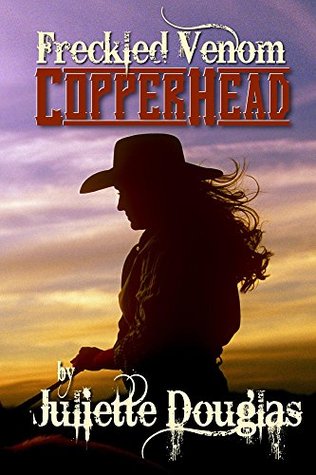
Straddling a big, gray horse, a young boy rides into White River, a small isolated town with few people. A town he fled years before. He is alone and sick. Multiple questions percolate, but the first one is, “How can he carry on?” Readers who seek historical western adventures, will find Freckled Venom by Juliette Douglas a satisfying read to be enjoyed by all ages of readers, youngsters or seasoned.
Juliette Douglas writes with a unique Western voice, full of quirky phrases that establish character, humor, emotional content, and moves the story briskly along. The story is set in 1878, and the narrative revolves around the opposing goals of the town marshal and the obsessed bounty hunter. Its supporting characters are enjoyable, although some lean toward stereotypes, but this old-time Western presents an engaging hero and heroine.
Tension and conflicts are layered and contain some violence. The Marshal Rawley and the venomous woman Lacy suffer as they’re jammed together against vile weather: rain, wind, cold and snow, while hunting three brutal socio-pathic brothers. While the villains provide gripping conflict and suspense, an underlying theme through the story is Lacy’s irreparable childhood damage.
Rawley tries to break through her emotional barricade, but is returned with Lacy’s biting reactions. However, such interactions define these characters as they grow; both of them learning while searching for a way to deal with their dilemma. Two plots climax at the end of the dual hunts: the hunt for the murdering scum brothers and the hunt for a resolution to Lacy’s pain.
As the narrative deepens, internal and external dialogue represents character reflections, and drives home. In almost every conversation with Lacy, Rawley uses a nickname, partly with affection, but also to taunt her, and the nickname becomes tiresome to Lacy and maybe to the reader also. However, the payoff for reading past these bumps is thoroughly enjoying a story that makes the Old West come alive.
Douglas writes the physical senses organically; readers see, hear, touch, and smell everything in the setting, know the season, feel the weather, and can taste the dust. Freckled Venom, Douglas’ debut novel, brings the Old West to life with vivid settings, believable adventures, and suspenseful plotting. She weaves together danger, Lacy and Rawley’s growth, their longing for intimacy, and induces reader empathy for Lacy and Rawley right to the end. Readers wanting to know more can look forward to Douglas’s sequel, Freckled Venom: Copperhead Strikes.
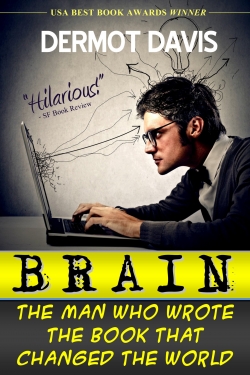
Daniel Waterstone has every intention of writing the Great American Novel, and in doing so, he is going to set the ignorant, crazy mass of modern readers straight on what constitutes great literature. But, after two improbable, failed “masterpieces,” his publisher, the delightfully savvy Suzanne, has told him that success and recognition will best be served by his authoring a book that some of the “great-unwashed” might actually be interested in reading. Daniel likes the idea but is clueless about how to proceed.
The product of coldly academic and overprotective parents, Daniel entered adulthood as a cynic with a dislike for people, a fear of women, and a conviction that everyone except him was crazy. He had such strong feelings of loneliness that he often thought of himself as an alien trapped on the wrong planet. Although highly-degreed in literature, the rigidly naïve Mr. Waterstone will soon learn that he is obligated to finish one final course: Life 101. And if he is willing to take his lessons, life just might have a little something up its sleeve for him.
Daniel quickly finds a theme for the book that will liberate him from poverty and his sense of failure; he enters a bookstore where a flamboyant and somewhat other-worldly writer of self-help books is preaching his gospel to an enchanted crowd. When Daniel calls him out as an opportunistic fraud, the guru challenges him to engage in a “mind-meld” that will supposedly free Daniel from some of his hang-ups.
Amused and seemingly unaffected, Daniel leaves the store cradling an idea for the book that will please the masses: he will write, under a pseudonym, a satire that exposes the pop-psychology industry for what he thinks it is: a total lie, an insult to crazy people done by crazy people. Ironically, his satire becomes the kind of blockbuster success that brings him riches and fame, but at a cost, as author Dermot Davis is happy to tell us all about in Brain: The Man Who Wrote the Book That Changed the World, his mystical and joyous tale of personal growth and fulfillment in the modern age.
“Crazy,” the word, the notion, the concept, is the spine from which flows the energy of Davis’ often tongue-in-cheek fairy tale, its relevance grounded in the infinite variability of human experience, and its ability to score a few points for emotion in the seemingly endless skirmish between skepticism and belief. Score more points for the stubborn and ineffective Daniel if he can revise the “me-versus-them” definition of “crazy” that has him strapped to the cheap seats of human experience.
And, could there be a better word than “crazy” to carry the torch of enlightenment into the shadows of our increasingly soul-less and programmed culture? Probably not, at least in Davis’ jauntily addictive narrative, an arena in which he holds court with the majesty of an imaginative, accomplished humorist.
I was not surprised to learn that the author is also a playwright, as his marvelously crafted characters and sets quickly acquire the kind of three-dimensional believability that one expects to encounter in a live theatrical performance or, according to my mind’s eye, a movie (complete with an endearingly haunting soundtrack and a reincarnated Jack Lemmon in the lead role!).
Dermot Davis’ Brain is that rare species of complete entertainment that can be both deeply philosophical and buoyantly accessible. Laughs, suspense, intrigue, love, and a gentle thread of the paranormal are all there for you, gift-wrapped in a sweet mist of serendipity.
Karl Larew is well known for the depth and breadth of his knowledge in the field of military history, both in academic works and in historical fiction.
Well, as you might imagine, Bad Vampires has nothing to do with world politics and war, or even reality on the home front. Rather, this versatile author has chosen to entertain us by delving into the practices of the netherworld of 19th-century vampirism, BUT, as it exists in the modern world—the difference being that, today, there are both Bad Vampires and Good Vampires. This is a modern fictional account, and one designed to make you chortle instead of scream. It is a hilarious and refreshingly fun read!
Rather than a single locale in Transylvania, the vampires in this tale travel from New York to our nation’s capital and its Virginia suburbs, then Hollywood, and on to Hong Kong, and back and forth, in multiple trips, logging who knows how many thousands of miles.
The 19th-century vampire’s vicious bite and suck method has evolved into a variety of means for the nourishment of vampires. Among Bad Vampires, the process can still end in, well, the end for the blood donor. Good Vampires, however, take care not to let this happen. Further, the New York Association of Good Vampires has rules regarding the infliction of mortal wounds by other means (pistols seem to be the most popular). In any case, Good Vampires are the winners, Bad Vampires are the losers. Bad Vampires have no imagination and can’t put a bullet in the side of a barn, whereas Good Vampires are ingenious in their strategies and never miss a target, even with one hand tied behind them.
This tale is either carried along or interrupted by outrageously corny puns, double entendres, and other linguistic contrivances designed to tickle the characters and amuse the readers. Larew obviously enjoyed drawing these from old TV shows: Bad Vampire Elmer wants to make a movie about vampires in New York City—”Sucks and the City” it gets labelled by a Good Vampire; another Good Vampire calls the Head Vampire about a new idea. The CHIEF tells him, “GET SMART! I could say that 99 times and still not have said it enough!” Do any readers remember “Henry Aldrich” (Hen-reeeeeeee) on the radio? No? Never mind.
It’s hard to develop the character of a vampire. In this story, some are good and some are bad. Protagonist Lance Blodgett is a good one and smart as well. In his day life, he’s an assistant professor of anthropology at New York University, specializing in East European folklore. He has a tender streak and loving heart, which he very soon gives to Carol Binghamton, who isn’t a vampire.
Carol, a computer programmer, finds herself reciprocating Lance’s feelings. She even offers him breakfast, if he’ll bite her where it won’t show. Lance tells her that biting is “too painful and leaves a big bruise. We use little spring-powered lancets, like diabetics use for blood sugar tests.” She kindly offers him a rump.
I wouldn’t want to spoil the story for you—just give you a taste that hopefully will tempt you to try it yourself. You might say, as Lance did after breakfast, “Oh, very good—[it has] a sort of tangy je ne sais quoi.”
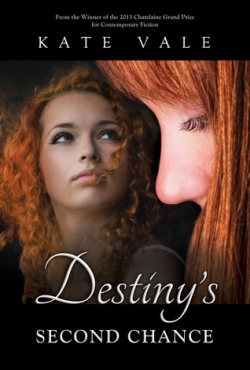
Two decades ago, librarian Isabella Campbell made the wrenching decision as a young, unwed mother to put her newborn child up for adoption. Though Bella wanted to keep her daughter, her rigid and disapproving parents insisted that a child needed both a mother and a father, not a single, inexperienced, teenage mother. Bella reluctantly agreed, but only if she was allowed to receive regular updates from the adoptive parents. The parents complied for a short period of time, but then Bella heard nothing more from them.
Upon returning home from a business trip, Bella finds a letter from her daughter’s adoptive father, Nolan Harris, giving her permission to contact Destiny, who is now twenty-one. Bella is instantly thrown into emotional turmoil, thrilled yet very apprehensive. Would Destiny evenwant to meet or talk to her? Had her daughter’s adoptive mother, who had always disapproved of keeping Bella in their lives, continue to be a roadblock? And why had Nolan Harris chosen this moment in time to contact her after all these years?
With a deft hand, author Kate Vale weaves this stressful, yet welcome complication into the daily events of Bella’s busy life—the distressing illness of a close friend who runs a local bookstore, the difficult relationship with her mother, who has never let Bella forget about her “little mistake”, and, of course, the new romantic interest in Bella’s life, Gavin, the nephew of her elderly ill friend. The result is a compelling novel rich in detail, heart-warming in its delicate yet realistic portrayal of the impact of adoption on all the lives it touches.
Vale has a real talent for drawing characters one wants to get to know, and for understanding the emotional impact of the events that shape our lives. Destiny’s Second Chance draws the reader in from the very beginning, providing a thoughtful and satisfying story about people who feel like close friends.
Life is messy, and life-altering decisions are never just good or bad, but rather create a mixture of emotions that run the gamut from satisfaction that one perhaps made the right decision, to guilt or despair over the toll that decision has taken in the intervening years. Vale understands this, and has described these conflicting emotions beautifully.
This book will stay with readers long after they put it down. Highly recommended for those who enjoy women’s fiction and stories of family relationships.
A tour guide in India and a practitioner of Healing Touch, Sonia has a country farmhousein Nashville, loyal friends, a generous but unfaithful husband, a flame on the other side of the world who seems to have forgotten her, and … breast cancer.
This highly engaging story, Part 3 of the series Romantic India by author Martha Rather, begins with Sonia burning up her “chemo pajamas” with her best friend, Clara Mae, in a wild “Freedom Fire Ceremony.”
We learn in flashbacks the very real fear and agony Sonia experienced in her two-year struggle with breast cancer, losing her memory and almost losing her mind. Now she faces losing Carl, her antique dealer hubby, who prowls for old furniture by day and sweet young things by night.
Sonia pals around with a lawyer friend, Bob, though she dreams, frustrated, of handsome Raj, her fellow tour guide and Indian prince who, she is told, is about to get married on the other side of the world.
When Sonia and her friends are tapped to squire some struggling musicians across India, it’s a chance to re-establish trust with the still-single Raj, break with Carl forever, and watch the haunting dreams of previous lifetimes unfold in this one.
Following the old dictum that writers should write about what they know, the author, like her heroine Sonia, has roots in South Dakota, lives in Nashville, has traveled extensively in India, and is a practitioner/instructor for Healing Touch International. Martha Rather writes in a wonderful girlfriend manner as though she is a dear friend catching us up on the latest happenings. She also seems as much at home with Southern accents as with Hindi street talk.
Settings, too, are a highlight, from a plain old Tennessee farmhouse to the romantic majesty of the Taj Mahal. There is rarely a moment when the action lags. The first half of the book, with its vivid descriptions of Sonia’s battle with chemo and radiation treatments, projects a depth of self-exploration and insights. Readers are then taken on a rollicking jaunt through India, with a group of self-important musicians and tourists in tow, for the second half of the story.
Nonetheless, Martha Rather is careful to keep emotions and libidos always on the boil for her intended readers who enjoy stories filled with intrigue, romance, friendships, adventures, handsome princes, and, maybe, a flirtatious elephant thrown into the mix.
Kismet or Kamasutra is a journey of self-discovery and the possibility of changing one’s stars. Kismet means destiny; fate and Kamasutra mean desire, but which one will win out? In this uplifting and transporting novel of love and connection, Sonia and Raj must confront their worst fears and the fateful patterns that started a thousand years before.
Chanticleer Book Reviews is honored to announce the First Place Category Winners for the CHATELAINE AWARDS 2014 for Women’s Fiction and Romance Novels, a division of Chanticleer Blue Ribbon Writing Competitions.
The CHATELAINE Awards recognize emerging new talent and outstanding works in the genre of Women’s Fiction and Romance Novels. The First Place Category Winners will be recognized at the Chanticleer Authors Conference and Awards Gala held in late September 2015.
Good Luck to the Chaucer First Place Category Winners as they compete for the CHATELAINE AWARDS 2014 GRAND PRIZE position!
The 1st Place Category Winners compete for the CHATELAINE AWARDS 2014 GRAND PRIZE position. The 2014 CHATELAINE category winner was announced at the Chanticleer Authors Conference and Awards Gala in September 2015. See the Grand Prize Winners.
The deadline for The Chatelaine Awards 2014 was August 31, 2014.
The deadline for The Chatelaine Awards 2015 is August 31, 2015.
To enter the 2015 Chatelaine Awards, please click here. The deadline is August 31, 2015.
To enter your work into a Chanticleer Writing Competition, please click here.
CBR’s rigorous writing competition standards are the reason literary agencies seek out our winning manuscripts and self-published novels. Our high standards are also another reason our reviews are trusted among booksellers and book distributors.Chanticleer Book Reviews & Media, L.L.C. retains the right to not declare “default winners.” Winning works are decided upon merit only. Please visit our Contest Details page for more information about our writing contest guidelines.
Please do not hesitate to contact Info@ChantiReviews.com with any questions, concerns, or suggestions about CBR writing competitions. Your input and suggestions are important to us.
Thank you for your interest in Chanticleer Book Reviews international writing competitions.
The Chatelaine Awards recognizes emerging new talent and outstanding works in the genre of Women’s Fiction and Romantic Fiction Novels. The Chatelaine Awards is a division of the Chanticleer Awards International Writing Competitions.
We are pleased to announce the Chatelaine Awards Official Finalists List for 2014 Entries, otherwise known as the “Short List.” The Official Finalists Listing is comprised of entries that have passed the first three rounds of judging from the entire field of entrants. To pass the first three rounds of judging, more than sixty pages of the works below have been read and have deemed worthy by the CBR judges of continuing in competition for the Chatelaine FIRST IN CATEGORY positions and their prize packages.
Congratulations to the CHATELAINE AWARDS 2014 FINALISTS:
Isabella Hargreaves for The Persuasion of Miss Jane Brody
Kathy Bryson for Feeling Lucky
Sarah Katz for Hidden Miracles
Catherine A. Wilson and Catherine T. Wilson for The Order of the Lily
Danica Winters for Montana Mustangs
Jennifer Snow for The Trouble with Mistletoe
Dr. Evan Mahoney for Nongae of Love and Courage
Kaylin McFarren for Buried Threads
Deborah Hining for A Sinner in Paradise
Kerryn Reid for Learning to Waltz
Peggy Patrick for Surrendered II
K.C. Simos for Ambrosia Chronicles: The Discovery
Donna Barker for Mother Teresa’s Advice for Jilted Lovers
Diane Green for Dragon Wife
Nadine Christine for Quintal’s Return;Home Again, Home Again; and RememberingLove
Ashlinn Craven for Maybe Baby
A. Clarke Scott for A Dissimulation of Doves
Noelle Clark for Rosamanti
Jamie A. Waters for The Two Towers
Martha Ratherfor Kismet or Kamasutra
Nancy Marie Bell for Christmas Storm
Janet K. Shawgofor Find Me Again
Betty Codd for Eleanor Grace
Julie LeMense for Once Upon a Wager
Kristine Caynefor Deadly Betrayal
K.C. Berg for Fallen Angel
E.E. Burke for Her Bodyguard
Debra Pickett for Reporting Lives
Gita Simic and G.T. Symms for As for Costanza
Eleanor Tatum for Swamp Home
Cauleen Noël for The Changes Within Us
Lisa Souza for Beauty and the Bridesmaid
Patricia Sands for The Promise of Provence
Callie James forInnocent
Kim Sanders for The Ex Lottery
Jianna Higgins for Just Going and Just Wondering
Sharon Struth for Share the Moon
Kate Vale for Destiny’s Second Chance
Colette Saucier for Viuda
Good luck to all the Chatelaine Awards Finalists who made the Short List as they compete for the First In Category Positions!
More than $30,000 dollars in cash and prizes will be awarded to Chanticleer International Blue Ribbon Awards Winners annually.
The Chatelaine First in Category award winners will compete for the Chatelaine Grand Prize Award for Women’s/Romance Book 2014. Grand Prize winners, blue ribbons, and prizes will be announced and awarded on September 29th at the Chanticleer Authors Conference and Awards Gala, Bellingham, Wash.
The First In Category award winners will receive an award package including a complimentary book review, digital award badges, shelf talkers, book stickers, and more.
We are now accepting entries into the 2015 Chatelaine Awards. The deadline is August 31, 2015. Click here for more information or to enter.
More than $30,000 worth of cash and prizes will be awarded to the 2015 Chanticleer Novel Writing Competition winners! Ten genres to enter your novels and compete on an international level.
Who will take home the $1,000 purse this September at the Chanticleer Awards Gala and Banquet?
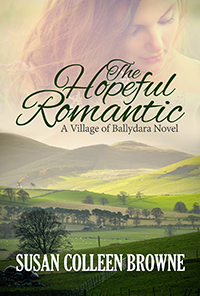
The Hopeful Romantic, Book 3 of The Village of Ballydara series, will transport you to the quaint farmlands of Ireland and to the city life of Dublin. The descriptions of the picturesque countryside of Ireland truly leave the reader wanting to hop a plane and visit the beautiful land. However, even more compelling than the scenery depicted, is the story of a couple who after many years of marriage has begun to feel that their relationship is predictable and “comfortable” allowing for the wrong sort of habits to seep in–the habits that can cause discord and heartache.
How far can two people let things go before it is too late to save a relationship? The Hopeful Romantic is a story of what happens when a couple assumes that no effort is needed to maintain their relationship and then inevitably realize that their marriage is at risk.
Kerry, the novel’s protagonist, after struggling to get back on track after her mother’s cancer scare and a personal loss that Kerry can’t come to grips with, begins to ask the question, “what if?” What if she had married Will, her husband’s witty and charming best friend, instead of her steady, boring, and reliable husband Stephen? Would she be happier in her life? Would she feel more passion? Now that the rift between her and Stephen seems to be growing, it also appears that each of them is keeping secrets from the other, along with not being completely honest in their communications. Is their marriage beyond saving?
The pages of this engaging story explores many facets about marriage, relationships, and family life, as well as the consequences of romanticizing the past, which may leave only an empty heart unable to find happiness. Most importantly, the story reinforces the need of communication and honesty to heal the many challenges that happen along the way in relationships. The author, Susan Colleen Browne, writes with clarity and bluntness about how much effort and honest communication goes into keeping a marriage alive and its partners happy.
The Hopeful Romantic was a pleasure to read for its engaging characters, its authenticity, and its unforgettable moments. It is a poignant and, sometimes humorous, old-fashioned romantic story that rings true in its lesson: It has been said that for a marriage to work, that the partners must fall in love over and over with each other. Kudos to Browne for capturing this important life lesson about re-discovering true love in such an entertaining manner. We certainly do hope that the author will continue to transport us to the Emerald Isle in her next novel in the Village of Ballydara series.
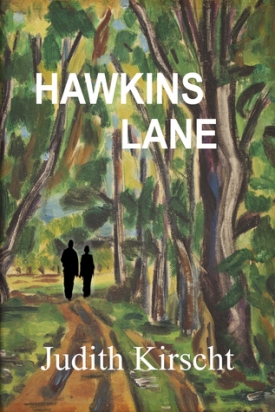
Judith Kirscht has penned a poignant story of two good people who struggle to escape their past and carve out a fulfilling life together. At its very core, this novel asks the compelling question of whether you can overcome the influences of family, and also, whether you can survive the consequences of your own actions.
As far as the people of the small town of McKenzie Crossing are concerned, Ned Hawkins is from the wrong side of the tracks. And that’s putting it mildly—his father is a convicted murderer, his brother an alcoholic with a violent streak. Ned has spent his entire life feeling trapped and attempting to outrun his family’s legacy.
As Hawkins Lane opens, Ned has escaped on his daily trek into his beloved Cascade Mountains to find peace and solace. By chance, he comes upon a young woman, Erica Romano, fishing in a creek far from town. Erica is also escaping from the demands of her family, though their circumstances are very different: Erica is the daughter of the town’s new physician and related to the rich and powerful McDonald family, owners of the local mill.
For both, it is love at first sight. Ned has grave reservations about exposing Erica to his family and wants to protect her by keeping his distance. Erica persists, convincing him that she needs him as much as he needs her.
Unfortunately, family almost always finds a way to impact one’s life, and depending on the family, that impact can lead to tragedy. Ned’s brother, who has been spiraling out of control ever since their father was sent to prison, ends up in trouble with the law. Erica, who is by nature a risk-taker, places herself in danger far too often, and the mountains are not always a forgiving place. However, when Ned’s father is released from jail he spreads his own brand of poison, driving deep wedges and creating divided loyalties. Erica and Ned are challenged in ways that even they could not predict nor expect.
Hawkins Lane is an excellent and, ultimately, a redemptive story about the heart-wrenching tragedies a family can survive, and about the healing powers of nature and friendship. The characters and the story will linger long after the last page is read and you will be captivated from the first page.
The Love Song by Sir Edward Burne-Jones portrays each of the three young people alone with their thoughts and dreams, but gathered together, as the sheep are in the distance, for comfort and support.
Sir Burne-Jones was forty years-old when he painted this, perhaps remembering the daydreaming times and wistfulness of his youth.
Sir Burne-Jones was mentored and influenced by Dante Gabriel Rossetti. Rossetti was one of Pre-Raphaelite Brotherhood founders who, in 1848, sought to create works of art that “conjured a realm of heightened emotions, aspirations, and visual splendor that would elevate a modern society beset by change.” 1
These are apt words for today’s hyper-charged digital age.
Sir Burne-Jones own words asserted, “Only this is true, that beauty is very beautiful, and softens, and comforts, and inspires, and rouses, and lifts up, and never fails.” And this sentiment is where the Pre-Ralphaelite movement artists of poets, novelists, painters, music composers, and craftsmen found connection and inspiration for their collaborations and works. 2
The Dante Gabriel Rossetti Influence
We have chosen Dante Gabriel Rossetti’s work to symbolize several of our writing competitions logos. We feel that the sentiment expressed by the Pre-Raphaelite movement exemplifies what inspires many authors to pick up their proverbial pens to express their emotions and their observations of the visceral dynamics of living.
Dante Gabriel Rossetti: artist, poet, and scholar of Italian Medieval art
Imagine nineteen-year-old Dante Rossetti looking at himself in a mirror as he is drawing his self-portrait in 1847.
As a young man, Rossetti was known to be confident, articulate, and charming as he was zealous, emotional, and irresponsible. His contemporaries called this a “poetic nature,” which drove him to combine the “human with the divine” in his art. His self-portrait captures these many traits. 1
We felt this portrait of Rossetti would be perfect to represent Chanticleer’s novel competition for young adult fiction as it deftly embodies the flashing range of emotions that young people from any era have experienced, and probably will continue to experience in the future, as they encounter the crossroads of adulthood.
Jane Burden Morris: muse, artist’s model, wife, and paramour
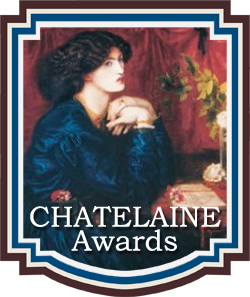
Twenty years later Rossetti painted Jane Morris in a “Blue Silk Dress” in 1868. She was twenty-nine.
He sublimely captures the many nuances of romance, love, and longing. Did a lover give her the flower tucked into her sash? What is she wistfully looking up from reading? What is on the other side of the drapery? Where did the flowers in the vase come from? Did she cut them or are they from a different suitor? As many find with Rossetti’s work, there are endless possibilities for story ideas when viewing his art.
Rossetti was a scholar of Medieval Art and Letters, along with pursuing knowledge of Arthurian Legend. He was profoundly influenced by his namesake, Dante Alighieri, and the English poet John Keats.
Rossetti’s portrayal of Jane Burden Morris in the “Blue Silk Dress” (to me) is an ethereal image of women–a perfect image for the Chatelaine Awards for Women’s Fiction and Romantic Fiction.
An Arthurian Legend Comes True in the Victorian Era?
Jane Burden (Morris), known as the Pre-Raphaelite ideal of beauty, came from an impoverished background, her father a stable-hand and her mother an illiterate domestic servant. Rossetti and Burne-Jones were struck by her beauty when they saw her when she and her sister attended a play in Oxford in 1857. The artists asked her to model for them. She was eighteen and destined for a life as a domestic servant. The rest is history in this fairy-tale-come-true story–essentially Arthurian legend come to life.
“Guinevere” by William Morris. Artist’s model is Jane Burden, 18)
Morris fell in love with Jane when she was modeling for his “Guinevere” painting and he asked her to marry him. After they were engaged, she was privately educated to become a suitable wife for a gentleman of high society standing such as he was. They married on April 26, 1859; she was twenty, Morris was twenty-five.
Apparently, she was quite intelligent, as she quickly took to her lessons and became fluent in French and Italian, became an accomplished pianist, and was known for her refined manners and eloquent speech.
Jane Burden Morris is considered to be the woman who inspired Bernard Shaw’s Pygmalion, more currentlyknown as My Fair Lady of Audrey Hepburn fame. 1
After her marriage to William Morris, she continued to model for Rossetti, which is another story unto itself. Jane Morris is said to have “consumed and obsessed him (Rossetti) in paint, poetry, and life.”4
Was Morris Rossetti’s King Arthur? Was Rossetti Morris’s Lancelot? And Jane, was she Morris’s Guinevere? Does life imitate art?
Love and the Arts during the Victorian Era in England
If you ever get the opportunity to view the works of the Pre-Raphaelites, I urge you to do so! I have had the pleasure of viewing them at the Metropolitan Museum of Art in New York City and at a touring exhibit at the Rijkesmuseum in Amsterdam. An interesting note is that the Rijkesmuseum titled the Pre-Raphaelite exhibit unabashedly as “Wives and Stunners.” The artists and their wives must have been the subject of many a gossip column in the newspapers and scandal broadsheets as well as inspiration for the contemporary authors of that era: Oscar Wilde, Charles Dickens, the Brontë sisters, Alfred Tennyson, Rudyard Kipling, and other notables.
The Pre-Raphaelite art movement is one that has resonated with me since I was teenage girl. And now that I am a woman of a “certain age,” I find that it still does, increasingly so–especially now that I have come to know more about the artists and their muses.





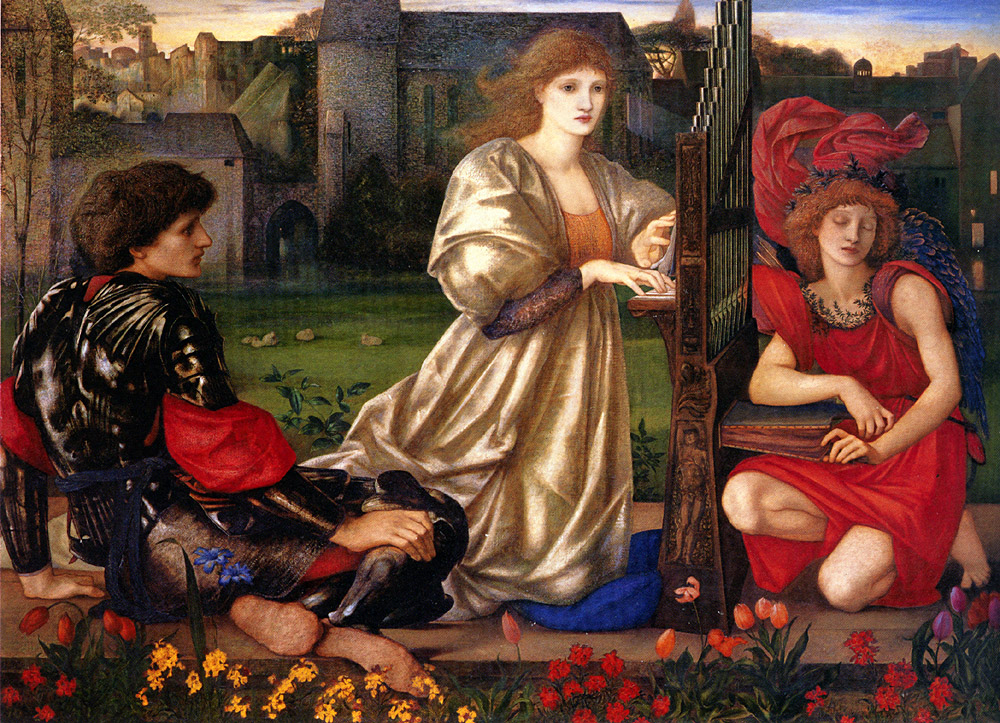
 The Love Song by Sir Edward Burne-Jones portrays each of the three young people alone with their thoughts and dreams, but gathered together, as the sheep are in the distance, for comfort and support.

