Tag: Research

  • Three Rules for Writing Historical Fiction That Will Transport Readers Back in Time

    There is magic in historical fiction.

    Magic that takes you to another time and place. In a time machine, you might say, with a beautiful cover and pages in between.

    That’s what readers expect when reading historical fiction. A time machine. They want to immerse themselves in a world that once was and now can only be visited in their imaginations. But who is this storyteller, this weaver of time, and how, exactly, does this time machine transport readers into the past?

    Books, clock, purple, blue, red

    Let’s look under the hood of that writer’s time machine and get to know the rules of historical fiction!

    1. Immerse Readers in the Past

    Historical fiction requires authenticity. Placing the reader in a world that once existed means they have a sense of that world based on their own experiences and knowledge. This doesn’t mean you can’t shape their beliefs, but to do so you must adhere to the way that world existed. 

    Before you tap one key on your computer, do your research. Immerse yourself in your characters world. Be a reporter from that time and ask yourself the who, what, why, and how questions that will help you set the tone and create the authenticity to make your story ring true.

    Make sure your sources are relevant and reliable. Readers of historical fiction tend to be well-versed in the time periods they are interested in reading about, so it’s up to the writer to make sure the details they put into their story are as accurate as possible.

    2. Characters That Live in the Past and Thrive in the Present

    They say the more things change, the more they stay the same. This thought can be applied to the characters your readers will meet in your story. Styles change, trends evolve, and what was once acceptable in society no longer is, but some things never change. 

    To make relatable characters in historical fiction you must blend the societal norms of their era with issues that can still resonate with readers today. You see this in the anguish over someone’s death, or the joy of seeing your destination after a long, difficult journey. Humanity has always shared similar desires and calamities, use them to bridge the gap between readers and the characters in your imaginary world.

    Blending the past and present is also needed for other details within your story. Maybe it’s clothing or language, or a specific smell or sound that places the reader in the past. Slip inside your character’s skin, but keep in mind the thru lines that humans have always shared.

    Books, hand, sleeve

    3. Restrain Your Research

    If you enjoy writing historical fiction, there’s a good chance you love learning about the past, and that’s where our good intentions can derail our writing process. Each turn of the page generates a new idea for your story, and time slips away before you realize your research has sucked up all the time you’d set aside for actually working on the manuscript.

    To protect yourself from this fast road to nowhere we suggest blocking out dedicated time for the research portion of your designated work time. Set an alarm for a specific time and commit to ending that day’s research no matter where you are in the process so you don’t miss out on writing. That is what timers are for!

    Be clear in your goals for your research to ensure you get what you want from the time spent researching. Organize the appropriate resources and tools you’ll need before sitting down so they’ll be within reach, and write a list of the things you want to accomplish before getting started. If you find yourself straying from your goals, refer to the list to find your next subject to research.
    Create steps for your research to break down the work into manageable tasks. You could do it by subject matter, or resource material, or anything that fits your specific needs. The point is to make it less overwhelming as you move through the tasks. Prioritizing the tasks to get the most important or urgent ones done first will also help you to streamline the process further.
    Don’t forget to take breaks from your research to get out of your headspace and refresh. Sometimes we can become so involved in the worlds we are researching that it’s hard to get into the world of our imagination. By taking a break to refresh, it gives our brain time to process the information and see it anew to incorporate into a plot.

    book, glasses, old, buckles

    Buckle Up for a Long Ride

    There’s no way around it—good research takes time and effort. But the payoff can be amazing for your readers. The more you can place them in the time period of your story, the more the story will infiltrate into their imaginations. The devil is in the details, but the details need to make sense. So don’t rush the process. Set boundaries, work toward goals, and find good, reliable sources and you’ll surely find the valuable information that will take your readers back in time on a magical historical fiction ride all the way to the very last page!

    For more tips on streamlining your research check out these Chanticleer articles:


    The Last Man cover

    The Last Man
    Thomas Goodman
    CIBA Grand Prize Winner in the Laramie Division

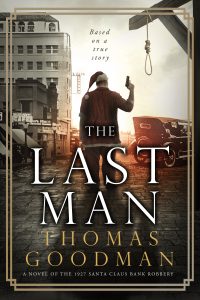
    In The Last Man: A Novel of the 1927 Santa Claus Bank Robbery by Thomas Goodman, four men in a small, depression-era Texas town lay in wait to carry out their unique plan for a holiday heist.

    It’s December 23 and a man in a Santa Claus suit walks into a bank. But rather than his bag full of Christmas surprises, he’s brought a gun. With the element of surprise on their side, the robber and his two partners would collect the cash, while another partner waited in the getaway car. It all seemed so simple.

    At the time, Texas bankers—in order to deter crimes such as this—promised a $5,000 reward for any dead bandits, “and not one cent” for the capture of a live one. Should anything go wrong, the possibilities for disaster were clear as a Greek tragedy, but what could go wrong?

    Guns blaze within minutes of entering the bank.

    Read more here…

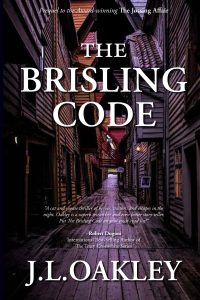
    The Brisling Code

    In The Brisling Code, a fast-paced first installment of her historical thriller series, Oakley weaves a brilliant portrayal of the perils met by the Norwegian Resistance during WWII.

    Layered perspectives—from resistance workers, traitors, and even an SS Officer—create a rich world through which readers can understand the sacrifices that were made to free our world from the tyranny of Nazi Germany.

    Immersed in volatile Nazi-occupied Bergen, Norway, fearless young intelligence agent Tore Haugland and his team of organizers work tirelessly to protect the essential work of the Norwegian resistance.

    Read more here…

    The Spoon Lisa Voelker

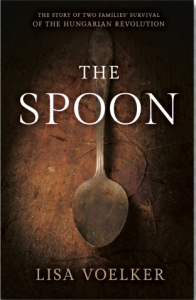
    The Spoon
    By

    Lisa Voelker’s historical fiction novel, The Spoon, takes us back to the 1950s in Hungary during the daring student uprising, and attempted revolution, in Buda and Pest. The author weaves historical facts with fiction in the form of family lore that has been handed down for generations.

    We follow scores of people whose lives intersected during this uprising of 1956. The revolution was, at its inception, a time of joyous upheaval, but in less than two weeks became one of devastating dissolution. People fled Hungary by the thousands, but not before giving the Soviet Union a taste of their discontent.

    Read more here..

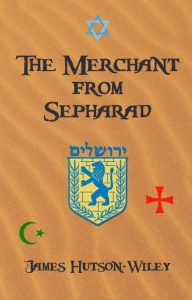
    The Merchant from Sepharad

    Joshua Ibn Elazar, the eager son of a Jewish merchant, travels to al-Andalus (the Iberian Peninsula under Muslim rule) to prove himself in his father’s business. But he finds an unwelcoming, degrading society waiting for him, and begins a journey of misfortune and anger in James Hutson-Wiley’s historical fiction novel, The Merchant from Sepharad.

    Shortly after arriving in the city of Lishbunah, al-Andalus, Joshua is tricked out of the gold for his living expenses. Worse yet, he learns that Jews in Lishbunah suffer under oppressive laws, holding far less status than Muslim citizens. He can only find help in Lishbuna’s Jewish community, meeting Rabbi Hiyya al-Daudi and his son Yaish, who house and feed him.

    Read more here…

    A Siren Called Truth Cover

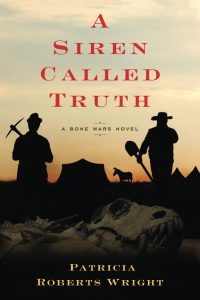
    A Siren Called Truth

    Patricia Roberts Wright’s A Siren Called Truth plunges into the fierce rivalry of the Bone Wars, a real-life scientific feud between paleontologists Edward Cope and O.C. Marsh. Blending history, ambition, and human drama, this gripping historical novel explores the cost of discovery and the lengths people will go to secure their legacy.

    A Siren Called Truth is a character-driven exploration of rivalry. Edward Cope, a self-taught genius, is determined to unearth America’s prehistoric past, but O.C. Marsh stands in his way, a well-funded and politically savvy adversary. Their battle for dominance in paleontology is not just about fossils—it’s about reputation, power, and the relentless pursuit of truth.

    A Siren Called Truth’s prose transports readers to the rugged landscapes where fossils lie buried beneath layers of time.

    Read more here…


    Recognition for Historical Fiction Excellence

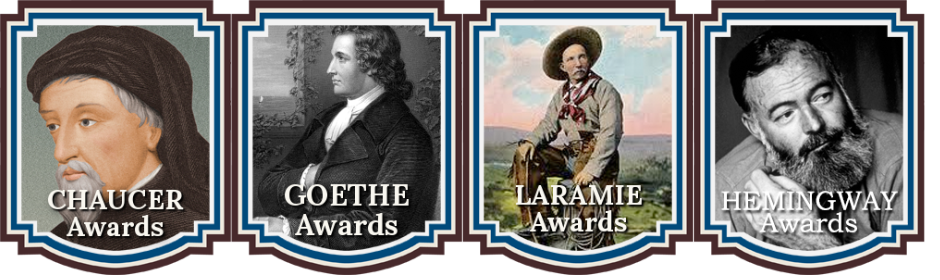
    Chaucer, Goethe, Laramie, Hemingway, CIBA, Awards

    Don’t miss out on your chance to submit to these fabulous Historical Fiction Awards!

    Whether you’re writing pure historical fiction or adding bits of history into other genres, professional recognition celebrates the craft behind effective tales from the past. The Chanticleer International Book Awards recognize outstanding fiction across multiple divisions that dive into the past:

    Chaucer Awards ~ Perfect for Early Historical Fiction (Pre-1750s Historical Fiction Novels

    Goethe Awards ~ Ideal for Late Historical (Post-1750s Fiction Novels

    Laramie Awards ~ Excellent for Western, Pioneer, Civil War, First Nations Fiction Novels and other Historical Fiction Books 

    Hemingway Book Awards ~ Fitting for 20th & 21st century Wartime Historical Fiction Novels

    The 2025 deadline is August 31st! These awards recognize the skillful writing in genres that creates memorable, impactful historical fiction.

    Historical fiction is about creating emotional experiences that resonate in the modern world long after the final page. Whatever your primary genre, adding in great period details, creating relatable characters, and sticking to a good process all the way to the finish can transform good stories into unforgettable ones.

    Submit before August 31 and let professional judges recognize your skill in crafting compelling, historical fiction.

  • The Research Puzzle—How to Conduct Great Research Without Becoming Overwhelmed

    Research adds so much to a story, but with so much great information available to us today finding the right information can sometimes become overwhelming. 

    Don’t let your research overtake your writing project! Create a clear and effective process to find the perfect tidbits to add validity and relatability to your story. 

    Good research serves three essential purposes:

    Builds trust with your readers
    Fills in gaps in your own knowledge
    Provides concrete examples to inspire or reinforce your narrative

    Begin Your Research with Trusted Resources

    The best start to any research project is to find the right resources. Make sure they are reliable, relevant, and relatable in some way to your story. If you’re writing a romantic scene with references to a specific type of cuisine don’t just rely on the last best meal you had. Find recipes or meal plans that give you the right words to describe the meal. If you are writing a western, look for reliable resources that will tell you the specifics about how to shoe a horse. Here are some good places to start when thinking about where you want to conduct your research—

    Familiar Resources

    • Your own bookshelf
    • Podcasts on your particular subject
    • Articles you’ve saved
    • Experts you already know

    Outside Resources

    • Your local library system
    • Professional associations for expert opinions
    • University research departments
    • Industry journals
    • News archives
    • YouTube videos
    • Online websites, such as the online encyclopedia Wikipedia
    • Search engines (But be careful—this is where most of my available time gets stuck as I start chasing research tidbits)

    Research Tips   

    Check an author’s other work if you like their approach
    Makes sure there are citations and references listed
    Check the publication date to determine if the information is current
    Take a look at the bibliographies of the books you read to find more sources
    Avoid information that is part of an advertising pitch or contains extreme or vague information
    Save everything that looks useful – you can sort it out later


    book, bookmark, magnifying glass

    Types of Data

    One of the best things I found in my research about research is there are only three types of data:

    Statistics and data offer an author straight-up facts and findings, and each one should come with a citation to its sourced material
    Quotes from experts or people “in the know” require the exact wording and a citation
    Anecdotes require a brief summary and the appropriate sourcing

    Your Research Project in Action

    Now that you have your reliable resources, it’s time to get busy! If you’re like me and can get caught up in finding out more juicy details to add to your story it may be a great time to implement the “5, 10, 10, 5” rule, and it goes a little something like this:

    1. Pick one key point to research for 5 minutes
      • Research one specific item and stay focused on that one item
      • Write down three questions that you want to find answers to
      • Note the type of evidence you are looking for, such as statistics, examples, or expert quotes. This is particularly helpful to me because it sets me on a direct path to the information I need, rather than through a divergent path of anecdotes, say, when I actually need statistics.
    2. Scan the information for relevant references for 10 minutes
      • Only work from 2-3 reliable sources to simplify and focus your research project
      • Save links, bookmark, or take photos of the information you need
      • Highlight key passages
    3. Record the information you need most for 10 minutes
      • Create a simple system to record your research; include space to write down where it came from, when the information was collected, who collected it, and a link to the resourced information if available
      • Save your best findings and note how you’ll use them in the story
    4. Quality check for 5 minutes
      • Read your original point
      • Add your research
      • Make sure it flows naturally

    toolbelt, books, book cart, wrench, screwdriver, pliers

    Research Tools

    Having effective tools in your research toolbelt can really take your effectiveness to the next level, but don’t get carried away! Only use the tools you need to avoid your research project from becoming chaotic. Here are some of our favorite tools—

    • Microsoft Word and Excel, and Google Docs are helpful to create simple research documents you can easily search, share, and back up
    • Web Browsers’ “Bookmark” features allow you to create folders for different topics or sources
    • Microsoft’s Notebook can turn you into a record keeping superstar!
    • Evernote: Clip web articles and organize by chapter
    • Apple Notes/Google Keep: Quick capture of ideas and sources on your phone
    • Kindle/eBooks: The search feature combined with its ability to highlight specific passages is the solution to foregoing typing out quotes, and their search function helps you skim through the content to find the information you need most
    • ReadWise saves and organizes the highlights and quotes you’ve found through your Kindle app
    • Zotero is a great free resource often used by Academics to track biographies and create folders to track their research. Powerful for anything that might require an annotated bibliography
    • Index cards and journals lets you see your research without logging into your computer, and using index cards allows you to move your thoughts around as you plot your story
    • Sticky flags will take you right to the information when researching physical books
    • File folders will help you organize physical information by topic, chapter, or source
    • Highlighters let you color-code different types of research
    • Voice memos and photos of book pages for quick grabs

    book, smoke

    Beware of research pitfalls! 

    Finding Research Mistakes:

    • Looking at only the first page of Google results—some of the most important information I’ve found has come from page 2 or 3 of a Google search
    • Using only one type of source and not verifying the information with other sources
    • Believing what you see on social media—never give your blind trust to what you find on social media
    • Not checking dates of your sourced material

    Organization Research Mistakes:

    • Saving everything “just in case” (I’m raising my hand in guilt here)
    • Not noting where you found something
    • Keeping research scattered across multiple places; good organization will alleviate a lot of stress
    • Forgetting to back up digital notes
    • Trying to use too many research organizational systems at once

    Writing Mistakes:

    • Letting research overwhelm your own voice
    • Including facts just because they’re interesting, not relevant
    • Dumping research without context; don’t make your story a lesson for your readers, make it an adventure in storytelling!
    • Not fact-checking quotes and forgetting who said what

    And always remember

    Research should support your message, not become the message!

    people, reading, readers, books, pans, men, women


    A red toolbox with the words "What's in your toolboxThank you for joining us for this Writer Toolbox Article

    There is so much to learn and do with Chanticleer!

    From our Book Award Program that has Discovered the Best Books since the early 2010s to our Editorial Book Reviews recognizing and promoting indie and traditional authors, Chanticleer knows your books are worth the effort to market professionally!

    Hungry for more? These articles can help you go even further with your research:

    Ready to put your research to work?

    After investing time in thorough research, you want to make sure it enhances rather than overwhelms your story. That’s where professional editorial guidance becomes invaluable.

    Chanticleer’s Manuscript Overview helps you see if your research is working effectively within your narrative. Our evaluators will assess whether your carefully gathered facts feel naturally integrated or if they’re disrupting your story’s flow. We’ll identify where research strengthens your work and where it might need better balance with your storytelling voice.

    Research should support your message, not become the message—and our manuscript evaluators help ensure you’ve struck that crucial balance.

    Learn more about Manuscript Overview services here and Editorial Services here!

    Take your well-researched book to the next level with professional editorial guidance!

    Take your book to the next level!

    With Chanticleer’s professional editing services and you’ll be confident your novel is ready for your next biggest fan!

  • Taking an Adventure in Writing, Travel Writing Basics from the desk of Dena Weigel


    Interested in travel writing? Here are just a few great authors writing about their adventures!

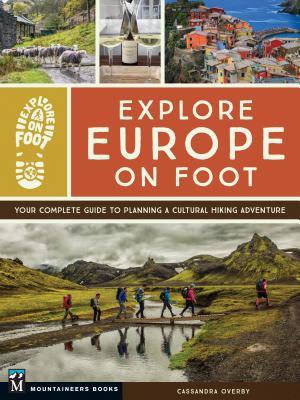
    Explore Europe on Foot

    travel writing

    In Cassandra Overby’s encyclopedic guide Explore Europe On Foot, readers are taken through a step-by-step process of dreaming, planning, and hopefully soon experiencing memorable, slow travel ventures of a lifetime. Whether it’s choosing a route and destination, deciding what to pack, finding appropriate accommodations and food options, or dealing with inevitable challenges, Overby supplies a world of information in this colossal foot travelers’ bible.

    Read more here!

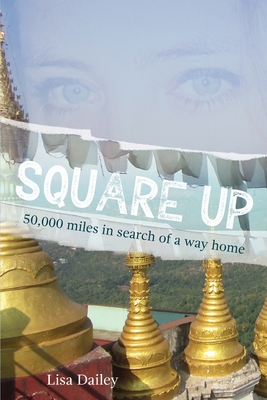
    Square Up: 50,000 Miles in Search of a Way Home
    By Lisa Dailey

    Square Up Lisa Dailey

    Although she and her husband had planned to take their family on a ’round-the-world adventure, she didn’t expect their plans to come together on the heels of grief, after losing seven family members in five years. Square Up shows us that travel not only helps us understand and appreciate other cultures, but invites us to find compassion and wisdom, heal from our losses, and discover our capacity for forgiveness, as well as joy.

    Find a copy today!


    Thank you for joining us for this Writer Toolbox Article

    A red toolbox with the words "What's in your toolbox

    There is so much to learn and do with Chanticleer!

    From our Book Award Program that has Discovered the Best Books since the early 2010s to our Editorial Book Reviews recognizing and promoting indie and traditional authors, Chanticleer knows your books are worth the effort to market professionally!

    Writer Toolbox Helpful Links: 

    12 MUST-DO’s for AUTHORS by Kiffer Brown and Sharon Anderson

    The Ropes Around Research for the Accurate Writer by David Beaumier

    The traditional publishing tool that indie authors can use to propel their writing careers to new levels?  Check it out here!


    Do you have a book about travel that deserves to be discovered? You can always submit your book for an Editorial Review with Chanticleer!

    Chanticleer Editorial Review Packages are optimized to maximize your digital footprint. Reviews are one of the most powerful tools available to authors to help sell and market their books. Find out what all the buzz is about here.

    Have an Award Winner?

    I&I or Instruction & Insight Awards CIBA Badge

    The I&I Book Awards has a Category just for Travel Writing!

    The tiers of achievement for the CIBAs

    You can see our full list of Non-Fiction Book Awards is a great way to get your book discovered!

    Anytime you advance in the Chanticleer Int’l Book Awards, your name and book are promoted right here on our website, through our newsletter, and across social media. One of the best ways to engage in long tail marketing!

    Now pack your bags, grab your laptop, and get exploring, writing, and creating great stories!

  • Spotlight on Lisa Spicer- Producer, Editor and Writer

    LISA SPICER – Producer, Editor, Writer

    Lisa Spicer has worked in television, film, and video production for over 30 years as producer, writer, and editor. Starting in the documentary unit at KCTS/PBS Seattle, she worked there later on the Bill Nye the
    Science Guy show, earning 3 Emmys. As an independent documentary producer, she has worked in Kenya, Mexico’s Lacandon rainforest, Northern Cheyenne and Lummi Indian reservations, Boulder, Seattle, and Bellingham.

    Lisa has a BA in Broadcast Journalism and certificates in Filmmaking and Screenwriting (UW). Mid-career she earned an MA in Anthropology (WWU). Integrating anthropology into documentary, she
    co-produced Homeless in Bellingham, an award-winning web series and documentary, and served as Consulting Anthropologist for the feature documentary, Cheech and Chong’s Last Movie.

    Recently finishing an historical novel, Radio Smokva, she’s now writing about her back-to-the-land childhood and publishing a weekly series on Substack, Collective Effervescence: Research About the Counterculture.

    Lisa will lead a workshop called How to Read a Film, with a focus to enhance your fluency in the language of film. Rooted in the practice of mise-en-scene, learn how meaning is conveyed through elements such as camera angle, set design, motif (shapes), lighting, actors, sound, all of which work together in support of the narrative.

    Tips and Tools with the Screen in Mind – by Lisa G. Spicer
    • Writing for the screen or with the screen in mind, whether narrative or non-fiction (documentary) film.
      • Ex: From any story, what is selected to be scripted and filmed? How is it framed (what do we see)?
      • Ex: Screenplays are written in present tense
    • As related to writing, film borrows from theater by using elements of mis en scene and motif.
      • Ex: How do theater directors use props and costume to support the narrative?
      • Writing for film or with film in mind can be informed by the craft and how films are actually made.

    Ex: Basic camera terminology, used throughout entire process: writing, filming, editing.


    Still thinking about Registering for the Chanticleer Authors Conference?

    Register Today!

    We have a stellar line up of speakers for CAC24, with multiple options to attend.

    We have a stellar line up of speakers for CAC24, with multiple options to attend. Find out why The Writer Magazine (founded in 1887) has repeatedly recognized the Chanticleer Authors Conference as one of the best conferences to attend and participate in for North America. Join us April 19-21, 2024 at the Four Seasons By Sheraton in Bellingham, WA.

  • Spotlight on Diane Garland – Your WorldKeeper – Continuity Editor

    DIANE GARLAND – Your WorldKeeper – Continuity Senior Editor


    Diane Garland and her editorial company Your WorldKeeper, specializes in the world of continuity. Multiple USA Today best-selling and award-winning authors in various genres rely on her system of cataloging and organizing the minutiae and rules of their story worlds. Growing up as an AF Brat, Diane traveled extensively as a child, which has fueled her passion for travel and reading. She graduated from Florida State University and is a life-long learner. She, along with her husband and two cats, have recently relocated to Columbus, Ohio from the Seattle, Washington area.

    Join Diane at her sessions about the necessity, creation, and organization of a story bible along with pointers on maintaining and using it to take your author career to the next level.


    Still thinking about Registering for the Chanticleer Authors Conference?

    Register Today!

    We have a stellar line up of speakers for CAC24, with multiple options to attend.

    Find out why The Writer Magazine (founded in 1887) has repeatedly recognized the Chanticleer Authors Conference as one of the best conferences to attend and participate in for North America.

  • Spotlight on Janet Oakley – Award Winning Author and Historian

    JANET OAKLEY – Award-Winning Author and Historian, and Educator

    J. L. Oakley writes historical fiction that spans the mid-19th century to WW II with characters standing up for something in their own time and place. She is an award-winning author and a recipient of the 2013 Bellingham Mayor’s Arts Award; the 2013 Chanticleer Grand Prize; the 2014 First Place Chaucer Award;  an Everybody Reads and Bellingham. When not writing, she demonstrates 19th-century folkways in the schools and at San Juan Island National Park. She also has a cat who thinks she’s editing.

    As a First in Category winner in the Goethe, Laramie, and Chatelaine Awards for Mist-chi-mas: A Novel of Captivity, the Chaucer Award for Timber Rose and The Jøssing Affair, the Hemingway Grand Prize Winner for The Quisling Factor and the OVERALL Grand Prize for her book, Tree Soldier.


    Still thinking about Registering for the Chanticleer Authors Conference?

    Register Today!

    We have a stellar line up of speakers for CAC24, with multiple options to attend.

    Find out why The Writer Magazine (founded in 1887) has repeatedly recognized the Chanticleer Authors Conference as one of the best conferences to attend and participate in for North America.


  • TAPPING the EXPERTS – Researching for Your Works in Progress by Carol M. Cram
    TAPPING the EXPERTS – Researching for Your Works in Progress by Carol M. Cram

    Guidelines for Connecting with Sources and Experts While Researching Novels

    Editor’s Note: Whether or not you write Thrillers, Science Fiction, Mysteries, Contemporary Social Themes, YA,  Historical, or any genre, these guidelines for connecting with sources and tapping experts will come in handy.

    One of the questions I get asked frequently when people discover I like to write historical novels is “How do you do your research?” I don’t have a pat answer (I wish I did!). The reality is that I “do my research” as I’m writing a novel and that, for me, it’s my least favorite part of the process. There, I said it!

    I know many historical novelists who adore research, who like it even more than writing, but I’m not one of them. I like research. I enjoy prowling through dusty libraries and doing endless Internet searches and reading stacks of books, but most of the time I’d rather be writing my story.

    That said, I have picked up some techniques over the past few years that I’ll share in this blog to help you find your feet when you’re researching and writing a novel set in the past. Getting the facts right is very important. You discover that the first time a reader finds a mistake (and tells you about it).

    In my novel set in early 19th Century London, I had a character refer to the third season of the year as “Fall.” A British reader set me straight, in no uncertain terms. Thank goodness she was a Beta reader and I was able to catch the error before the novel was published!

    Books are great, the Internet can’t be beaten for looking up and verifying facts quickly, and libraries are awesome. But even better are the academics who write all those books and articles. In other words, the experts. Many experts are happy and eager to share what they know with you. And many go well beyond just answering questions.

    Following are some tips and advice for reaching out and working with subject matter experts.

    Do your homework before contacting a subject matter expert. You don’t want to waste an expert’s time asking questions that you could easily answer yourself with a bit of reading. Consult books and articles to become as conversant as you can with the subject and then prepare a list of specific questions to focus the discussion. Experts who see that you’ve made an effort to understand their field are usually very generous with their time and interested to hear about your Work in Progress.

    Keep the number of questions reasonable. A half-hour interview is about right, although if your expert wants to go on longer, sit back and enjoy! You never know what great information you’ll get—often on a subject you weren’t looking for but that will fit beautifully into some part of your story. Experts are often fascinated by the creative process and may suggest plot ideas based on their more in-depth understanding of the period. When an expert says something like “What if you have your character do such and such…”, listen up!

    Experts care a great deal about their fields of expertise and as a result, most welcome the opportunity to work with a novelist to bring their knowledge to a wider audience. An academic I consulted for The Muse of Fire told me how thrilled he was that someone apart from his students was interested in early 19th Century British theater.

    Make sure you end an interview with a request for additional book and research recommendations. Most experts are happy to provide you with more references than you’ll probably have time to read.

    Find experts by looking up faculty lists at universities, consulting bibliographies, conducting searches for specialist groups, and asking for recommendations. You can click the Ask a Librarian link on any Library website to get all sorts of academic questions answered. Before contacting experts—generally by email—familiarize yourself with their credentials and read at least some of their articles and books. When you take the time to read their writing, you’re more likely to ask intelligent questions.

    Photo Credit: Myrabella / Wikimedia Commons
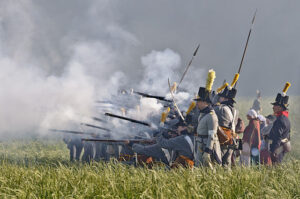
    Soldiers in front of the wood of Hougoumont during the reenactment of the battle of Waterloo (1815)

    Another place to find experts, particularly in specific historical eras, is to seek out re-enactment groups and themed events such as Renaissance Fairs. Here you’ll find experts who have really steeped themselves in your period and are eager to share what they know.

    Approach experts with a polite email that includes a short description of your Work in Progress and a few sample chapters. In my experience, experts are most eager to help when I give them an opportunity to first read my work. Many want to be sure they are associating their names with writing that they personally like.

    For all three of my novels, I’ve been fortunate to have experts give me advice during the writing process and then to read drafts of my novel to catch stray errors. Several of them became almost as invested in the accuracy of my novel as I was and are now fans!

    In your introductory email to an expert, make sure you include your own web address in your signature line and a short summary of your own background and credentials. I know that several of the experts I’ve reached out to told me they checked out my website before replying to my request. They understandably wanted to verify my background and learn about my books before connecting with me.

    Thank experts in your acknowledgments. I always include historical notes at the end of my novels to cite books I consulted while writing. I also personally thank experts with whom I’ve connected personally. Everyone appreciates being thanked.

    Send complimentary copies of your novels to experts who have provided you with significant help. I think it’s money well spent to let the people who have helped me know how much I appreciate them.

    We are incredibly fortunate as novelists to be able to easily connect worldwide with experts in a dizzying array of subjects. I’ve visited with the curator of the Narrenturm—an anatomical museum housed in Europe’s first insane asylum in Vienna; taken tea in London with an expert on 19th Century women composers; become good friends with a professor of medieval art history, and connected with several wonderful specialists in early 19th Century British theater. Each of them did much more than just answer my questions. They actively contributed ideas about plot and character motivation appropriate to the era I was writing in and inspired me to explore all sorts of new ideas.

    You never know what might come from your interactions with experts once you get the nerve to approach them – respectfully and after having done your homework.

    And then all you need to do is weave what you’ve learned into a compelling novel that people will not want to put down. Easy, right?


    Carol M. Cram, CIBA Award-Winning Author (both Goethe and Chaucer Historical Book Awards) for these outstanding novels:

    Carol M. Cram will announce the new CHAUCER Book Awards winners on Saturday, April 27, 2019, at the Chanticleer International Book Awards ceremony. She is also presenting at the sixth annual Chanticleer Authors Conference. Her award-winning historical fiction books will be available in the CAC19 Books By the Bay Book Fair hosted by Village Books on April 27 & 28, 2019.