
Tag: Repression of Homosexuality

  • UNTIL MORNING COMES by Jonathan Epps – True Crime Thriller, Vigilante Justice Thriller, Conspiracy Thrillers

    UNTIL MORNING COMES by Jonathan Epps – True Crime Thriller, Vigilante Justice Thriller, Conspiracy Thrillers

    Jonathan Epps pulls from the darkest corners of our headlines a tale most despicable in his latest novel, Until Morning Comes.

    Young girls seldom know the dark, wicked places awaiting them in the world, but they do have real problems. They come from hard-scrabble backgrounds and make destructive decisions because they want something more for themselves. These girls don’t know how to get what they desire, only without a doubt, each one understands they need something so much bigger – so much better than what life currently offers, and they will believe anyone – and do anything – to attain it.

    In short, they become targets for predators.

    The very rich and the celebrated take what they want from these girls and leave them worse off than ever. It’s those people who should know better but don’t care. They hire people to hunt down these girls, profit from them, and promise a future that never comes to fruition, then discard them like trash.

    The girls participate in sordid parties for the uber-wealthy, famous, even celebrated elite who enjoy perpetrating illicit and disturbing actions upon the underaged and vulnerable. They take their pleasure in places where drugs never run dry, and consent is deemed optional. Lots of money changes hands, and some of it even makes its way to a few girls. But at one of these events, Ava witnesses a most deplorable act, and instead of helping the girl, she runs away. She can’t forgive herself. Ava’s haunted by the sights, sounds, and smells of that night, and her hatred grows for the people who perpetrated these offenses.

    Ava forms friendships with two others, and they all try to move on. Each one deals with the lingering trauma in different ways. The other two begin to piece together plans for the present, hoping they can eventually set goals for happy futures. But Ava fails in all her attempts. She can’t move on from her past. She can’t move on from the horrific scene she ran from, and so she puts together a plan for revenge.

    Ava Rose Anderson decides to put an end to the group.

    Why? Simple. She has nothing left to lose. Ava seeks revenge for herself and for all those who suffer the aftermath of the life they once lived. She challenges the offenders with exposure of their crimes – and she’s determined to fight that nightmare to the bitter end.

    Revenge may give Ava closure, if not peace. Ultimately, she wants to face the man who ran the trafficking operation. She wants to see him dead. Also, she wants to face off with the woman who recruited her – and so many like her. Ava hunts her targets through media and across a couple of major cities to trap the human trafficking ring. She doesn’t know it, but Ava is not the only person on this trail. Who will reach them first, and how will it all end?

    Jonathan Epps masterfully develops his latest thriller with public figures we all recognize from today’s headlines. True crime and thriller fans alike will find Until Morning Comes riveting and simply impossible to put down.

     

    5 Star Best Book Chanticleer Reviews round silver sticker

  • The LOOSE ENDS BECAME KNOTS: An ILLNESS NARRATIVE by Austin Hopkins – Memoir, Sexual Awakening, Health and Wellness

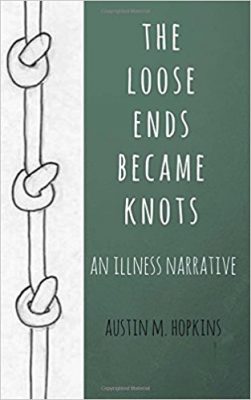
    The LOOSE ENDS BECAME KNOTS: An ILLNESS NARRATIVE by Austin Hopkins – Memoir, Sexual Awakening, Health and Wellness

    A young man survives the extremes of sexual abuse, physical harm and emotional chaos in the harrowing and profoundly powerful memoir, The Loose Ends Became Knots: An Illness Narrative by Austin M. Hopkins.

     The experience of sexual violence starts for Hopkins as a teenager, during the time he struggles defining his own sexual identity. The men he meets take advantage of his youth and naiveté, at first, and later, though he gradually becomes wiser to the stark intricacies of a sexual awakening in the world of gay men, he still succumbs to men who use him – with and without his consent. He never seeks such treatment consciously, yet, it continues to happen. What is it about him that attracts predatory partners, he wonders? Hopkins grapples with the many issues that often assail young people dealing with gender identity: How can he reach out to his parents for help when the root of his pain contradicts whom he believes they want him to be? Is he disappointing them? Will they cut him out of their lives? How complicated his life has become since his childhood!

     As encounter after encounter with unkind and uncaring individuals sends him into a downward spiral, three things work together to give him hope: he’s a bright student and doing well in college; he finds an excellent therapist who offers concrete advice and skills that will serve to help him personally and professionally in the years to come; and finally, after courageous self-examination and altered personal perspective, he meets a loving, compassionate partner, who, though not fully understanding the different emotions and energies from Hopkins past, authentically recognizes and acknowledges the unique qualities that his partner brings into their marriage.

     Hopkins has collected this episodic memoir from his journals, poetry and other writings, and added the observations of others, attributing identity where permission was granted. He carefully phrases the depictions of sexual violence in a manner that compels the reader to feel his pain and humiliation. Hopkins does not shrink from the frank sense of shame and self-blame that characterizes his early encounters. Readers unfamiliar with sexual awakening stories may find some of the text hard to work through. And yet, the author presents his work as a gift to those who are on the brink of their own sexual awakening – or who are already there and wonder what next to do – how to live successfully in the malaise of public opinion and family complications. It is through the pain and traumatic recollections that Hopkins expresses himself most eloquently – and it is here where his work, though painful, is the most rewarding. Readers witness a young man triumph over obstacles and begin to actively balance his life with acceptance and love, endeavoring to help others along the way.

    Hopkins’ story is profoundly powerful. And his story is not over – he is, after all, a young man working towards a career in medicine. He offers this narrative to “raise awareness of the pervasiveness of sexual violence within the gay community” as he experienced it. His goal is to help others who are experiencing similar kinds of abuse and hopefully shed a much-needed light in this potentially lonely and frightening time for those whose sexual identity is something other than what certain groups claim as normal.

  • GRAN’PAUL’S FAMILY: Book 3 of the PAUL’S THREE WARS TRILOGY by Karl Larew

    GRAN’PAUL’S FAMILY: Book 3 of the PAUL’S THREE WARS TRILOGY by Karl Larew

    Gran’paul’s Family, the third volume of Karl Larew’s trilogy of the life of Paul Van Vliet and his family, as well as the wars he fought in as a member of the U.S. Army, is true to its title. While the first two volumes introduced readers to his family, we were often following Paul’s experiences in WWII and the Korean War.

    Part III, however, allows us to join the family circle, which grows considerably, as families usually do. Many of their experiences are similar to those of most of us, but some are quite unique, especially the musical careers of Paul’s wife Betty and her daughter Rosalie, and the military intelligence exploits of Paul’s nephew Ted Lauterbaugh (whose mother Dottie is Paul’s sister).

    I must describe Larew’s work as a fictional family biography–one that is variously romantic, exciting, cozy and warm, hurtful and cold, tragic and sad, but mostly always interesting although there are always a few plodding times that as a member you just have to get through. Remember, like actual biographies, this fictional one doesn’t have a plot but is a story that weaves together the characters and events.

    The story begins with Ted Lauterbaugh reminiscing about meeting his cousin (by marriage), Rosalie, when they were both 14. He immediately fell in love with this beautiful girl with the satiny red hair–who played the violin, accompanied by her mother, on Christmas Day. Just as happens for most 14-year-olds, their relationship dwindled, in their case, to that of cousins, exchanging Christmas cards at best.

    The novel is a written kaleidoscope of personal connections that span time and datelines across the globe. Paul’s own son Danny, who refuses to be drafted or leave the country, must deal with his family’s military history and find his own way. His protesting against the Viet Nam conflict creates estrangement within the family. Danny becomes the embodiment of the intersecting point of the fracturing that many families faced during this time of upheaval.

    Spying, philandering, homosexuality in a time of appalling repression, NSA sleuthing, the Viet Nam conflict and the 60s protests against it, the Civil Rights movement, Soviet espionage, and the ushering in of psychiatric sessions for those seeking help and happiness with many more story threads of the “Paul” family. Will the family be able to withstand the strains and stresses that the turbulent Sixties force upon them?

    This reviewer isn’t going to give away any more of this remarkable story. You know these people now—their character, their strength. You’ll want to find out how their lives evolve from this point. It is an evolution—with oldsters passing on and youngsters assuming family roles. Karl Larew has an important story for almost anyone to read–to learn and to enjoy.

    Gran’Paul’s Family  is preceded by two other compelling volumes that some may find to be faster paced reads:  Paul, Betty and Pearl (that’s Pearl Harbor and WWII) and  Daddypaul and the Yo-Yo War (the Korean War).