Tag: Psychology

  • SUICIDE TANGO: My Year Killin’ it with a Shrink by Tripsy South – Teen Suicide, Psychology, Satire

    SUICIDE TANGO: My Year Killin’ it with a Shrink by Tripsy South – Teen Suicide, Psychology, Satire

    A novelistic look at the serious issue of teen suicide, Suicide Tango walks us through the relationship between a young woman who wants to end it all and the psychiatrist who wants to keep her alive.

    Doctor Jon Moore, a-just-okay-psychiatrist considers himself an expert on the issues surrounding teen suicide. One day a tall, beautiful girl, Tripsy South, strolls into his office without an appointment, lights a hooter (a joint) and tells him she has only a year to live. She intends to get rid of herself sometime soon. Her attitude is defiant with the overarching theme apparent: she is sick of her life.

    Exploring who South is and who she might become takes one year, 52 sessions all recorded, even the ones South sleeps through. Moore points out that going from infancy to physical adulthood in only fifteen years is a massive endeavor that some may view as cataclysmic. The notion of suicide might provide solace to someone trapped in that maelstrom, especially since, to the young, it’s hard to envision a future beyond the moment. There is much opposition expressed to over-medicating and “big pharma,” and a leaning toward a simpler, more eclectic view of mental deviation through the vexing, ever-changing personality of South.

    She is styled as an “indigo child,” more perceptive than her peers and more intelligent. These differences cause her to experience painful social alienation. At times the doctor becomes the student, and the patient becomes the teacher. South suggests, for example, that people like her need to talk to people like her – potentially suicidal peers. And by the time her therapy year has been successfully completed, Moore’s life has been upturned and needs examining.

    This is a well-written book that slaps the reader upside the head with the snark of a young woman thinking of doing the most devastating act possible. And while the Suicide Tango is classified as Satire, it must be noted that Tripsy’s longing to commit suicide and her observations about it seem intensely honest and therefore able to speak to teen readers.

    South presents a few practical ideas that may resonate with those who are at war with themselves. She is brash, unapologetic, and in-your-face in a way that demands and holds your attention, uncomfortable as that may be.

    The best observation is from the dedication page: “…for Every Beautiful Soul who struggles with personal demons and, on occasion, slays the fuck out of ‘em.” Amen, Tripsy South. A-men.

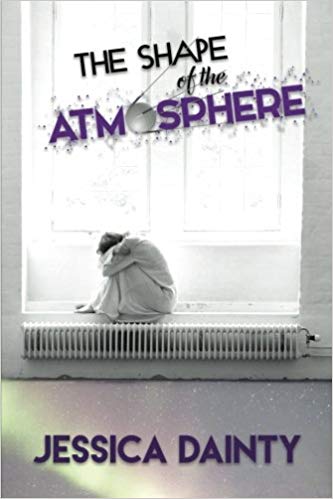


  • The SHAPE of the ATMOSPHERE by Jessica Dainty – Literary, Psychology, Women’s Fiction

    The SHAPE of the ATMOSPHERE by Jessica Dainty – Literary, Psychology, Women’s Fiction


    Jessica Dainty’s, The Shape of the Atmosphere is remarkable for its startling realism, its gritty young heroine, and its hopeful conclusion.

    When Gertie’s father and sister are killed in an accident on Gertie’s sixteenth birthday in 1957, she is left with one cherished memory: viewing the heavens with her father on the night of the world-changing Sputnik flight.

    After the funerals, Gertie wounds herself as a way of coping with her inner anguish, after which her alcohol-addicted mother commits her to an insane asylum. Such institutions were considered modern and scientifically advanced for their time, but as author Jessica Dainty frankly depicts, Gertie’s new home is a combination prison and torture chamber. The naïve but intelligent girl soon becomes acquainted with such therapies as immersion in icy cold water and electroshock (both designed to calm the inmates), as she gradually gets to know her fellow patients, the women on Ward 2.

    Gertie observes that some of her companions are not mentally ill at all: one has a speech defect that he is struggling on his own to correct, and another has Down Syndrome. Yet such people – anyone not wanted by family – are consigned to such asylums and often get lost in its labyrinthine system. Gertie slowly gains inner resolve, becomes an advocate for her rights and those of her companions, and starts an in-house newsletter that tells their stories. But when her compositions find their way outside the walls of the asylum, she is forced to take even bolder measures.

    Dainty writes this traumatizing tale as though she’d lived it, so starkly painful and remarkably poignant are her portraits of Gertie and her fellow sufferers. She portrays the doctors as caring only up to a point, mainly interested in maintaining a full house of captive mental “cases” to keep the income rolling in. One staff member is sympathetic toward Gertie, but most are cold and indifferent, strictly allowing only 3-minute bathroom breaks, a single towel at communal shower times, and almost no time spent unmonitored.

    Treatments such as electroshock (Electro Convulsive Therapy, ECT) are performed differently today for the treatment of severe depression, treatment resistant depression, severe mania, catatonia, and agitation and aggression in dementia patients (Mayo Clinic: https://www.mayoclinic.org/tests-procedures/electroconvulsive-therapy/about/pac-20393894), for example. But today, this treatment is done under general anesthesia and at reduced levels. This was not the case in the 1950s or in Dainty’s harrowing novel. ECT was conducted without any form of anesthesia and often without patient’s consent.

    Reminiscent of the less enlightened times also is the blatantly denigrating attitude shown towards people of color and other minorities. The author’s descriptions of daily life in a mental institution of the 1950s are filled with scenes of mistreatment tantamount to torture. But many readers will find the story inspiring, especially as Gertie, sustained by images of space travel, finds her own stars to aspire to and reaches out to help others. Debut novelist Dainty is a high school teacher with many points of contact with the teens she hopes to engage with this evocative coming-of-age saga.

    The Shape of Atmosphere won First Place in the 2022 Goethe Book Awards for Post-1750s Historical Fiction.

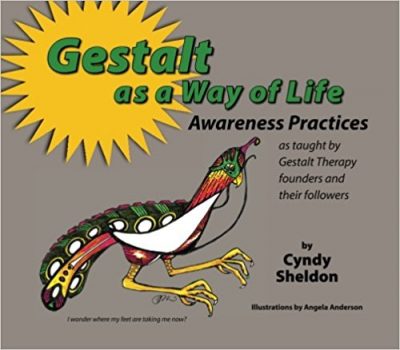
  • GESTALT as a WAY of LIFE: Awareness Practices as Taught by Gestalt Therapy Founders and Their Followers by Cyndy Sheldon – Gestalt, Self-Help, Psychotherapy, TA & NLP

    GESTALT as a WAY of LIFE: Awareness Practices as Taught by Gestalt Therapy Founders and Their Followers by Cyndy Sheldon – Gestalt, Self-Help, Psychotherapy, TA & NLP

    Word of warning: I’m a bit of a self-help junkie, so Cyndy Sheldon’s Gestalt as a Way of Life is right up my alley. As one of the movement’s founders, Ms. Sheldon provides a valuable and instantly useable advice in this approachable introduction to Gestalt Therapy.

    The word Gestalt derives from the German word for “form.”  The group’s antecedents intended to create a holistic way of attending to human potential by, in Sheldon’s words, “… attending to the whole human being, including the physical, emotional, mental and intuitive or spiritual aspects.”

    The book came out of a series of seminars that the writer had been offering beginning in 2007 in the Pacific Northwest. It became clear to her that recording the information and making it available to a wider audience would allow not increase exposure to the ideas, but would allow people to refer back to sections of value as needed.

    Ms. Sheldon’s time spent among the Navajo Tribe, over ten years, clearly impacted the work. The overlap between Buddhist teachings, Navajo spiritualism, and Gestalt practices make an intriguing mix. The varying influences appear to really ground the suggested exercises or “experiments” as the author refers to them. Those experiments are intended to help the reader fully realize the benefits of the program as if one had attended the seminars as a participant. It’s in the experiments where the book shines, offering real-world practices the reader can revisit.

    The book is broken up into six sections with letter identifiers A through F: Awareness, Growing Up, Get Out of Your Head, Authenticity, The Magic and Sacred in Gestalt, and Final Thoughts. I found the section on Authenticity (D) particularly apropos. As the reigning Queen of Conflict Avoidance (Ask my friends! Okay you can ask absolutely anyone who has ever met me!), the exercises intended to assist with becoming more direct in interactions with other people target my style of using nearly any tactic to prevent trouble from brewing – even if it leaves me furious, frustrated, angry and resentful. The sample experiment below helped me recognize some of my favorite dodging language, used when trying to avoid hurt feelings at the cost of being clear:

    EXPERIMENTS (p. 83)

    1. Watch people in restaurants, in parks, wherever you can hear them, and listen for their qualifiers.
    2. Listen for your own. Exaggerate using qualifiers with good friends—see if they notice. Then experiment with not using them.
    3. What other ways do you use to be indirect? Exaggerate these, which will help you become more aware of doing this…
    4. Now be direct and clear without judging.

    That last instruction alone proved so valuable. Being clear without indulging in a knee-jerk urge to start a self-shame-athon (at my deplorable display of selfishness) helped increase my awareness of the automatic pilot way my mind works when trying to avoid hurting others’ feelings.

    Like most books of the genre, you benefit to the extent you are willing to engage in the suggested experiments. Gestalt as a Way of Life delivers on two levels: it provides a fine introduction to the Gestalt movement and a gentle method for applying it in your life.

    5 Stars! Best Book Chanticleer Book Reviews