

Tag: Psychological Fiction

  • SHELTER In A HOSTILE WORLD: Love and Peace Series Book 2 by Mack Little – Historical Fiction, Caribbean Slavery, Psychological Fiction

    Blue and Gold Badge Recognizing Shelter in a Hostile World by Mack Little for winning the 2023 Shorts- Collections and Novellas Grand PrizeShelter in a Hostile World, second installment in Mack Little’s Love and Peace series, is an epic tale of resistance, desire, and tragedy, saturating readers in the complexity of Igbo culture.

    Little paints a character-rich portrait of the horrors of enslavement and the unthinkable violence against women in the Caribbean, locking people together in relationships molded by adversity.

    Set in 17th century Igboland—the invaded region of Nigeria — and on the island of Barbados, Shelter in a Hostile World is a searingly brief novel packed with mesmerizing prose. It blends genres to create a literary language entirely its own.

    Throughout Little’s story, readers follow the life and loves of Badu Obosi, a haunted revolutionary escaping enslavement to protect his daughter from sexual violence.

    As he seeks shelter from the hostility of his exterior and inner worlds, he is submerged in memories of his early years as a passionate young man deeply in love with an unattainable girl named Ekemma. Although separated from him by class status in their Igbo community, Badu’s adoration for Ekemma is overwhelming and alters the course of his life.

    Badu eventually finds a mature love with his current wife—an equally traumatized yet empowered Irish woman named Saoirse. She forces Badu to come to terms with his ghosts, regrets, and desires so he can release himself of his emotional wounds and forge a new life as a marriage partner and a free man in control of his own destiny.

    Throughout it all, the paranormal manifestations of his past—known in Igbo culture as “Duppy”—threaten to undo him. In the end, Badu must let himself be rescued not only from his physical threats, but from the mental and emotional terrors that have kept him from living fully embodied. 

    Shelter in a Hostile World weaves in and out of time, place, and perspective, allowing us to see how Badu has been shaped by his experiences.

    Throughout this short novel, Little masterfully entangles genre and theme — including coming of age, horror, romance, and action — creating an expansive collage that can touch a vast audience.  

    Little’s writing is not for the faint-hearted. Shelter in a Hostile World is a complicated, difficult story that invites readers to deconstruct plot, themes, and motives and find their way to the truth. Cultural expectations and traditions are troubled by the human experience. Fleshed out in vivid detail, these characters resist the constraints of easy interpretations.  

    Women experience a variety of sexual traumas, innocent people are the victims of slaveholders’ extreme brutality, and the ghosts of the wronged come back to reconcile with their wrongdoers, often in grotesque ways. 

    Even so, the novel forges a bridge between the inescapable past and the grueling present, allowing characters and readers alike to pass into a world where peace and hope can be found even amidst the most horrific of circumstances.

    In the end, Badu realizes that all the regrets and desires “that pulled him in opposing directions receded until the whole of his thought and purpose crystallized into a ‘shelter in a hostile world.’” Similarly, this novel pulls together threads that appear to be leading in different directions and knits them into something whole and entirely its own.  

    Infused with sensory language and descriptions of setting, Shelter in a Hostile World pierces readers’ hearts and demands the dignity of their attention.

    Shelter in a Hostile World by Mack Little won Grand Prize in the 2023 CIBA Shorts Awards for Novellas, Essays, and Collections.


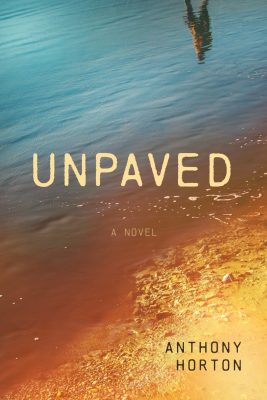
  • UNPAVED by Anthony Horton – Contemporary Fiction, Family Issues, Psychological Fiction

    Somerset Blue and Gold First Place BadgeUnpaved by Anthony Horton is a pensive novel of how returning to one’s roots can reveal hints on how to move forward after a lifetime of grief.


    Russell Nowak-McCreary is a man whose life has been proudly shaped by formidable women. His mother, Judith, was a prominent cardiac surgeon at the reputable St. Bartholomew’s Hospital in London. His wife, Anna, thrived as a student of Judith’s and has risen to the top of Boston’s best medical campus. And Russell’s work partner Sarah Westroes joined his company, Datatel, as its CEO with a relentless drive to expand its footprint in the tech industry. His childhood was spent without a father figure, only excepting the fond memories of a single summer at his grandfather’s cabin in the Canadian wilderness.

    As he returns to the remote cabin of his youth to set his mother’s affairs in order, Russell takes this time alone to finally process all that he lost.

    His mother, Judith, died in her prime from pancreatic cancer. Russell’s only son’s life was taken too soon, and his marriage has fallen apart in the wake of it all. After several dark years enduring grief in compounding waves, Russell comes to wonder how he “felt so incredibly severed from that happy boy who had been satiated with the promise of the future”.

    Meanwhile, a corporate and romantic drama unfolds involving Sarah and Datatel. Russell has to reckon with fraud, insider trading, and illicit offshore bank accounts.

    While Russell isn’t convinced his lover is the one at fault, he finds it harder to trust Sarah after more of her personal life is exposed. As he ties loose ends on his mother’s will in Toronto, Russell struggles to decide: should he take Sarah’s place as CEO, or leave the company for good?

    Anthony Horton’s consistent lyricism gives an engaging rhythm to the story’s slow pace and puddle-hops through time — an arguably welcome reprieve from the typical hustle of an office drama.

    The corporate subplot in Unpaved proves to be the most entertaining and propulsive element of the book. Its rare appearance throughout Russell’s pilgrimage to Toronto and Teapot Lake provides the momentum needed to move our protagonist forward as he finds himself venturing into the backwaters of his past.

    For readers seeking a novel that sees them in their own grief, Unpaved is a thoughtful work that wades gently into the subject with grace. Horton’s careful prose allows us to take comfort in Russell’s unwavering confidence in the face of uncertainty as he determines how to begin the next chapter of his life on his own.


  • A MAP Of The EDGE by David T. Isaak – 1960s, Coming of Age, Psychological Fiction

    To say that fifteen-year-old Rick Leibnitz has had a difficult childhood would be an understatement. Abandoned by his mother when he was eleven and left with a physically and mentally abusive father, Rick’s teenage anger is justified in A Map of the Edge by David T. Isaak.

    After a violent episode with his father, Rick is caught holding drugs for a girl he hopes to impress and is sent to a juvenile detention center. There, he refuses to capitulate to the demands of his jailers until his probation officer offers him not only a possible reprieve but also, for the first time in his life, listens to Rick’s problems.

    When he is handed back to his father’s custody, his nightmare life continues until Rick is befriended by Lincoln Ellard. Linc finds Rick a place to stay after a vicious beating from his father, and the two quickly become inseparable, with Linc eventually bringing Rick in on his drug dealing business. In his adolescent mind, Rick has it made–drugs, girls, popularity, but the good times end abruptly when a rival drug dealer attacks Rick and Linc, leaving their relationship perpetually plagued. When a close friend nearly overdoses, Rick again finds himself in over his head.

    The novel’s title perfectly sums up Rick’s predicament. He is on the edge of everything.

    Rick hovers on the edge of adulthood in many ways. At fifteen, he is too young to get a job or to be on his own, stuck living with his cruel, angry father who takes out his own wasted choices on everyone else. Rick can remember the beatings his mother suffered, and he feels that her leaving him is justice for his lack of action to protect her. But now, he has become the target of his father’s wrath and can’t legally escape it. Eventually, he refuses to even try to get along with his father and chooses defiance, which leads to even worse treatment.

    Not physically big enough to stand up to his father, he seeks an escape in alcohol and drugs, a decision which leads to his first sexual encounter with the girl whose punishment he took on himself. Both the juvenile detention and that encounter push him again closer to the edge of adulthood. He romanticizes his imprisonment as a chivalrous gesture that is sure to lead to a grateful and lovesick Stacy. When she refuses him after his release, he’s pushed beyond his emotional capacity and turns to self-harm in multiple ways.

    After meeting Linc, Rick thinks his life is finally turning around.

    Linc convinced Rick that the drugs they sell and use aren’t really hurting anyone but instead are expanding their thinking. The two of them skirt the edge of reality and LSD-induced illumination. For a time, Rick lives on this edge of 1960s teenage idealism. He parties, with others and alone, has sex with lots of girls, and makes excessive amounts of money with little effort. He listens to Linc’s pontificating, believing him to be enlightened and knowledgeable.

    When the boys are attacked by rival drug dealers, Rick reaches the edge where the fun stops and danger becomes real. His entire perception changes, and he cleans himself up as he and Linc drift apart. When Lisby, one of Linc’s many girlfriends, tries to commit suicide, Rick finally takes the advice of his probation officer, Leo, seriously. As his only true champion, Leo has attempted to keep Rick on the straight and narrow throughout the novel, but it isn’t until this last near-tragedy that Rick seems to understand. While the edge is exciting, its precariousness leads to destruction.


    Chanticleer Book Reviews 4 star silver foil book sticker


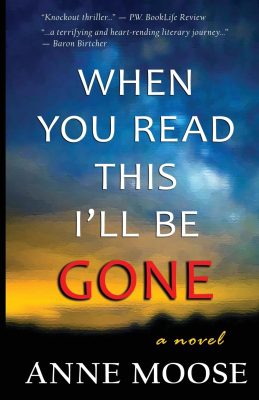
  • WHEN YOU READ THIS I’LL BE GONE by Anne Moose – Mystery, Crime Thriller, Psychological Fiction


    With unexpected twists, When You Read This I’ll Be Gone by Anne Moose ramps up a kidnapping escapade with a campus tragedy of life-altering consequences.

    When You Read This I’ll Be Gone takes us on a gripping book-within-a-book journey. Valerie Hawthorne—an author and college professor—has written a note to her family about the vagaries of her own disappearance. One might even consider the book’s title to be the true opening sentence.

    As Valerie recollects the events leading up to the rupture of her marriage and her disappearance, she sucks readers into a meta-narrative that lays the groundwork for Valerie’s published book, which becomes the very book that you are reading.

    Through this fascinating narrative approach, the author takes an unfortunately common tragedy of campus rape and re-sensitizes readers to all the reasons why rape survivors find it difficult to come forward about their experiences.

    Moose takes Valerie and her kidnapper down the remorseful road of “what-ifs” and “if-onlys” that haunt those whose small actions contributed to someone’s silence. Valerie must come to terms with the fact that she can’t go back in time and fix things—her marriage, her interaction with a student—but she can do something to make sure a victim’s story is told and bring to justice in their absence.

    When You Read This I’ll Be Gone is equal parts thrilling and sincerely devoted to its premise, “How far will a person go to hold abusers accountable?” There is some question as to how the title itself factors into the story when it comes full circle. The reader is left unsure who it is for if not about Valerie. Is it coming from the victim of sexual violence, or the father seeking revenge on the men responsible for his child’s undoing? Leaving the question open-ended allows the reader to experience the kind of heartache that can be understood in multitudes.

    For readers of Laura Dave’s The Last Thing He Told Me and Chanel Miller’s Know My Name, Anne Moose’s When You Read This I’ll Be Gone is full of fast-paced suspense that will have you revisiting the beginning to catch what you missed with renewed insight. Which, if we were to ask Valerie Hawthorne, is the point of storytelling all along.

    *This book comes with a Content Warning for campus rape, revenge porn, and suicide

    Chanticleer Book Reviews 4 star silver foil book sticker