Let’s face it, finding those who are looking for a book just like yours isn’t always easy. But finding your target audience is key to creating a base of loyal fans clamoring for your next novel. Understanding of your target audience allows you to tailor your messages to more effectively gain their attention and improve your marketing return on investment (ROI). You’ll be able to create content that resonates with your target readers, boosts engagement, and ultimately drives conversions. A win, win, win!!
Whether you’re launching your debut novel or running a marketing campaign, understanding your readers can make all the difference in your success. Here’s a guide to help you effectively identify your target audience.
Identifiers That Will Help You Find Your Target Readers
Analyze Your Current Readers
Start by examining your existing readers. That can be family, friends, co-workers, or anyone that you’ve shared your work with and know they want to read more. Look for common characteristics such as age, gender, location, income level, and interests. Once you get your website set up, tools like Google Analytics and social media insights can provide valuable data about who is already engaging with your brand.
Conduct Market Research
Talk to your current readers to find out what initially interested them enough to read your book. This can be done informally through conversations with pointed questions that will help you understand what drives your readers’ purchasing decisions.
Create Buyer Personas
Once you have sufficient data about your readers, develop a reader character description. Just like the character descriptions you create when developing your characters, these are semi-fictional representations of your ideal readers. The information should include the demographics, behaviors, goals, and challenges your readers experience. A well-crafted reader persona is an asset to guide your marketing strategies and content creation, making them more interesting to your readers.
Analyze Other Authors in Your Genre
We all want our books to land on the bookshelves next to the best writers in our genre, so you better have a good understanding of your neighbors on that shelf will be. Study other writers’ books to see how they market their novels. Look at their covers, size, messaging on the cover, how they present the content, and then look those authors up on the web to see how they extend their marketing to their online presence.
Engage on Social Media
Using tools you already have in place gives you a leg up on identifying your ideal reader. Using your social media platforms as a goldmine for understanding your audience can really bring in a payload of new readers. Pay attention to the conversations happening in your genre, join relevant groups, regularly post, engage with your followers, and encourage them to share your content across their social media channels. Their comments and feedback can provide insights into their preferences and pain points.
Test and Iterate
Identifying your target audience is an ongoing process. Launch small campaigns or create content tailored to different segments of your audience, then analyze the results. Use A/B testing to determine what resonates best, and be prepared to adjust your strategies based on feedback and performance metrics. The better the campaign the more readers it will reach!
“A/B testing, at its most basic, is a way to compare two versions of something to figure out which performs better.” Learn more from the Harvard Business Review here!
Considerations to Remember
Segmentation: Your audience is likely diverse, so consider segmenting it into smaller groups based on specific characteristics. This allows for more personalized marketing strategies.
Adaptability: Audience preferences can change over time. Stay informed about trends and be willing to adapt your approach as needed.
Feedback Loop: Encourage and monitor feedback regularly. This ongoing dialogue can provide invaluable insights into your audience’s evolving needs.
Identifying your target audience is a crucial step toward building a successful brand. By taking the time to understand who your customers are, what they need, and how they think, you’ll be better equipped to create meaningful connections that drive engagement and sales.
Remember, your audience is the heart of your business as an author! Knowing your audience is key to unlocking your full potential.
Chanticleer Editorial Services – We’re ready when you are ready!
Did you know that Chanticleer offers editorial services?
We do and have been doing so since 2011!
Tools of the Editing Trade
Our professional editors are top-notch and are experts in the Chicago Manual of Style. They have and are working for the top publishing houses (TOR, McMillian, Thomas Mercer, Penguin Random House, Simon Schuster, etc.).
If you would like more information, we invite you to email Kiffer or Sharon at KBrown@ChantiReviews.com or SAnderson@ChantiReviews.com for more information, testimonials, and fees.
We work with a small number of exclusive clients who want to collaborate with our team of top-editors on an on-going basis.Contact us today!
Chanticleer Editorial Services also offers writing craft sessions and masterclasses. Sign up to find out where, when, and how sessions being held.
QR codes have emerged as
a versatile and powerful tool
for authors to promote and sell their books
In the ever-evolving landscape of book marketing and reader engagement, QR codes, these seemingly simple squares of black and white pixels can open doors to a multitude of opportunities. This makes them an invaluable asset for writers looking to connect with their audience in innovative ways. Here we’ll delve into how QR codes work and how authors can harness their potential to sell more books!
What is a QR Code?
QR codes, or Quick Response codes, are two-dimensional barcodes that can store a variety of information. When scanned using a smartphone or QR code reader, they can direct users to websites, videos, social media profiles, and more. Unlike traditional barcodes, QR codes can hold much more data and can be read from any angle, making them exceptionally user-friendly.
How Do QR Codes Work?
Encoding Information:
QR codes are created by encoding information into a pattern of black and white squares. This information can range from URLs, to contact details, or even multimedia content.
Scanning the Code:
When a QR code is scanned using a smartphone or tablet, the embedded data is quickly decoded and the user is redirected to the stored content, whether it’s a webpage, a promotional video, or a digital book. It’s a seamless and mostly effortless way for your readers to find you on the internet.
Decoding and Action:
The scanning app or device, such as a cell phone, reads the QR code and performs the action associated with it. If the QR code contains a URL, the device will open the linked webpage automatically.
Why Should Authors Use QR Codes?
QR codes present a unique opportunity to engage with readers in a more interactive and dynamic way. These are just some of that ways you can incorporate QR codes into your marketing strategy:
Streamlined Book Sales:
Place QR codes in promotional materials, at book signings, or on your book covers to lead readers straight to your selling sites, like Amazon or your personal website.
Direct Access to Content:
QR codes can link directly to book trailers, sample chapters, exclusive content, or your Newsletter! This immediate access helps generate interest and provides readers with a direct path to learn more about your work. For more information on different types of content marketing and how to build your Newsletter, check out this interview with Chanticleer Overall Grand Prize Winner Michelle Cox!
Enhanced Author Websites:
Use QR codes to direct readers to your author website where they can find more information about your books, upcoming events, or subscribe to your newsletter.
Interactive Marketing:
QR codes can be used to participate in interactive campaigns. For example, you can create codes that lead to online contests, reader polls, or exclusive behind-the-scenes content.
Social Media Integration:
Encourage readers to follow you on social media by including QR codes on you promotional materials. Scanning the code can take them directly to your social media profiles, making it easier for them to connect with you.
Simplify Reader Reviews:
Having a QR code at the end of your book can better link the reader directly with your Amazon or Goodreads page where they can leave a review of your book. Remember! Editorial Reviews help drive Reader Reviews by giving them language to work with. You can learn more about updating your Editorial Reviews on your Author Central here.
For more tips on marketing your book, check out this article here, which includes suggestions for using Book Awards and Editorial Reviews to market your work!
How to Create and Use QR Codes Effectively
Generate the QR Code:
Use a QR code generator tool (Many of which are free) to create your code. Enter the URL or information you want to encode, and download or screenshot the generated code.
Design with Purpose:
Incorporate your QR code into your book cover design, marketing materials, or business cards. Ensure it is large enough to be easily scanned and placed in a prominent location.
Test Thoroughly:
Before printing or distributing, try scanning your QR code yourself. Nothing is worse than discovering the code you set up for people to use just doesn’t work!
Provide Instructions:
Not all readers may be familiar with QR codes. Including a brief explanation on how to scan the code and what to do afterward can be the call to action you need to make things as easy as possible for your readers.
Give Readers More with QR Codes
QR codes are a powerful, cost-effective tool for authors aiming to enhance their marketing efforts and engage with readers in new ways. By providing direct access to content, facilitating book sales, and integrating with your online presence, QR codes can significantly boost your visibility and reader interaction. Embrace this technology to unlock new opportunities and keep your promotional strategies ahead of the curve!
Thank you for joining us for this Writer Toolbox Article
There is so much to learn and do with Chanticleer!
From ourBook Award Programthat has Discovered the Best Books since the early 2010s to our Editorial Book Reviews recognizing and promoting indie and traditional authors, Chanticleer knows your books are worth the effort to market professionally!
When you’re ready,did you know that Chanticleer offers editorial services?We do and have been doing so since 2011.
Our professional editors are top-notch and are experts in the Chicago Manual of Style. They have and are working for the top publishing houses (TOR, McMillian, Thomas Mercer, Penguin Random House, Simon Schuster, etc.).
If you would like more information, we invite you to email us at info@ChantiReviews.com for more information, testimonials, and fees.
We work with a small number of exclusive clients who want to collaborate with our team of top-editors on an on-going basis. Contact us today!
Chanticleer Editorial Services also offers writing craft sessions and masterclasses. Sign up to find out where, when, and how sessions being held.
A great way to get started is with our manuscript evaluation service, with more information available here.
And we do editorial consultations for $75. Learn more here.
Ashton Kutcher and Seann William Scott in the 2000 film Dude, Where’s my Car?
A Frequently Asked Question
With the 2023 CIBAs all wrapped up and the winners having been announced at the Four Points by Sheraton in beautiful Bellingham, WA on April 20, 2024, many people have the very reasonable question: Where are the official announcements, and why didn’t they all come out on that Saturday or on Sunday-the next day? (We are staffing the Books By the Bay Book Fair on Sunday).
First off, you can see all CIBA Winner Lists as they come out on our website here!
On our home page, these are all under the top center section labeled Book Awards News – CIBAs.
Playing the Social Media Game
While a PDF with a list of the winners could easily be posted, that wouldn’t uphold our promise to help with long-tail marketing and increasing our authors’ digital footprints. We are committed to maximizing promotion for authors.
How do we maximize your promotion?
Our normal posts, when not during our conference season, tend to have double the response and interaction rate of comparable businesses. During the Chanticleer Int’l Book Awards, these rates rise to seven times the standard engagement of those other posts, and is still double the posts during similarly busy times at other companies. And that is for each Awards post that goes out. The way we do this is simple.
First, we give each division breathing room on Social Media, on our high traffic Website, and our e-Newsletter in our flurry of daily email blasts that are sent out until all the lists have been posted. The consistent promotion over the course of two weeks allows for each set of winners to have their moment in the sun, and it keeps every post prioritized instead of being devalued by search engines for over-posting.
We also try to tag each winner on Facebook per CIBA division. Again, if we post more than three posts per day, FB devalues the posts which means less exposure.
Under the Hood with SEO
One of the best parts of Chanticleer is our emphasis on being ahead of the technological curve. The main way we do this is through a robust SEO package that we usually talk about with regards to our Editorial Reviews, but we use all those same tools to promote the authors who advance in our Book Awards as well.
You can see the article we put out specifically about the All In One Search Engine Optimization tool (AIOSEO) we use here.
Argus Brown and David Beaumier presented a coffee klatch on this at CAC24 to help explain the ins and outs of promotion, specifically looking at different author websites and giving feedback right there in the moment!
While most SEO tools recommend a score between 60-80, we always strive to exceed that, with many of our Book Award posts receiving a AIOSEO score above 90. We do this through our usual rigorous attention to detail surrounding the optimization of heading distribution, sentence length, alternative text, key phrases, meta data, tagging, and much more. There’s no replacement for basic elbow grease (or clicking away?) when it comes to maximizing our posts so that web crawlers love them and promote our authors writing as much as possible. We know from client feedback that it really makes a difference!
Human Beings at Work
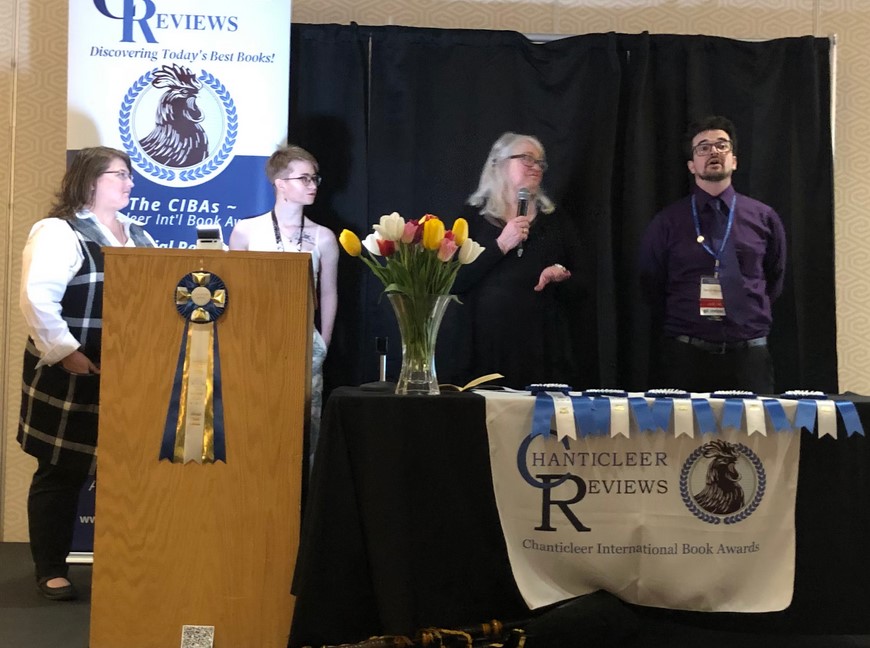
A rare photo of the Chanticleer staff all in one place and, yes, that is a bagpipe under the Chanticleer table’s banner.
Of course, it’s important to remember that we are a small business with huge reach that works hard to address every question, email, and comment we receive directly with care, empathy, and expertise. Putting together an internationally attended conference with authors from India, Australia, and the UK takes hours of dedication and careful planning. As we move into the follow up phase, we are just as determined to provide the excellent service that is a hallmark of Chanticleer. We double-check our work before putting the lists out, maximizing SEO, looking to see that names and titles are written correctly, and scheduling out posts to have the strongest online impact.
Then, we promote all the CIBA winners again with our Overall Posts for the CIBA Fiction Book Awards, the CIBA Non-Fiction Book Awards, and the SERIES, SHORTS, and COLLECTIONS Awards.
And then, the CIBA lists are kept on the HOMEPAGE of the Chanticleer Website for a year with all those links!
And then, we recognize the Division Winners in periodic SPOTLIGHT posts with links!
And then, well we could go on, but I think you are getting the picture.
Most of all the Chanticleer International Book Awards is a labor of love!
Love of books, love of words, love of storytelling, love of authors,
and love of the writing community!
We are passionate about what we do!
Finally, Thank You
Thank you so much to everyone who submitted to the 2023 CIBAs and to the hundreds who have already submitted to the 2024 CIBAs. Every year, the quality and intensity of the competition is better than the year before, and we are always blown away by the incredible work you send our way. We will do everything we can to wrap up the 2023 CIBAs in the best way possible and get the ribbons and rewards out to all the winners before we dive into another year of Discovering Today’s Best Books.
Thank you for making Chanticleer possible and for trusting us with your work!
I learned a very long time ago in business school that “nothing happens until someone sells something.” [Henry Ford]
Selling is meant to create a chain reaction.
Pitching is the act of trying to sell something.
Selling (pitching) your book(s) is part of being a professional writer.
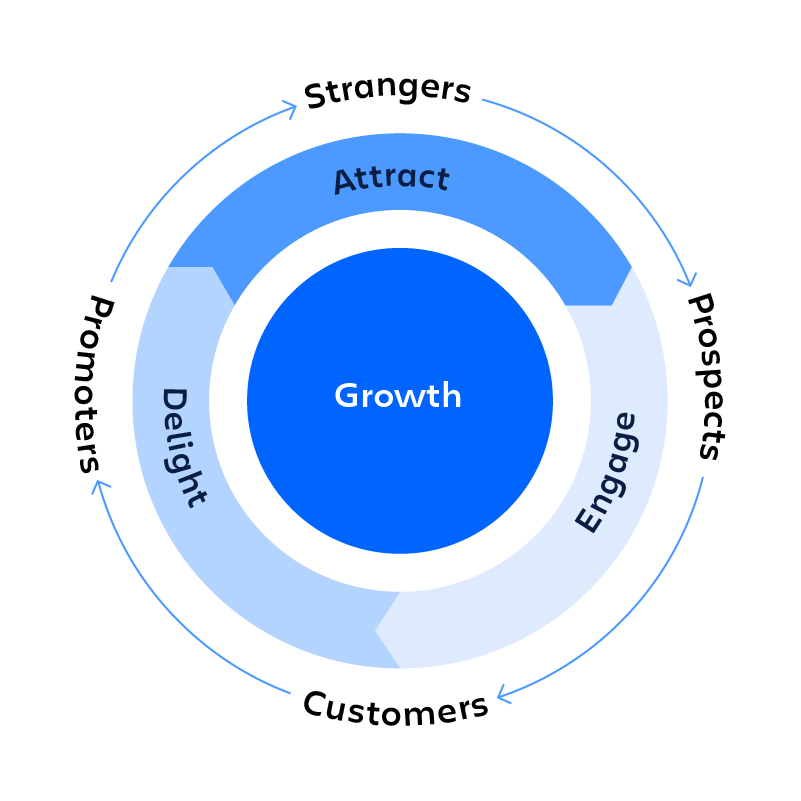
Pitching your book should put another spin on your book’s marketing flywheel to gain momentum for your book sales. The flywheel strategy creates a cyclical business pattern of success.
The idea is that a flywheel takes a lot of effort at the start, but once it gets spinning, it continues to quickly gain momentum and spin faster. This is similar to the snowball effect, where a snowball gets pushed down a hill as it progressively gets bigger and bigger until it is nearly impossible to stop before it reaches the bottom of the hill. The difference is that a flywheel never has to stop.
Amazon has a very intentional flywheel strategy. And, yes, it was written by Jeff Bezos on a paper napkin in 2001.
ATTRACT. ENGAGE. DELIGHT/ENTERTAIN
Elegantly simple.
The FLYWHEEL SUMMARY
The flywheel effect occurs when small wins (acquiring readers one at a time) accumulate over time, creating momentum that keeps your business growing (increasing your readership).
The concept is based on mechanical flywheels that power rowing machines and other devices.
Achieving the flywheel effect requires removing friction and applying force. In business terms, that means creating a self-serve purchase flow and applying “forces” to make the wheel spin faster, e.g., SEO, Meta-Data, and nurture campaigns.
A flywheel go-to-market model is well suited for selling books — easily replicated products such as books, e-pubs, audio-books, games, etc.
Flywheels attract and engage customers 24 hours a day – they’re literally working while you sleep. See SEO above.
Stay tuned for future posts on FLYWHEELS and how to create yours.
A Tiny Bit of Publishing History
We will circle back around to pitching. Please bear with me.
Amazon shifted the book-selling business by selling print books on July 16, 1995 and is now considered having the world’s largest collection of books. The first books were sold out of Jeff Bezos rented home’s garage. Remember that Bezos drew Amazon’s flywheel on a napkin in 2001. The rest is history.
E-books have been around since late 1990s, but it wasn’t until Amazon released the Kindle book reader in 2007 that e-books (digital books) caught the general public’s attention and dollars.
Selling books online – digital books requires a very different approach – one that sells directly to the reader and works to make the work discoverable by potential readers/purchasers.
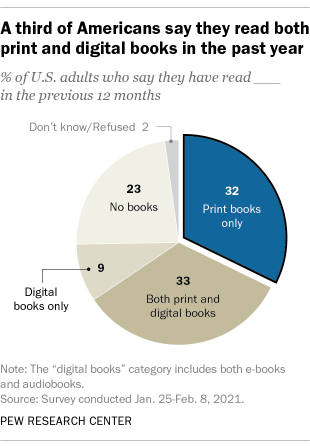
The Pew Research Center states that as of April 4, 2012 that only one-fifth (21%) of Americans have read an e-book.
As of now, 30% of Americans have read an e-book. This number has remained consistent since 2019 according to PEW Research.
The typical American reads five books a year (median – symmetric distribution) while the average (mean – includes outliers) is about 14 books per year per person.
Most Americans only have eight hours of free time per week. This is the window when reading a book (e-book or print book) for pleasure/leisure would take place. People could watch TV, play video games, play pickleball, golf, swim, etc. instead of reading during these rare free hours. Hence, this is why audio-books sales are increasing! Busy people can listen to books while they commute, knit, wash laundry, load the dishwasher, or rake the autumn leaves.
The point is “what is in your bag to sell?” If you are self-published, are your works available on a wide variety of platforms to reach your readers?
Audiobooks Hands-Free Reading
Now to circle back to PITCHING!
Whether or not you are pitching your work to a literary agent, a publishing acquisitions editor, bookstore staff, or, most importantly, a potential reader, you will need to know how to pitch your works.
Your literary agent will need to know how to pitch your book to publishers. They do not get paid until your book is under contract (and purchased).
The publishing house (you or a traditional publishing house) will pitch your books to “the trade” – booksellers, libraries, online selling platforms, and other brick & mortar outlets.
Most writers first exposure to pitching to agents is at writing conferences that offer “Pitch Blocks” or “Pitch Slams” where the conference host is paid (again, not the literary agent) a fee for hosting a session with a roster of agents who will listen to pitches. PNWA and Writer’s Digest offer these for a fee per block (WD $179 PNWA $100 per block). Pitch time is anywhere from five minutes to eight minutes per attendee and are on a strict time schedule with one pitch being delivered after another. There are different schools of thought of whether pitch sessions are helpful or not in obtaining a literary agent, but that is another topic.
How to Pitch at Conference Pitch Sessions
While it is normal to feel nervous when you are pitching your works, it behooves you to remember that:
You paid for this pitch session.
The clock is ticking.
There are many others pitching to the same agent.
Agents only want pitches on completed manuscripts or polished non-fiction book proposals.
Do your homework ahead of –make sure that you are pitching to an agent who is representing your genre. Visit their websites to see other books that they are representing.
First, most agents are forgiving of nervousness. It happens a lot and all that anxiousness will not help your pitch to stand out. Don’t spend your time apologizing for being nervous or explaining why you are not prepared. Doing so is wasting precious time. Rambling does not make a good impression. You want them to have your pitch echoing in their brains.
Come prepared. Over prepare. Have a prepared, polished pitch. Write it on a note card. Carry the card with you. Memorize your pitch. Read off from it if you need to. Believe me, the agent will appreciate this more than you hearing you hemming and hawing and umming.
“Or is your name Sir ‘Um’?” Knight’s Tale
They also do NOT want to hear about your ‘dreams and passions’ about writing. Everyone that is pitching to them is passionate about their writing. Agents are about salability. They have mortgages to pay, food to by, and their own dreams of vacations and income from discovering that next break-out Hunger Games. See “nothing happens until someone sells something” above.
Keep your pitch short. Have questions to ask the agent-your conduit to the world of publishing-about if there was something that appealed to them. What did not appeal to them or what was missing. Try to let the agent guide the feedback. This is your chance to get professional feedback, to listen and learn.
Also, keep in mind that agents are also seeking to represent writers who are open to feedback and pleasant to work with along with understanding the process of the publishing industry (that it takes time and effort).
Remember to bring your business card with your website and contact information. Say hello. Introduce yourself. Give your pitch early on so that the agent will have time to give you feedback on it. Ask questions instead of “explaining” your manuscript to the agent so that she will give you feedback.
When your session is over (Some are as short as three minutes. Eight minutes is considered to be a long session.). Thank them for their time and leave. The next person to pitch is waiting to take your spot.
If the agent does have interest, be sure to have your synopsis ready (printed) with your contact information in case she asks for it.
Less than 1 percent of writers at a pitch session will gain representation. It is about the same as cold querying (another post is coming on that — stay tuned). So, keep on writing, editing, refining. The main objective is for the agent at the pitch sessions to think that you are open and understand the business and marketing side of being a writer.
Most agents also understand that it’s a busy world and will allow simultaneous submissions. If they don’t, they might not be a good general fit for most writers.
Chanticleer Authors Conferences do not offer “pitch sessions.” However, we do offer sessions on developing pitches. We do have opportunities to make excellent connections with film agents, directors, publishing house acquisitions, literary agencies, and other professional connections in the content industry such as Maggie Marr, Legal (Film and Book Representation) and Scott Steindorff, President of Stone Village Film Productions
Mariners pitching prospect Bryce Miller gets his first start of spring — against team he grew up watching | The Seattle Times
What is a PITCH and/or LOGLINE?
Your story reduced to less than 33 descriptive words. EACH. WORD. COUNTS.
Brand your story with a compact package of words that will astonish and entertain. It’s a craft of its own! Continue to refine and refine your pitch to a concise sound bite.
A PITCH is NOT
A meandering description about the story
The opening scene
Side stories
Character names
Flash forwards
Psychological thinking
Don’t confuse platitudes for story – avoid them!
Get your ‘self’ (looking at you Writer) out of the way of your story
Never give away the ending
A PITCH consists of the following:
Identifying the main character (protagonist) using descriptive words — tonality – leverage your language/voice
Describe the world that character lives in (Fantasy? Dystopian? Barbie Land? Future? Stone Age? Future in a galaxy far away?
What sets the story in motion — the inciting event
The goal of the protagonist — central conflict — choice — action
What stands in the protagonist way – what is the conflict or who is antagonist?
The best loglines have a sense of irony. (There’s the conflict again!)
Answer all of the above in 33 words or less. Perfect words. Use active and visual language. This is where you should show off your word craft abilities.
How are loglines/pitches different than taglines? Pitches are descriptive. Taglines are provocative and are used for marketing. Don’t confuse the two.
Here is a classic example of a logline/pitch and tagline:
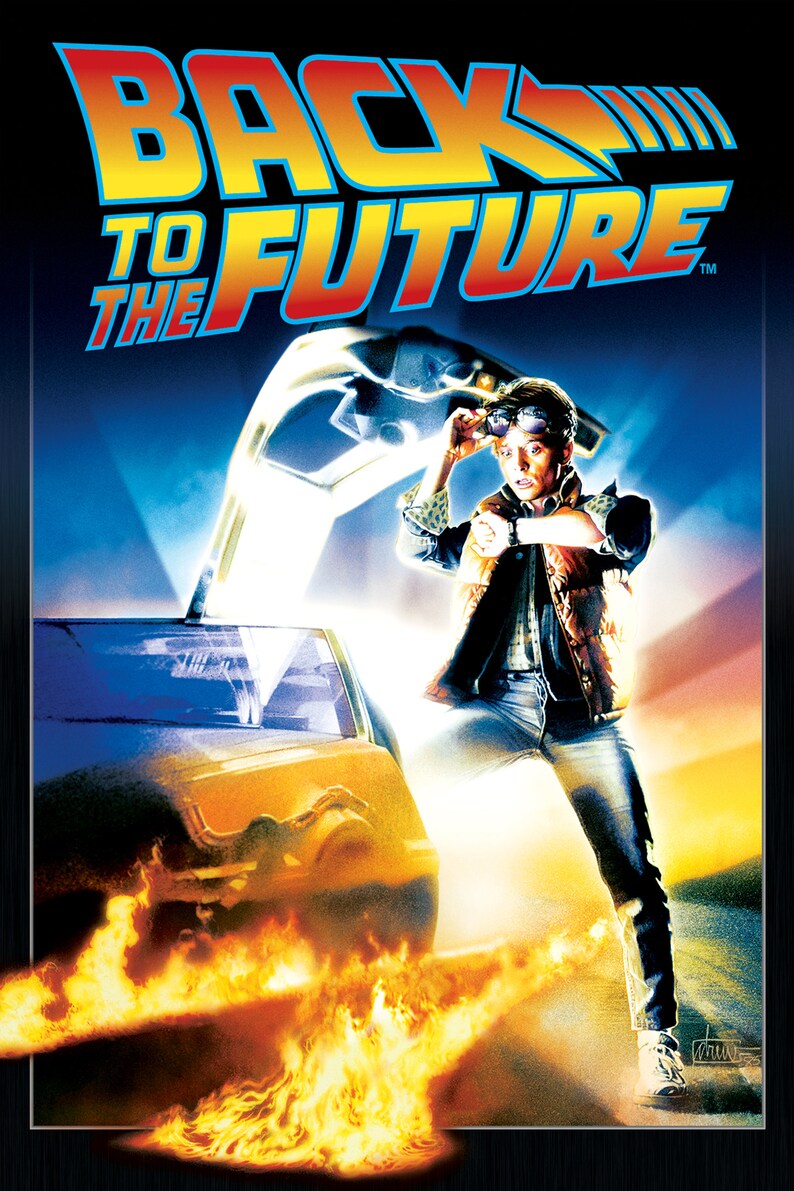
Back to the Future:
Logline: “A young man is transported to the past, where he must reunite his parents before he and his future cease to exist.”
Tagline: 17-year-old Marty McFly got home early last night—30 years early. (Notice that this tagline gives the tonality and targets the market for the work/film.)
In closing: The whole idea of pitching is to entice an extremely busy person to making time to read your work!
Next step: write a 50 word summary of your story. Bring it on your stationary along with your pitch on a notecard to your pitch session. Just in case! I’d even work on a tagline to give a visual!
An effective, evocative, compelling logline/pitch can propel your writing career forward and open doors and lead to conversations with industry professionals.
Oriana Leckert is the Director of Publishing & Comics Outreach at Kickstarter
Photo Credit Lauren Renner
Oriana Leckert helps creators bring a marvelous array of literary projects to life. She’s written and edited for Vice, MTV News, Slate, Hyperallergic, Gothamist, Atlas Obscura, and many more. Her first book, Brooklyn Spaces: 50 Hubs of Culture and Creativity (Monacelli, 2015), grew out of a multi-year project chronicling the rise and fall of under-the-radar creative places across New York City. Follow her at @orianabklyn on Twitter/Instagram.
Kickstarter Fundraising is an excellent way to make money off your book before you publish. Avoid the pitfalls and mistakes early users make by coming to Oriana’s session! You can learn more here.
Still thinking about registering for the 10th Anniversary Chanticleer Authors Conference?
We have a stellar line up of speakers for CAC22, with options to attend in person and virtually. Find out why The Writer Magazine (founded in 1887) has repeatedly recognized the Chanticleer Authors Conference as one of the best conferences to attend and participate in for North America. Join us June 23-26, 2022 at the beautiful Hotel Bellwether in Bellingham, WA.
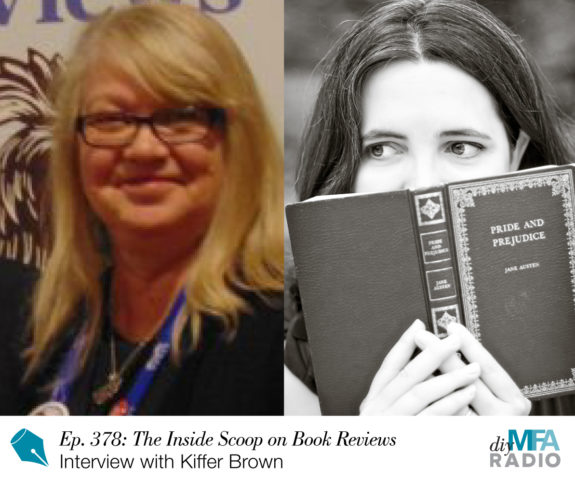
If you haven’t heard the news, Kiffer was interviewed on DIY MFA where she and Gabriela Pereira discuss
Why now is the best time to be an author
The difference between a write-up and a review
The Four Types of Reviews
How advance reviews help to promote your book
When you should start sending your book out for reviews
Plus, Kiffer’s #1 Tip for Writers
You can listen to the full interview on Chanticleer’s under the hood technology that gets increases the digital footprint of each book review published on Chanticleer’s website here or wherever you get your podcasts. Kiffer also gives quick and easy tips about how to get more “Amazon Love” to your book’s Amazon selling page. Below is a quick synopsis of the interview, but tune in to get the full scoop!
So what does all this mean? We have the inside scoop!
The Best Time to be an Author
With millions of books being published every year, it’s harder for an author to be noticed than ever! So why is now the best time to be an author?
Simply put, the number of resources available to authors now are greater than ever before. Not only can Chanticleer help you navigate this vast ocean of publishing, but we provide many of the tools directly. A brief list of our formidable resources are:
Overwhelmed? You can always email us at info@ChantiReviews.com for assistance, or message us directly on Facebook. Of course, one of our primary services is the Editorial Review.
A Write-Up vs A Review
The proof is in the pudding for write-ups vs reviews. A write-up, as said on Merriam-Webster is a review that is intended to be “flattering.” While there’s nothing wrong with one of these, readers will wisely be wary of them as they have a biased tone. By contrast, Editorial Reviews are unbiased and objective, referring to what a text specifically does or does not do – it focuses on the quality of the work. Editorial Reviews are an excellent way for readers to gauge their actual interest in a book, instead of having to read between the lines to see if it’s actually something they’ll enjoy. Both happen and can help with book sales, but an Editorial Review will be more versatile. Let’s dig into that!
The Four Types of Review
Editorial Reviews
These reviews are unbiased and objective, the standard by which readers measure if they’ll want to read a book or not. Chanticleer Editorial Reviews are a professional avenue for your book to be fairly assessed and get people talking about it! We keep up with the latest in Search Engine Optimization technology to maximize the digital footprint of our clients, including cross-posting across social media.
Chanticleer’s Marketing Kits are given to authors whose books receive a 4 or 5-star CBR review.Our kits include personalized Shelf Talkers you can use wherever your print book is sold, as well as samples of our silver-foil Book Review stickers designed to catch readers’ attention.
Typically, the best time to begin submitting your work for an Editorial Review is when you reach the proofing stage. Your reviewer will understand that the book is approaching its final form, and that minor changes will still be made. Your book will be evaluated, not on minor typographical errors, but on how well you’ve realized your story.
Reader Reviews
Close kin of the write-up, these are the kinds of reviews you’ll find everyone on Amazon and Goodreads letting you know how someone who read the book liked it. While some are helpful and provide real insight on the book, many are just a rating from 1-5, and the information relating to your book varies. You can’t be sure this reader is in your audience, even if they read your book! There’s no denying that reader reviews help your book do well, and it’s more of a question of quantity over quality, but they’re tricky to maneuver and guarantee.
Peer Review
One of the most difficult reviews to obtain is that of the peer review, or, as it’s commonly known, the book blurb. This describes an author or someone else in your circle of influence who readers will listen to. J.D. Barker, a regular presenter at The Chanticleer Authors Conference, has networked to have Stephen King blurb his thriller novels, and you can believe that King’s readers sit up an pay attention to that!
Circle of Influence is how Kiffer describes those who surround you that can directly contribute to your success as an author. If you aren’t sure who your circle includes, try writing down ten people who you know you can turn to for advice or support. Each year, you’ll want to grow this circle by another ten people. Kiffer and Sharon Anderson wrote an excellent article about this that you can read here.
JD Barker presented at CAC19 and VCAC21!
While you will, of course, reach out to authors on your level, it’s always good to have a few authors who are doing better than you blurb your book. Obviously, writers at the top of their game will be inundated with blurb requests, so be gentle and patient when asking, even if you never hear back.
The Manuscript Overview
This one is always unexpected, because a review of your manuscript doesn’t come after your book is done (or close to it). However, Kiffer recommends that you do a Manuscript overview around the second of third draft of your book. It’s before you’ve paid someone to painstakingly line edit and proofread your book, but after you feel comfortable with knowing the core of the story, and you know the ideas you want to convey are on the paper. That’s when you’re ready for your overview.
A manuscript overview (MOV) is a broad overview of your manuscript – what’s working and what isn’t from all aspects of your story: structure, plot, pacing, character development, dialogue, etc. Chanticleer can offer guidance on what you need next. Using a manuscript overview before you begin the editorial process will not only save you money in terms of editorial services down the road, but it also will save you time by clarifying where you are in writing your story right now.
Now that we’ve covered the four types of reviews, let’s continue to dig deeper into how you can use your Editorial Reviews
How Advance Reviews Can Support Your Book
So often when authors receive their Editorial Review, instead of inspiration lighting up the night sky telling them what to do next, there’s a strange buzzing sound that surely isn’t dread and uncertainty.
It’s okay! Of course, you’ll want to test bits of your Editorial Review as blurb material for you book. Feel free to be selective and grab multiple sound bites that you like to describe your book. Workshop them with friends and fellow writers in your circle of influence. For the other potential blurbs, you can use those on Amazon, Goodreads, Barnes Noble, and Kobo. Each one of those places has a special location for Editorial Reviews that the author can upload. The reason you use different quotes from you review for these is so that readers who come across your book on multiple platforms have something new to read in each spot. Editorial Reviews used in this way can really help drive presales.
If your book hasn’t been published yet, but is a manuscript that you are sending to agents and publishers, then the Editorial Review can still be used in the same way to market it to those you query regarding your book.
The other big thing is link to your review! Adding links on blog posts and websites increase your SEO rating, and having your digital footprints over a wide path with help readers come across your book online.
When Should you Solicit Reviews?
At least six months in advance. In times where shipping is not being impacted by a global pandemic, it takes about two weeks to receive a shipment of books. And that’s in the best case scenario. Remember, even if all you have left to do is proofreading, your book will still have the following to go through before it can go to print:
Interior Formatting
Cover Design
Proof Copies
The interior formatting and cover design time varies greatly, and the time it takes to receive a galley or proof of your book will be another two weeks for shipping. Six moths will be the minimum amount of time you’ll want to make sure the blurb can appear somewhere on your book and then will be sent out in marketing packages. Bestselling books are often sent out a year or more in advance to receive reviews.
The book is a wonderful tool for someone interested in an MFA, but sitting on the fence. It walks you through the essentials of what an MFA program provides, and the dives into how to create a similar situation, while providing craft tips on par with the latest advice from top-tier editors. Highly Recommended!
Seating is Limited. The esteemed WRITER Magazine (founded in 1887) has repeatedly recognized the Chanticleer Authors Conference as one of the best conferences to attend and participate in for North America.
Join us for our 10th annual conference and discover why!
The days of publishers handling all an author’s marketing are looking like a thing of the past, even for traditionally published authors. This means you need to take control of your own marketing strategy for your books’ promotions.
To begin, list off the places where you imagine people will see information about your book(s). We have some ideas, but you know your community best so trust your expertise there. It’s safe to say you will need to at least look in these places:
Your Website!
Your Social Media Platforms (that point back to your website — not a selling platform)
A Cross-Promotion platform that you share with other authors
Bookchain.ca, Amazon, Barnes & Noble, Apple, Kobo, PublishDrive, and as many selling platforms as possible to create streams of revenue/royalties.
Independent Bookstores and Retail Outlets (many Chanticleerians join with garden shops, wineries, gift shops, toy stores, etc.) to sell their books.
Local Bookstores
Your local bookstores deserves special attention. There are always loyal readers with a strong preference to shop local, so take some time to show those stores extra love.
Shelf-talkers for point of sale displays
Small posters (free standing and flat for windows and bulletin boards
Shiny book stickers work! – They make your books stand out on the shelf.
Bookmarks with your WEBSITE and Social Media Handles and your Covers — ask if you may insert them in your books.
Make plans to participate in virtual author events – most indie booksellers are hosting these with great success
THEN you promote your events every where! (Social Media, email blasts, website, posters, etc.)
Now let’s put those together for some general recommendations (remember, your situation is unique, so if this advice clearly needs an adjustment for you, go for it).
[Editor’s Note: David Beaumier has worked with Village Books (Bellingham’s local Independent Bookstore) for several years before rejoining the Chanticleer Team after completing his Master Degree in English, so he knows what he is talking about with how to increase sales at local bookstores.]
How to Make Your Website More Effective in Promoting Your Books
We recommend that your website has a tab for Reviews and Awards, in addition to a tab for your books. It can also be good to include your shelf talker blurb after that to showcase a strong hook to bring your reader in. Then, from your Book tab, lead them to your review from there so they can see you have a strong digital base already built up with accolades from an independent and respected reviewer. These nods to your success tell the reader that your book is worthwhile and make it stand out from the thousands of other books they’ll come across.
Website Checklist
Tab for Reviews and Awards
Books Tab for more information with links to wear to purchase
Feature Your Digital Badges
Sign up Page for Announcements, Freebies, Bonuses, Short Stories, News, and Beta Readership Opportunities
If your books are available at indie bookstores, or other retail outlets — list where they are and give links!
Questions For and How To Connect with Book Clubs (remember — virtual gives you a wider audience span and the benefit of no travel expenses)
You can feature your digital sticker in proximity to an image of your cover in both places. It can also be good to include your shelf talker blurb after that to showcase a strong hook to bring your reader in. Then, from your Book tab, lead them to your review from there so they can see you have a strong digital base already built up with accolades from an independent and respected reviewer. These nods to your success tell the reader that your book is worthwhile and make it stand out from the thousands of other books they’ll come across.
Marketing packages can include an ARC, any swag you have (bookmarks, buttons, wrist bands, quarter sheet advertisements), a one page Sell Sheet (aka a write up of your book) which should mention your awards and positive reviews (including excerpts). On websites where your book is sold, you can populate their editorial review section of the site with your Chanticleer Editorial Book Review.
Village Books, Bellingham, Wash. all aglow!
Village Books at night. A brick cornerstone of the community with light pouring out the windows when it gets to be dark at 4 p.m. Our very own local, Bellingham bookstore. Local bookstores are key for selling your book!
That’s David up in the upper left hand corner sans grad school mustache.
Check to see if they have a regular advertising publication or newsletter and ask about including your review or your shelf talker in it (depending on space). Ask if you can post shelf talkers at their store and what the specifications for talkers are through their store.
Chanticleer Shelf talkerShelf Talkers sell Wine and Books! They work!
If a bookstore team member says they love the genre you write in, you can even offer them a free copy of your book and ask if they can do a write up for you. They have an abundance of riches when it comes to free books, but they don’t have a personal connection with every author. Only offer if they seem interested. Generally, do remember to always be kind to bookstore employees. They are the people who hand sell your book the most after you.
If the bookstore does do raffles on sale event days, or if you are having a socially distanced author event perhaps the staff can offer your swag such lavender sachets to each attendee or purchaser (as Gail Noble Sanderson does with The Lavender Meuse Trilogy or Kizzie Jones offers with coloring sheets for her Tall Tale of Dachsunds children’s book series).
Here is what Kizzie Jones is doing for her foreign book editions:
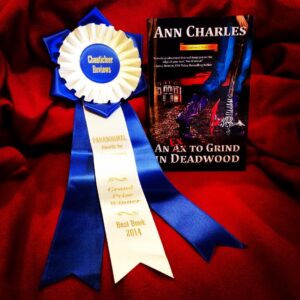
Plan events with your ribbon front and center — even if it is virtual — have your well-earned Chanticleer Blue Ribbon placed where it can be seen — another subtle way of stating that you are an award-winning author without having to say so yourself in your virtual presentation.
People know what a blue ribbon means, and it’s a great way to start a conversation about your book. Events are for more than just your local bookstore, but any stores near where you live or other places you think your story might resonate. Ask yourself if you might know special interest groups that would want to read your work that deals with zookeeping, financial advising, or a classic thriller. Reach out and add these places to your tour stops–yes even virtual tours—all small businesses are looking for ways to create virtual events to keep existing customers and find new ones.. Bookstore websites often run reading and writing groups that might connect to the genre you work in, and they love to have published authors stop by to chat with them.
But what about “virtual events” at your local bookstore?
If this means bookmarks, buttons, stickers, quarter sheets, and remember to put in your winning status and/or a blurb from your review as applicable and as makes sense for fitting the information onto the material. These swag items are a great way to keep the book in people’s mind. Bookstores can drop all of these into customer’s bags, which can really pay off in sales! Especially if the purchase was instigated by a virtual event. These items let your readers know that they are special to YOU! Be sure to invite them to visit your website because you offer readers special prizes and raffles and other fun stuff to readers who subscribed.
Always be gracious with anyone who might sell or buy your work at an event. There’s no crowd too small, even if it’s just a bookstore employee—remember, that person will hand sell your book and be your representative to customers in the store.
The short version of this, as with all the best advice, is to have a plan, reach out to your local community that provides built-in support, and always be kind and gracious to those around you.
Tweet us @ChantiReviews on Twitter to let us know how you used your marketing materials and award from Chanticleer to help generate interest in your book. We will share and LIKE and Comment.
Promote your wins by showing off your digital badges (Semi-Finalist, Finalist, First Place, or Grand Prize), book stickers, and reviews!
Now to start preparing for the HOLIDAY SEASON – Stay tuned for Tips and Tools for Increasing Holiday Book Sales.
Our team is going to be too busy enjoying a bit of time off on Black Friday to post a promotion on that day. But, we didn’t want to miss an opportunity to give back to our wonderful supporters.
Now through midnight on November 30, 2016, we are offering you $75 off the cost of our Chanticleer Book Review for a limited time.
Book isn’t quite ready? You can take advantage of this Thanksgiving special and we will issue you a voucher that is valid until December 2017. That’s a whole extra year to get your final polish done!