Tag: Pre-1750s Historical Fiction Book Awards

  • CHAUCER Book Awards for Pre-1750s Historical Fiction 2020 CIBA Award Winners

    CHAUCER Book Awards for Pre-1750s Historical Fiction 2020 CIBA Award Winners

    The Chaucer Awards for Historical NovelsThe CHAUCER Book Awards recognize emerging new talent and outstanding works in pre-1750s Historical Fiction. The CHAUCER Book Awards is a division of the Chanticleer International Book Awards (The CIBAs).


    The Chaucer Book Awards competition is named for Geoffrey Chaucer the author of the legendary Canterbury Tales. The work is considered to be one of the greatest works in the English language. It was among the first non-secular books written in Middle English to be printed in 1483.

    Chanticleer International Book Awards is seeking for the best books featuring Pre-1750s Historical Fiction, including pre-history, ancient history, Classical, world history (non-western culture), Dark Ages and Medieval Europe, Renaissance, Elizabethan, Tudor, 1600s.

    These books have advanced to the Premier Level of Achievement in the 2020 CIBAs.

    The 2020 CHAUCER Book Awards First Place Category Winners and the CHAUCER Grand Prize Winner were announced by Gregory Erich Phillips on Saturday, June 5, 2021 at the Hotel Bellwether and broadcast via ZOOM webinar and Facebook Live.

    It is our privilege and profound honor to announce the 1st in Category winners of the 2020 CHAUCER Awards, a division of the 2020 CIBAs.

    This is the OFFICIAL 2020 LIST of the CHAUCER BOOK AWARDS First Place Category Winners and the CHAUCER Grand Prize Winner.
    Congratulations to all!

    • Ancient Historical Fiction: B.L. Smith – The Fall of the Axe
    • Bronze Age – Pre-Historic: N.L. Holmes – Bird in a Snare 
    • Dark Ages/Medieval: Helena P. Schrader – The Emperor Strikes Back
    • World History:  Denis Olasehinde Akinmolasire – The Mission to End Slavery
    • Legend Based Historical Fiction:  Thoren Syndergaard – Ripley of Valor
    • Classical Roman/Greek:  Brook Allen – Antonius: Son of Rome
    • Elizabethan/Tudor: Janet Wertman – The Path to Somerset
    • Norse/Celtic Historical Fiction:  Regan Walker – Summer Warrior

    The Grand Prize Winner for the CIBA 2020 CHAUCER Awards is:

    N.L. Holmes for

    Bird in a Snare
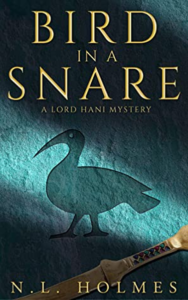
    Cover of Bird in a Snare by N.L. Holmes

    Gold and blue Grand Prize badge for the 2020 Chaucer Awards won by N.L. Holmes' Bird in a Snare

    The 2021 CHAUCER Book Awards winners will be announced at CAC22 on April 10, 2022. Save the date for CAC22, scheduled April 7-10, 2022, our 10 year Conference Anniversary!

    Submissions for the 2021 CHAUCER Book Awards are open until the end of July. Enter here!

    Don’t delay! Enter today! 

    A Note to ALL the WINNERS: The coveted CIBA Blue Ribbons will be mailed out starting in July. We will contact you with an email to verify your mailing address and other items. We thank you for your patience and understanding.
  • The 2020 Finalists for the 2020 CHAUCER Book Awards for pre-1750s Historical Fiction CIBAs

    The 2020 Finalists for the 2020 CHAUCER Book Awards for pre-1750s Historical Fiction CIBAs

    The Chaucer Awards for Historical NovelsThe CHAUCER Book Awards recognize emerging new talent and outstanding works in pre-1750s Historical Fiction. The CHAUCER Book Awards is a division of the Chanticleer International Book Awards (The CIBAs).


    The Chaucer Book Awards competition is named for Geoffrey Chaucer the author of the legendary Canterbury Tales. The work is considered to be one of the greatest works in the English language. It was among the first non-secular books written in Middle English to be printed in 1483.

    Chanticleer International Book Awards is seeking for the best books featuring Pre-1750s Historical Fiction, including pre-history, ancient history, Classical, world history (non-western culture), Dark Ages and Medieval Europe, Renaissance, Elizabethan, Tudor, 1600s, we will put them to the test and choose the best among them.

    These titles have moved forward in the judging rounds from the 2020 SHORT LIST to the SEMI-FINALIST POSITION and have now progressed to the 2020 FINALISTS.

    These titles are in the running for the Finalist positions of the 2020 CHAUCER Book Awards for pre-1750s Historical Fiction. Good luck to all as your works move on to the next rounds of judging.

    • James Hutson-Wiley – The Travels of ibn Thomas
    • Regan Walker – Summer Warrior
    • N.L. Holmes – Bird in a Snare
    •  Thoren Syndergaard – Ripley of Valor
    • Seven Jane – The Isle of Gold
    • Edward Rickford – The Bend of the River: Book Two in the Tenochtitlan Trilogy
    • Leah Angstman – Out Front the Following Sea
    • Helena P. Schrader – The Emperor Strikes Back
    • B.L. Smith – The Fall of the Axe
    • Brook Allen – Antonius: Son of Rome
    • Sherry V. Ostroff – Caledonia
    • Amy Wolf – A Woman of the Road and Sea
    • Wendy J. Dunn – Falling Pomegranate Seeds: The Duty of Daughters
    • Denis Olasehinde Akinmolasire – The Mission to End Slavery
    • Janet Wertman – The Path to Somerset

    Which of these works will move forward in the judging rounds for the 2020 Chaucer Book Awards for pre-1750s Historical Fiction?

    Good Luck to ALL! 

    The 2020 CIBA FINALISTS were announced at VCAC21 – April 21 – 24, 2021. 

    The Chaucer Book Awards 2020 First Place and Grand Prize Winner will be announced at the hybrid CIBA Ceremony that will take place on Saturday, June 5th, 2021 at the Hotel Bellwether. More details will be posted in early May.  

    Good luck to all as your works move on to the next rounds of judging.


    The First Place Category Winners, along with the CIBA Division Grand Prize winners, will be selected from the 23 CIBA divisions Finalists. We will announce the 1st Place Category Winners and Grand Prize Division Winners the CIBAs Ceremonies June 5th, 2021 virtually (Free) and LIVE at the luxurious Hotel Bellwether in Bellingham, Wash.

    VCAC21 laurel wreath

    Register today!


    We are now accepting submissions into the 2021 CHAUCER Book Awards for pre-1750s Historical Fiction. The deadline for submissions is July 31, 2021. The  2021 winners will be announced in April 2022.

    As always, please contact us at Chanticleer@ChantiReviews.com with any questions, concerns, or suggestions!


  • The 2020 CHAUCER Book Awards for pre-1750s Historical Fiction – the Semi-Finalists for the CHAUCER Division of the 2020 CIBAs

    The 2020 CHAUCER Book Awards for pre-1750s Historical Fiction – the Semi-Finalists for the CHAUCER Division of the 2020 CIBAs

    The Chaucer Awards for Historical NovelsThe CHAUCER Book Awards recognize emerging new talent and outstanding works in pre-1750s Historical Fiction. The CHAUCER Book Awards is a division of the Chanticleer International Book Awards (The CIBAs).

    The Chaucer Book Awards competition is named for Geoffrey Chaucer the author of the legendary Canterbury Tales. The work is considered to be one of the greatest works in the English language. It was among the first non-secular books written in Middle English to be printed in 1483.


    Chanticleer International Book Awards is seeking for the best books featuring Pre-1750s Historical Fiction, including pre-history, ancient history, Classical, world history (non-western culture), Dark Ages and Medieval Europe, Renaissance, Elizabethan, Tudor, 1600s, we will put them to the test and choose the best among them.

    These titles have moved forward in the judging rounds from the 2020 LONG LIST to the SHORT LIST and have now progressed to the 2020 SEMI-FINALISTS. 

    These titles are in the running for the Finalist positions of the 2020 CHAUCER Book Awards for pre-1750s Historical Fiction. Good luck to all as your works move on to the next rounds of judging.

    • James Hutson-Wiley – The Travels of ibn Thomas
    • Patrick E. Craig – The Mennonite Queen
    • Regan Walker – Summer Warrior
    • N.L. Holmes – Bird in a Snare
    •   Thoren Syndergaard – Ripley of Valor
    • Seven Jane – The Isle of Gold
    • Edward Rickford – The Bend of the River: Book Two in the Tenochtitlan Trilogy
    • Helena P. Schrader – The Emperor Strikes Back
    • Dave & Steve Curliss – To Give Thanks – Our Pilgrim Ancestors
    • Brook Allen – Antonius: Son of Rome
    • Sherry V. Ostroff – Caledonia
    • Amy Wolf – A Woman of the Road and Sea
    • Marilyn Pemberton – Song of the Nightingale: a Tale of Two Castrati
    • Wendy J. Dunn – Falling Pomegranate Seeds: The Duty of Daughters
    • Denis Olasehinde Akinmolasire – The Mission to End Slavery
    • Janet Wertman – The Path to Somerset

    Which of these works will move forward in the judging rounds for the 2020 Chaucer Book Awards for pre-1750s Historical Fiction?

    The 2020 CIBA FINALISTS will be announced at VCAC21 – April 21 – 24, 2021. 

    The 2020 CIBA Finalists for all divisions will be announced at VCAC21 with the First Place and Grand Prize winners announced on Sunday, April 25, 2021. 

    Good luck to all as your works move on to the next rounds of judging.

    The Semi-Finalists’ works will compete for the First Place Winner positions, and then all will be recognized in the evenings at VCAC21 April 22-24th from 6-8 p.m. PST.

    The First Place Category Winners, along with the CIBA Division Grand Prize winners, will be selected from the 23 CIBA divisions Finalists. We will announce the 1st Place Category Winners and Grand Prize Division Winners the CIBAs Ceremonies June 5th, 2021 virtually (Free) and LIVE at the luxurious Hotel Bellwether in Bellingham, Wash.

    VCAC21 laurel wreath

    Register today!


    We are now accepting submissions into the 2021 CHAUCER Book Awards for pre-1750s Historical Fiction. The deadline for submissions is July 31, 2021. The  2021 winners will be announced in April 2022.
    As always, please contact us at Chanticleer@ChantiReviews.com with any questions, concerns, or suggestions!

    VCAC21 laurel wreath

  • The 2020 CHAUCER Book Awards for pre-1750s Historical Fiction – the Short List

    The 2020 CHAUCER Book Awards for pre-1750s Historical Fiction – the Short List

    The Chaucer Awards for Historical NovelsThe CHAUCER Book Awards recognize emerging new talent and outstanding works in pre-1750s Historical Fiction. The CHAUCER Book Awards is a division of the Chanticleer International Book Awards (The CIBAs).

    The Chaucer Book Awards competition is named for Geoffrey Chaucer the author of the legendary Canterbury Tales. The work is considered to be one of the greatest works in the English language. It was among the first non-secular books written in Middle English to be printed in 1483.


    Chanticleer International Book Awards is seeking for the best books featuring Pre-1750s Historical Fiction, including pre-history, ancient history, Classical, world history (non-western culture), Dark Ages and Medieval Europe, Renaissance, Elizabethan, Tudor, 1600s, we will put them to the test and choose the best among them.

    These titles have moved forward in the judging rounds from SLUSH pile to the 2020 Chaucer Book Awards LONG LIST and now have progressed to the 2020 SHORTLIST. 

    These titles are in the running for the Semi-Finalists positions of the 2020 CHAUCER Book Awards for pre-1750s Historical Fiction. Good luck to all as your works move on to the next rounds of judging.

    • James Hutson-Wiley – The Travels of ibn Thomas
    • Patrick E. Craig – The Mennonite Queen
    • Regan Walker – Summer Warrior
    • N.L. Holmes – Bird in a Snare
    • Leah Angstman – Out Front the Following Sea     
    • Thoren Syndergaard – Ripley of Valor
    • Seven Jane – The Isle of Gold
    • Edward Rickford – The Bend of the River: Book Two in the Tenochtitlan Trilogy
    • Helena P. Schrader – The Emperor Strikes Back
    • B.L. Smith – The Fall of the Axe
    • Dave & Steve Curliss – To Give Thanks – Our Pilgrim Ancestors
    • Brook Allen – Antonius: Son of Rome
    • Sherry V. Ostroff – Caledonia
    • Amy Wolf – A Woman of the Road and Sea
    • Marilyn Pemberton – Song of the Nightingale: a Tale of Two Castrati
    • Robert Wright – The Stone Gardner’s Fire, Second Book of the Before They Awaken Trilogy
    • Jim Fuxa – At War with Mars
    • Wendy J. Dunn – Falling Pomegranate Seeds: The Duty of Daughters
    • Denis Olasehinde Akinmolasire – The Mission to End Slavery
    • Indra Zuno – Freedom Dues
    • Janet Wertman – The Path to Somerset

    Which of these works will move forward in the judging rounds for the 2020 Chaucer Book Awards for pre-1750s Historical Fiction?

    Good luck to all as your works move on to the next rounds of judging.

    The ShortListers’ works will compete for the Semi-Finalists positions. Finalists will be selected from the Semi-Finalists, and then all Finalists will be recognized at the VCAC21 ceremonies. The First Place Category Winners, along with the CIBA Division Grand Prize winners, will be selected from the 22 CIBA divisions Finalists. We will announce the 1st Place Category Winners and Grand Prize Division Winners at the CIBAs Ceremonies April 21-25th, 2021 live at the luxurious Hotel Bellwether in Bellingham, Wash.


    We are now accepting submissions into the 2021 CHAUCER Book Awards for pre-1750s Historical Fiction. The deadline for submissions is July 31, 2021. The  2021 winners will be announced in April 2022.
    As always, please contact us at Chanticleer@ChantiReviews.com with any questions, concerns, or suggestions!

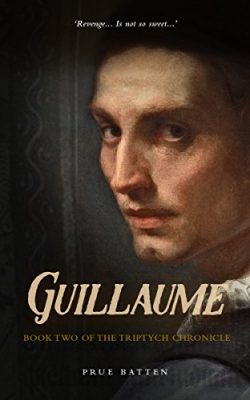
  • GUILLAUME (The Triptych Chronicle, Book Two) by Prue Batten – Biographical Fiction, Medieval France Geopolitics, Literary

    GUILLAUME (The Triptych Chronicle, Book Two) by Prue Batten – Biographical Fiction, Medieval France Geopolitics, Literary


    Welcome to Lyon, France, circa 1193. Battle-hardened veterans, returned from the Third Crusade, serve as loyal guards and spies for wealthy merchants. Some have crossed into the world of the bourgeoisie.

    Across Europe, monarchs are restless, the Church is ruthless, and trade is flourishing, bringing in rare, sought-after commodities from faraway markets, and fueling cutthroat competition in the burgeoning economy.

    In Guillaume: Book Two of The Triptych Chronicle, Prue Batten reimagines the life of one such upwardly mobile trader/merchant who lives in this socio-political chrysalis and is unwittingly caught up in issues and events that will change the future.

    Guillaume de Gisborne is an archer recently returned from the Third Crusade. He helps manage de Clochard, a small textile house struggling to survive after the death of its founder. When an arson fire threatens the property and merchandise of this already struggling business, Guillaume keeps watch over the premises and the prized, purple-dyed, velvet and fine wool fabric from Al-Andalus that is slated to go to the Holy Roman Emperor. During the night, he is attacked by strangers who are searching for something on the property.

    Subsequently, Guillaume learns that a copy of the heretical Vaudès Bible, which the Church wants to destroy, may very well be hidden somewhere on the de Clochard premises. This is, perhaps, what the assailants were seeking.

    Guillaume, assisted by Ariella Ben Simon, the beautiful Jewish daughter of a textile merchant in Venezia, and several of Sir Guy of Gisborne’s most trusted guards, seeks to find the book hoping to save it and return it to its rightful owners, the Poor Men of Lyon, proponents of the Vaudès’ dogma.

    While working together, Guillaume and Ariella learn to understand, rely upon, and eventually love one another. They begin to plan their future—but Destiny has something else in mind.

    After getting through the prologue and a long, (9,293 word) first chapter, the pace never slows. The amount and complexity of information included in chapter one may seem overwhelming, but the reward of gaining powerful knowledge that will enable the reader to relate to and understand Guillaume’s world is simply indispensable.

    Overall, Batten’s rich sensory imagery, engaging characters, and authentic voice, combined with meticulous research and attention to detail add depth and dimension to a cleverly crafted, multi-layered plot. The writing is both gritty and lyrical, creating a moving, memorable story.

    But wait! There’s more! Batten’s research notes at the end of the book are an absolute gift for history buffs and historical fiction fans.

    Guillaume (The Triptych Chronicle, Book Two) by Prue Batten won 1st Place in the CIBA 2017 Chaucer Awards for Early Historical Fiction.


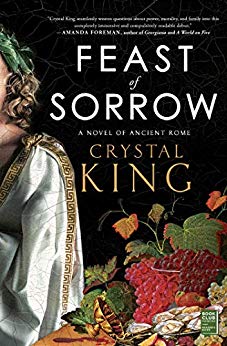
  • FEAST of SORROW by Crystal King – Ancient Rome, Biographical, Family Saga

    FEAST of SORROW by Crystal King – Ancient Rome, Biographical, Family Saga


    In the twenty-sixth year of Augustus Caesar’s reign, Marcus Gavius Apicius purchased nineteen-year-old Thrasius for twenty thousand denarii, enough money to buy more than sixty normal slaves, but Thrasius is more than the typical slave. Born to a slave woman who died in childbirth and whose name he never knew, Thrasius has trained for seven years as a cook in the kitchens of Flavius Maximus, a man known for his unforgettable dinners, and Apicius hopes the young coquus will lead him to the ultimate culinary fame, gastronomic advisor to Caesar himself.

    Grateful to be saved from the cruelty of the slave trader, Thrasius throws himself headlong into the new role and proves tremendously successful, but an ominous prophecy given to Apicius on the day he purchased Thrasius looms over every achievement. As Apicius climbs higher and higher in the Roman political world, Thrasius becomes an ever-growing asset eventually becoming more advisor than cook and feels the pressure of helping Apicius accomplish his fame at any cost, even his family and friends. His chase for fame becomes both consuming and destructive. Though Apicius refuses to see the price of his obsession, Thrasius knows a reckoning is coming and prays the gods can save him from the man who controls his life.

    This masterful thirty-year tale rejuvenates life in ancient Rome, a place where favors become life-changing, where people are bought and sold, and where death could reside in a glass of wine or in a snake-filled box. The complex, rich storyline, entwines real Romans with endearing fictional characters. Readers will recognize historical figures like Pliny and Ovid, who burst to life on the pages of this novel. Though perhaps not as well-known as some of the other characters, Marcus Gavius Apicius, an overly ambitious man who bankrupted his vast fortunes with his sumptuous cenas and expensive gifts, is credited with the first cookbook and a cooking school. Readers will see the rise and fall of this man who desired fame over everything. His single-minded ambition is contrasted with Thrasius, his fictional foil in many respects. Where Apicius wants his recipes in every Roman kitchen and his name spoken in jealous whispers, Thrasius seeks only to create good food and safe life for his love, Passia.

    Fate plays a major role in the lives of the characters and poses important philosophical questions throughout the novel. From the opening pages, the importance Romans placed on omens, fortunes, and premonitions is evident. Apicius, a man who refuses to acknowledge the undesirable part of his sinister fortune, often with acts with dire consequences, begging the question is fate fixed, or do men create their own? In taking charge of his destiny, does he, in essence, destroy himself?

    Even when he is told that he will have “as much sadness as there is success,” he continues to connive and conspire until he loses everything. He finally gains his coveted position but at the expense of a man’s life and a debt which will take everyone he loves.

    In his blindness to everything but fame, he turns this prophecy into truth, bringing about the “greater failures [clustered] to the sides” of each success. Even the wholesome Thrasius isn’t immune to the question of fate versus free will when he curses Sejanus, a cruel, unscrupulous man. Though his curse takes twenty-five years to come to fruition, Thrasius wonders how much blood is on his hands when the culmination of the curse also results in the death of people Thrasius loves. Has he doomed himself by fiddling with fate? In taking fate into their own hands, both Apicius and Thrasius pay enormous costs.

    Obscene wealth and devastating poverty. The height of fame and the desolation of obscurity. On the backs of many, one man builds his legacy while another prays for freedom. Feast of Sorrow creates a world where curses are feared, blessings hinge on blood sacrifice, and history becomes real.

    Feast of Sorrow by Crystal King won 1st Place in the CIBA 2017 Chaucer Awards for Early Historical Fiction.