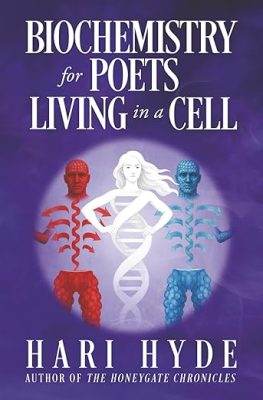
Hari Hyde’s Biochemistry for Poets Living in a Cell encourages readers to reach beyond the scientific discourse and explore humanity through this collection of poems for creative intention.
Written for lovers of science who enjoy poetry with a lyrical word play focused on all the interconnected workings of our physiology, these poems discover at the core of every one of us all the minutia of functions through the lens of a scientist. They create a conversation with the substructures that drive our nervous system as in, “Nerve Storm of GABA,” say, or our circulatory system, “L-asparaginase: Juggler in Bondage,” for example, or a virus such as the flu as it enters our body and proceeds to infect, as in “Influenza Virus Traitor.”
This collection stands as a love poem that, within each vignette, explores the building blocks of what it is to be human, cell by cell.
These poems meld science with poetic form in a way that only a talented scientist can achieve, and his mastery of both science and writing craft shine in this thoughtful assembly.
Hyde’s latest collection of poems was written to explore the science behind what it means to be human beginning at the cellular level with “A Night in New Orleans with L10A Protein” and “The Inner Outpost of the Cell.”
Hyde’s poems imagine the world at a subatomic level. He populates this world with actually occurring phenomena, as in “Microbiome Gangland,” or “Enzymes: Militant Maniacs.” Readers will enjoy the fun he has with his subject matter and witness his mastery in biotechnology shining through each stanza.
Readers will see the poetic beauty in “Keratin, Fur, and Fun,” or the reality of aging in “The Heart’s Cold Clock.” Hyde’s expertise as poet coupled with his career as a research director in the biotechnology industry for three decades shines through each line as he explores the science behind the cellular structure of the average human as seen through the eyes of a poet.
As a seasoned-published author, Hyde has honed his craft of short stories and poetry to deliver satisfying reads in several genres. This work will not disappoint. Fans of poetry, science, or fans of Hari Hyde himself will count this as another valuable addition to their collection. Five-Stars
The submissions for our newest division are underway, and The Collection & Anthology Awards close on July 31, 2025!
There’s something magical that happens when individual pieces are thoughtfully assembled into a unified whole—whether it’s a poet’s lifetime of work, a themed anthology exploring social justice, or a collection of short stories that illuminate the human condition. The Collection & Anthology Awards celebrate this unique art form, recognizing the literary excellence that emerges when curation meets creativity.
Branching off from our established SEA Shorts Awards, this exciting new division honors the publishers, authors, and editors who understand that the whole can indeed be greater than the sum of its parts. From single-author poetry collections to multi-voice thematic anthologies, we celebrate works where exceptional writing combines with masterful organization and thematic coherence.
The Power of Thoughtful Assembly
What transforms a simple gathering of pieces into a truly compelling collection or anthology? It’s the invisible architecture that connects each work to the next, the thematic threads that weave individual voices into a larger conversation, and the careful curation that ensures every piece earns its place.
Whether you’re a poet who has spent years crafting a cohesive collection, an editor assembling diverse voices around a central theme, or a publisher investing in the literary community’s best collaborative works, the Collection & Anthology Awards recognize that quality writing is just the beginning. The real artistry lies in creating thematic coherence that resonates across every page.
Categories That Span the Literary Landscape
Our categories intentionally align with Chanticleer’s established award divisions, ensuring that collections and anthologies across every genre find their perfect home:
Narrative Non-Fiction Collections/Anthologies – Memoir collections, essay compilations, and themed non-fiction that tells powerful true stories
Essay Collections – Whether personal reflection, cultural criticism, or literary exploration, celebrating the essay as an art form
Poetry Collections – From debut collections to lifetime retrospectives, honoring the unique voice of poetry in all its forms
Speculative Fiction – Fantasy, science fiction, and paranormal collections that transport readers to other worlds
Celebrating Our Founding Excellence: Dr. Yumiko Shimabukuro
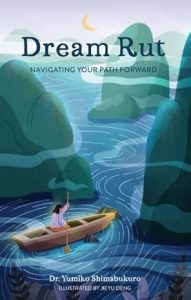
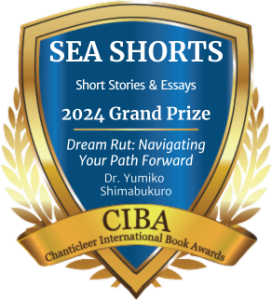
We’re honored to highlight Dr. Yumiko Shimabukuro, whose inspiring collection Dream Rut: Navigating Your Path Forward exemplifies the literary excellence we seek to recognize in this new division. This beautifully crafted work combines meditative prompts, poetic writing, and full-color illustrations to guide readers through transforming their relationship with their dreams—from dealing with estranged dreams to discovering unknown ones.
Shimabukuro’s achievement showcases how thoughtful curation creates something greater than individual pieces, offering readers both comfort and actionable insights for moving forward. In addition to ongoing promotional features, Dream Rut will be regularly promoted throughout the year and for the next five years in our upcoming Hall of Fame posts. Dr. Shimabukuro will also be invited to participate in a Chanticleer 10-Question Interview and receive continued recognition across our promotional platforms.
A Home for Every Voice, Every Vision
The Collection & Anthology Awards welcome submissions from diverse creators across the literary community:
Publishers showcasing their finest anthologies and themed collections
Individual Authors who have assembled their short fiction, essays, or poetry into cohesive collections
Anthology Editors who curate multi-author works around compelling themes
Literary Organizations producing collections that advance important conversations
Whether your collection features a single powerful voice or weaves together multiple perspectives, we celebrate the editorial vision that transforms individual works into something greater.
Check out some of these outstanding collections and anthologies we’ve celebrated recently!
Portrait of a Feminist: A Memoir in Essays
By Mariana Marlowe
Marianne Marlowe’s memoir, Portrait of a Feminist, reveals the evolution of her feminism through a collection of thought-provoking essays.
“I would say, if it were possible, I was born a feminist” is at the heart of Marlowe’s story. She relates to this defining identity throughout years spent in Peru, California, and Ecuador, where she navigates childhood, marriage, motherhood, and a professional career.
The section titles reflect periods in Marlowe’s life that correspond to nature’s rhythms— “Seeds Planted”, “The Growing Years”, “Maturation”, and “Harvesting”—and maintain strong connections between her thematically-linked experiences.
As a Peruvian American woman, Marlowe navigates the concepts of gender, race, and culture from a personal and critical point of view.
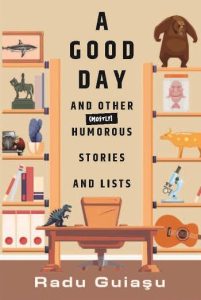
A Good Day and Other Mostly Humorous Stories and Lists
By Radu Guiasu
Through the thirty-six diverse writing efforts of A Good Day and Other Mostly Humorous Stories and Lists, Radu Guiasu masterfully combines wit, whimsy, satire, and personal contemplation.
These vignettes cover a wide range of topics, styles, and techniques. While they often seem to be typical “slice-of-life” moments, Guiasu clearly has a knack for finding humor in even the most absurd situations.
As a native Romanian now residing and teaching in Canada, Guiasu writes from his own knowledge and experience. He often broaches serious and meaningful topics, such as the world of academia, growing up under a dictatorship, and a love of nature.
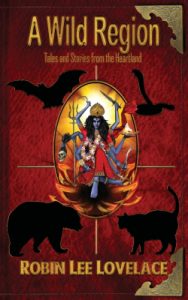
A Wild Region: Tales and Stories from the Heartland
By Robin Lee Lovelace
Includes a Chanticleer Short Stories Awards Grand Prize Winner!
A Wild Region: Tales and Stories from the Heartlandby Robin Lee Lovelace is a wonderful collection of Weird fiction (emphasis on Weird), showcasing the oddities and fantastic adventures which hide among the everyday people of the midwestern United States.
Lovelace opens with ‘Virgie’s Headless Chicken’, setting the tone for the full collection as Virgie attempts to reproduce a circus sideshow act. Lovelace shares her familial inspiration for this story in a fascinating preface.
From there she gifts readers with the award-winning novella,Savonne, Not Vonny, a coming-of-age story of a little girl involving brothels, voodoo, and displaced gods. Savonne faces trial after trial as she grows up in different environments, all while she tries to understand her place in the world. This setting is particularly well-developed, leaving readers wanting more from even the secondary characters. Readers who lovedAmerican Godswill enjoy every page of Savonne’s adventures.
Varying in emotion and impact, all of these tales will grab a reader’s attention. In every story ofA Wild Region, fully-realized characters deal with important problems, approaching them with their own strange solutions.
Tax MythBusters: Don’t Fall Prey to the Tax Misconceptions,compiled by tax professional Lily Tran with essays by other financial, tax, and accounting professionals, gives valuable insight into the myths of what can and cannot be claimed as a deduction for small businesses and entrepreneurs.
This work provides tips and strategies to optimize tax planning and make the most of available deductions. As the foreword reminds the reader, “Knowledge is power when it comes to taxes,” adding that gaining a better understanding of the tax rules and regulations will allow you to “make smart financial decisions and protect yourself from unnecessary risks.”
The essays that make up this work are short, succinct, and to the point about the pitfalls and challenges that face small business owners, framing these dangers as “myths.”
These works demonstrate the range and power of well-curated collections across every genre and format.
See the Chanticleer Difference for Yourself!
We’re excited about all the exceptional collections and anthologies we’ll receive in this inaugural year. The Chanticleer International Book Awards offers an incredible $30,000 in cash, prizes, and promotion across all divisions!
This new division represents an unprecedented opportunity to gain recognition for the often-overlooked art of literary curation. From debut poetry collections to landmark anthologies, we’re committed to celebrating the publishers, authors, and editors who understand that bringing the right pieces together creates literary magic.
Be Among the First to Claim this Honor!
As our newest division, the Collection & Anthology Awards offer a unique opportunity to be among the first winners in this exciting category. Whether you’ve spent years perfecting a poetry collection, assembled a groundbreaking anthology, or published a thematic collection that deserves wider recognition, this is your moment.
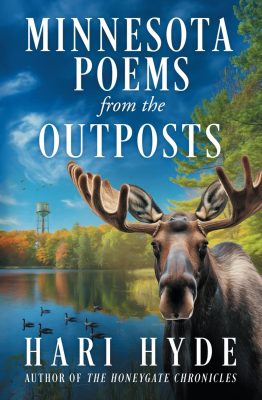
Hari Hyde reveals the mysticism of exploring chaotic nature and our human need to connect with it. He takes readers to sites of wonder, physical and conceptual, in his collection Minnesota Poems from the Outposts.
“Part 1: Middle Rivers” illustrates the shared liminal states of people and the natural world.
Aligning symbols of the turning seasons with people growing up in their communities, “Middle River, Minnesota” establishes our innate kinship with nature—as individuals and collectives. “School Bus” follows the transient days of childhood, while “Unruffled Railway” looks back from the end of an era, as the rails are now overgrown and unused. But, to be overgrown is to find life, and a new way of being after the end of that old cycle.
Meanwhile, “Moon Over Thief Lake” illustrates the need to commune with nature through beautiful but distant imagery.
Part 1 maintains a childlike playfulness in its use of language.
“Goose Capital” and “Young’s Store” give in to flights of fancy about the little details of rural life, while a trio of poems “Ye Olde Depot Theater, River Avenue”, and “Church Bell” fully immerse themselves in the charm of small communities.
But Part 1 also touches on the difficult challenge of maturity. “Milking Holsteins” and “Angus Cattle” find peace in a world where each creature has a role to play. But, matching the use of rivers as a thematic force of eternal change, “Minnesota Highway 59” reckons with the fact that there are some deep yearnings a person will never be able to satisfy.
These first poems open the book well, introducing both the setting of rural Minnesota and a focus on living in relation to its natural forces. Some of the themes in Part 1 could be expanded upon, but the warm poetic voice beckons readers to continue on.
“Part 2: Smalltown Outposts” broadens its scope to include a variety of notable locations, embracing the culture and history of Minnesota.
A mixture of compelling imagery and unique tones give each new location a sense of identity, especially in poems like “Split Rock Lighthouse (Lake Superior)”.
This combines with whimsical renditions of local mythology in “Paulette Bunyan” and “Mankato Man and Nature’s Plan” to instill in readers Minnesota’s vital, defiant soul.
Hyde also explores the human shadow of Minnesota’s history—the inner lives of those who made it—in “Minnesota’s Ten Millennial Girl” and “Blue Mounds State Park”. These poems describe the personality that history leaves to its locations but, at the same time, exposes the complexities that can’t be preserved over a long period of time.
Where Part 1 embraced communion with nature, Part 2 creates a thematic duality by highlighting our inherent conflict with it.
“Mankato Man and Nature’s Plan” puts this conflict in stark relief. The central figure defies his place as a tool in Nature’s hand. But “Red River Flood” shows how futile that fight can be, with the narrator choosing to become like the river itself rather than try to live in spite of it.
The rhyming can create awkward lines sometimes, but this section’s beauty is in its clear familiarity with its locations, which maintain their grandeur.
“Part 3: Inner Outposts” and “Part 4: Family and Faith” create another dichotomy—the inner self and its struggle to fit in with the outer world.
“Private Ponds”, “Secret Snow Bones”, and “The Outside” encourage trusting the inner self, finding meaning beyond societal expectations and dogma. But “The Believable Distance” and “Last Love” both recognize the pain in being distant from others.
These sections make playful use of metaphors, but in poems like “Guard Dog”, those become more complex and conflicted. The animal part of one’s mind tears and recoils at the chains that bind it.
As a whole, Parts 3 & 4 step into darker territory. Pain and suffering are reframed as the necessary teachers of survival—from the mundane to the divine—in “Ancient Apathy”. “Corporal Counselor” grapples with pride and envy as truly inescapable sins, innate to the inner self.
While there’s a return to some of the mysticism of childhood from Part 1, these later parts offer a more nuanced perspective on relationships.
This is particularly true among the poems most concerned with death, “Elegy for a Nobody”, “Get Well Cards (Calibrated)”, and “A Little Light”. While the themes of family and faith don’t interact much in general, these death poems find interesting connections between how death changes our relationships to each other and the deep desire to understand one’s meaning in the universe.
“Jonah and the Great Fish” stands out as a unique take on this section’s view of God. Here, animals are to humans as humans are to the divine. But the might of nature tests the boundaries of this metaphor. A great and terrible sturgeon reigns as a bloody demon, and it’s only through the help of nature’s small and wriggling things that the fish can be bested.
This poem serves well as a transition point to the fifth and final part of the collection, “The Wild.” Here, the core ideas and writing style of Minnesota Poems from the Outposts both shine at their brightest.
“Moose Head” grants intention and emotion to the forces of the natural world, while reinforcing its incompatibility with human society. This poem and “Arrowhead Northern Lights” create a compelling combination of descriptive language and poetic contrasts. All underscored by a palpable appreciation for the wilderness of Minnesota.
“Into the Woods” and “Lake of the Woods” experiment most with structure and poetic flow, to fascinating effect.
Both are much longer than any other poems in the collection, with lines and paragraphs shifting in size as they explore new parts of the wilds. They take this time to fully immerse a reader in their contrasting views of wilderness.
The narrator finds that, to truly go “Into the Woods” and become a part of them, one has to give themselves up to the beautiful ways of nature. It’s a welcoming of the raw, physical world.
“Lake of the Woods”, on the other hand, seeks divinity in the beasts of the water. Recurring symbolism aligns the lakes with the sky—a celestial realm, where humans can touch and even enter, but will find themselves reflected back in challenging ways.
And yet, for all of the woodlands’ chaos and strangeness, people come.
Here, in these final poems, Hyde returns to the incessant yearning. The distance between a person and the worlds of men and trees alike might be vast, but the quest to cross it is equally as meaningful.
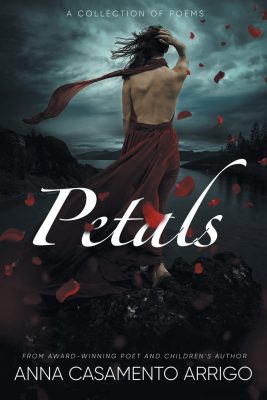
Anna Casamento Arrigo tells of longing, memory, and lingering pain through verdant imagery and mythological metaphor in Petals, a poetry collection.
Poems such as “Life Speaks Loudly” and “Time Too Quickly” establish a focus on the ever-changing seasons, and the power of time to both take away from someone and transform them. Arrigo’s work here is a remembrance of those things gone to the past, both the beautiful and the awful. “A Slow Dance in the Summer Rain” shows the weight of loving memories, while “Treading” reaches for the dreams of childhood, before they were stamped out by the struggles of life.
These poems use vibrant sensory descriptions – especially of the natural world – which ground the heightened emotions to allow readers to connect with them. In fact, readers can listen to some of these poems in musical form on Arrigo’s YouTube channel.
Petals grapples with family and identity in “Who Am I” & “Nonno’s Orchard”, grief over a lost father in “Daddy’s Flower”, and a yearning for connection in “Wrapped in Your Heart”. These themes meld with one another to give a complete sense of loss. Certain intimate details, such as a specific jacket or kind of flower, recur throughout the book. Readers will begin to recognize these motifs, creating a familiarity that will open them to deeper sorrow and joy.
Arrigo explores a sense of being adrift in the world, unsure of even one’s own self.
“Hey Child!” and “More than Now” insist that, even while adrift, there is a powerful urge to act – to take in the world. “My Naked Soul” dalliances with the very cosmos, while “Hollow Men” and “The Reality” use mythology to interrogate how people see themselves, and whether their eyes are clear when they do so.
This sense of interrogation continues, growing into the biblical reckoning of “The Gatekeeper” and the menace of “The Red Knight”. Greed, injustice, and faith intertwine in these poems as Petals sets its sights on those who have used and abused their fellow people and the world around them.
A strong rhythm carries Petals along, with a back-and-forth of long lines and short, as well as comforting and tumultuous emotion.
Arrigo uses occasional formatting changes to make poems such as “The Night Warrior” striking while maintaining a broadly consistent style.
The likewise consistent through-line of reminiscence lends itself well to stark tonal shifts, as these poems hold tight to memories of love, fear, and grief alike. “Sounds and Silent Seas” calls out to the past, asking it to open a path of reunion while indulging in the beauty of what once was. “TOO!” speaks instead of escape, flying away from the darkness of childhood.
And yet, a person can’t let memory consume them, not while they have a present. “Now” stands as an answer to the past – for all of its wonderful and terrible power, it only exists through the lens of what is now.
Through careful description and dedication to the impact of memory, Petals creates a cohesive and affecting collection of poems.
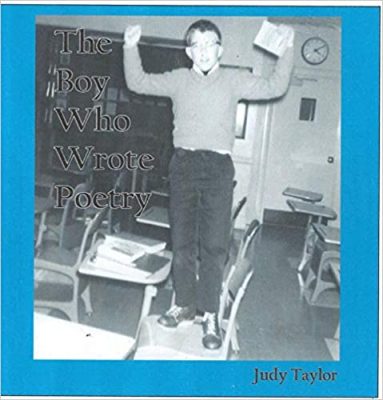
The Boy Who Wrote Poetry is a heartwarming and inspirational work about Mark Ford, a promising young poet and writer who died a tragic and premature death at the age of eighteen. This collection is the poetry he left behind.
Judy Taylor, Mark’s sister and the author of the book, tells the story of her brother’s short life and their family, the circumstances in which he grew up, and how he began to express his creativity at a very young age. The examples of Mark’s poetry and general writings that the author presents are remarkable and moving. Considering the tender age at which Mark wrote the poetry, the sophistication and insight revealed in the work are astonishing.
Despite the sometimes perplexing narration and lack of photograph captions, leading to confusion about who’s who in the images presented, the pictures of the family growing throughout the years give a touching clue to the close-knit family and the seven children, of whom Mark was the eldest and the author, his sister Judy, was the youngest. The photos, even without clarity on which child is which (the glasses at least make clear which is Mark Ford), make for warm reminiscences and give a clue to how the young poet lived and grew.
What is of particular note is the degree to which the self-awareness is evident in Mark’s work. “Please excuse the misspelled words,” he requests in the introduction to a collection of his poetry. “It was meaning, not grammar I strove (and am still striving) for.”
There are glimpses of what kind of storyteller that Mark would have developed into with offerings like “What do you use/To keep out the night? Try to conceal/Your delicate fright. Don’t call for help/For nothing is worse/Than wounded dignity/Innerness unhorsed.” A little trepidation, a little humor.
Mark, according to the author, went through phases including fantasy (in particular The Lord of the Rings trilogy by J.R.R. Tolkien) and Bob Dylan’s work, and produced imagery that reflects the prose of the time:
What changes in a day?
What makes the sky so grey?
What takes the wind and makes it so alone?
What breaks the earth and scatters senseless stone?
On the horizon, the bare brown
Horizon, glowing with the last of life,
Glowing with the last of life.
What changes in a week?
What makes it easier to speak
The words I should have said but could not say
And now that day has joined the past days
Littered in a pile.
A useless pile of days.
A useless pile of days.
A lightning tears the sky in two.
Another moment it is through
And sky is whole.
Beating down your wincing brow
The rains betray your wisdom now.
Alone the storm.
You, your trials, disappear
For who will equal or compare
Its tear-born ire?
The weeping storm screams out aloud.
Its tears are naked, bare and proud,
Anew for each departed leaf.
The sky lays down and cries its grief.
Not only that, more than a bit of insight amid the darkness, in his final poem before his death:
Guilt drops hawklike on suspecting man
And plummets toward his silent, secret sin.
The soul is pierced in vain; no talon can
Remove the stain when it is held within.
The grace of God, when sought, can dull
The beak and claws of guilt. A man can pray
And ease the burden in a heart too full
To bear, although the pangs of failure stay;
For God is God above us all and draws
Us up to Him, but man is man and shall
Persist in needing comrades in the pause
Between the ultimate rise and the ultimate fall.
God’s gifts uplift, but cannot be compared
In saving strength to sadness equally shared.
Mark Ford’s poetry and creative writing, the focus of the piece, were truly outstanding, and his early demise heartbreaking.