Tag: Picture Books

  • 5 DIFFERENT BOO-BOOS by Maggie Keefe, illustrated by Vaughan Duck – Children’s Books, Activity & Bravery, Picture Books

    5 DIFFERENT BOO-BOOS by Maggie Keefe, illustrated by Vaughan Duck – Children’s Books, Activity & Bravery, Picture Books

     Climbing trees, playing soccer, and riding scooters have three things in common: scrapes, bruises, and fun. 5 Different Boo-Boos by Maggie Keefe and illustrated by Vaughan Duck, encourages kids to not let a few boo-boos get in the way of an adventurous day.

    Told through the first person perspective of an energetic and bold girl, we follow her throughout a week of adventures. Joined by her band aid-toting dog, she ventures from home, to school, and to the park where she jumps at any bit of play, and find multiple ways to acquire a scrape, bump, or bruise.

    Keefe tells each day in an offbeat rhyme perfect for read-alongs.

    She separates the lines into easy little stanzas and varies their lengths to keep the story’s rhythm interesting—just enough of a challenge for very young readers. Key words pop out in a large font and eye-catching colors.

    Vaughan Duck’s illustrations capture the excitement of a sunny day outside.

    Swaths of blue and green blend in the background, contrasted by bright pink objects and clothing around the main character. Along with this strong color identity, Duck’s art has a sense of space and motion to match such an active kid.

    The protagonist herself has a scrappy, scuffed design that harkens to a child’s irrepressible interest in exploring the world around her. Young readers will love the cute little dog chasing behind her to offer comfort after a tumble, and every other character comes alive with a distinctive and diverse design of their own.

    A vibrant, rhythmic read-along, 5 Different Boo-Boos by Maggie Keefe and illustrated by Vaughan Duck, teaches little kids that they might get a scratch and a bump, but they can always get back to playing. And, even if they get hurt the first time they try something new, it just means there’s more to learn and more fun to be found.


  • BELLYRINA: A Tutu Tale from the Belly of the Beast by Once Upon a Dance, Illustrated by Ethan Roffler – Picture Books, Children’s Dance Books, Children’s Animal Stories

    BELLYRINA: A Tutu Tale from the Belly of the Beast by Once Upon a Dance, Illustrated by Ethan Roffler – Picture Books, Children’s Dance Books, Children’s Animal Stories


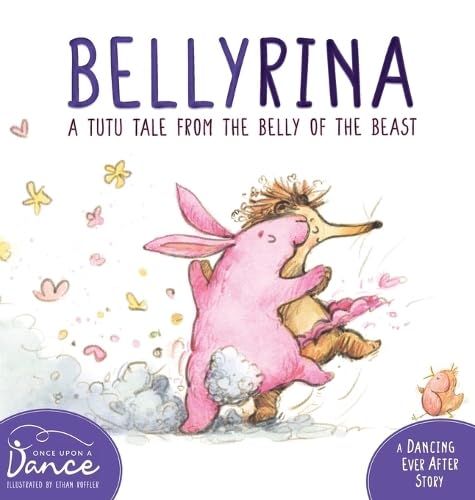
    Bellyrina: A Tutu Tale From the Belly of the Beast, the latest whimsical creation from the mother-daughter team of Once Upon a Dance and illustrated by Ethan Roffler invites readers into a delightful world where movement, music, and imagination intertwine.

    Peter the boy, Milo the cat, Ren the bird, and Roxy the duck have a rough start to their morning when a hungry wolf ambushes them and swallows Roxy. Tickled by her downy feathers, the wolf sneezes out not only Roxy, but a mysterious pink bunny with zero-to-sixty energy and no name. The crew dance their way through the mystery of the bunny’s origins.

    The danger of the wolf is an immediate hook that begs to be resolved before putting the book down, and the mysterious, energetic bunny is a relatable character for active young children.

    Every page suggests dance moves for children to mirror the story.

    Integrated seamlessly into the story, these dancing prompts help children learn about their bodies and the artistic connection between movement and storytelling. The alliteration and rhythm of the text, such as the line “feathers and fluff flew like confetti,” are a perfect match for the dancing theme and might even inspire readers to try out movements of their own invention.

    Throughout the book, purple text is used for words that children can act out, providing the opportunity to choose a different adventure with every reading. Each character’s name is also represented by different colors, helping children explore each animal’s personality through their unique words and dance movements.

    Ethan Roffler’s sweet, soft illustrations follow the traipsing adventure of the mysterious bunny, with images reminiscent of Timothy B. Ering’s disproportionate, personality-filled animals in The Tale of Despereaux.

    The animals’ exaggerated facial expressions are sure to send young readers into fits of giggles—especially when the exuberant bunny springs up in the middle of the group’s slumber to announce a sudden revelation about a distant, sparkling memory.

    Children and adults interested in dance and/or animals will fall in love with Bellyrina: A Tutu Tale From the Belly of the Beast by Once Upon a Dance. Themes of friendship, sticking together, getting your wiggles out, and recovering from a difficult trial will strike meaningful emotional chords for young readers. Adults interested in encouraging play between siblings may be especially interested in this book to create a dance party for the kids right in their own home.


  • THE STOMP-CLOMP-CLUMP MONSTER ABOVE The BED by J.W. Zarek, Illustrated by Anastasiia at GetYourBookIllustations – Picture Books, Children’s Friendship Books, Children’s Monster Books

    THE STOMP-CLOMP-CLUMP MONSTER ABOVE The BED by J.W. Zarek, Illustrated by Anastasiia at GetYourBookIllustations – Picture Books, Children’s Friendship Books, Children’s Monster Books


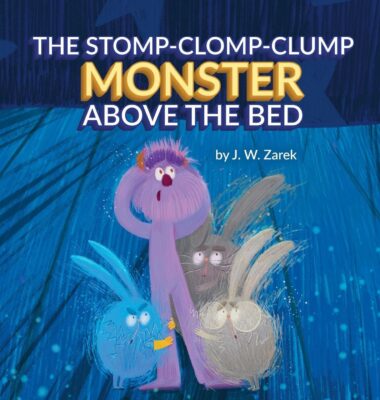
    Many a child has gotten ready for bed with a fear of monsters lurking in dark closets or hiding under the bed. J.W. Zarek’s delightful children’s book The Stomp-Clomp-Clump Monster Above the Bed, illustrated by Anastasiia at GetYourBookIllustrations, uses a creative twist of perspective to show that “monsters aren’t always monsters after all”.

    The tale opens with a pair of eyes in the dark, those of Fred, a purple Gumby-like character sporting a fuzzy mane. Together with three dust bunnies—big and brave Brutus Bunfluff, Dust Puff Ted the germaphobe, and bespectacled scaredy cat Gunnar Puffbutz—the group have created a comfortable little world for themselves beneath the bed.

    They’ve organized an array of lost items from the world above like puzzle pieces, buttons, socks, and crayons. But a giant pair of red shoes suddenly come clomping into the room. The dust bunnies huddle together, wondering about the loud noise.

    Upon investigating, Fred notes a messy room and a boy, Billy, asleep on top of their bed. Fred and his dust bunny cohorts declare war against this intruder. But facing an environment filled with what they consider booby traps of plastic building blocks, broken cookies, pencils, and some sticky, slippery cherry stuff, they retreat.

    The fuzzy creatures decide to return a missing crayon that Billy is searching for, introduce themselves, and propose sharing the space.

    The dust bunnies are bombarded by a menagerie of flying puzzle pieces, blue sticky stuff, and stabbing squares, as Billy’s continued search wrecks their home. Great loud sounds fill the backdrop, SKREETCH, SLAM, THUD, THUD, THUMP, THUMP, and BOING. Billy himself is startled when he finally hears the dust bunnies demanding he stop the ruckus.

    Having disrupted the dust bunnies’ peaceful existence, Billy apologizes with an offer of cookies. The dusty creatures accept, so long as Billy agrees to clean his room and apologize for accusing his sister of taking his things.

    Anastasia’s Illustrations throughout are warm and adorable.

    Shades of blue with star-studded bed linens capture the nighttime scenes, with a planetary mobile that casts a glow above. In one moment, as the dust bunnies march across the bedding, the perspective of their size and the folds of the blankets give the appearance of a lunar landscape.

    Pip the Domovoi once again adds a hint of mystery to Zarek’s picture book, a spritely little creature appears in the background of several pages.

    The Stomp-Clomp-Clump Monster Above the Bed by J.W. Zarek and illustrated by Anastasiia at GetYourBookIllustrations, focuses on themes of friendship, sharing, and accountability. Fun for youngsters anytime, but when read at bedtime it soothes imaginary fears of lurking monsters and helps children realize that sometimes friendships can form in the most unlikely of places.


  • The Adventures of Mrs. Crockess and Ivy: No Pockets? No Problem! by Julia Kolouch and illustrated by Petros Bouloubasis – Picture Books, Children’s Humorous Books, Animal Stories

    The Adventures of Mrs. Crockess and Ivy: No Pockets? No Problem! by Julia Kolouch and illustrated by Petros Bouloubasis – Picture Books, Children’s Humorous Books, Animal Stories


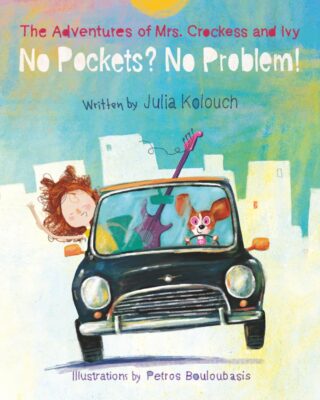
    The Adventures of Mrs. Crockess and Ivy: No Pockets? No Problem! by Julia Kolouch, illustrated by Petros Bouloubasis, is a wacky tale of innovative solutions to one of life’s greatest struggles: pockets!

    A joyful lesson in problem-solving and independence, this is the perfect story for young readers who want to do things all by themselves. They’ll want to hear it over and over again—and then learn how to read it on their own.

    The adored Briggs’ family dog, Mrs. Crockess, is a snuggly reading partner to Mrs. Briggs, an extra hand (or paw) in the kitchen to Mr. Briggs, and a rock n’ roll bandmate, slushy enjoyer, and flower-picker to her best friend, little Ivy Briggs. Together, Ivy and Mrs. Crockess are a force to be reckoned with.

    When a string on Ivy’s guitar breaks in the middle of their jam session, they have to rush to the music store so they can keep rocking out. But—oh no! Mrs. Crockess lacks an essential item for their mission: a pocket!

    Without a pocket, she can’t hold her money, her keys, her phone, her map, her bone, or her lip balm. The best friends put their noggins together to come up with a creative solution to the pocket problem. But when that idea falls through, they need another… and another … and another … and another! They only have until the music store closes to come up with the perfect solution.

    Tag along with lovable Ivy and fantastic Mrs. Crockess as they learn to solve big problems with lots of love, silliness, and patience for each other.

    Packed with Petros Bouloubasis’s colorful illustrations and goofy details, No Pockets? No Problem! will make kids laugh out loud and ask important questions like: “Why does a dog need lip balm?” “What kind of word is “Phwump’?” and, “How in the world does a dog play the drums?”

    Inspired by stories imagined by her 3-year-old niece, No Pockets? No Problem! by Julia Kolouch will have kids and adults alike wondering what in the world Ivy and Mrs. Crockess will do next.


  • THE DAY WE FOUND YESTERDAY by Tamara Dever, illustrated by Missi Jay – Children’s Books, 1980s, Picture Books

    THE DAY WE FOUND YESTERDAY by Tamara Dever, illustrated by Missi Jay – Children’s Books, 1980s, Picture Books


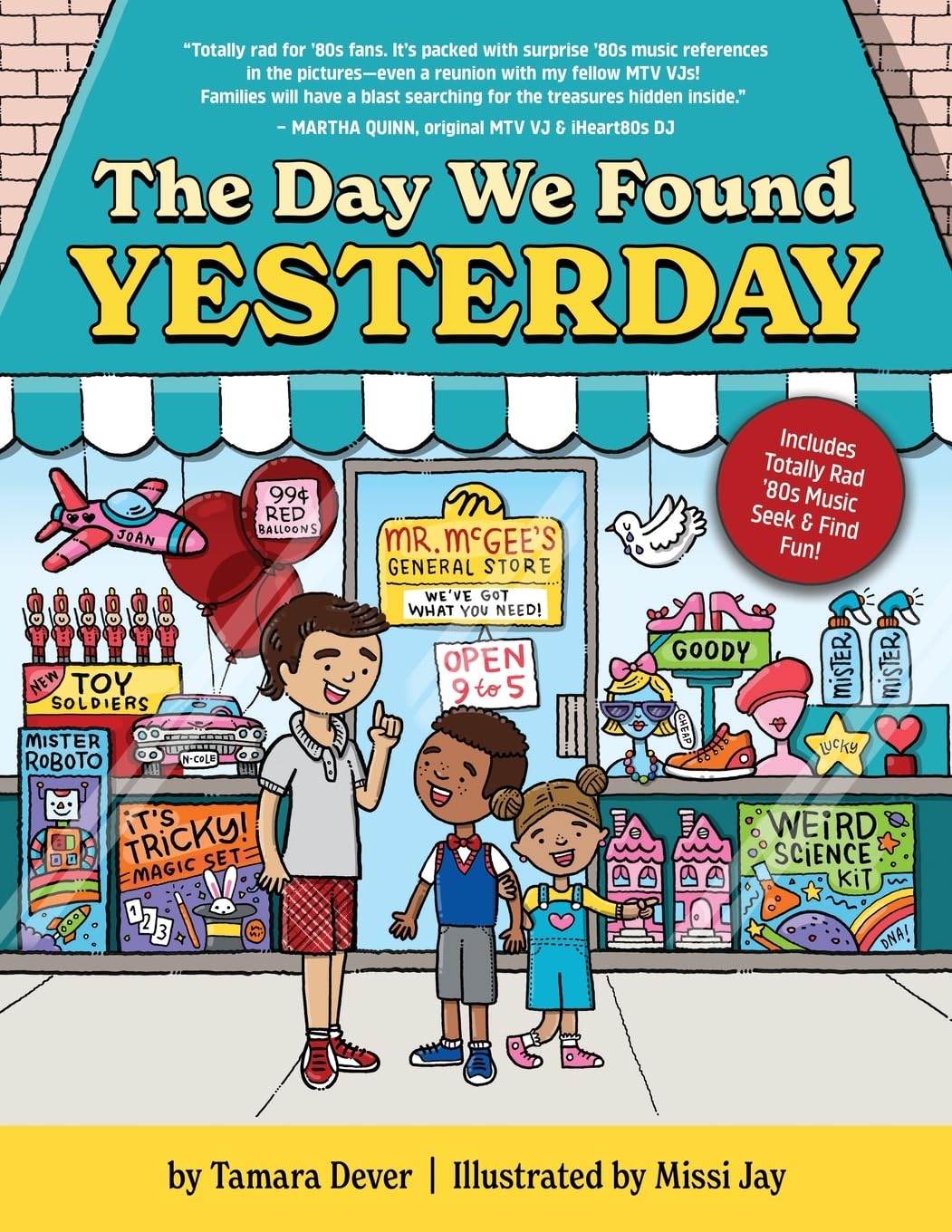
    Tamara Dever’s The Day We Found Yesterday is a blast from the past, a picture book for both young readers and nostalgic GenXers to experience the ’80s. Dazzling funky illustrations with 500+ music references will catch anyone’s eye and instantly transport readers back to the days of “I want my MTV!”

    Eileen, Mickey and Eddie love their grandparents, Nana and Papa. When they overhear them grieving something special they lost long ago, the grandkids set out on a mission in their grandparents’ hometown to find it. They visit their grandparents’ friends at their local businesses, hoping that one of them will have the answer to the question of the missing treasure.

    Their journey quickly turns into a time-traveling adventure as they gather stories of their grandparents’ ’80s childhoods from the friends and family who watched them grow up.

    The shops are covered with ’80s music callbacks, like “Karma” the Chameleon in the pet store, the travel agency slogan, “On the Road Again,” and a reminder on the doctor’s office wall that “every breath you take keeps lungs healthy.”

    Each page of The Day We Found Yesterday, illustrated by Missi Jay, is a universe of detail.

    Colorful signs and carefully hidden objects cover every inch, inviting children to pore over the pages, pick out favorite illustrations, and giggle over silly puns. New readers will find ’80s slang like “atomic” and “funky” to be an exciting challenge!

    Once the kids’ adventure has come to an end, there’s more to explore at the back of the book.

    Young readers can treasure hunt through the pages for tiny items like bells and hamsters. Meanwhile, adults can search for references to songs, artists, and even spot cameos from ’80s celebrities like Corey Hart, Debbie Gibson, and the lead singers of Men Without Hats, A Flock of Seagulls, and Led Zeppelin’s Robert Plant. Mark Goodman, Nina Blackwood, Alan Hunter, and Martha Quinn also show up in colorful images as the original MTV VJs.

    The Day We Found Yesterday by Tamara Dever opens opportunities for children to learn more about their parents’ and grandparents’ lives, sparking connection beyond generational boundaries in a fun, colorful adventure. This is a story that will last through the decades!


  • From Words to Wonder: 6 Smart Tips for Writers Collaborating with Illustrators

    From Words to Wonder: 6 Smart Tips for Writers Collaborating with Illustrators

    They say a picture is worth a thousand words.

    A children’s book’s illustrations are a non-reading and early reader child’s gateway into a story.

    Falling in love with books is imperative for the development of a child’s listening and attention skills, as well as their cognitive and language development. It also helps them socially and emotionally, creates bonding experiences and fosters their own creativity as they begin to express themselves through art and verbal storytelling.

    All characteristics that lay the path toward a happy, successful person later in life.

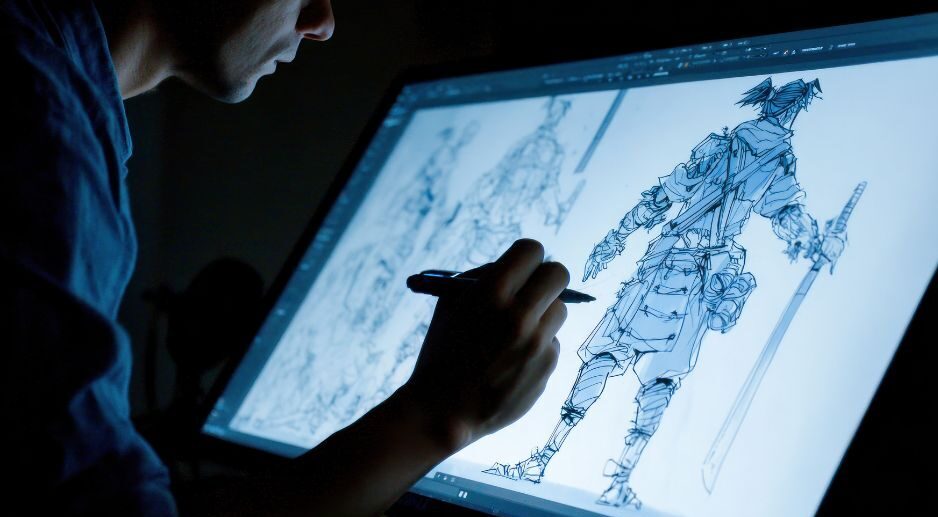
    Illustration, hand, light board, man

    Finding and working with an illustrator that you believe shares your vision is a big first step in creating a great children’s book.

    Once you are finished drafting and editing your picture book and it’s time to tackle the visual component, consider the following process to find the right illustrator, establish a great working relationship, and manage the workflow all the way through to the final product. These six tips will help you manage the project.

    1. Determine Your Scope of Work

    Never start working with an illustrator until you have a good understanding of what your project entails. Illustrators need this information so they can plan their schedules, determine fair pricing, and set a foundation of trust in your working partnership. Make it a great experience for everyone by going into the project with a carefully considered plan. Know what you need, the time-frame of the project, how they’ll be paid, and how much you have budgeted for the project.

    2. Consider Your Preferred Artistic Style

    The art produced in children’s books is as varied as the stories themselves. Fun, quirky, beautiful, and serene; the images run the gamut of styles to reinforce the plot as each page is turned. There is a lot to consider when you are thinking about your preferred style. Explore books on the market now and make a decision on the general style you prefer prior to beginning your search for an artist.

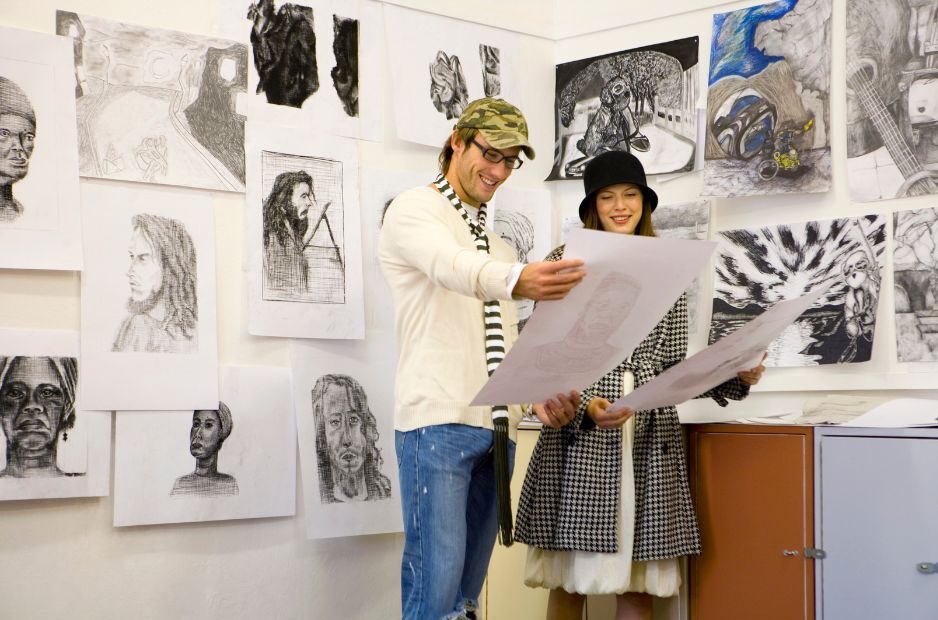
    Man, woman, drawings, black, white

    3. Take your Time Choosing an Illustrator

    Each artist brings something unique to your story, but if you don’t find one that can accurately reflect the tone of your story, you may end up causing confusion when the art doesn’t feel right with the story. Seek out illustrators that have proven they can deliver the tone and style that you desire. Zero in on three to five illustrators, view their portfolios and talk to them about their art and what inspires them, then go with the one who most closely aligns with your vision.

    4. Negotiations and Contracts

    Once you’ve found your illustrator and discussed the creative vision for your book, it’s time to get down to the business end of working with an illustrator. Before discussing schedules and pricing, do your research. Know what the typical rates are and what qualifies as a finished product: how will the images be delivered, formats, what issues could occur, and how will they be resolved, etc. Write up a simple contract that includes all the information you’ve discussed and a summary describing the style and tone will keep the vision clear for both of you as the project gets underway.

    people, man, woman, computer

    5. Now the Fun Part!

    A good practice when working with an illustrator that will ensure the project gets off on the right foot is to see a few rough sketches soon after the project gets started. Discuss them with the artist, letting them know what’s working for you, and what’s not. Be honest, but kind. Respectfully ask for the changes you wish to see and don’t forget to tell them the great things you see in their work. Pointing them toward the great things is as important as telling them what you don’t like.

    6. Checking In

    Your illustrator will need time and space to create beautiful images, and authors should respect that. But that doesn’t mean you have to be in the dark as your book comes to life with color and shape. Schedule regular check-ins or have deadlines for a specific number of pages/images. Both you and the artist will feel confident that you are moving through this process together.

    Kid, pencil, book, land, hill, sky, orange, green

    Creating a great working relationship with an illustrator will lay the groundwork for a smooth translation of your story through images and fill those young readers’ imaginations with the wonderful stories you’ve created just for them!


     Take a look at the great illustrations in these children’s picture books from Chanticleer authors! 

    Geckos in the Garden Cover

    Geckos in the Garden
    By Ruth Amanda
    CIBA Little Peeps First Place Winner

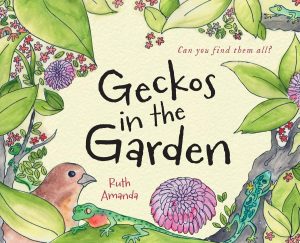
    Geckos in the Garden by Ruth Amanda is a children’s counting book that takes readers through a delightful, rhythmic, aesthetically pleasing romp past a series of hidden geckos.

    Amanda starts out with just one gecko in the garden. Every page after, one more is added amongst myriad natural details such as flowers, a snail, a palm tree, garden taps, rocks, a mango tree, leaves, a gate, a bird’s nest, a pond, and more.

    Amanda demonstrates a natural sense of narrative arc even within a counting book—readers will feel the climax of the adventure when they arrive at the ninth gecko and read the line, “I spot one—two—no, six—no, more! Nine!” The escalation of the words’ momentum makes the ninth and tenth geckos more dramatic. Furthermore, the clever dénouement includes the narrator realizing the geckos might watch them just as much as they watch the geckos, and this is written alongside an adorable picture of a gecko looking in the window of the narrator’s home.

    Read more here!

    Lily's Mysterious Odyssey Cover

    Lily’s Mysterious Odyssey

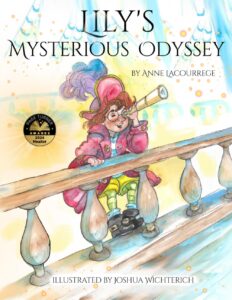
    Lily’s Mysterious Odyssey by Anne Lacourrege, illustrated by Joshua Wichterich, follows a young girl named Lily through her dreaming nautical adventure.

    Homes hold onto the history of their families. With only herself to play with in her family’s old house, Lily comes across a hidden chest of antique keepsakes, unaffected by generations of storms and floods across the New Orleans coastal area. Lily and her parents soon find even more items hidden away that paint the history of 1800s sailor Captain Harry and his family.

    That night, Lily dreams of Captain Harry’s daughter, Anne, who invites Lily to see her father’s ship. Lily’s mysterious odyssey truly begins as the ship sets sail with Lily still on board. She soon finds herself on an journey to Greece, where she learns about Greek culture and its similarities to her home when a Mediterranean cyclone hits.

    Read more here!

    Bella Brown visits a Bee Farm Cover

    Bella Brown Visits a Bee Farm
    By 

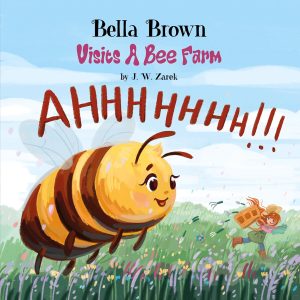
    Bees frighten Bella, but a learning adventure turns her fear to fascination in J.W. Zarek’s delightful children’s book Bella Brown Visits a Bee Farm.

    Bella’s bespectacled Grandma Yetta asks for help in her wildflower garden. Bella hops along with her bucket of gardening tools, surrounded by beautiful hovering butterflies. But a sudden encounter with a large striped flying insect sends Bella running.

    Grandma Yetta explains that the buzzing bee is merely curious or trying to protect her home or babies. She advises Bella to stand very still, and the bee will fly away. Bella gives it a try and sees her own fears fly away as the bee continues its journey through the garden.

    Read more here!

    granny, snow, boy, cane, basket, miracle, christmas, appalacian

    Miracle on the Mountain

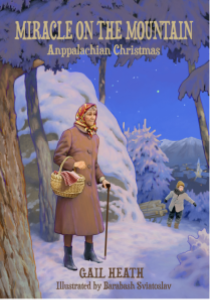
    Gail Heath’s Miracle on the Mountain: An Appalachian Christmasshares a message of love and redemption through the heart-warming tale of Granny, a faithful, disciplined, and generous Appalachian woman.

    On a blustery winter day, Granny starts down her home’s snowy, mountain landscape to attend Christmas Eve service in the village. When her dog, Shep, wanders off, Granny runs into Pete. The young man uses firewood collecting as an excuse to not attend service, hiding a deeper motive beneath.

    Granny asks after his grandfather, who is in the midst of a long recovery after being attacked by a boar. Pete is forlorn, casting aspersions at Granny’s message that a miracle may yet happen, especially on this of all nights. Sensing his loss of faith, Granny offers Pete a few cups of her warm chicory as she regales the miracle on the mountain she witnessed ten years ago that made her a true believer.

    Read more here!

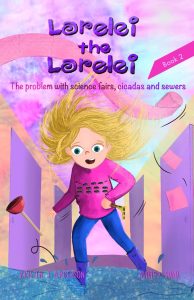
    Lorelei the Lorelei 2 Cover

    Lorelei the Lorelei: The Problem with Science Fairs Cicadas and Sewers

    Lorelei, the charismatic and outspoken seven-year-old, leaps at the chance to save her school’s science fair from disaster in Lorelei the Lorelei: The Problem with Science Fairs, Cicadas, and Sewers, second book in Kristen J Anderson’s Lorelei the Lorelei series.

    Beyond excited for the science fair, Lorelei prepares a project with a mission. She hopes to change people’s perception about cicadas, which most consider a gross nuisance of a bug. On the day of the science fair, during a trip to the restroom, Lorelei encounters a plumbing catastrophe.

    With the help of her family and friends, Lorelei put a plan in motion to protect the school fair, while learning valuable lessons about sportsmanship, classroom behavior, and empathy. She may be silly and likeable, but some of her quirks can get her into trouble too!

    Read more here!


    Professional Recognition?

    It isn’t just for the biggest names!

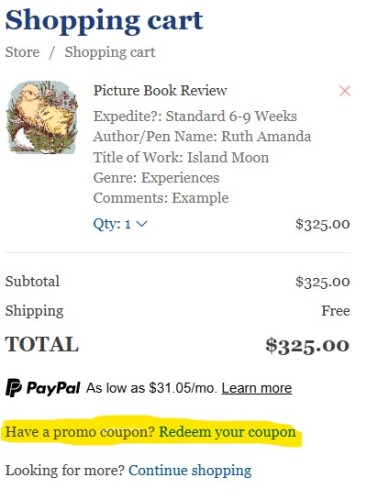
    $50 Off Children’s Book Reviews

    Your illustrations tell a story. Let professional reviewers help readers discover it.

    Through November 12, use code 3ZPULQAN25 for $50 off Chanticleer Children’s Book Reviews. Each review includes specialized assessment, ongoing SEO optimization, social media promotion, marketing-ready quotes, and author approval.

    Input the discount code here!

    Get your review with $50 off

    Offer expires November 12, 2025

  • Chanticleer 10-Question Author Interview Series with Ruth Amanda – Grand Prize Award-winning Author of Island Moon

    Chanticleer 10-Question Author Interview Series with Ruth Amanda – Grand Prize Award-winning Author of Island Moon

    CHANTICLEER 10-QUESTION AUTHOR INTERVIEW SERIES with RUTH AMANDA,
    the CIBA Grand Prize Winning Author in the
    Little Peeps Division! 


    Hello friends! We have another fabulous interview for you today, with author Ruth Amanda! Her book Island Moon took home the Chanticleer 2024 CIBA Grand Prize Award in the Little Peeps Division for Early Readers, and we are excited to share with you the joyful journey she took to becoming an author and what adventures she’s planning to take readers on now. Take a minute or two and get familiar with Ruth Amanda and her incredible journey to becoming award-winning author!
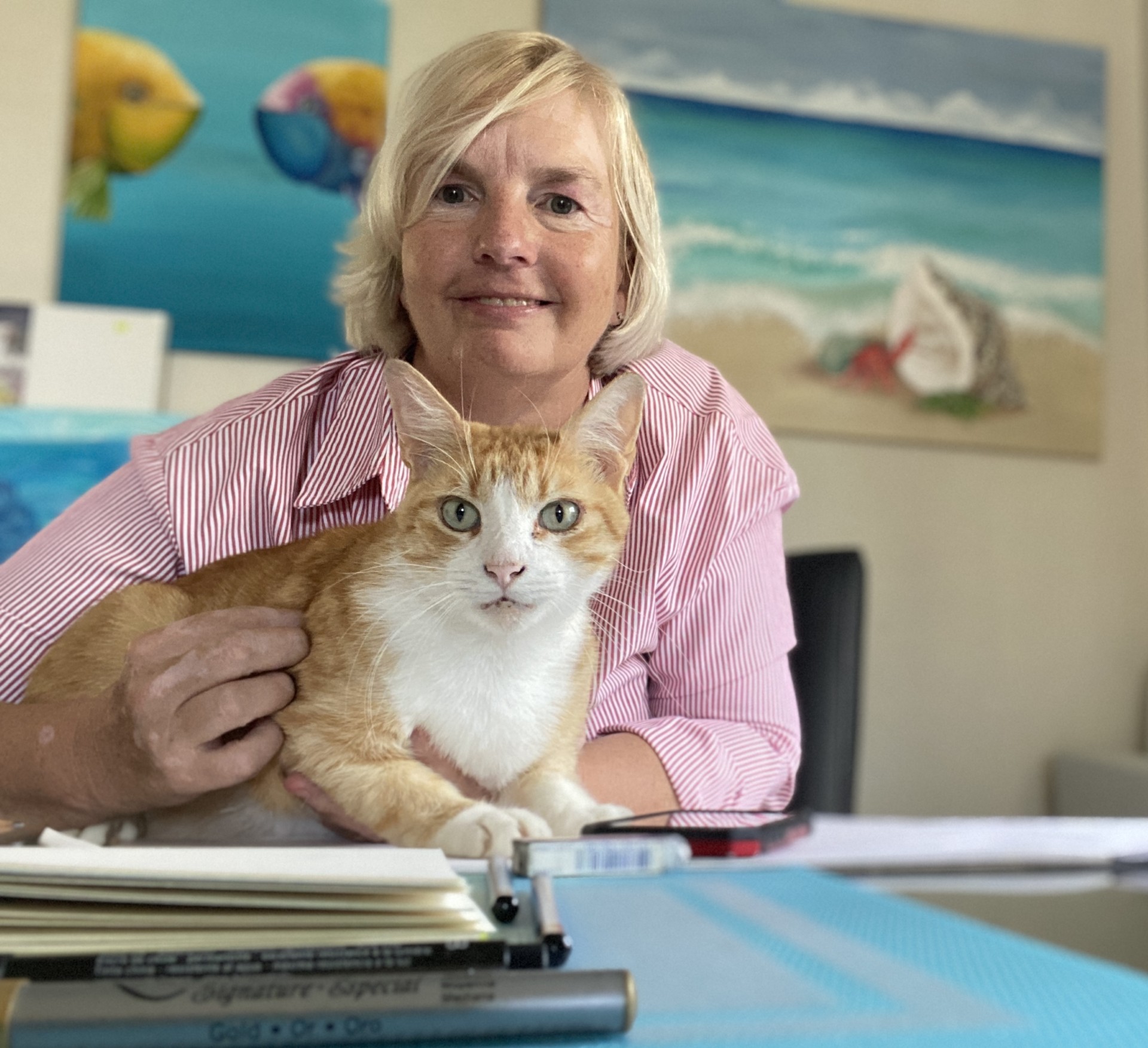


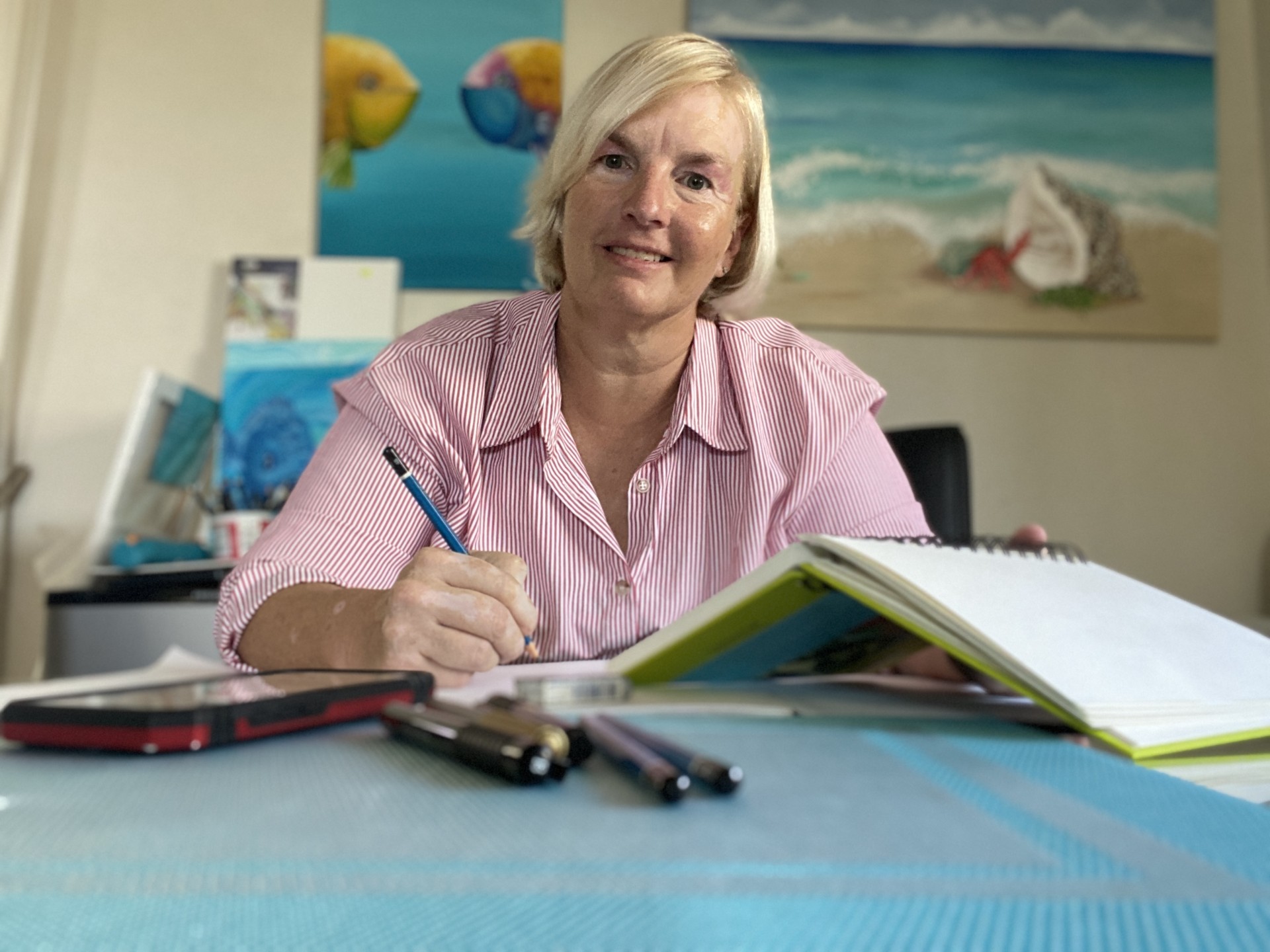
    woman, cat, poster, book, desk, sketch pad, pencils

    Chanti: Tell us a little about yourself: Have you. always been telling such imaginative, fun stories?

    Ruth Amanda: I’ve been making up stories since I was quite small, usually with an art project to accompany it, and sometime around grade 4 or so I started writing those stories down. Not because I thought I would become a writer, but because it seemed a good way to not forget the stories.

    One of my teachers in grade 7 or so, encouraged me to enter a writing competition. I won that, along with a small cash prize, and I promptly spent the money on something important like chocolate.

    Writing seemed to be more school related for a while but when I had my kids, I would read to them endlessly and, as children are prone to do, they would ask incessant questions. “Why are the eggs and ham green?” “He should have been an accountant, not a pirate because he can count good…why isn’t he an accountant?” And so on…so I made up answers, like “There used to be flying pigs, but their meat was green and very tasty so people hunted them and ate them all. Now they are extinct, so we can’t by green ham at the grocery store and that’s also why we have no flying pigs.” “The Pirate Captain actually used to run a very profitable bookkeeping business at the docks until his competitor—Bahama Bob—stole his calculator. So the Pirate Captain snuck onto Bob’s ship late at night and stole it back, but he was spotted by the Pelican who ran security and had to flee in his boat…after that, a life of nautical crime seemed more appropriate than returning to shore and a very tedious job of ‘accountancy’ and ‘tax season’…funny thing, your Grandpa probably should have been a pirate…”)

    We would also read chapter books when they were quite small so they could be tucked into bed and I would read to them from the hallway between their bedrooms. I would tell them to close their eyes and imagine the pictures since there weren’t any in the book. Then I would go downstairs and put paper on the walls in the playroom and  doodle the characters with a magic marker for the kids to colour the next day. Together we would make up our own stories while we were coloring.
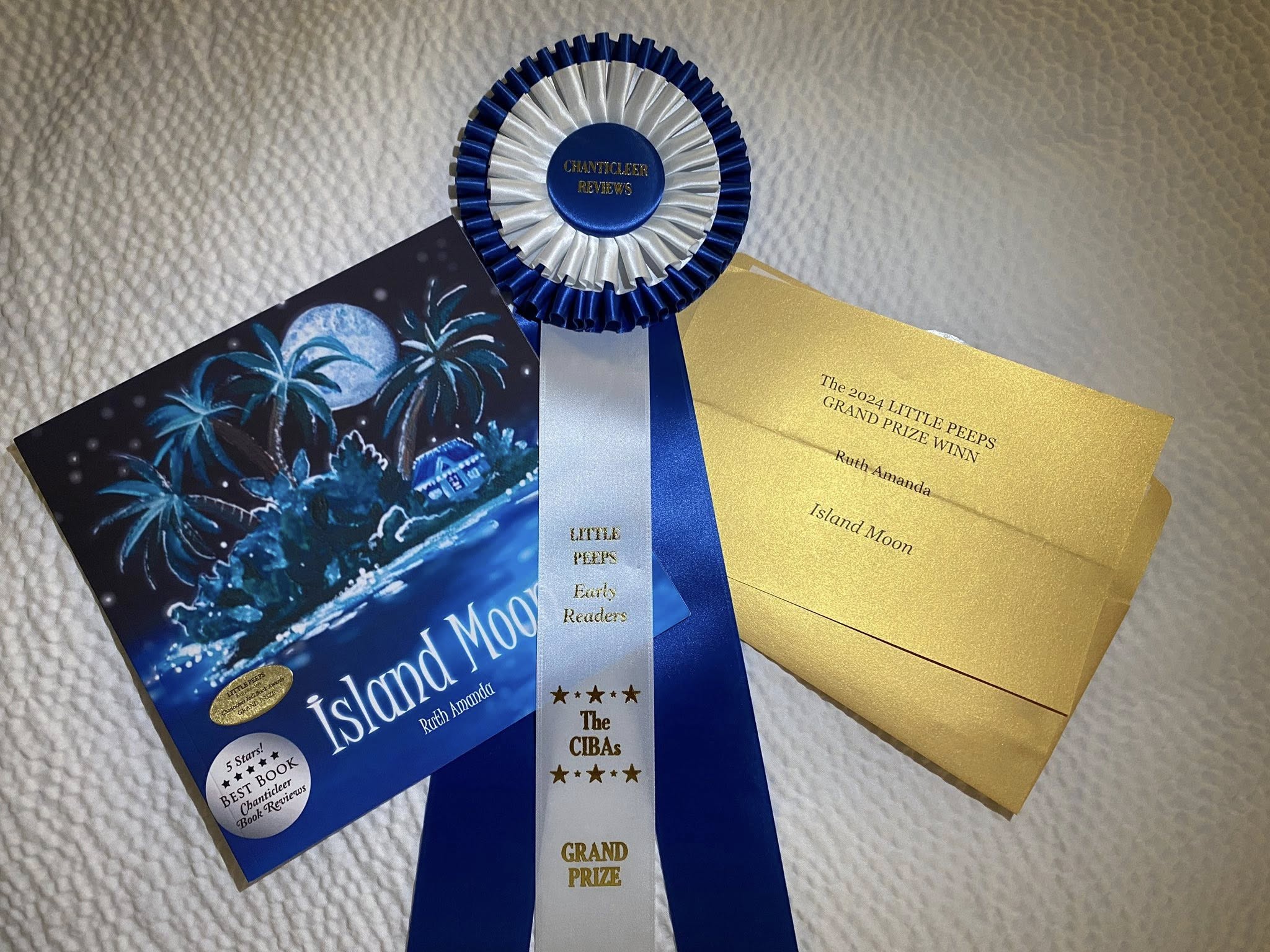
    CIBA, Blue, gold, white, Island Moon, envelope, ribbon

    Chanti: I love those creative parenting moments! Your humor and whimsy really shine through in your work. What drew you specifically to writing picture books for children?

    Ruth Amanda: I write particularly good “utter nonsense”, “total drivel”, and factual biographies of people like Stumpy (a gecko), Skippy (a bullfinch) and Coulda, Woulda, Shoulda, Diddit and Bob (the Grackle crime family).

    Translation: Children’s Picture Books.

    I primarily write these in rhyme as, having grown up with a lot of Dr. Seuss in my formative years, I tend to think in rhyming couplets. (Much to the dismay of my husband.)

    I do have some plans to write for adults as well, but that means I will have to grow up first.
    Kids, blonde, book, mat, school

    Chanti: You seem to have a gift for characters whose personalities shine on every page. Do you find yourself following the rules or do you like to make up your own rules?

    Ruth Amanda: I like to think I follow the rules, but then I get gentle reminders from the people editing my work that I take liberties with punctuation and making up words.

    And of course, I often break the laws of anatomy when illustrating. I mean, really!! A buzzard with it’s pinkie in the air? Buzzards lack the necessary fingers to do so, but then it happened so… (see “There’s a Buzzard on the Balcony”, 2023, Friesen Press).

    Chanti: What do you do you like to do in your off-time? Are you always looking for new ideas?

    Ruth Amanda: I like to go hiking and camping. Anything outdoors where I may bump into cool characters like Philbert the cane toad or a pack of green monkeys. The beach is a favourite hangout, especially with a snorkel and mask! I also enjoy sketching and painting.

    “But you also illustrate your books, so that doesn’t count.” You say.

    I say “Ah, but it DOES count as a hobby because (1) I don’t pay me to illustrate which makes it a hobby and (2) I sketch and paint things that have nothing to do with my stories.”

    (Yet.)

    Sometimes a painting gives me an idea for a book.

    There should be a twelve-step program.
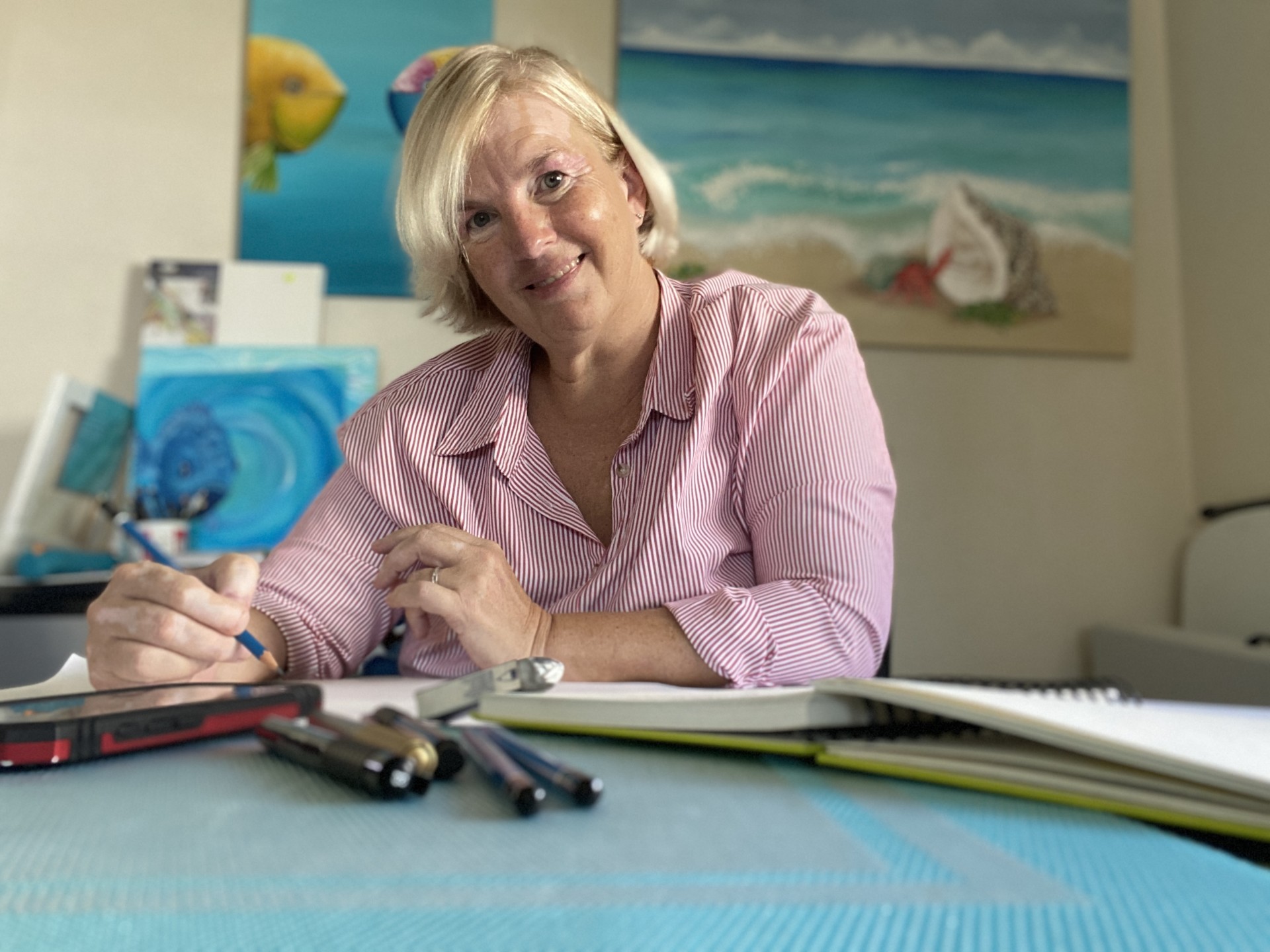
    Woman, pens, posters, desk, books, blonde

    Chanti: Your creative process sounds inspired. Can you talk a little more about how those story ideas actually come to you? What’s your method for developing a new book?

    Ruth Amanda: I think I come up with my story ideas in the usual way. Someone annoys me. I write their name down. I turn them into a frog (it’s a bit like witchcraft) and put them into a book.

    All kidding aside, I see possibilities in everything.

    If you were to look outside right now, you would have trouble spotting any snails. If it rains, you will instantly see thousands of them. Why? Good question. Because they can hydroplane in the puddles, which makes them go very, very fast. So, they are obviously holding races. Voila! “Ess-Car-Go!” (2024, Ruth Amanda).

    You might go to bed but wake later with your bedroom flooded with light. It’s morning!-you think. So, you get up and go to the window, only to discover that it’s a very bright full moon pouring through the window. You hear the whistling frogs, the wind, the waves, a dove who is also having trouble sleeping…and again, you suddenly have “Island Moon” (2024, Ruth Amanda).
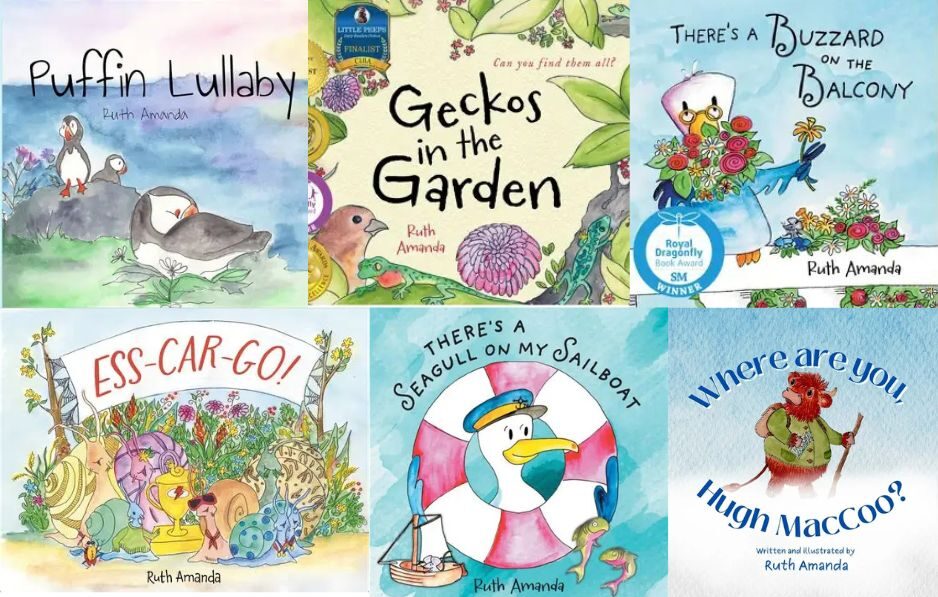
    books, childrens, picture, watercolor

    Chanti: What do you feel your writing fosters in children?

    Ruth Amanda: I am most confident in my ability to make kids look at things they wouldn’t normally stop for in this age of electronics and social media. Most of them haven’t hunted for small lizards in the back yard ever…until now!

    I am also quite confident in my ability to entertain children. My success is measured in children’s reactions and not in book sales. Don’t get me wrong, books sales are great, but, hearing the kids laughing and talking about what’s happening in the book is all I need. Or the sleepy smiles as they head to bed. Priceless.

    My advice? Regress into your childhood. Look at things with childlike eyes and see the everyday magic that is dewdrops on spiderwebs, butterflies in aerial combat, puffins dancing polkas, and whales that snore deep in the ocean. Open up that imagination and let it spread out like a flood.

    Also, do not get too caught up in a moral or a lesson for the kids. They get school. Some of them get Sunday School or other religious instruction. If you want them to read in their own personal time, provide them some fun escapist reading.

    After all, when you take a book to read for your personal time, you likely are not picking up a text book or academic paper. You are going to grab a murder mystery, espionage, romance, or other fun reading. Don’t expect children to get enthusiastic over something you wouldn’t be enthusiastic about.

    It can have a lesson—just don’t sacrifice story.
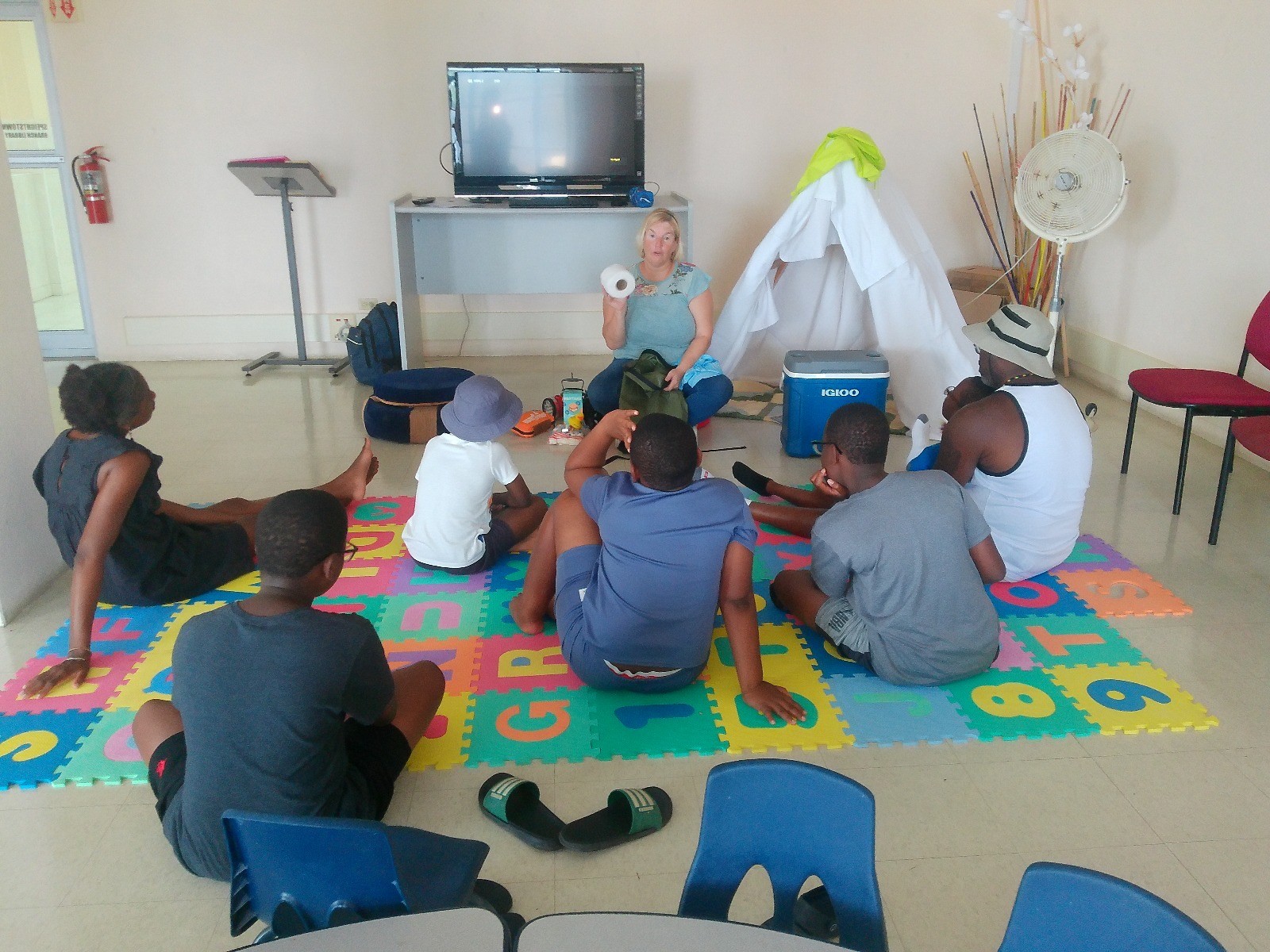
    classroom, kids, children, mat, woman

    Chanti: Not sacrificing story for lessons really resonates with me. Writing is definitely a craft that requires ongoing development. How do you continue growing and sharpening your skills?

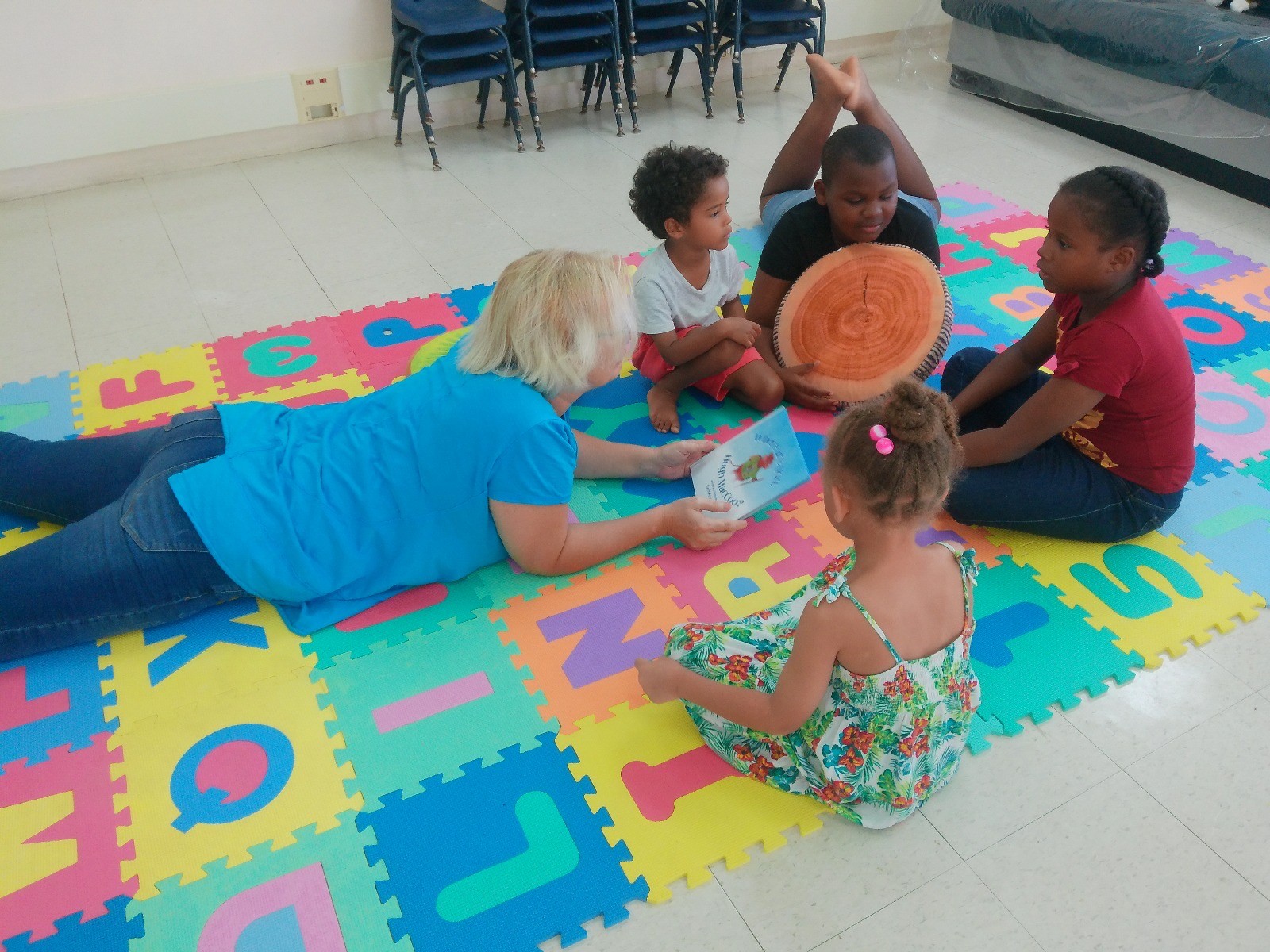
    Ruth Amanda: I read to a great group of kids at the local library. By great, I mean enthusiastic, inquisitive and as unruly as I was at that age. They love to question the content of the books, adore getting the globe out to see how far away the story happens, and they always provide feedback on my latest writing projects. That act of reading also means I am constantly reading work in my genre of Children’s Picture Books by my peers and writers from previous generations. I get to rediscover these stories with fresh childlike eyes as I try to anticipate what the questions will be so I can be prepared.

    I also try to write something every day even if it’s just a limerick.

    A good game of Scrabble is also useful to keep the vocabulary sharp.

    By the way, if asking for feedback from people who fall into the Picture Book target audience, be clear. Responses must be, “I don’t like it because __________” or “I like it because ___________”. This gives the opportunity for them to develop some clear communication skills, and also provides you with actionable feedback on what to tweak or which story to just scrap and move on until a better idea surfaces.

    Chanti: What are you working on now? What can we look forward to seeing next from you?

    Ruth Amanda: I have just released, on June 6, 2025, “Where are you, Hugh MacCoo?” which is about a young highland cow (or “coo”) that goes out hillwalking in Scotland and gets caught in some weather (as one does). The Mountain Rescue is called in to go search for him. Meantime, he has bumped into a Scottish legend. No spoilers here—buy the book. Available on Amazon, Barnes & Noble, Chapters/Indigo, Waterstones, Foyles, and wherever fine books are sold…(And leave a review!)

    I also have two Caribbean themed Christmas books in illustration to be released in November 15 (knock on wood), a middle grade sequel to “Cried the Raven” (2024, Ruth Amanda) that is stumbling through a plot flaw at the moment, and a developing manuscript about a hermit crab experiencing a fashion crisis due to a shortage of suitable shells on the beach.

    If I can squeeze it in, I also have a sea turtle themed colouring book in development.
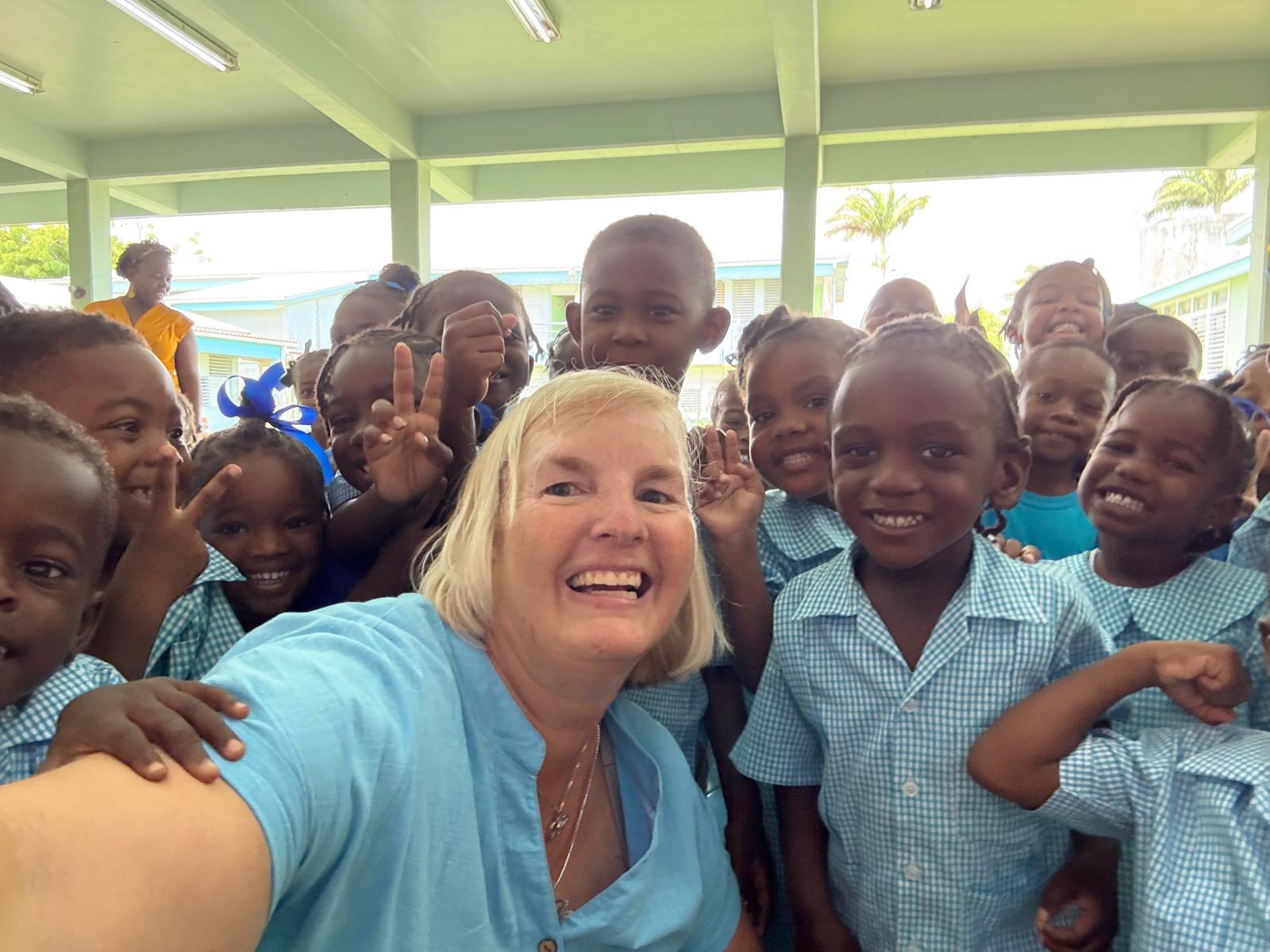
    Kids, woman, blonde, window

    Chanti: Wow! You are so creative! What is the most important thing a reader can do for an author?

    Ruth Amanda: Read their book. At the library, or buy a copy, it doesn’t really matter. Just read it. Recommend it. Leave a review on Goodreads and Amazon.

    Also, send cash. A writer needs to eat.

    Chanti: Your books are both fun to read and beautiful to look at. What excites you most about writing?

    Ruth Amanda: A blank screen and a great idea. They go together like Peanut Butter and Jelly! Much like the chapter books I used to read to my kids, the pictures pop into my head as the words fill the page.

    What excites me the least about writing? Knowing that I have to bring those pictures in my head out onto the canvas and paper…that’s stressful. Especially when you have a couple of young fans asking, “Miss Ruth, I need more books. Are you writing more books?”

    Woman, palm, yellow, smile, blonde, Ruth Amanda

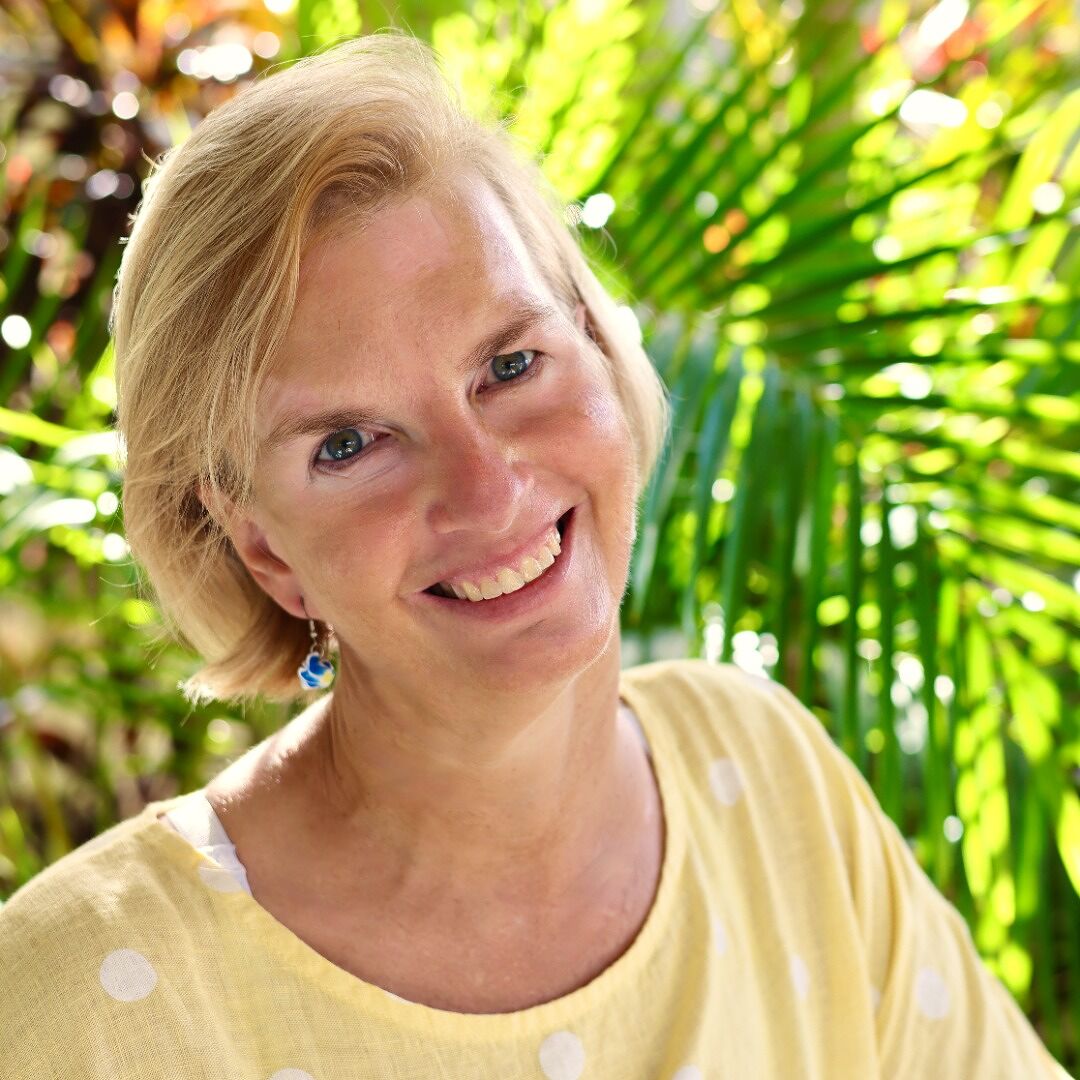
    Ruth Amanda lives in Barbados with her husband and a collection of wild creatures in her garden and tame creatures in her home. On most Saturdays, you can find her at the Speightstown Branch of the Barbados National Library Service where she works hand in hand with the Barbados Roaring Virtual Lions Club and the library to provide entertaining story time and activities for the kids. Ruth Amanda also conducts school visits and readings, and has some fabulous handouts for classrooms on Writing Stories and creating books.

    Ruth Amanda has been helping install book nooks in various nurseries and schools in coordination with the Kiwanis Club of Barbdos in Action and President Tracey MacWatt for the program BarbadosWorking, as well as the Child Care Board Barbados and the Barbados Association of Reading. Ruth Amanda is a strong proponent of increasing literacy worldwide, and knows that literacy begins very early. She also works in partnership with the Barbados National Library Service and the Prime Minister’s Office Division of Culture along with other authors and local creators to promote literacy in Golden Square Freedom Park, Bridgetown.

     

  • The 2025 Little Peeps Long List for Picture and Children’s Books

    The 2025 Little Peeps Long List for Picture and Children’s Books

    Two little chicks, fresh from their eggThe Little Peeps Book Awards recognize emerging new talent and outstanding works in the genre of Children’s Fiction. The Little Peeps Awards is a genre division of Chanticleer International Book Awards and Novel Competitions (The CIBAs).
    Chanticleer International Book Awards is looking for the best books featuring stories of all shapes and sizes written to an audience for Early Readers. Story books, Beginning Chapter Books, Picture Books, Activity Books, and Educational Books. These books have advanced to the Long List for the 2023 CIBAs. (For Young Adult Fiction see our Dante Rossetti Awards, for Middle Grade Readers see our Gertrude Warner Awards.)

    These titles have moved forward in the first look rounds from all 2025 LITTLE PEEPS entries to the 2025 Little Peeps Book Awards LONG LIST. These entries are now in competition for the 2025 Little Peeps Short List. The Short Listers will compete for the Semi-Finalists positions. FINALISTS will be chosen from the Semi-Finalists and recognized at the Chanticleer Authors Conference, CAC26.

    We will announce the 1st Place Category winners and Grand Prize Division Winners at the CIBAs Banquet and Ceremony on Saturday, April 18th, 2026 in beautiful Bellingham, WA at the Bellingham Yacht Club sponsored by the 2025 Chanticleer Authors Conference

    These titles are in the running for the SHORT LIST of the 2025 Little Peeps Book Awards novel competition for Children’s Fiction!

    Join us in cheering on the following authors and their works!

    • Alison Frenz – I Bet I Can Make You Yawn
    • Amy B. Mccoy – Katie Finds Her Voice: A Story About Autism
    • Andrew Woolnough – Nuts About Dinosaurs
    • Andy M Riley – Finding Hanna’s Happy Place
    • Angelina Natale – Peanut and Butter: A Sky View Farm Adventure
    • Ann P. Borrmann – You Little Monkey
    • Ann P. Borrmann – Never Take a Pirate’s Pearls
    • Anna Gerrodette – Wild Rides with Pedal and Blaze
    • Anne Polli – Mason the Magnificent
    • Antonia Blackmore & illustrated by Sarah P Sharpe – Figgles & Flo the Elephant in the Room
    • Ben St. James – Cowboy Cooper and the Ghost Town
    • Brandon Moore – Bridget Kimble Learns Self Control
    • Bridgetta Tomarchio – Monsters Don’t Say Meep Even the Tiniest Roar Can Make the Biggest Difference
    • Brittany Petish- Sally the Brave
    • Cal Lopez & Natalia Ulloa – Humans Are Awesome: A Kid’s Guide to Staying Smarter Than AI
    • Carrie A. Buck – Ivy Learns to Share
    • Christine Kessides – Tail Tale Too
    • Corey Turner – Cloudy Days
    • David Waugh – Benny the Lost Balloon
    • Deborah L. Staunton – Owls Can’t Sing
    • Dzvinka Hayda – The Legend of the Dipper
    • Ellissa Schwartz – This Day I Hold Dear
    • Everett Livingston – The Story of You
    • G.R. Foster – The Puppy That Wanted to Be a Flower
    • Gail Heath – Miracle on the Mountain: An Appalachian Christmas
    • Glenda Keiper – Clancy McFancy and the Tree with Bright Green Leaves
    • Gretchen K. Webber – Beanie the Weenie
    • J.W. Zarek – Bella Brown Visits a Bee Farm
    • J.W. Zarek – Bella Brown’s Messier Than Messy Room
    • J.W. Zarek – Bella-Brown Grandma’s Missing Butterfly Locket
    • J.W. Zarek – The Stomp-Clomp-Clump Monster Above the Bed
    • Jane Xu – Can Pandas Be Koalas Too
    • Jessica A. Macpherson – The Little Things We Do
    • Jessica Mcanelly – Birdie’s Picnic Party a Tasty Take on Food Safety
    • Jomo Jesus Thomas Suriel – The Angry Vacuum
    • Kate Shooltz – Kate the Earthling
    • Kelly Curtin and Molly Hallinan – Molly and Potato
    • Kenneth Brown – Saving Private Brown
    • Kim P. Chesney – A Mysterious Night at the Library
    • Kim Sloan – Billy Bob’s Adventures Learning the 50 States
    • Kristen J Anderson – Lorelei the Lorelei: The Problem with Science Fairs, Cicadas, and Sewers
    • Kristy Whilden – Alice’s Colorful New World
    • Laura Ball – Albert the Donkey Solves a Mystery
    • Leslie Calimeri – One Day with Dinosaurs
    • Lisa Mueller – Dot’s Spots
    • Lolisa Marie Monroe – Dungoolee
    • Lori Hoffman Penna – Catawampus the Story of a Crooked Cat
    • Lori Orlinsky – Being Middle
    • M.D. Mcalister – Phin York and the Giants of Wintercoombe
    • Mark Anthony King – Trigger the Dog That Thought He Was a Horse
    • Michele L Sayre – The Long Lazy Summer Wonders of Childhood Beyond
    • Michelle Mcalister – Carolina Is a Knight
    • Michelle Mcalister – Gilly Green Will Sing
    • Michelle Mcalister – Nighttime for Everyone
    • Michelle Mcalister – Snelliot the Bold
    • Mike Darcy – Little Joe and the Big City
    • Mike Stonecypher – There’s a Girebra in the Forest
    • Miki Taylor – Bentley Finds a Hippopotomonsterous
    • Mr. Steve – Fishing Is Fun
    • Mr. Steve – The B Hive
    • Nicole Metas – Hemi Bunny Finds a Mommy
    • Olga Podoprigora – The Banana From Space and Other Stories From Riverstone
    • Once Upon a Dance – Bellyrina
    • Paloma Williams – Milo’s Big Beautiful Journey
    • Pamela Gray Willcox – Tux the Little Emperor
    • Patty York Raymond – There Was a Tenacious Teacher Who Scarfed Down a Sticker
    • Payton Lynch – The Journey To You
    • Rae St. Clair Bridgman – W Is for Winnipeg a Little Architect’s ABC
    • Robin Currie – How Do You Sleep
    • Ruth Amanda – Ess-Car-Go!
    • Sally Kashner – River Song
    • Sally Kashner – The Night Has a Secret
    • Sherry Roberts – Amica Helps Zoe
    • Sherry Roberts – Just Call Me Pardner
    • Shlomo Goldman – Ryder the Spider Discovers the Body
    • Svetlana Kitik – Mother’s Mega Marrow: a Gardening for Kids Nature Storybook About Growing Food, Sharing, and Outdoor Learning
    • Sydney Roubian – Scarecrow Finds a Heart
    • Tamara Neal – I Know Why the Red Bird Talked
    • Thomas Anthony – Walter the Polar Bear
    • TK Sheffield – Nellie’s Island Small Hooves Big Heart Island Adventures Start
    • Tom Morency – Doris the Dragon
    • Vassi Rombis – Luna the Little Witch the Magic of Teamwork
    • Victoria Fletcher – Lovely Locks of Gold
    • Wanda Carter Roush – The Jellybean Gospel the Born-Again Bunny

    PROMOTING OUR AUTHORS! 

    This post has been posted on the Chanticleer Facebook Page. We try to tag all authors listed here in the Facebook post. However, it is easier for us to tag authors when they have Liked and Followed us on Facebook.

    Please click here to visit our page to LIKE, COMMENT, and SHARE on Facebook.

    We will also be promoting this list in our Newsletter, which you can sign up for here!

    Congratulations once more to the 2024 Little Peeps Grand Prize Winner

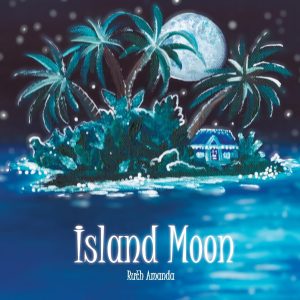
    Island Moon

    By Ruth Amanda

    Click here to see the full list of 2024 Little Peeps Book Award Winners for Children’s Fiction.

    We are now accepting submissions into the 2026 Little Peeps Book Awards for Children’s Fiction.

    Please click here for more information.

    Winners will be announced at the 2025 CIBA Awards Ceremony that is sponsored by the 2026 Chanticleer Authors Conference.

    April 17 – 19, 2026! Save the Date for Registration!

    Seating is Limited. The esteemed WRITER Magazine (founded in 1887)  has repeatedly recognized the Chanticleer Authors Conference as one of the best conferences to attend and participate in for North America.

    Join us for our annual conference and discover why!


  • RALPHY’S RULES For LIVING The GOOD LIFE by Talar Herculian Coursey – Children’s Animal Stories, Children’s Self-Esteem Books, Picture Books

    RALPHY’S RULES For LIVING The GOOD LIFE by Talar Herculian Coursey – Children’s Animal Stories, Children’s Self-Esteem Books, Picture Books


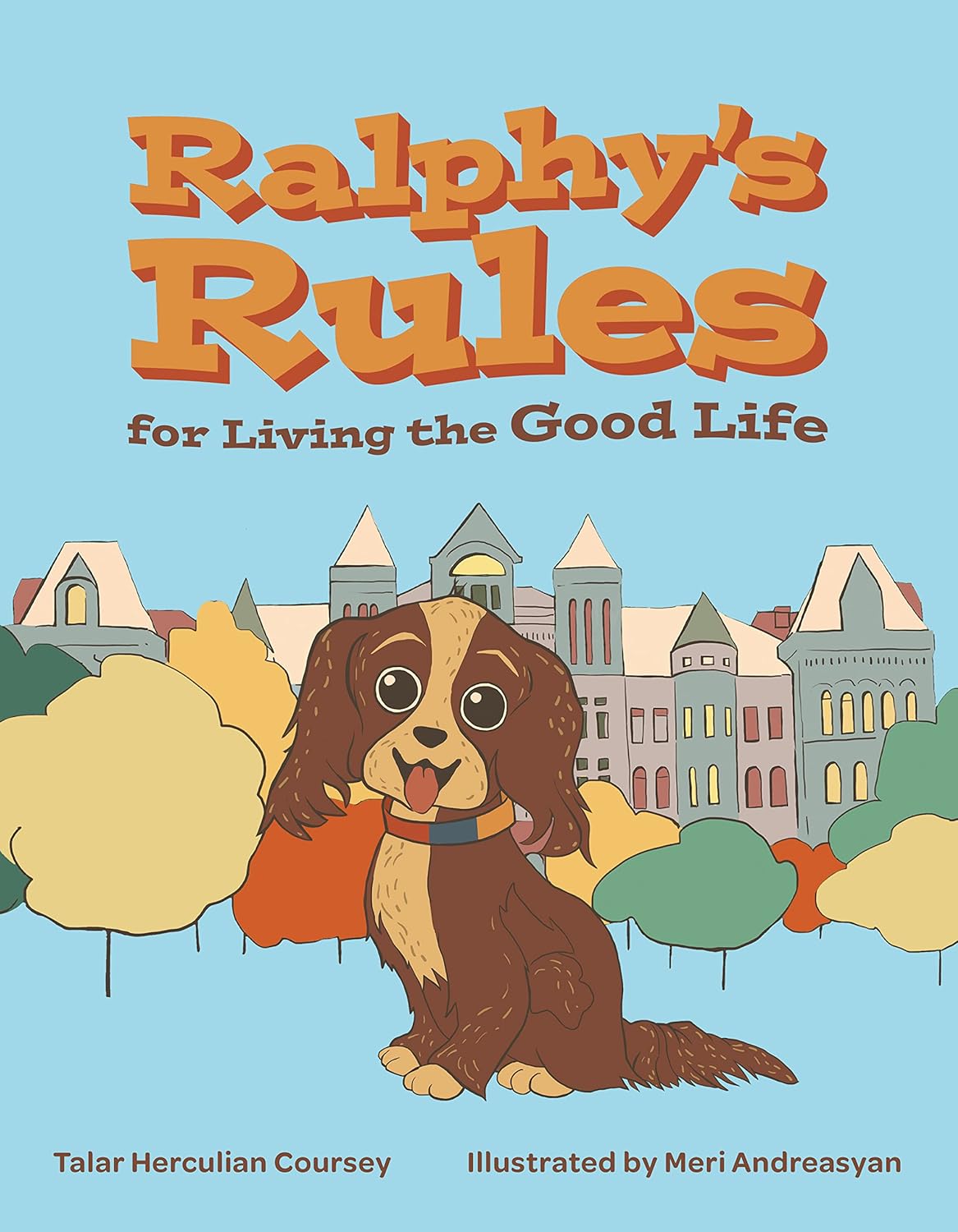
    Ralphy’s Rules for Living the Good Life by Talar Herculian Coursey teaches big lessons about seeing yourself and the world with kindness through an approachable, gentle, and colorful story for young readers.

    Joey the squirrel isn’t just grumpy but downright cranky. He’s weighed down by pessimistic thoughts about himself like “I’m not good at math” and “I’m funny looking.” But Joey bumps into Ralphy, a happy dog who introduces Joey to his different, empowering perspective, Ralphy’s Rules for Living the Good Life. Ralphy teaches him critical lessons on emotional resilience, which are communicated in a way that any child can identify with.

    Ralphy’s Rules for Living the Good Life stands out among its peers for its easy and flowing writing.

    The rhythm of dialogue between Joey and Ralphy makes reading aloud feel like you’re overhearing a conversation between two friends, one a little wiser than the other.

    Meri Andreasyan’s bright, warm, and expressive pictures make Joey’s frowns and Ralphy’s cheerful energy come alive.

    Through them young readers can easily understand Joey and how he changes as he learns. His initial words and way of seeing the world may remind you of moments as a child or even as a grown-up when you have muttered to yourself or to others about how you are not enough.

    The themes of kindness, resilience, self-love, and understanding others are clear but never heavy-handed.

    These lessons are not only for children but adults as well. They remind readers not to take things so personally, not to be so hard on themselves, and sometimes to be just a little bit braver.

    Ralphy’s Rules for Living the Good Life by Talar Herculian Coursey is cheerful, encouraging, and real. It’s a story that gives children life lessons they can adopt right away, and one that parents will appreciate for its lingering message of kindness to oneself.


  • A PLACE CALLED HOME by Nora G. Ho, Illustrated by Marlon at GetYourBookIllustrations – Picture Books, Children’s Animal Stories, Children’s Cat Stories

    A PLACE CALLED HOME by Nora G. Ho, Illustrated by Marlon at GetYourBookIllustrations – Picture Books, Children’s Animal Stories, Children’s Cat Stories


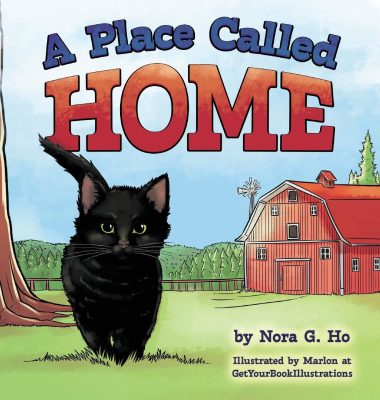
    A Place Called Home, a kitten leaves his barn to adventure around the redwood forest, looking for somewhere he belongs among the diverse wildlife.

    The pond’s singing frogs and leaping trout draw his interest, but kitten certainly wouldn’t fit in underwater. He gets nervous in the woods, so vast around him, but also decides against a bunny burrow because it’s not nearly big enough. After intruding on a skunk’s dumpster and a bear’s cave, kitten finds his way back to the farm. Even the friendly pigs are too muddy for his fur.

    His journey returns to the barn with his mama and siblings, where kitten finds home waiting for him.

    Ho’s writing creates an easy and educational read-along for young children.

    Each line fits into a simple rhyming scheme. Frequent use of synonyms makes this book an effective introduction to new vocabulary, with a glossary in the back for less familiar words like ‘furrow’. Onomatopoeia words like “ribbit” and “oink” create an engaging and multisensory world of imagination for the readers.

    A Place Called Home teaches kids about the living habits of different species, from burrowing bunnies to slimy slugs. The book ends with further rhymes about each animal, along with a message on respecting wild creatures and the importance of the Redwood trees. Children interested in nature will share in the kitten’s curiosity throughout his journey.

    The art by Marlon at GetYourBookIllustrations gives vibrant personality to both the places kitten goes and the animals he meets.

    Landscapes stretch wide around the little kitten, each with its own visual identity. Pastel blue waters ripple around the frogs, titanic Redwoods reach far above the edge of the page, a skunk guards the colorful contents of its dumpster.  The imposing stones of the bear’s cave give way to a familiar green farm and finally the warm-lit wood and hay of the barn.

    Marlon depicts each animal with realistic shapes in motion, stylized enough to show their reactions to kitten. With his black fur, kitten pops against the bright colors of the background, highlighting the attention to detail in his dynamic feline mannerisms—the fuzzy attitude that any cat lover will recognize.

    An educational romp through nature and comforting bedtime story, Nora G. Ho’s A Place Called Home will be loved by any young reader.