Tag: Philosophy

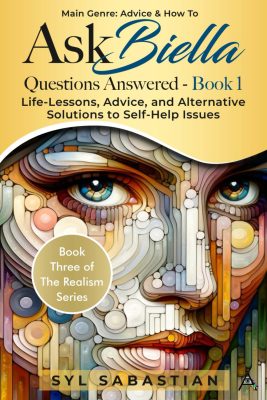
  • ASK BIELLA: The Realism Series Book 3 by Syl Sebastian – Self-Help, Philosophy, Personal Transformation


    Syl Sabastian’s Ask Biella is unlike today’s typical self-help books—ones that are quickly read, interpreted, and forgotten. Instead, Ask Biella is a thoughtful and thought-through self-help reference work featuring a fictional guide from Syl Sabastian’s core series fielding deep questions from real readers. It asks its audience for a different kind of commitment to its deep sharing: a raw, self-exploratory approach in which one creates a realistic-ideal world for themselves through the process of positivity and emphasis.

    Ask Biella invites readers to turn inward for enlightenment, satisfying their questions with lasting internal empowerment rather than external compromises. Biella reveals the harmful mental habits to which we are all prone and points to the rope that can save us from ourselves. After all, according to Biella, “We, and we alone, are the creators of meaning.”

    Biella’s world is rooted in real-world wisdom with an easy-to-follow candor, and pulls from Biella’s “Dictionary-of-Power,” hyphenating and capitalizing particular words and phrases for emphasis to change how the reader engages with the text. For example, Biella hyphenates and capitalizes the phrase “Thinking-Things-Through-TO-THE-END” to capture readers’ attention, changing the way readers’ brains respond to the words via emphasis. These specific words and phrases, or “tools-of-living,” cover a wide variety of topics.

    From relationships to business endeavors, self-love to suffering, and social media to sobriety, Biella has something to offer those who seek answers.

    At times the vocabulary of Biella’s Dictionary-of-Power loses its whimsical shape, and the author allows his personality to seep through. This change may catch the reader off guard with colloquial words such as “suckers,” “lol,” “kinda,” “umm,” and “bullsh***ers,” but it serves to bring a sense of our own human experience into contact with the divine wisdom of the Universe as explained by Biella.

    Ask Biella is a visually beautiful book, featuring original digital art by Sabastian which complement the topics addressed by Biella throughout the book. Central figures find peace and attune themselves with positivity amid colorful surroundings in the art, and each depiction provides a window into Biella’s imagination, inspiring readers to visualize alternative solutions to their problems.

    Ask Biella is intentionally formatted to create a lasting effect on the reader.

    Each chapter entry includes a question from an external source, and Biella’s response is broken down into digestible categories, followed by hashtags that summarize the keywords addressed in the chapter. These small, organized segments reveal a rhythmic pattern in the book that provides the reader with the tools necessary to think through the ideas presented with clarity, interrogating the text, their personal experiences, and their beliefs to go “beyond the usual, convention, the expected and assumed.”

    Syl Sabastian’s Ask Biella is an inventive approach to the self-help genre.

    It invites readers to approach the questions in their lives with curiosity and internal satisfaction rather than providing neatly packaged solutions to common modern problems. Slipping at times it between its invented Philosopher, Biella, and its author, the overall message is clear and important to all readers: “Trust in yourself, Trust in your Goodness, Trust in your Honesty, and Trust in your Integrity. If you are Real in your being, Realness will follow.”
     

  • SOMETHING MORE: Living Well in a Broken World by Daryl Potter – Philosophy, Religious Studies, Spiritual Growth Self-Help


    Something More by Daryl Potter weaves an intrinsic tapestry of personal narratives, philosophical inquiries, and the refuge of spiritual contemplation, wrapping itself around these in a quest for inner truth, self-growth, and fulfillment in the unrelenting cold of human existence.

    “Blind belief in authority is the greatest enemy of truth.” This line by Albert Einstein corresponds to the opening message of Something More, a modern take on the ancient wisdom of the Biblical book of Ecclesiastes attributed to Solomon.

    In a world where information can flow freely and often unchecked, Potter puts into question the very framework and inspiration for his discussions. If everything is ‘hevel’—translating to ‘vapor’, the transience of life—as declares Solomon in Ecclesiastes, does he mean that life is meaningless? Or does he reference life’s innate fragility as encouragement to cherish the present?

    The answer to this question is the driving force behind Something More as it explores the human capacity for resilience, emphasizing the ability to find joy even in the middle of life’s complexity.

    As it stresses the profound significance of simple pleasures as a source of fulfillment, Something More encourages readers to be receptive to subtle, beautiful moments amid chaos. The author argues how wisdom—wise leadership especially—and forging meaningful relationships help a person navigate the turbulent sea of life.

    As this book furthers its take on Solomon’s reflections in Ecclesiastes, it points to the divine gift of finding snippets of happiness through personal growth, self-awareness, adaptation, and resilience over all material pursuits and external validation. Much emphasis is put upon investing in meaningful relationships, exchanging slices of time with others for a life that encapsulates a sense of belonging. The point here isn’t to utterly forsake financial necessities and stability but to strike a balance that also recognizes life’s value beyond these prospects.

    Potter next dives into the inevitable dichotomy of individual desires versus societal expectations.

    Without taking sides, the text highlights the possibility of aligning one’s identity with the broader societal structure. The author examines ethical dilemmas in the luring face of bribery versus contributing to genuine contentment.

    Something More vouches for spirituality’s ability to enrich life experience with purpose and fulfillment. All these complex ideas comes clearly through as we follow the author’s self-journey to connect with the greater truth of universal phenomena. The main argument, encapsulating all others, is in Solomon’s advocacy for seeking God as the sole timeless addressee of emptiness and unfulfilled longings.

    With a blend of styles, Something More crafts a vivid landscape of reading experiences.

    As the text supports a contemplative engagement with one’s internal reflection, the philosophical concepts—as drawn from Solomon’s wisdom—stimulate intellectual agency. Evocative language and personal anecdotes will emotionally resonate with readers, helping them to absorb this book’s complex ideas.

    The strength of the work lies in its exploration of philosophical concepts across myriad aspects of life.

    As it ponders dilemmas of personal, social, and spiritual dimensions, Something More creates a space for readers to reflect on their own experiences. Among this plethora of abstract concepts there are some that could benefit from more concrete examples, though even if not as accessible, they’re still intellectually stimulating.

    As a combination of self-help, philosophy, and memoir, Something More best aligns with existentialism in addressing the questions of personal freedom, absurdity, and the potential for fulfillment. David Thoreau put it succinctly—“You must live in the present, launch yourself on every wave, find your eternity in each moment.”


    Chanticleer Book Reviews 4 star silver foil book sticker

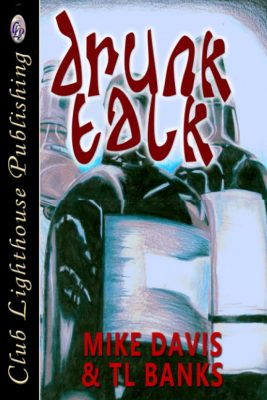
  • DRUNK TALK by Mike Davis & TL Banks – Philosophy, Personal Transformation, Humor

    Authors Davis and Banks have combined forces to create this humorous but practical look at how people think and why they act as they do.

    The essential message of this satiric volume is that most people tend to nurse false notions about their lives and the universe in general – notions that the authors rapidly and thoroughly debunk. They take the stance of a drunk hanging out at a bar, hearing about everything that goes on in people’s minds. In forty-eight segments, various human problems are examined, derided, and substituted for what many readers will consider far more rational viewpoints.

    Some issues raised seem trivial – “Celebrities” who do not, as might be supposed, get to enjoy their fame since the general attitude toward them is “shut up and entertain us or else.” Other matters are significant. One of the longer treatises focuses on “Gods,” with the authors asserting that God is merely an imaginary projection, and religion only a means of seeing and believing what people want, “even if it’s not real or makes no sense.” A true, non-superstition-based belief system would impel people to help others more and take full responsibility for their actions.

    Science is also a target for this lively discourse, questioning, for instance, that since the Big Bang Theory “is only a theory,” why do people consider it an absolute happening? A repeated motif often placed at the ends of chapters is that we all have the option to “view the glass as half-empty or half-full,” to refill our glass, or even try the middle ground.

    Davis and Banks, the creators of this highly unconventional, witty, and wise exploration of human nature, are professional wordsmiths who write with verve and intelligence, spiced with sardonic humor.

    They invite readers to see the frailties and flaws in human nature, along with the potential for rational change. They have organized their work neatly, following their narrative segments with a lengthy list of “Drunken Quotes to Keep You Focused,” including such zingers as “Never stand underneath what you can’t lift,” and “Like pets, people are rewarded for being well trained.”

    Their book propounds a general sense that one must ignore convention and avoid conformity to succeed. It is filled with thought-provoking concepts couched in curse words that, in their opinion, represent a break with “the ruling majority.” With its undeniably alluring title, this book can help readers organize their personal philosophies and adopt a new, more dynamic way of dealing with life’s thorny issues.


    5 Stars! Best Book Chanticleer Book Reviews

  • COGNITION by Jacques St-Malo – Technothrillers, Philosophical Fiction, Genetic Manipulation

    Cygnus Science Fiction 1st Place Blue and Gold CIBA Badge

    A scientific thriller by Jacques St-Malo, Cognition draws from a variety of sources – from Middle East royals to Asians, corporate tycoons from the US and UK to the Chinese and US administrations – to create a canvas as broad and fascinating as the philosophical and moral speculations it presents.

    Cognition moves along in the span of a few decades, with its many facets of people in search of the child entrusted with the full capability of germinal-choice technology – to finish off the exclusive child before its countrymen could claim the genius mind for themselves. Meanwhile, an agitation based on the rage of those denied this germline manipulation is being waged against the richly endowed children of the privileged. The tug-of-war between the several factions throughout the book, each with their own set of interests and ideologies, creates numerous opportunities for philosophical debates among these genetically engineered children, educating the reader on the many ramifications of genetic manipulation that results in mental and physical enhancement.

    Upon the fall of the last monarch’s regime in Turkey, the royal child prince is taken away to a foreign land to live with his mother’s maidservant for safety of life.

    The Chinese Code Seagull is under operation to locate the child entrusted with the full Prometheus module —alpha and beta complement. Ethan, the sought-after child, is growing up away from his regal life and knowledge of real identity as a housekeeper’s son in the home of billionaire business mogul Bruce Taylor. Valerie Taylor, Bruce’s daughter, is another ‘extra somatic’ or genetically tailored child whose fate intersects with Ethan’s. Their course is eventually altered by the gap in their familial genealogy.

    Driven by resentment against privileged for the lack of opportunities, Connor Dashaw becomes a rolling force in populist Aamon Wade’s political party fighting against germ line-treatment, which is only affordable by the rich.

    All the big players in the novel – political, business, and administration – enact a cat-and mouse game to get grip of a clue puzzle to gain greater power. The collision of many motives results in a chain reaction that consumes everyone in its radar – those seeking a countermeasure to humanity’s predetermined DNA on the one hand, and arbitrariness on the other.

    The novel explores, through the psyches of three children, the feeling of estrangement.

    Ethan and Connor, in their own ways, embody the estrangement: one is a prince who is oblivious of his identity, while the other is socially deprived of prospects. Ethan feels at ease in the peaceful seclusion of tycoon Taylor’s historic palace-like property. However, his position as a servant’s son stings him, and he considers it humiliating to spend his life “tending to another’s leisure.” Connor, on the other hand, becomes a staunch supporter of political ideology against extrasomatics. The feeling of not belonging returns to Ethan, along with genetically modified Valerie, when they do not find friends or partners who share their “eccentric” views.

    Each chapter of the story begins with a quote and introspection about the topic of the chapter.

    The author’s tone is upbeat and open about his various philosophies as well as current technologies, which demonstrates his extensive knowledge and necessitates thought. A subtle critical tone accompanies the ardent tone: there is an occasional commentary on the human urge to exert control over others and his own fate, however unethical it may be.

    Cognition mixes a wealth of material – from science and technology to business and philosophy, and politics – to create an enthralling fiction about modern evolution. A heavy-read that requires time and consideration, Cognition will especially appeal to tech nerds due to the abundance of scientific discussion that it presents.

    Cognition by Jacques St-Malo won 1st Place in the CIBA 2019 Cygnus Book Awards for Science Fiction.


    Chanticleer Book Reviews 4 star silver foil book sticker

    Cygnus 1st Place gold foil book sticker image


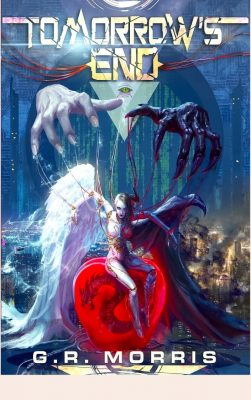
  • TOMORROW’s END (Book One) by G.R. Morris – Cyberpunk Sci-fi, Horror Literature & Fiction, Philosophy

    TOMORROW’s END (Book One) by G.R. Morris – Cyberpunk Sci-fi, Horror Literature & Fiction, Philosophy

    A cosmic force of evil is rising, come to consume whole worlds and plunge them into darkness. Earth is next, and the only chance for humanity to survive is a pair of young, destined heroes who have no idea what dangers lurk in their future.

    Kevin Knight is a sixteen-year-old savior, the warrior foretold in an alien prophecy who will combat the Dragon. He’s also afraid of the dark and suffers the routine abuse of his stepdad. Though his mother Sara insists her son will have a bright future, Kevin refuses to believe it until the day his life is shattered. Kevin comes face to face with aliens, monsters, and a staggering truth about humanity. He must follow Robert’s teachings, an alien Changeling who reveals just as much as he keeps hidden. Oh, Kevin must also face down the very forces of Hell.

    At the same time, an orphaned Changeling girl named Daren tries to find her place amongst the children who shun her and the adults in her life who have anything but her best interests at heart. As Daren grows and stumbles into the powers of her species, her desires are simple: to protect her only friend, Thomas, and find a mysterious figure whose destiny is bound to hers. But the more powerful she becomes, the more significant her trials, and the danger surrounding her surrounds the orphanage as well. Can she muster her strength fast enough to keep the powers of darkness at bay?

    The characters of Tomorrow’s End are vibrant, each one driven by their own desires and philosophies. Kevin and Daren’s stories are focused on their internal struggles, with the fate of the world resting on their shoulders. Kevin must decide who to trust when he’s surrounded by mysterious people and morally dubious mentors. Daren must make do with no teachers at all. In time, both Kevin and Daren fight against bombastic, over-the-top enemies with ties to demonic power.

    G.R. Morris fills this story with fantastic descriptions. The aliens and monsters are painted with inventive designs, creating visuals that are wholly unique and distinctive. The creatures, in particular, and the places they come from are visceral depictions of roiling, hellish things, all cast in darkness. The villains of Tomorrow’s End are intensely evil characters who commit graphic violence against nearly everyone around them—even innocent children, which Morris never shies away from showing.

    The characters create and break illusory worlds, intricately shown in displays of light and color. These surreal mindscapes help illustrate the thoughts and desires of those meeting within them. Despite all of the otherworldly imagery in this dark science fictionthe regular lives from which Kevin and Daren originate are built with just as much care. Within the settings, expansive action scenes stretch for pages on end, mixing advanced technology with dangerous supernatural power, creating fight scenes larger than life.

    Tomorrow’s End sets up its bizarre settings quickly, giving the characters space to breathe and ask questions ─ and their questions abound. This story’s world is full of mysterious societies and convoluted plans that stretch back and forth through time, involving cosmic beings, societal control, and Matrix-like technological constructs. Morris painstakingly develops the storyline, and, at times, the pacing of the novel seems to slow a bit. Things pick back up when the villains make their appearance. Morris shows the turmoil of individual characters as they understand what they should do and who they should choose to be.

    Tomorrow’s End centers on a philosophy of free will and choice in every conflict. Evil and good are chosen rather than innate, and situations that appear random are always driven by earlier choices. Kevin must choose truth and have faith in his own purpose if he will have any chance to win the battle against the darkness. Daren learns that she’ll have to fight, to be defiant if she wants to keep those around her safe. And they both will have to understand that belief can change reality, that the choice to suffer could teach them the lessons they need, and that it’s not always so easy to pick light over darkness. All in all, readers will more than likely line up for Book II!


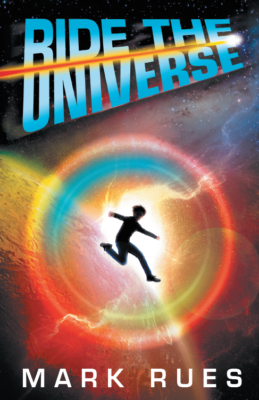
  • RIDE the UNIVERSE by Mark Rues – Sci-Fi/Fantasy, Philosophy, Magic Realism

    RIDE the UNIVERSE by Mark Rues – Sci-Fi/Fantasy, Philosophy, Magic Realism

    A young boy goes on a journey through the solar system searching for the spirit of his sister, discovers the basics of science and spirituality with the help of a mystic teacher and a super-powered cat.

    Teddy DeXue’s ride around the universe begins in the summer of 1963, just as his amazing catch wins the Little League Championship for his team. But it doesn’t really start there. It really began the year before when Teddy’s sister Jean died, and his family fractured into broken, grieving pieces.

    Teddy has a secret. He believes that his sister is out there, somewhere, and that the moon, the big, bright full moon that helped him make his game-winning catch, is going to help him find her. With training from a mysterious spiritual master, a bit of scientific knowledge gleaned from his dad and guarded by Henry, his strange and slightly super-powered cat, how can he fail?

    While his best friend, Tem, thinks that Teddy’s quest is nothing more than wishful thinking, he goes along for the ride – and what a ride it is!

    As Teddy searches through the stars for his sister, his engineer father introduces him to scientific concepts about the nature of the universe; even the many ways that light can be refracted, reflected, and split. In his dreams, Master Fu-Hsi teaches him the spiritual side of what his father’s talking about. It’s up to Teddy to put that knowledge together to make his journey into the stars – and back.

    The story and the way it proceeds is reminiscent of the way the best-selling novel, Sophie’s World by Jostein Gaarder introduced young Sophie to the basic concepts and history of philosophy while pulling readers along for the fascinating journey.

    There’s also an element of the classic YA SF novel, A Wrinkle in Time by Madeleine L’Engle in Teddy’s search among the stars for his lost sister.

    The combination of the two elements draws readers on Teddy’s journey as he finds his way to his sister and back. Along the way, he grows up and learns what it is to love, even as his family finds their way back from heartbreak.

    Ride the Universe crosses genres of Sci-Fi, Fantasy, and Philosophy, as it uses those tropes and more than a bit of magical realism to tell its story.

    Ride the Universe is a multi-genre novel with heart. Fasten your seatbelt! For those searching for something a bit more outside the box, look no further, Ride the Universe is a magic Thunderbird of a ride – in an actual, honest-to-goodness, T-bird.

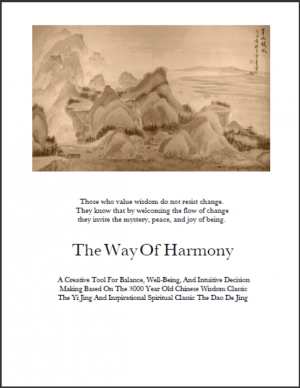
  • The WAY of HARMONY: ANCIENT WISDOM for MODERN TIMES

    The WAY of HARMONY: ANCIENT WISDOM for MODERN TIMES

    The Yi Jing, the most ancient of the Chinese classics, is both a book of philosophy and an intuitive divination tool. Its timely wisdom maps the world of change through its sixty-four Hexagrams, each representing a distinct message and point of view. Chinese culture pays deep homage to The Yi Jing as a source of the highest truth. It has many benefits and is especially useful as an intuitive approach for delivering wisdom and understanding. The Yi Jing is also called The I Ching or The Book Of Changes.

    The author makes no claims that his version is either complete or authoritative. Rather the text offers a “sincere attempt to faithfully express the Spirit of the Yi Jing themes.” The Oracle works through the Hexagram, a message in six parts. This is achieved by casting three coins, each with a heads and tails side (or a Yang and Yin side, the two complimentary forces that guide the universe). The seeker throws the three coins at the same time to determine each line of the six line reading.

    Hexagram readings are both simple and practical. They offer specific advice for balance, harmony, and creative action. They run the gamut from advising seekers that the moment is right for powerfully moving ahead, as in “The Creative” (Hexagram 1), to advising on how to deal intelligently with a time of “Conflict” (Hexagram 6). An essential principle found in The Yi Jing is that all human affairs follow a cycle of growth and decay.

    The philosophical voice of Confucius resonates through these pages, adding the message of  “universal benevolence” to the original texts. That Confucian goal is not merely to gratify the self, but rather to create a society where humanity can be harmoniously connected to self, family, community, King, and Heaven. Like many versions of The Yi Jing this one offers some Chinese-style illustrations of the adage “as above, so below” which is a way of describing how earthly nature reflects and compliments cosmic Heavenly influence.

    A brief illustration may show how The Yi Jing speaks to us.

    A recent family crisis led me to seek a Yi Jing Oracle reading for guidance. My first impulse was to move swiftly with little reflection and make rapid changes, such as evicting one of my family members and placing another in care. The Oracle advised me that such a course of action would not work. I received “Restraint” for the first Hexagram and a second Hexagram, “Discipline”, which further clarified the situation. A few weeks later I recognized how appropriate the advice was that the Oracle had given me.  Impulsive action would have destroyed significant relationships, possibly forever. While unresolved, the way has been left open for deeper bonding and mutual understanding among all the conflicting parties.

    The Way of Harmony is clearly and elegantly written while providing a lucid, highly intelligible, and sensitive account of the three thousand-year-old masterpiece The Yi Jing and introducing readers to its spiritual counterpart The Dao De Jing.

    Readers are invited to take the time to explore their own capacity for intuitive wisdom by using The Way Of Harmony as a guide. It is a way to quiet your mind and encourage feelings of deep harmony.

    My advice is to make a cup of tea, take some time to relax, and read The Way Of Harmony, a modern text that draws on ancient wisdom, making it accessible and practical in these hectic and over stimulating times.

    Note: The Way Of Harmony is available in three versions: as a print book with color illustrations, as a print book with B&W illustrations, and as an ebook with color illustrations where the e-book format display allows for color. There are only three illustrations, each distributed several times through the book. These original creations are meant to evoke a peaceful mood that compliments the Yi Jing experience. We are told that the illustration on the cover of the color books, a misty mountain painted in the traditional Daoist style, was inspired by a famous centuries old handscroll and interpreted by a classical brush and ink artist living in China. It also appears within all the book’s versions.