Tag: philosophical

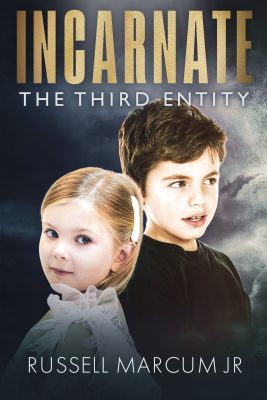
  • INCARNATE: The Third Entity by Russell Marcum Jr. – Crime Thrillers, Christian Fiction, Philosophical

    Incarnate: The Third Entity by Russell Marcum Jr. merges the suspense of a crime thriller with the weighty themes of Christian theology. This crafts a unique narrative that explores second-chances, faith, and divine purpose.

    The story follows Jake McCallum, a deputy sheriff from Western Virginia whose life unravels after a series of devastating blows. Wrongfully charged with a false and trumped up accusation of mail fraud then abandoned by his closest friends, Jake faces the loss of his career, his fiancée, and his freedom. At rock bottom in prison, while waiting for death, Jake experiences a profound spiritual awakening. This reversal is galvanized by Eli, a chaplain whose faith and guidance inspire Jake to embrace Christianity. Beyond that, Jake redefines his life in pursuit of a divine quest to find and protect the incarnate Holy Ghost, a child prophesied to bring salvation to the world.

    Marcum Jr.’s novel stands out for its bold concept.

    Jake’s transformation from a broken man to a determined protector echoes biblical trials like those faced in the story of Job. His character arc solidifies as he navigates spiritual challenges and physical dangers. The stakes are immense, with plot lines involving corrupt officials, assassination attempts, and Jake’s ultimate hope and search for a divine sign. The novel’s combination of a modern-day thriller coupled with theological explorations creates an ambitious narrative. Readers who resonate with the book’s Christian themes will likely find the message deeply affirming.

    Fans of spiritual fiction will appreciate the philosophical depth of Incarnate: The Third Entity.

    The novel asks big questions about faith, redemption, and the presence of God in everyday life. Jake’s quest to protect a young boy that he believes to be the incarnate Holy Ghost provides a fresh take on Christian storytelling, blending the tension of a thriller with the reflective tone of a morality tale. Those intrigued by stories of spiritual awakening intertwined with suspense will find much to enjoy here. 

    Ultimately, Incarnate: The Third Entity is a thought-provoking story with an impressive conceptual foundation.

    For readers drawn to the overlap of spiritual discovery and suspense, Russell Marcum Jr’s novel delivers a unique journey of redemption, sacrifice, and divine purpose. This is a story for those ready to reflect on the complexities of faith and fate while enjoying the twists and turns of a high-stakes thriller.

    For readers seeking a novel that weaves high-stakes action with deep spiritual reflection, this story offers an intriguing and thought-provoking journey.


  • ROADS To The INTERIOR by W. Hans Miller – Poetry, Philosophical, Haiku


    Roads to the Interior by W. Hans Miller is a journey through the interior of the mind, seeking to find answers, peace, and insight.

    This book is inspired by, and dedicated to, the works of Matsuo Basho, the father of haiku and other spiritual writings. Haiku usually has a fixed pattern of three lines with a 5/7/5 syllable pattern – often referencing nature or reflecting on life – but the haikus within this book don’t always follow that tradition.  Rather, Roads to the Interior turns the haiku’s reflective questions on the mind itself.

    Each of this book’s three sections is filled with raw emotion, existential musings, and careful contemplation. Recurrent readings of this collection will allow readers to absorb yet more truths and insights.

    Different poems make reference to many thinkers, writers, and literary characters.

    “Part I – Wide Roads to the Interior”, considers struggle and longing. “Each Newborn Bubble” shares these truths: “Even Siddhartha had bad days.  A dear friend tells me to persevere: don’t search for spring’s source, care for each newborn bubble.” In “Penance” the speaker says, “I’ll speak no more of my predicament, always fearing my words will mean less than they say. I’m taller now but wiser when I was seven…”

    “Part II – Narrow Roads to the Interior”, reflects on the existential.

    Poems such as “Longing to Trust the World” and “Nothing is the Answer” pull readers into this shift. “Paradise Lost” is shaped much like a cocoon, taking the reader from dust to revelation and then dust again. These poems draw on other authors such as (T.S. Elliot and Walt Whitman, and even the protagonist of Albert Camus’ “The Stranger”, through such lines as, “Mersault found a truth. A truth that brought light falling upon that which already lit his gentle indifference to the world. His death testimony cause peace and calm to warp their arms around an unfinished circle on his brow.”

    The final section, “Your Brain’s Secret Interior Life: Seven Poems”, comes with an epilogue of the author’s journey through the complexity of the human mind. These last poems provide thoughtful considerations in the pursuit of understanding the Road to the Interior that each one of us must walk.


    5 Stars! Best Book Chanticleer Book Reviews

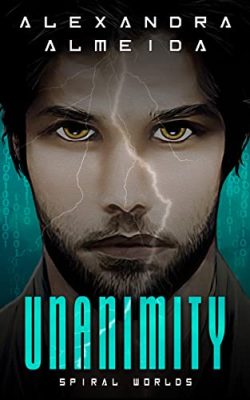
  • UNANIMITY: Spiral Worlds Book 1 by Alexandra Almeida – Science Fiction, Philosophical, Virtual Reality


    Alexandra Almeida probes the philosophical and ethical depths of wealth, technology, pop culture, and religion in a world ravaged by global warming through her sci-fi adventure, Unanimity: Spiral Worlds #1.

    Readers will delight in the gradual reveal of both the technology within the story and the dramatic history between many of those involved with the creation and evolution of that technology.

    Tom, a screenwriter, works with Harry, the genius inventor of the world’s most popular AI (artificial intelligence) app, to create a simulation that will nudge people toward acting morally.

    This virtual world consists of multiple layers, each focusing on a different psychological alignment depending on the needs of the person using the program. A lower level, much like Hell, exposes people to horrors and cruelty, while some upper levels focus on order and happiness.

    The project becomes more complex when they upload the entire consciousness of people, creating virtual immortality. The story opens with the digital resurrection of Tom, also known as Shadow, long after his death.

    With this rise of digital immortality comes an effective replacement for the afterlife of Heaven and Hell promised by Christianity.

    Almeida gives readers a glimpse at a world coming to grips with direct access to this afterlife which is completely and undeniably real. Governments as well as popular culture must deal with new questions.  Should humans have access to immortality? Who ultimately controls this virtual world? Who acts as God within the machine? This story explores the depths of these questions.

    The characters are all delightfully complex.

    The name Shadow fits the protagonist, given the corrupting task he undertakes, all with the good intention to understand those he loves more completely. Harry, also known as Twist, lacks social skills and empathy, but he knows this and reaches for help from Shadow. The cast is full of inner conflicts and contradictions. They match the complexities of real people and include LGBTQ+ characters among them, making the story more relatable and universal.

    With this breadth of characters, readers might be confused during the early introductions in the book. However, this confusion passes as the story goes on and the characters differentiate themselves.

    Unanimity’s technology feels well-researched and thought out.

    Throughout the novel, readers get more and more of a view of both the complexity of the story world and the ideology behind the virtual reality system. Almeida does a great job of making everything about this story fully believable, as if this AI afterlife could happen in the real world in the near future.

    Overall, Unanimity is a strong read for fans of sci-fi, philosophy, and AI fiction, and a gripping first entry for the Spiral Worlds series.

    5 Stars! Best Book Chanticleer Book Reviews

  • EMPTY BOTTLE of SMOKE by Conon Parks – a riotous romp through Seattle’s Underground

    EMPTY BOTTLE of SMOKE by Conon Parks – a riotous romp through Seattle’s Underground

    In an effort to escape his shadowed past, work-a-day dweeb, Walter Curmudgeon flees from Portland to Seattle where he carefully inserts himself into the anonymous corporate shield of Seattle’s financial district. But, like the U.S. Mail service, former transgressions have a way of ferreting out their target, and Walter’s latest load of junk mail drives home the message that his safe haven has been breached. Wedged in between lottery scams, Ponzi-style chain letters and Soviet sex enhancement ads is the first of several warnings that “payback” is both brutal and inevitable.

    Once again in the role of the hunted man, Walter runs underground – straight into the bosom of the Manifesto Party, a disorganized band of anti-establishment types bound by the common ethos of “Free Guns and Dope.” Housed in a crumbling historic building, the Manifesto Headquarters shares space with the infamous “Museum of Indecision and Hysteria and WE B Art Gallery.” It’s in this pit of diverse artistic detritus that Walter hooks up with Mac, a PTSD Vietnam vet whose “combat oriented” neural wiring makes him a perfect ambassador for the disorganized band of Seattle underground n’er-do-wells.

    Mac’s inherent paranoia sucks Walter further into his own web of altered reality. And Mac’s Mao-cum-Baader-Mienhoff world view, backed-up by his “always carry violence in your back pocket” mantra, make for a wicked ride as the two jump into the chaotic build-up of Seattle’s cataclysmic World Trade Organization meetings.

    In a stream-of-consciousness prose style reminiscent of Ginsberg’s howling, debut author Conon Parks pulls the reader into the world of the collective disenfranchised, albeit one with an absurdist twist. And with a clever sleight of hand the author guides his seemingly inconsequential hero, Walter “everyman,” through a world of madness on a quest for life’s meaning.

    An Empty Bottle of Smoke is a witty, jumbled mash-up of anarchist philosophies and pub trivia in which the disparate threads of culture swirl in a literary vertigo.  It’s “Trainspotting” meets “Brazil” in this darkly comic romp that takes its hero from de Tocqueville’s “nanny state” to full-blown anarchy and reminds the reader “we really only have the rights we can defend.”