Tag: Pacific Northwest

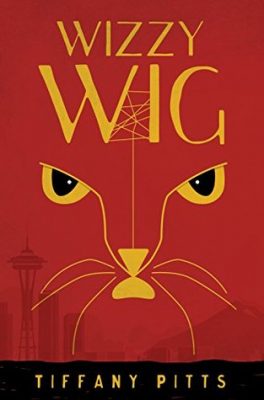
  • WIZZY WIG: THANATOS RISING, BOOK 2 by Tiffany Pitts – Sci-Fi, Fantasy, Humor

    WIZZY WIG: THANATOS RISING, BOOK 2 by Tiffany Pitts – Sci-Fi, Fantasy, Humor

      Have you ever wondered what might happen if you unknowingly ripped a hole in the space-time continuum? Jake and Kix find out firsthand just how much madness can ensue when this exact conundrum befalls them in Wizzy Wig: Thanatos Rising Book Two by Tiffany Pitts, a fun and quirky Sci-Fi romp that fans of Terry Pratchett and Douglas Adams are sure to enjoy.

      The evening begins innocently enough when Jake invites Kix over with a pizza to help him solve a wave function experiment. While Kix relaxes on the couch, Jake turns his attention to an experiment he’s come up with based on the idea of Schrödinger’s cat, except instead of a cat in a box, Jake’s version uses a pizza in a box. For those unfamiliar with the concept of Schrödinger’s cat, this thought experiment posits that an unobservable cat in a box is simultaneously alive and dead—essentially the cat can exist in any or no state at all. Jake hypothesizes that an unobservable pizza in a box is inherently similar—it could exist in any state as well—and thus can have its toppings changed if one knows the right math—which he does.

      Jake turns his attention to his computer and does his best not to be distracted by Kix’s (striped) tights and his massive crush on her while he attempts to alter the toppings on the unseen pizza in the box. He succeeds. And the world as they know it is altered in incredible, yet difficult to see ways. Soon, Kix is on the run for her life from the genuinely creepy and disturbing Brad, a far more sinister version of her neighbor Thad, who has crossed over from another version of reality.

      Enter Thanatos, Dark Lord of the Underworld, otherwise known as Toesy. Toesy is not your normal housecat. Firstly he is part demon, secondly, he has thumbs that help him open doors (a souvenir from a previous experiment of Jake’s in book one) and lastly, he’s got Executive Wartime Consigliore Steve…the voice inside his head who helps him strategize his battles. As a cat, Toesy is a natural ‘boundary walker’ and quickly realizes what the other characters do not—that the hole Jake ripped in the space-time continuum by solving his wave experiment has caused the distinct versions of the multiverse to overlap and merge in terrifying ways.

      Wizzy Wig is told through the shifting perspectives of its diverse cast of characters, some of whom are alternate versions of each other. Multiple storylines that may at first be confusing come together in the end to create a complex story set in the heart of modern Seattle. Readers should note that this isn’t the type of novel one can halfway pay attention to. Wizzy Wig requires all of a reader’s attention. We are dealing with the space-time continuum after all and characters do not only cross from one reality to another in easily tracked ways. The realities themselves overlap and merge at times, and characters may appear as one or the other version of themselves or even change personalities altogether.

      Pitts has crafted a fun, complex, modern Sci-Fi novel in which nothing is off limits. Multiverses exist, murderous banana spiders find their way into apartment buildings, sugar gliders seek their freedom, readers find themselves in the mind of a sociopath, and the boy who just may get the girl, if they can both survive long enough. Wizzy Wig: Thanatos Rising is an entertaining and quirky Sci-Fi novel, and while there are some punctuation errors throughout, it doesn’t detract from the story. Readers will find clever and resourceful heroes worth cheering for in this second installment of the Thanatos Rising series.

      5 Stars! Best Book Chanticleer Book Reviews

    • Lake Perriquey – Attorney at Law to present Sessions at CAC18

      #CAC18  Story. Production. Beyond. 

      We are excited to announce that Attorney Lake Perriquey will present sessions at CAC18 on the topics of Copyright, Intellectual Property, and Trademark.

      Lake Perriquey, attorney
      Aliciajrosephotography.com

      We want to extend a special welcome to Lake Perriguey, attorney, to the 2018 Chanticleer Authors Conference.  Lake’s company, Law Works, LLC, handles all aspects of copyright and trademark law, with experience before the Trademark Trial and Appeals Board and the US Copyright Office and multiple cases in the United States District Court. These matters include the initial registration of copyrights and trademarks and claims and defenses of copyright infringement and trademark infringement.

      Lake Perriguey owns Law Works LLC, a full-service law firm in downtown Portland which focuses on civil rights, employment, injury, and copyright litigation. Lake brought the lawsuit to the courts that established marriage equality for gay and lesbian Oregonians as well as the first successful action for non-binary legal recognition in the United States. Lake has represented authors and publishers in contract negotiations and in federal court litigation regarding copyrights. Law Works, LLC is based out of Portland, Oregon.

      CAC18 Workshops and Presentations: 

      • Copyright 101 and the Publishing Contract in our Digital Age
      • Copyright and what that really means- when it starts and its protections
      • An intellectual property primer, coupled with some tips on common terms in publishing contracts that should be considered given the worldwide market, and the ease of digital distribution.
      • Reversion rights consideration
      • KaffeeKlatche informal chat

      Click here for more information about the Chanticleer Authors Conference.

    • THE CAMERA’S EYE by Judith Kirscht – Mystery, Family Saga, Pacific Northwest

      THE CAMERA’S EYE by Judith Kirscht – Mystery, Family Saga, Pacific Northwest

      A peaceful home in the San Juan Islands turns perilous when two women are persecuted by residents who have plenty to hide when The Camera’s Eye is turned on them. Master storyteller Judith Kirscht presents a thrilling mystery with heart, ripe for today’s environment and rich for readers.

      Veronica and Charlotte considered themselves unlikely targets of hate crimes, after all, who wouldn’t like two nice white-haired ladies who share a home for economy and company on an island in Washington’s Puget Sound? Both women have tragic family histories which they thought they’d left behind, but trouble never really lies quietly for long.

      Veronica has the gift of capturing the truth with her constant companion, Constance, her beloved Nikon camera. When she captures an uncomfortable truth in their new neighborhood, the eye of persecution turns and focuses on her and Charlotte. In The Camera’s Eye, the reader comes face to face with how perception encourages action, and how action can either heal or destroy.

      From the beginning scene, Veronica and Charlotte are in jeopardy as a rock is thrown through their window in the middle of the night. Who would do such a thing? With pasts that cultivated their own sets of demons, the friends have their own ideas, and the field is rife with possibilities. However, when the local law enforcement shows up and suggests that their lifestyle is to blame for the attack, the women go on the defense and start their own investigation as to who and why they have suddenly become targets.

      This story is not to be confused with a cozy. Kirscht opens the story with violence and forces the reader to examine the many results of hard decisions made with the best intentions, and question philosophies based on the letter of the law rather than on love. It’s a mystery, certainly, but with an unrelenting grip and careful sleuthing that feels more sinister as the plot unfolds.

      Rich with superb dialogue and beautifully penned scenes, The Camera’s Eye is typical of Kirscht’s style and readers will be hard-pressed to set this book down. As one event leads to another escalating event, our characters wits and wills are tested as they struggle to make sense of the violent hatred surrounding them and the blatant disregard for their well-being at the hands of the authorities who are supposed to protect them.

      A Chicago native and multi-award-winning author, Judith Kirscht makes her home on an island in the Puget Sound in Washington state where she spends her time taking her dogs for walks, discussing dinner plans with friends, and penning her next literary masterpiece. The Camera’s Eye is Kirscht’s fifth novel.

      “In a world where too many rocks are thrown at those who represent anything other than the norm in middle-class white America, two friends decide to take matters into their own hands and stand up to the hatred with which they are targeted in order to save their home and ultimately their lives. Hot off the shelf from the literary award-winning author, Judith Kirscht, The Camera’s Eye will challenge the reader to focus on what they believe and how their beliefs inform their actions. A very important book for our times.”

      5 Star Best Book Chanticleer Reviews round silver sticker

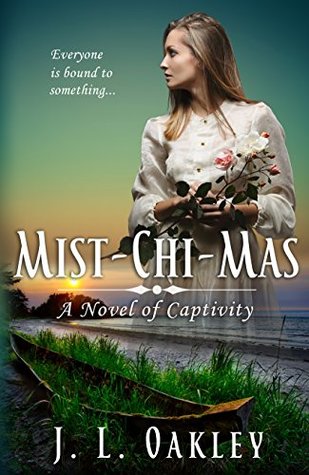
    • MIST-CHI-MAS by J.L. Oakley – Historical Fiction, Pacific Northwest, Literary

      MIST-CHI-MAS by J.L. Oakley – Historical Fiction, Pacific Northwest, Literary

      A masterful work of historical fiction that charts a deeply compelling romance set in the Pacific Northwest during the fascinating but under-reported second half of the nineteenth century. Award-winning author, Janet Oakley brings us another exceptional work from her heart, Mist-chi-mas: A Novel of Captivity.

      It is 1860 and Washington Territory is rich with a diversity of cultures. British and American military camps are posted on San Juan Island, both groups awaiting the decision of an international committee as to which country will be awarded the land. It will take more than a decade for the committee to determine what is to be the water boundary between Washington and British Columbia.

      Although a previous incident involving a shot pig almost instigated a war, at the start of the Mist-chi-mas, the two military encampments are respectful of the other’s turf and co-exist well.  There’s a bit of society in the area, ladies’ teas and picnics take place, and plenty of business dealings due to the ubiquitous presence of the Hudson Bay Company.

      In addition to the relative newcomers to the Pacific Northwest are the native peoples, a number of Indian tribes, the Haida, the Saanich, and the Songhees peoples, as well the “Kanakas,” the Hawaiians who have been here since the early nineteenth century. Attitudes toward the native peoples vary, with some being appreciative of their contributions to the shipping, trading and lime works industries, and others being condescending or outright violent towards them.

      The history of this area comes vividly to life through the romance of a widow, Jeannie Naughton, and Jonas Breed. Jeannie is the niece of the Scotsman, Archibald Campbell, a major representative of the Hudson Bay Company in the Pacific Northwest, and has arrived from England with her young son. Her reasons for beginning life anew in a foreign land are mysterious and mired in scandal.

      In contrast, everything is known about Jonas Breed, a man whose ethnic heritage and experiences reflect the geography and culture of the region. The orphan of an American trader in the South Pacific and a Welsh mother, he grew up speaking English and Hawaiian. As a youth, he was captured by the Haida and was made a “mist-chi-mas,” a slave.  After several years of servitude, he saves the life of his captor and his status changes.   He is grateful for all he has learned from the Haida, and when he asks for his freedom, it is granted. The Haida respect and trust him.

      Breed’s closest companions and friends are members of the tribal peoples, and he will prove his love and loyalty to them repeatedly. He’s as at home on land as he is on water, reads Ralph Waldo Emerson, and is certainly the most self-reliant character in the book. He may remind some of Natty Bumpo, James Fenimore Cooper’s hero in The Last of the Mohicans.

      The Americans and the British generally regard Breed with great admiration, although there are those who envy him and seek his downfall. In turn, someone threatens Jeannie with his knowledge of her hidden past. Despite this, Jeannie and Jonas find love but also tremendous danger at every turn. Jeannie comes to understand the truth of Breed’s words, “We are all mistchimas.” Some are enslaved by external forces, some by inner forces. Their relationship will prove to be as complicated and compelling as the historical events of the novel.

      J.L. Oakley deserves tremendous recognition for the clearly exhaustive and meticulous research she did in writing Mist-chi-mas. With writing so clear and vivid, Oakley brings time and place to life leaving readers captivated by her craft. She invokes the mountains and the waters with such descriptive beauty and fully creates her characters against this panoramic landscape that challenges and shapes them.

       Can love blossom between the most unlikely pair in a multi-cultural, tension-ripe environment? Author J.L. Oakley breathes life into an often forgotten part of Pacific Northwest history in her beautifully penned novel, Mist-chi-mas: A Novel of Captivity–destined to be a regional classic.

      5 Star Best Book Chanticleer Reviews round silver sticker


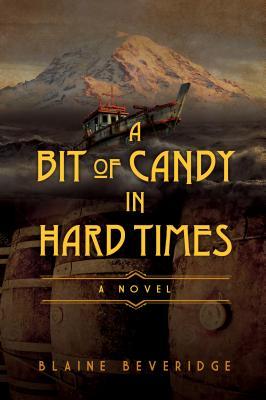
    • A BIT of CANDY in HARD TIMES by Blaine Beveridge – Historical Fiction, Political, Prohibition, Pacific Northwest

      A BIT of CANDY in HARD TIMES by Blaine Beveridge – Historical Fiction, Political, Prohibition, Pacific Northwest

      It’s midnight in May and Prohibition is the law of the land. A boat packed with Canadian liquor is racing through the waters off Portland, Maine, and a heavily-armed US Coast Guard Cutter is in hot pursuit—hungry for another kill. The smugglers are about to get paid for their sins—one way or another.

      Emmett Dougal has a penchant for working on boats the Coast Guard loves to shoot at. As he hits bottom and realizes he’s out of options, he returns to his home turf near Seattle weighed down by an identity crisis—Emmett’s a wanted man. Even his brother, a county sheriff, swears out a warrant against him. It’s hard to survive when you’re always looking over your shoulder, or your only skill sets involve fishing and smuggling. To make matters worse, he doesn’t even have a boat.

      Blaine Beveridge’s initial foray into the world of fiction is a winner with his smooth, confident, and engaging writing style. A Bit of Candy in Hard Times is set in a time where alcohol was illegal, but people wanted it more than ever and were willing to pay handsomely for it.

      Beveridge’s clever yet restrained use of syntax and vocabulary is smart, entertaining, and brings the settings, characters, and story alive, grabbing the reader immediately and never lets go. He displays real talent for crafting vivid, yet measured descriptions of the Puget Sound area, boats, fishing styles and equipment, residences of the poor to the affluent, and other items that resurrect the Prohibition era. Of note is his solid and consistent artistry crafting bright, vibrant scenes ranging from a ride at Coney Island, to a seedy bar where a man can buy bootleg beer, attending an opulent holiday celebration, or the grittiness of a dark, waterside warehouse filled with illegal liquor and suspicious clientele.

      The well-crafted characters are compellingly believable. As Beveridge trowels on the conflict his characters act, react, or rebel accordingly, adding delicious texture and tension to the story. Trust between parties can sometimes be measured in what remains in the bottle. The usual concrete line between right and wrong is about as real as the yellow brick road. Characters stagger between moral and immoral guided only by the immediate situation, mood, relationships, or the amount of money or liquor involved.

      Beveridge is an award-winning screenwriter, an alumnus of The Writer’s Program at UCLA, former Program Administrator for Film and Television at UCLA Extension, served as an executive board officer of the Pacific Northwest Writers Association, and a US Army Vietnam Veteran.

      A Bit of Candy in Hard Times starts with a bulls-eye and enthralls to the last page. It’s tough to put down, so arrange your schedule accordingly. You’ll be waiting for Beveridge’s next book.

      5 Star Best Book Chanticleer Reviews round silver sticker

    • INTERVIEW with Grand Prize LARAMIE AWARD-WINNER, JACQUIE ROGERS!

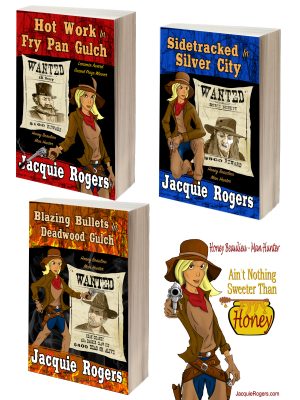
      In honor of the Laramie Awards month, we decided to interview one of our very favorite authors, Jacquie Rogers. It should come as no surprise that Jacquie won the Laramie Grand Prize in 2016 for her rip-roaring, shooting, tooting, humorous Western that features Honey Beaulieu, Man Hunter!

      Jacquie Rogers is a regular contributor for the Western Fictioneers blog. She presents at RWA conferences and workshops, Chanticleer Authors Conferences, and  Western Writers of America. Her works are known for their hilarity, adventure, mistaken identities, and romance. Rogers’ books are  a hit for anyone who has a penchant for classic Westerns and Shakespearean comedies. She lassos the genres together in a most enjoyable way making her tales a true pleasure to read. From saddles sores and thorns from the trail, to finally being able to breathe when the last binding on the corset is released, even the most die hard Western readers will be impressed with Roger’s knowledge and expertise she portrays as she takes you back in time to the Old West.
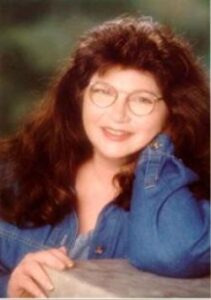
      Jacquie Rogers: Thanks for inviting me to the Chanticleer blog.  I’ve been privileged to be part of the Chanticleer family right from the get-go, so that makes it extra special for me to be here.  I had help, though—the folks at the Pickle Barrel Bar and Books on Facebook choose my questions, so here we go!

      Chanticleer: We’re so glad you have some time to spend with us. Let’s jump right in…What areas in your writing are you most confident in? What advice would you give someone who is struggling in that area?

      Rogers: Dialogue and chaos.  For dialogue, the advice is easy—listen to people talk.  Two nuances I’ve noticed is they rarely speak in complete sentences and seldom use the other person’s name.  More specifically, listen to people who are similar to your characters.  In the case of Honey Beaulieu, I draw strength from the old Missourians in our family, and mix in a little Owyhee County speak.  As for chaos scenes, the main thing to remember is that the first thing you think of is also the first thing the reader will expect, so turn left when expected to turn right.

      Chanticleer: That’s really good advice, Jacquie. How do you keep track of all the… left turns? Do you work with a storyboard? 

      Rogers: When a character turns left and it’s a better idea than what you’d planned, then it’s best to go with them.  However, that does cause a ripple effect on that particular thread, and sometimes several or all threads.  I try to veer into position so I don’t have to go back and change things, but very often that simply can’t happen.  Either way,  from the turn-left point forward, the whole plot needs to be tweaked.  I’m happy to take the fun route to the end, but I do have to know where and how the story is going to end, and all the characters need to be in the right spot for that to happen, and all (or most, in the case of a serial type series such as Honey Beaulieu – Man Hunter) threads need to be tied in a neat bow.  So it’s a matter of connecting the dots in a logical but relatively unpredictable manner that allows the reader to play along with you.  Because books are really a group activity—the interaction of characters, readers, and the author.

      Even with all that, continuity errors can and do occur.  My first line of defense is Your WorldKeeper, Diane Garland.  She has an eagle eye for continuity and can take me all the way through the thread so I can see what needs fixing  Or sometimes it can’t be fixed (e.g., in a previously published book), and we have to come up with a logical explanation for how things are in the current book.  I work with her as I’m writing, so she usually nails my hide to the wall before even the editor sees the story.

      Rogers: An author can’t keep writing unless readers buy the books—simple economics.  Books are expensive to produce.  So telling others about the author’s books is absolutely gold.  There are a variety of ways to do this, including sharing the author’s posts on social media, reviews (many advertising sites require a certain number of reviews before the author can purchase ads), and telling all your friends in real life to buy the book.  Visibility is the name of the game.  And keep reading!  Your enjoyment is a gift to me.

      Chanticleer: Thank you for mentioning the social media aspects and sharing. Very important. What are you working on now? What can we look forward to seeing next from you?

      Rogers:  My next book will be Hearts of Owyhee #6, Much Ado About Mail-Order Brides.  If you’ve read the third and fifth books of the series, you’re acquainted with the McKinnon brothers.  This book will be Bram’s book.  He’s the oldest brother and the hardest to place because he’s perfect.  Flawed heroes are much, much easier to write.  But since he’s perfect, he has to end up in an impossible situation, and I’ve definitely got him in a big to-do.  Believe me, he has a lot more help than he wants.  I’ll start writing next week and hope to have the book done by the end of the year.

      Chanti: Oh, we’ll be looking forward to that! We love it when characters get knocked around! Let’s move on to craft… It’s important to work on your craft. What do you do to grow your author chops?

      Rogers: I try new techniques.  For instance, I wrote I Heard the Brides on Christmas Day in four points of view—and it’s only a 15,000-word story.  I think I pulled it off but believe me, I won’t be doing that again!  Also, the Honey Beaulieu series is in first person point of view, and the narrative is written in Honey’s vernacular just as if she were actually speaking.  I did this because we think the way we talk, so the narrative can’t be in modern correct grammar.  My Hearts of Owyhee series is in the third person.  So I’m always switching back and forth, writing one book in first and one in third.  That gives me the opportunity to remember the strengths in each and apply them in both series.

      When I first started writing, I read a ton of craft books.  I was so hung up on the rules that I couldn’t write a word for nearly a year, so I tossed it all out and decided the only way to write is to let my hair down and go for it.  Then I heard an interview with Johnny Depp where he remarked that actors had to be brave enough to look stupid (paraphrasing).  I think that goes for writers, too.

      Chanti: We love that you were naturally brave enough to follow your gut on this one. And we love that Johnny Depp backed you up on this one… because, you know, Johnny Depp! Let’s switch gears a bit – give us your best marketing tips, what’s worked to sell more books, gain notoriety, and expand your literary footprint.
      Western Pioneeer Civil War Fiction Award

      Rogers: Depends on what year, month, time of day.  This business is changing fast.  When MySpace was king, I had a strong presence there.  I’ve never had much success on Twitter and only go there because I feel like I should.  Facebook is the place to be right now, which isn’t to say that it’ll still be popular next year.  It’s important to have a presence on social media that is personable (notice I didn’t say “personal”), where people see you and want to be your friend.  This is what marketing is all about these days—the personal touch.  Frankly, I think we’re moving on from social media to real people in the real world contact.  The pendulum is swinging back.  That’s why I put on the Silver City event every year, and try to get out as much as possible to meet my readers.

      I also think it’s important to hang out with other industry professionals—reviewers, publishers, and other authors.  Getting a Chanticleer review and entering the Chanticleer contest is great for raising the discoverability of your books.  Attend the conference and blast pictures all over social media.   The added bonus is that these conferences are lots of fun as well as informative.


      Chanticleer: Talk a little more about the Silver City event… What was that like? Who came? How did you set it up – C’mon, Jacquie! Spill the beans!

      Rogers: I enjoy getting together with my readers and fellow book lovers, and I had this bright idea that it would be fun to meet where the Hearts of Owyhee series is set, which is in Owyhee County, Idaho.  (Owyhee is pronounced oh-WYE-hee, and is the original anglicized spelling of Hawaii.)  Most of the books in the series have scenes in Silver City, and two of them are set there for most of the story.  Silver City is a treasure that few people know about.  It’s a genuine Old West town that still exists as it did in the 19thCentury.  There’s no power or telephones—although they did have telephones in the early 1880s.  The Idaho Hotel is a gem and staying there is like spending the weekend in a living museum, although it’s a soft landing because they did install flush toilets and showers.  The hotel restaurant has always been known for its fine cuisine and believe me, the current owners are living up to the historical standards.  Jerri Nelson’s pies are simply divine.

      There’s a lot more to say about the place, but I’ll go on to the event.  Keep in mind that Silver City is not a tourist town.  You won’t find staged shoot-outs or slot machines (that work).  People there live like folks did in the 1800s.  So visitors live like that, too.  What does it mean?  It means that whatever we do, we have to create ourselves.  If we want music, then we need to play it.  I can’t play anything so I enlisted the aid of fiddler Daria Paxton and her dad, Matt Paxton, who plays guitar and sings.  They’re both talented musicians and old family friends—my dad and Matt’s parents were in the same class.  Relationships were everything in the old days, and there, they still are today.

      The event in Silver City is for everyone, young and old.  In the olden days, families would come to a dance.  The musicians would play and everyone would dance, including the kids.  Then the kids would play and dance until they got tired, and the parents would put them to bed on the pile of coats while they continued to party into the night.  That’s the feeling I wanted to create at our event and we succeeded.  Wildly.  Some of us dressed in costume, others didn’t.  No one really cared because we all were there to have a rip-snortin’ good time.  Which we did.

      Poet Roberta Whittemore joined me at the book signing and that was fun.  Everyone raved about the melodrama, billed as the worst melodrama in history, which had a terrible script (I wrote it), and bad actors (except for Ichabod—he was great, and so were Curtain Rod #1 and Curtain Rod #2).  But the audience participated and had a great time.  The cool thing was that half the audience were walk-ins, not part of the event, and they loved it.  After that, we had an auction for charity.  Sherry Walker chaired the auction with Ken Walker as the auctioneer.  The gals in the kitchen soon learned not to bang pans or he’d call their bid.  We raised over $300 for the Children’s Tumor Foundation to find a cure for neurofibromatosis.

      So I’d like to invite everyone to join us next year.  The tentative date is July 20-21, 2018.  Information will be on my website at http://www.jacquierogers.com/silvercityevent.html.

      Chanticleer: What a terrific event! Thank you for letting us in on Silver City! What do you do when you’re not writing? Tells us a little about your hobbies.

      Rogers: Reading is my first love, make no mistake about it.  I was a reader long before I ever wrote a single word of fiction.  Other than that, I like rodeo, cooking (but not doing the dishes), and baseball.

      Chanticleer: Tell us more! What’s your favorite rodeo event? If we came to your house for dinner, what would you cook? and Who’s your favorite baseball team? 

      Rogers: Favorite rodeo event—well, that would be hard to pick.  Of course, I love the bull-riding but all of the events are fun to watch.  I like all the rough stock events, but then I’m amazed at the ropers, too.  And I know how hard it is to run the barrels without knocking one over.  I also look forward to the specialty acts they bring in.  At the Snake River Stampede, they had the Stampeders—a horseback drill team that performs in the dark so all you see is the lights on the horses and rides.  It’s pretty spectacular.

      If you came to my house for dinner, you’d get down home cookin’.  I cook everything from scratch—even yogurt and salad dressing.  I do buy mayonnaise, though, because we eat too much of it when I make it myself.  So what’s on the menu?  How about homemade bread bowls filled with genuine Idaho potato soup, salad with ranch dressing, and strawberry shortcake (with real shortcakes hot out of the oven) for dessert?  Or maybe you’d like Thai fried rice, spring rolls, and bok choy stir fry.  I’m willing to give just about anything a go.

      As for baseball, I’m a Mariners fan, unfortunately.  Go M’s!

      Chanticleer:  That all sounds good! What led you to write in the western humor genre?

      Rogers: Writing westerns was a simple choice—I grew up where the Old West is still alive so I didn’t have much to research.  Also, in light of the urbanization of our country and the vast change in communications, I want to do my part to keep the culture in people’s awareness.  It’s hard to explain to someone how people lived in the late 1800s without television and cell phones, and that’s why we have so much fun at the Silver City event.  We’re not connected, so we have to create our own entertainment and [gasp] actually visit with one another face to face.

      Humor?  I don’t actually write humor.  Every time I do, no one laughs.  There’s one line in Blazing Bullets in Deadwood Gulch (Honey Beaulieu #3) that absolutely cracked me up, but not one person has laughed or even noticed it. [Update: one person finally got it!  Made my day.]

      Chanticleer: Really, no humor? Well, certainly situational, character driven humor. We love your books and love how you put your characters in situations they can’t possibly imagine! How structured are you in your writing work?
      Rogers: Horribly unstructured and unfocused.  My marbles are rattling around somewhere and they’re not even in the same room, or house, or state.  How I ever manage to finish a book is beyond me.  But when the deadline looms, I do hunker down and git ’er done.

      However, my approach to writing a novel is quite structured.  I don’t write a single word until I know the main and secondary characters inside and out.  The better I know the characters, the easier it is to throw obstacles in their way (that’s also called plotting).  I always have one scene in mind for the opener.  But I confess that the opening scene very rarely stays the opening scene.  The first scene I wrote in the Honey Beaulieu series will be in book #5.  The first scene I wrote in Much Ado About Miners is now in chapter 7.  I always start too far in, probably because I have little tolerance for backstory and I want to get on with things.

      Chanticleer: We appreciate that, Jacquie. How do you approach your writing day?

      Rogers: I always try to leave off in the middle of a scene so I don’t have to figure out what I’m going to write.  So after that scene is finished, then I check with my plot bones chart to see if I’m on track.  If not, I turn left.  Actually, I turn left a lot because sometimes things happen on the page that are too fun to throw out, so then I have to make it work with the rest of the story.  An example is Louie Lewie in Blazing Bullets in Deadwood Gulch.  He was supposed to be a throwaway character, but he kept coming into the story, so I resigned myself that he’s now part of it.  In fact, he’ll probably be in the next book, too.  So a lot of my day is thinking and while I’m thinking, the best way to come up with new ideas is to bake bread.  My extended family gets a lot of bread.

      Once everything’s figured out for the day, I fire up my laptop and use speech recognition to rough out a scene.  Believe me, “rough” is the right word considering when I said “bustier” it typed “buzzard ears.”  I end up with about 90% dialogue.  Then I send the scene to my desktop computer and edit using the keyboard.  If the scene starts out at 500 words, it’ll be 1,000 by the time I’m done adding the narrative.  A side note: I detest description and always skip it when I’m reading for pleasure, which means I have to make an extra effort to make sure I’ve created a picture for the reader.  This is by far my weakest area.

      Chanticleer: Ah, bread. Here’s the part where we wish we lived closer! The idea of using speech recognition software is pure genius – and time-saving, too. How do you come up with your ideas for a story?

      Rogers: I actually don’t know.  Usually, some phrase, prank, or predicament makes me laugh.  Then I put characters to it and voila! We have the concept for a new book.  Honey helps me out because I know that if I dig a hole big enough, she’ll keep me entertained.

      My entertainment is the determiner as to whether I use an idea or not.  If I’m entertained, then I hope the readers are, too.  But on the other hand, if I get bored writing, then you can bet that readers will also be yawning.
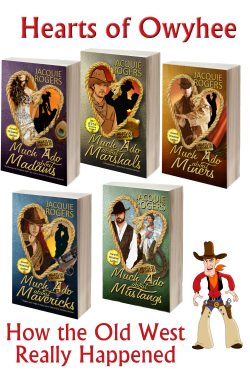
      A few of my ideas for books are identifiable, though.  In Sleight of Heart, I wanted to write a heroine who was as good at math as Aunt Grace, and I always wondered how she’d get along with Maverick.  So Lexie Campbell and Burke O’Shaughnessy were born.  The idea for Much Ado about Mustangs came from an article I read in The Owyhee Avalanche about the local theater group booking a national star to headline their local production.  Hence, we have Lady Pearl Montford and local rancher Josh McKinnon, whose heart’s desire was to raise Friesians.

      The next book I’m going to write, Hearts of Owyhee #6: Much Ado About Mail-Order Brides, came from the fact that the hero, Bram McKinnon, is perfect.  Perfect is boring.  Perfect makes for no conflict.  Unless he’s put in a situation where there’s absolutely no solution.  Bwahahaha.  Naughty me.

      As for Honey Beaulieu, what happens isn’t much of a surprise.  What’s interesting about her is the journey, so I’m always on the lookout for incidents that aren’t exactly your usual bill of fare.  Honey obliges by reacting in ways that surprise me every time.  Of course, she constantly changes the plot, too, which can get frustrating.  But I learned just to go along for the ride and let Honey take me with her.  We get along much better that way.

      Chanticleer: And what a ride! Thank you, Jacquie, for being our first interview of the year! We love what you do and love how you do it.

      Rogers: Thanks again for inviting me here today!

       

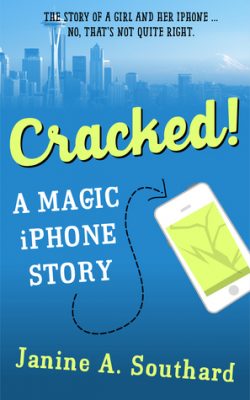
    • CRACKED! A MAGIC iPHONE STORY by Janine A. Southard – Seattle, Cyber-Punk, Fantasy

      CRACKED! A MAGIC iPHONE STORY by Janine A. Southard – Seattle, Cyber-Punk, Fantasy

      Can a middle-aged, hip statistician find the perfect boyfriend in Washington’s Emerald City? Maybe with the help of her magic iPhone!

      On this quirky journey through and around Seattle our heroine, Morena’s accompanied by two strange, but well-meaning sidekicks. Morena’s best friend/roommate, Suzyn, a twenty-something, aspiring photographer from New York, who likes to dance, get drunk, and get high; Magic Man, is an undercover, 6,000-year-old elf, who only wants to fit it with the humans around him. Also, a mysterious Green Man, who seems to be nearby wherever Morena goes, but whom she never notices, adds a note of mystery.

      After a breezy false start in which the narrator chats the reader up, like a neighbor over mid-morning coffee and Danish, the real story begins.

      One morning, Morena discovers a package on her kitchen table. Her ex-boyfriend, who “never sent her a single gift,” before their “horrid break-up,” has now sent her an iPhone—and it just so happens the phone is magic. It has only one app, designed for finding the right mate—and Morena, with her biological clock ticking, longs for love. She is searching for a soul mate—as long as it doesn’t take a lot of effort. She enjoys her current lifestyle, so, the right man would have to not only conveniently drop into her life, but also fit into her life. That iPhone may have been the perfect gift.

      The reader journeys with Morena, her magic phone in hand, on Seattle’s buses and light rail, into various neighborhoods, coffee shops, pubs, and restaurants, as well as to neighboring communities. Cracked! . . . introduces a plethora of geeks, freaks, “funky hipsters,” story gamers, “hipsters playing at being gamers  . . . ,” anonymous drug dealers, and more. Along the way, the reader may learn some street slang while being apprised of the go-to (for whatever you want) places in that urban area.

      Particularly entertaining and interesting are the forays into the story gaming world, where the gaming part counted as a respectably nerdy pursuit, and the story part counted as creative . A fun feature of the story is that it is a microcosm of Seattle life: giving its readers a chance to interact with some odd characters, but still not have to be friends with them.”

      While some may find Cracked! to be somewhat thin on plot, it’s heavy on atmosphere and setting, which is captivatingly authentic. Southard’s hip and cool characters are multi-dimensional and memorable. As a stylistic technique, the intrusive and opinionated omniscient narrator is sometimes informative and amusing, but at other times, can be distracting. However, always fun!

      Overall, Cracked! A Magic iPhone Story provides an insider view of Seattle, its denizens, and some of their various activities and belief systems, that contribute to its unique culture. It’s a fun read in a much too serious world.

    • The FLYING BURGOWSKI by Gretchen Wing – YA, Social & Family Issues, Fantasy

      The FLYING BURGOWSKI by Gretchen Wing – YA, Social & Family Issues, Fantasy

      In many ways, Gretchen K. Wing’s protagonist in The Flying Burgowski, Jocelyn Burgowski (Joss, for short) is a typical teenager.  She admires and appreciates a favorite teacher, argues with her older brother, Michael (in an awkward rebellious stage), and hangs out with her friends, the popular Savannah and the sweet social misfit, Louis. She loves to relax with a good book, usually one in the Harry Potter series. The third is her favorite.

      Then there are the atypical aspects of Joss’s life.  She lives off the coast of Washington, on Dalby Island, beautiful with its tall fir trees and surrounding water, although not a mall or a MacDonald’s in sight. Her father runs the all-purpose store and shocks his children when he abruptly marries Lorraine, the seemingly stereotypical librarian.  Joss’s mother abandoned the family nine years earlier for mainland life and has struggled with alcoholism and pill addiction.

      And then there’s Joss’s very vivid dreams, dreams in which she takes flight and soars over the island.  Unlike Harry Potter, she doesn’t need a broom.  No, she flies as freely as a bird.  On her fourteenth birthday, which occurs on the summer solstice, she discovers that the dreams were preparation for the real thing.  She instinctively takes off from The Toad, a large rock on the island, and life will never be the same.  How could it?  Even if she and Michael (in trouble again for driving his father’s truck into a ditch and smoking pot) weren’t sent to the mainland to spend time with their mother, Joss’s life is forever on a new course, one that is mapped against the sky.

      To Wing’s enormous credit, the novel never loses its convincing realism despite the main character’s spending a good portion of it in the sky, her arms outstretched, her body turning as she banks left and right, her lungs filling with the scent of lilies. The author weaves these scenes seamlessly, beautifully into the narrative.  We root for Joss as she plans her flight sessions, catch our breath when she takes a rough landing, her skin scraped, and worry with her that she’ll be sighted by someone who happens to look up at the evening sky. The realism is complemented, however, by the exhilaration of these scenes. Joss is so thrilled by the experience of flight that the reader wants to take her hand and witness what she does as a human bird, to feel that rush of air swim against our skin.

      Joss’s gift for flight, of course, is mired in old and interesting secrets that involve her mother and even her new step-mother. Her aerial talent is tested when she adjusts to a new school, unkind classmates, her mother’s substance abuse relapses, and the surprising but welcome maturation of her brother. Wing’s poignant and sensitive handling of Joss’s and Michael’s time on the mainland underscores the protective power of sibling relationships in the face of parental weakness or failure. The self-growth that they experience as a result stays with them when they return to Dalby Island and resume life as they knew it, but with far greater self-awareness.

      The Flying Burgowski isn’t your typical young adult book and that’s a very good thing.  Wing infuses realistic teen life, with all its problems, with a hefty dose of magic realism, and the result is an engaging and captivating fusion.  After reading it, don’t be surprised if you find yourself looking up at the sky, ready to sight the lucky human endowed with the gift of flight.

      5 Star Best Book Chanticleer Reviews round silver sticker

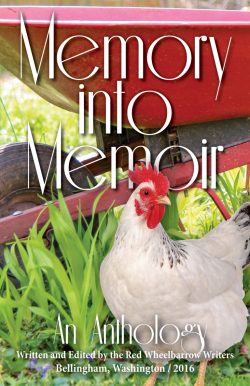
    • MEMORY into MEMOIR: An Anthology by The Red Wheelbarrow Writers – NonFiction, Memoir, Anthology

      MEMORY into MEMOIR: An Anthology by The Red Wheelbarrow Writers – NonFiction, Memoir, Anthology

      This curated anthology shows the collective creative effort that the Red Wheelbarrow Writers have dedicated to “Memory into Memoir,” each one a nugget of remembrance cloaked in the wisdom of time’s perspective and expressed in well-chosen words and memorable well-crafted story telling that will capture your heart and expand your soul.

      Below are a few samples of the superb writing in this anthology.

      The collections start with author (Beyond the Scope – Truth Turns Deadly in the Congo) and former US Embassy staffer Nancy Adair, who recounts, in “Just Say No,” being called upon to provide “community control” for a planned visit from Nancy Reagan to her post in Malaysia. Disaster follows disaster as plans fall through, the weather refuses to cooperate, and Reagan’s anticipated speech is four words long. Adair learns that far from being “one of those introverts who doesn’t like to disappoint people” as she initially imagined herself to be, she is secretly feisty, feisty enough to say “no” to the First Lady when the situation requires it.

      Blogger Sky Hedman’s “The Chosen Day” examines a distraught family trying to reconnect on a mountain picnic. The narrator, her Alzheimers-ridden mother and silently suffering sister Martha barely dodge tragedy on that outing, only to face it days later, along with an acknowledgment of fractured relationships: “The time to know Martha better had passed.”

      In “Thank You, Grace Paley,” aspiring Novelist Barbara Clarke recalls her remarkable personal meeting with the feminist icon over a late-evening cup of tea. Discouraged with her attempts at writing, she asks for and gets en-heartening advice from the famous author: “Just keep going.”

      University instructor Kate Miller’s “Elemental” is the memory of her eleven-year-old self, happily receiving a much-desired chemistry set, then balking at using it when she discovers the many vials containing poisonous substances: “What if I spilled two chemicals that weren’t supposed to mix?” Her escalating concern sparked by an active imagination causes her to stow the set away; later in life she is diagnosed with panic disorder, but still sometimes dreams of the chemistry set and its many messages.

      In “Leaving the Roman Lands,” world-wanderer Kenneth W. Meyer recreates his adventures overseas when in 1976 he and a traveling buddy agree to drive four wealthy students from Istanbul to Pakistan. In those days, foreign travel, the author states, “was like walking in space: you detached from the capsule, fed out your line, and enjoyed the spectacular view.”

      The final piece in Memory into Memoir, “The Great Moratorium,” is the fascinating story of a young woman “busting out of the beige life” at age 18, only to find herself in a highly abusive relationship. Escaping that, she later becomes a therapist for victims of domestic violence and embarks on a one-month experiment in “relationship moratorium” that stretches out to eighteen elucidating years.

      Superb writing styles blend with ease in The Red Wheelbarrow Writers’ first anthology of thirty-two non-fiction works that are a pleasure to read. Offering something for most everyone to appreciate makes this anthology a wonderful gift and a welcome addition to any writer’s library as an inspirational read. A consortium of writers has produced this engaging collection of life’s vicissitudes remembered.

      The Red Wheel Barrel Writers

      According to members Cami Ostman and Laura Kalpakian, the Red Wheelbarrow Writers in Bellingham, Washington, call themselves a “loose collective of working writers” who have “monthly Bored meetings (yes, that’s the correct spelling)” and eschew formal designation as a club or non-profit (“when we need money we pass a hat”). The writers have conspired to inspire with this array of 32 short memoirs.

      The group takes its name from a poetic work, XXII, by William Carlos Williams:

      So much depends
      upon
      a red wheelbarrow
      glazed with rain
      water
      beside the white
      chickens.

      Underscoring this theme, each memoir begins with a quotation from Williams chosen by the individual writer.

      5 Star Best Book Chanticleer Reviews round silver sticker

    • UNCONVENTIONAL BOOK TOURS — Finding Your Tribe by Susan Conrad

      UNCONVENTIONAL BOOK TOURS — Finding Your Tribe by Susan Conrad

      We have a LOT of terrific sessions planned for CAC17, and we are still adding more. One of those amazing sessions will be:

      My Life as an Unconventional Book Tour – Gone are the days where an author simply reads, opens the floor to Q&A, and then signs books. (Can you say YAWN FEST?)

      Your audience craves engagement, and you want them to leave with your book in their hands—and with vivid memories in their minds.

      The presenter for this class, Susan Conrad, is an author, adventurer, and speaker who has been living her own whirlwind book tour since the release of her debut memoir in May 2016. Susan gives us a sneak preview into the session she will be teaching.

      • Is your book’s unveiling looming excitedly on the horizon? Or are you deep in the throes of promoting a recent release—but feel like you’re spinning your wheels?
      • Or maybe you’re just curious how to get the best bang for your take-over-the-world-book tour campaign.
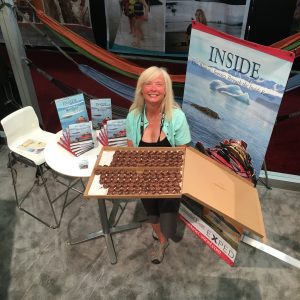
      A box of chocolates from one of Susan Conrad’s fans who read the book and knows that she adores chocolate!

      Just as there’s so much more to being an author than “simply writing a book,” there’s so much more to a book tour than contacting a few bookstores. Whether you are self-published or traditionally published, you’ll be sure to pick up some priceless tips and tricks to launch your own kick-a&$# book tour.

      You didn’t write your book, pour out your heart, and create interesting characters, plots and themes just to make money, right? I’m assuming you (also) wrote your book to share your passion, spread your message, and tell your story. Indubitably, the next step is about making connections and building relationships—essentially finding your TRIBE!

      This session will help participants wrap their brain around who their audience truly is, where the best venues are to secure those audiences, and once that audience is all under one roof—how to invite them to come into your book. We’ll brainstorm ways to find your audience, organize and present a killer book tour (and not go broke doing it), set the mood, engage and dazzle your audience, and more. We’ll also discuss ways to generate clever promotions and land the venues you want.

      I look forward to meeting all of you at CAC17 and sharing ideas on how to get a leg up on your book tour competition! – Susan Conrad

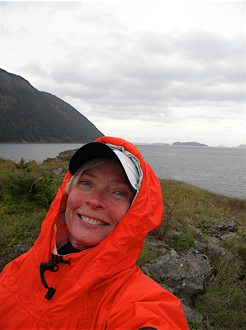
      Susan Conrad is an adventurer, author, educator, and speaker. She’s also an accomplished paddler. Her tenacious exploration by sea kayak has fueled her stories and images of the natural world for decades. Her articles and photographs have appeared in Sea Kayaker, Canoe and Kayak, Adventures Northwest, and Figure magazines. Countless newspapers, guidebooks, and historical journals also feature Susan’s work.