
Tag: Orcas

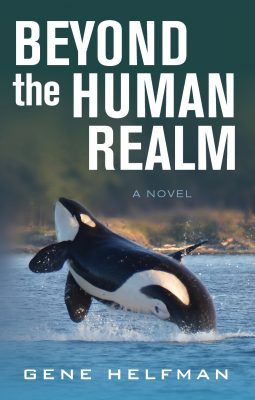
  • BEYOND the HUMAN REALM by Gene Helfman – Killer Whale Fiction, Family and Friendship Fiction, Action/Adventure Fiction

    BEYOND the HUMAN REALM by Gene Helfman – Killer Whale Fiction, Family and Friendship Fiction, Action/Adventure Fiction


    Author Gene Helfman, noted academic expert on aquatic biodiversity, delivers a fictional tale about an orphaned orca (killer whale) named Sam and the humans who seek to change his life in Beyond the Human Realm.

    The book opens from Sam’s viewpoint. On display for humans, whom he calls “split-tails” or “logriders,” Sam relies on the humans now for food in his too-small habitat. In exchange, he must perform tricks such as carrying balls and leaping about, actions he performs reluctantly if at all. There’s one split-tail that he likes, though, a female who speaks to him gently. Sam allows her to ride on his back as one of his tricks. When a female companion arrives in his habitat Sam falls in love and the pair produces a baby. All seems blissful until the split-tails take his baby, and his partner dies of grief.

    Sam can’t know, but some split-tails rally to his side, plotting to release him in the wild, to join wild orcas.

    Rudy Laguna, a college professor and renegade whale behaviorist, is recruited by billionaire J. B. Alexander, who wishes to rescue the orca they call “Makai”, a highly costly venture, to make amends for his principal source of income – the manufacture of toilet paper and its decimation and contamination of forests and seas.

    Rudy leads the effort to sequester “Makai,” re-accustom him to catching live fish, repair his broken dorsal fin, acquaint him with an orca tribe, and finally, set him free. Rudy enlists the help of Cassie Flanagan, an aspiring academic whose love of aquatic creatures and former acquaintance with the whale brought them close – but not too close; Cassie wears a gold ring and Rudy lost a previous job for consorting with a female student. The humans’ collaboration will result in “Makai’s” return to wild waters, allowing the embittered orca a chance at happiness – and revenge.

    The action in Helfman’s multi-layered tale switches between dry ground and the depths of the sea, floating between the viewpoints of Sam/Makai and the split-tails.

    Helfman, Emeritus Professor at the Institute of Ecology and the Program in Conservation Ecology and Sustainable Development at the University of Georgia, Athens, weaves scientific details into the narrative reflecting his extensive knowledge of the aquatic realm. Heretofore most known for his non-fiction titles focusing on fishes, Helfman gifts readers with lively dialogue, an intriguing storyline, and delightful characters. Readers will enjoy the possibilities of non-verbal communication between land dwellers and sea beings and no doubt wish for more fiction releases from this author. As the story unfolds, a series of remarkable coincidences tie the tale of the humans and that of Sam together, including the presence of one of the book’s more mysterious characters, a friendly canine whose name may be Genius, Cheez Whiz…or Jesus.

    Helfman’s cinematic, wide-ranging novel is a rewarding must-read for anyone who loves seafaring adventure, respects nature in all its aspects, enjoys a ribald romantic rivalry, and most of all those who find whales fascinating as friends and teachers to humankind. In other words, here’s a novel we highly recommend.

    5 Star Best Book Chanticleer Reviews round silver sticker

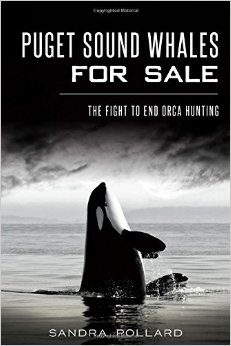
  • PUGET SOUND WHALES FOR SALE: The FIGHT to END ORCA HUNTING by Sandra Pollard

    PUGET SOUND WHALES FOR SALE: The FIGHT to END ORCA HUNTING by Sandra Pollard

    This is the history of two parallel and competing movements involving the beautiful Puget Sound orcas. One is the orcas-as-commodities commercial movement to capture the killer whales and sell them to marine parks all over the world, where they are kept in small pens and trained to perform for public amusement. The other is the growing appreciation of both scientists and the general public for orcas as intelligent, sensitive, family-oriented wild creatures deserving of protection.

    Packed with poignant details, such as a description of captive orcas in Seattle and Vancouver, B.C. talking to each other via a phone call, and reports of newly captured orcas crying so loudly and mournfully that one man said his cat tried to hide under a chair to get away from the heart-rending sound are accounted for in this expose of these cruel practices for the sake of entertainment. The brutality is painful to read about—when the first captures took place, the hunters used harpoons and wire nets to catch the orcas. Later, explosives were thrown into the water to chase the whales into a net. Needless to say, many orcas died during the capture process, and most who survived to be sold into captivity in small pens didn’t live long.

    But as the attendance and profitability of marine entertainment parks exploded, so did the protest movement to stop the brutal practice of capturing whales. Government agencies clashed, with the NOAA Office of Protected Resources enacting the Marine Mammal Protection Act and establishing rules to protect the orcas, while the National Marine Fisheries Service granted “economic hardship” exemptions to SeaWorld Inc. to capture even more whales. Scientists and commercial entities argued over the number of killer whales in existence. Soon it evolved into a media blitz and a court battle, with the state of Washington against the Feds from Washington, D.C. and SeaWorld to stop the practice of capturing orcas.

    Fortunately, the conservationists prevailed and today the orcas of Puget Sound swim free, their number sadly decimated after a decade of captures and killings, and now their small population threatened by human over-fishing and pollution.

    As Pollard points out, killer whales in other locations such as Iceland still face the danger of capture, and orcas are still penned up in amusement parks and forced to perform for entertainment.

    When are wild animals a resource to be harvested for profit? And when do they deserve to be protected from harm? When does capture of a species become kidnapping, training become torture, and captivity become imprisonment? When does the death of a wild animal at the hands of a human become murder? Readers will find themselves pondering these questions as they explore the history presented in this meticulously researched book.