Tag: Novella

  • SAVONNE, NOT VONNY by Robin Lee Lovelace – Southern Literature, Myths & Legends, 1960’s

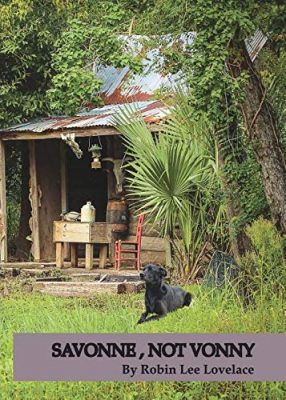
    Shorts Grand Prize for Short Stories, Novelettes, & Novellas Savonne, Not Vonny by Robin Lee LovelaceRobin Lee Lovelace evokes a world in which the mystical intertwines with the everyday in Savonne, Not Vonny, a coming-of-age story set in rural Louisiana.

    Nine-year-old Savonne lives in a small room at the back of Mama Gwen’s whorehouse, in Indianapolis in the ’60s. Her mama is one of the working girls, and her father is Mama Gwen’s own son. Savonne’s daddy dotes on her, and Mama Gwen loves Savonne like the daughter she never had; the two of them together make a loving home for Savonne, in the midst of their raucous brothel.

    By contrast, Savonne’s birth mother rarely pays her any mind. A “crazy-ass woman” with a temper “as hot as a Mississippi afternoon,” Coco is not at all opposed to beating the bejesus out of someone. In a fury one night, she does something that cannot be undone, and in her headlong flight out of town, she takes Savonne with her.

    And so it is that Savonne is forced from the only home she’s ever known and left in the care of her mysterious and reclusive great-grandfather, Pompey.

    With Pompey, Savonne enters another world, one of casual acquaintance with hoodoo and root work, a world where Papa Legba guards the crossroads and serves as an intermediary between the human and the spirit world, a world where an enemy might cast a subtle spell or command the serpents, or shapeshift into another form himself. However, as long as Pompey is there to guard her, Savonne is safe. She takes after her great-grandfather, and he recognizes that she too has the gift, the ability to conjure, “the natural.”

    But the day will come when Savonne is left to face the forces that would undo her, with only Leatha, Pompey’s old black dog all gone now to gray and stiff-boned, by her side. Before her journey home is over, Savonne must outwit an enemy far more powerful than she — and rely on help from the most unlikely of allies.

    Robin Lee Lovelace has conjured a world in which the seen and the unseen alike direct our days, in which the divine intermingles with the mundane, with characters so rich and fully realized they fairly leap off the page.

    Pick this story up for the delicious experience of diving headlong into a landscape reminiscent of those spun by the finest Southern writers in the American canon.

    Readers may find themselves racing through this novella to see how it all comes out for Savonne in the end, and likely wanting more of Savonne and her world (and maybe those allies too) in her full short story collection, A Wild Region, is available now!

    Savonne, Not Vonny by Robin Lee Lovelace won Grand Prize in the 2020 CIBA Shorts Awards for Short Stories.


    5 Stars! Best Book Chanticleer Book Reviews

  • HOMEGOING by Toni Ann Johnson – Literary Fiction, Discrimination & Racism, Novella


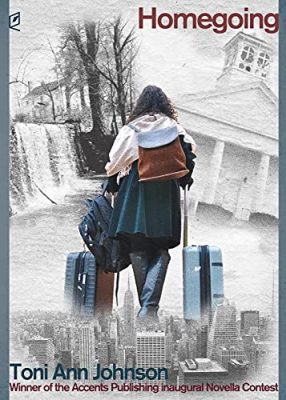
    Blue and Gold Grand Prize Badge for the Short Novella Homegoing by Toni Ann JohnstonHomegoing by Toni Ann Johnson is an intimate portrait of a middle-aged African-American woman dragging herself hand over hand out of grief and despair.



    This story begins with her aching, echoing pain after the one-two punch of a miscarriage and the dissolution of her marriage. Her journey takes her back to the upper-middle-class white suburb where she grew up, through childhood memories that refuse to be denied and to, of all times and places, a funeral.

    Something and someone is supposed to be buried. Certainly the deceased. But quite possibly the woman who has held on to her losses and her grudges long enough to poison her own future.

    Homegoing explores two literary tropes about the place called “home.” Thomas Wolfe’s posthumous 1940 novel states starkly in its title, You Can’t Go Home Again. But Robert Frost, in his poem The Death of the Hired Man, says, “Home is the place where, when you have to go there, They have to take you in.”

    The home that Madeline Arrington can’t truly go back to represents the past and not the present. She remembers her childhood, as one of the very few black children in a mostly-white suburb, being filled with racist taunts and bullying from children who were never held accountable for making her childhood hell. A hell that seems to be remembered by no one but herself – and she can’t let go of either the original memories or the gaslighting that now surrounds them.

    While Maddie doesn’t want to go home, she can if she must, as she does for the funeral of her former next-door neighbor. And in that return, she learns that the past is dead except in her own memories and that it’s time to let it go – not for anyone else’s sake, but for her own.

    Homegoing offers catharsis.

    While Maddie’s memories of childhood bullying revolve around racism, any adult who was bullied as a child will resonate with Maddie’s experiences. Children are often cruel, and the victims remember their treatment much more harshly and in much more detail than the perpetrators.

    But the past is another country, to quote another classic novel, and they do things differently there – or did. Maddie’s own healing requires her to leave the past behind, and her ability to do so gives the reader hope for a brighter future for the character, and quite possibly for themselves as well.

    Highly Recommended!

    Homegoing by Toni Ann Johnson won Grand Prize in the 2021 CIBA Shorts Awards for Short Stories, Essays, Novelletes, and Novellas.


    Shorts GP gold sticker

    5 Stars! Best Book Chanticleer Book Reviews

  • CATARI: A Novella by Karl G. Larew – Mystery, Psychological, Literary

    CATARI: A Novella by Karl G. Larew – Mystery, Psychological, Literary

    Maxwell Roux introduces us to his story with a Prologue, beginning with a minds-eye picture of a grand house in New Orleans. It is a soft, blossom-scented spring evening. From his hiding place behind a tree, he sees Catari step out on the wrought-iron balcony, fan in hand. Her gown is unbuttoned at the top, revealing her pale complexion glowing in the moonlight, contrasted by her dark-brown eyes and hair. Max had flown down from New York late that afternoon to surprise her, but he chooses to enjoy her beauty from the solitude of the dark garden for a moment before their blissful reunion ensues—marred only by the unpleasant gaze of her step-father.

    This sketch is now a memory of what had been a happy engagement—until Max unforgivably accused Catari of having an ungrateful heart, as Enrico Caruso sang of in “Core n’grato,” a song both of them knew and loved.

    The story begins when Max is called to another grand house, in Fontano, Italy, the home of Catari’s beloved Gran’papa, Il Barone di Fontano. He hears the Requiem Mass sung by a local choir at the funeral of his beloved Catari—only 27 years old—and sees her casket placed in the Fontano Crypt on the grounds of the family villa. It is there that he hears the gossip that Catari was drunk when she fell into the pool at 2:00 AM, as well as the comment by her step-father, Hugh Fontane, that Max, as nothing but an “ex-boyfriend,” has no right to be present. But the Baron had invited him to come, and then to stay at the villa. Later that evening, he and Max talk as friends about their beloved Catari. Max had visited the villa with her several times, and the two men like and trust each other. Finally, fatigue sends them to bed—Max in the room where he had slept before.

    Max awakes at 2:00 AM, somehow urged to go to the pool. He senses Catari’s presence and hears her voice, “I did not want to die. I did not want to die like this.” He hears his own voice, “I’ll find out…how and why, Catari.”

    Thus is this sad love story transformed into a murder mystery, its solution sought by Max, Darlene (Catari’s close friend), and the Baron. Larew’s tale is filled with family history, dating back to the Fontane brothers who fought in Napoleon’s Army in the conquest of Lombardy and were rewarded with the land on which the villa stands; the Fontano brothers who served in the Italian Resistance during WWII; and the Fontano family’s current history in the making. The Three Musketeers, as they decide to call themselves, question the servants and several villagers and search the property inside and out. They engage the help of the family doctor, who had examined the body and found a lesion on the back of Catari’s head. The doctor does not believe that she was drunk. They work with the Chief of Police, who is intrigued when he learns about the pilfering activities of the servants.

    As he has done in previous books of greatly different natures—their characters ranging from WWII military families to Good and Bad vampires—Karl Larew skillfully brings his characters to life. In Catari, he artfully draws not just their natures, but oddities of their physical features, speech, and movement, such as town gossip Madame Cavalli, who finally runs out of words, and the rude and overbearing Hugh Fontane, bursting into the villa declaring that he will have the Baron declared incompetent, thereby revealing his own incompetence. Larew’s knowledge of military history stands him in good stead, as well.

    Max fulfills the poolside promise he made to the ghost of Catari, to “find out…how and why,” but I won’t spoil the how and why for the reader. Nor will I tell you what happens to the Three Musketeers. I’ll say only that, for many reasons, this book offers a good read.


  • Big River Meadows: Eviction from Eden by W. David Jones, M.D.

    Big River Meadows: Eviction from Eden by W. David Jones, M.D.

    Big River Meadows: Eviction from Eden is a novella based on a true story written by W. David Jones, M.D.  He tells the story of his father’s boyhood—a rancher’s son growing up on a large Montana spread.  The story propounds that the vigilante law of the old West prevailed as late as 1927. (more…)