Tag: Non-Fiction

  • VETERANS DAY 2021 – Honoring All Who Have Served – Books For, By, and Honoring Veterans

    VETERANS DAY 2021 – Honoring All Who Have Served – Books For, By, and Honoring Veterans

    Veterans Day: A celebration to honor America’s veterans for their patriotism, love of country, and willingness to serve and sacrifice for the common good, and to protect our democracy. 
    As an annual tradition here at Chanticleer Reviews on Veterans Day, we are suggesting these titles from among our reviews of authors who are Veterans.

    But before we recognize these outstanding works, let us take a minute to review these statistics about those who have served our country.

    • There are 19 million Veterans as of this year (Pew Research Center)
    • There was an average of 17.2 Veteran suicides a day in 2019 (VA Mental Health)
    • Firearms were used in 70% of veteran suicide in 2019 (Stars and Stripes)
    • Suicide Risk of veterans is almost double what it is for the general population (VA Public Health)
    • The greatest difference in suicide rates between veterans and nonveterans is among those ages 18–34 (Rand Corporation)
    • The largest number of veterans who die by suicide are between 55 and 74 years old.
    • (Rand Corporation)
    • 25% of all veterans have a service connected disability (Military.com)
    • 41% of all post 9/11 veterans have a service connected disability (Military.com)

    HELPFUL LINKS for ASSISTANCE  

    Writing is known to be a “transformative therapy’ for veterans haunted by their experiences. “The Red Badge Project encourages Wounded Warriors to rediscover their personal voice and realize the value of their experiences and emotions.”

    “RBP partners with Vet Centers and allows Veterans of all ages to take advantage of the Red Badge Project’s program while providing a link between veterans of multiple generations.” Here is a link to a Seattle Times article by Nicole Brodeur that was published on November 11, 2019, that is about the Red Badge Project.

    Using the creative process of storytelling, Wounded Warriors begin to rebuild their individual sense of purpose and unique individuality.

    For Wounded Warriors struggling to heal the invisible wounds of PTSD, Anxiety, and Depression, believing in the value of their story and finding the means to communicate it to family, friends, and community is a struggle of heroic proportions. Tom Skerritt is a founder and is part of the Red Badge Project faculty.

    We here at Chanticleer Reviews have had the honor of reviewing top novels and narrative non-fiction written by outstanding authors whose stories enlighten, remind,  empathize, and creates a better understanding with those who have served in the armed forces.

    Read on to see excerpts from our reviews:

    NO TOUGHER DUTY, NO GREATER HONOR
    By GySgt L. Christian Bussler
    First Place in Journey Awards

    From a family with a long history of military service dating back to the civil war, GySgt L. Christian Bussler brings to life his experience as a Mortuary Affairs marine and sheds light on a duty that few ever talk about. He is called to duty for his first of three tours in Iraq in February of 2003 after spending many years training as a reservist.

    This fear becomes reality when he narrowly escapes an IED blast with his life. Afterward, Bussler wrestles with the guilt of going back home injured, leaving his team behind to fight without him. The final and longest section of No Tougher Duty, No Greater Honor mirrors the length of the final and longest tour from 2005-2006. This tour especially proves to be the most challenging for not just Bussler, but his whole team, and it leaves them all forever changed.

    Continue Reading Here…

    HILLBILLIES to HEROES
    The Memoir of James Quinton Kelley
    By S.L. Kelley
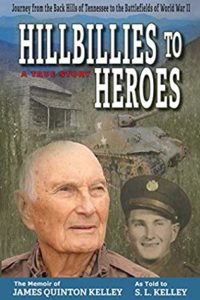
    World War II veteran Quinton Kelley recounted his life story to an avid biographer – his daughter, S. L. Kelley, a documentarian and award-winning video producer.

    Kelley’s tale begins in Coker Creek, Tennessee, where he was raised on an 80-acre farm, in a log cabin that he described as rough, but “brightened” with flowers. Taught to be honest and hardworking by his parents, he grew up with kerosene lamps for light, a fireplace for warmth and a wood stove for cooking. His recollections are colorful, with language that recalls his roots.

    Continue Reading Here…

    WOUNDED WARRIOR, WOUNDED WIFE
    By Barbara McNally
    The critical issues surrounding post-traumatic stress among America’s wounded warriors is expanded here to include the challenges and concerns of military wives and families.

    Barbara McNally was working as a physical therapist when she watched helplessly as a man jumped off a bridge to his death. Feeling involved in his tragedy, she learned he was a wounded veteran. The experience spurred her to find out more about PTS and its effects on those who have participated in war.

    Continue Reading Here…

    A CROWDED HEART
    By Andrea McKenzie Raine
    Note: This is a work of Fiction

    Willis Hancocks survives fighting in Western Europe during World War II but faces continuing battles of the mind at war’s end in Andrea McKenzie Raine’s poignant study of the plight of the former soldier in her historical novel, A Crowded Heart.

    Willis decides to remain in London rather than return to his native Canada where his parents and sister live near Vancouver. Eager to put the war behind him, he marries Ellie, an intelligent young woman who has studied art at Cambridge University. Her affluent parents approve of Willis, and her father offers to finance his new son-in-law’s study of law at Cambridge. The newlyweds’ future could not look rosier.

    Continue Reading Here…

    MERRY CHRISTMAS AND A HAPPY PTSD
    By Christopher Oelerich
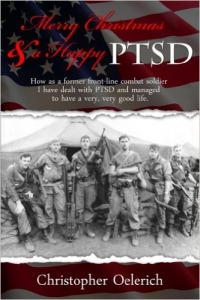
    Merry Christmas and a Happy PTSD by Christopher Oelerich

    “I went away to war one person and came back another, and in my wildest dreams would never have chosen to be the one who came back.” – Christopher Oelerich

    Thus begins this heartfelt discussion of Post Traumatic Stress Disorder by a military veteran who has spent his life helping others deal with the debilitating symptoms associated with the disorder. Christopher Oelerich relates his own personal history, beginning from when he was drafted into the military during the Vietnam War, and continuing through his return to civilian life and his own rocky road to recovery.

    Oelerich eschews political correctness in favor of blunt talk mixed with detailed, empowering strategies that have worked for him, as well as for the military veterans and homeless he has helped over the years.

    Continue Reading Here…


    A Note from Chanticleer CEO, Kiffer Brown:

    Many of my family members have served their country (many of whom have passed) and are serving their country: my father (Marine Corps, deceased), my brother (Army, with us but 100% disabled), my nephew Robert is currently serving in the Air Force,  my dear Aunt Ellen (WWII nurse – she passed away recently), my cousin Billy Wayne (first 100 to die in the USA – Vietnam Conflict), and many other cousins too numerous to mention here.

    Thank you all for your service.
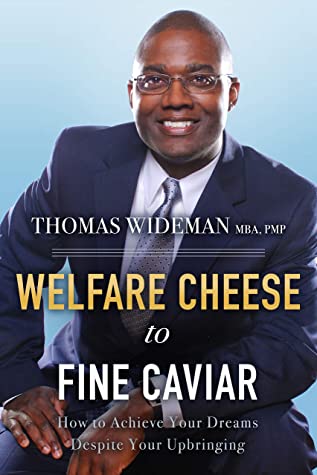
  • WELFARE CHEESE to FINE CAVIAR: How to Achieve Your Dreams Despite Your Upbringing by Thomas Wideman, MBA, PMP – Self-Help Manual, Personal Transformation, Goal Setting

    WELFARE CHEESE to FINE CAVIAR: How to Achieve Your Dreams Despite Your Upbringing by Thomas Wideman, MBA, PMP – Self-Help Manual, Personal Transformation, Goal Setting

    Thomas Wideman, the author of this dynamic self-help manual, Welfare Cheese to Fine Caviar: How to Achieve Your Dreams Despite Your Upbringing, rose from poverty and dismay to a life of security and personal achievement through techniques he shares with readers who can incorporate them into their own life plans.


    Wideman came from an impoverished African American family wracked by confusion, chaos, and, at times, criminality. His mother had three sons by three fathers, and he would come to know his own father only peripherally, eventually learning that the man murdered people and subsequently died in prison. The boy grew up in tough neighborhoods and ate “welfare cheese” (a block of pre-sliced heavy American cheese that supposedly melted well). Every month, making ends meet became more and more difficult. In an early chapter of this finely woven chronology, we see him taking food from trains parked along the railroad tracks and running from the authorities. In this, as in each new chapter, he speaks of confronting severe issues and finding ways to resolve them. In the case of the theft and other childhood incidents of fighting, experiencing bullies, and battling racism, he speaks of making up his mind that “my circumstances need not be my limitation.”

    A math whiz, Wideman found his strengths through schoolwork, striving for A’s instead of merely accepting B’s.

    He excelled academically and attained many honors by the time he graduated from high school. After joining the military, Wideman realized that if the military machine could not break him, nothing could. He met and cautiously courted his sweetheart, and with her and their two sons, established a happy home life, a sensible financial plan, and new dreams for the future. He can afford to eat caviar now – though he doesn’t choose to.

    Each section of his book comprises a personal recollection, frank and realistically drawn, followed by a “Reflection” to help the reader examine feelings and reactions related to their own, comparable experiences. Wideman helps his readers by following up with an “Application” section. Wisdom gleaned by experience seems to stick the best. Wideman ends with a section cleverly termed “Caviar Time,” in which readers talk to themselves in a mirror, giving creative, inspiring advice and encouragement based on the guidance contained in the segment. Wideman’s well-organized, intelligent parables cover a wide range of issues: family stresses, drug and alcohol abuse, racial divisiveness, financial planning, and complex situations faced in the workplace.

    Wideman’s Welfare Cheese to Fine Caviar offers hope and realistic, replicable strategies to anyone who, like himself at earlier phases of his life, faces what seems like insurmountable barriers. His general message focuses on positives: do your best, and keep meaningful goals for success always in sight. Highly recommended.

    Welfare Cheese to Fine Caviar won First Place in the 2021 Harvey Chute Book Awards.

    5 Star Best Book Chanticleer Reviews round silver sticker


  • The JOY of SEARCHING, BUYING and SELLING ANTIQUES and HOME DECOR from FRANCE and ENGLAND by Dennis J. Kotchmar – Traveler and Explorer Biographies, Europe Travel Guide, Antiques and Collectibles

    The JOY of SEARCHING, BUYING and SELLING ANTIQUES and HOME DECOR from FRANCE and ENGLAND by Dennis J. Kotchmar – Traveler and Explorer Biographies, Europe Travel Guide, Antiques and Collectibles

    If ever a love letter could be written in the context of a solid how-to guide in the antique business, Dennis Kotchmar has done a marvelous job in The Joy of Searching, Buying and Selling Antiques and Home Décor from France and England.
    Dennis recalls his beloved wife Laura and the remarkable life they shared as they traveled the world locating, buying, selling, and displaying household treasures from candles to couches to credenzas.

    Dennis met Laura (now passed away) in 1971 when he was in the military, and she was an assistant elementary school principal in the Virginia Beach school system in Virginia. They shared a love for sporty cars and soon, for each other. Laura had already begun to demonstrate a zeal for collecting and selling interesting objects. With Dennis at her side, she grew this interest into a full-scale business, Chelsea Antiques. It began close to home, going to local auction sales seeking items of unusual interest. With no business experience, they took advantage of the development of Brightleaf Square, a former tobacco warehouse district converted into a charming marketplace in downtown Durham. The Kotchmars secured a space there and began building inventory.

    Laura had an eye for décor and arrangement, and before long became a display artist with a fine instinct for desirable products that seemed to come naturally to her.

    Her enthusiasm soon led the couple farther afield; noting that antiques and art objects from the English countryside were enjoying popularity, they made reliable contacts there and traveled to and from London where they resided at the time several times a year. From there, they began to buy and sell, remotely at first and then by on-site visits, in France. The work was a continually growing success and, as Kotchmar notes, a continual surprise. Travel could be a joy – or a problem. Laura was once stuck on a plane whose engines were attacked by a flock of birds; there were unavoidable delays for such things as airline strikes; and perhaps most memorable, ten days spent trapped in France and England, just after 9-11.

    Kotchmar’s vivid color photos grace the narrative, with a stand-out being views of Monet’s garden including the famous lily pond; he and Laura were touched and amazed that ordinary folk can still visit such storied sites. His book also contains nitty-gritty details of the business, including the contacts made and lost, back roads explored, and the truly spectacular range of items to be discovered, marketed, and enhanced.

    Kotchmar composed this memoir as a paean to Laura.

    In doing so, he has come to appreciate her intelligence and intuition all the more. He concludes that Laura did what she loved, and working together, they created an aura of romance and adventure that few couples can even dream of. His book will be of interest to fans of antiques and the antique business, as well as to North Carolinians, who will admire the ambition and artistry of Laura Kotchmar, one of their own.


    5 Star Best Book Chanticleer Reviews round silver sticker

  • TEN THINGS EVERY CHILD WITH AUTISM WISHES YOU KNEW by Ellen Notbohm – Autism, Children’s Health, Parenting Hyperactive Children & Children with Disabilities

    A Blue and Gold Badge that reads: I & I Instructional and Insightful Non-Fiction 2019 Grand Prize 10 Things Every child with Autism Wishes you Knew Ellen NotbohmRenowned author and mother of a son with autism, Ellen Notbohm here writes from both a personal and a studied viewpoint.

    Not so long ago, autism was considered incurable, hopeless, a sort of dead-end diagnosis. But with time and attention to real people on the spectrum, we know now that children with autism can become positive, productive adults. The author’s son, Bryce, decided early on to “be happy” despite his differentness. For parents initially facing the diagnosis, there will undoubtedly be challenges, often on a daily, hourly basis, but Notbohm’s diligent exploration assures us that “autism is not awful.”

    The ten messages from your child are 1. “I am a whole child.” My autism is part of me. Even the word “autistic” can classify me negatively. 2. “My senses are out of sync.” I may have heightened, sometimes terrifying sensations that keep me from engaging in ordinary activities. 3. “Distinguish between won’t and can’t.” Just because I balk at a new task, even something simple like riding a bus, doesn’t mean I’m defiant – maybe just scared. 4. “I am a concrete thinker, I interpret language literally.” Don’t speak to me in roundabout ways; just tell me what to do plainly. 5. “Listen to all the ways I’m trying to communicate.” My communication barriers make it hard for me to learn to socialize. Study my body language. 6. “Picture this! I am visually oriented.” Visual cueing really helps. 7. “Focus and build on what I can do rather than what I can’t do.” Watch what I do well; encourage my neatness, my ability to occupy myself without outside stimulation. 8. “Help me with social interactions.” Recognize that sociability will be one of my toughest challenges. 9. “Identify what triggers my meltdowns.” Yes, I may explode sometimes; you can help. 10. “Love me unconditionally.” Don’t base approval on an “if.”

    Notbohm examines each of these simple revelations in fascinating and practical detail, using numerous examples and referencing many authorities, including autistic notable Dr. Temple Grandin. As part of her own mothering experience, Notbohm recalls a lovely, lively example of telling Bryce to “stick to his guns”- an idea that horrified his literal mind. Then he cleverly concludes that she must have meant “gum.”
    Parents, educators, social and community workers should read this dynamic take on an often confusing and misunderstood aspect of human consciousness and development. Notbohm poses common viewpoints about autistic children and offers real strategies for improvement in the child’s outlook and abilities and the parent’s understanding and broader perspective.

    Ten Things Every Child with Autism Wishes You Knew won GRAND PRIZE in the CIBA 2019 I & I Awards for Non-Fiction: Insight and Instruction books.


  • HINDSIGHT: Coming of Age on the Streets of Hollywood by Sheryl Recinos, MD – Medical/Professional Biographies, Memoir, Teen Abuse/Homelessness, Mental Health/Family

    HINDSIGHT: Coming of Age on the Streets of Hollywood by Sheryl Recinos, MD – Medical/Professional Biographies, Memoir, Teen Abuse/Homelessness, Mental Health/Family

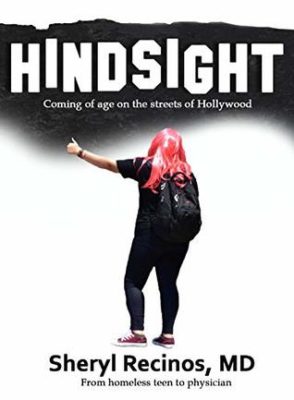
    Hindsight: Coming of Age on the Street of Hollywood by Sheryl Recinos presents a childhood fraught with family dysfunction caused by mental illness and emotional and psychological abuse. The two formative figures in Recinos’ life were negligible participants instead of the supportive, loving parents all children need to grow and thrive into adulthood.

    While this memoir takes place in the 1980s and 90s, we can only hope the services that support runaways and dysfunction within families have improved. For example, her father’s main go-to plan for dealing with his daughter was to commit her to an asylum instead of doing the hard work of parenting.

    Homelessness, a significant theme in this memoir, is continuously in the news, an issue that plagues every major city in America and occurs even in small towns and rural settings. Homelessness is one of those issues that many in America turn a blind eye to and ignore, but Recinos shines a light, bright and clear, on this issue, and knowing her story helps us understand this issue in a new way. It brings a face to embody homelessness and a possible answer to the question, why?

    Why do people choose the street? Why do people refuse shelter? Why do some kids become flight risks? The answers may surprise you.

    Recinos never places blame, of which there seems plenty to go around. Never blames her mentally ill mother, who, during a psychotic episode, put her and her brother in danger. She never blames her father and portrays him as a figure that we can sympathize with at times. She never blames the legal system that failed her time and again, penalizing her but never breaking her spirit. And she never condemns any of the men that rape or attack her. She doesn’t blame drugs or alcohol or any “friends” she meets along the way who rob her or worsen her situation.

    Instead, Recinos tells the story of her teen-years with a pragmatic focus on the events. She never imposes her adult understanding of this world but focuses on her mental state at the time. What she produces is a raw and unapologetic story of a girl misunderstood, trying to survive in a world of neglect and abuse.

    That she survives is a miracle. That she finds her way out of homelessness to become a successful contributing member of society, becoming a loving parent with no role model for such a thing is another.

    Recinos breaks the cycle of abuse that drove her to the streets. She has become a champion of homeless teens. Her ability to see the injury she suffered through an unfiltered lens, and not accept it or be shaped by it, is why we love Dr. Recinos and her story.

    This memoir is a page-turner, a tour de force, a blockbuster read that will have you laughing, crying, cringing, and hoping for something better for this young woman. You won’t be disappointed. Recinos delivers, and she does so with grace and talent. We highly recommend this intense and eye-opening memoir.


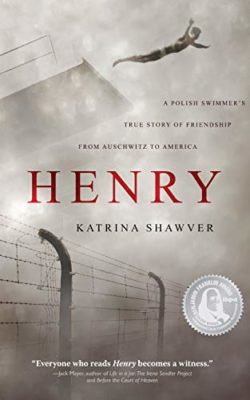
  • HENRY: A Polish Swimmer’s True Story of Friendship from Auschwitz to America by Katrina Shawver – Jewish Holocaust History, Historical German Biographies, Jewish History

    HENRY: A Polish Swimmer’s True Story of Friendship from Auschwitz to America by Katrina Shawver – Jewish Holocaust History, Historical German Biographies, Jewish History

    Katrina Shawver, a journalist for a Phoenix newspaper, was seeking a story for her weekly column. She had heard from a friend that a Holocaust survivor named Henry Zguda and his American wife, Nancy, lived in Phoenix. She called Zguda and was invited to come to his home, only a few blocks from her own. Shawver quickly bonded with both Henry and Nancy. Then she and Henry decided to have a series of weekly interviews, which she would draw on for her column and, later, for a book—this biography.


    The horror story of Henry Zguda, a Catholic Pole born and raised in Krakow, Poland, begins with Henry walking down the street toward the YMCA for swim practice in 1942. A Gestapo car screeches to a stop beside him. Two men leap out, arrest Henry on the spot, throw him into the car, and take him to prison. After several days of torture, a practice used by the Gestapo to obtain information (of which Henry had little), he is taken to the train station and shoved into a cattle car so filled with people that it is impossible to do anything but stand, shoulder to shoulder. The door is slammed shut, and the train pulls out of the station. Henry has no idea what fate awaits him.

    Most of his fellow passengers were Jews, which Henry was not, but under these circumstances, it made no difference. They did what they could to accommodate each other over days of travel, until they reached their final destination, Auschwitz. Many of the Jews would find themselves in the gas chamber in short order. Only those strong enough to work were allowed to live—at least long enough to finish building the camp.

    His story covers more than two years in Auschwitz and Buchenwald. As a young man, he is characterized by his courage and tenacity to live under the most horrendous circumstances and his valor and compassion in helping his fellow prisoners—most of whom he met there, and some who had been childhood friends in Krakow. Somehow, Henry never lost hope, which would have been a death knell…as it was for many prisoners. He characterizes himself as lucky, very lucky.

    Henry tells Shawver about his youth in Krakow. Most of all, his love for swimming. Henry was a member of the swim team at the YMCA founded and built by Americans. Despite the German presence, he had fun with his family and friends.

    It is with some reluctance that he begins to give her details of his years in the concentration camps, but that is what she needs to know. Supporting his memories are photographs obtained after the war as well as official cards recording his Auschwitz registration, train passenger lists, personal effects inventories, and records of money sent to him by his family. These offer interesting details of life in the camps, as do some of Henry’s more pleasant memories. Prisoners participated in theater performances and concerts for the prison staff and their families as audiences.

    As the interviews proceed, Henry intuits when it is time for him to tell Shawver what transpired as the camps’ main objective—killing Jews—was fulfilled. He explains how Jewish prisoners met their fate through such horrible means as being left, still alive, hanging from hooks in dark basements; being lined up in rows and shot to death in view of other prisoners, including family members; being told they must remove their clothing to have showers, only to be herded naked into the gas chambers (their clothing left behind as booty for the guards who led them to their fate); or being tortured to death by nonchalant Germans.

    But in 1944, WWII finally drew to a close. As American forces approached the concentration camps, the Germans fled. The prisoners were free! Some prisoners left on their own, while others awaited the Americans bringing food, clothes, medical care, and the means to go home. Henry returned to Krakow, to spend time with his mother and earn money for her to continue living there and for him to emigrate to America.

    It was difficult for Henry to relate his story, and it is difficult for us to read it. Still, both Henry and Shawver saw in this effort a purpose—to warn all people that they must do everything possible to ensure that the atrocities of WWII never occur again.

    Henry: A Polish Swimmer’s True Story of Friendship from Auschwitz to America won First Place in the CIBA 2018 Journey Awards for Memoir.


  • MORE THAN JUST WEATHER and MUSIC: 200 Ways to Use Alexa by Bradley Metrock

    MORE THAN JUST WEATHER and MUSIC: 200 Ways to Use Alexa by Bradley Metrock

    So you think you know Alexa?

    A new book on the ubiquitous Amazon-created voice assistant, Amazon Alexa: More than Just Music and Weather  will convince you otherwise within its first few pages.

    Start by looking at the table of contents. There are 226 different commands you can say to your voice-activated gadget. Some are certainly the basics: latest news, weather, access to your favorite music, and more. Those you would expect. But then there’s “baby sleep white noise,” “Yes, Sire (an Alexa game, not a 50 Shades of Gray manual), the ability to control your Rhoomba vacuum or Braava jet mop, and so much more.

    It’s not only a great list of suggestions of the many things you can do with your Alexa device, it’s also an impressive education in the many ways in which voice-activated assistants are becoming a vital part of daily life.

    We’re well accustomed to the way that our mobile phones have become essential to our daily lives. Alexa—more accurately, the Amazon Echo device with the Alexa voice assistant—debuted in late 2014. It was followed shortly by the Google Home system, making Google’s legendary information treasure trove available in the home, and Microsoft’s Cortana voice system for Windows. Alexa’s system, however, came out of the chute with a greater number of Alexa-centric services and a more comprehensive list of vendors whose products and services were already linked to Alexa. It’s these impressive listings that this book brings into focus for everyday readers.

    Each service is listed on its own graphic page that explains the service and presents the voice command you say to Alexa that will get you there. It’s a fun experience and a helpful guide to get the most out of this useful technology.

    5 Star Best Book Chanticleer Reviews round silver sticker

  • The 2020 CANDIDATE by Lloyd Bruce Miller – Political, Presidential Bid, Non-Fiction

    The 2020 CANDIDATE by Lloyd Bruce Miller – Political, Presidential Bid, Non-Fiction

    There are so many hopefuls gearing up for the United States 2020 election, what’s one more?

    Meet Lloyd Bruce Miller, 75-year-old who wants your vote. Or not. You see, Mr. Miller is a complicated man. Crazy, some may say – and why not, for he calls himself ‘crazy’ several times throughout his bid for the presidency.

    In all actuality, it is uncertain whether or not Mr. Miller is indeed throwing his hat into the ring for 2020. He realizes he’s a “nobody” but goes on to comment that if “Trump could win, I don’t see why I, or anyone for that matter, couldn’t be a valid candidate.” By the way, Mr. Bruce did make a run for mayor of New York City back in 2009, he even registered, but Michael Bloomberg stole the election from underneath him. It’s as simple as that.

    Reading through his 10,962-word bid for the 2020 Presidency (this is, the point of fact, what Mr. Miller’s book is all about), we begin to wonder who this man is. Where did he come from? He helps us out on page 24 by stating that “…(he) doesn’t really want to be president. (He’s) a fictional character in a story or novel.” We should all think of him in this way.

    And yet, he has these thoughts…  “I am a lunatic of some sort, a screwball in a novel. My name is Harold. That’s enough for you to know, at least for now.” He goes on to say, “The man who wrote something called ‘Utopia’, Thomas Moore I believe, must have been also a little crazy, like me.” Further along, he gives himself the title, “Harold the madman.”

    From my perspective, there is nothing unusual for a politician to be a ‘madman.’ Most politicians have to be a little off in order to open themselves up to ridicule and public display. That being said, should you wish to cast your vote for Harold the Madman in 2020, you should know what he stands for, what his policies are, and how he approaches things.

    Here’s a head’s up, Harold the Madman is not ‘politically correct’ in any fashion. Reading through his bid, here is what I’ve discovered:


    1. Criminal Justice System. Criminals should be treated with respect and reasoned with. Therefore, no prison terms in years; prison terms should be measured by if the individual has had a real change.
    2. Bullies have a right to bully. It’s a matter of protecting their Freedom of Speech. Victims of the so-called bullying should “toughen up.” (I warned you…) But, even so this is the age of “Jordan Petersen” and his penchant for political incorrectness that attracts both support and criticism.
    3. #Metoo. It is, according to Harold the Madman, wrong for a woman to ruin a man’s career simply because he touched her. It’s up to women to tell men what behavior is right or wrong. He arrives at this because “100 French actresses came forward opposed to the Me, too, movement*.” Also, according to HtM, “women and men play sexually with each other.” He is also from the “Mad Men” era, much like that uncle we all have and care for but disagree with at Thanksgiving dinner. Perhaps Harold the Madman isn’t a misnomer after all, but perchance a lingering after effect?
    4. Freedom of speech is the foundation of a free society; therefore, people have the right to talk about wanting to kill themselves, wanting to kill other people, etc. Because the only way to help these people is to talk to them and reason with them. HtM is opposed to the Suicide Hotline, and they are monitored by the government, and the government is more interested in collecting information about you to aid in your arrest**.
    5. Foreign policy. Because HtM doesn’t have a lot of experience with foreign policy, he is going to leave it in the hands of the military. He believes in compromise and Manifest Destiny. This allows for the policy he proposes next: Because we cannot fit “the entire population of the whole world into the area of the current United States… you are welcome to join us, but now, your land is our land, part of the United States under the jurisdiction of our federal government.” At first, HtM will focus on friendly democracies like “… Mexico, Canada, Israel, South Korea, Taiwan, Japan, France, Germany…” and extend the invitation to become part of the United States. Undoubtedly, HtM will find support for his foreign policy platform as I did see a red truck the other day with “I LOVE WALLS” painted across both sides of it.
    6. “Compromise is actually the force which enabled the human race to survive over the centuries. Without compromise, no nation could even be formed or last a day. Compromise, more than anything else, is the basis of human society.” This is when HtM starts to make some sense and I found myself nodding my head in agreement—just when I was shaking my head in confoundedness on some of his other platforms.


    While it is true that there certainly is much in his proposition to scratch your head about and ponder over, the true beauty of The 2020 Candidate is the freedom by which its author can express his opinions. That, after all, is the American Way.

    And then in his closing remarks, he recommends that we all need to talk to each other and get to know each other on an individual basis. Because there are so many variations of us communication is key—if not the most important agenda of his bid.

    In closing, if you choose to read Harold the Madman’s bid for the presidency, please read it through to the end. It’s not so “mad” after all…

    All things considered, Lloyd Bruce Miller, a.k.a. Harold the Madman, is a unique character and perhaps someone with whom one might like to sit down for a conversation and a pint at Samwise Gamgee’s Old Gaffer’s table at the Green Dragon.

    **This is not our view at Chanticleer Reviews. Suicide Hotline is a vital service in our society, one we could scarcely do without. So if you are thinking of doing something dangerous to yourself or someone else, we strongly encourage you to reach out to this service at: https://suicidepreventionlifeline.org/ or call them at 800-273-8255

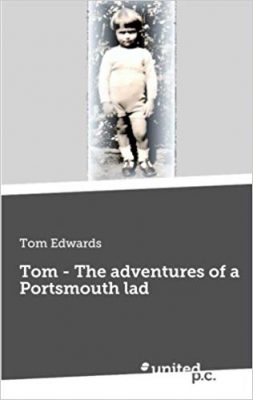
  • TOM – The ADVENTURES of a PORTSMOUTH LAD by Tom Edwards – Memoir, Action/Adventure, Coming of Age

    TOM – The ADVENTURES of a PORTSMOUTH LAD by Tom Edwards – Memoir, Action/Adventure, Coming of Age

    Tom Edwards grew up rough and never lost his yen for travel and new adventures, as shown in this wide-ranging portrait that spans numerous years and continents.

    The author depicts himself through the eyes of an omniscient observer, growing up as a sailor’s son in and around the city of Portsmouth, England during the Depression era. Many scenes of his childhood speak to the poverty in which the family, his mother, sister, and brother, lived in as they rarely saw the father/husband who was mostly away at sea.

    But the boy never realized they were poor until one Christmas when the better-off folk visited his neighborhood with boxes of fruit, cakes, and toys for the children. Vivid historical touches including everything from famous buildings, castles, and ships in the harbor are wrapped around childhood memories of the flannel vests slaked in camphor that children were forced to wear all winter, to the sports cards sold with cigarettes that children prized, saved, and fought over. Yet despite an absent father and a mother who seemed happy to have the old man gone, Tom chose the seafaring life.

    Born in 1929, Tom was accepted at Portsmouth Technical High School, and as the war was ending, he joined the Royal Navy, beginning his roving lifestyle. He was often punished in his training stint for being a daring young man, but he also managed to compete in various sports – swimming, boating, sailing, and once – but only once, boxing.

    Stationed in Ireland, he was then transferred to Malta, his first experience of a truly foreign place. That was followed by years in various countries of southern Africa and finally Australia. In those years he was married, twice, had daughters whom he loved but rarely saw as his wife kept returning to England, while he couldn’t bear the boredom of home for long.

    He mined for semi-precious gems, learned to fly gliders, played water polo, started a camera magazine, headed a rescue team, battled and won a fight against tuberculosis, worked in a dynamite factory, sailed around the world, and was shipwrecked three times, became a surveyor, a painter and ran art groups in three countries, and immigrated to Australia when independence movements in Africa began to make existence difficult for the former English colonizers.

    Edwards is known for his writing, his first book compellingly titled If I Should Die, composed after he joined an anti-terrorist unit in Rhodesia. His prose is colorful and well organized, and his interjections of significant events in the world add a stirring background – the abdication of Edward VIII, the coronation of Elizabeth II, the war and all its terrors told both by the history book and from the observant memory of a growing boy in a critical seaport city. Small details overlap the larger scheme of things, including a great deal of humor surrounding young men’s constant longing for, and occasional securing of, female companionship. He is careful to admit his flaws, such as his weaknesses as a husband, his incurable need to seek new adventures in new climes, and his now waning physical powers after a youth and manhood of grit and occasional glory.

    Edwards has made a comfortable name for himself in several spheres and here delivers a memoir that combines the larger historical picture and a plethora of nostalgia, revealing him as both gutsy and tenderhearted.


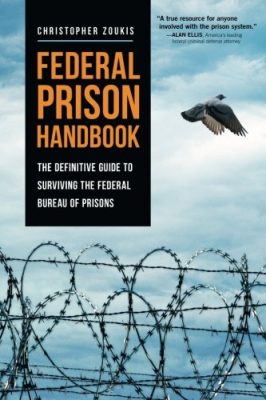
  • FEDERAL PRISON HANDBOOK – The Definitive Guide to Surviving the Federal Bureau of Prisons by Christopher Zoukis – Survival Guide, Non-Fiction, Federal Prison

    FEDERAL PRISON HANDBOOK – The Definitive Guide to Surviving the Federal Bureau of Prisons by Christopher Zoukis – Survival Guide, Non-Fiction, Federal Prison

    In the Federal Prison Handbook-The Definitive Guide to Surviving the Federal Bureau of Prison, Christopher Zoukis has meticulously identified, collected, and organized a compendium of information regarding life in federal prison. Zoukis’ straightforward writing, free of personal bias or opinion, is neither mysterious nor titillating—reality is not sensationalized—it’s not fiction, it’s the facts.

    However, if through some twist of fate, you or a loved one finds yourself in the unthinkable situation of going to prison, it may become the best book you’ve ever read.

    Consider. You’ve been sentenced to serve time in one of the Federal Bureau of Prisons’ 125 stand-alone facilities, a private contract facility, or a satellite prison camp scattered throughout the United States. You, who need directions to find your way through Costco to the deli, must now enter an unfamiliar world with its own lexicon, rules, and consequences. How will you survive?

    As a thirty-year-old federal prisoner, incarcerated since he was a high school senior, Zoukis speaks authoritatively to that question—and other issues you haven’t even considered—and, why would you, with no previous experience or points of reference.

    Zoukis has created a comprehensive guide to seemingly all aspects of prison life—from entering the front doors to the time you leave. He provides annotated, specific information regarding life in this mandated setting, a community which exists within both real and figurative walls. Its written and unwritten rules allow little latitude for divergent behavior or personal desires. And, perhaps equally important, Zoukis delineates the unique customs and unwritten social mores of prison culture.

    Each handbook section cites and explains rules and regulations in detail, as well as providing practical tips, based upon the author’s experiences, observations, and information garnered from extensive interviews of fellow prisoners.  The Federal Prison Handbook disabuses some of the sensationalism created by fiction, tell-alls, and media in general, regarding sexual abuse, gang violence, power hierarchies, and such. The topics are objectively elucidated within the context of the prison rules, consequences, and the overall prison culture.

    Unlike many popular “survival” books, the Federal Prison Handbook will probably not give the reader an emotional rush or provide an epiphany regarding the meaning of life. However, it could prove invaluable to counselors, lawyers, families, and individuals who find themselves facing incarceration in the federal prison system.

    Federal Prison Handbook-The Definitive Guide to Surviving the Federal Bureau of Prison won First Place in the Instruction & Insight Awards in 2017.