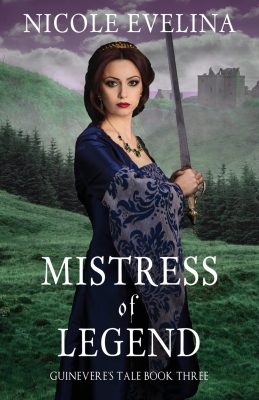
In Mistress of Legend, the enticing finale of Nicole Evelina’s Guinevere’s Tale trilogy, matters are life-and-death by the second sentence, pulling readers deep into Guinevere’s fate in this retelling of Arthurian legend.
We come upon heroine Guinevere in the midst of an ill-fated romance with Lancelot. It’s far from her first troubled entanglement, but the stakes rise as she’s severely injured and faces even more threats, pursued by possible enemies. The novel’s beginning is woven with backstory, which adds suspense to the drama unfolding in Guinevere’s present. This summarizing might be slow for readers familiar with the series, but makes the story accessible for those who haven’t picked up the first two books.
Many more characters appear, waving the web of intrigue Guinevere finds herself caught in.
Evelina builds this setting through well-researched cultural details, like the holidays and rites of Guinevere’s pagan world, and the symbolism and ideology of the Christianity that threatens to blot her world out.
Though it’s a work of fantasy, Mistress of Legend has the feel of magical realism. Paranormal abilities like Guinevere’s “sight” fit subtly within Evelina’s carefully constructed foundation. Details down to ritualistic makeup and intoxicants are based on fascinating historical truths, many of which are explained in the author’s notes at the end.
Evelina avoids foreshadowing to ensure her characters’ futures long remain inscrutable. Unpredictable shifts in individuals and relationships seem to arrive at every turn, making for a thrilling, if at times mystifying, read. Guinevere’s relationship with Morgan, Arthur’s second wife, feels uncertain until the end, as the two vacillate from enemies to friends and back again. Meanwhile, Mordred, son of Morgan and Arthur, undergoes surprising development that makes perfect sense only in retrospect.
The use of “the sight” by characters like Guinevere and Morgan provides windows into other places, even the future, as the women experience highly realistic visions.
This allows Evelina to show two places at once without using multiple points of view (though some characters are so fascinating that readers may wish they could see things through their eyes). Instead, only Guinevere’s perspective is given, and readers feel her claustrophobic sense of being trapped in the mechanisms of fate.
Along with the characters involved in it, this tale of political intrigue only grows more complex with time.
The story begins to feel like a tapestry whose threads disappear and reappear in the weave. Some characters – even main ones – vanish and are nearly forgotten, only to return when they’re least expected. Guinevere’s life-threatening injuries, so crucial to the first pages, are soon eclipsed by even more pressing problems. Yet they return to the narrative from time to time, the marks left behind to remind the aging Guinevere of how much she’s lived – and how much is still in store.
Mistress of Legend fits well within the literary tradition of retelling classics from a strong woman’s point of view.
It’s a great pick for readers of magical realism, historical fiction, and new twists on old classics. It takes things a refreshing step further, too, with a strong female character who remains formidable, agile, and the subject of much male attention as she ages past 40. Youth is no threat to Guinevere. The foolish grabs for power that surround her are.
The pace of the novel shifts wildly: speeding through seasons, only to suddenly slow and zoom in on the intense details of a moment. At times, it feels a bit like whiplash – but surely that’s how Guinevere felt, as the life she built crumbled time and time again. Readers remain close within her viewpoint, feeling everything she feels, in a world whose only constant is change. Ambitious though she is, her true quest is simply for peace.
On August 18, 1920, the Nineteenth Amendment to the United States of America Constitution was ratified and signed into law on the 26th that same month.
Celebrating the 103rd Anniversary of the 19th Amendment: A Triumph of Perseverance and Equality
In the tapestry of history, some threads are woven with courage, resilience, and indomitable will. This year, as we commemorate the 103rd anniversary of the 19th Amendment to the United States Constitution, we honor the relentless dedication of those who paved the path to gender equality and universal suffrage.
Join us in celebrating this significant milestone, reflecting on the arduous journey that spanned over seven decades. The suffrage movement wasn’t a mere campaign; it was a movement that transformed society and opened doors to empowerment.
This commemoration takes us back to the historic victory that marked the amendment’s ratification on August 18, 1920, forever engraving the right for women to vote into the framework of American democracy. The amendment stood as a testament to unity, courage, and the conviction that change is attainable.
The Nineteenth Amendment was the capstone of that fight, but it took over seventy years to achieve it.
We are celebrating the 103rd anniversary of the Nineteenth Amendment’s adoption into the U.S. Constitution: the amendment that guarantees citizens the right to vote regardless of their gender, and the victory of the American Suffrage Movement. It took more than seventy years of protesting, picketing, and struggles for women to gain the civil right to vote in US elections. And many more decades passed before other disenfranchised groups were systematically denied the right to vote.
And still, the vote was not granted to Black women and men. That right came about much later than most people realize, June 6, 1965, whenPresident Lyndon Johnson signed the Voting Rights Act, which outlawed the discriminatory voting practices that some Southern states adopted after the Civil War.
Women’s suffrage was not just a long fight, but one taken on by many pivotal figures. But the story of the suffrage movement is best told by remembering many of its impactful suffragists, such as Alice Stone Blackwell, Elizabeth Cady Stanton, Matilda Joslyn Gage, Ida B. Wells, Mary Church Terrel, Josephine St. Pierre Ruffin, and Harriet Tubman whose unwavering dedication rallied people to challenge oppressive norms. Their legacy echoes through the ages, inspiring us to continue championing justice and equality.
Suffragists were physically attacked by mobs of angry men and boys while police looked the other way. They’d been roughly arrested; been held in fetid, cold, vermin-infested cells; been shackled to the wall; and endured abuse and even torture in jail. When they went on hunger strikes, they were force-fed, tubes rammed up their noses. The Christian Science Monitor.
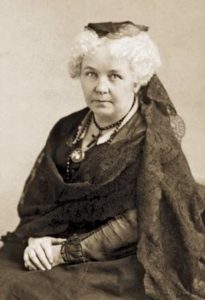
Elizabeth Cady Stanton, c. 1880
Elizabeth Cady Stanton was one of the women who first crystallized the Suffrage Movement, having helped organize the Seneca Falls Convention. Her unique background was pivotal in formulating the first demand for women’s suffrage in 1848.
As the movement grew and drew public attention, Stanton proved herself to be a skilled orator and writer, working closely with Susan B. Anthony throughout the years; Stanton actually wrote some of the speeches that Anthony delivered, and– along with Anthony– was one of the founders of the National Woman Suffrage Association. Stanton wrote for a more equitable future in more than voting; in addition to the question of suffrage, she championed a broader view of women’s freedoms, supporting labor rights, property rights, and the right to divorce. She saw that women should have the chance to lead their own lives, taking part in all aspects of society equally to men.
Movements don’t just happen, they come alive when a group of people decides to take action against injustice, and even small beginnings can lead to sweeping change.
Elizabeth Cady Stanton came from a privileged background and used her position and means to propel her views. Her father was a prominent attorney, Congressman, and a judge. He also was a slave owner. Elizabeth was exposed to the study of law and the government mechanisms that govern by her father. She was particularly against how religion was used to justify the oppression of women. She pennedThe Woman’s Bible to tackle misogynistic traditions rooted in religious dogma after being sent to a seminary at the age of sixteen.
She became an adamant abolitionist to end the practice of slavery in the United States in 1839 at the age of 24. Many historians believe that the Abolitionist Movement to End Slavery experiences and lessons were essential to pave the way for the Women’s Suffrage Movement.
Stanton wasn’t the only suffragist who saw the reality of sexist injustice throughout her society, and one of her contemporaries joined her in drawing attention to these wrongs. Matilda Joslyn Gage was considered a radical in her time, having fought against traditionalist views as Stanton had. Matilda was on the revising and editing committee for Elizabeth’s highly controversialThe Woman’s Bible.
Matilda Electa Joslyn March 24, 1826
This right to vote was a battle, fought and won 103 years ago by women we will never know, but by what they have written, what others have written about them, and what they have done for all of us.
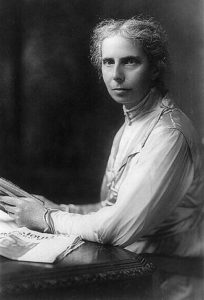
Alice Stone Blackwell
One of the women who played a significant role in uniting these two groups was Alice Stone Blackwell.
She was in a position to do so because of her connection to the AWSA: her mother was Lucy Stone. Along with Alice’s father, Henry Browne Blackwell, they were some of the primary organizers of the group. As Alice Stone Blackwell grew up, she worked with her parents on their paper, theWoman’s Journal, and eventually ran the paper. Once the AWSA and NWSA had merged, Blackwell served as the NAWSA’s recording secretary.
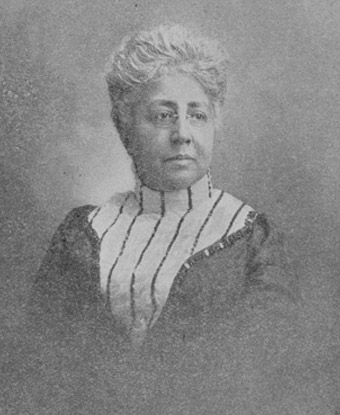
Publisher and founder of the Woman’s Era Club (which laid the foundation for NAACP), Josephine St. Pierre Ruffin, an activist at heart, a community leader, and a national organizer, grew up surrounded by the abolitionist ideals of justice, equality, and political representation. Her earliest public service dates to the Civil War, during which Ruffin recruited African American men for the 54th and 55th Massachusetts infantry regiments. After the war, Ruffin served on several charities that helped Southern Blacks. Ruffin dedicated her life to bettering the lives of women and Black Americans both locally and nationally. NPS.Gov/People/Josephine-St-Pierre-Ruffin.
Josephine St. Pierre Ruffin
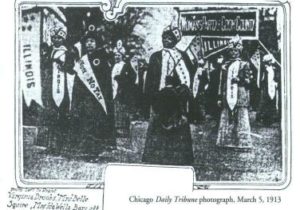
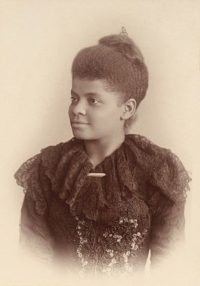
While the centennial celebrates the federal adoption of women’s suffrage, we shouldn’t forget the smaller victories and works that punctuated the movement’s length, those who spoke out against injustice in many forms, while seeking the vote. One such woman was Ida B. Wells, who played an active role in the suffrage movement of Chicago. The city had given partial suffrage to women. Wells, along with a fellow suffragist Belle Squire, started the Alpha Suffrage Club to advance women’s suffrage further and educate women on civic involvement.
Ida Wells & Belle Squire marching in 1913
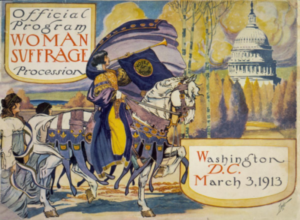
The club especially supported African American candidates for the city’s elections, working to break down multiple unjust barriers in politics. Wells participated in one of the NAWSA’s best-remembered marches, set in Washington D.C. the day before the inauguration of President Woodrow Wilson. At the beginning of the rally, she was told to walk at the back, but she refused. Ida B. Wells marched with her sister suffragists from Illinois at the front. The power of social change comes from unified work between many people, and Wells refused the idea that she, as a suffragist, could be divided from anyone else.
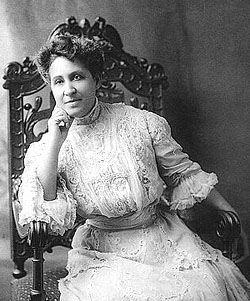
Along with women like Wells and Ruffin, Mary Church Terrel was an advocate for racial equality. She was entwined with gender equality, which shows throughout her work with the NAWSA, where she frequently met with Susan B. Anthony and Elizabeth Cady Stanton. She insisted that the movement fight for the rights of black women alongside those of white women, and spoke highly of the suffragists who fought for everyone oppressed by the political and social systems of the time. She spoke at NAWSA meetings, delivered speeches, and called for the suffragists to remember all of the women whose vote they worked so hard to gain.
Ida Wells
Let’s not allow their work to be forgotten – and let us never give up our full Rights as U.S. Citizens to carry out this all-too-important privilege.
Despite the NAWSA’s issues with racism, some black women did act within that organization, such as Mary Church Terrel, who was an advocate for racial equality entwined with gender equality, which shows throughout her work with the NAWSA, where she frequently met with Susan B. Anthony and Elizabeth Cady Stanton. Mary insisted that the movement fight for the rights of black women alongside those of white women, and spoke highly of the suffragists who fought for everyone oppressed by the political and social systems of the time. She spoke at NAWSA meetings, delivered speeches, and called for the suffragists to remember all of the women whose vote they worked so hard to gain.
Mary Church Terrel Sept 23, 1863
Women’s suffrage had a complex relationship with black civil rights in large part thanks to the period of history in which the suffrage movement began: the Seneca Falls Convention took place in 1848, seventeen years prior to the abolition of slavery. This meant that the women’s rights movement was progressing and focusing at the same time that black people across were achieving freedom and directing themselves in a country that, while changing dramatically, still marginalized them.
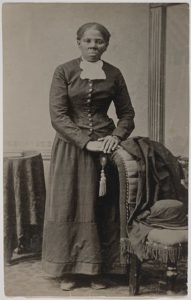
Harriet Tubman’s work is an example of how black women fought on both fronts; she’s a figure best remembered for her work as a liberator, freeing slaves prior to and during the civil war, but she took part in the suffrage movement as well. During the time of the NAWSA, she traveled to meetings and demonstrations to give speeches, telling of her experiences fighting for freedom and facing down oppressive and dangerous power structures during the time of slavery, and how important the struggle for freedom is. She bridged her advocacy for equality into the fight for the vote, and during this time, Ruffin’sThe Woman’s Erawrote a profile on Tubman, as the country’s attention was once again drawn to her fight.
Harriet Tubman after the Civil War
All of these histories show that the suffrage movement’s victory– the adoption of the nineteenth amendment– was the result of disparate people, dedicated and idealistic people coming together and fighting hard for their rights. They gave time, energy, and passion to a movement that would, eventually, provide them with the right to participate in the democracy of their country. The fact that the suffrage movement stayed strong for 70 years united its two significant organizations, tackled legislation at both the national and local levels, is a testament to the people who refused to give up, and whose worked– together– to win the fight.
It’s been a century since women won the right to vote, and more than 170 years since the American suffrage movement started in earnest. This movement has a lot it can teach us: the value of working together, across the country, to bring about change; the importance of remembering that there is always more than one fight for progress and rights, that we should listen to the voices of everybody who’s been pushed down and denied their rights and opportunities; and, of course, that even in the face of a power structure that calls rebellion and the fight for equal freedoms’ radical’, that fight is a good one, and worth taking on.
At the Seneca Falls Convention, the call for women’s suffrage rang out in America, whereas before it had been considered a fringe idea, or even impossible. The fight was long, but after seventy-two years, the suffragists made what was ‘radical’ a reality.
So, in the spirit that the right to vote is something that all people deserve, and should never have been restricted to any one group over another, let’s celebrate the centennial of a victory that brought America one step closer to the ideals of equality, freedom, and the rights of all. The power of the vote has shaped America’s history. We must all understand the importance of voting, and today we recognize those who fought for our rights. We are thankful for those brave suffragettes, for it is their struggle that has given us the right to participate in our democracy regardless of gender.
It required three generations of fearless activists over a span of more than seven decades working in more than 900 state, local, and national campaigns to finally win the vote for American women. And that active verb – win – is important: Women were not given the vote; they were not granted the vote. As one commentator so aptly describes it: “They took it.” Christian Science Monitor
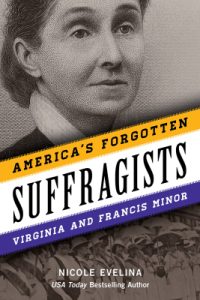
This year holds a special place in our hearts as we also celebrate the exceptional work of Nicole Evelina, whose groundbreaking book, ‘America’s Forgotten Suffragists: Virginia and Francis Minor,’ sheds light on the indelible contributions of lesser-known suffragists. Evelina’s meticulously researched biography illuminates the lives of Virginia and Francis Minor, who, alongside their better-known contemporaries, shaped the course of women’s rights and equality. Their story, like many others, exemplifies the unyielding spirit that fueled the suffrage movement.
As we honor the remarkable journey that brought us to this juncture, we are reminded that progress is a collective endeavor. The road to universal suffrage was marked by sacrifices, courage, and a shared vision of a more just world. The fight for equality continues to resonate, urging us to safeguard the rights that were hard-fought and won.
Join us in commemorating the 103rd anniversary of the 19th Amendment, a testament to the power of determination, unity, and the enduring spirit of change. Let us remember the past, honor those who blazed the trail, and carry forward their legacy as we champion equality and justice for all.
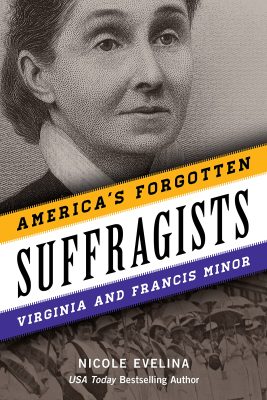
Comprehensive in its own right, America’s Forgotten Suffragists by Nicole Evelina is an essential addition to the canon of women’s suffrage and first-wave feminism.
Equal parts local history of women’s right to vote in the nineteenth century and biography of Virginia and Francis Minor, America’s Forgotten Suffragists illuminates the story of a wife-and-husband feminist duo who were the first to fight for women’s suffrage at the Supreme Court level.
We learn about the lives of Virginia and Francis Minor by way of historical records, intersecting timelines with other suffragists, and news articles and letters. Virginia Minor was raised on the new and intellectually stimulating University of Virginia campus, where her father worked. Born into a colonial settler and slave-owning family, Virginia came into her own as she grew older, forming abolitionist and feminist beliefs.
In 1869, Virginia realizes that, through implication, the Constitution could grant women the right to vote by way of the Fourteenth Amendment, which acknowledged the freedom, citizenship, and human rights of Black men freed from enslavement. She shares her thoughts with Francis — a practicing lawyer and constant ally for women’s financial independence. And when Virginia is denied from registering to vote in 1872, she sues and goes to court with Francis as her attorney, to introduce her interpretation of the law.
As history reveals, the Minors lost their case. However, they ignited conversations about women’s suffrage nationwide, pushing others to take up the charge.
Virginia became good friends with Susan B. Anthony, collaborating on suffrage campaigns in the Midwest, and giving speeches in territories that were becoming states. Francis Minor continued his advocacy for the feminist cause by publishing his writing on women’s rights. To preserve their words, biographer Evelina includes many of the Minor’s speeches and articles, as well as Virginia and Francis’s petition in full calling for the Supreme Court to acknowledge women’s right to vote based on the Fourteenth Amendment.
What truly shines about this book — along with its gentle prose and historical scene-setting — is what it teaches about the origins of first-wave feminism and why the American voting system continues to disenfranchise Black citizens.
Nicole Evelina takes great care to analyze Virginia’s 1875 Supreme Court case, Minor v. Happersett, from all angles.
Minor v. Happersett has been (mis)used over seven times since the trial to reinforce voter suppression tactics. Evelina demonstrates through this extensive biography of Virginia and Francis Minor that the issues we face today — election tampering, gerrymandering, expunged registration records, and restrictions on accessible voting methods for the working class — can, in part, be traced back to this case.
This biography documents one woman’s bold path to securing women’s rights, a beacon of hope for a world where no person is lesser than another.

 In Mistress of Legend, the enticing finale of Nicole Evelina’s Guinevere’s Tale trilogy, matters are life-and-death by the second sentence, pulling readers deep into Guinevere’s fate in this retelling of Arthurian legend.