Celebrating the Twelve Days of Christmas – One Day at a Time
On the 6th Day of Christmas, we wish you a very HAPPY NEW YEAR!
“But Jiminy Crickets, it’s after December 25th! Is it not too late for the 12 Days of Christmas?” you say.
Not to fear, Chanticleerians! The 12 Days of Christmas begins on December 26th! And it continues to the 6th of January – Three Kings Day. The four weeks leading up to Christmas is known as the Advent.
So if you haven’t finished wrapping presents, sending out those cards, and baking cookies—don’t worry—you’ve got an extra seven days!
Happy Holidays to You from the Chanticleer Team!
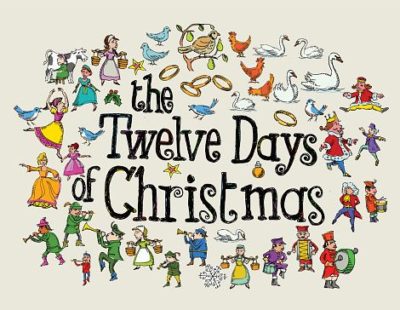
On the sixth day of Christmas, my true love sent to me
Six Geese a-laying
Five Golden Rings
Four Calling Birds
Three French Hens (Chanticleer’s favorite #justsaying)
Two Turtle Doves
And a Partridge in a Pear Tree
The 6th Day of Christmas, December 31st, is New Years Eve! Despite not all cultures celebrating in accordance with the Georgian calendar, everyone culture has their own ways to mark the end of one year and arrival of the next. Here are some traditions from around the world!
United States
The Times Square ball drop is a nationally televised event that millions of Americans tune into on December 31st, with thousands more waiting on the freezing streets of New York City to watch in person. The inaugural drop was to mark the start of 1908 but the countdown until the midnight has become a wide-spread tradition enjoyed by folks of all ages.
Denmark
Danes take the expression “leaping into the new year” literally! It’s traditional to jump off a chair, couch, counter, or wherever you can find yourself several centimeters off the ground right as the clock strikes midnight. It is seen as a way to bring good luck into the new year.
Brazil
Since the new year arrives on the same day as the summer celebration of the sea god, these annual traditions overlap. Wearing white, meant to signify purity for the sea goddess Iemanjá, the culminating event of the night, everyone runs into the ocean fully dressed and jumps over seven waves. These jumps and waves are meant to hold wishes and hopes for the coming year.
Ireland
The Irish have many traditions surrounding the new year, including banging the outside of their homes with bread to keep away bad luck and evil spirits. The most heartfelt of these is the setting of an extra place at the table for the evening meal, said to be for any loved ones who have been lost in the past year.
Philippines
While many cultures eat “lucky” foods, such as Hoppin’ John in the southern USA or 12 raisins in Spain, or twelve grapes in Italy, in the Philippines it’s considered lucky to eat numerous round fruits. And not only do they eat round things, they also dress in polka dots! The more round objects the better.
What are your favorite ways to mark the new year? Resolutions? Thorough house cleaning? A polar plunge?
On the 6th Day of Christmas, Chanticleer brings to me…
Six newsletter tips!
Newsletters are a staple in an author’s marketing toolbox. But hitting the right mark with a newsletter that will attract readers can be elusive. For our Sixth Day of Christmas, we’re bringing you six tips to help you improve your newsletter to attract more readers.
1. Be unique. Create a newsletter that reflects your brand, or your book’s genre, to give your readers an idea of what to expect when they dive into your latest release. Think about color choices, subject matter, layout, and what extras you may want to put into it to keep readers coming back for more. I’ve seen newsletters that offer a recipe, discount offers, and some that even offer birthday wishes to their followers.
2. Write original email subject lines. You’ve got to catch their attention right away, so you better use your writing chops to throw out that hook! Create a phrase that relates to the content of your newsletter, and make it interesting. Think of it as a tagline—something that will excite them enough to open it. This also goes for your preview text.
3. Consistency is king! Do your research to find the best time and day to schedule the release of your newsletter, but note, the best day/time you see today could change in the future so check back every few months to see if the statistics have changed. A simple Google search can help you with finding the most updated information.
4. Keep the topic focused. Your newsletter readers follow you for a reason. They know they can get the information they are looking for when they click to open the newsletter. It could be they are interested in your writing journey, tips, or you! Newsletters are a branding tool that need to reflect what you are creating. It also helps to create interest if you give a little insight into your own life, but just a taste. A photo collage of a place you visited that you reference in your book is a good example.
5. Repurposed content. We all need a few extra hours during the day, so don’t give yourself extra work. Find ways to repurpose the content you’ve already generated. I offer a bit of information, just a short blurb, with a link embedded in the text or through a clickable button that will take them to my website where I have a full article for them to read. This way I am seeing an advantage with my newsletter and my website at the same time!
6. Keep it timely. People are reading your newsletter because they think of you as an publishing insider. Stay up on the topics of the day and provide them with well-researched content, or an honest critique on the top issues of the day.
Stay tuned for the 7th Day of Christmas!
Our favorite part about having the 12 Days of Christmas is that we can have the time we need to celebrate with our loved ones. We have time for wrapping presents, meeting with friends for hot cocoa, and continuing to prepare the Chanticleer Authors Conference and the CIBA Banquet and Ceremony.
Wishing you Happy Holidays from Chanticleer from Kiffer, David, Dena, Scott, Anya, and Argus!
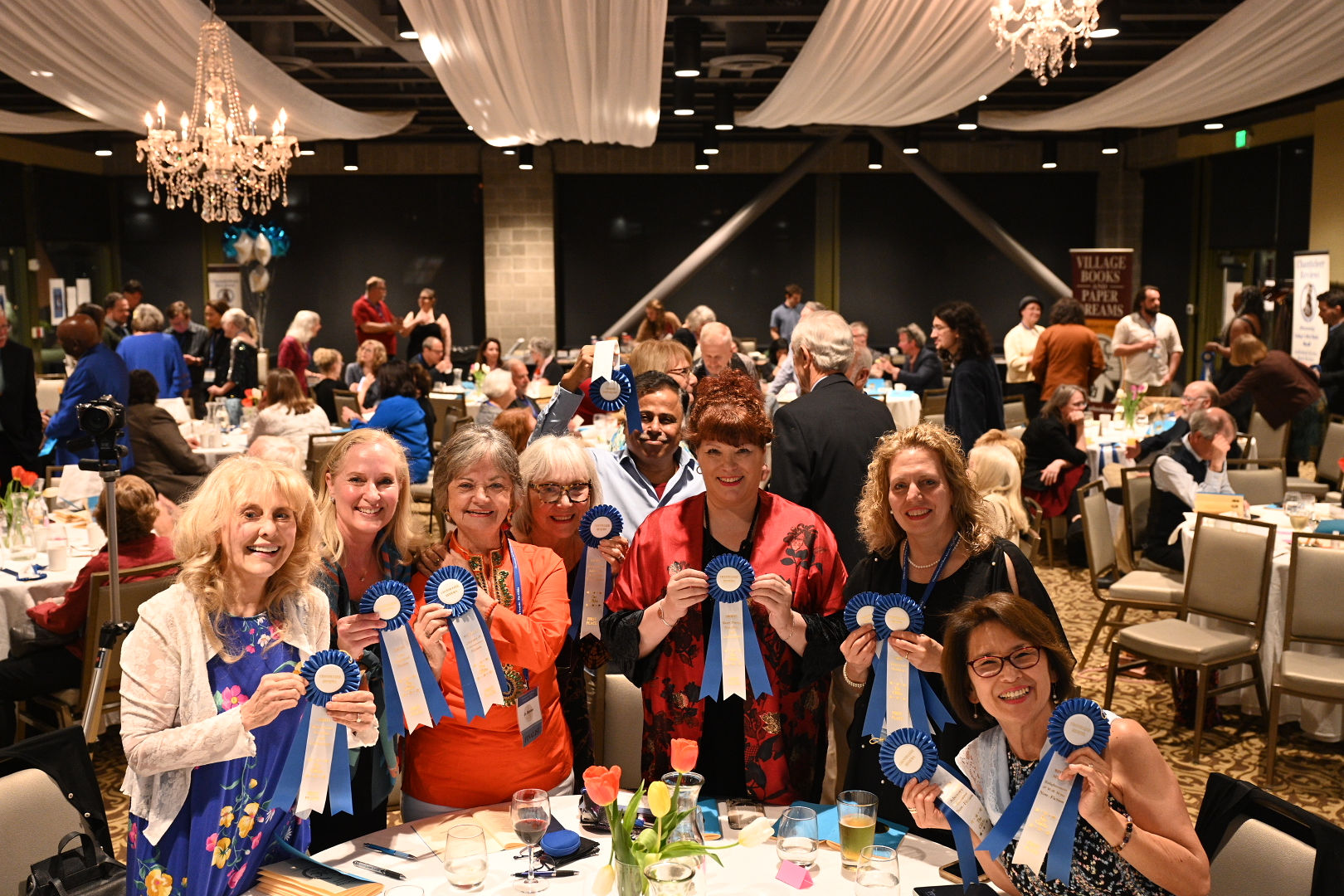
One of our favorite Writing Communities meets annually at the Chanticleer Authors Conference!
How to Form a Writing Community
No matter where you are in the writing journey, it’s never too late to join a Writing Community or form a Critique Group. We’ve talked to people who have ran book groups at our own local Village Books, those who ran the Skagit Valley Writers League, and those who have gone through graduate-level writing classes to bring you the best tips and tricks for your community needs.
Writing Communities and Critique Groups are often a wonderful and necessary step on the journey to becoming a professional author, not just someone scribbling into the void.
So my Writing Community will fulfill all of my authorly needs?
Commander Tuvok and Ensign Kim of the USS Voyager. Kim is usually wrong.
Probably not. Just like one person can’t fulfill all our needs for friendship, writing communities are diverse and can include your local bookstore to the writing group you found online during quarantine. It isn’t just one thing, but here we’ll talk about how to build one if you notice your needs aren’t getting met as well as they could be.
First, we’ll focus on where to begin, then we’ll dive into actually running a critique group.
Starting your Group
Pick who you want to be in your Writing Community
When putting together a group it can be important to consider both experience and demographic. If you’re hoping to publish by the end of the year, it’s important to work with like-minded people as opposed to writers who are just discovering their voice. Of course, even a writer who is still working through their craft may be an excellent reader, so don’t be afraid to take a chance on someone!
Likewise, while it’s helpful to have a variety of readers, ask yourself who the audience for your book is. Lee Child’s The Killing Floor has a pretty different audience from The City of Glass by Cassandra Clare. The best feedback will come from the people who would be interested in grabbing your work at the bookstore.
If you’re looking for more on connecting with readers, and less on connecting with other writers, check out this article on reader engagement from Kiffer Brown here.
Decisions in a Critique Group
There are plenty of ways to run a writing group, but knowing if it’s open or closed and whether people come prepared to give feedback or if they’re expected to give feedback in the moment is key
For a critique group though, startby asking if it’s going to be a closed or an open group. Even with an open group, it helps to recruit people to join it initially, so you set the tone and hopefully create something that will really serve your needs.
For an open group, you’ll have the great pleasure of extraordinary writers coming into your sphere, though on the other hand, you will also find writers whose work needs desperate help beyond what you can give to the work just being plain offensive. Despite that, the rewards of working in an open group are innumerable, as are the connections that will help expand your circle of influence.
In a closed group you don’t have the same level of variety in the people you work with, but the consistency can make up for that. Of course, if the people you invite in end up feeling hurt, this can negatively affect friendships that have been brought into the group.
Regardless of who you have in a group, it’s worth remembering that writing is a sensitive art, and it does well to treat people kindly, even when giving direct feedback.
When is Feedback done?
Whether or not you choose to do an open or closed group, you also need to pick whether or not work will be read in advanced so feedback can be ready to present at group. The other natural option is that the author will present their work at the group and receive feedback immediately after.
I ran a group for 7 years that sent work in advance, and I found the extra time to comment and think about a book really helped! That said, the maximum word count suggestions and number of members we had meant we critiqued approximately 40,000 words a month! That’s a lot of novels!
In contrast, Janet Oakley, a Chanticleer Overall Grand Prize Winner, is still in a group where the author reads the work aloud and then receives feedback in the moment. That group saves a lot of time and effort by keeping the focus on just what can be shared in the time that they meet. Both have great merits! – David
Regardless of the choice you make, writers will be able to get a huge benefit from however feedback is delivered!
Community is something we make at Chanticleer
Here at Chanticleer we have our usual (or unusual) suspects in terms of people who live near us and are guaranteed to show up at our local events ready to cheer us on.
To facilitate this, we’ve created The Roost, a private online community for serious authors looking for support. Not only does The Roost offer steep discounts on many Chanticleer services, there are weekly write ins, monthly workshops, author promotion projects, NaNoWriMo support, and of course pictures of our beloved pets (always a must).
If you’re interested in joining the Roost, please reach out to AuthorOutreach@ChantiReviews.com
One of Kiffer’s adorable kitty cats
The Roost is a social community where authors can share their expertise and knowledge with fellow writers who take the craft and business of being an author seriously. Make posts and share photos just like any other social media, but better since the community is intentionally curated for writers!
Thank you for joining us for this Writer Toolbox Article
There is so much to learn and do with Chanticleer!
From our Book Award Program that has Discovered the Best Books since the early 2010s to our Editorial Book Reviews recognizing and promoting indie and traditional authors, Chanticleer knows your books are worth the effort to market professionally!
When you’re ready,did you know that Chanticleer offers editorial services?We do and have been doing so since 2011.
Our professional editors are top-notch and are experts in the Chicago Manual of Style. They have and are working for the top publishing houses (TOR, McMillian, Thomas Mercer, Penguin Random House, Simon Schuster, etc.).
If you would like more information, we invite you to email us at info@ChantiReviews.com for more information, testimonials, and fees.
We work with a small number of exclusive clients who want to collaborate with our team of top-editors on an on-going basis.Contact us today!
Chanticleer Editorial Services also offers writing craft sessions and masterclasses. Sign up to find out where, when, and how sessions being held.
A great way to get started is with our manuscript evaluation service, with more information availablehere.
And we do editorial consultations for $75. Learn morehere.
Michelle Coxis the author of the multiple award-winning Henrietta and Inspector Howard series as well as “Novel Notes of Local Lore,” a weekly blog dedicated to Chicago’s forgotten residents. She suspects she may have once lived in the 1930s and, having yet to discover a handy time machine lying around, has resorted to writing about the era as a way of getting herself back there.
Her work has received multiple Mystery & Mayhem and Clue Awards from Chanticleer as well as the Overall Grand Prize Award for Best Book for her book A Spying Eye, in addition to several top-rated reviews, plus many other accolades, so she might be on to something. Unbeknownst to most, Michelle hoards board games she doesn’t have time to play and is, not surprisingly, addicted to period dramas and big band music. Also marmalade.
Still thinking about Registering for the Chanticleer Authors Conference?
Find out why The Writer Magazine (founded in 1887) has repeatedly recognized the Chanticleer Authors Conference as one of the best conferences to attend and participate in for North America.
Celebrating the Twelve Days of Christmas – One Day at a Time
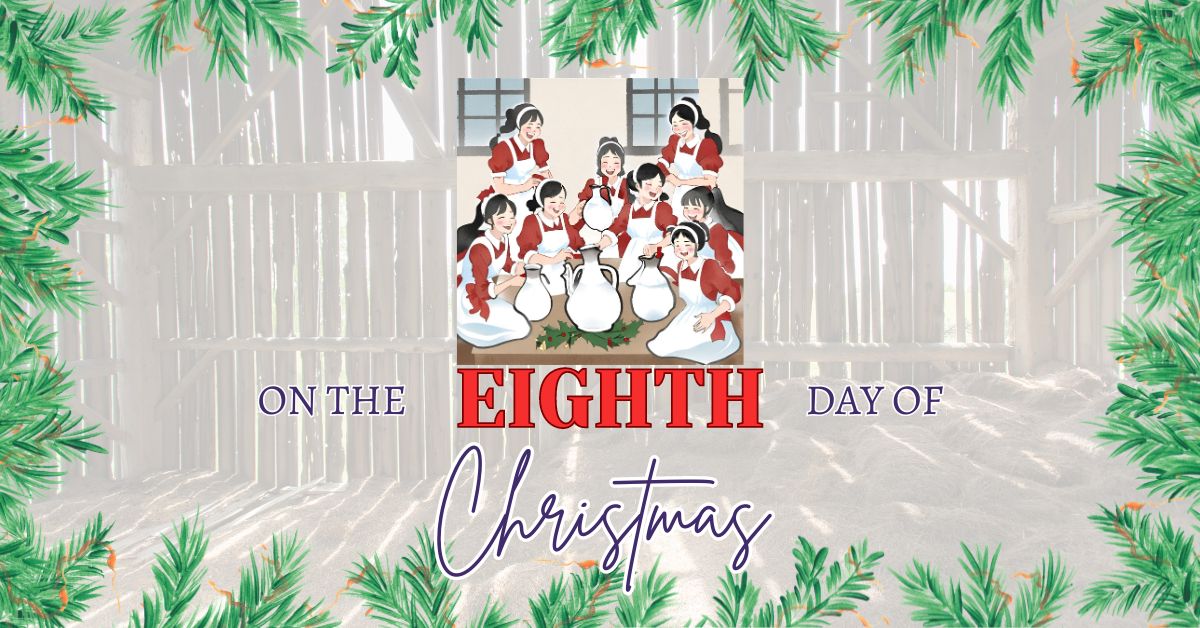
On the 8th Day of Christmas…
The Eighth day of Christmas is the celebration of Mary as the Mother of Jesus, which can be traced back to as early as 431 AD.
“But Jiminy Crickets, it is the 2nd of January! Is it not too late for the 12 Days of Christmas?” you say.
Not to fear, Chanticleerians! The 12 Days of Christmas begins on December 26th! And it continues to the 6th of January – Three Kings Day. The four weeks leading up to Christmas is known as the Advent.
So if you haven’t finished wrapping presents, sending out those cards, and baking cookies—don’t worry—you still have time! You have FIVE Days!
Happy Holidays to You from the Chanticleer Team!
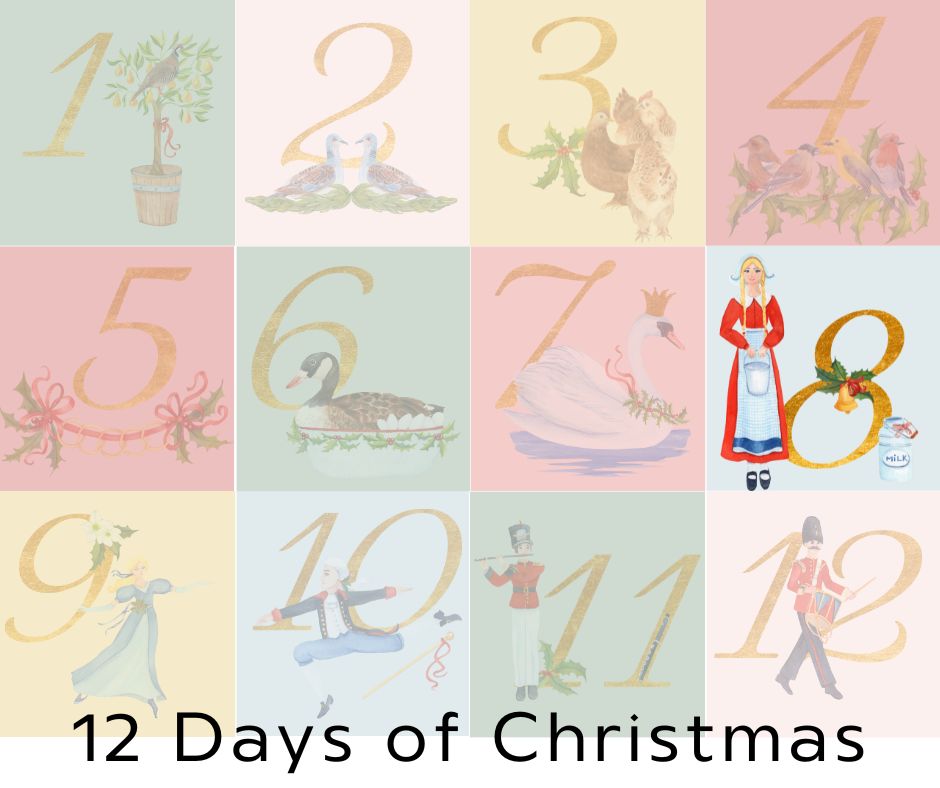
On the Eighth day of Christmas, my true love sent to me
Eight Maids A-Milking
Seven Swans A-Swimming
Six Geese A-Laying
Five Golden Rings
Four Calling Birds
Three French Hens (Chanticleer’s favorite #justsaying)
Two Turtle Doves
And a Partridge in a Pear Tree
This lyric represents the common worker. We are so grateful to all those who make the wheels of the world turn who can be so easy to forget! An extra special Happy New Year to all workers!
Happy Holidays to You from the Chanticleer Team!
On the Eighth Day of Christmas, Chanticleer brings to me…
Image by Tumisu from Pixabay
Eight SEO Boosts (at least!) with each Chanticleer Book Review Package
SEO stands for Search Engine Optimization. When you purchase an Editorial Review from Chanticleer, we do our best to keep up with all the latest trends and under-the-hood data technologies that ensure your book is picked up by search engines like Google, Bing, Yahoo, and others.
Key Phrase Optimization: We choose a word or phrase that is most likely to lead to your book, usually your title.
Title Optimization for the length of our review title as it appears in search engines.
Heading Optimization: We use our blurbs to stand out in describing your book while also showing search engines what’s most important to pick up.
Sentence Optimization: We make sure all reviews use the appropriate number of words to best improve theirFlesch reading score.
Optimization that utilizes your keywords.
Tagging and Categorizing for web crawlers.
Links! Links to the Author’s website, links to the Publisher’s website, links to the book’s Amazon Sales Page, links to other Chanticleer Reviews in the series (if applicable), and Links to our Local Village Books’ sale page for your book if it’s available through Ingram. We are currently working on linking to Barnes & Noble. The more links the better in the Internet of Things!
AISEO PRO SEO Booster app with Meta Descriptions, Cornerstone Content, Focused Key Phrases
In addition, all Chanticleer Reviews are promoted in our e-newsletter, website, Social Media platforms, and the Chanticleer magazine.
Editorial Reviews are powerful tools that are only limited by imagination! Don’t let your book go undiscovered!
For more detailed information about how a Chanticleer Review with its exclusive AISEO PRO booster app, click here>> You can learn more about SEO here.
Image by Gerd Altmann from Pixabay
We would like to invite you to join our curated online communityThe Roost!
We are so proud the community we have on The Roost! It is great perch to hang out on for writers and publishers to hang out in and connect.
We host weekly write-ins, discussions of writing craft books, and advice on the author’s journey. With authors in all stages of the writing process joining us, there is always something to learn on this independent PRIVATE social media site.
Writing may seem like a solitary activity, but stories are told in community. Whether you find that on The Roost or elsewhere, we’re happy that you are a part of our community here at Chanticleer.
Limited Time Only! Join The Roost during the 12 Days at a discounted holiday price.
Our favorite part about having the 12 Days of Christmas is that we can have the time we need to celebrate with our loved ones. We have time for wrapping presents, meeting with friends for hot cocoa, and continuing to prepare the Chanticleer Authors Conference and the 2023 CIBA Banquet and Ceremony.
Wishing you Happy New Year from Chanticleer! from Kiffer, Sharon, David, Dena, Vilina, Scott, Anya, and Argus!
Celebrating the Twelve Days of Christmas – One Day at a Time
“But Jiminy Crickets, it’s after December 25th! Is it not too late for the 12 Days of Christmas?” you say.
Not to fear, Chanticleerians! The 12 Days of Christmas begins on December 26th! And it continues to the 6th of January – Three Kings Day. The four weeks leading up to Christmas are known as Advent.
Some say that December 25th is the first day of Christmas, but we are going with the medieval date of the 26th because revelry could not take place on the 25th as it was a holy day. And the Twelve Days of Christmas are about revelry!
So if you haven’t finished wrapping presents, sending out those cards, and baking cookies—don’t worry—you’ve got an extra 5 days!
Happy Holidays to You from the Chanticleer Team!
On the seventh day of Christmas, my true love sent to me
Seven Swans A-Swimming
Six Geese A-Laying
Five Golden Rings
Four Calling Birds
Three French hens (Chanticleer’s favorite #justsaying)
Two turtle doves
And a partridge in a pear tree
Seven Swans A-Swimming by Carolyn Bell
International Holiday Traditions – The Seventh Day of Christmas is also known as New Year’s Day!
Kiffer’s family tradition (Southern U.S.) is to eat Hoppin’ John on New Year’s Day. Eating black-eyed peas, pork, greens (kale or spinach), and cornbread
for good luck, health, peace, and prosperity in the new year.
In Japan, people welcome the new year with a bowl of soba noodles made from buckwheat. The noodles symbolize longevity and the buckwheat resilience.
In Italy, people wear red underwear on the first day of the new year to bring good luck.
Walloon (Belgium) and Flemish (Netherlands) farmers wish their livestock a happy new year along with extra feed or treats.
And people go for a dip in freezing cold water around the world —brrrrrr—polar bear plunges!
What do you do to celebrate New Year’s Day?
On the Seventh Day of Christmas, Chanticleer brings to me…
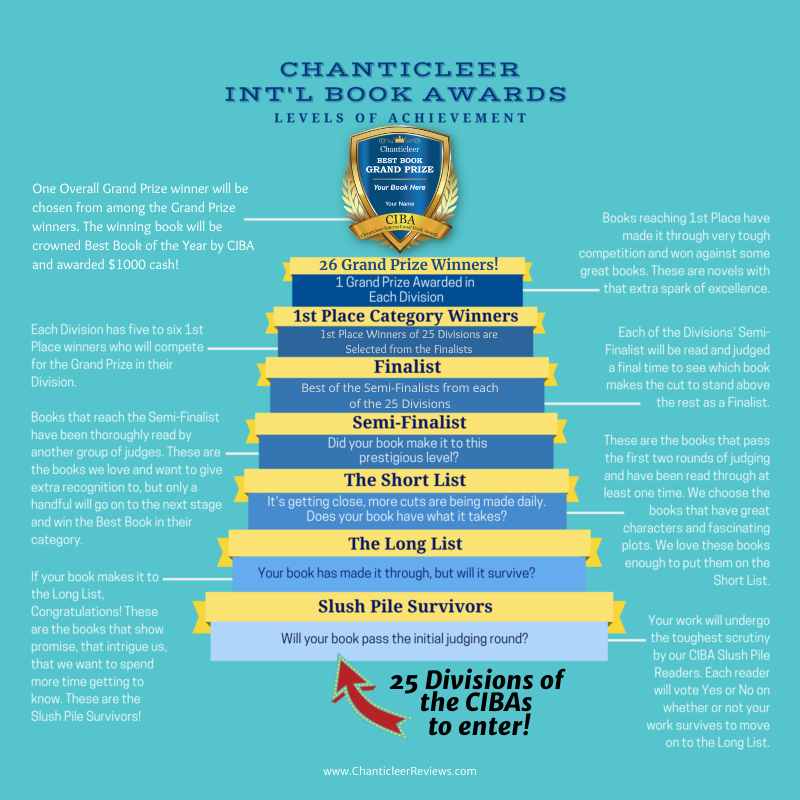
Seven Tiers of Achievement
While winning an Award always feels amazing, one of the best parts about signing up for a Book Award Program is the long-tail digital marketing that comes with it. What do we mean by that?
Every time your book advances in our Awards, we post about it on our website, on our social media, and in our newsletter. This puts your name and your book out in front of thousands of people, and it tells search engines that you’re doing something right. Being discoverable is key as more and more books are published every year. You can see our Book Awards Program here and submit today!
MailChimp may be no Rooster, but it’s a great way to start email marketing. With a very low barrier to entry (free!), you can build your audience before your book is published!
Why Use MailChimp?
Your personal email is great for sending messages to a small group of people, but once you get a higher volume of recipients, limits will apply. For instance, Gmail will only allow 100 contacts per outgoing email, with a limit of 2000 emails per day (source). Your email account can be suspended if you go over their limits.
Signing Up
To sign up, just go to MailChimp.com. Of course, there are paid plans, but assuming you’re starting out with fewer than 500 contacts, free will work! They also offer free email support for the first 30 days, so make sure to get your questions in early. Paid accounts can provide 24/7 technical support, add additional users to your account, and would allow more than 500 subscribers (source).
To sign up, create an account with your email, and be prepared to verify. A surprise for most users is that to sign up you have to provide a physical address. This address will appear at the bottom of every email! Make sure it’s not going to give away your location if you’re working from home and are concerned about safety and privacy. Read up on MailChimp’s ideas to provide a less personal address here.
I’ve signed up, now what?
Once you’re in the Mailchimp site, you’ll see a dizzying array of choices. If you have a website, you’ll want to create a signup form. Click the “create” icon, and select “embedded form.” The form includes name and email by default, but other fields are available too.
Once you’re happy with your form fields, hit ‘continue’ and you can copy the code and place it directly into your website. If this is all Greek to you, consider working with a webmaster to get the form to appear correctly. They also have a pop-up form option. If you create a pop-up form, you’ll need to provide your website address to connect it, then add some provided code to your site’s header, which MailChimp explains here.
Your Audience
Get your audience excited!
Once people sign up, they’ll be added to your Audience. “Audience” is where you manage your contacts. If you already have a list of emails you want to market to through Mailchimp, you can add them manually or by uploading a spreadsheet. Make sure you have the email owner’s permission first! The anti-spam laws can work against you if you get a lot of people marking your email as spam (learn about the importance of permission here). If they sign up via your form, they’ve given their consent!
Campaigns
Marketing Campaigns rather than D&D Campaigns
Your outgoing emails are called “Campaigns” in MailChimp. You create your campaign to go out to your audience or to a section of your audience. MailChimp’s design tools are a bit rudimentary, but they do provide templates to help you get started. You can use uploaded images, different fonts, texts and links, and style it to be consistent with your brand. While designing your email to send, you can send test emails to yourself and others to see how it appears in your inbox. Just remember that once it’s finalized, you can no longer make edits. Once sent to your designated audience, you’ll be able to see how many people opened your email in your dashboard via Campaign Reports. You can learn more about Campaigns in Mailchimp directly here.
Thank you for joining us for this Writer’s Toolbox Article, and good luck out there on the web!
Rochelle Parry helps authors and small business owners with their digital marketing efforts by creating custom websites, setting up social media, and publishing print and online materials including magazines and art books. You can learn more at her website: www.megabite.com
I hope you enjoyed this quick introduction to using MailChimp and found some useful tips! There is much more to this service, and hopefully this is enough to get you past the blank white page and into creating some fantastic emails! — Rochelle
Looking for more quality time with Chanticleer?
Take Your Publishing Career to the Next Level – April 27 – 30, 2023! Register Today!
Seating is Limited. The esteemed WRITER Magazine (founded in 1887) has repeatedly recognized the Chanticleer Authors Conference as one of the best conferences to attend and participate in for North America.
Every Author Needs an Effective Website, But What Should You Do to Manage Yours?
Now is the time to freshen your website or seriously consider creating one dedicated to your author brand.
The internet is confusing enough without having to look at the back end of a webpage that’s supposed to draw others in. For many authors, their website will be the first thing online readers will come across, and it should represent the best parts of you and your work.
AUTHOR BRAND – Your website your reflects your author brand
Like a Resume, the Author Website should highlight what’s special about you
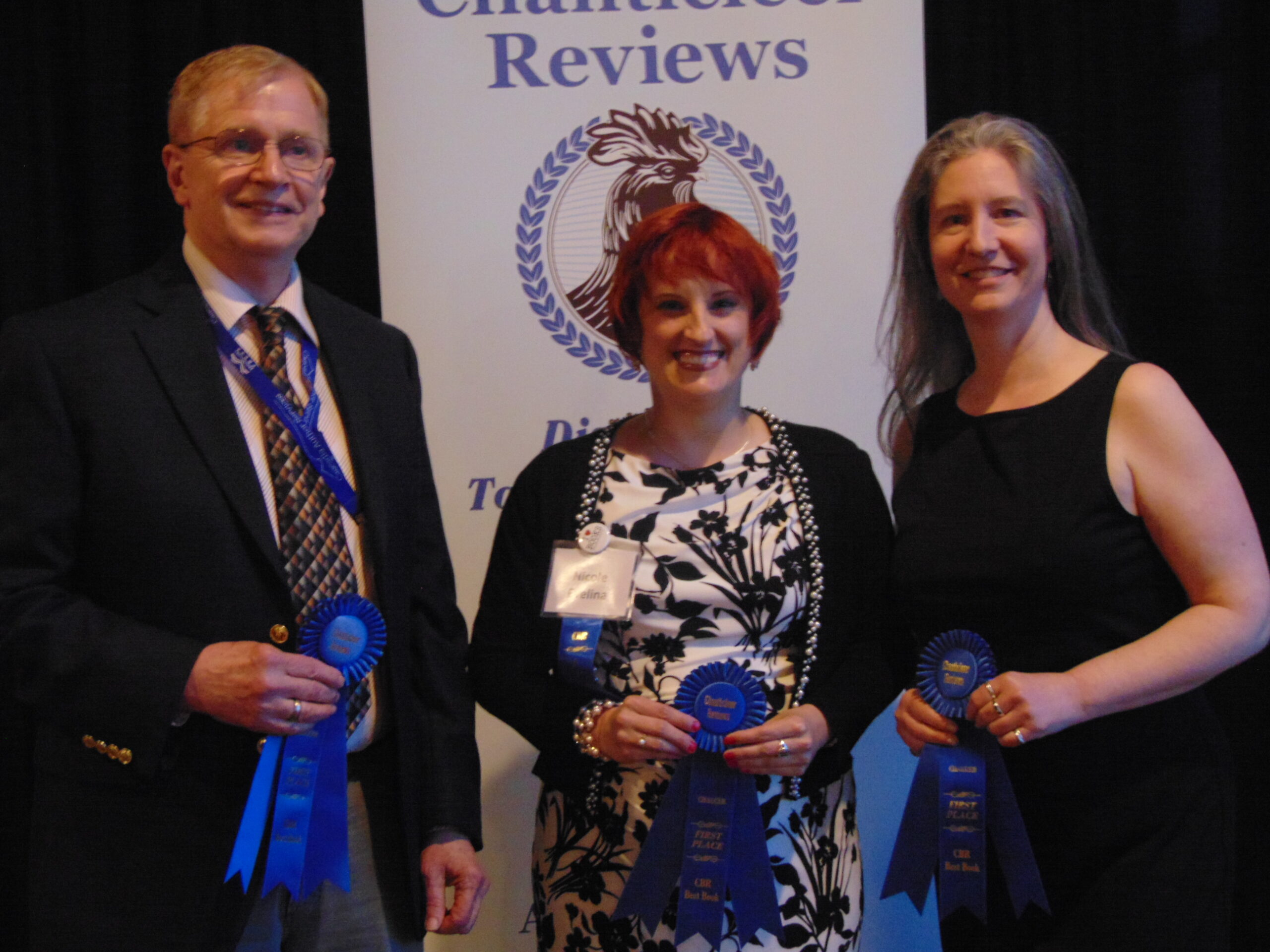
If your book receives a positive review or award, crow about it on your website. You can see Nancy Thorne doing that on her site here for her book Victorian Town, which won a First Place blue ribbon in the Dante Rossetti Awards. Having that digital badge can be the difference between someone purchasing your book and passing on it.
Where else will people find information about you?
Aside from your author website, most readers will find out about you from bookstores, social media, through your publisher, or through Reviews and Awards as described above.
The only place you fully control is your Author Website
The Bones (wireframe) of Your Website
These are the key subjects your author website should touch on for readers:
Your AUTHOR BRANDING – this will be a blogpost to itself – please see links at the end of this article,
What do you write – Fantasy? Historical Fiction? Non-Fiction? Children’s Books?
Do you have an elevator pitch for each of your works? If so, this is where you put it. Then drill down with more info.
What information or services you provide?
Are you available to present?
Are you available for Book Clubs? (You do have a Book Club page—right?)
Do you promote/support any causes? Humane Society? Autism? Wildlife? Lover of Libraries? Board Games?
Schedule of where people can meet you? Author Events, Wine Tastings/Lavender Days, Comic-Cons?
Products (books) to sell –
Can they be purchased directly from your website?
Can they be purchased from your fav Indie bookseller? Amazon? Barnes and Noble? Bookchain?
Kudos given your works
Digital badges, links to awards and accolades
Access to your Blog – it should be easily available AND with at least once a week posts.
Blogposts do not have to be long – a short paragraph will do to keep it fresh and earning “browser love” i.e. ranking on search engines
An outdated blog suggests that you are not interested in what you are doing (writing/written).
BIO – why readers should READ your books rather than another author’s works in the same genre
Please have easily downloadable photos, short and snappy bio with an invitation to contact you (see below) if a more in-depth one is needed, and graphics of your book covers available for those who want to promote you and your work. For example – you are going to do a book signing at your local bookseller – they will want to be able to create posters, social media posts, mailings, etc. and will need this basic info easily and readily available.
Also, have links or a listing to where you have presented, been interviewed, and/or published, accolades and awards
Contact info – Social Media Links, a secure way of contacting you, and a place to subscribe to your newsletter .
Social media links – especially LinkedIn and Twitter
Subscribe to your newsletter (yes, you read that correctly)
Secure way of contacting you while allowing for your privacy
However you go about making your website, the first thing to check is that it’s presented cleanly. Simple is going to be better than an over complicated landing page with too many buttons to look at. There should be a natural progression to your website to help visitors navigate it with ease.
Also, it’s worth mentioning that Chanticleerian Rochelle Parry does a deep dive into this subject here here.
1. Communicating What you Write
Readers should automatically know what genre you write in when they look at your website. Ideally this is done with design and by saying it directly. Consider what images are important to the work you do and how you describe the genre of your work. Both should be front and center. Again, the design doesn’t need to be over the top or fancy, but rather focused on communicating directly to the reader to let them know if they’ve landed in the right space. For example, these are the first big buttons anyone who comes to ChantiReviews.com sees:
Obviously we consider our Newsletter, Awards, and Reviews to be fairly important. Ask yourself what the main purpose of your website is—selling books? Selling copyediting services? Providing reviews? Whatever that is, it needs to be the main focus.
2. About Page
This is where you’ll want a professional head shot and a little bit about you and your story. You can ease up on the advertising here, and talk more about why you’re passionate about the subjects you write about.
We’re all about giving this rooster some love here.
An author page that puts the author front and center is Janice S Ellis, PhD’s website here. You get a good sense of who Dr. Ellis is and the reason that she is a reliable authority for her books. A different route is to be a website that primarily highlights your book, like Avanti Centrae’s website here. You can see the difference in focus, especially since Dr. Ellis’s work tends to have a wider range of subjects, while Centrae’s focuses exclusively on VanOps novels and thriller series.
3. Books
Your books will undoubtedly be an important part of your author website. If you’ve won any awards, such as from our Chanticleer International Book Awards (CIBAs), you should include your digital badge to help the book stand out to those who visit your site. Likewise, if you’ve received a good Editorial Book Review from us, you’ll want to make a note of that and link to the review.
The goal is to show readers that your book stands out, and that it’s well connected enough to receive widespread recognition.
One of the biggest things we see with author websites is they forget to list those awards. Your website is a storefront among millions of digital storefronts, and something needs to be there to make your product stand out beyond what other authors have.
4. Contact
The Contact page is where you have a chance to let your audience reach out to you. It’s a great spot for people to request your presence at their book club, writing group, author’s conference, or upcoming Awards Ceremonies.
Your Contact page is also an excellent place to gather information for your Newsletter. Your Newsletter lets you speak directly to your audience, cutting through the algorithms of social media and the whims of the internet to land directly in their inbox. Make sure you share information that’s fun and to the point of what might interest an audience.
5. Interact
If you have a blog and people interact with it, take a little bit of time to respond to them. Likewise, if you have emails from you contact page or responses from your Newsletter, you can take the time to let people know you heard them and respond in a positive way.
Your interactions may not be this cute
This is part of the business side of being a writer, so set up some dedicated time each week to deal with it rather than letting it bother you a little bit every day. Schedules can be the best way to avoid the death of a thousand cuts.
One of the big ways we promote interaction is through The Roost. The Roost is our personally curated social media site that allows authors to network and ask each other questions, while at the same time taking advantage of some extraordinary discounts. Learn more about The Roost here.
6. Avoid Sales Resistance
Sales Resistance is when the design of your website prevents readers from following you or buying your products. This is a huge personal pet peeve of Kiffer herself. To avoid this double check all your buttons and links, and even consider setting up multiple buttons for one product that your visitor can click on to buy your work. It can help here to have a friend explore your website and test it out. A second pair of eyes (or more) can’t hurt!
Hand in hand with that, share your brand! Promote your new book, promote new merchandise, and remind people of the services you offer If you have a new book? Advertise it! Win a new Award or receive a good review? Advertise it! Make sure it’s clear how to contact you, and that your SEO is up to date. What’s SEO you ask?
7. SEO and Publishing Alphabet Soup (How you and your works are found in the Internet of Things)
Possibly the most confusing element to the world wide web is the idea of Search Engine Optimization (SEO). Tags and Keywords are the first start to this. Rather than go with the first idea that comes to mind, so a little bit of searching. The word “raffle” has nearly 90 million searches on Google while “giveaway” has 335 million. Generally, you’ll want to focus on the one that’s more common. The exception to this rule is what makes you shine should be a keyword more unique to you. You can read more about SEO here.
SEO is all about driving traffic back to your website, and you can do this by referencing your website frequently and generously. Have it ready when people ask where to find you on podcasts or guest blogs, and double check to make sure that information is posted to send their audience back to you.
8. Social Media
Links to your social media help so much, because that’s a good way to stay in your reader’s mind throughout the day. You can link individually to your Twitter, Facebook, Instagram, and anything else, but what happens when you need to link to multiple sites (including your author website) from a space like Instagram?
No need to fear Social Media!
At the recent Chanticleer Authors Conference, VCAC21, Chelsea Bennett of LuLu and Alexa Bigwarfe talked about different ways to put up multiple links using Linktree and Shopify.
The big difference between the two is that Linktree is just for sharing links, whereas Shopify also doubles as a storefront, much like Squarespace, but it’s an all in one paid tool. If navigating multiple platforms is a challenge for you, Shopify may be worth the expense.
8. Newsletter
Your Newsletter is one of the best ways to connect with readers. Unlike social media, which is always filtered through automatic algorithms, people have signed up for and chosen to receive your newsletter. You don’t have to pay extra for it, just send it out to regularly tell your readers that you’re thinking of them, and to let them know how best to support you!
Newsletters can seem overwhelming, but you can break them down into a few simple steps. Here are a few possible choices:
Recent Publications
Status of Current Works in Progress
What You’re Reading
Writing Thoughts
Links to your Social Media
You know yourself best, so choose what works best. The other big question with a Newsletter is how often to send one out. Luckily, the answer is you can send it out as little as twice a year. While there should always be a way for your readers to support you in the letter, it’s important that the main thrust of it is in connecting with them.
Your newsletter is a chance to give your books a big hug
What is the Author Website, in the end?
Your website is the hub of your part of the community of writers you’ve joined. It’s like a small inn where you invite readers in and can provide resources and support to your fellow authors. Be kind and excellent to each other.
Thank you for joining us and please stay tuned for the next Chanticleer’s Business of Writing Tools and Tips Article!
Seating is Limited. The esteemed WRITER Magazine (founded in 1887) has repeatedly recognized the Chanticleer Authors Conference as one of the best conferences to attend and participate in for North America.




 Brazil