Tag: Narrative Non-Fiction

  • The 2017 JOURNEY International Book Awards for Narrative Non-fiction – The Official List

    The 2017 JOURNEY International Book Awards for Narrative Non-fiction – The Official List

    We are excited and honored to officially announce the Grand Prize Winner and the First Place Category Winners for the 2017 JOURNEY Book Awards for Narrative Non-fiction Books at the fifth annual Chanticleer Authors Conference and Chanticleer Book Awards Ceremony. This year’s ceremony and banquet were held on Saturday, April 21st, 2018 at the Hotel Bellwether by beautiful Bellingham Bay, Wash.

    We want to thank all of those who entered and participated in the  2017 Journey Book Awards for Narrative Non-fiction, a division of the Chanticleer  International Book Awards.

    When we receive the digital photographs from the Official CAC18 photographer, we will post them here and on the complete announcement that will list all the genres and the Overall Grand Prize Winner for the 2017 Chanticleer International Book Awards. Please check back!

    Click here for the link to the 2017 Journey Shortlisters! An email will go out within three weeks to all Shortlisters with links to digital badges and how to order Shortlister stickers.

    Christine Smith, the author of the 2014 JOURNEY  Grand Prize Winner, More Faster, Backwards: Rebuilding David B,  announced the First Place Award Winners and the Grand Prize Winner for the 2017 Journey Book Awards at the Chanticleer Awards Banquet and Ceremony.

    Congratulations to the First Place Category Winners of the 2017  Journey Book Awards for Narrative Non-fiction. 

    An email will go out to all First Place Category Winners and Grand Prize Winners with more information, the timing of awarded reviews, links to digital badges, and more by May 21st, 2018 (four weeks after the awards ceremony). Please look for it.

    2017 Journey Book Awards for Narrative Non- Fiction First in Category Winners

    • Broken Places by Rachel Thompson
    • Getting to Heaven by Going Through Hell by Dr. Scot Hodkiewicz
    • Inside: One Woman’s Journey Through the Inside Passage by Susan M. Conrad
    • Immunity by Donna LeClair
    • Refraction by Bruce Rettig
    • Fishing With Hyenas by Theresa Mathews

    And now for the 2017 JOURNEY Grand Prize Book Award Winner for Narrative Non-Fiction:
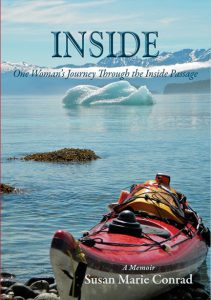
    Inside: One Woman’s Journey Through the Inside Passage

    by Susan Marie Conrad 


    This post will be updated with photos. Please do visit it again!

    The submissions deadline for the 2018 Journey Awards is April 30, 2018 midnight PST.

    Our next Chanticleer International Book Awards Banquet will be held on Saturday, April 20th, 2019, for the 2018 winners. Enter your book or manuscript in a contest today!

  • MY DEAR WIFE and CHILDREN: CIVIL WAR LETTERS FROM a 2nd MINNESOTA VOLUNTEER by Nick K. Adams – Civil War Memoir, Family Letters

    MY DEAR WIFE and CHILDREN: CIVIL WAR LETTERS FROM a 2nd MINNESOTA VOLUNTEER by Nick K. Adams – Civil War Memoir, Family Letters

    Collected and annotated by the great-great-grandson of a Union soldier, these recollections of the Civil War take on new life and meaning in current times.

    Nick K. Adams, a retired schoolteacher and Civil War re-enactor, was fortunate to have access to letters written by his ancestor, Brainard Griffin. A Minnesota farmer, Griffin volunteered to fight for the Union, leaving behind his wife Minerva, their two young daughters and baby son. His first letter home was written on September 30, 1861. The letters, 100 in all, express his longing to be back home while describing in often minute detail the life of an ordinary combatant.

    Griffin wrote the letters in quiet times, holding a board or his knapsack on his lap as a table. The repeated themes are poignant: loving messages to his wife and children, advice for the management of the farm, even bits of gossip.

    Money worries were constant; at one point Griffin washed the clothes of other soldiers so he could send more of his pay back to his family. Around the mid-point in his service he avows that, “experience is a good school,” assuring “Nerva” that when he returns, he will “prize” his time with family and home.

    Griffin’s regiment traveled extensively through Kentucky, Tennessee, and Alabama, constantly on the alert, experiencing battles, sickness and the travails of heat, mud, and snow. He observed the ravages of war in the farming communities and burned-down towns he passed through and saw firsthand the horrors of a field hospital. He met slaves and engaged them in personal conversation. He often lamented “the curse of slavery” and vowed to fight to end it. From the outset, he believed that the war would soon be over—in a few months, or a year at the most. His accounts of mealtimes indicate the increasing stress on the army’s resources: from coffee twice a day, pancakes, beef, fresh fruits, even pies, to half rations for months at a time, and towards the end of his accounts, mostly salted meat and crackers.

    Despite his optimism that the war would soon end, and his repeated visions of returning to Minerva and the children, Griffin was killed in the first few moments of the savage Battle of Chickamauga, two years after his first letter home, and was buried by Confederate soldiers in a mass grave.

    Adams has taken care to present the letters in their original form. Before each section, he highlights the coming contents and includes a map of troop movements. Though there is repetition, it seems fitting that almost every letter begins and ends with loving greetings to Griffin’s wife and children (some written directly to the girls), and that all express the simple daily trials of the foot soldier. Griffin had illnesses, lost teeth, grew a beard, and never ceased encouraging his wife in her work on their homestead.

    His homey remarks and even a bit of good-natured joking show him as a strong-willed, positive person, and his views on the progress of the national struggle reveal him as a thoughtful patriot with a mind to the future of his country and all its inhabitants.


  • JOURNEY Book Awards for Narrative Non-Fiction – 2017 Slush Pile Survivors

    JOURNEY Book Awards for Narrative Non-Fiction – 2017 Slush Pile Survivors

    The JOURNEY Book Awards recognize emerging new talent and outstanding Narrative Non-fiction works. The JOURNEY Book Awards is a division of the Chanticleer Book Reviews International Book Awards.

    Chanticleer Reviews International Book Awards also offers Non-Fiction Book Awards focusing on Instruction and Insight, Guides, How-To, and Self-help. Click here for more information.

    The following titles and their authors have made it past the initial “Slush-Pile Rounds” and will compete in the next rounds to see which titles will  be Short Listed for the 2017 Journey Book Awards.

    Good Luck to All! 

    • Kari Rhyan – Standby for Broadcast
    • Patricia Walkow – The War Within, the Story of Josef
    • Marilynne Eucgubger – Lives of Museum Junkies
    • Roni McFadden – The Longest Trail
    • Theresa Mathews – Fishing With Hyenas
    • Bruce Rettig – Refraction
    • Karen Elizabeth Lee – The Full Catastrophe: A Memoir
    • Pattie Welek Hall – A Mother’s Dance: One Step Back, Two Steps Forward, Full Circle
    • Alice Grant Bingner – Some Steps Back in Time
    • Dennis P Freed – Love Loss and Awakening
    • Donna LeClair/Emma Baker – Immunity
    • Susan Marie Conrad – Inside: One Woman’s Journey Through the Inside Passage
    • Judith Works – Coins in the Fountain
    • Valerie Gardener – Chapunza: Witch doctor, Ax-In-Head and Pink Baboons, Memoir of a Nurse in the African Bush
    • Lou Lesko – The Ghost of Communism
    • W. Hock Hochheim – Don’t Even Think About It
    • Dr. Scot Hodkiewicz – Getting to Heaven By Going Through Hell
    • Tommy Donovan – The Rail: What Was Really Doin’ in the 60’s Bronx
    • Deeann Callis Graham – Head-On, Stories of Alopecia
    • Kevin M Maher – No Couches in Korea
    • Rachel Thompson – Broken Places: a  Memoir
    • Frank Iszak – Freedom Flight
    • Joseph William Simmons – Dirty Motel Shenanigans

    These titles will compete to be SHORT LISTED in the next rounds.

    We are accepting entries into the 2018 Journey Book Awards for Narrative Non-fiction works.

    To compete in the 2018 Journey Awards or for more information, please click here.

    Chanticleer Book Reviews & Media, L.L.C. retains the right to not declare “default winners.” Winning works are decided upon merit only. Please visit our Contest Details page for more information about our writing contest guidelines.

    CBR’s rigorous writing competition standards are why literary agencies seek out our winning manuscripts and self-published novels. Our high standards are also why our reviews are trusted among booksellers and book distributors.

    Please do not hesitate to contact Info@ChantiReviews.com about any questions, concerns, or suggestions about CBR writing competitions. Your input and suggestions are important to us.

    Thank you for your interest in Chanticleer Book Reviews International Writing Competitions and Book Awards.

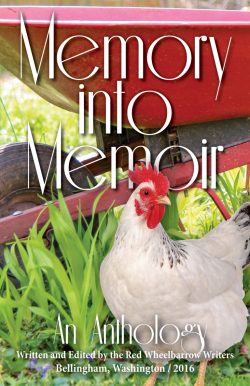
  • MEMORY into MEMOIR: An Anthology by The Red Wheelbarrow Writers – NonFiction, Memoir, Anthology

    MEMORY into MEMOIR: An Anthology by The Red Wheelbarrow Writers – NonFiction, Memoir, Anthology

    This curated anthology shows the collective creative effort that the Red Wheelbarrow Writers have dedicated to “Memory into Memoir,” each one a nugget of remembrance cloaked in the wisdom of time’s perspective and expressed in well-chosen words and memorable well-crafted story telling that will capture your heart and expand your soul.

    Below are a few samples of the superb writing in this anthology.

    The collections start with author (Beyond the Scope – Truth Turns Deadly in the Congo) and former US Embassy staffer Nancy Adair, who recounts, in “Just Say No,” being called upon to provide “community control” for a planned visit from Nancy Reagan to her post in Malaysia. Disaster follows disaster as plans fall through, the weather refuses to cooperate, and Reagan’s anticipated speech is four words long. Adair learns that far from being “one of those introverts who doesn’t like to disappoint people” as she initially imagined herself to be, she is secretly feisty, feisty enough to say “no” to the First Lady when the situation requires it.

    Blogger Sky Hedman’s “The Chosen Day” examines a distraught family trying to reconnect on a mountain picnic. The narrator, her Alzheimers-ridden mother and silently suffering sister Martha barely dodge tragedy on that outing, only to face it days later, along with an acknowledgment of fractured relationships: “The time to know Martha better had passed.”

    In “Thank You, Grace Paley,” aspiring Novelist Barbara Clarke recalls her remarkable personal meeting with the feminist icon over a late-evening cup of tea. Discouraged with her attempts at writing, she asks for and gets en-heartening advice from the famous author: “Just keep going.”

    University instructor Kate Miller’s “Elemental” is the memory of her eleven-year-old self, happily receiving a much-desired chemistry set, then balking at using it when she discovers the many vials containing poisonous substances: “What if I spilled two chemicals that weren’t supposed to mix?” Her escalating concern sparked by an active imagination causes her to stow the set away; later in life she is diagnosed with panic disorder, but still sometimes dreams of the chemistry set and its many messages.

    In “Leaving the Roman Lands,” world-wanderer Kenneth W. Meyer recreates his adventures overseas when in 1976 he and a traveling buddy agree to drive four wealthy students from Istanbul to Pakistan. In those days, foreign travel, the author states, “was like walking in space: you detached from the capsule, fed out your line, and enjoyed the spectacular view.”

    The final piece in Memory into Memoir, “The Great Moratorium,” is the fascinating story of a young woman “busting out of the beige life” at age 18, only to find herself in a highly abusive relationship. Escaping that, she later becomes a therapist for victims of domestic violence and embarks on a one-month experiment in “relationship moratorium” that stretches out to eighteen elucidating years.

    Superb writing styles blend with ease in The Red Wheelbarrow Writers’ first anthology of thirty-two non-fiction works that are a pleasure to read. Offering something for most everyone to appreciate makes this anthology a wonderful gift and a welcome addition to any writer’s library as an inspirational read. A consortium of writers has produced this engaging collection of life’s vicissitudes remembered.

    The Red Wheel Barrel Writers

    According to members Cami Ostman and Laura Kalpakian, the Red Wheelbarrow Writers in Bellingham, Washington, call themselves a “loose collective of working writers” who have “monthly Bored meetings (yes, that’s the correct spelling)” and eschew formal designation as a club or non-profit (“when we need money we pass a hat”). The writers have conspired to inspire with this array of 32 short memoirs.

    The group takes its name from a poetic work, XXII, by William Carlos Williams:

    So much depends
    upon
    a red wheelbarrow
    glazed with rain
    water
    beside the white
    chickens.

    Underscoring this theme, each memoir begins with a quotation from Williams chosen by the individual writer.

    5 Star Best Book Chanticleer Reviews round silver sticker

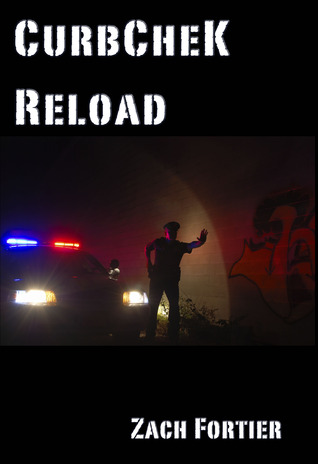
  • CURBCHEK RELOAD by Zach Fortier – True Crime/Police Memoir

    CURBCHEK RELOAD by Zach Fortier – True Crime/Police Memoir

    Interspersed with surprising moments of dark humor, fervent police pranks, and told with unchecked language, CurbChek-Reload by Zach Fortier is an expose’ of the challenging and graphically violent situations that are reflections of his day-to-day experiences of his thirty-year career as a city police officer.

    Fortier’s CurbChek-Reload is the third installment of his true-crime trilogy, The Curbchek Collection and takes readers on another ride through the arduous physical and emotional tribulations he experienced as a veteran police officer.

    Fortier does not temper his prose when he describes the depth of indifference, cruelty, malice, and depravity people inflict upon themselves, their loved ones, or someone in the wrong place at the wrong time without regard to the consequences of all involved.

    From the first sentence, the reader is positioned as a civilian who desires to witness the real underbelly of the mean streets and rides along in the patrol car. Fortier, who professes he hates ride along’s, recounts each story to you without emotion and in straightforward, curt exposition as if you’re watching over his shoulder. He articulates the benefits, downsides, and hazards of working the night shift, day shift, and with a four-legged partner armed with razor sharp teeth and a nasty independent streak.

    The stories take place in an undefined location called Central City and do not have a time sequence. The book is somewhat of a hybrid as it does not follow the usual conventions of true crime or memoir and contains some minor craft issues. However, it shines in its representation of the hazardous and complex challenges faced by the police. Fortier admits that if the public actually knew how thinly spread the police department was at times (six officers for an entire city), there would have been absolute panic.

    Fortier’s attitudes concerning some members of an apathetic society, duplicitous city leaders, inept police department management, and other officers are quite telling. He calls the people who drive into the city each morning to work Daywalkers.

    Conversely, Fortier provides examples where he relied upon his ability to communicate to de-escalate dangerous situations such as domestic disturbances, suicidal gestures or attempts, a potential melee, insatiable drug abusers, and so on.

    There is no overall plot or chronological framework to this story; rather, it’s a collection of episodic scenes without a story arc that occurred during the author’s law enforcement career. The writing style contains gives the impression this book is a transcription of the author’s recorded recollections of some of his intense situations that he experienced in his thirty-year career as a policeman.

    Nevertheless, as written, this collection contains some indomitable, funny, freakish, sad, outlandish, and bizarre accounts that vividly reflects one police officer’s complex experiences that occur all in his line of duty to protect and to serve.


  • UNCONVENTIONAL BOOK TOURS — Finding Your Tribe by Susan Conrad

    UNCONVENTIONAL BOOK TOURS — Finding Your Tribe by Susan Conrad

    We have a LOT of terrific sessions planned for CAC17, and we are still adding more. One of those amazing sessions will be:

    My Life as an Unconventional Book Tour – Gone are the days where an author simply reads, opens the floor to Q&A, and then signs books. (Can you say YAWN FEST?)

    Your audience craves engagement, and you want them to leave with your book in their hands—and with vivid memories in their minds.

    The presenter for this class, Susan Conrad, is an author, adventurer, and speaker who has been living her own whirlwind book tour since the release of her debut memoir in May 2016. Susan gives us a sneak preview into the session she will be teaching.

    • Is your book’s unveiling looming excitedly on the horizon? Or are you deep in the throes of promoting a recent release—but feel like you’re spinning your wheels?
    • Or maybe you’re just curious how to get the best bang for your take-over-the-world-book tour campaign.
    A box of chocolates from one of Susan Conrad’s fans who read the book and knows that she adores chocolate!

    Just as there’s so much more to being an author than “simply writing a book,” there’s so much more to a book tour than contacting a few bookstores. Whether you are self-published or traditionally published, you’ll be sure to pick up some priceless tips and tricks to launch your own kick-a&$# book tour.

    You didn’t write your book, pour out your heart, and create interesting characters, plots and themes just to make money, right? I’m assuming you (also) wrote your book to share your passion, spread your message, and tell your story. Indubitably, the next step is about making connections and building relationships—essentially finding your TRIBE!

    This session will help participants wrap their brain around who their audience truly is, where the best venues are to secure those audiences, and once that audience is all under one roof—how to invite them to come into your book. We’ll brainstorm ways to find your audience, organize and present a killer book tour (and not go broke doing it), set the mood, engage and dazzle your audience, and more. We’ll also discuss ways to generate clever promotions and land the venues you want.

    I look forward to meeting all of you at CAC17 and sharing ideas on how to get a leg up on your book tour competition! – Susan Conrad
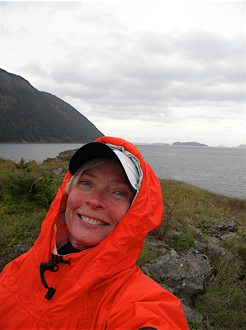
    Susan Conrad is an adventurer, author, educator, and speaker. She’s also an accomplished paddler. Her tenacious exploration by sea kayak has fueled her stories and images of the natural world for decades. Her articles and photographs have appeared in Sea Kayaker, Canoe and Kayak, Adventures Northwest, and Figure magazines. Countless newspapers, guidebooks, and historical journals also feature Susan’s work.

  • JOURNEY 2016 Book Awards for Narrative Non-fiction – The SHORT LIST (Semi-Finalists)

    JOURNEY 2016 Book Awards for Narrative Non-fiction – The SHORT LIST (Semi-Finalists)

    The JOURNEY Awards writing competition recognizes emerging new talent and outstanding works in the genre of  Narrative Non-fiction. The Journey Awards is a division of the Chanticleer Book Awards & International Writing Competitions.

    We are pleased to announce the JOURNEY Awards Official Short-List (Semi-Finalists)  for 2016 for Narrative Non-fiction.


    Congratulations to the JOURNEY AWARDS 2016 Semi-Finalists and Good Luck to them as they compete for the First Place Category Positions.

    Chanticleer Short List

    The Official 2016 JOURNEY Awards SHORT – LISTERS:

    • L. Darlene – Another Thirty-(Seven) Days (The Aftermath)
    • Gretchen Walker – The Silver Lining Encounters With Angels
    • Judy Lytle – A Mile in Her Shoes
    • Destiny Allison – The Romance Diet: Body Image and the Wars We Wage on Ourselves
    • Hazel J. Magnussen – The Moral Work of Nursing: Asking and Living with the Questions
    • Abbe Rolnick – Cocoon of Cancer: An Invitation to Love Deeply
    • Nick K. Adams – My Dear Wife and Children: Civil War Letters from a 2nd Minnesota Volunteer
    • Phillip Buchanon – New Money: Staying Rich
    • Robin Suerig Holleran, Lindy Philip – Bracing for Impact: True Tales of Air Disasters and the People Who Survived Them
    • Monica Sucha Vickers – My Extraordinary Life
    • Cyndy Sheldon – Gestalt as a Way of Life 
    • Richard Southall – Haunted Plantations of the South
    • Roni McFadden – The Longest Trail

    Good luck to all the Journey Awards Semi- Finalists who made the Short List as they compete for the First Place Category Positions.

    More than $30,000 dollars in cash and prizes are awarded to Chanticleer International Blue Ribbon Awards Winners annually.

    The 2016 Journey Short Listers will then compete for 5 First Place Category positions that will be announced and awarded on April 1, 2017 at the Chanticleer Authors Conference and Awards Gala, Bellingham, Wash. All Short Listers in attendance of CAC17 will be given recognized at the awards ceremony and will be given special badges to wear at the conference.
    We are now accepting entries into the 2017 JOURNEY Awards. The deadline is February 28, 2017. Click here for more information or to enter.

    More than $30,000 worth of cash and prizes will be awarded to the 2016 Chanticleer Novel Writing Competition winners! Check out out fifteen genres to enter your works into to compete on an international level and distinguish your books from the two million new titles hitting the market this year.

  • Love, Loss, and Awakening: (Mis)adventures on the Way Back to Joy by Dennis Freed – Non-Fiction/Memoir

    Love, Loss, and Awakening: (Mis)adventures on the Way Back to Joy by Dennis Freed – Non-Fiction/Memoir

    A heartfelt and profound account of confronting the death of a beloved spouse, Love, Loss, and Awakening combines pathos, humor, and gutsy truth from a survivor’s direct vantage point.

    When Dennis Freed married Hope, they were young. They had two sons, lived in the same house for years, and weathered many crises—until Hope contracted cancer and after several years of struggle, passed away. This is Freed’s frank, heart-rending tale of bereavement and recovery, and as such, it is also a paean to his devotion to Hope.

    As can be seen, even the names are charged with significance. Hope was a person with a positive nature who enjoyed helping others; who was determined to avoid discouragement even as her body was ravaged by disease, and who after her passing seemed able to advise and comfort her grieving spouse. But Dennis knew that in order to be truly “freed” he must, somehow, move on.

    At first, he battled with suicidal ideations, bouncing from despair and loneliness to anger–why did his wife “leave” him? Tormented by memories of Hope, he seized, perhaps prematurely, perhaps to excess, on the notion that other women could save him from his hellish grief state. This wasn’t easy for him because he’d met Hope at age 21 and married her soon after; he had to relearn the art of dating. He took on the search for women like a job. He visited dating websites, studied how to create a profile, and took pictures of himself in various poses and outfits. He had problems with his sexual apparatus and sometimes turned to a certain kind of female to relieve his aches and longings. He experimented with hair removal products to re-image himself for dating.

    Yet, as he remembered Hope, he knew what he wanted: not just a date – but a real partner. He went through all the recommended rituals: writing a letter of apology to Hope and burning it, scattering her ashes, connecting with his old memories and new aspirations through music and meditation, attending focus groups.

    In an especially poignant segment, he describes in vivid detail his wife’s one last tear. At times he even believed he had “seen” Hope, or “heard” her counseling him. But widower Freed finally realized that he had to take life as it came at him, not try to orchestrate the next moves; it was then that he found a new companion, someone he could accept and love fully, without guilt or regret.

    Freed, a developer, construction executive, and part-time university lecturer displays a remarkable gift for creating rich, emotionally tinged prose. Anyone who’s been through, or envisions ever having to go through, even a small part of what Freed experienced, will be moved because his story elicits vividly painful and, ultimately, a broad redemptive spectrum of emotions.

    Too personal to be a how-to manual, Love, Loss, and Awakening is more akin to a vivid portrayal of someone desperately stumbling in the dark desperately fumbling for a light switch, a flashlight, even a match to show the way out despair and hopelessness, and, then after a lot of bumps and scrapes, finally finding what he was seeking–happiness.

    5 Star Best Book Chanticleer Reviews round silver sticker

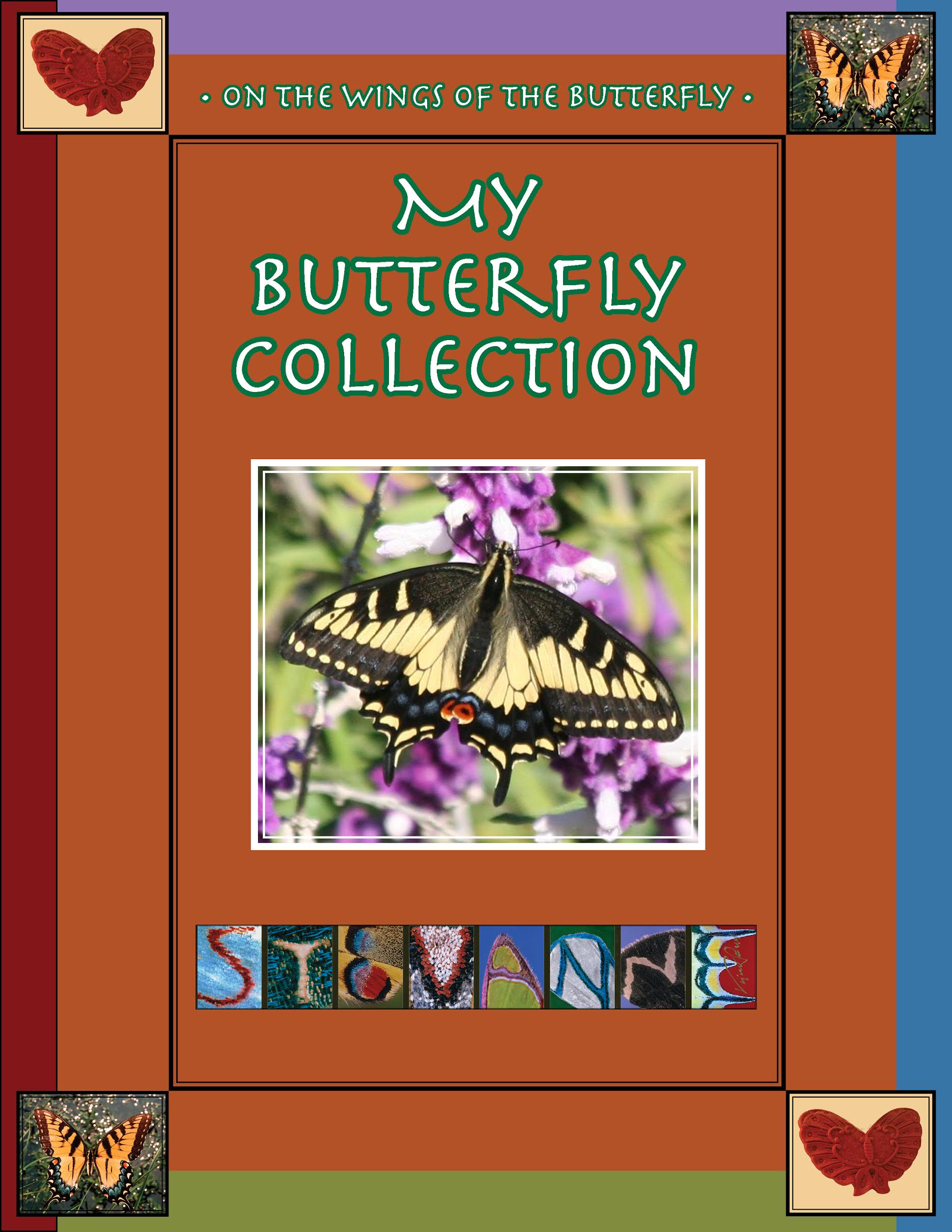
  • MY BUTTERFLY COLLECTION: On the Wings of a Butterfly by Stevanne Auerbach – Nature Books, Biology, Entomology

    MY BUTTERFLY COLLECTION: On the Wings of a Butterfly by Stevanne Auerbach – Nature Books, Biology, Entomology

    There are approximately 20,000 species of butterflies around the world, and this enlightening book is a compilation of all things butterfly. As well as delivering in-depth explanations of butterfly life cycles and species, the author, Stevanne Auerbach, PhD, teaches us that specific species are dependent on specific plants, and that butterflies need both host plants for caterpillars and nectar plants for the adult butterflies. Perhaps the most important lesson is that butterflies of the world are now dependent on us, the human species, for their very survival.

    To help readers become butterfly protectors, the author provides lists of suggested plants gardeners can grow to nurture butterflies dependent on species and geography. After reading this book, no gardener will look at caterpillars in the same way again, because killing a caterpillar means destroying a beautiful butterfly, moth or bee.

    The largest words on the cover of this book are My Butterfly Collection, which might cause readers to expect a book about an old-fashioned collection of preserved butterfly specimens on pins. Instead, this book is a tribute to the lives and worth of butterflies, as well as a celebration of the beauty and symbolism of butterflies through history. The “butterfly collection” actually refers to the author’s extensive personal journey, which led to her assembly of all this butterfly information, and objects decorated with butterfly motifs.

    The book contains lists of endangered and threatened species, as well as many color photographs of specific butterflies, most by famous photographer Kjell B. Sandved. The interconnection of butterflies and environmental health is emphasized in a moving foreword by David Seaborg, a prominent evolutionary biologist and founder/director of the World Rainforest Fund.

    Readers are treated to explanations about how butterflies have symbolized hope, transformation, and resurrection throughout the ages. The author even describes how she went through her own personal metamorphosis to become a lighter, healthier, happier individual.

    Bright art, illustrations, and paintings decorate the pages, which are also enriched with poems and literary excerpts from a variety of authors, including the author of this book. Some pieces are inspirational and uplifting; a few are eloquent, but sad, such as a reference to a collection of butterfly art and poetry by Jewish children imprisoned in a concentration camp.

    This rich collection includes extensive lists of organizations, gardens, and butterfly books for adults and children, field guides, butterfly garden books, and websites that the butterfly devotee can use to find more information. The biographies of the many experts who contributed to this book are listed in the back pages, along with a list of butterfly species around the world that may go extinct; a sobering reminder that butterflies are an indicator species of the health of our planet, and the fate of these magnificent “flowers on wings” is up to us.

    My Butterfly Collection: On the Wings of a Butterfly by Stevanne Auerbach, is a fascinating compendium of all things butterfly that educates and illuminates to its readers that “The health of the planet rests on the wings of the butterfly.”

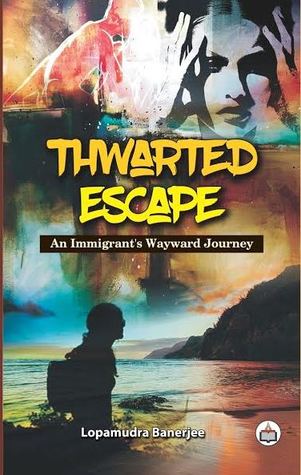
  • THWARTED ESCAPE: An Immigrant’s Wayward Journey by Lopamudra Banerjee – a stirring narrative

    THWARTED ESCAPE: An Immigrant’s Wayward Journey by Lopamudra Banerjee – a stirring narrative

    In her book, “The Art of Memoir,” Mary Karr recalls hearing novelist Don DeLillo once say that a fiction writer starts with meaning and then manufactures events to represent it, whereas a memoirist starts with events, then devises meaning from them.

    Lopamudra Banerjee does just that in her memoir “Thwarted Escape: An Immigrant’s Wayward Journey.” She takes us through a journey of achievements and sorrows while using words to make meaning of her spirituality, her femininity and her literary identity.

    Broken down into four volumes, the book is a collection of essays and articles, many of which were previously published in print, online anthologies and literary journals.

    Depending on which chapter you’re reading, you could say Banerjee is a memoirist, a creative writer, an essayist or a journalist. But no matter what label you choose for her writing, you will see Banerjee has major writing talent – the culmination of a passion that was borne at an early age when she considered words her playmates.

    “I have been in love with these moments of restlessness and release as these clusters have formed a pattern called words. I watched this written world of prose and verse, as with my hands, my body, I absorbed these nuances of creation,” she writes.

    Through the pages, Banerjee transitions from a small town girl in India who makes her way to the United States. She has traveled to many places throughout the US and in one chapter where she derives the book’s title, “Thwarted Escape,” she talks about her departure to Omaha, Nebraska, as in this stirring passage: “I am an ordinary, commonplace refugee in North America, and like many others of my ilk, have embedded myself in a family, far flung from what is called ‘original home.’ Like many others, I am striving to gain the status of the coveted Non-resident Indian, a legitimate work permit to survive in a distant land while my heart continues to ache with the desire to be rocked in the bosom of my mother and to revisit the havens of my childhood.”

    With the power of narrative in her life, Banerjee lives with the secret ambition to “get published” and to let the world read her stories. Thankfully, she has fulfilled her dream of compiling such a book and sharing with us her engaging and well-written stories of grief, death in her family, motherhood, and femininity.

    In a particularly moving section of the book, Banerjee introduces us to Taslima Nasrin, a Bangladeshi novelist and poet who has lived in exile since 1994 amid death threats for her outspoken feminist views and criticism of Islam. With admiration for Nasrin’s voice, Banerjee includes newspaper clippings (scans from the original print versions) of Nasrin and explains some of the abuse and hardship the activist has endured. As a graduate student of English literature, Banerjee harnesses Nasrin’s power and draws parallels to other literary greats.

    “I realize how [fusion_builder_container hundred_percent=”yes” overflow=”visible”][fusion_builder_row][fusion_builder_column type=”1_1″ background_position=”left top” background_color=”” border_size=”” border_color=”” border_style=”solid” spacing=”yes” background_image=”” background_repeat=”no-repeat” padding=”” margin_top=”0px” margin_bottom=”0px” class=”” id=”” animation_type=”” animation_speed=”0.3″ animation_direction=”left” hide_on_mobile=”no” center_content=”no” min_height=”none”][Virginia] Woolf, how Taslima [Nasrin], how Sylvia Plath, trapped and tangled in a women’s bodies, have suffered the heat and passion of their literary selves…”

    Banerjee ends the book with letters she wrote to her family and other people while she was pregnant and during other periods in her life. We readers are grateful Banerjee has found the courage and energy to publish all of these personal stories that are so moving, eloquently written, and significant in both her life and the lives of women.[/fusion_builder_column][/fusion_builder_row][/fusion_builder_container]