Tag: Myths & Legends

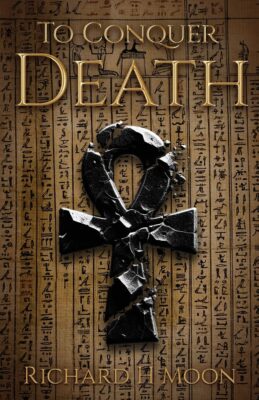
  • TO CONQUER DEATH by Richard H. Moon – Myths & Legends, Epic Fantasy, Ancient Egypt


    To Conquer Death by Richard H. Moon follows brothers Koshei and Tyfon—and Doryah, a barbarian woman—on a mythic quest across ancient Egypt and beyond, to a place where Egyptian myths come to life and rouse the dead. To restore balance to their world, the trio may have to sacrifice everything from their homes to their very souls.

    From the very first page, this story is built on love and loss. Koshei and Tyfon—mere children at the time—face the prospect of life without their beloved father after his body is returned to them from war wrapped in linen. Doryah lost her mother, and the funeral leaves the grieving daughter with the impression that only flames can subdue the dead when they attempt to rise again.

    The brothers, now young men, have followed in their father’s footsteps as warriors and joined the army. Supposed invaders have come from across the Great Green Sea, but after the battle they are discovered to be refugees rather than aggressors. Among them is Doryah, who warns Koshei and Tyfon that they have fled a dark and ancient force that can bring corpses back to life. At Pharoah’s command, the three lead an expedition back across the sea to Achea, through abandoned communities, until finally they reach a frozen wasteland. An army of the dead awaits them, along with a god whose games mortals have very little hope of winning.

    Moon’s descriptions of the ancient lands these characters traverse, as well as the cultures and customs they practice and encounter, anchor this story to history. From this solid foundation, the mystical and supernatural elements thrive.

    Even without any prior knowledge of ancient Egyptian hierarchies and social conventions, readers will easily immerse themselves in the story and learn as they go. Moon makes a point to include information such as how the Egyptian New Kingdom’s civil calendar was structured and how the Nile’s annual flood cycles determined the seasons, ensuring historic authenticity beneath the rich world-building.

    The dynamic cast imbues large, otherworldly conflicts with a myriad of human personality.

    Where Koshei is measured and almost always perfectly in control, Tyfon has grown up to become more reckless. Their relationship is relatable despite the distinct challenges they must undergo. Doryah contributes unique, equally developed perspectives to round out the narrative. While the story takes place in the ancient world, like many historical novels they often utilize more modern turns of phrase when speaking to one another, the characters work hand in hand with the supernatural setting to weave a suspenseful plot.

    Combining the scope of epic fantasy with intimate personal conflicts, Richard H. Moon’s To Conquer Death tells a timeless story of characters who face insurmountable trials, endure profound loss, and forge bonds that outlast even death itself.

     

  • DIOMEDES In KYPRIOS: Diomedia Series Book 2 by Gregory Michael Nixon – Myths & Legends, Historical Fiction, Bronze Age

    Gregory Michael Nixon’s Diomedes in Kyprios, book 2 in the Diomedeia Series, continues the adventures of the godlike yet all too human hero, Diomedes of Tiryns, as he seeks to discover a meaningful destiny in the chaos of the Bronze Age Collapse.

    We begin after the fall of the Hittite Empire, four years after the destruction of Troy. He emerges from the dark river that runs through the underworld where the sacrifice of the Hittite Great King has just occurred, and he has rescued the Hittite Queen from certain death. Nearly drowned but still alive, he recalls only that he had vowed to reunite with the former Queen of the Hittites, the woman he loves named Lieia, at Paphos on the island of Kyprios (ancient Cyprus).

    Lieia must undergo her own “odyssey” to get to Paphos to meet Diomedes. She depends on her band of protectors, but they pay for fare aboard a ship with evil men who cannot be trusted.

    After many adventures, Diomedes arrives in Paphos and is recognized from Troy by the Akhaian (Greek) warriors already there. He becomes a war leader and seeks to unite the Peoples of the Sea gathered on the island of Kyprios for chaos is descending from the end-of-the-era Bronze Age Collapse. He attains his goal and at last meets with Lieia, who through incredible circumstances has also arrived and been acclaimed as the Goddess of Paphos.

    After a murderous shipwreck, Lieia has struggled to shore and, because of her extraordinary beauty, has been mistaken for a new incarnation of the ancient Kypriot Goddess of Love. The people save her and celebrate her arrival. She is proclaimed Aphrodite—born of the sea foam. She is made Goddess-Ruler of the city, but this makes her enemies, and she becomes uncertain who she really is.

    Diomedes and Lieia rule together, he as military commander, she as goddess-queen. Lieia must overcome the dangerous witch, Myrrha, who challenges her power. Diomedes, in his turn, must deal with two vicious villains who caused Lieia’s shipwreck and the beautiful youth, Adonis, Myrrha’s son, who seeks to kill him and become the lover of Aphrodite.

    Nixon draws heavily on ancient legends to write these larger-than-life characters, threading them through this novel with great artistry. This is a short book yet a memorable epic, whose vivid setting and colorful characters will stay with the reader long after finishing the book.

    In this Audible audiobook version, the narrator, Simon de Deney, captures the dramatic flair and clear articulation one would expect in mythic Greece, among the Hittites, on ancient Cyprus, and all the places this adventure takes us. De Deney is an actor whose classically trained voice will hold the readers’ full attention, leaving them with the metallic dust of the copper mines of Kyprios in their eyes and the sea spray of the vast Mediterranean on their lips.

    For first-time readers/listeners of this series, Diomedes in Kyprios can be read as a stand-alone for the previous book is summed up in flashbacks and a chronological prologue. It will appeal to myth lovers of all ages, but also to those drawn to historical fiction based in the ancient Bronze Age and the mysterious Peoples of the Sea (and, of course, to lovers of historical romance). The book contains serious historical credentials, for the author suggests realistic interpretations of a number of unexplained mysteries of the Bronze Age Collapse.


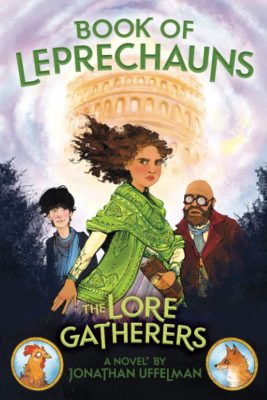
  • BOOK Of LEPRECHAUNS: The Lore Gatherers by Jonathan Uffelman – Myths & Legends, Middle-Grade Adventure Fiction, Fantasy

    OZMA 1st Place Blue and Gold BadgeThree leprechauns, Molly, Shaun, and Dorker, have their lives turned upside down when a sinister figure returns to their peaceful village with greed and revenge on his mind. In Jonathan Uffelman’s middle-grade fantasy, Book of Leprechauns: The Lore Gatherers, they embark on a treacherous journey to recover their lost home.
    Shaun McClanahan struggles to support his daughter Molly as she fails a crucial test for young Lore Gatherers—a subculture of Leprechauns who respect the power of stories. Though he’s weighed down by his responsibilities as the protector of his village’s communal gold stash, Shaun tries to overcome his worrying nature by trusting Molly to check on the gold by herself, hopeful that she can prove her worth to the village.

    But when Molly follows her father’s magical instructions to the letter, she discovers with horror that the treasure is missing, save one ancient Roman coin.

    The theft means exile for both Molly and Shaun, as gold is the catalyst for Leprechaun magic. A dangerous and unwelcoming world awaits them beyond the village’s protection.

    Shaun’s fear spirals into anger and mistrust towards Molly. The only Leprechaun who tries to speak on her behalf is Dorker—a gangly young teenager with a great big heart who has a great big crush on Molly. However, his efforts only serve to get him caught up in their banishment, where his reservoir of foolish behavior adds a lightness to their magical exile.

    In the shadows of the forest, they are small and vulnerable creatures. Shaun scrambles desperately to put together a plan to reclaim the stolen gold across time and space. If, of course, Poor Reynard the hungry fox doesn’t catch them first.

    Meanwhile, Molly rails against the injustice of it all—the village’s draconian laws of exile, her own father refusing to believe she told the truth about what happened, and how Shaun refuses to trust her again.

    On the trail to find the coins, our Leprechauns travel to Ancient Rome, hoping to connect Julius Caesar, whose image on the coin is the only hint they have, with the location of the missing coins. While Shaun’s magic can get them to the past, there’s no telling what—or who—might be waiting for them on the other side.

    Uffelman creates a strong fantastical atmosphere with his whimsical writing style, reminiscent of Lemony Snicket and Terry Pratchett.

    Book of Leprechauns is presented as an account of Lore Keeper history, using footnotes and references to other in-universe texts that pull readers into the setting.

    Filled with a lighthearted mix of dream logic, fairytale whimsy, and even some science fiction, the reader will find themselves laughing at even morose moments. Poor Reynard, the hungry fox, contemplates his place in the world as he follows the heroes on their journey, and Dorker even tries to help by picking up Latin but finds he has much more of an aptitude for the clucks of the strong-willed chicken, Gladys.

    The highlight of Book of Leprechauns is its cast of characters, each one unique and fleshed out in their motivations and actions.

    Evocative descriptions and distinctive banter bring these characters to life. Readers come to understand what drives and troubles them, giving interesting depth to even those who start as opponents, including Poor Reynard, Lucius the Roman legionary, and Julius Caesar himself.

    Readers will eagerly peer through the characters’ clever lies and half-truths to find the facts behind unreliable narrators. This tactic emphasizes the focus Lore Gatherers put on adding trickery to their own tales.

    Among these characters, Shaun and Molly go through a powerful emotional journey as they struggle to understand each other as family.

    Shaun lets his fear and anger create a gulf between him and his daughter. This is widened further by his refusal to talk openly about Molly’s late mother as he wrestles with guilt over her death. Molly wants desperately to be closer to Shaun and aims to prove herself by handling the responsibilities of their enchanted life. But Shaun slips deeper into a whirlpool of panic as their situation grows more dire.

    Shaun must find the courage to trust Molly again, which is the only thing that can repair their relationship.

    Molly herself is an exciting and relatable protagonist who has much to learn about the world and herself. Young readers will love her passion and fire at the journey’s beginning. Yet as those flames turn to anger, they threaten to consume more than she bargained for.

    Molly starts to learn that people are often much more complicated than she first gives them credit for. While anger might be a powerful force, she must push herself to empathize with the stories of those around her to truly do good for anyone—including herself.

    At its heart, Book of Leprechauns is a story about seeing the good in people.

    The heroes must all learn to trust not only each other, but themselves to achieve their mission. To get home they will need to move beyond their own fears and limitations.

    After all, Lore Gatherers know well the power storytellers have in shaping the world.

    Book of Leprechauns: The Lore Gatherers by Jonathan Uffelman won First Place in the 2023 CIBA OZMA Awards for Fantasy Fiction.


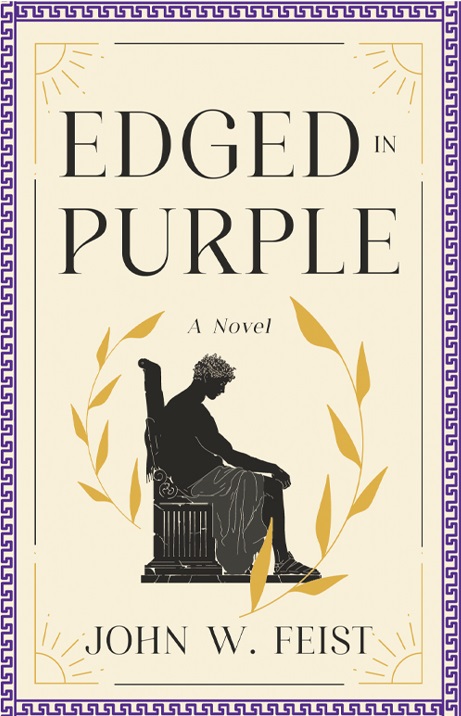
  • EDGED In PURPLE by John W. Feist – Myths & Legends, Historical Fiction, Romance


    Chatelaine 1st Place Best in Category Blue and Gold BadgeEdged in Purple by John W. Feist welcomes readers to a place outside of time and space, a liminal space where characters of myth wait to return to their fated stories.
    The Fold is a beautiful land, a near-utopia shepherded– literally– by Thetis and Peleus of Greek mythology. They raise the heroine of Shakespeare’s The Winter’s Tale, Perdita, after her father had accused her mother of betraying him with another, the whole sad story a product of his own paranoia.

    Perdita’s story is proceeding as it was written. She has already met Florizel, the man who should be the hero of her romance– when her story is intersected by another. Just as The Winter’s Tale features royal courts, doomed relationships, mistaken identities, and family murder, so too does an ancient Greek drama: the Oresteia of Aeschylus, the story of Agamemnon after the Trojan War.

    Orestes, the hero of that ancient tale, joins Perdita in the fold, pulling both of them from the paved road of fate.

    They fall in love. Florizel goes mad with jealousy and proves that she’s MUCH better off with Orestes– as he pursues the lovers out of The Fold and into a reality that none of them are quite prepared for.

    The reality they wake up in is that of the late 19th century, among the ruling class of the teetering Austro-Hungarian Empire of the Habsburgs, not far from Archduke Franz Ferdinand’s date with destiny.

    Edged in Purple begins as a whimsical combination of fantasy and mythology.

    Characters such as Orestes and Perdita’s adopted mother Thetis mingle with characters from the classics of literature– not just Perdita herself but nearly all of the personae from The Winter’s Tale. Peleus implies that characters from countless other stories have passed through The Fold on their way to their own endings, whether happy or not.

    This setting offers a wealth of possibilities for stories to mingle and morph, which Edged in Purple explores to excellent effect.

    It turns two familiar stories into one brand new adventure, transforming The Winter’s Tale into the kind of love vs. power romantic triangle that defines such stories as The Princess Bride, with Orestes, Perdita, and Florizel taking the roles of Wesley, Buttercup and Prince Humperdinck, respectively.

    However, the curtain of fantasy is pulled back and the characters must inhabit the bodies of very real historical figures. And yet still, they seek to control their own fates.

    After all, they managed it once, back in The Fold.

    But as fantasy transforms into historical fiction, their lives become fixed to moments in time. And as Orestes– now Franz Ferdinand– learns, the wheels of history can’t be steered as easily as a story.

    The two very disparate parts of Edged in Purple are equally compelling, and while that switch from fantasy fairy tale utopia to oncoming historical tragedy could send some readers for a spin, those interested in the blending of genres will be enthralled by this mirrored tale.

    For readers who do make the leap, Franz Ferdinand and Sophia’s impossible happy ever after is both compelling and heartbreaking. Recommended for readers who enjoy portal fantasy, historical fiction, and tragic romance.


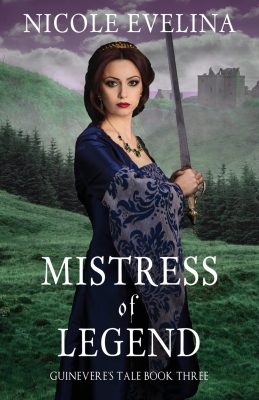
  • MISTRESS Of LEGEND: Guinevere’s Tale Book 3 by Nicole Evelina – Arthurian Legend, Historical Fantasy, Myths & Legends


    In Mistress of Legend, the enticing finale of Nicole Evelina’s Guinevere’s Tale trilogy, matters are life-and-death by the second sentence, pulling readers deep into Guinevere’s fate in this retelling of Arthurian legend.


    We come upon heroine Guinevere in the midst of an ill-fated romance with Lancelot. It’s far from her first troubled entanglement, but the stakes rise as she’s severely injured and faces even more threats, pursued by possible enemies. The novel’s beginning is woven with backstory, which adds suspense to the drama unfolding in Guinevere’s present. This summarizing might be slow for readers familiar with the series, but makes the story accessible for those who haven’t picked up the first two books.

    Many more characters appear, waving the web of intrigue Guinevere finds herself caught in.

    Evelina builds this setting through well-researched cultural details, like the holidays and rites of Guinevere’s pagan world, and the symbolism and ideology of the Christianity that threatens to blot her world out.

    Though it’s a work of fantasy, Mistress of Legend has the feel of magical realism. Paranormal abilities like Guinevere’s “sight” fit subtly within Evelina’s carefully constructed foundation. Details down to ritualistic makeup and intoxicants are based on fascinating historical truths, many of which are explained in the author’s notes at the end.

    Evelina avoids foreshadowing to ensure her characters’ futures long remain inscrutable. Unpredictable shifts in individuals and relationships seem to arrive at every turn, making for a thrilling, if at times mystifying, read. Guinevere’s relationship with Morgan, Arthur’s second wife, feels uncertain until the end, as the two vacillate from enemies to friends and back again. Meanwhile, Mordred, son of Morgan and Arthur, undergoes surprising development that makes perfect sense only in retrospect.

    The use of “the sight” by characters like Guinevere and Morgan provides windows into other places, even the future, as the women experience highly realistic visions.

    This allows Evelina to show two places at once without using multiple points of view (though some characters are so fascinating that readers may wish they could see things through their eyes). Instead, only Guinevere’s perspective is given, and readers feel her claustrophobic sense of being trapped in the mechanisms of fate.

    Along with the characters involved in it, this tale of political intrigue only grows more complex with time.

    The story begins to feel like a tapestry whose threads disappear and reappear in the weave. Some characters – even main ones – vanish and are nearly forgotten, only to return when they’re least expected. Guinevere’s life-threatening injuries, so crucial to the first pages, are soon eclipsed by even more pressing problems. Yet they return to the narrative from time to time, the marks left behind to remind the aging Guinevere of how much she’s lived – and how much is still in store.

    Mistress of Legend fits well within the literary tradition of retelling classics from a strong woman’s point of view.

    It’s a great pick for readers of magical realism, historical fiction, and new twists on old classics. It takes things a refreshing step further, too, with a strong female character who remains formidable, agile, and the subject of much male attention as she ages past 40. Youth is no threat to Guinevere. The foolish grabs for power that surround her are.

    The pace of the novel shifts wildly: speeding through seasons, only to suddenly slow and zoom in on the intense details of a moment. At times, it feels a bit like whiplash – but surely that’s how Guinevere felt, as the life she built crumbled time and time again. Readers remain close within her viewpoint, feeling everything she feels, in a world whose only constant is change. Ambitious though she is, her true quest is simply for peace.

    Mistress of Legend by Nicole Evelina won First Place in the 2018 CIBA Chaucer Book Awards for Pre-1750s Historical Fiction.

    The Guinevere’s Tale series by Nicole Evelina won Grand Prize in the 2021 CIBA Book Series Awards for Fiction Series.


    5 Star Best Book Chanticleer Reviews round silver sticker


  • SAVONNE, NOT VONNY by Robin Lee Lovelace – Southern Literature, Myths & Legends, 1960’s

    Shorts Grand Prize for Short Stories, Novelettes, & Novellas Savonne, Not Vonny by Robin Lee LovelaceRobin Lee Lovelace evokes a world in which the mystical intertwines with the everyday in Savonne, Not Vonny, a coming-of-age story set in rural Louisiana.

    Nine-year-old Savonne lives in a small room at the back of Mama Gwen’s whorehouse, in Indianapolis in the ’60s. Her mama is one of the working girls, and her father is Mama Gwen’s own son. Savonne’s daddy dotes on her, and Mama Gwen loves Savonne like the daughter she never had; the two of them together make a loving home for Savonne, in the midst of their raucous brothel.

    By contrast, Savonne’s birth mother rarely pays her any mind. A “crazy-ass woman” with a temper “as hot as a Mississippi afternoon,” Coco is not at all opposed to beating the bejesus out of someone. In a fury one night, she does something that cannot be undone, and in her headlong flight out of town, she takes Savonne with her.

    And so it is that Savonne is forced from the only home she’s ever known and left in the care of her mysterious and reclusive great-grandfather, Pompey.

    With Pompey, Savonne enters another world, one of casual acquaintance with hoodoo and root work, a world where Papa Legba guards the crossroads and serves as an intermediary between the human and the spirit world, a world where an enemy might cast a subtle spell or command the serpents, or shapeshift into another form himself. However, as long as Pompey is there to guard her, Savonne is safe. She takes after her great-grandfather, and he recognizes that she too has the gift, the ability to conjure, “the natural.”

    But the day will come when Savonne is left to face the forces that would undo her, with only Leatha, Pompey’s old black dog all gone now to gray and stiff-boned, by her side. Before her journey home is over, Savonne must outwit an enemy far more powerful than she — and rely on help from the most unlikely of allies.

    Robin Lee Lovelace has conjured a world in which the seen and the unseen alike direct our days, in which the divine intermingles with the mundane, with characters so rich and fully realized they fairly leap off the page.

    Pick this story up for the delicious experience of diving headlong into a landscape reminiscent of those spun by the finest Southern writers in the American canon.

    Readers may find themselves racing through this novella to see how it all comes out for Savonne in the end, and likely wanting more of Savonne and her world (and maybe those allies too) in her full short story collection, A Wild Region, is available now!

    Savonne, Not Vonny by Robin Lee Lovelace won Grand Prize in the 2020 CIBA Shorts Awards for Short Stories.


    5 Stars! Best Book Chanticleer Book Reviews

  • The SECRET of the MOON by Anthony Allaway – Metaphysical Sci-Fi, Fantasy, Myths & Legends

    The SECRET of the MOON by Anthony Allaway – Metaphysical Sci-Fi, Fantasy, Myths & Legends

    In a world once nearly obliterated by war, mankind has been put under the control of powerful religious forces. However, not all humans are convinced of the beneficence of their rulers. A young man named Axel is destined to combat the evil that pervades his realm.

    Axel is an introspective young man, partner to Val, his beautiful true love, with whom he shares many secrets from childhood. He questions the meaning of life, the mysteries of the cosmos, even the works of God. His nemesis Lucinder is the offspring of a mother raped and savagely beaten by his priest father, leaving him with no feelings of love or compassion, only hatred underpinned by a deep cynicism.  Now known as the Serpent Priest, Lucinder and his goddess-like lover Shira hold thousands in thrall, promulgating rigid religious doctrine. When Axel learns that Lucinder is planning a global upheaval, he knows he must act before Lucinder has a chance to exact his wrath.

    First, Axel urges his little band of loyal companions to retreat by entering the Enchanted Forest.

    The forest is seen as a mysterious, dangerous place, but Axel reveals that he spent time in the forest as a child and that there are forces of good within its shadows. From a Buddha-like human figure and heavenly visions, Axel will learn why he has been chosen and what sacrifices he will make in an epic battle against evil.

    In this engaging debut fantasy, Anthony Allaway writes with an undeniable flair for the genre with tropes reminiscent of Tolkien and C. S. Lewis.

    He uses Biblical lore, European mythology, and ancient folklore in his story, though all are clothed in illusion and metaphor. One example is the fruit tree that stands in the middle of the Enchanted Forest, the tree from which Axel and Val eat the fruit. As a consequence of taking and eating the fruit, the children are banished from the Temples of Avalon, where the monks reside. But from the fruit, in Allaway’s mystical depiction, Axel is given revelations about the powerful secret of the moon.

    The author has created vibrant characters: innocent children; nefarious priests; memorable females like the generous-hearted Grace and the nasty-minded Shira; and angelic beings who seem a cross between the pure spoken of in religious literature and the all-seeing but humanly flawed celestial overseers described in Greek mythology.

    The blend of heady philosophy and an action-packed plot forms a colorful, page-turner-of-a novel.  Allaway’s story is the stuff dreams are born out of, easily envisioned in cinematic images that will appeal to all imaginative readers.

    Chanticleer Book Reviews 4 star silver foil book sticker

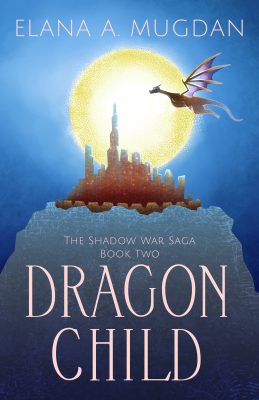
  • DRAGON CHILD, Book 2 of The Shadow War Saga by Elana A. Mugdan – Epic Fantasy, Myths & Legends, Y/A

    DRAGON CHILD, Book 2 of The Shadow War Saga by Elana A. Mugdan – Epic Fantasy, Myths & Legends, Y/A

    A young woman with more power than she realizes must confront the greatest evil in her cosmos in this richly conceived fantasy by Elana A. Mugdan.

    In Book I of The Shadow War Saga, Dragon Speaker, we met Keriya, a teenage girl who went from being “nameless” by nature of her low social status to being given a new name of high honor – Keriya Soulstar. Book II begins as she and her friends Roxanne and Fletcher and her faithful dragon Thorion are relaxing in a Galantrian infirmary. With the vile shadow demon, Necrovar, destroyed, Keriya and Thorion can play and rest while Roxanne recuperates from her injuries.

    Keriya, in fact, has never had it so good. She now has fast friends and allies, is regarded with great adoration by ordinary folk who see her as a magic-wielding warrior and has gained the respect she did not have in her early life. And to make matters even sweeter, there is a handsome young man, Max, who wants to get to know her a little more.

    Imagine the surprise when she is summoned to be tried for treason.

    Guided with telepathic messages from Thorion, Keriya answers her accusers and is acquitted, putting her archenemy General Tanthflame in the hot seat. It stands to reason, if she has told the truth, he must be the traitor. Now she must go to Noryk to meet with Lady Adelphia to testify in Tanthflame’s trial.

    The night before her departure, Keriya has a vision. In it, she meets with Necrovar and the great spirit Shivnath from whom she derived her ability to do battle with the hateful shadow beast. Her vision clearly shows that although Necrovar is weakened, he is by no means eradicated. Keriya must abandon her peaceful niche and join the struggle against this evil once again.

    Is she equal to that task? And where is her magic sword? Before her questions can be answered, Thorion is attacked and wounded, and flees, leaving no doubt where Keriya’s duty lies.

    Author and filmmaker Mugdan has devoted much of her time since adolescence to constructing this grand tale of dragons, demons and a heroine who scarcely knows or understands her own powers but acts with faith that she can conquer the dark forces besetting her world.

    Mugdan’s writing is charming and confident, revealing an expansive and delightful use of language. Also tucked neatly in this volume, Mugdan introduces Valerion of the Unknown Lands who has sworn to destroy Necrovar with a mystical spell and an enchanted sword. A possible love interest? Readers may expect to know more of him and his connection to Keriya in Book III, already planned for release.


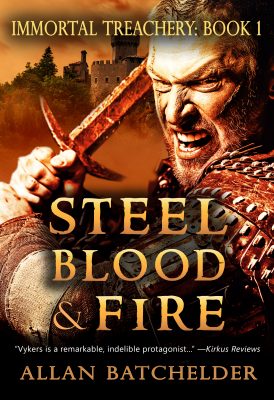
  • STEEL, BLOOD & FIRE by Allan Batchelder – Fantasy, Military, Fairy Tale

    STEEL, BLOOD & FIRE by Allan Batchelder – Fantasy, Military, Fairy Tale

    Tarmun Vykers, the central character in Allan Batchelder’s accomplished fantasy, has many epithets: “The Scourge of Empires,” “The Reaper,” “The Merciless One,” and sometimes just good old “Vykers the Vicious.” He’s very aware that he’s widely feared but not admired, and that’s just fine with him. He’s not the sentimental type.

    On the other hand, he’s darn likable. Why? Well, he’s smart, witty, and often sarcastic, but he’s also able to laugh at himself and the many predicaments that befall him. And he’s not the worst guy around.

    No, that would be Anders, better known as “The-End-Of-All-Things.” The-End is not likable.  Far from it. When one’s goal in life is taking enormous satisfaction and delight in the destruction of everyone and everything, you don’t have friends, you just have people who do your bidding because they’re terrified of you.

    Of course, a showdown between Vykers and The End is going to happen – and Batchelder has lots of fun getting us ready. In this world, the very weapons used have almost as much personality as characters who wield them. Along the way, we meet the cast, many of whom will prove invaluable to Vykers on his quest.

    And what a cast! Batchelder provides a lengthy list at the novel’s conclusion but they’re all so memorable, the reader doesn’t have to consult it often. For starters, there’s Arune, a shapeshifter who has taken up residence in Vykers’ mind where she reads his thoughts and responds with zingers of her own. Some of the most memorable scenes in the book, in fact, take place with Vykers seemingly talking to himself, but really, it’s Arune matching his wit, sentence for sentence. There is so much more to explore and fall in love with, we won’t ruin it for you here.

    If this all sounds like a lot of fun, it is. It’s easy to imagine Monty Python fans reveling over many of these scenes. This fantasy, however, has more to offer. The humor is adroitly balanced with darker chapters concerning primal fears and terrors.

    Steel, Blood & Fire will appeal to a broad group of readers. Although primarily a fantasy, the classic themes of fairy tales, myths and folklore are woven into the narrative.  Good versus evil, the gaining of self-knowledge while on a quest or a journey, transformation through enchantment – it’s all here but with a twist because Batchelder so deftly juggles ribald humor and unexpected poignancy.  He also allows the reader to view these themes through several lenses.  This is particularly true in the battle scenes, the author giving us the individual experiences of several of the male characters.  While there are fewer female characters, they are quite strong, fully realized, and residing in the forest and the castle, the folkloric motifs of the poor and the royal in play.

    The great news is the book is the first in the series Immortal Treachery. Batchelder concludes Steel, Blood & Fire on a tantalizing note and there’s clearly much more material to be mined. If it’s as fully realized as this book, the entire series is a must read.

    Fairy tales, myths, and folklore collide in Batchelder’s first book in the Immortal Treachery series, Steel, Blood & Fire, rollicking fun and seriously addictive read.