Tag: Mythology

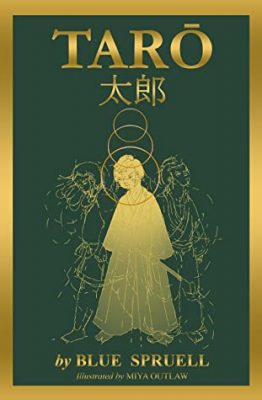
  • TARO: The Legendary Boy Hero of Japan by Blue Spruell, illustrated by Miya Outlaw – Japanese Mythology, Historical Fiction, Action & Adventure


    TARO Legendary Boy Hero of Japan Dante Rossetti Grand Prize BadgeAdventure, classic tales, fantasy, and exciting action combine in TARO: Legendary Boy Hero of Japan, a well-poised debut novel by award-winning author Blue Spruell.

    In the turbulent final decades of the sixteenth century, feudal Japan reeled in mayhem as the central hereditary dictatorship collapsed, and tyrannical powers fought to control the empire. TARO: The Legendary Boy Hero of Japan is the story of how one man revolutionized a nation by taking its reigns and forging a new destiny through his depths of compassion and determination.

    The story begins with Taro as a young boy. As an heir to the Takeda family, Taro enjoyed reading, much to his father’s disapproval, as he wanted him to follow in his footsteps as a skilled Samurai. Tragedy changes Taro’s presumed destiny when his parents are murdered in a fierce power struggle, leaving him an orphan. Shortly after, a witch saves him from drowning and begins Taro’s new life of adventure, introducing him to a world of mythical creatures. On this new journey, Taro discovers shocking secrets about his lineage, and with them, his ultimate purpose in medieval Japan.

    Author Spruell has written an enrapturing novel that brews literary art and imperial Japanese culture with the complexities of human life.

    Imbued with historical elements, this novel is tightly plotted to recreate three famous Japanese folktales that will hold your attention to the last sentence. The graceful and precise prose careens readers through a unique period and place in history, with universal appeal.

    Clearly, Spruell did thorough research before writing this novel.  His enthusiasm and attention to intricate historical detail shape the plot, shedding a light on this period of Japanese lifestyle, society, and, tradition. Allowing the characters’ warmth, frustration, and hope to speak, TARO: The Legendary Boy Hero of Japan becomes a collective attestation to the fortitude of a people and a reflection on the initial stages of a nation’s history.

    The feather in the cap of this novel is Miya Outlaw’s grand and enlightening illustrations, which bring out the spirited and energetic life of the Samurai, a world that is uncommon and unknown to many.

    The atmospheric representation of disillusionment and yearning that pervades the novel makes this story emotionally resonant. Further, its crystalline writing and flow are cinematic, resulting in a narrative that defies the limitations of any targeted genre.

    Indeed, TARO: The Legendary Boy Hero of Japan is a remarkable literary feat. Themes such as betrayal, deceit, zeal, and self-sacrifice are vividly evoked and provide a panoramic view of what it took to restore balance in power in a country that was almost torn apart by years of war and ruthless ruling families. Brutal and intense, this work is an excellent addition to its genre.

    Taro: Legendary Boy Hero of Japan by Blue Spruell and illustrated by Miya Outlaw won Grand Prize in the 2021 CIBA Dante Rossetti Book Awards for Young Adult Fiction.


    Dante Rossetti Gold Foil Grand Prize Book Sticker

    5 Stars! Best Book Chanticleer Book Reviews

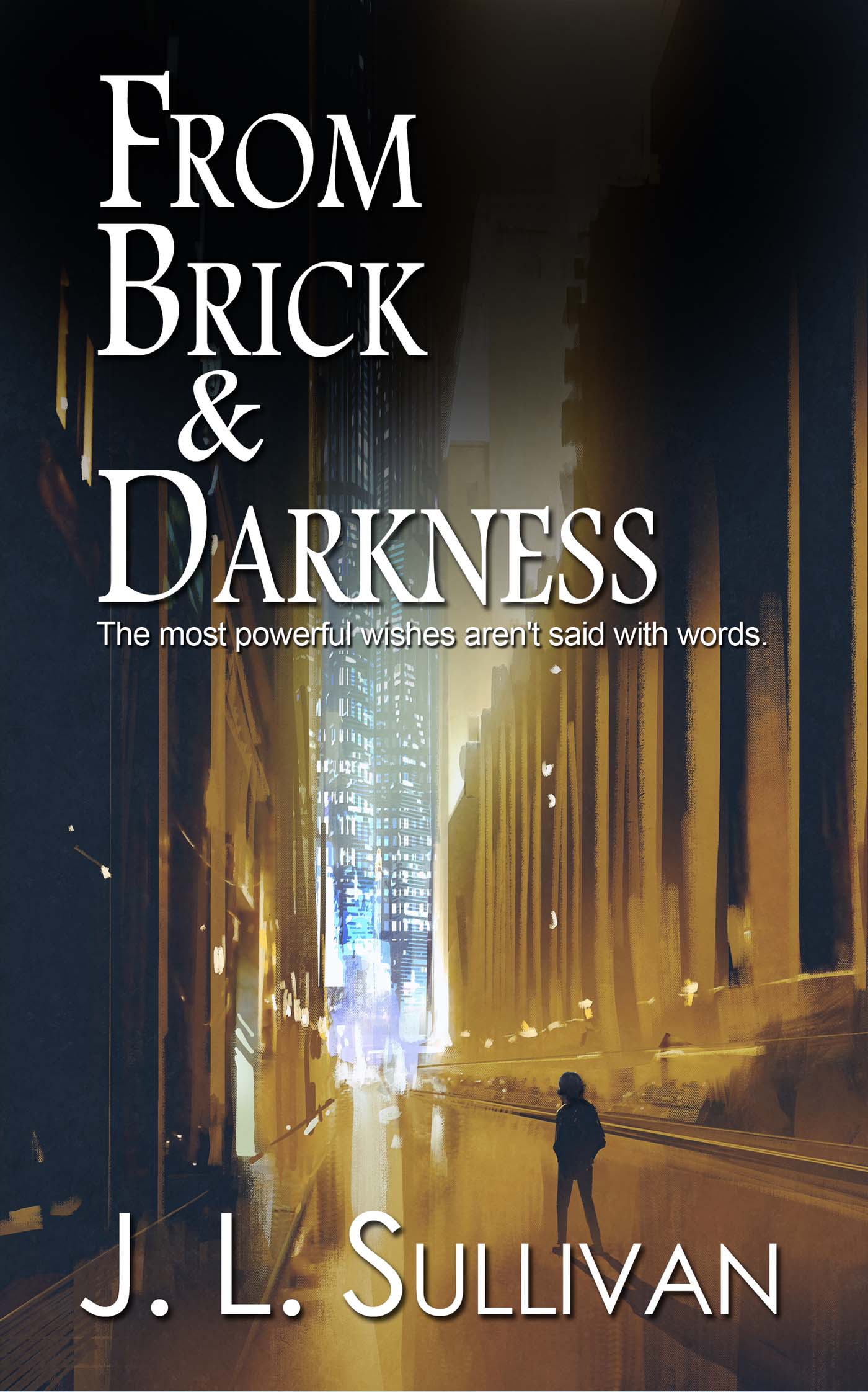
  • FROM BRICK and DARKNESS By J. L. Sullivan – YA Urban Fantasy, Mythology, Coming of Age


    OZMA 1st Place Blue and Gold BadgeDreams become a reality for a high schooler who gets more than he bargains for when he unwittingly releases a demon in J. L. Sullivan’s urban fantasy novel, From Brick and Darkness.

    Fifteen-year-old Baxter (Bax) Allen encounters a creepy homeless-looking man at his apartment complex with purple eyes. The stranger, who asks for Greg, Bax’s estranged father, hands him a ring affixed with a purple stone. The man says that the costume jewelry is valuable, although Bax has difficulty believing his claim.

    At school the next day, as he shares his weird experience with his best friend, Jason, Bax accidentally rubs the ring, the stone emits a hypnotic glow, and a small monkey-like creature appears, saying, “How can it serve?” Once Bax and Jason realize that the ring summoned a genie (or Janni, as the creature says), the two plan to investigate this strange phenomenon further at Bax’s house. One thing leads to the next, and before the boys know what’s going on, Ashley, Bax’s neighbor catches a glimpse of Janni. She joins the boys and is sworn to secrecy about this enchanted creature.

    Although Janni’s job is relegated to fetching objects instead of granting wishes, Bax wonders if it has untapped power, especially when Bax has a vivid dream involving his estranged father.

    The dream activates the ring, causing it to emanate a purple light. Janni, who admits to knowing where to find a more powerful djinn – an ifrit, more akin to a demon – leads the trio to an ordinary box fitted with yet another purple jewel. Bax rubs it, producing a gastly-looking creature that Bax immediately orders back in the box.

    That evening, Bax has another vivid dream that, to his horror, exactly matches the death of Nick Ruiz, a popular student at Truman High. The mysterious conditions behind Nick’s demise can only point to one culprit: the ifrit. Bax and his friends feverishly scramble to find a way to stop the demon from unleashing more harm. What the trio doesn’t know is that the ifrit has more sinister plans in the works.

    Rising young adult author, J. L. Sullivan, combines mythology, theology, and astronomy to create an invitingly fresh, nail-biting coming-of-age teen tale.

    At the center of all the “ologies” is an ordinary teen with ordinary desires, except that he often wonders about the father he barely knew who seemed to have vanished from the face of the earth. Sullivan excels at making not only Bax Allen a real person, but making the entire St. Louis-based environment come to life. In Bax’s world, teens are just teens with hormones, angst, bullies, and rumors galore.

    But what happens when, amid a commonplace high school atmosphere, one teen accidentally walks into a realm beyond the three-wish genies’ basic concept? Sullivan’s imagination takes “curiosity killed the cat” to a new level when not just Bax but his clever best friend and Bax’s annoying teen neighbor are grouped as an unlikely trio on a research-driven quest that turns deadly. Because Janni and the ifrit only answer to Bax, he constantly finds himself in sticky situations. Tension builds between him and his mother as his excuses pile on top of one another.

    Sullivan’s sure and engaging writing style offers a well-balanced mix of narration and dialogue with a small but mighty supportive cast that provides readers with an inside scoop on the main character’s thought processes and internal struggles. Scenes slowly build, especially while highlighting victims and surly characters, creating non-stop tension and a gripping page-turner.

    From Brick and Darkness is guaranteed to become a new teen favorite.

    5 Stars! Best Book Chanticleer Book Reviews

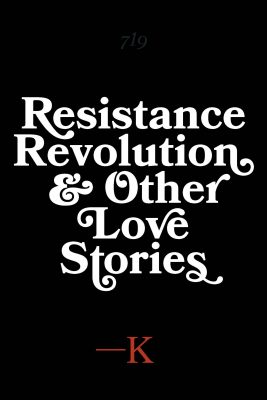
  • RESISTANCE, REVOLUTION and OTHER LOVE STORIES by K. – Short Story Collection, Love Stories, Literary

    RESISTANCE, REVOLUTION and OTHER LOVE STORIES by K. – Short Story Collection, Love Stories, Literary


    The Ancient Greeks believed that there were eight different types of love. To the poet Emily Dickinson, “… Love is all there is, Is all we know of Love.” But in the words and stories in this collection, Resistance, Revolution and Other Love Stories by K., love sometimes requires desperate action, whether embraced, resisted, or a combination of the two.

    The twelve stories here range from the mythic past to a far-flung future as the author goes back to retell the classic myth of “Orpheus and Eurydice.” In “Automatonomatopoeia,” we reach forward into a future that resembles the harsh authoritarian worldview of Orwell’s classic 1984 until its protagonist learns the truth behind the strict conformism that kept him isolated and alone.

    Several of the most poignant stories present as contemporary reflections on the forms of love and the ways that society twists love around.

    In “Calamity Jane,” the friendship of two teenaged boys crashes into the rocks of their mutual love for the same beautiful and calamitous girl. A girl who seems to like getting between the two friends more than she loves either one of them – or herself.

    Meanwhile, in “Vikings” we meet a protagonist caught between several different types of love. He’s in a situation where the best thing he can do may very well destroy him. What could it be? The only certainty, the only way forward – the only way to preserve what he loves is to leave everything he cherishes behind. Can he do it?

    The would-be lovers in “Head Down” face a dilemma made all the more heartbreaking because it feels so very real.

    This sad tale speaks of the conflict between love and duty, wrapped around a romance that can never be fulfilled because the lovers have met too late. Both parties have commitments that they cannot or will not break. So, they must break each other’s hearts instead.

    As with any collection of short stories, whether by multiple authors or by a singular author, not every story will appeal to every reader. That being said, Resistance, Revolution and Other Love Stories, with its wide range of genres, not only showcases the author’s talent, but is certain to please a vast readership.  From myth to historical to romantic to speculative, and its exploration of all the different kinds of love from the altruistic to the romantic to the obsessive, those looking to have their hearts touched and their minds blown in the space of a single, beautifully curated collection need look no further.

    In other words, Resistance, Revolution and Other Love Stories by K. tops our list for what to read this summer.


    5 Star Best Book Chanticleer Reviews round silver sticker

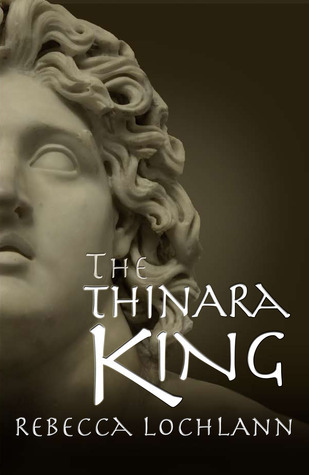
  • The Thinara King by Rebecca Lochlann – Historical Fiction/Fantasy/Mythology

    The Thinara King by Rebecca Lochlann – Historical Fiction/Fantasy/Mythology

    There’s only sorrow for Aridela, the heiress to the throne of Kapthor when she learns her heart is not hers to give freely and every decision she makes concerning her love life brings about dire consequences for her people in Rebecca Lochlann’s The Thinara King, Book 2 of The Child of the Erinyes series.

    When Aridela meets Chrysaleon, a Greek “barbarian” by the standards of her people, she falls in love. Chrysaleon, young, bold and brash, is as smitten with Aridela as she is with him, but he has been promised in marriage to her sister Iphiboë, who is bland and boring by comparison.

    The marriage is all important, though, as it will consolidate his father’s power, linking his lineage with that of the Aridela’s culture, a culture that reveres the power and station of women. Kapthor is ruled by Aridela’s mother Queen Helice and guided by the powerful female oracle Themiste.

    Aridela and Chrysaleon cannot help but consummate their forbidden love, yet as they do, a volcano erupts, devastating the island and killing many of Aridela’s relatives and friends. The volcano, seen as goddess Athene’s handiwork, is blamed on Chrysaleon, who has been identified by Themiste as the “lion” or the Thinara King, foretold in an ancient prophecy linking him to Aridela and a mysterious, unidentified bull figure. The prophecy states that this triad has the power to restore or destroy the world.

    Rebecca Lochlann skillfully immerses the reader in a semi-fictional world of ancient rites and conflicts where characters live, die, and are reborn throughout her series The Child of the Erinyes.

    The product of many years of study and fascination with the era and the mythology, The Thinara King establishes Lochlann’s connection with the novel’s setting and genre by smoothly combining many convincing elements: the handsome hero determined to win the strong-minded fair lady, the dark anti-hero plotting on the sidelines, the wise demi-goddess who keeps her own counsel and manipulates outcomes behind the scenes, the grisly battles fought at close range, and the spectacular festivals marking the passing of the years.

    Lochlann’s over-arching narrative, switching from character to character, is deftly composed, making for many surprises without deviating from the backdrop with its elaborate history-rich trappings.

    A tale of ancient kingdoms, of love promised and lost, heralded victory and hopeless defeat is the second novel in her much-acclaimed series, The Child of the Erinyes – another masterfully written historical fiction novel of Ancient Greece from Rebecca Lochlann.

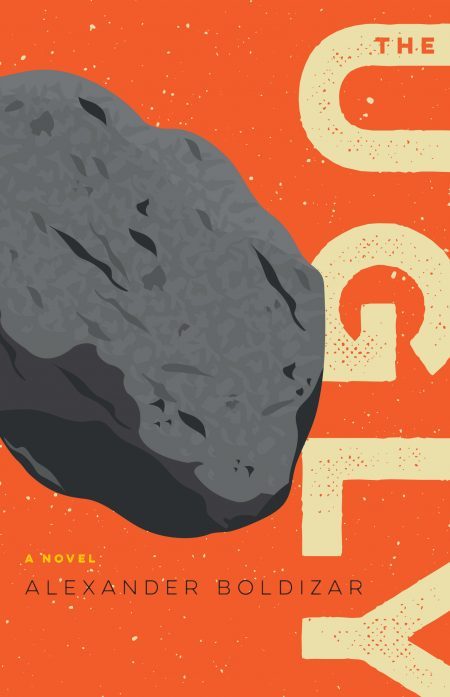
  • THE UGLY by Alexander Boldizar  – Contemporary Satire

    THE UGLY by Alexander Boldizar – Contemporary Satire

    Words thrown as hard as boulders are easy to catch – if you’ve had practice. Just ask our hero, Muzhduk the Ugli the Fourth in Alexander Boldizar’s new release, The Ugly.

    In the great tradition of existentialism, Boldizar brings us a book that is hard to classify. It has aspects of the existential with a fair amount of satirical wordplay and a bit of theater of the absurd thrown in.

    An interconnected story of a Siberian Slovak tribal leader looking for a way to save his land and his people, via Harvard Law School and the Tuareg uprising in Africa. Oh, and there’s dark magic and Winnie the Pooh thrown in as well.

    Muzhduk the Ugli the Fourth is a mountain of a man who comes from a tribe of Siberian Slovaks where honor is found in throwing boulders-yes, actual boulders-and either causing great damage to one’s opponent or catching said boulders without physically breaking.

    When his tribe has their land taken through the clever use of legal wrangling by an American lawyer, Muzhduk heads (on foot) to Boston to attend Harvard Law School. On the way, he floats on an iceberg to the Bering Sea, plays rugby for a college in Canada, and gets a perfect LSAT, which ushers him into Harvard where he hopes to learn the words that will help him win back his land for his tribe.

    It is during this part of the story that the wordplay and Muzhduk’s obvious lack of “sophistication” are most enjoyable. In this first year in law school, Muzhduk observes how words are used to challenge and crush the students, much like the boulder throwing at home. This extended metaphor of words as boulders that can be thrown and cause damage, especially in the world of law where words can be twisted and used within the multiple connotations, is where the book finds its best rhythm and is most enjoyable. It is also where Muzhduk meets an odd assortment of professors and students.

    Interspersed throughout the third person, past tense narrative of Muzhduk’s first year as a One-L at Harvard, is the first person account of his travels in Africa, looking for Peggy, his American girlfriend who has been kidnapped (or perhaps not) by the Tuareg in their war with the government.

    This part of the novel unfolds like layers of an onion. As the One-L year continues chronologically, Muzhduk’s journey in Africa and his reason for being there unfolds with new layers of complexity. Even now, Muzhduk discovers that the dangerous game of words as crushing boulders still is in play, but there are added dangers as well.

    There were times in this novel that it felt reminiscent of Heller or Beckett, as Muzhduk is challenged to understand the strange culture of Harvard Law and also navigate his way through a tribal uprising to accomplish his goals. In both places, Harvard and Africa, the story abounds in wordplay and existential ponderings. Just like reading Beckett or Heller or Buber (there’s a reference to his I-Thou theory in the book), or any other existential writer, The Ugly isn’t for everyone and it’s not an easy read. This eccentrically irreverent work, absurd in the very best sense of the word, will amuse and enlighten.

    Alexander Boldizar is the first post-independence Slovak citizen to graduate with a Juris Doctor degree from Harvard Law School. Born in Czechoslovakia (now the Slovak Republic) in 1971, he resides in Vancouver, British Columbia Canada where he writes, works his mad skills in the economic community of Wall Street, and brings meaningful commentary as an art critic. His writing has won the PEN / Nob Hill prize, represented Bread Loaf as a nominee for Best New American Voices, and been shortlisted for a variety of other awards. He has published over one hundred articles in a variety of venues. He states that his freelance writing pays for his son’s circus school.