Tag: Multicultural

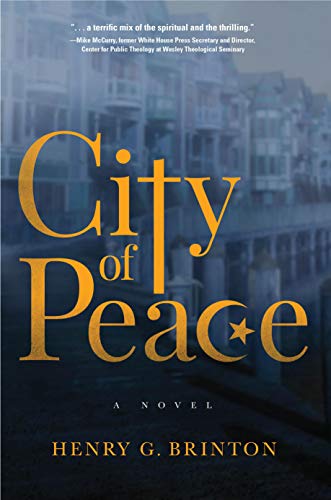
  • CITY Of PEACE by Henry G. Brinton – Murder Mystery, Religious Tension, Multicultural

    M&M Blue and Gold 1st Place Badge Image

    Religions and personalities collide, mix, and meld in this vibrant multicultural, multinational mystery by author Henry G. Brinton, set in the engaging town of Occoquan, Virginia.

    Harley Camden never heard of Occoquan before he is assigned there by his bishop. She insists on a change of venue for him because both his sermons and his management of church affairs have lost their flavor – understandably – after his wife and daughter were killed in Brussels, by Islamic terrorists who used nail bombs to make their horrifying statement.

    Camden realizes that he needs the change, and soon finds that, despite his inner pain, Occoquan has many charms, and many charming residents who go out of their way to make him feel at home.

    Tim, who lays claim to no religion, introduces him to the remarkable history of the region, staunchly abolitionist during the Civil War. Tim also tells him about the Bayatis, an Iraqi family who operate the local bakery. Not long after Camden’s arrival, the complacent riverside town is rocked by sudden tragedy when Norah, the baker’s daughter, is murdered; the presumption made by law enforcement is that her father Muhammad is guilty of a ritualistic killing because Norah had consorted with a man, thus dishonoring her family.

    To preach the Christian gospel, find forgiveness in his enraged anti-Islamic mind, and to find a way to bring together the many strands of spirituality in the town – Christian, Jewish, Muslim – will be a task that Camden never expected to take on.

    Tormented by strange, seemingly prophetic dreams, and guided to meet a Coptic Christian couple and a Jewish woman about whom he receives psychic “messages,” Camden will also befriend the Bayatis and begin, almost without meaning to, to investigate Norah’s murder. In doing so he will uncover obscure but meaningful lore with a bearing on the town’s dilemma, providing regenerative fodder for his emotive sermons. In seeking Norah’s actual killer, he will also imperil himself, and ultimately uncover a terrifying danger hovering over Occoquan.

    Brinton knows whereof he writes, as a Presbyterian minister and well-known journalist whose articles often encompass the themes of multiculturalism, religious understanding, and tolerance.

    Examining as he does the thorny religious and political issues gripping the nation and our world today, Brinton makes Camden a spokesperson for those crucial themes. Mining materials from the history of the Galilean city of Sepphoris as the “city of peace” brings his story into broader focus, while the real-life town of Occoquan is almost a character in the book’s plot, so deeply does Brinton delve into its unique and admirable qualities.

    The first in a series of Harley Camden sagas, City of Peace is a tale of disruption and chaos – followed by reconciliation and interfaith resolve – that will fascinate readers of intelligent mystery fiction and make them seek more offerings from this talented wordsmith.

    City of Peace by Henry G. Brinton won 1st Place in the 2019 CIBA Mystery & Mayhem awards for Cozy & Not-So-Cozy Mysteries.


    M&M 1st Place Gold Foil Book Sticker Image

    5 Stars! Best Book Chanticleer Book Reviews


  • The BOATHOUSE CAFE: Book One of FIRST LIGHT by Linda Cardillo – Intercultural Romance, Literary, Historical Fiction

    The BOATHOUSE CAFE: Book One of FIRST LIGHT by Linda Cardillo – Intercultural Romance, Literary, Historical Fiction

    Mae Keaney is looking for a way back to her childhood, back to safety, and finds it in a property on Chappaquiddick Island. A wind-tattered cottage and an old boathouse she envisions as a café will be her haven, as long as she can keep her regrets and sorrows hidden.


    With determination, she brings her talents as cook and waitress to bear, attracting locals and tourists alike with her hearty sandwiches, delicious cakes, and teas. She has her privacy and her shelter, and that is all she craves – until she meets Tobias, a quiet, kind, dark-skinned fisherman who begins the difficult process of enflaming her cold heart. Tobias is the son of the chief of the island’s Wampanoag tribespeople and scurrilous rumors begin to fly about Mae and her lover.

    Set during the Second World War years and beyond, The Boathouse Café reminds us of a time when an unwanted pregnancy could ruin a woman for life and prejudice against Native Americans was status quo. These factors affect the star-crossed, inter-cultural relationship between Mae and Tobias, twisting it into a complex carpet of unanswered–and unanswerable–questions. Only strong, sincere, honest love can hold them together to face the storms that will beset them before their union can be secured.

    This is a story that breaks through the barriers of race and challenges tradition and social mores for love.

    Award-winning writer Cardillo planned out this stunning family saga with extreme care. Though the motivations and histories of her well-constructed characters may be mysterious at first, the author will thoughtfully tie up every thread as the story progresses. Her setting, a tiny dot of land hanging out in the Atlantic Ocean, subject to torments of both harsh weather and human weakness, gives the tale great power, somehow presenting more potential for drama than similar yarns spun on safe, dry land. When a fire rages on Mae’s property or a vindictive enemy vandalizes her cozy home, there will be people on “Chappy” who value the land and the traditions of the island and will step in to help and widen the circle of Mae’s support. The island, in Cardillo’s skilled hands, becomes not just an enthralling environment but a shared ethos.

    Ultimately, this beautifully written, passionate, page-turning adventure of a blended family history and a romance of grand proportions will have readers yearning to continue the series with The Uneven Road and Island Legacy

    5 Stars! Best Book Chanticleer Book Reviews

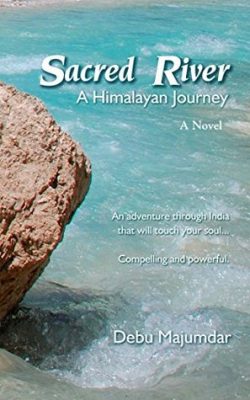
  • SACRED RIVER: a HIMALAYAN JOURNEY by Debu Majumdar – Mystery, Literary, Multicultural, Spiritual Journey

    SACRED RIVER: a HIMALAYAN JOURNEY by Debu Majumdar – Mystery, Literary, Multicultural, Spiritual Journey

    A tour de force of India’s history, religion, culture, philosophy, anthropology, sociology, and politics are neatly packaged as a mystery, await the lucky readers of Debu Majumdar’s latest novel, Sacred River: A Himalayan Journey. All elements of this foundational novel are experienced through a well-developed cast of characters, wealthy and poor, educated and illiterate, as they make pilgrimages to the source of Ganges River.

    The River itself is a character in that it exerts the greatest influence on those who travel to its origin in the Himalayan mountains. In its waters, truths are revealed, and those who ponder its depths must acknowledge how they have lived their lives. The Ganges is the great equalizer; she washes the indigent and the affluent alike. Characters learn that money cannot buy enlightenment, and those who have lived the simplest lives may be much further down the spiritual path than those who’ve had every material advantage.

    Majumdar does a splendid job of giving each character a complete history before individual plots merge into a full and rich narrative. It’s as if he has taken tributaries of a river and studied their routes before entwining them with the flow, force, and beauty of a majestic river. From bonded servant to landed gentry, foreigner to outcast, all will be deeply affected by their journeys.

    This is the set up to a fascinating mystery. It unfolds as the reader learns about the SMS, the Sarva Mangal Society, a philanthropic organization that advocates education for all Indians and the removal of social barriers. Its staff believes that implementing the ancient ideals of India will lay the foundation for a new society, one in which the constant injustices done to the poor will finally halt. Its chief financial officer, Sevanathan Chetti, despairs, however, as to whether enough funds can be raised to continue its important work. He and his associate wonder where the wealth of India has gone. As speculation of a golden hoard hidden in the sacred temples arises, Chetti and his associate scheme to locate and plunder treasure for a noble cause.

    An engrossing and tense subplot unfurls, one that will ensnare a temple swami along with some of the pilgrims to the Ganges. This adventure, which culminates in an enormously suspenseful climax, is an effective counterpoint to the serene and meditative aspects of the novel.

    Majumdar’s prose is rich and spectacularly vivid. Locations are very important in this novel, and his descriptive writing is superb. Readers will feel they are in a marketplace, on the side of the mountain, in a temple, and bathed in light and water. Especially lovely are the passages noting religious rituals and the spiritual significance of the Ganges. The author weaves in Indian legends and morality stories, artfully juxtaposing parallels between ancient tales and his characters’ modern lives. There’s such a breadth of consideration for every aspect of Indian culture that it’s easy to imagine this novel being included on college syllabi for classes related to Hinduism.

    This book is a must-read for anyone with interest in Indian life and culture. Indeed, the author joyfully admits that one could read the book as a travelogue, and we agree! When readers finish this novel, we predict they will experience a deep longing to journey to the Himalayas to see “the maiden in the mountains,” that most sacred river, the Ganges.


    “Money cannot buy enlightenment, but for those who struggle to reclaim one nation’s equality, gold is the currency that will drive two overzealous men on a journey to uncover hidden treasure for the benefit of all. A rich and spectacularly vivid, multi-faceted literary mystery for seekers and skeptics alike.”  – Chanticleer Reviews

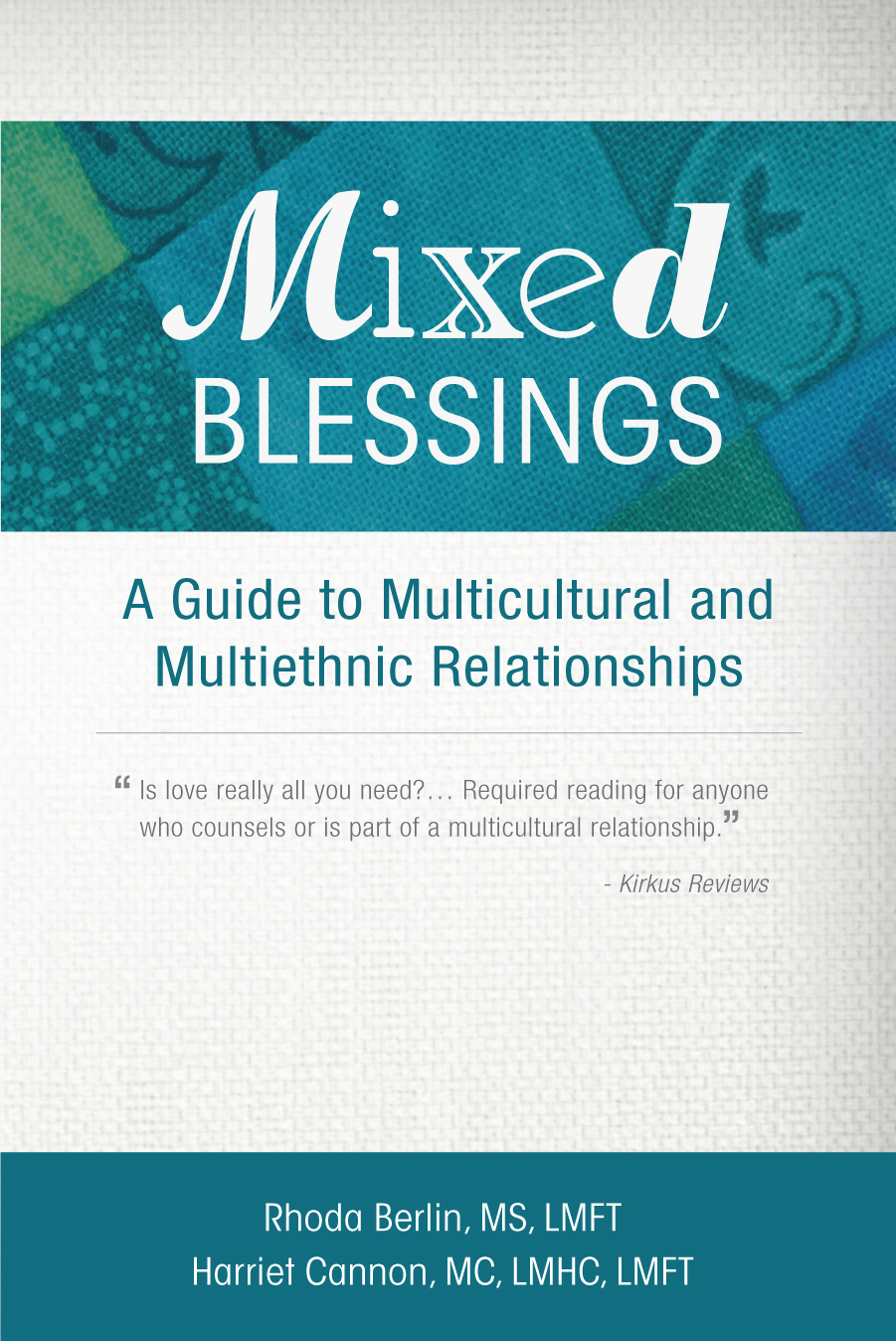
  • An Editorial Review of “Mixed Blessings” by Harriet Cannon and Rhoda Berlin

    An Editorial Review of “Mixed Blessings” by Harriet Cannon and Rhoda Berlin

    What genuinely makes a difference in a couple’s ability and willingness to nurture and maintain their relationship? Rhoda Berlin and Harriet Cannon, both highly insightful psychotherapists, address this significant question through a series of fictional case studies of multicultural and multiethnic couples.

    Each couple’s story demonstrates a crucial concept, such as ethnocentrism, the belief that one’s own culture is always right; cultural universal, an element, pattern or institution that is common in some form to all human cultures, such as age-related roles; and acculturation, adapting to the patterns or customs of a new culture.

    Other impediments to relationship harmony that are illustrated by the couples’ case studies include: cultural loss, the experience of moving out of one’s culture, social class or ethnic enclave resulting in a sense of estrangement; subculture, membership in an in-group within the majority culture, such as the military or a sorority; cultural grieving, the inability to overcome the loss from migrating to another country or marrying into a different type of family culture; cultural identity, the culture we identify with and feel as a “second skin;” and code switching, the ability to move fluently from one language and cultural context to another.

    Children accomplish cultural shifts most easily, code switching from their family’s way of life to a new language or social mores within months. Middle-aged people tend to resist change, hanging on to their traditional life-ways. Older persons may never make a successful shift out of their traditional culture, religion or social class.

    Particularly revealing is the notion that people socialized in an individualistic culture, such as America, Canada, the British Isles, Australia, New Zealand or Western Europe, have a demonstrably different social context for relating than people growing up in a collectivist type society. For instance, the extended family remains a major concern for persons growing up in such areas as rural China, Asia, Eastern Europe or India.

    Rather than cherishing an improved career or making lifestyle improvements through geographic changes, as in individualistic cultures, extended family-oriented persons are unwilling to sacrifice traditional values of support, loyalty and social approval. For example, a partially acculturated wife who grew up with the expectation that she must cater to her culturally grieving mother’s unceasing demands will find her more successfully adapted husband very unsympathetic to such arrangements.

    Multicultural and multiethnic couples get especially hung-up in the shift from early to later stages of their relationship, such as when they encounter the extended family. Let’s highlight one case. William, an American, had an uncle who served in World War II and had returned from that war profoundly impacted by years of internment in a Japanese prison camp. William’s implicit family rule of “never buy Japanese” proved to be a serious drawback for his new companion, Eve, a Japanese-American woman, who had suffered the indignities of living as a child in an American prison camp simply because she was Japanese. Eve experienced “hidden trauma” as she confronted the family’s prejudice and discrimination, contributing to her withdrawal, but William insisted they work out their difficulties. Through counseling, Eve and William developed a “big picture” of their situation, encouraging the extended family to leave their ethnocentrism behind. Now, family members even buy Japanese cars!

    Social class differences can be nearly as disruptive as ethnic or racial distinctions. Take the situation of an Indian couple, one from a Brahmin family and the other from a middle class background. The authors portray how cultural differences in their parents’ cooking, gift giving, household décor or child rearing practices can readily upset a couple’s harmony.

    Mixed Blessings is a fascinating and educational guide to understanding and healing couples’ relationships under pressure from ethnic, geographic, racial, social class and other cultural disparities. Not only do the authors provide incredibly lucid portraits of couples’ differences that make a difference, but they also indicate steps couples can take to minimize or eradicate apparent diversities.

    I strongly recommend this book for its courageous leap forward to elucidate the “hidden culture” that separates and divides loving families and especially for the authors’ substantial skills in showing us the various ways of healing the breaches.

    Travelers, educators and students going abroad, along with business people who want a better understanding of how to recognize and bridge cultural gaps would also benefit from reading Mixed Blessings.