Tag: Multi-cultural

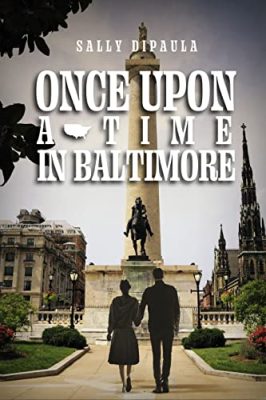
  • ONCE UPON A TIME In BALTIMORE by Sally DiPaula – Historical Fiction, Multi-Cultural, Family Saga


    In Sally DiPaula’s Once Upon A Time In Baltimore, a young couple faces the pains and triumphs of life amidst the changing social mores and ever-present challenges of the 20th century.

    Throughout decades, this story unfolds to reveal their relationships with extended family, and their lifetime commitment holding against the likes of marital strains, discrimination, war concerns, and health issues. Inevitably, there are moments of pondering about the choices they’ve made and worries over what the future holds.

    As an Irish-American girl growing up in Baltimore, young Annie Finnerty suffered the loss of both a parent and sibling. Vince Parisi, the son of Italian immigrants who worked in the restaurant business, also weathered the heartfelt loss of a family member. When the two meet, their definite attraction soon leads Vince and Annie down the expected path of marriage and starting a family.

    With the joining of the Italian Parisis and Annie’s Irish-Catholic Finnerty clan, DiPaula includes familiar details to distinguish the contrasting ethnicities.

    While momentarily at odds in their courtship, in an attempt to reconcile, Vince delivers a chocolate Easter egg gift to Annie. Here Mrs. Finnerty questions its edibility, inferring that Italians are known to poison their enemies. And while Vince looks upon his Italian relatives as extended family, Annie insists on privacy and separation from them.

    Whether family members who succumb to illness or sons going off to war, country club rejections or suspicions of infidelity, DiPaula fills these pages with emotional characters entangled in a bevy of themes from Love and loss, betrayal and heartache, to jealousy and fear.

    Once Upon A Time In Baltimore holds many beautiful moments of family life, coupled with just the right amount of sudden and unexpected twists to pull the reader in.

    Annie deals with panic attacks, frequently overwhelmed by the world around her, while Vince often voices his inner sense of feeling unappreciated. Along a marital route marked by bliss and blisters, separation and counseling help to heal their connection. In the final chapters, we see a contrast between contentment and loneliness. With friends and family of her generation passing, Annie doesn’t enjoy her left-behind Matriarchal status, waiting out her time and suffering from age-related concerns.

    DiPaula delivers chapters in chronological order and maintains a steady pace. With an impressive timeline, the story sometimes jumps ahead, always providing a brief update on where characters are in their present life situations.

    Extensive research went into the details of this century-spanning story.

    From the descriptions of the involved process of starting up a car and the daily routine of running a restaurant, to the available cancer treatments for a key character stricken with the disease, DiPaula’s effort proves thorough and genuine.

    Once Upon A Time In Baltimore is the kind of story that could seemingly be set anywhere. Amidst the joys and sorrows of blended families when a marriage takes place, we see a striving for The American Dream. For individuals who enjoy following emotional family sagas and the generational relationships that play out over many years, DiPaula delivers a rich-in-character, well-crafted, and entertaining novel.

     

    5 Star Best Book Chanticleer Reviews round silver sticker

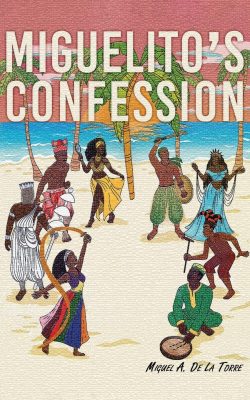
  • MIGUELITO’S CONFESSION by Miguel A. De La Torre – Historical Fiction, Cultural Heritage Fiction, Latin Literature


    Miguelito’s Confession by Miguel A. De La Torre shows the resonate struggle of escaping the generational cycle of poverty and injustice.

    Human nature is a product of circumstance, interwoven with the impact of one generation on the next. Sometimes history teaches people lessons of pain, cruelty, and inhumanity. How can someone rise above the disadvantages they’re raised in, the pressures that hold them hostage from their own goals and wishes? Especially at risk are the innocent children caught in the midst of a maniacal battle within the corrupt powers of society. Can an illegal immigrant find success and happiness despite the brutalities of life? And what is the personal cost of pursuing justice?

    Manuel de la Cruz is dying, and he is alone.

    At the end of his life, he suffers from dementia, a mixed blessing that releases him from the violent slice of history he had fully participated in. It allows him to forget the cruelty and violence he inflicted as part of the police force during the 1959 Cuban Revolution. Even the times that followed are lost to him, all he did to escape from the consequences of his actions by escaping to the U.S.

    Yet suddenly, in his final moments, Manuel is granted the ability to think clearly again, a sign that justice is possible. As Manuel leaves this world, he is haunted by what his life has been, his impact upon others and his family, and especially the psychological inheritance he leaves his son Miguelito.

    Now, this is Miguelito’s story, and he takes a difficult journey.

    As a young boy, his family lived in the slums of New York. It’s a filthy, dangerous place to grow up, and its threats are magnified many times over for an illegal immigrant boy who is despised for being Latino. The author is masterful in his portrayal of this revolting setting.

    Miguelito seeks out ways to survive his painful world. He learns from others who dwell in the corners of humanity, minorities who are punished for not being what the majorities require. Playing the social games forced upon him, Miguelito discovers some peace, persistence, and answers through his secretive worship of African gods. It’s an unexpected friend who introduces him to this path, helping him weather the turmoil that his mere existence incites around him.

    Author and Professor Miguel A. De La Torre lifts conventional history out of a single point of view. Miguelito’s Confession brings to life the complex past settings, and the lessons revealed both sting and inspire.

    This is history shown without glorification. Readers will be engaged by the author’s ability to mold multi-dimensional characters with complex motives. The backdrop slice of life is described artfully within a foundation built by preceding generations. Vivid pictures of human interaction drive the present and shape the future, holding the reader in a thought-provoking trance.

    Empathy for the characters pulls the reader deeper and deeper into the story, in pursuit of hope. Will they uncover the hidden answer to what can make life worth living, and what can finally bring justice?


    5 Stars! Best Book Chanticleer Book Reviews

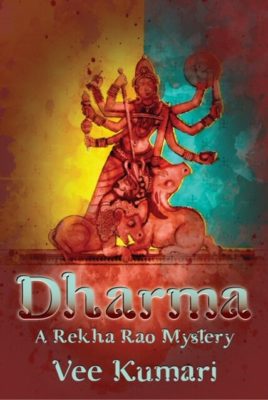
  • DHARMA, A REKHA RAO MYSTERY by Vee Kumari – Cozy Mystery, Female Sleuth, Multi-Cultural Mystery

    DHARMA, A REKHA RAO MYSTERY by Vee Kumari – Cozy Mystery, Female Sleuth, Multi-Cultural Mystery

    A Blue and Gold Badge for M & M Mystery and Mayhem 2019 Grand Prize Dharma A Rekha Rao Mystery

    A complex murder mystery always requires a little spice. In Dharma, A Rekha Rao Mystery, that extra seasoning is provided by the casting of an Indian American woman as the amateur sleuth, despite her realistic fears for her personal safety.

    Professor Rekha Rao is no Bollywood Mighty Girl. She’s a whip-smart American-born 32-year-old college instructor who must deal with her own PTSD after the murder of her father and her unstoppable passion for releasing the man wrongly convicted of her father’s slaying. That obsession is the reason Rekha was dismissed from her old teaching position. The scene is set for deep, personal involvement in the murder of a colleague, a fellow professor who is killed. And a rare, centuries-old statue excavated from an archeological dig in India is the murder weapon.

    When Rekha, an expert in the art of ancient India, is asked by the Pasadena police for some background on the statue of Durga, a well-known goddess in India’s rich religious tapestry, she’s not content to limit her investigation to the narrow role assigned to her. Despite the handsome police detective’s warning to not continue the investigation, she turns over every rock to look for answers. She soon uncovers a galaxy of possible suspects: friends, colleagues, and students – many of whom may have motives to see harm done to the seemingly beloved professor. Art theft, a closeted gay man, a hidden affair, and even a little cross-dressing make their way into the mountain of evidence as Rekha works through territory that the police have not yet uncovered.

    Rekha Rao is a well-drawn character with many facets to her personality. Her Indian heritage is evident in her food tastes, decorations, and family values. Still, she is clearly a modern American woman making her way in a very different culture. Rekha sets out to solve the mystery despite the fear that someone is stalking her – even as she stalks them.

    Dharma, A Rekha Rao Mystery will also provide readers with a glimpse into the religious history of India’s gods and rich mythology. This is one of the hidden treats that makes the novel an enjoyable read for mystery lovers everywhere.

    Dharma, A Rekha Rao Mystery won the Grand Prize for Mystery & Mayhem in the 2019 CIBAs!


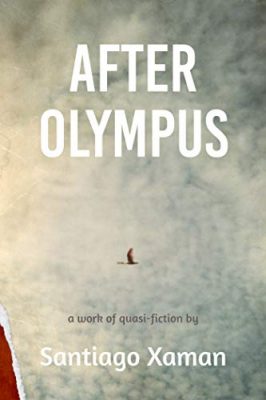
  • AFTER OLYMPUS: A Work of Quasi-Fiction by Santiago Xaman – Magic Realism, Literary Fiction, Multi-Cultural

    AFTER OLYMPUS: A Work of Quasi-Fiction by Santiago Xaman – Magic Realism, Literary Fiction, Multi-Cultural

    Reviewers note:  Consider the term, “quasi-fiction” in the subtitle of this novel by Santiago Xaman. It’s key to reading and understanding this deeply compelling and innovative work. The book begins with two definitions of quasi-fiction:  1. A narrative combining fictional characters with published facts of minor historical significance. 2. The form of realism evoked by quasi-fictional content. Having completed the book, I find I must smile at the term, “realism,” as used in the second definition.

    In this groundbreaking novel, what is real – and what isn’t – is always the heart of the matter. There are elements of reality in the fantastical, and there are elements of magic realism in the rather ordinary. After Olympus is a novel about characters who don’t just think outside the box; they are outside the box.

    Intrigued? You should be. We don’t see novels like this every day, but this one will find its way into the hands of the most discerning readers.

    After Olympus is arranged into six sections: Alpha, Beta, Gamma, Delton, Epsilon, and Omega. Yes, Greek letters, very appropriate for a work laced with mythic associations, associations that will take the reader, as the title notes. Santiago Xaman tells his story via a manuscript found on his property in California. We learn of his childhood in Guatemala in the 1950s and early 1960s, his plea to Xaman Ek, the North Star, for the power of invisibility. We meet his sister who wants to fly like the Mancho bird that nests where the rainbow ends. A fire will change the tide of Santiago’s life, eventually bringing him to the United States, where adoptive American parents raise him.

    Throughout his adult life, he will live with a Russian woman raised in the communist Soviet Union and who has burdensome secrets that will impact Santiago’s life in ordinary and extraordinary ways. One night, Santiago witnesses what he thinks is a falling star but is fuselage falling from a Soviet spacecraft. The event brings two international Stanford scientists to his door and a puzzle of a quest begins, one that will encompass the themes of schism and reconciliation, myopia and sight, and inequity and prosperity.

    Gus, a businessman with a dream to be the “Yahoo of the medical world,” will join this group that Santiago comes to refer to as “magicians.” They will accomplish things that might seem magical, but just as one must carefully observe a magician for sleight of hand, the reader should follow the words of this enigmatic narrative with complete focus.

    The magicians’ projects include designing new frameworks to analyze and make use of neuropsychological testing, intersections of social and political media, employment opportunities for young women with small children, and a gamut of concepts intended to make the world a better place through the removal of hurdles and the dissolving of problems. If technical innovation can be decapitalized and the profits realized by those most deserving of them, the economy can be reinvented. But there are villains on the scene as well and what they do to counter the magicians’ is astounding.

    The ultimate triumph of After Olympus is that it’s not just one book. It will be different books for different people. Included in it is the old and classic story of the blind men who describe an elephant in entirely different ways. What one brings to this book may influence what one thinks they’re reading. The ending alone will make readers wonder if they really know the difference between tusk and tail.

    After Olympus is a superb selection for any book group interested in a novel that is so thoroughly outside the box, so uncaged, that it’s a bit wild, in the best of ways.