
Tag: Military History

  • Three Rules for Writing Historical Fiction That Will Transport Readers Back in Time

    There is magic in historical fiction.

    Magic that takes you to another time and place. In a time machine, you might say, with a beautiful cover and pages in between.

    That’s what readers expect when reading historical fiction. A time machine. They want to immerse themselves in a world that once was and now can only be visited in their imaginations. But who is this storyteller, this weaver of time, and how, exactly, does this time machine transport readers into the past?

    Books, clock, purple, blue, red

    Let’s look under the hood of that writer’s time machine and get to know the rules of historical fiction!

    1. Immerse Readers in the Past

    Historical fiction requires authenticity. Placing the reader in a world that once existed means they have a sense of that world based on their own experiences and knowledge. This doesn’t mean you can’t shape their beliefs, but to do so you must adhere to the way that world existed. 

    Before you tap one key on your computer, do your research. Immerse yourself in your characters world. Be a reporter from that time and ask yourself the who, what, why, and how questions that will help you set the tone and create the authenticity to make your story ring true.

    Make sure your sources are relevant and reliable. Readers of historical fiction tend to be well-versed in the time periods they are interested in reading about, so it’s up to the writer to make sure the details they put into their story are as accurate as possible.

    2. Characters That Live in the Past and Thrive in the Present

    They say the more things change, the more they stay the same. This thought can be applied to the characters your readers will meet in your story. Styles change, trends evolve, and what was once acceptable in society no longer is, but some things never change. 

    To make relatable characters in historical fiction you must blend the societal norms of their era with issues that can still resonate with readers today. You see this in the anguish over someone’s death, or the joy of seeing your destination after a long, difficult journey. Humanity has always shared similar desires and calamities, use them to bridge the gap between readers and the characters in your imaginary world.

    Blending the past and present is also needed for other details within your story. Maybe it’s clothing or language, or a specific smell or sound that places the reader in the past. Slip inside your character’s skin, but keep in mind the thru lines that humans have always shared.

    Books, hand, sleeve

    3. Restrain Your Research

    If you enjoy writing historical fiction, there’s a good chance you love learning about the past, and that’s where our good intentions can derail our writing process. Each turn of the page generates a new idea for your story, and time slips away before you realize your research has sucked up all the time you’d set aside for actually working on the manuscript.

    To protect yourself from this fast road to nowhere we suggest blocking out dedicated time for the research portion of your designated work time. Set an alarm for a specific time and commit to ending that day’s research no matter where you are in the process so you don’t miss out on writing. That is what timers are for!

    Be clear in your goals for your research to ensure you get what you want from the time spent researching. Organize the appropriate resources and tools you’ll need before sitting down so they’ll be within reach, and write a list of the things you want to accomplish before getting started. If you find yourself straying from your goals, refer to the list to find your next subject to research.

    Create steps for your research to break down the work into manageable tasks. You could do it by subject matter, or resource material, or anything that fits your specific needs. The point is to make it less overwhelming as you move through the tasks. Prioritizing the tasks to get the most important or urgent ones done first will also help you to streamline the process further.
    Don’t forget to take breaks from your research to get out of your headspace and refresh. Sometimes we can become so involved in the worlds we are researching that it’s hard to get into the world of our imagination. By taking a break to refresh, it gives our brain time to process the information and see it anew to incorporate into a plot.

    book, glasses, old, buckles

    Buckle Up for a Long Ride

    There’s no way around it—good research takes time and effort. But the payoff can be amazing for your readers. The more you can place them in the time period of your story, the more the story will infiltrate into their imaginations. The devil is in the details, but the details need to make sense. So don’t rush the process. Set boundaries, work toward goals, and find good, reliable sources and you’ll surely find the valuable information that will take your readers back in time on a magical historical fiction ride all the way to the very last page!

    For more tips on streamlining your research check out these Chanticleer articles:


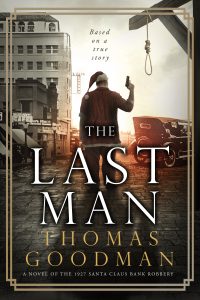
    The Last Man cover

    The Last Man
    Thomas Goodman
    CIBA Grand Prize Winner in the Laramie Division

    In The Last Man: A Novel of the 1927 Santa Claus Bank Robbery by Thomas Goodman, four men in a small, depression-era Texas town lay in wait to carry out their unique plan for a holiday heist.

    It’s December 23 and a man in a Santa Claus suit walks into a bank. But rather than his bag full of Christmas surprises, he’s brought a gun. With the element of surprise on their side, the robber and his two partners would collect the cash, while another partner waited in the getaway car. It all seemed so simple.

    At the time, Texas bankers—in order to deter crimes such as this—promised a $5,000 reward for any dead bandits, “and not one cent” for the capture of a live one. Should anything go wrong, the possibilities for disaster were clear as a Greek tragedy, but what could go wrong?

    Guns blaze within minutes of entering the bank.
    Read more here…

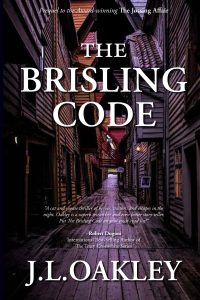
    The Brisling Code

    In The Brisling Code, a fast-paced first installment of her historical thriller series, Oakley weaves a brilliant portrayal of the perils met by the Norwegian Resistance during WWII.

    Layered perspectives—from resistance workers, traitors, and even an SS Officer—create a rich world through which readers can understand the sacrifices that were made to free our world from the tyranny of Nazi Germany.

    Immersed in volatile Nazi-occupied Bergen, Norway, fearless young intelligence agent Tore Haugland and his team of organizers work tirelessly to protect the essential work of the Norwegian resistance.
    Read more here…

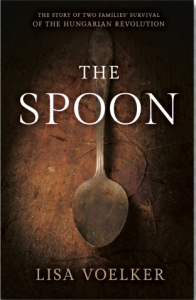
    The Spoon Lisa Voelker

    The Spoon
    By

    Lisa Voelker’s historical fiction novel, The Spoon, takes us back to the 1950s in Hungary during the daring student uprising, and attempted revolution, in Buda and Pest. The author weaves historical facts with fiction in the form of family lore that has been handed down for generations.

    We follow scores of people whose lives intersected during this uprising of 1956. The revolution was, at its inception, a time of joyous upheaval, but in less than two weeks became one of devastating dissolution. People fled Hungary by the thousands, but not before giving the Soviet Union a taste of their discontent.

    Read more here..

    The Merchant from Sepharad

    Joshua Ibn Elazar, the eager son of a Jewish merchant, travels to al-Andalus (the Iberian Peninsula under Muslim rule) to prove himself in his father’s business. But he finds an unwelcoming, degrading society waiting for him, and begins a journey of misfortune and anger in James Hutson-Wiley’s historical fiction novel, The Merchant from Sepharad.

    Shortly after arriving in the city of Lishbunah, al-Andalus, Joshua is tricked out of the gold for his living expenses. Worse yet, he learns that Jews in Lishbunah suffer under oppressive laws, holding far less status than Muslim citizens. He can only find help in Lishbuna’s Jewish community, meeting Rabbi Hiyya al-Daudi and his son Yaish, who house and feed him.
    Read more here…

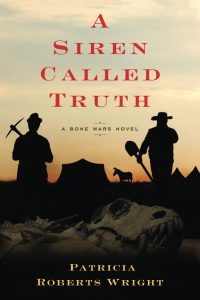
    A Siren Called Truth Cover

    A Siren Called Truth

    Patricia Roberts Wright’s A Siren Called Truth plunges into the fierce rivalry of the Bone Wars, a real-life scientific feud between paleontologists Edward Cope and O.C. Marsh. Blending history, ambition, and human drama, this gripping historical novel explores the cost of discovery and the lengths people will go to secure their legacy.

    A Siren Called Truth is a character-driven exploration of rivalry. Edward Cope, a self-taught genius, is determined to unearth America’s prehistoric past, but O.C. Marsh stands in his way, a well-funded and politically savvy adversary. Their battle for dominance in paleontology is not just about fossils—it’s about reputation, power, and the relentless pursuit of truth.

    A Siren Called Truth’s prose transports readers to the rugged landscapes where fossils lie buried beneath layers of time.

    Read more here…


    Recognition for Historical Fiction Excellence

    Chaucer, Goethe, Laramie, Hemingway, CIBA, Awards

    Don’t miss out on your chance to submit to these fabulous Historical Fiction Awards!

    Whether you’re writing pure historical fiction or adding bits of history into other genres, professional recognition celebrates the craft behind effective tales from the past. The Chanticleer International Book Awards recognize outstanding fiction across multiple divisions that dive into the past:

    Chaucer Awards ~ Perfect for Early Historical Fiction (Pre-1750s Historical Fiction Novels

    Goethe Awards ~ Ideal for Late Historical (Post-1750s Fiction Novels

    Laramie Awards ~ Excellent for Western, Pioneer, Civil War, First Nations Fiction Novels and other Historical Fiction Books 

    Hemingway Book Awards ~ Fitting for 20th & 21st century Wartime Historical Fiction Novels

    The 2025 deadline is August 31st! These awards recognize the skillful writing in genres that creates memorable, impactful historical fiction.

    Historical fiction is about creating emotional experiences that resonate in the modern world long after the final page. Whatever your primary genre, adding in great period details, creating relatable characters, and sticking to a good process all the way to the finish can transform good stories into unforgettable ones.

    Submit before August 31 and let professional judges recognize your skill in crafting compelling, historical fiction.

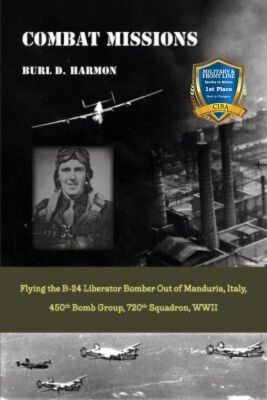
  • COMBAT MISSIONS by Burl D. Harmon – Wartime Memoirs, WWII Aviation, Military History


    Gold and Blue Military and Front Line Awards First Place Badge for Service to Others

    Sometimes, a close and personal story can reveal the true weight of major historical events. Combat Missions, a memoir from WWII veteran Burl D. Harmon, achieves this by detailing how Europe’s vicious aerial battles shape a young boy’s entry to manhood.

     On December 7, 1941, Harmon is summoned to his high school’s auditorium to hear President Roosevelt proclaim it as, “a day which will live in infamy…” Soon after, his draft notice arrives. Harmon’s junior college studies and work at the local Rexall drug store are put on hold as he joins the vast flood of young American men and women conscripted into military service. Leaving his small Iowa town and a family mostly sheltered from the grim realities of the outside world, he travels to New York City with people from every imaginable background.

     With no prior mechanical experience, he works diligently to become a flight engineer, training to master a lexicon of manual tasks and learn the intricacies of air-to-air combat amidst bombing runs. His training takes him even farther from home, to Detroit, Lorado, Texas, Puerto Rico, and even Cuba.

    In these unfamiliar places, Harmon experiences other, more hidden sides of adulthood, including a visit to a notorious brothel in Havana. The reader feels his innocence shedding, but not his moral compass, which keeps him from indulging in many of the temptations that entice other draftees.

    Once trained, Harmon spends most of his deployment in Italy, where he flies a total of 38 perilous missions.

    He takes readers into the cockpit to experience aerial battle with first-hand, harrowing descriptions. But this memoir shows much more than just the violence of war. It’s also about the men he served with, the officers he served under, and the good and bad of both. He names beloved friends and respected officers, gives us glimpses of those who survived the war to live fruitful lives, and memorializes those who were lost in Europe’s battle-scarred skies.

    Harmon reveals the struggles and joys of his own life in the shadow of war.

    We see his quarreling parents in Iowa, the often tormented and confusing love life of a young man, and the family he befriends in Italy with the kindness they bestow upon him. At the conclusion of the war, he tells us of how it was to come home. He has to readjust to a quiet existence as he stumbles around trying to figure out a way forward until, ultimately, he discovers his love of teaching.

    Decades later, at 85, Harmon takes on a new challenge when he joins a group called Global Volunteers, which places him overseas once again. The adventure takes him back to Italy, near the place where he was stationed during the war. It’s a bittersweet return. He makes new friends but discovers the family that he’d spent time with during the war is gone, chased from their home by fleeing Nazis who rampaged villages and confiscated everything they could find ahead of the Allied force’s advances.

    This trim volume shows how the experience of war shaped Harmon’s character and the course of his life, looking back now at 97. Readers interested in the Greatest Generation, who risked their lives to win a war against a rising fascist power, this memoir offers fascinating and meaningful detail from that time. For those who want to understand the way war can change a young boy’s life, Combat Missions is a personal, compassionate must-read.

    Combat Missions by Burl D. Harmon won First Place in the 2021 CIBA Military & Front Line Awards for Narrative Non-Fiction.


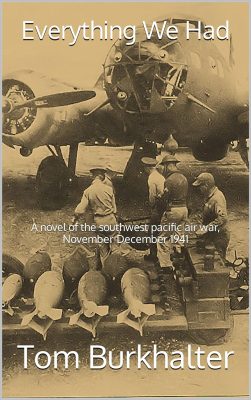
  • EVERYTHING WE HAD: No Merciful War Book 1 by Tom Burkhalter – WWII Aviation, Historical Fiction, Military History


    Everything We Had, book one of Tom Burkhalter’s No Merciful War series is an inexorable thrill that will grip readers tight. It starts with a poker game, through which a main character’s luck soon becomes evident. But will that luck hold out?

    Jack—the poker player—and Charlie—Jack’s older brother—have been separated by war, even though that war has yet to be declared. Everything We Had focuses more on the machinations leading up to US involvement in World War II than on actual combat. The gears of war that have so many young men caught in them move with gradual but inevitable force, and so Everything We Had takes a more thoughtful approach to a historic moment in time.

    Connecting with the characters is a gradual process as you get to know the intricacies that make up their individual personalities. This sets the reader up to feel the emotions of the characters as they face an uncertain fate, and throughout the book the author’s clear and methodical research shines with details such as specific views, locations, and—most notably—comprehensive descriptions of the airplanes Jack and Charlie pilot. This allows the reader to become deeply familiar with the motivations of the characters and the capabilities of the airplanes they fly.

    The importance of their family gradually emerges, too, through their mother’s letters and their memories of their father who flew racing planes. The more readers learn, the more attachment they feel to these characters, giving weight to the growing danger they face.

    Even side characters in Everything We Had have names, hometowns, and sweethearts they’ve left behind. This grants a sense of truth in the actual people who were lost to war.

    Readers may not track every last piece of information—especially the technical details of planes and flight—but the story remains accessible, with its most important details emerging with time. Like flying a P-26, it takes a bit of patience and skill to follow everything in this book, but Burkhalter trusts his readers to keep up.

    The perspective switches between Jack, Charlie, and occasionally Al, who becomes Charlie’s navigator. Al’s viewpoint lends interest at first, but Everything We Had focuses on Jack and Charlie’s narratives as they become more complex and dire.

    Through dialogue, readers start to piece together the puzzle: why Jack and Charlie’s father is gone, who Jack’s mysterious love interest is, and the strength of Charlie’s desire to be a leader. Burkhalter makes good use of dialogue for exposition as readers see how the war gradually unfolds, and how little information the men prepping for combat are told. For much of the book, Jack and Charlie aren’t even sure of each other’s whereabouts.

    Sensory descriptions help ground this intricate story.

    A few wonderful flying scenes—including Jack flying in challenge to a rival pilot—give physicality to the technical descriptions of planes. Small details, like a black Bakelite telephone, and a manila envelope holding mysterious contents, make the narrative even more tangible—not to mention historically accurate. Character descriptions remain simple, but with so many named characters in the story, this helps avoid overwhelming the reader with information.

    The book uses true-to-form period language and stereotypes of US enemies. While this can make for an uncomfortable read at times, it serves the book’s historically-accurate illustration of  a growing conflict. However, the main characters show their good hearts. They speak respectfully of women and, for the most part, of each other. In fact, a sense of camaraderie grows steadily even among former rivals as the war creeps closer.

    When the war arrives, late in the book, it shakes the reader like a stone thrown into the still pond of the characters’ lives, who wait for war with a growing sense of apprehension.

    With war, of course, comes injury and more death than these characters have ever seen.

    Yet Burkhalter steers away from lurid, bloody descriptions and instead focuses on how the violence affects Jack and Charlie internally as people. They come from a privileged background, with a healthy dose of luck, and have distinguished themselves each as leaders by the time war arrives. Yet it’s far from certain that these accolades will help protect them from the hopeless-sounding odds: the US is under-prepared and low on supplies, while the enemy has at least one ace in the hole.

    After such a carefully paced book, the ending comes quickly, and leaves some loose ends untied, nudging readers to continue with this fascinating series.

    Thanks to Burkhalter’s meticulous research, real events, places, and even people in the early Pacific war get a well-deserved remembrance in the form of fiction.

    The No Merciful War series by Tom Burkhalter won First Place in the CIBA Series Awards for Fiction Series.


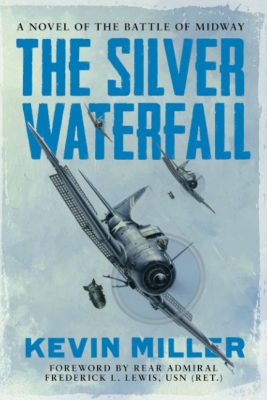
  • THE SILVER WATERFALL: A Novel of the Battle of Midway by Kevin Miller – WWII Historical Fiction, Battle of Midway, Military History


    In The Silver Waterfall, author retired U.S. Navy Captain Kevin Miller reveals the intricate and deadly turns of the Battle of Midway, a combat shaped by transforming warfare, and one that would in turn shape the rest of WWII’s Pacific Theater.
    After their surprise attack on Pearl Harbor, the Japanese Navy seeks to draw American aircraft carriers into an ambush, to secure Japanese power over the Pacific. In a time of great upheaval for warfare technology, aircraft carriers dominated both sea and sky. So, to destroy the USS Enterprise, Yorktown, and Hornet, Chūichi Nagumo— commander of the Japanese First Air Fleet— brings to bear his own four carriers, HIJMS Akagi, Hiryū, Kaga, and Soryu.

    But the Americans had cracked the Japanese communication codes, so as the First Air Fleet launches their provoking attack against the Midway Islands, the American carriers are already steaming into position. From June 4th to June 6th of 1942, planes filled the skies above the remote Pacific waters, both American and Japanese pilots dashing back and forth, knowing that either they sink the enemy’s carriers, or they’ll have none of their own to return to.

    Author Miller, author of the highly-rated Raven One trilogy of contemporary carrier aviation, draws on his experience as a former carrier-based fighter pilot to place the readers into the shoes of commanders, strategists, pilots, and gunners alike.

    Readers get a glimpse into the intricate planning and communication involved with this sort of naval warfare, as each character struggles to glean the information vital to their own success— and survival. This is a warfare of radio, fuel tank ranges, hand-drawn plotting boards, and cloud cover. Characters clash over the right move, knowing that any mistake could cost their lives and more.

    Amidst all this detailed information, however, The Silver Waterfall takes time to shown the humanity of its characters. Though specific moments and personal dynamics are fictional, each character was a real person in the Battle of Midway. Their little conflicts with each other, their moments of bonding, and the lives that they hope against the odds to return to, become palpable. And every bit of personal charm lives under the shadow of their next flight.

    From the bunks of the aircraft carriers to the cockpit of a Devastator torpedo plane, neither characters nor readers can escape an imposing sense of danger, the ever-present possibility that someone’s unique, full life will be snuffed out in a cloud of black smoke.

    The Silver Waterfall takes on a massive amount of information, given the complex nature of real naval warfare.

    Readers will have to pay close attention to understand the events of the battle, as planes take flight time and time again. Thankfully, Miller provides a list of commanders and naval jargon/acronyms, so those unfamiliar with this specific setting will be able to grasp the details. As well, a few helpful diagrams throughout the book keep locations clear— a luxury not afforded to those in the battle itself.

    Though each side pores over their plans, information is precious and incomplete. The Japanese strategist Genda argues with his superiors as they wait for confirmation on the presence of enemy carriers, just as John Waldron— Commanding Officer of Torpedo Eight— pleads for a fighter escort, knowing that death awaits his pilots without one. But even solid plans have fractures and crack apart amidst tracer rounds and enemy pursuit.

    The dynamics between different groups of pilots stand out amongst the chaos, with torpedo planes (“torpeckers”) and bombing squadrons relying on scouts and fighters to bring them into— and more importantly out of— enemy fire. Tensions rise with every miscommunication and bad decision, as everyone must grapple with the fact that they hold someone else’s life in their hands.

    The Battle of Midway is filled with personal weight. Characters on both sides become easy to empathize with.

    The Japanese pilots are much like the American ones— sent to kill and die for the sake of their country. They share the fear of death, the thirst for vengeance as their comrades fall out of the sky or into the flames of a dying carrier, and heartbreaking moments of grief— all the more horrible for the fact that they can’t take but a moment away from the fight.

    Knowing these characters at a personal level makes each flight gripping. Will Taisuke Maruyama somehow escape the storm of anti-aircraft fire from the American ships? Is Bill Evans really going to follow his CO Waldron to his death? Will Lloyd Childers ever get to pay Darce the money he owes him? Or, will these young men be lost? Readers will feel the importance of each answer they receive.

    More than anything, The Silver Waterfall confronts the horrific impact this battle has on the people who wage it.

    Grief turns to rage, the flames fanned by racism, national supremacy, and the unrelenting, unpredictable chance of death. Miller shows that for every kill made in the name of a fallen warrior, a soldier on the other side etches another name into their memory. But to speak of rage and revenge alone wouldn’t do these pilots and gunners justice.

    It takes monumental feats of bravery for these soldiers to get in their planes and fly into danger. Readers sit with them in those terrible seconds of watching a compatriot go down, and the true comradery of the pilots looking out for one another. They yearn for the glory of a hit on an enemy carrier. They act for their cause despite death all around them. And in an ocean of violence and terror, their humanity, their compassion reminds the reader that these are not just soldiers— they’re boys, some no older than nineteen.

    But this story saves its deepest sorrows until the quiet after the battle, as the characters themselves must do the same.

    With pathos and intricate detail, The Silver Waterfall makes for a fulfilling read.

    Fans of historical fiction will appreciate the clear amount of research that went into this novel, which illuminates the back and forth aircraft carrier warfare in one of its earliest and most impactful forms. Readers of all sorts will end the book with a greater understanding of one of WWII’s most pivotal battles— an understanding both factual and emotional.

    The Silver Waterfall by Kevin Miller won Grand Prize in the 2023 CIBA Hemingway Awards for 20th Century Wartime Fiction.


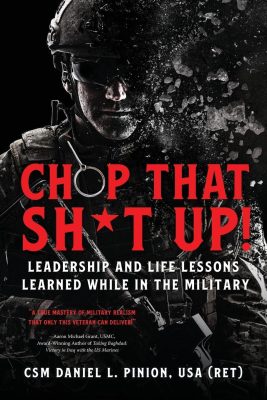
  • CHOP THAT SH*T UP!: Leadership and Life Lessons Learned While in the Military by CSM Daniel L. Pinion – Memoirs, Military Life, Military History

      In Chop That Sh*t Up: Leadership and Life Lessons Learned While in the Military, Daniel L. Pinion reminisces about his experiences in the US Army, both good and bad, before he retired as a Command Sergeant Major.


      Some of the stories and lessons he offers are heartbreaking, some are horrifying, and some are insightful. As it turns out, some are even heartwarming.

      The author explains his origins: a quiet and uneventful childhood that did not give him much idea of what he should do with his life. Some counseling and a few incidents led Pinion, after high school, to the National Guard and eventually the US Army, where he found his life’s calling.

      He learned life lessons through a series of supervisors (noncommissioned officers for the most part) and fellow soldiers, from whom he discovered what to do and when (and predictably, what not to do and when). As Pinion comments, occasionally, one of his supervisors “was tough but fair, and I modeled a lot of my leadership style on what I learned from him.” But occasionally the soldier “rocked the boat and got in trouble.” Despite this, the author tells us, he would “still smile every time” he remembers those events.

      Chop That Sh*t Up! details the soldiers Pinion served with and some of the more extraordinary things they experienced. The book closes with photographs of these soldiers and what happened to them—some heartbreaking, some comforting, all memorable.

      These fascinating stories range from Daniel Pinion being dragged into a hunt for evidence of infidelity that involved climbing to an upper-story balcony, awkward spying techniques, and cumbersome recording equipment; a malfunctioning toilet (the details are a bit much, but perhaps entertaining to those who have similar memories in the service); and superior officers with attitude (and perhaps more than a bit of a need for psychotherapy) versus those who truly earn the loyalty of their soldiers.

      What remains with readers at the end are the mentions of the author’s fallen fellow soldiers after describing each one and their eventual fate: “I will see you in Valhalla, my friend, and recount the fun times we had together.”

      Overall, CSM Pinion’s work runs the reader the gamut of what life has in store for a soldier, and what can be learned from all of its challenges. Judging by the accounts of this book, the military life is not one for everyone, but clearly, it’s a life that worked for Daniel Pinion.

      Chop That Sh*t Up has received multiple literary awards including that Military & Front Line Book Award from the Chanticleer Int’l Book Awards.


      5 Stars! Best Book Chanticleer Book Reviews

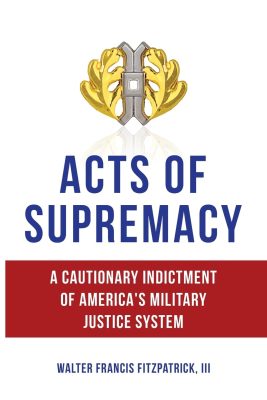
    • ACTS Of SUPREMACY: A Cautionary Indictment of America’s Military Justice System by Walter Francis Fitzpatrick III – Military Justice System, Military Memoirs, Military History


        Acts of Supremacy: A Cautionary Indictment of America’s Military Justice System by Walter Francis Fitzpatrick III, edited by Dominic McFarland Martin, is a unique treatise about one man’s court-martial in the spring of 1990.

        This work details how an admiral set in motion the events that would lead to his subordinate’s court-martial, and how that subordinate – the author – fought to be exonerated. The author, now a retired naval officer, explains to readers how the current system of military justice came to be, claiming it to be beyond the laws and constitution of the United States, and what can be done to start fixing it.

        “A central idea advanced in this work is that America’s military discipline system is extra-constitutional (unconstitutional, or outside the constitution) and extralegal (outside the law), and that it is purely a function of command wherein military commanders practice absolutism, giving them a free hand to treat their underlings as ‘so many chickens,’” Fitzpatrick says.

        He continues, “If a given military rule bears any resemblance to the scope and operation of the US Constitution, it is simply a matter of that commander’s passing whim.”

        Fitzpatrick goes into the history of military justice in this country, even to how it was formed with the Founding Fathers:

        “ ‘John Jay told George Washington this much: “Let Congress legislate. Let others execute. Let others judge.” The bedrock foundation of the Constitution was a separation of powers in times of peace and tranquility. Little known, though, and terribly unappreciated is that the founders further provided that in times of national emergency or dire threat, all power must migrate to and reside in an ‘energetic executive.’ In other words, the Constitution is situational, and its structure and power are tied directly to particular levels of threat that the country may face.”

        “Therefore, there is nothing particularly ‘judicial’ about America’s military government under the Uniform Code of Military Justice (UCMJ),” Fitzpatrick explains, holding that the code is nothing more than “flimsy artifice” and indeed, that it is used to “hide in total darkness the very serious real-world abuses visited upon US servicemen.”

        “A country’s character is measured by the way it treats its veterans.” —Unknown

        Fitzpatrick concludes, “It follows that those not bound by constraints of the Constitution and those who deny constitutional protections to others cannot be trusted to defend the Constitution. Individuals and groups who deny these protections are most certainly suspect and represent a greater danger to the country than America has ever faced.”

        Fitzpatrick’s unique, deep-dive work is an eye-opening look at the military justice system and how it has been used and abused throughout the years.


        Chanticleer Book Reviews 4 star silver foil book sticker


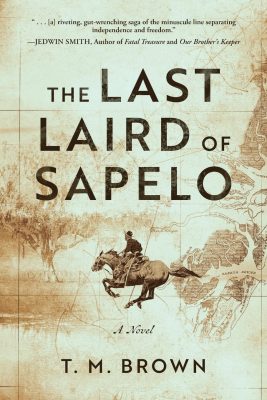
      • THE LAST LAIRD of SAPELO by T. M. Brown – Biographical Fiction, U.S. Civil War, Military History


        The Last Laird of Sapelo, by T. M. Brown, is the story of one man’s tragic death in pursuit of justice, as his way of life, too, dies in the flames of a war that he had tried his damnedest to avert.

        Sapelo is one of the barrier islands off the coast of Georgia. As this story opens, the War Between the States has just begun, and the Confederacy plans to use those islands as a bulwark against the Union gunboats that assuredly will extend their blockade of Savannah all the way down the coast. If the blockade succeeds, then the South’s cotton, the fuel of its economic engine, will languish in Southern warehouses instead of sailing to buyers and allies across the sea.

        Colonel Randolph Spalding, the last laird of the title, committed to the war despite arguing vehemently against it. Now an officer in charge of building a garrison on his own land, he’s caught between military duty, and personal responsibility.

        As the Laird of Sapelo, Spalding is duty-bound to protect his family and his property, including more than three hundred enslaved people. .

        The Spaldings consider themselves ‘enlightened’ slaveholders, giving their slaves more time and ‘freedom’ to work for themselves and have leisure, as well as sturdy houses and decent food. Their neighbors call them fools. The Confederate soldiers see the slaves as their rightful prey.

        His military duty is to keep those soldiers in line. His personal duty is to keep his people safe. When those lines get crossed, he moves Heaven and Earth to make it right. Even if those lengths will cost him his own life.

        This fictionalized biography illuminates a little-known, but pivotal, part of the U.S. Civil War: the defense of the Confederate coastline as it happened on the ground, in tiny communities.

        Spalding draws readers into his own story, telling it through letters and diary entries over the first year of that terrible war. His first-person perspective on those early months, at a point when hopes were high but organization was lacking, foretells the inevitable cost of this fight. The Civil War will exact a bloody cost no matter who triumphs on the battlefield.

        Despite the deplorable cause for which he fights, Spalding’s internal conflicts, filled with intense emotion, make him a riveting character. He faces the scant triumphs and ultimate tragedies of a man who fights to preserve his world, only for it to disintegrate in his grasp.

        The Last Laird of Sapelo will fascinate readers interested in the unsung facets of the U.S. Civil War, those looking for a nuanced approach to the origins of the conflict, and anyone interested in the details of military organization – or lack thereof – in 19th-century warfare.

        The Last Laird of Sapelo comes out August 15, 2023, and is available for pre-order now wherever books are sold!

        5 Stars! Best Book Chanticleer Book Reviews

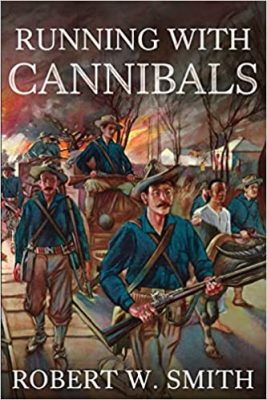
      • RUNNING WITH CANNIBALS by Robert W. Smith – Philippine-American War, Historical Fiction, Military History

        Robert W. Smith tells the story of a forgotten war and the fractured peace that follows in his powerful historical fiction novel, Running with Cannibals.

        It has been said that “War is hell.” It has also been opined that “It is well that war is so terrible, or we should grow too fond of it.” Running with Cannibals is a no-holds-barred, candid portrayal of a war that is glossed over in U.S. history, the Philippine-American War of 1899-1902. It was the first war fought overseas by the U.S.

        Running with Cannibals begins with an unnamed man on the run from an unjust accusation bought with blood and money.

        At first, the reader may wonder how this man ends up halfway around the world to the Philippines, a soldier hiding among other soldiers.

        Through the eyes of Sergeant Ethan Cooper, the reader has an intimate view of the self-fulfilling shibboleths that empower and provoke the U.S. Army into stupidity, atrocity, and self-aggrandizement. They squander the genuine possibility of cooperation and partnership with the Filipinos who were colonized by Spain.

        Running with Cannibals is a story where the truth sets one man, Ethan Cooper, free of the past that dogs his every step. He keeps his head down, desperately trying not to draw attention to himself. So afraid of being seen, Cooper participates in committing monstrous acts against the Filipino people with his fellow soldiers – even against his better judgment.

        When Cooper and his unit leave the capital for the remote villages on a mission that is doomed to fail because of the ignorance and racism of its commanding officer, Cooper’s eyes and the reader’s are fully opened to the U.S. true intent to subdue and subjugate the Filipinos into starvation and death. The more brutality Cooper sees, the more he questions what he’s been told. Not just about the supposed enemy, but about his own side.

        Running with Cannibals is both an adventure and a philosophical and sometimes even angst-ridden journey told through a very close third-person point of view.

        Smith crafts his story with exceptional skill, enabling readers an up-close look at Cooper’s ultimate metamorphosis. Ethan Cooper’s desperate desire to not see what is going on all around him does change over the course of his adventures into a soul-searching journey of purpose and fulfillment.

        Running with Cannibals is an epic tale of war, hell, and redemption that will stick with readers long after reading the last page. Highly recommended.


        5 Stars! Best Book Chanticleer Book Reviews

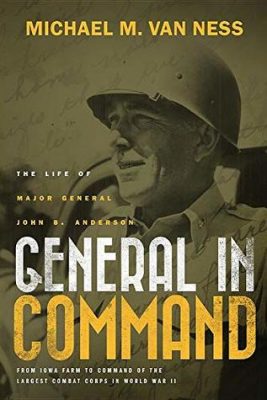
      • GENERAL in COMMAND – The Life of Major General John B. Anderson by Michael M. Van Ness – Military History, WWII Biographies, Military & Spy Biographies

        GENERAL in COMMAND – The Life of Major General John B. Anderson by Michael M. Van Ness – Military History, WWII Biographies, Military & Spy Biographies

        Michael M. Van Ness, the grandson of “the general in command,” has created a remarkable biography chronicling the adventures of a farm boy who rose high rank in the US military and served with distinction in two world wars as a combatant, officer, and sage observer.

        Born in 1891, John Benjamin Anderson must have had considerable intelligence as well as patriotism and grit, since he was accepted at West Point Military Academy at age 19, an honor conferred on only 130 applicants per year—and finished in the top third of his class. He would soon serve under General Pershing in the Mexican War, giving him the experience of combat and coincidentally, his first ride in an automobile. That deployment earned him inclusion in Pershing’s ranks in World War I. It was then his diaries began, and though he protested humorously that “I hate to write,” these personal recollections give readers an up-close picture of the devastation of warfare.

        Anderson also describes, in straightforward prose, the grim conditions of foot soldiers in that terrible war—in muddy water up to their waists in the trenches, and always carrying two gas masks. The war gave him a chance for advancement through the ranks, and admiration for his fellow fighters, including the “bulldog tenacity of the British.”

        His welcome home included giving a speech to the locals along with the realization that the military would be his lifetime profession, as the family had died or scattered. He studied to attain the rank of major and then lieutenant colonel, married happily, worked in Washington, DC, and had an assignment with the CCC (Civilian Conservation Corps) during the Great Depression.

        In 1942, as a new war was rumbling once more in Europe, he took charge of training an infantry division. In 1944, he met with Winston Churchill; in fact, at one time he escorted Winston Churchill and Field Marshal Montgomery over the Rhine River. General William Simpson was a dear friend of Anderson’s and the pair maintained contact for years. He wrote letters to his wife, daughter, and mother-in-law; his homey descriptions included seeing a cart drawn by a dog, and noting foreign celebrations of Christmas. His XVI corps served in the Rhineland campaign, and he personally oversaw the liberation of the Dutch city of Roermond, where his name is revered to this day.

        After the war, Anderson retired but often attended reunions with his military cohort and continued to receive civilian recognition. However, unlike many others, including his friend Simpson, he did not receive a post-war promotion. A rise to lieutenant general would fairly reflect his actual role in World War II, so Van Ness and others continue to petition for this honor—a third star—to be bestowed posthumously, as it is undoubtedly merited.

        Van Ness served in the Navy in a medical capacity and shares a deep understanding of his outstanding forebear in this well-organized life story, which offers a thorough, thoughtful exploration of the many issues that arose during his grandfather’s wartime service. General in Command – The Life of Major General John B. Anderson will resound those who have served their country, either at home or abroad, their families, and with military history buffs. Highly recommended.


      • The WARSAW CONSPIRACY by James Conroyd Martin – a political tale of gripping suspense

        The WARSAW CONSPIRACY by James Conroyd Martin – a political tale of gripping suspense

        This gem could be read as a stand-alone novel even though it is James Conroyd Martin’s conclusion to his gripping historical saga on Poland. The Warsaw Conspiracy  is preceded by Push Not the River and Against a Crimson Sky; you do not need to read the first two books in the trilogy to appreciate and enjoy it, but why would you cheat yourself out the total immersion?

        The book covers the Polish revolt of the 1830’s, known as the November Rising or the Cadet Revolt. Martin uses this tumultuous time in Polish history as the backdrop for his sweeping novel. It starts with an armed rebellion of young Polish officers in Warsaw and soon grows as the cadets are joined by other Polish sympathizers in a grandiose stand against the Russian Empire. The uprising is ultimately crushed by the Russian Army and Poland is placed firmly under Russian control. Martin expertly weaves historical figures and events with a cast of fictional characters that carry the story through to its emotional end.

        Martin centers his tale on one extended family giving the story the feel of a family saga set within the greater true-to-life struggle of a nation. This method lends well to the overall scope of the work and the overarching story contained within the pages of this lengthy 510-page novel. Yes, like the other novels in this saga, this book is huge, and will not disappoint readers who love to curl up with a thick juicy novel.

        The family dynamic is a key to the success of this novel. In particular, the relationships centered on Anna, one of the main characters, were fleshed out well, and in effect made her one of the book’s more endearing characters. To drive the story, Martin gives us an excellent Villain we love to hate: Viktor, the head of the Russian secret police, who is as complex and intriguing as he is dastardly. A family man who lovingly kisses his family goodbye in one scene, and in the next, we see him torturing Poles under the guise of extracting confessions. Add to the drama, brothers Mical and Jozef who find themselves caught up in a plot to capture the Grand Duke of Russia. Here you have a story filled with gripping tension that builds throughout the book.

        Author James Martin makes this well-known revolt in Polish history come alive, jump from the pages and captivate the reader. This book is nothing short of a true testimonial to the Polish people and their drive to remain an independent nation. Filled with unstoppable action, edge-of-your-seat suspense, and unforgettable characters, this breathtaking page-turner will remain with readers long after they close their books.