Tag: Mental Health

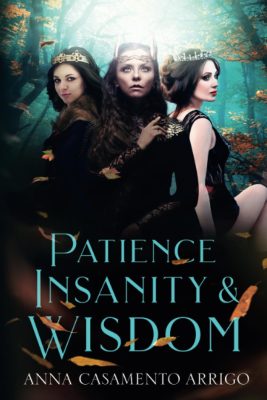
  • PATIENCE INSANITY And WISDOM by Anna Casamento Arrigo – Poetry, Family & Relationships, Mental Health

    Patience Insanity and Wisdom, Anna Casamento Arrigo’s poetry collection, dances seamlessly between reflective, philosophical, whimsical, colorful, and especially therapeutic.

    In her author bio, Arrigo shares that she turned to poetry as part of her recovery from a stroke. This gives a glimpse into the true depth of these poems, which offer healing to the reader as well. Arrigo deals with issues of love and loss, depression and survival, and life itself. Her poems carry the echo of her struggle, softly alluded to, but not blatantly laid bare.

    Arrigo’s poems take the reader through our shared human experiences. “I am enough” and “I am here” lay between “In Silence”. “Insanity” shares a painful childhood, “A constant stream of hateful words/slurred/rising from a golden whiskey tumbler.” “Wizard Wings” reflects on growing up, “From my toddler years/Through that period when neither girl nor woman be-.” “One soul” shares the joy and bittersweetness of the parent-child relationship, “it was not too long ago You held my hand/ Precious memories and hugs/One Soul We two/Divided in half.”

    “Just Another Birth Day” brings full circle the impact of the loss of one’s mother, “yesterday a mom celebrated her 68th birthday in heaven,” and yet, her continued presence in her children’s lives continues on, “Listen my dear children to the sound of the wind/ I’m there./Watch as dawn sips the darkness away./ I’m there/ Reach out and touch the roses-/comforted in essence of their being/ I’m there. I’m there/Speak my name/ Mom?/’I’m here’.”

    Patience Insanity and Wisdom does not shy away from the realities of grappling with life.

    “Depression” has this subtitle: “A dedication to the far too many who wear the mask. You are NOT alone,” empathizing with this common, yet hidden experience, “Waiting for those daily doses of ‘Happy Pills’/To bring my soul back to me-/For year/So many years…” and “Depression is not contagious-/Remove your mask!”

    “Hold On!” is a shout of encouragement, acknowledging the struggle for some with suicide awareness, “days when everything hurts -Wishing you would disappear…There will be day/ Of fighting back/Standing up/Holding on.”

    “Holding on Letting go” starts with the line, “It hadn’t been an easy death. But the will to die was less than my will…to survive […] Holding on/Letting go/A separation/Decisive/And in eternities bound…/Where my projected self-free falls/Letting go.”

    The poems share pages with Arrigo’s art, mostly impressionistic compositions with a wonderful mingling of bright and cool colors.

    To add to this experience, Arrigo partnered with musician Paul Simeone, setting some of these poems to music videos which can be found on YouTube and SoundCloud. Patience Insanity and Wisdom is like a dessert cart in a favorite restaurant, with poems that should be taken in small portions and savored to enjoy them fully.

     

    5 Star Best Book Chanticleer Reviews round silver sticker

  • IN The UNDERWOOD by Kourtney Spadoni – Graphic Novels, Mental Health, Coming of Age Memoirs


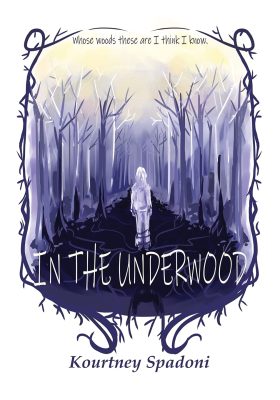
    In the Underwood by Kourtney Spadoni is a memoir in graphic novel form, a thoughtful and gentle story about a young girl struggling with mental health issues, and learning how to keep them at bay as she grows up.

    What if Alice’s adventures in the strange and fabulous Wonderland were the result of a mental health crisis instead of a story? In the Underwood draws metaphors inspired by Alice’s Adventures in Wonderland by Lewis Carroll and evokes the mood of Robert Frost’s classic poem “Stopping by Woods on a Snowy Evening.”

    Author Spadoni relates with a simple narrative and delicate art style how as a child she was prone to severe bouts of anxiety, leading to her crying uncontrollably in her classes and avoiding other children in social situations.

    She describes episodes in which she withdraws and attempts to hide within herself. A cat, in Wonderland and in real life, appears and acts as an occasional guide through the fantasy land, where a mad queen in red tells her over and over again that she’s not good enough, that she’s weak, before she eventually learns to stand up to the queen.

    Ultimately, she manages to tell herself that despite her fears, “it’s not the end of the world.” This phrase becomes her personal talisman. Through her ups and downs, she steps forward and through the darkness before coming out on the other side, addressing her fears and eventually conquering them.

    In the long run, Spadoni comes out of her shell, gains friends, develops a group with whom to share similar interests, and learns how to control and deal with the anxiety that overwhelmed her when she was younger.

    However, later on, depression comes for a visit, and she has to step up for another fight—a fight she is now better equipped to win.

    The art and coloring of In the Underwood match the mood of the work, and like the Frost poem, they conjure the depth and even the darkness and stillness of the night. The words themselves seem to swirl in a mist, sometimes vivid and sometimes faint, reflecting the author’s mind, both when it’s at its lowest and darkest and when it’s at its strongest.

    Kourtney Spadoni’s tale about battling mental illness as a youngster, told in vibrant graphic novel form, is a winning combination and should be a go-to for young people in crisis.

    In the Underwood by Kourtney Spadoni won First Place in the 2021 CIBA Shorts Awards in the Graphic Stories category.

    5 Stars! Best Book Chanticleer Book Reviews

  • PATHWAYS to HOPE by Harish Malhotra, M.D.

    PATHWAYS to HOPE by Harish Malhotra, M.D.

    Pathways to Hope is a wealth of practical advice and  positive messages presented in an easy to digest manner. It is a slightly more analytic approach to metaphor as a healing technique than Dr. Harish Malhotra’s earlier book, Metaphors of Healing. However, Pathways is still an accessible and powerful tool to help those with personal difficulties on a self-help basis, and yet comprehensive enough to be a guide to those professionals who want to add new methods and techniques to their patient communication skills.

    Dr. Malhotra proposes 23 essential pathways, all with playful titles, ranging from “Go on with Your Best Face,” “Leave Nothing Unturned” to “Change the Storm into a Breeze.” As the titles imply, the author employs ordinary experience to deal with extraordinary issues that afflict humans.  Again, Dr. Malhotra offers a simple, but brilliant, idea: Use the healing language of metaphor as a therapeutic strategy and a curative approach for daily life. What do these pathways of hope offer therapists and patients?

    He advises, that first, therapists should not depend on a single approach to solving problems, such as depending exclusively on standard psychotherapy or behavioral techniques. Dr. Malhotra believes in adjusting the style to fit the person, regardless of the type of therapy. For example:  If a patient has hallucinations that tell him to cut himself, his behavior is unlikely to change by telling him to look at the origins of the behavior.  He offers that instead of taking the “origin’s route” that the therapist shifting his patient’s attention to what voice the patient is actually listening to, and then guide the patient to determine  whether that voice is using  good judgment. This pathway may enable the patient to “deny the voice that is only loud thoughts” in his mind.

    Second, Dr. Malhotra advises us to highlight the positives—thought, word and deed—so that we may “put different highlights in our life book.”  How can one counsel a lonely patient, one who seeks but has no hope of meeting people?  The author shows that by connecting to the social media, hundreds of different opportunities present themselves. We strike up friendships through slight measures: small talk, shaking hands, smiling and just paying attention to a person.  A simple recipe: Grow a social network by taking small positive steps whenever and wherever you can.

    Whether you are a therapist, patient or truth seeker, what can be learned from this book?  We can summarize some major markers. Pathway l, “Go with Your Best Face,” emphasizes that we focus on our strengths, not our weaknesses. Pathway 8, “Search for the Silver Lining,” encourages the reader to pay attention to the joys of living rather than the fear of dying. Pathway 11, “Make Yourself a Happy Person,” clarifies that we all have choices, and that “happiness is an inside job.” One more illustration of metaphor, Pathway 12, “Leave Nothing Unturned,” focuses on good habits that inspire positive attitudes and healthy lifestyles—“neither of which require a copyright.”  Ordinary people can live extraordinary lives by considering new pathways, by hearing new stories, by learning by metaphor.

    Pathways of Hope and Metaphors of Healing are not theoretical psychotherapy books. As Dr. Malhotra makes clear, these are lighthearted stories to provide innovative insights and language to enhance our everyday lives. He seeks to empower readers with his decades of experience in helping people transform their lives and improve difficult situations in their daily lives.

    As with Metaphors of Healing, this is not a book to be read in one sitting or all at once. It is one that the reader will find herself/himself picking up again and again taking in a chapter or a metaphor to ponder and, perhaps, adapt. It will become a gentle companion that guides and inspires. One will find, on reflection and on rereading, that these simple stories contain deep insight and wisdom. Clinicians and those seeking to increase their understanding of themselves and their fellow humans would benefit immensely from reading Dr. Malhotra’s gentle, healing stories.