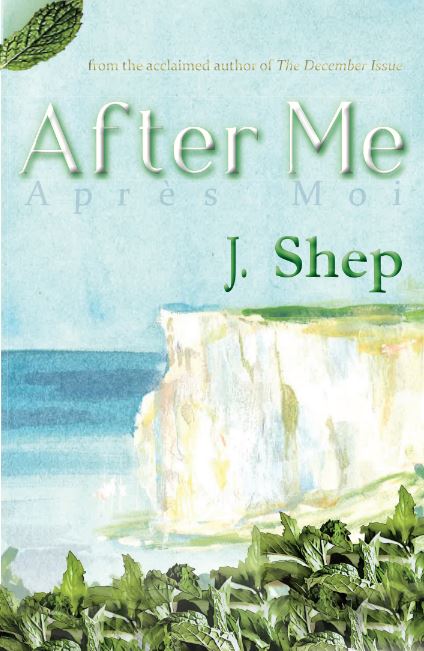
The arrival of a mysterious package makes for an enticing beginning in J. Shep’s After Me. Inside we find a manuscript with the same text as the book we’re about to read. This inventive start lends a sense of realism and truth to what follows and creates a vivid yet hazy quality, like memory itself.
After Me travels back in time to rural France just after World War II. The setting appears idyllic at first—almost unbelievably so. Still, there’s a disturbing undercurrent felt from the start. Not from an unwanted presence, but rather from an absence.
Told from the perspective of Ellande, a young boy, he recounts the summer his parents die in an accident and he and his nine-year-old little sister, Madeleine-Grace, are sent to their extended family’s summer home in France. Their care seems competent at first—but cracks in the façade gradually emerge as Ellande begins his tale.
Aside from their mourning, life seems lovely in the beginning. Lavender-hued skies at sunset, and the scent of peony soap permeate the background of this tale. Ellande recalls the light-filled home’s orderly kitchen where meals are made with fresh herbs from the garden and numerous aunts, uncles, and cousins create a large roster of characters. Readers may feel a bit disoriented encountering so many new names, as well as the French words and traditions sprinkled throughout the text. But that disorientation offers the reader insight into the mental state of the children as they navigate this strange summer of loss and learning.
The home’s idyllic nature springs almost entirely from a single character: Aunt Adèle. A tireless worker, she keeps the house beautiful and functional, doing the cooking, cleaning, gardening, and taking care of the childcare with grace and joy. As the novel progresses, her surviving siblings emerge as toxic counterpoints who are bitter, unhappy, and unwilling to pitch in around the house.
While some of their issues and instability can be traced back to the war and its aftereffects, the family strife isn’t just a product of wartime tragedies. Instead, issues that emerge are largely ones of character. Aside from Adèle, the adults in the house share little interest in the traditions, values, and work performed for the betterment of the family. They prioritize idleness and petty feuds, and their children largely take after them.
As the summer unfolds, the peaceful narrative slowly takes on a sinister quality.
But Ellande and Madeleine-Grace are different. Their mother Juliette was the sibling most aligned with Adèle, and the children have inherited her sense of tradition and good values. They take pride in helping the childless Adèle around the summer house. Still, with Juliette gone, the burden on Adèle grow heavier. Adèle’s siblings are resentful of her homemaking abilities and unbreakable spirit and continually punish her for a lifetime of perceived slights.
Though this is a modern novel, it’s written in a traditional style and slow pace, evoking novels of long ago. It has a dream-like quality, with beautifully specific descriptions that exist alongside the uncertainty of memory.
And readers will be well-rewarded for their patience with the slow early sections. Not only do fantastic details of real traditions emerge as the story progresses—such as the harvesting of fleur de sel—but so does an intense narrative of family and intangible inheritance. As Ellande and Madeleine-Grace come of age, they’re confronted with questions of who will keep those traditions alive, why, and at what cost?
Ultimately, After Me is a tale of breaking generational curses. A shocking turn near the end seems to suggest that even the most well-intentioned will never escape the burdens of family trauma and destruction. But this is a story within a story, and most of the main characters will find some sort of closure, though the finishing touches may take decades to emerge.
After Me starts out as gentle and luxurious as a rolling meadow. Yet it ends up confronting some of life’s greatest questions and most haunting mysteries. This combination makes for an evocative novel whose message will linger long after the last page has been turned.