Tag: Memoir

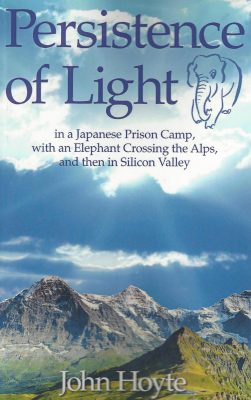
  • PERSISTENCE of LIGHT: in a JAPANESE PRISON CAMP, with an ELEPHANT CROSSING the ALPS, and then in SILICON VALLEY by John Hoyte – Memoir, Travel Adventure, Transformation/Inspiration

    PERSISTENCE of LIGHT: in a JAPANESE PRISON CAMP, with an ELEPHANT CROSSING the ALPS, and then in SILICON VALLEY by John Hoyte – Memoir, Travel Adventure, Transformation/Inspiration

    Reading John Hoyte’s memoir, Persistence of Light, is like sitting around a campfire absorbing stories of adventure, loss, and love – and feeling better for it. With journalistic precision, Hoyte shares both the facts and the emotional impact of his fascinating travels, doing so void of self-pity for his suffering and without self-aggrandizement for his vast achievements.

    Born in 1932 to medical missionary parents (his father, Stanley, was British; his mother, Grace, American), Hoyte enjoyed a vibrant childhood taking nature walks and playing with his five siblings. A pivotal moment came at 8 years old when his parents were summoned to a missionary hospital, 1300 miles away in Lanchow. Hoyte and his siblings ended up in a Japanese internment camp without either parent.

    Despite weeks with little to no food, wearing tattered clothing and walking barefoot (shoes were a commodity), he mustered the energy and the interest to write, sketch and draw – ultimately finding mystery and hope in a world besieged by authoritarian forces. His intense curiosity that percolated as a child, along with his faith in God, leads him on the many adventures he depicts in this thoughtful and exciting memoir.

    The second part of the title “…in a Japanese Prison Camp, with an Elephant Crossing the Alps, and then in Silicon Valley,” encapsulates just a few highlights of the author’s escapades – the most memorable of which was his 1959 trek across the French Alps with an elephant. Fascinated with history, he and college friends from Cambridge embraced the goal of trying to reenact Hannibal’s legendary crossing of the Alps that occurred in 218 BC (in case you don’t know: Hannibal trekked with an army and 37 war elephants en route to attack Rome more than two thousand years ago).

    In Hoyte’s case, they successfully guided Jumbo, a female Asian elephant provided by a zoo in Turin, Italy, from France over the Col du Mont Cenis. Life magazine, which sponsored the trek, published a considerable photo spread of Jumbo and parts of the trek in its Aug. 17, 1959 edition. To this day, Hoyte rounds up his kids and lifelong friend Richard Jolly (who accompanied Hoyte and wrote the book’s Preface) every few years for a reunion hike in the French Alps to celebrate that fateful crossing.

    This exciting, adventuresome spirit lives in Hoyte’s suspenseful storytelling. We learn of other notable moments like when he knew Eric Liddell, the Scottish Olympic runner, who tragically died while at Weihsien, the same internment camp as Hoyte (Liddell’s life is depicted in the 1981 movie, “Chariots of Fire”). Later, at the age of 27, Hoyte landed a contestant role on the American game show, “To Tell the Truth,” and in the mid-1960s, after leaving a corporate job at Hewlett-Packard, he took the leap to start his own company Spectrex in Palo Alto, Calif. Through all of his travels, Hoyte embraces light and color which lends a cheery quality to the book. Each chapter begins with a reference to Isaac Newton’s seven colors of the rainbow. For example, Chapter 4, An Alpine Journey, starts with green, evoking the natural beauty of the Alps.

    In addition to writing, Hoyte enjoys painting, sketching, and drawing and lives in Bellingham, Wash. with his wife, Luci Shaw, a poet. While he dedicates the book to his grandchildren, its universal appeal is for anyone who overcomes adversity – or may need to overcome adversity – and dreams about adventure in faraway lands.

    Highly recommended.


    “When Gandalf said to Frodo, ‘All we have to decide is what to do with the time that is given us.” (J.R.R. Tolkien), surely John Hoyte was listening. Starting early and without choice, he and his siblings are interned in a Japanese prison camp, afterwards, he follows along Hannibal’s elephant trail over the French Alps. .” – Chanticleer Reviews

  • BACK STORY ALASKA by Lance Brewer – Travelogue, Vacation Adventure, Alaska, Memoir

    BACK STORY ALASKA by Lance Brewer – Travelogue, Vacation Adventure, Alaska, Memoir

    In 1993, Brewer took advantage of an opportunity to go on a fishing expedition in a remote part of Alaska. As the bush pilot guided the plane to their first destination in the great northern wilderness, Brewer was so entranced that he told a fellow passenger that he intended to buy a float plane, learn to pilot it, and “explore Alaska.” He did that and more over the next twenty-some years. Brewer states that he did not set out to write a book. Rather, one day as he reflected on his time in Alaska, he wrote a single poem, and within a month, twenty-two reflective poems followed. Brewer wrote the back stories to each poem, and the Back Story Alaska was born.  Each chapter ends with an integrated poem which cleverly summarizes the events of the chapter. Throughout the memoir/travelogue are photographs of wild animals and outstanding Alaskan scenery.

    After that first encounter with the Alaskan backcountry, Brewer, a lawyer in southern California, gradually established Camp Brewer, a summer retreat for friends and family. It’s there that he shares the experience of the rustic charms of the forty-ninth state. He gained multiple ratings as a seaplane, ski-plane and helicopter pilot which he uses as a means to explore Alaska. The wildlife available for viewing around his camp include brown bears, moose, eagles, foxes, wolves, and salmon so plentiful that in places, a fisherman may find himself walking on a living carpet of them.

    Stories of Brewer’s “Campers” – those he’s introduced to his cherished wilderness – give testimony to the effect that Alaska has on a newcomer, a surreal combination of feelings that, Brewer says, “stir yet calm.”

    A practiced raconteur, Brewer writes with intelligence and emotion, sparked by his wry sense of humor. He gives each visitor to the camp a nickname – usually the animal that the person most wanted to see – so there are tales of Mr. Fox, Mr. Wolf, and Mr. Eagle, and a little boy named Master Bird. His observations about his Campers, the habits of the game they encounter, the many still largely unspoiled regions of the Alaskan bush with its capricious, unpredictable seasons and rapidly changing tides, will whet the armchair traveler’s urge to get up and go north.

    One segment is especially gripping, as Brewer follows the running of the famed Iditarod dogsled race from stop to stop, overseeing the action in an unpredictable ski plane that took two hours to start in the 20-below temperatures.

    Brewer’s writing serves as a travelogue, reminding us that Alaska, often depicted on US maps as a small inset, is twice as big as Texas, holding more coastline than all the other states put together. The many color photographs give the book further allure, taken by Nat Geo award-winning photographer Bob Dreeszen, whom the author calls Ugashik Bob after the settlement where they first met.

    A wolf nestled in a stand of blue flowers, foxes sparring, an eagle making a landing on the surface of the water – these images and more add piquancy to a book already spiced with poems, family nostalgia, a heaping helping of rough adventure and a frisson of danger.


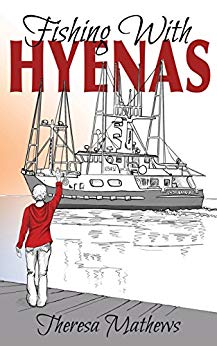
  • FISHING WITH HYENAS by Theresa Mathews – Narrative Non-Fiction, Memoir, Sea-Faring, Romance

    FISHING WITH HYENAS by Theresa Mathews – Narrative Non-Fiction, Memoir, Sea-Faring, Romance

    Romance, typhoons, and exotic scenery highlight this exceptional sea-faring memoir about love and surviving loss by debut author, Theresa Mathews.

    When the author first meets Bart, he strikes her as a “wonderful blend of sophistication and blue collar.” Captain of a fishing boat, he prowls the seas for albacore, the long-fin tuna beloved of sushi fans. To hook up with this romantic figure, Mathews must accept the reality of connection with one of the “Hyenas”—a group of hardy fishermen (and some women) who give each other humorous nicknames and look after one another at sea and “on the beach” (their term for being on dry land). Bart fishes for three-month stretches, so it isn’t long before Mathews decides to drop her professional career and sign on as the cook and a deckhand on his next voyage.

    On that voyage, Mathews learns more than she ever imagined about the perils and pleasures of the sea, tuna fishing, and—herself. She hauls in the big fish, cutting and wounding her hands so severely she can barely hold a toothbrush. She cooks and also keeps watch, once needing the assistance of a fellow crewman to avoid a close encounter with another vessel.

    It gradually becomes clear, as the Hyenas often say, that “Mother Ocean” changes a person. On land, Bart is talkative and flirtatious; at sea, he is the Captain with no time for chitchat. On their last voyage together, the couple, now married, discovers that the going rate for a tuna haul is half what it had been. They are beyond broke, so Bart keeps fishing while Mathews stays on land and works. Then she receives a call—her beloved husband has died at sea of a heart attack.

    Flashing from the shock of that news to the halcyon, sometimes perilous and often amusing days at sea with a cast of colorful characters too fascinating to be fictional, Fishing With Hyenas evokes heartthrob and heartbreak. Mathews’ creative competence is beyond question, as this skillfully constructed narrative attests. Well-chosen photographs bring the episodes alive.

    The memoir is partly catharsis and partly a paean to Bart and his many staunch friends. Mathews deftly weaves the lore of the independent fishermen and adventures on the water through every page: the rescue of a kitten, the freeing of a bird, camaraderie among fishing families, and the occasional spectacular sunset.

    The aftermath of Bart’s death leaves Mathews grief-stricken, penniless and fighting for his legacy—the boat he had borrowed everything to possess. But we know from her courageous account that Mathews will overcome any hardship—having experienced a weathered life at sea and the loss of a good man.

    Fishing With Hyenas won 1st Place in the JOURNEY Awards, the narrative non-fiction category of the Chanticleer International Book Awards in 2017.

    5 Stars! Best Book Chanticleer Book Reviews

  • JOURNEY Book Awards for Narrative Non-Fiction – 2018 SHORT LIST #CIBA

    JOURNEY Book Awards for Narrative Non-Fiction – 2018 SHORT LIST #CIBA

    The Journey Book Awards recognize emerging new talent and outstanding works in the genre of Narrative Non-Fiction and Memoir. The Journey Book  Awards is a genre division of Chanticleer International Book Awards and Novel Competitions (CIBA).

    These titles have moved forward in the judging rounds from the Long List to the 2018 Journey Book Awards SHORT LIST (aka the Slush Pile Survivors). We incorporate the Long List when the judges request an additional round of judging to accommodate the number and/or quality of entries received.  These entries are now in competition for the 2018 Journey Semi-Finalists List. First Place Category winners and the Journey Grand Prize winners will be selected from the Semi-Finalists and the winners will be announced at the Awards Banquet and Ceremony on Saturday, April 27th, 2019.

    Chanticleer International Book Awards is looking for the best books featuring true stories about adventures, life events, unique experiences, travel, personal journeys, global enlightenment, and more. We will put books about true and inspiring stories to the test and choose the best among them.

    These titles are in the running for the 2018 JOURNEY Book Awards Semi-finalists list for the Narrative Non-fiction Fiction and Memoir CIBA Awards. Good Luck to all of the  CIBA Journey Short Listers 2018!

    • Joy Ross Davis – Mother Can You Hear Me?
    • Sean Dwyer – A Quest for Tears: Overcoming a Traumatic Brain Injury
    • Philip Muls – Mind on Fire: A Case of Successful Addiction Recovery
    • H. Alan Day with Lynn Wiese Sneyd – Cowboy Up! Life Lessons from Lazy B
    • Andrew Jurkowski and Lisa Wright – Between The Swastika and the Bear: A Polish Memoir 1925 – 1948
    • Janice S. Ellis – From Liberty to Magnolia: In Search of the American Dream
    • Kayce Stevens Hughlett – SoulStroller: experiencing the weight, whispers, & wings of the world
    • Liberty Elias Miller – The Heart of the Runaway
    • Karen A. Anderson – The Amazing Afterlife of Animals; Messages and Signs From Our Pets on the Other Side
    • Jeff O’Driscoll, MD – Not Yet
    • Julie Morrison – Barbed
    • GySgt L Christian Bussler – No Tougher Duty, No Greater Honor – a memoir of a Mortuary Affairs Marine
    • Terry Milos – North of Familiar: A Woman’s Story of Homesteading and Adventure in the Canadian Wilderness
    • Janis Couvreux – Sail Cowabunga! A Family’s Ten Years at Sea
    • Dennis M. Clausen – Goodbye to Main Street
    • Russell Vann – Ghetto Bastard, A Memoir
    • Dr. Rick Scarnati – God’s Light 
    • Rebecca Brockway – Miss Matched at Midlife: Dating Episodes of a Middle-Aged Woman
    • Austin M Hopkins – The Loose Ends Became Knots
    • Katrina Shawver – HENRY: A Polish Swimmer’s True Story of Friendship from Auschwitz to America
    • Lou McKee – Klee wyck Journal
    • Donna LeClair – IMMUNITY: Entitlement of Wealthy Political Notables
    • Cheryl Hughes Musick – The Day the Musick Died
    • Cheryl Aguiar – Great Horned Owlets Rescue: Where There’s a Will, There’s a Way…

    Journey Book Awards for Narrative Non-Fiction 2018 Judging Rounds

    1. Slush Pile (all entries)
    2. Long List (Slush Pile Survivors)
    3. Short List (Stickers and Digital Badges available (Website and e-newsletter notifications. Please LIKE and Follow Chanticleer Book Reviews to be tagged in social media).
    4. Semi-Finalists (notified by email) Selected from Short List.
    5. First Place Category Positions (announced at the CIBA ceremony in April, 27th 2019. (Selected from Semi-Finalists). Ribbon packages, stickers, digital badges awarded.
    6. Journey Book Awards Grand Prize winner (selected from First Place Category Positions).  Ribbon packages, stickers, digital badges awarded.

    CIBA Grand Prize Winner

    1. CIBA Grand Prize Winner (selected from the 16 CIBA divisions grand prize winners). $1,000 cash prize,  CIBA ribbon packages, stickers, digital badges awarded.

    All Short Listers will receive high visibility along with special badges to wear during the Chanticleer Authors Conference and Awards Gala.

    Susan Marie Conrad, 2017 JOURNEY GRAND PRIZE WINNER
    Journey Book Award Winners

    Good Luck to each of you as your works compete for the JOURNEY Book Awards Semi-Finalists positions. 

    The JOURNEY Grand Prize Winner and the Five First Place Category Position award winners will be announced at the April 27th, 2019 Chanticleer Book Awards Annual Awards Gala, which takes place at the Chanticleer Authors Conference that will be held in Bellingham, Wash. 


    We are now accepting submissions into the 2019 JOURNEY Awards writing competition. The deadline for submissions is April 30th, 2019. Please click here for more information. 

    As always, please do not hesitate to contact us with any questions, concerns, or suggestions at Info@ChantiReviews.com. 


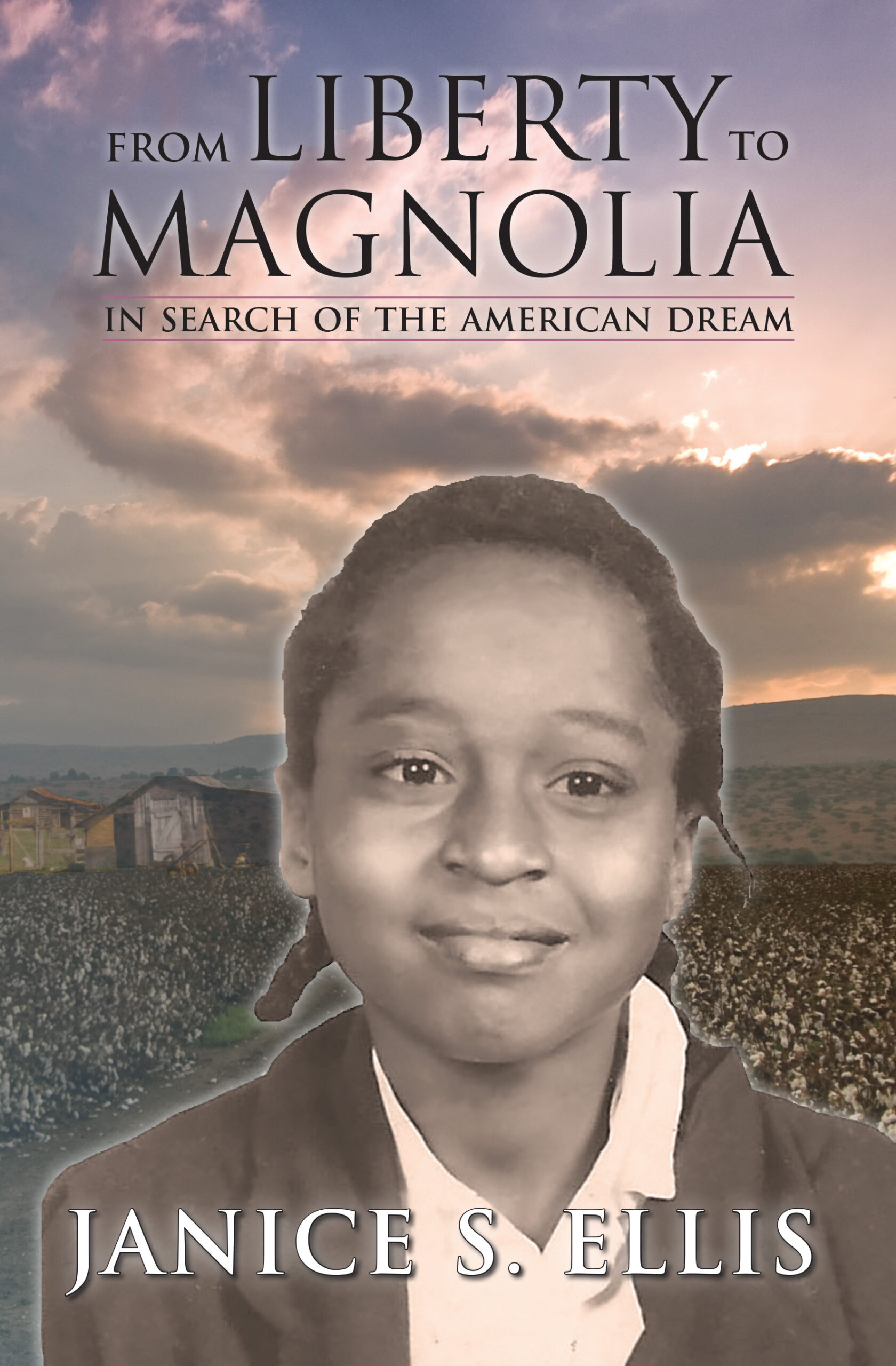
  • FROM LIBERTY to MAGNOLIA: In SEARCH of the AMERICAN DREAM by Janice Ellis, Ph.D. – Memoir, Descrimination & Racism, Women

    FROM LIBERTY to MAGNOLIA: In SEARCH of the AMERICAN DREAM by Janice Ellis, Ph.D. – Memoir, Descrimination & Racism, Women

    From Liberty to Magnolia: In Search of the American Dream, a timely and important book, won GRAND PRIZE in the 2018 CIBAs in the JOURNEY division for Memoir.


    Journey Awards Grand Prize Badge for From Liberty to Magnolia: in Search of the American DreamAs a black woman on a cotton farm in Mississippi in the 1960s, Janice Ellis could have resigned herself to a life full of status quo: never speaking up for herself, never speaking out against injustice or racism. Instead, she never let unsettling times define her or hold her back, even as a witness to some of the ugliest racial violence this country has seen. In her candid and thought-provoking memoir, From Liberty to Magnolia: In Search of the American Dream, Ellis vividly depicts her life in the South during the height of the Civil Rights and Women’s Rights movements.



    Through fluid and skillful writing, Ellis recounts the battles she encountered due to her skin color or due to her gender: an abusive husband, discouragement to further her education, sexual and racial discrimination in the workplace, a lack of support from friends and family when she runs for election. Despite these mounting obstacles, she goes on to earn her Ph.D., lands leadership roles and furthers her career, and even runs for mayor in a major US city. Her faith in God and her unwavering belief that the American Dream should be accessible and attainable to everyone are what lead her.

    The story is hopeful and inspirational, yet there are painful passages for both writer to recount and reader to absorb. One such incident occurs on a Saturday afternoon in Mississippi when two little white boys spit at her parents as they exited a store. Most hurtful about the event for Ellis was seeing her parents flee to their car for safety; for blacks lived in fear as racial violence was targeted and prevalent during the 60s. Of course, there was the added fear of being female. While she lived fully aware of the color of her skin, she often wondered which came first: her race or her gender.

    Ellis is fascinated with the writings of both CBS Newsman Eric Sevareid and political commentator Walter Lippmann, and in Chapter 6, she dives in deep explaining the theories of Lippmann in particular. But she also shares the pivotal moment in her career, and in her life, when she meets Sevareid at his home for an interview. Ellis has gone on to become a political and social commentator and is a prolific columnist to this day, writing about race and gender. Her premise is that race is a modern construct and that we all belong to the human race.

    Interestingly, the title of the book comes from the names of two surrounding towns where she grew up. Liberty and Magnolia are stand-in metaphors for freedom and the American Dream, something that seems unattainable to a portion of the American population.

    Despite her struggles, she believes the country has come a long way in racial and gender relations. Her overarching message is to stay true to oneself and continue to follow your heart, no matter how unpopular or uncomfortable your choices.

    Anyone facing adversity will be moved by this tenacious woman’s account, which serves as a historical record amid one of the most tumultuous yet empowering eras in American history. Complete with a discussion guide in the Appendix, the book can serve as a text for a college course or a community book club exploring themes of race and gender.

    Certainly, From Liberty to Magnolia: In Search of the American Dream is a timely and important book. Highly recommended.


  • NEW YORK CITY BUM: A NEW AGE JOURNEY THROUGH the SEWERS of PARADISE – Ten Years on the Streets of New York City by David Boglioli – Memoir, Social Science, Poverty/Crime

    NEW YORK CITY BUM: A NEW AGE JOURNEY THROUGH the SEWERS of PARADISE – Ten Years on the Streets of New York City by David Boglioli – Memoir, Social Science, Poverty/Crime

    Portrayals of bums and hobos in American culture are often comic (Red Skelton’s “Freddie the Freeloader,” carefree (Rodgers and Hart 1932 song, “Hallelujah, I’m a Bum,”) or sociological (“Hobos, Hustlers, and Backsliders” by Teresa Gowan).

    Not so in David Boglioli’s first-person narrative of ten years spent on the streets in his aptly titled New York City Bum (Midway Books, 2017): in turn a memoir, guidebook, and first-person exploration of Dante’s Inferno, 20th-century style.

    Readers may want to listen to Lou Reed’s classic street ode, “Walk on the Wild Side” to get into the mood for this book.

    Boglioli started using crack cocaine in the mid-1980s. A highly successful chef (New York’s Ritz Carlton Hotel, among others) from an affluent background, well educated, living the life in a luxurious apartment, he was dissatisfied with his well-appointed life. The “netherworld,” as he calls it, fascinated him: “The street was the gutter, the very bottom of the barrel, always a trek through new territory where experience, caution and instinct are one’s only guide… A long way from anyplace with places that might not even exist. Such was my challenge; my catharsis. My escape.”

    He becomes a bum by choice, with his crack habit as his mentor, releasing the person inside—the person trapped by his Middle-class American roots. He offers no apologies nor excuses for his downward spiral. Instead, he embraces his desire for more, always more of the life. Whether it is trashing several apartments, a methodical listing of all the places for him to score dope, his seemingly endless friendships with hookers that were more about using drugs together than sex, and the sheer paranoia interwoven with his lifestyle of choice, he sets out on his newly chosen life with the intimacy of a diary and the mindset of a reporter.

    The greatest surprises of this book may be his portrayal of how he and his fellow bums find shelter and work in the often-squalid streets of Manhattan. He describes every conceivable way that people survive, from cardboard “houses” to charitable housing provided by churches and other institutions. It is possible to be a bum and yet find life’s basics—provided, of course, that the self-destructive behavior on his part and at the hands of others that went with The Life didn’t destroy these respites from the streets.

    He also shows the many jobs that street people have access to, from fast food places to hotel services, putting enough cash in their collective pockets so they can score more dope. “One’s entire waking existence, which was often incessant for days at a time, was directed towards getting high. Get the money, cop, get off.” He shows how selling stuff, often his own as well as someone else’s, provides a steady cash flow. At one point he makes money by renting out his apartment by the half-hour to crack users or whores. The jobs are there if you know how to find them.

    With all the lengthy description of his life of choice, he is somewhat chaste while describing his personal cravings. He gives us all-too-brief glimpses of his coming out as a cross-dresser and some vague references to his pansexuality, but he gives us few glimpses of his intimate relationships. A typical peek-a-boo remark on the women in his life goes something like this: “Although my steady girlfriends were top of the line, I too enjoyed the scuzziest of skanks, depending on my current level of degeneracy. From five star to closed by order of the Board of Health.”

    Whether he is describing his many walkabouts in New York’s streets or detailing the many ways that people ingest crack, he writes with an almost manic level of detail. He wants us to see his world precisely as he sees it. And while he mostly paints his life and his fellow bums with broad strokes, there are some downright frightening gems, such as the whores who are happy to have contracted AIDS so they can have a warm, safe place to stay and get off the hustle—for a while, that is.

    There is no simple way to explain how his street life ends for him, other than the reality that he had lived it as much as he could. There is no magic friend, family member or therapist, only a bird, some hamsters and his discovery of “the kid” within him that takes him from his mean streets to the streets where most of his readers are only too happy to live.

    A gritty, hard-knocking plunge into the gutters of New York City in Boglioli’s self-inflicted journey to hell and his subsequent rise. A Dante’s Inferno for the 21st century.

    Highly recommended.


  • 10 Question Author Interview with DESTINY ALLISON – 2016 Grand Prize Winner for JOURNEY AWARDS

    10 Question Author Interview with DESTINY ALLISON – 2016 Grand Prize Winner for JOURNEY AWARDS

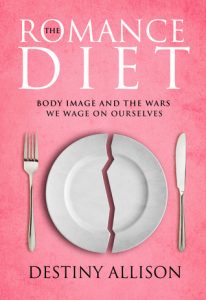
    Destiny Allison writes narrative non-fiction/memoir, and she writes it in a no-holds-barred fashion that captures audiences across the globe. The Romance Diet: Body Image and the Wars We Wage On Ourselves was our pick for Grand Prize in the 2016 Journey Awards.

    Join us in discovering what drives Destiny Allison.

    Chanticleer: Tell us a little about yourself: How did you start writing?

    Allison: I started writing at a very young age. My father was an aspiring writer and I wanted to be like him. I published my first poems when I was nine.

    Chanticleer: Nine-years old? Wow! That is so exciting – Congratulations! When did you realize you that you were an author?

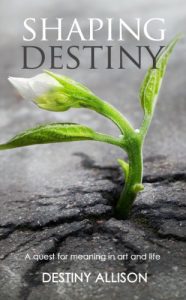
    Allison: The day I released my first book, Shaping Destiny. There’s a big difference between being a writer and being an author. When you become an author, you can change people’s lives.

    Chanti: Well said, Destiny. Thank you for that. What do you do when you’re not writing? Tells us a little about your hobbies.

    Allison: I love to hike with my dog and I love to kayak, which is difficult because I live in the desert. Finding water is a constant adventure and a joy. I also own and operate several businesses. I think I was a social entrepreneur before the term was coined.

    Chanti: You’re ahead of your time! How do you come up with your ideas for a story?

    Allison: Most often, they come to me, as long as I’m writing regularly. When I try to force an idea, the writing typically isn’t good.

    Chanti: Speaking of writing regularly, how do you approach your writing day?

    Allison: With anticipation. I’m very disciplined when working on a project and I like to start early in the morning. I have to write at least 500 words every day, but usually, by the time I do, I have the inspiration for a couple of thousand.

    Chanti: What areas of your writing are you most confident in? What advice would you give someone who is struggling in that area?

    Allison: Memoir is my greatest strength. My advice to other memoir authors is simple. Be brutally honest, but don’t feel like you have to provide every detail. Lay bare the bones of your story – know why you’re telling it and what message you hope your readers will take from it – then concentrate on the details that craft that message. Be lush with your imagery, authentic with your dialogue, and borrow from fiction. Your aunt may have been wearing a green hat that day but giving her a red one might flesh out her character and add pop to your story. It’s important to work on your craft. What do you do to grow your author chops? Read, write, repeat.

    Chanti: What do you do in your community to improve/promote literacy?

    Allison: I sponsor readings, support my local library, and help local authors sell their books.

    Chanti: That is so important – Thank you! Give us your best marketing tips, what’s worked to sell more books, gain notoriety, and expand your literary footprint.

    Allison: While we all love to see our work in bookstores, I’ve found that marketing outside the mainstream is more effective. I sell The Romance Diet in a local boutique and it does really well there because the subject matter is so close the hearts of that store’s customers. Knowing you market matters most when promoting your book.

    Chanti: Very smart! What is the most important thing a reader can do for an author?

    Allison: The most important thing a reader can do for an author is to leave a review. The next best thing is telling friends about the books they love and giving those books as gifts. Loaning a book is great, but gifting a book is better. Authors need to eat, too.

    Chanti: Destiny Allison is also a sculptor and works in steel. Here is a quote from her blog:

    Steel is exciting to me as a medium because it can have an exceptional softness in the final finish. I achieve a combination of organic forms and geometric shapes through the use of my MIG welder and plasma cutter. I create my colors by applying acid patina and heat to the raw metal, after the form has been completed. The combination of techniques allows me the freedom to explore relationships between emotional and intellectual responses to experience.

    Reminds me of the editing process…Chanticleer

    Thank you, Destiny Allison, for being a part of the Chanticleer Author Interview series! 

    Now, readers, you know what to do:

    • Like & follow Destiny’s Facebook Page
    • Check out her books on her Amazon.com author page
    • Read her book and, you guessed it, write those reviews!

    Here are Destiny’s other book links:

    Pipe Dreams  and Bitter Root 

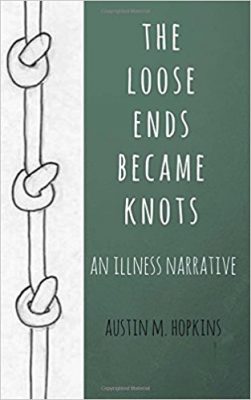
  • The LOOSE ENDS BECAME KNOTS: An ILLNESS NARRATIVE by Austin Hopkins – Memoir, Sexual Awakening, Health and Wellness

    The LOOSE ENDS BECAME KNOTS: An ILLNESS NARRATIVE by Austin Hopkins – Memoir, Sexual Awakening, Health and Wellness

    A young man survives the extremes of sexual abuse, physical harm and emotional chaos in the harrowing and profoundly powerful memoir, The Loose Ends Became Knots: An Illness Narrative by Austin M. Hopkins.

     The experience of sexual violence starts for Hopkins as a teenager, during the time he struggles defining his own sexual identity. The men he meets take advantage of his youth and naiveté, at first, and later, though he gradually becomes wiser to the stark intricacies of a sexual awakening in the world of gay men, he still succumbs to men who use him – with and without his consent. He never seeks such treatment consciously, yet, it continues to happen. What is it about him that attracts predatory partners, he wonders? Hopkins grapples with the many issues that often assail young people dealing with gender identity: How can he reach out to his parents for help when the root of his pain contradicts whom he believes they want him to be? Is he disappointing them? Will they cut him out of their lives? How complicated his life has become since his childhood!

     As encounter after encounter with unkind and uncaring individuals sends him into a downward spiral, three things work together to give him hope: he’s a bright student and doing well in college; he finds an excellent therapist who offers concrete advice and skills that will serve to help him personally and professionally in the years to come; and finally, after courageous self-examination and altered personal perspective, he meets a loving, compassionate partner, who, though not fully understanding the different emotions and energies from Hopkins past, authentically recognizes and acknowledges the unique qualities that his partner brings into their marriage.

     Hopkins has collected this episodic memoir from his journals, poetry and other writings, and added the observations of others, attributing identity where permission was granted. He carefully phrases the depictions of sexual violence in a manner that compels the reader to feel his pain and humiliation. Hopkins does not shrink from the frank sense of shame and self-blame that characterizes his early encounters. Readers unfamiliar with sexual awakening stories may find some of the text hard to work through. And yet, the author presents his work as a gift to those who are on the brink of their own sexual awakening – or who are already there and wonder what next to do – how to live successfully in the malaise of public opinion and family complications. It is through the pain and traumatic recollections that Hopkins expresses himself most eloquently – and it is here where his work, though painful, is the most rewarding. Readers witness a young man triumph over obstacles and begin to actively balance his life with acceptance and love, endeavoring to help others along the way.

    Hopkins’ story is profoundly powerful. And his story is not over – he is, after all, a young man working towards a career in medicine. He offers this narrative to “raise awareness of the pervasiveness of sexual violence within the gay community” as he experienced it. His goal is to help others who are experiencing similar kinds of abuse and hopefully shed a much-needed light in this potentially lonely and frightening time for those whose sexual identity is something other than what certain groups claim as normal.

  • PIZZA WITH JESUS (NO BLACK OLIVES) by PJ Frick – Memoir, Grief & Dying, Devotion, Inspirational

    PIZZA WITH JESUS (NO BLACK OLIVES) by PJ Frick – Memoir, Grief & Dying, Devotion, Inspirational

    Memories of love and despair combine with hope and faith in this honest depiction of one woman’s struggle dealing with grief surrounding the loss of her husband to cancer.

    Author P.J. Frick writes movingly of her successful and courageous battle with breast cancer, to be followed, tragically, by her husband David’s diagnosis—inoperable pancreatic cancer. The couple shares a Christian faith that bolsters them with compassionate community, much-needed emotional support, and the belief that things will be better if not now, certainly in the future. But their faith isn’t their only anchor. The couple often finds joy in their shared love for their pets and pizza for dinners.

    P.J. and David are moving contentedly through life when they must face a series of events the author calls a “hit list.” After they move to a more expensive home, a costly merger at work negatively affects P.J.’s employment. The author, experiencing physical signs of stress, quits her job to pursue a Master’s Degree in Library Science.

    Just when things seem to calm down, P.J. discovers a lump and breast cancer is diagnosed. A plan is made to fight the disease. And the plan is successful! However, David secretly spirals out of control, dealing with the overwhelming stress and grief of almost losing his wife by secretly drinking. When he gradually comes to his senses, he receives his own diagnosis: inoperable pancreatic cancer.

    David passes and P. J. is overcome with grief. One day as she is on a hunt for a neighbor’s lost dog, she has a revelation: God is always waiting for us, even as we stray from His loving care. This knowledge comforts her and aids in her grieving, bringing an ameliorating sense of peace.

    This narrative will touch any reader who has been through even a portion of what she and David experienced. Her retrospective spiritual understanding adds a layer of hope and comfort, underpinned by comments about David’s positive qualities shared by family and friends after his passing. Interwoven with the chronicle of woes are vignettes of pets that provided cheer, even inspiration in this dark time of her life. Significant dreams, especially those about David after his death, seem a necessary part of Frick’s healing process.


  • MY DEAR WIFE and CHILDREN: CIVIL WAR LETTERS FROM a 2nd MINNESOTA VOLUNTEER by Nick K. Adams – Civil War Memoir, Family Letters

    MY DEAR WIFE and CHILDREN: CIVIL WAR LETTERS FROM a 2nd MINNESOTA VOLUNTEER by Nick K. Adams – Civil War Memoir, Family Letters

    Collected and annotated by the great-great-grandson of a Union soldier, these recollections of the Civil War take on new life and meaning in current times.

    Nick K. Adams, a retired schoolteacher and Civil War re-enactor, was fortunate to have access to letters written by his ancestor, Brainard Griffin. A Minnesota farmer, Griffin volunteered to fight for the Union, leaving behind his wife Minerva, their two young daughters and baby son. His first letter home was written on September 30, 1861. The letters, 100 in all, express his longing to be back home while describing in often minute detail the life of an ordinary combatant.

    Griffin wrote the letters in quiet times, holding a board or his knapsack on his lap as a table. The repeated themes are poignant: loving messages to his wife and children, advice for the management of the farm, even bits of gossip.

    Money worries were constant; at one point Griffin washed the clothes of other soldiers so he could send more of his pay back to his family. Around the mid-point in his service he avows that, “experience is a good school,” assuring “Nerva” that when he returns, he will “prize” his time with family and home.

    Griffin’s regiment traveled extensively through Kentucky, Tennessee, and Alabama, constantly on the alert, experiencing battles, sickness and the travails of heat, mud, and snow. He observed the ravages of war in the farming communities and burned-down towns he passed through and saw firsthand the horrors of a field hospital. He met slaves and engaged them in personal conversation. He often lamented “the curse of slavery” and vowed to fight to end it. From the outset, he believed that the war would soon be over—in a few months, or a year at the most. His accounts of mealtimes indicate the increasing stress on the army’s resources: from coffee twice a day, pancakes, beef, fresh fruits, even pies, to half rations for months at a time, and towards the end of his accounts, mostly salted meat and crackers.

    Despite his optimism that the war would soon end, and his repeated visions of returning to Minerva and the children, Griffin was killed in the first few moments of the savage Battle of Chickamauga, two years after his first letter home, and was buried by Confederate soldiers in a mass grave.

    Adams has taken care to present the letters in their original form. Before each section, he highlights the coming contents and includes a map of troop movements. Though there is repetition, it seems fitting that almost every letter begins and ends with loving greetings to Griffin’s wife and children (some written directly to the girls), and that all express the simple daily trials of the foot soldier. Griffin had illnesses, lost teeth, grew a beard, and never ceased encouraging his wife in her work on their homestead.

    His homey remarks and even a bit of good-natured joking show him as a strong-willed, positive person, and his views on the progress of the national struggle reveal him as a thoughtful patriot with a mind to the future of his country and all its inhabitants.