Tag: Memoir

  • REDLINED: A Memoir of Race, Change, and Fractured Community in 1960s Chicago by Linda Gartz – Memoir, Racial Segregation, Sexual Liberation

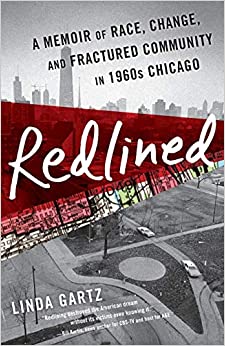
    Author Linda Gartz tells of her childhood and early adulthood amidst social upheaval in the city of Chicago in her memoir, Redlined: A Memoir of Race, Change, and Fractured Community in 1960s Chicago.

    Gartz grew up the second child of second-generation immigrants to the US. Her father’s father boldly made the trip to the land of opportunity at age 21. She spent much of her childhood in cramped quarters with her parents and her older brother, living alongside strangers. They paid this price for the “dream” – the couple bought a house in a decent neighborhood; keeping roomers, even living in the same flat with them, helped pay expenses.

    Gartz’s grandmother, a talented dressmaker, helped out with childcare and other chores while her mother worked to manage all the finances, tenants, and repairs in their rooming house; she had to do this alone half the year while Gartz’s dad traveled for his job. But Grandma K suffered mental illness and abused Gartz’s mother and father, sometimes violently. Gartz’s father felt oppressed by her presence, which caused ongoing, if mostly unspoken, conflict in the home.

    Chicago’s social and economic upheaval served as a microcosm for national change, and as backdrop for the Gartz family drama.

    African Americans fled the dangerous and economically dead-end South for more promising prospects in places like Chicago. But majority white cities and regions resisted their incursion through restructuring and re-designating neighborhoods and school districts. All the while, the civil rights movement sought large-scale change amidst peaceful protests, riots, and violent reprisals from the law.

    The influx of black workers into her own neighborhood affected Gartz’s choice of schools and friends. Civil rights struggles incited her sympathies while her parents expressed their older prejudice. They feared that all of their hard-earned investments would vanish if “the colored” came in. Still, the teen had black friends and neighbors. She felt touched by the spirit of rebellion in a new testing of societal limits: sexual freedom.

    Gartz felt driven to compose this intelligent account of the changing times when she and her brother “found our gold” in the attic of their parents’ home: diaries, letters, cards, calendars and notebooks reaching back to the couple’s own youth.

    The undercurrent of family tensions became clear. Grandma K’s psychosis put the house on edge. Gartz’s father struggled to balance his home and work life, needing to earn money with a job that required six months of travel across each year, and also supporting his over-burdened wife with the demands of their rooming house with as many as eleven tenants. Her mother saw her behavior in the sexual revolution as shocking. Gartz includes details of the subtleties of “redlining” that allowed cities and regions to keep African Americans down and poor by limiting their ability to own property. Family photos pepper her book, lending emotive touches. The result is a vibrant look at the coming of age of a nation through the eyes of a frank, freethinking woman.

    Redlined: A Memoir of Race, Change, and Fractured Community in 1960s Chicago by Linda Gartz won 1st Place in the 2019 CIBA Journey Book Awards for Narrative Non-Fiction and Memoir.


    5 Star Best Book Chanticleer Reviews round silver sticker

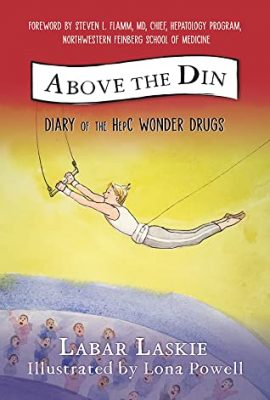
  • ABOVE THE DIN (Diary of the HepC Wonder Drugs) by Labar Laskie – Memoir, Hepatitis C Cure, Insightful and Transformative Non-Fiction

    ABOVE THE DIN (Diary of the HepC Wonder Drugs) by Labar Laskie – Memoir, Hepatitis C Cure, Insightful and Transformative Non-Fiction


    Labar Laskie closely explores the experience of chronic HepC in her unique memoir, Above the Din.

    These days, Hepatitis C infection is curable with a simple treatment that lasts only a few months. In 1999, when author Labar Laskie receives her diagnosis, she sees no good option. The only possibility for a cure lies in a treatment with dismally low success rates and poses a significant danger. Not wanting to jeopardize her life, Labar embarks on a fifteen-year-long search for an alternative cure, hoping to find a wonder drug. Her waiting ends in 2014 when she begins her three-month-long treatment of two pills daily while keeping a journal of each day’s progress.

    She goes through a string of doctors, many urging her to do the toxic treatment.

    Labar tries every alternative treatment under the sun, but only if they don’t pose any known adverse effects. Eventually, she meets Dr. Right, who supports her choice to pursue other treatments. They work together on her care for over a decade. During this time, Labar and her young daughter become hooked on flying trapeze. The activity helps her manage the mental strain of her chronic illness. These precious moments with her daughter make the journey to recovery doable.

    Above the Din‘s short, easy-to-read chapters come accompanied with illustrations by Lona Powell.

    Humor and honesty abound in this story despite the grim topic of severe chronic disease. Labar’s years of research and connecting with people like her provide valuable insight and knowledge. Beyond that, she does an excellent job of including disclaimers about not being a medical professional herself and for people to do their own research. Her purpose for writing this story is to help others find strength, hope, and inspiration.

    As Labar’s story progresses, the past and present intermingle.

    Her early days dealing with shock and fear juxtapose her abundant present-day knowledge and wonder drug treatment. The best example of this comes in the chapter where Labar learns the extent of her liver disease. The treatment is working. This takes the uncertainty of the end of her Hepatitis C story away and enables her to focus on the journey itself.

    Something positive comes out of her Hepatitis C diagnosis: through trapeze, Labar learns to overcome her fears and stand up for herself instead of just going along with the opinions of others to keep the peace. Hopefully, Hepatitis C will be outdated one day, but these critical lessons Labar learns along the way are universal.


    5 Star Best Book Chanticleer Reviews round silver sticker


  • Spotlight on the 2021 Hearten Book Awards for Uplifting and Inspiring Non-Fiction

    Spotlight on the 2021 Hearten Book Awards for Uplifting and Inspiring Non-Fiction

    Hearten – “To Make More Cheerful or Confident”

    Life is full of ups and downs, but you know that it’s those things that inspire and uplift us, that hearten us so we can make it through each day and onto the next. This doesn’t mean every day is easy, but it does follow the idea that every cloud has a silver lining.

    You can do it! Submit to the Hearten Awards before the end of November!

    The Hearten Awards came into existence thanks to the Journey Awards. In addition to burgeoning submissions of narrative Non-Fiction and Memoirs, our six Non-Fiction Awards have been exploding in popularity. The competition has never been steeper, and the time to submit has never been better. You can see the full list of Non-Fiction Awards here.

    The words "Non-Fiction CIBA Divisions Because truth Matters" over the pages of a book

    We saw the Hearten Awards as a necessary addition due to the high number of stories we receive that inspire us to live a life full of love and joy as best we can. These stories are heartwarming, empowering, and help show us a world where we are our best selves.

    Tenets of Uplifting Fiction

    While this fiction often has religious undertones, that isn’t alway the case, and even when there is religious inspiration at work in the text, it doesn’t proselytize or distract from the narrative at hand. The work is still meant to engage and delight readers with or without a faith background.

    Two light-skinned brown people holding hands
    Handholding is a-okay in Heartwarming Non-Fiction

    What the work does not include is violence, profanity, or explicit sexual content. Despite this, the emotional impact and journey taken in most inspirational texts can often lead the reader to tears, so don’t take that light-heartedness lightly. Also, don’t count out romance! Inspirational fiction has it all!

    Tastes Like Chicken

    white hands holding a white egg with a black heart and arrow drawn on it.

    Part of the inspiration for this Awards Division was the Chicken Soup for the Soul series. Other popular examples are Eat, Pray, Love by Elizabeth Gilbert, You are a Badass by Jen Sincero, or The Secret by Rhonda Byrne. Interested in reading more about the ins and outs of inspirational fiction? Check out this article from DIYMFA.

    If you love writing inspirational fiction or are interested in learning to write more of it, reading it is a great way to learn more. Here are heartwarming books that we’ve read and would recommend!

    A YEAR of LIVING KINDLY
    By Donna Cameron
    First Place Winner in I&I Awards

    A Year of Living Kindly by Donna Cameron Book Image

    Donna Cameron’s guide, A Year of Living Kindly: Choices That Will Change Your Life and the World Around You, invites readers to live more richly, thoroughly, and fruitfully.

    Perhaps the best way to enjoy Cameron’s guide to kindness is to drink it in slowly, for a year, as its structure suggests. Savoring one of its 52 meditations – thoughtful, introspective, resonate, and wide-ranging discussions – each week. She turns to a new topic grouping with the advent of each new month, traversing the four parts, the “seasons,” as the year progresses.

    Keep reading here

    WALTZING A TWO-STEP
    By Dan Juday

    Waltzing A Two-Step Book cover image

    Dan Juday’s memoir Waltzing A Two-Step is a humble and compassionate look at his formative years.

    Born a few years after the second world war, Dan experiences a peaceful and happy childhood in rural Indiana, moving frequently before the family settles on a rural area of land named Springwood in Clinton County, Indiana. The Juday family were devout Catholics and enrolled Dan and his siblings in Catholic schools until the family moved to Springwood. Public school became the only option for the siblings. There Dan does his best to fit in but his status as a minority Catholic in a mostly Protestant community in the 1950s brings its own challenges.

    Keep reading here

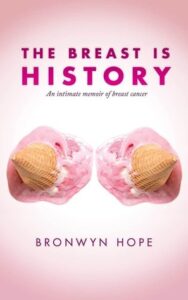
    THE BREAST IS HISTORY
    By Bronwyn Hope

    A realistic, up-close look at life as a cancer patient and survivor. The Breast Is History is a strong tool of hope and humor in the darkest days of any woman’s life.  

    In September 2011, Bronwyn Hope received her initial diagnosis of breast cancer; by March 2013 she had had both breasts removed, had gone through numerous chemo and radiation treatments, taken thousands of pills, and come out of it with a gritty, positive philosophy.

    Keep reading here

    ODYSSEY of LOVE
    By Linda Jämsén

    Odyssey of Love : A Memoir of Seeking and Finding Book Cover

    Odyssey of Love: A Memoir of Seeking and Finding by Linda Jämsén is an utterly charming Eastern European take on Eat – Pray – Love

    This odyssey begins with its 40-something author exchanging her job and dead-end relationship in Boston for two years in Budapest. The goal? To explore new career opportunities, live an adventurous life as an American expat in Europe, and, possibly, hopefully, find her soulmate.

    Keep reading here


    Have a book that Inspires and Uplifts? Submit by the end of November for the 2021 CIBAs! 

    See the 2020 Hearten Award Winners Here!

    Blue and Gold 2020 Badge for the Hearten Grand Prize for Inspiring & Uplifting Non-Fiction Love, Life, and Lucille by Judy Gaman

    Looking to submit to our other Non-Fiction Divisions? See them all here!

    When you’re ready, did you know that Chanticleer offers editorial services? We do and have been doing so since 2011.

    Our professional editors are top-notch and are experts in the Chicago Manual of Style. They have and are working for the top publishing houses (TOR, McMillian, Thomas Mercer, Penguin Random House, Simon Schuster, etc.).

    If you would like more information, we invite you to email Kiffer or Sharon at KBrown@ChantiReviews.com or SAnderson@ChantiReviews.com for more information, testimonials, and fees.

    We work with a small number of exclusive clients who want to collaborate with our team of top-editors on an on-going basis. Contact us today!

    Chanticleer Editorial Services also offers writing craft sessions and masterclasses. Sign up to find out where, when, and how sessions being held.

    • A great way to get started is with our manuscript evaluation service, with more information available here.
    • And we do editorial consultations for $75. Learn more here.
    • If you’re confident in your book, consider submitting it for a Editorial Book Review here or to one of our Chanticleer International Awards here.

    And remember! Our 10th Anniversary Chanticleer Authors Conference (CAC22) will be April 7-10, 2022, where our 2021 CIBA winners will be announced. Space is limited and seats are already filling up, so sign up today!  CAC22 and the CIBA Ceremonies will be hosted at the Hotel Bellwether in Beautiful Bellingham, Wash. Sign up and see the latest updates here!

    Writer’s Toolbox

    Thank you for reading this Chanticleer Spotlight Article.

    Important Links from this Article

    Beyond Janette Oke: A Look at Inspirational Fiction

    The traditional publishing tool that indie authors can use to propel their writing careers to new levels?  The Seven Must-Haves for Authors – Unlocking the Secrets of Successful Publishing Series by Kiffer Brown

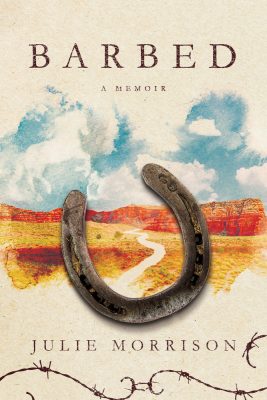
  • BARBED A Memoir by Julie Morrison – Women’s Biographies, Memoirs, Ranching

    BARBED A Memoir by Julie Morrison – Women’s Biographies, Memoirs, Ranching

    blue and gold badge recognizing Barbed: A Memoir by Julie Morrison for winning the 2023 Journey Grand PrizeJulie Morrison saddles up to take us for a ride through the harsh dry mountains of northern Arizona and beyond in her memoir, Barbed.

    Readers visit the ranch where Julie’s parents try to keep the family legacy alive. Julie reveals a cowboy’s world where she meets walls instead of doors but never gives up.

    Barbed opens with Morrison living in the rainy Seattle area with her husband. But the lure of a cowboy’s life on the range working cattle and riding horseback beckons them both. Julie needs salvation like this for her marriage, now distant and cold.

    Reality turns their idealistic, romantic fantasies into a daily grind of working the land. Julie and her husband fight the losing battles of finding enough water and grassland for the cattle and keeping recreationalists from cutting their fence lines. And worse yet, who would have thought mud would be a problem in arid Arizona? Readers learn about the workings of a cattle ranch as Morrison tries one fix after another to save the property.

    Morrison realizes that the operation hemorrhages money.

    To move the budget from red to black, she must make some significant changes. But the cowboys she works with as a manager meet these changes with resistance at every step. The cowboys ride the horses until their joints are out of alignment and their feet are bruised and lame. Julie’s attempt at proper horse husbandry becomes another leak in the ranch’s finances, and she struggles between the money problems of the ranch and what she can do for these poor animals. Morrison soon reaches the breaking point.

    Morrison’s exploration of self bolsters her in this harsh world. She sees the success of other ranch women and a select few men, people who support her efforts and encourage her even when she wants to drop from exhaustion and self-recrimination.

    This memoir does not pussy-foot around complex issues that women experience in business or marriage.

    Morrison never lets conflict stop her, though she acknowledges that depression can hold her back. Her bravery will inspire readers who might not have to stand toe-to-toe with hardened cowboys or encounter rattlesnakes during an average workday. As she works through the problems of the ranch, she also works through her own self-discovery.

    She sees her father, a man she loves, as so pressured to continue the family legacy without incurring more expenses that he perpetuates problems rather than helping her solve them. Until her arrival, his deference to “the cowboy way” had gone unchallenged as something acceptable. In addition, the similarity between the cowboys who work her family’s ranch and her husband shines too bright to ignore. Morrison pulls the cover off the lies we tell ourselves as women to remain in the security of failed relationships and not seek the path of healing and strength.

    This memoir opens the book on a fascinating, nontraditional life filled with adventure and mishap.

    Morrison, alone, supports her ideas and dreams of a better world for the horses she cares for and for herself. However, the harsh life she lives and the disappointments she suffers do not break her. They move her forward toward the healing she needs.

    Barbed abounds with sagacity and affirmations that ring true for readers who may never set foot on a ranch or ride a horse. This tough, savvy woman shows us how to persevere and survive in the harsh climate of a failing business and a failing marriage. She teaches us how to let go of what doesn’t work and find what does, and how to keep trying even when all doors seem to be firmly shut. Morrison keeps on knocking.

    Julie Morrison’s aptly titled memoir, Barbed, connects her myriad of encounters into one cohesive tapestry. She faces the difficulty of not backing down or taking the easy path of giving up and embraces what happens when she reaches the other side. Does she find Nirvana? Morrison finds a life worth living, and she moves forward to contentment. She saddles a new horse and rides a new path, and in the end, she finds herself.

    5 Star Best Book Chanticleer Reviews round silver sticker

  • GATHERING PEBBLES: Learning How to Make Your Own Chicken Soup by David Okerlund – Memoir, Inspirational, Healthy Living

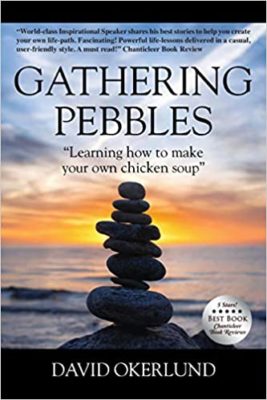
    GATHERING PEBBLES: Learning How to Make Your Own Chicken Soup by David Okerlund – Memoir, Inspirational, Healthy Living

    Inuit of the Canadian Arctic are known for creating stone structures used as navigational points and message centers for fellow travelers. Some of these directional monuments provide a spiritual connotation meant to enrich the journey.

    Gathering Pebbles is David Okerlund’s own “inukshuk” of sorts, a book filled with stories, recollections, and memorable life events that have become part of his personal road map for living. Okerlund, a world-class inspirational speaker, shares his best stories to help you create your own life-path. He shares this collection of nuggets in the interest of helping others along their chosen path and hoping to encourage their own “gathering” and sharing of valuable knowledge.

    Okerlund directs his writing in a casual, user-friendly style. Each of the book’s chapters is highlighted as a pebble gathered on his winding life’s path. Titles are effectively posed as questions to help draw readers into the topic at hand. Each chapter is formatted with a variable mixture of contemplative quotes, poetry, recaptured historical moments, and personal experiences, to showcase qualities such as perseverance, retaining a sense of childhood wonderment, the importance of faith, and following your dreams.

    Whether referencing the words of Pablo Picasso, Chuck Norris, Colin Powell, or Mario Andretti, Okerlund taps into thought from the world at large. From Presidents and self-help gurus to business moguls and religious leaders, the inclusion of such a broad range of sentiment represents a treasure trove of relatable wisdom. In a chapter on self-esteem and learning to be content with your present situation, even troubled starlet Marilyn Monroe’s ponderings ring true, “Wanting to be someone else is a waste of the person that you are.”

    In a similar light, included poems, primarily authored by Okerlund, often provide a whimsical complement to a chapter’s focus. Whether the narrative rhyming verse of “A Single Arrow” that emphasizes a need to stay on target to reach our goals, or the musings of “The Child Within” suggesting we retain the charms of our childlike curiosity and resilience. The messages are clear and heartfelt. “My Legacy” proves a down-to-earth embodiment of sincere gifts like smiles, laughter, dreams, and blessings.

    Okerlund weaves many of the classic and time-honored lessons amidst his storytelling.

    One narrative about efforts to avoid traffic pointedly entertains a “stop and smell the roses” philosophy. Additional directives to readers include being responsible for your actions, how to approach situations with a balanced head and heart when making decisions, and realizing that failure is often a prerequisite to success. The book has an interactive appeal with questions to ponder and simple exercises to help in assessing the likes of values, priorities, and needs vs. desires in our daily lives. A touching story about an unexpected friendship between a student with down-syndrome and a star athlete focuses on the importance of little things and how simple efforts can create positive change.

    While the core messages of this book may not be new, the shared information of Okerlund’s own deconstructed “inukshuk” proves an inspiring worthwhile effort to help others navigate life’s winding path. Such positivity is always a good thing.

  • The KNOCK … a collection of childhood memories by Carolyn Watkins – Children’s Life Books, Childhood Memoir, Family Life

    The KNOCK … a collection of childhood memories by Carolyn Watkins – Children’s Life Books, Childhood Memoir, Family Life

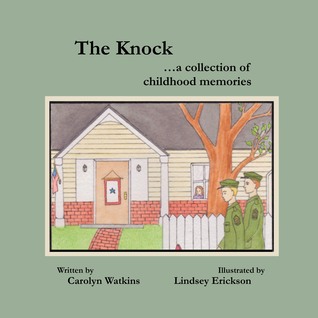
    In a quiet voice filled with emotion and heartfelt detail, Carolyn Watkins’ The Knock… a collection of childhood memories realistically captures what it’s like for a child when a parent in the military is deployed at a great distance for active duty.
    From her own personal recollections as an 8-year-old girl, each vignette weaves an honest perspective of life growing up in a military family. Tapping into the tender parent/child bonds and the feelings of loneliness and anxiety that arise in being separated from loved ones, Watkins’ intentions are to help other youngsters in similar situations, and to let them know that they have a supportive network. Here she explores the importance of family coping skills to include the strengths of a parent on the homefront, the help of relatives, and the care and concern needed for a wounded parent returning from war.

    When dealing with her father’s absence, Watkins easily voices notable questions like “Would he remember me?” and “Would he be hurt?” She also recalls how her mom often hid her own emotions to remain stoic and supportive for her children. While the brave front is comforting, Watkins realized how it contributed to more concerns.

    Wisely, Watkins sheds important light on the need to be open and express emotions during trying times. The ultimate realization is that shared feelings can make the experience of handling tough situations a bit easier. Watkins also reflects on the adolescent insecurities she felt and how they seemed heightened by constant relocations. Flexibility and adjustment as part of a military family proved key.

    While this particular true-life memoir focuses on the ’60s and the war in Vietnam, the story is truly relatable to the conflict of any era. With Dad off to serve in the jungles of a foreign terrain, and Mom at home serving a dual parenting role, a visit from German Grandmother “Oma” helps solidify the cross-generational sentiments of wartime experiences. Stark recollections of visits to a hospital where Watkins saw firsthand the harsh realities of war seem a necessary component. Clearly, a time that helped Watkins gain strength in learning to accept “The Knock” at the door that symbolizes an unsettling fear of the unknown. Such moments undoubtedly helped the family come to understand the heroic efforts of those who put themselves in harm’s way in the fight for our freedom.

    Lyndsey Erickson’s soft pastel illustrations easily complement the moving words of this narrative. Whether visualized in the glory of the star-spangled flag flying against a blue-clouded sky; a family gathered around the dinner table featuring an empty chair, that speaks to both togetherness and the solemnity of dad’s absence, or an army helicopter falling from the sky, all depict indelible moments. The importance of letter exchanges, especially during a time before computers and internet communication is sweetly rendered through images of red & blue-bordered airmail envelopes. A small, yet charming note of nostalgia.

    The book’s final words include a great springboard of ideas to open up further discussion about family dynamics, challenges, and feelings of universal concern. Though intended for the 8-13-year age group, this gentle, informative memoir shares a powerful message that should be appreciated by readers both young and old.

    The Knock won First in Category in the CIBA 2019 Little Peeps Awards for Children’s Literature.


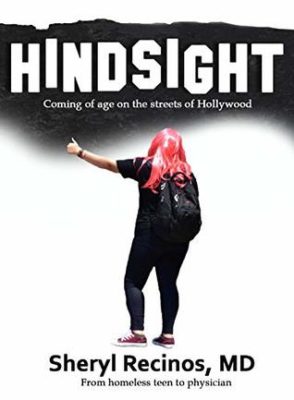
  • HINDSIGHT: Coming of Age on the Streets of Hollywood by Sheryl Recinos, MD – Medical/Professional Biographies, Memoir, Teen Abuse/Homelessness, Mental Health/Family

    HINDSIGHT: Coming of Age on the Streets of Hollywood by Sheryl Recinos, MD – Medical/Professional Biographies, Memoir, Teen Abuse/Homelessness, Mental Health/Family

    Hindsight: Coming of Age on the Street of Hollywood by Sheryl Recinos presents a childhood fraught with family dysfunction caused by mental illness and emotional and psychological abuse. The two formative figures in Recinos’ life were negligible participants instead of the supportive, loving parents all children need to grow and thrive into adulthood.

    While this memoir takes place in the 1980s and 90s, we can only hope the services that support runaways and dysfunction within families have improved. For example, her father’s main go-to plan for dealing with his daughter was to commit her to an asylum instead of doing the hard work of parenting.

    Homelessness, a significant theme in this memoir, is continuously in the news, an issue that plagues every major city in America and occurs even in small towns and rural settings. Homelessness is one of those issues that many in America turn a blind eye to and ignore, but Recinos shines a light, bright and clear, on this issue, and knowing her story helps us understand this issue in a new way. It brings a face to embody homelessness and a possible answer to the question, why?

    Why do people choose the street? Why do people refuse shelter? Why do some kids become flight risks? The answers may surprise you.

    Recinos never places blame, of which there seems plenty to go around. Never blames her mentally ill mother, who, during a psychotic episode, put her and her brother in danger. She never blames her father and portrays him as a figure that we can sympathize with at times. She never blames the legal system that failed her time and again, penalizing her but never breaking her spirit. And she never condemns any of the men that rape or attack her. She doesn’t blame drugs or alcohol or any “friends” she meets along the way who rob her or worsen her situation.

    Instead, Recinos tells the story of her teen-years with a pragmatic focus on the events. She never imposes her adult understanding of this world but focuses on her mental state at the time. What she produces is a raw and unapologetic story of a girl misunderstood, trying to survive in a world of neglect and abuse.

    That she survives is a miracle. That she finds her way out of homelessness to become a successful contributing member of society, becoming a loving parent with no role model for such a thing is another.

    Recinos breaks the cycle of abuse that drove her to the streets. She has become a champion of homeless teens. Her ability to see the injury she suffered through an unfiltered lens, and not accept it or be shaped by it, is why we love Dr. Recinos and her story.

    This memoir is a page-turner, a tour de force, a blockbuster read that will have you laughing, crying, cringing, and hoping for something better for this young woman. You won’t be disappointed. Recinos delivers, and she does so with grace and talent. We highly recommend this intense and eye-opening memoir.


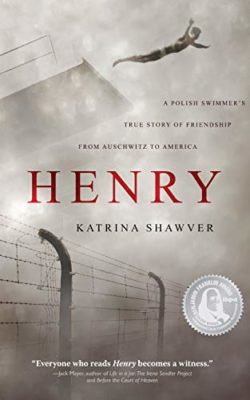
  • HENRY: A Polish Swimmer’s True Story of Friendship from Auschwitz to America by Katrina Shawver – Jewish Holocaust History, Historical German Biographies, Jewish History

    HENRY: A Polish Swimmer’s True Story of Friendship from Auschwitz to America by Katrina Shawver – Jewish Holocaust History, Historical German Biographies, Jewish History

    Katrina Shawver, a journalist for a Phoenix newspaper, was seeking a story for her weekly column. She had heard from a friend that a Holocaust survivor named Henry Zguda and his American wife, Nancy, lived in Phoenix. She called Zguda and was invited to come to his home, only a few blocks from her own. Shawver quickly bonded with both Henry and Nancy. Then she and Henry decided to have a series of weekly interviews, which she would draw on for her column and, later, for a book—this biography.
    The horror story of Henry Zguda, a Catholic Pole born and raised in Krakow, Poland, begins with Henry walking down the street toward the YMCA for swim practice in 1942. A Gestapo car screeches to a stop beside him. Two men leap out, arrest Henry on the spot, throw him into the car, and take him to prison. After several days of torture, a practice used by the Gestapo to obtain information (of which Henry had little), he is taken to the train station and shoved into a cattle car so filled with people that it is impossible to do anything but stand, shoulder to shoulder. The door is slammed shut, and the train pulls out of the station. Henry has no idea what fate awaits him.

    Most of his fellow passengers were Jews, which Henry was not, but under these circumstances, it made no difference. They did what they could to accommodate each other over days of travel, until they reached their final destination, Auschwitz. Many of the Jews would find themselves in the gas chamber in short order. Only those strong enough to work were allowed to live—at least long enough to finish building the camp.

    His story covers more than two years in Auschwitz and Buchenwald. As a young man, he is characterized by his courage and tenacity to live under the most horrendous circumstances and his valor and compassion in helping his fellow prisoners—most of whom he met there, and some who had been childhood friends in Krakow. Somehow, Henry never lost hope, which would have been a death knell…as it was for many prisoners. He characterizes himself as lucky, very lucky.

    Henry tells Shawver about his youth in Krakow. Most of all, his love for swimming. Henry was a member of the swim team at the YMCA founded and built by Americans. Despite the German presence, he had fun with his family and friends.

    It is with some reluctance that he begins to give her details of his years in the concentration camps, but that is what she needs to know. Supporting his memories are photographs obtained after the war as well as official cards recording his Auschwitz registration, train passenger lists, personal effects inventories, and records of money sent to him by his family. These offer interesting details of life in the camps, as do some of Henry’s more pleasant memories. Prisoners participated in theater performances and concerts for the prison staff and their families as audiences.

    As the interviews proceed, Henry intuits when it is time for him to tell Shawver what transpired as the camps’ main objective—killing Jews—was fulfilled. He explains how Jewish prisoners met their fate through such horrible means as being left, still alive, hanging from hooks in dark basements; being lined up in rows and shot to death in view of other prisoners, including family members; being told they must remove their clothing to have showers, only to be herded naked into the gas chambers (their clothing left behind as booty for the guards who led them to their fate); or being tortured to death by nonchalant Germans.

    But in 1944, WWII finally drew to a close. As American forces approached the concentration camps, the Germans fled. The prisoners were free! Some prisoners left on their own, while others awaited the Americans bringing food, clothes, medical care, and the means to go home. Henry returned to Krakow, to spend time with his mother and earn money for her to continue living there and for him to emigrate to America.

    It was difficult for Henry to relate his story, and it is difficult for us to read it. Still, both Henry and Shawver saw in this effort a purpose—to warn all people that they must do everything possible to ensure that the atrocities of WWII never occur again.

    Henry: A Polish Swimmer’s True Story of Friendship from Auschwitz to America won First Place in the CIBA 2018 Journey Awards for Memoir.


  • ELEPHANTS IN MY ROOM by Christie Nicholls – Dark Humor, Love, Sex & Marriage Humor, Actor & Entertainer Biographies

    ELEPHANTS IN MY ROOM by Christie Nicholls – Dark Humor, Love, Sex & Marriage Humor, Actor & Entertainer Biographies

    A bitingly funny collection of life-stories from Christie Nicholls – stand-up comedian, actor, and writer – made all the more piquant by her repeated insistence that she has no short-term memory. Fortunately for us, her long-term reminiscences more than make up the deficit.

    Nicholls has divided the book into four parts. In the first, “A Broad Abroad,” she recalls her experiences of traveling to far-flung places, beginning with a summer in Belém, Brazil as a child. She and her brother, for some reason nicknamed Beluga, slept in hammocks and played in a swimming pool, but much of her cherished time involved a German Shepherd named Ferdinand, from whom she learned dog talk. Raucous family bowling in Bologna, Italy, is contrasted with attendance at a staid English wedding. At a later period, Nicholls and her mother went to Sweden, where the budding comic tried her hand at stand-up in newly acquired Swedish, leading to an amusing mix-up of jargon.

    “Odd Jobs” highlights employment, from babysitting to trying to sell magazines by phone and getting the ax for her admirable refusal to inveigle a woman who was going blind to buy a subscription. Nicholls’ recollections of those “Dearly Departed” includes lessons learned from a singularly inspiring music teacher, and time spent with her grandparents – with the pain of watching them slowly “disappear” from failing health and dementia.

    In “Boys to Man,” she confesses a few of her more outstanding, and hilarious, meet-ups with the opposite sex, revealing her youthful whims and desires. The final episode, and the book’s closing, is a comedy of errors that gradually reveals itself as a well-crafted salute to her partner and their quirky manner of demonstrating mutual respect.

    Nicholls is a charming yarn spinner, revealing much about herself in this lively aggregation, and not all of it merely for laughs. She expresses her self-doubts and her struggles with schooling and recalls the year she did not win a prize from her music teacher. The experience of not being acknowledged for her effort spurred her to try even harder next time. Nicholls admits her many flaws in a characteristic satirical manner, almost certainly dramatized for comic effect. But poignant moments arise frequently. After feeling frustrated in her early relationship with her grandfather Poppop, who could be, and often was, sarcastic and bombastic, she took up his cause. She protected him when he became wheelchair-bound, rewarded by his beaming smiles.

    Anyone familiar with the author’s significant talents will be happy to learn that she can write as well. Indeed, those getting to know her through this debut writing romp will want to see her show, follow her on social media, stalk her at the grocery store… well, we discourage stalking. What you will come away with is a genuine respect and admiration for Nicholls, a smart modern comedian, who brings her audience joy and quite possibly makes the world a brighter place to reside.


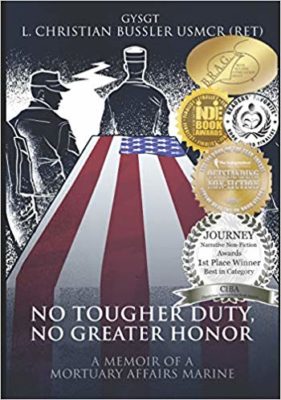
  • NO TOUGHER DUTY, NO GREATER HONOR by GySgt L. Christian Bussler – Iraq War Biographies, Memoir, War Biographies

    NO TOUGHER DUTY, NO GREATER HONOR by GySgt L. Christian Bussler – Iraq War Biographies, Memoir, War Biographies

    From a family with a long history of military service dating back to the civil war, GySgt L. Christian Bussler brings to life his experience as a Mortuary Affairs marine and sheds light on a duty that few ever talk about. He is called to duty for his first of three tours in Iraq in February of 2003 after spending many years training as a reservist.

    This fear becomes reality when he narrowly escapes an IED blast with his life. Afterward, Bussler wrestles with the guilt of going back home injured, leaving his team behind to fight without him. The final and longest section of No Tougher Duty, No Greater Honor mirrors the length of the final and longest tour from 2005-2006. This tour especially proves to be the most challenging for not just Bussler, but his whole team, and it leaves them all forever changed.

    Despite its heavy topic, No Tougher Duty, No Greater Honor is rich with Bussler’s humble and humorous personality and is full of informative detail. People read memoirs to learn about the lives of others and gain new perspectives, and as the pages quickly turn, the wide range of emotions felt by Bussler and those around him are beautifully described. The addition of personal photos adds to the authenticity and genuineness of Bussler’s story as a Mortuary Affairs officer.

    A defining quality of No Tougher Duty, No Greater Honor is Bussler’s unrelenting humbleness and is best expressed when he reflects about going home injured and leaving behind his fellow marines to continue fighting without him. He also presents an important question about whether to try and maintain a distance from the reality of the Mortuary Affairs or to embrace the fallen angels’ stories and their connections to those left behind.

    In the closing part of the book, comes the defining moment of Bussler’s career where the deep emotions of grief are at the forefront. From this comes the ever honest and humble reflection,

    “Maybe in a weird way, this book is my attempt to keep their memories and their sacrifices alive, because I saw with my own eyes how much they paid for a freedom that so many take for granted, and I truly, from the bottom of my heart, hope that I demonstrated exactly that throughout this work.”

    Though now retired from the Marines, GySgt L. Christian Bussler is still active in the veteran community and acts as a mentor for other veterans. A truly magnificent and heartfelt memoir, No Tougher Duty, No Greater Honor is a must-read for every American.

    No Tougher Duty, No Greater Honor won first place in the CIBA 2018 JOURNEY Awards for narrative non-fiction.