Tag: Memoir

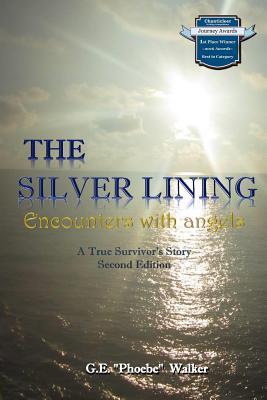
  • The SILVER LINING: ENCOUNTERS WITH ANGELS by Phoebe Walker – Memoir

    The SILVER LINING: ENCOUNTERS WITH ANGELS by Phoebe Walker – Memoir

    Imagine a crisp autumn afternoon, taking a walk with a favorite companion on a country lane. You share stories about life’s ups and downs; you both laugh and cry. When you get to your destination, you give each other a goodbye hug and part separate ways with a smile, feeling a sense of strength in your friendship.

    Meandering through the pages of Phoebe Walker’s, The Silver Lining Encounters with Angels, is like a walk down this country lane, leaving us with warmth and hope.

    Admittedly, Walker’s book is a tough read – a story rife with abuse, her parent’s divorce at a young age, a suicide attempt, battling Multiple Sclerosis (MS) and other health concerns, and a near-death experience. It’s a lot to handle, for both the author and reader, but Walker makes the story accessible and down to earth with her conversational tone. Flipping through the pages is like a fireside chat.

    In one early and instrumental memory, Walker recalls how she was introduced to God. In 1989, her friend Christi said, “speaking to Jesus was just like talking to your best friend.” Accepting Christi’s advice, Walker became convinced that certain people in her life were placed there by God as “silver linings.” “God provides the crutches,” Walker says in her memoir.

    And so it went in Walker’s life, assigning silver linings to people who helped during dark days, including her loving husband Chip. The memoir is engaging and heartfelt, a recommended read for anyone wishing optimism and hope amid adversity.

    Not only do we learn that Walker survived incredibly tough times, but also she thrived, earning a college degree, having children, and living a full life, later without vision due to MS.

    A theme of revelation is what led her to write and share her story. She says: “By allowing myself to become fully exposed, I’m confident that not only will I continue on my journey of healing, but that it will offer hope, peace, and perhaps even direction to others. That makes sharing my story fully worth [it].” Today, she maintains a website displaying her art and ways she helps others through a life coaching business.

    While Walker’s book takes us on an emotional rollercoaster, even to the edge of despair, she holds our hand with thoughtfulness and humor. She avoids lecturing and being preachy by staying in her own story, ultimately showing how her deep faith has healed her during life’s challenges.

    5 Star Best Book Chanticleer Reviews round silver sticker


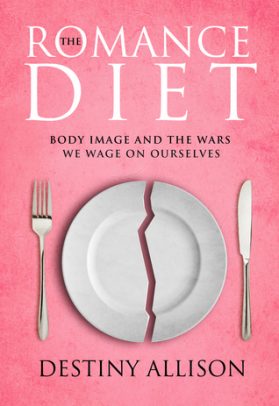
  • The ROMANCE DIET: BODY IMAGE and the WARS WE WAGE on OURSELVES by Destiny Allison – Memoir, Weight Management, Body Image

    The ROMANCE DIET: BODY IMAGE and the WARS WE WAGE on OURSELVES by Destiny Allison – Memoir, Weight Management, Body Image

    A woman struggling with external self-image finds that inner self-awareness is the true key to permanent, meaningful reshaping, in Destiny Allison’s unusual, memorable true story, The Romance Diet – Body Image and the Wars We Wage on Ourselves.

    Happily married and successful, metal sculptor Destiny Allison was forced to give up her chosen profession when an unexpected health disaster—damage to her spine— took its toll. A year later, after fighting with pain and subsequent weight gain, she was further devastated to learn that her cholesterol was dangerously high. Fortunately, she found support from her husband, Steve, a thriving entrepreneur. Having gained a lot of unnecessary pounds himself, and concerned about his wife’s declining health, he agreed to go on a diet with her. At first, it didn’t seem too difficult; the couple would simply order or prepare one meal and split it. They took up dancing at nightclubs, reviving lost youthfulness as the pounds disappeared. The exercise made their bodies more attractive; their sex life regained its energy.

    Gradually, though, the process began to fray. Destiny, now running her own business in cooperation with her spouse, wanted more credit for the work she did but began to notice that clients and colleagues always preferred to do business with the man. Steve, innocently, basked in the attention and took his superior status for granted. His wife began to suspect, was sure, that he was having an affair. As their relationship fractured, it became increasingly difficult, sometimes impossible, to communicate. Destiny felt that she was the one always conceding and sacrificing. Things came to a head when she was molested by a man in one of the bars where the couple liked to show off their sometimes suggestive dancing feats. The incident brought back memories of a rape that happened when she was still in her teens, and Steve’s attempts to console her turned into a shared nightmare.

    Told with utter frankness, The Romance Diet reveals, what Allison describes as “…my personal hell, my deepest shame.” Women will recognize and learn from the many ways that this bold, feminist autobiographer examines her many rationalizations, her self-abnegating strategies for getting along with men, and most importantly, readers will share Destiny’s growing sense of pride and empowerment as she learns that these tactics are not necessary, either in casual social context or in the center of a hard-won, long term, committed relationship.

    Author (Shaping Destiny, Pipe Dreams, Bitter Root) Allison has developed her artistry as a well-practiced wordsmith, but just as importantly, here she demonstrates her ability as an explorer of that perilous country, the mind. She and Steve lost weight, nearly lost their marriage, and were able to recoup the companionship and mutual sense of responsibility that marriage requires without the extra pounds—all in all, a truly remarkable accomplishment.

    In this highly emotive memoir, a couple’s shared commitment to improvement takes longer and hurts more than originally planned, but the result is a new, better and brighter promise—one that can endure in Destiny Allison’s The Romance Diet.

    5 Star Best Book Chanticleer Reviews round silver sticker

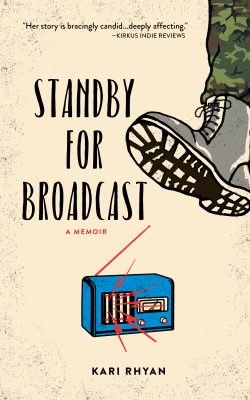
  • STANDBY for BROADCAST by Kari Rhyan – Memoir, Wartime Nursing, PTSD

    STANDBY for BROADCAST by Kari Rhyan – Memoir, Wartime Nursing, PTSD

    Childhood demons and combat wounds cause one Navy nurse to examine her life in Standby for Broadcast, a moving and turbulent memoir by Kari Rhyan.

    Rhyan served nearly twenty years in the US Navy as a nurse, her final deployment taking place in Afghanistan to a medical unit run by the British where Rhyan upheld her duties to aid others, while inwardly feeling unprotected and helpless. After witnessing the many tragedies of war, primary among them multiple amputations, she comes home scarred in mind. Her trauma becomes so obvious that she is sent to a special private unit.

    It is at this private unit, The Willows, where Rhyan is overseen by a compassionate counselor, Riza, who enjoins her to attend AA meetings. Rhyan refuses, feeling that “acceptance” is not the answer for her rational hatred of warfare. But she cannot dodge the assignment of writing a chronicle of her war experience to be read aloud to fellow patients at sessions in “The War Room.”

    Her memories of Afghanistan soon become jumbled with her childhood recollections of abuse by her addicted mother and sexual aggression by another family member, and with her current, difficult life as a gay mother. Because fellow patients were deployed as soldiers, Rhyan feels her suffering is not as authentic as theirs, but Riza continues to push her to write, to remember and describe, at the least, a single day. Finally, she is able to bleed out her agonized story of observing and treating pitifully wounded war victims, including a child, burned nearly to the bone. Ultimately, her treatment at The Willows leads her to separate from her alcoholic mother and find a new life outside the military.

    Rhyan writes with vivid emotion, leaving nothing out in her determination to make her story known and understood. Not a soldier, still she and her fellow medical personnel must find inner stores of courage and battlefield humor in order to take on the daily task of assisting young soldiers so badly torn apart that it would seem death more likely and perhaps the most desirable outcome.

    Throughout her recollections, which are liberally peppered with appropriate profanity and shocking imagery and at times exhibit a frantic desperation, Rhyan quotes great writers and philosophers on the subject of war. Through Riza’s voice, in a dramatic scene, she reminds us that warriors in ancient times were never allowed to return home because of the madness that war caused…so wars had to be continuous, to keep those who waged it occupied and out of sight. Rhyan shows us their madness close-up, with its many results, as she has seen and lived it: the nightmares, paranoia, violence, self-medication, self-hatred.

    The conclusion to Rhyan’s hard work on herself at The Willows is what seems for now like a restful, if not entirely peaceful existence, in closeness with her child and the spouse who remained faithful and understanding throughout her long ordeal.

    Rhyan’s memoir is frank, insightful, and a powerful reminder of the toil taken by those who wrestle with the fallout of the carnage of war. She also reminds us of the resiliency of the human spirit and the power of hope.

    5 Star Best Book Chanticleer Reviews round silver sticker

  • MY EXTRAORDINARY LIFE by Monica Sucha Vickers – Memoir, Inspirational

    MY EXTRAORDINARY LIFE by Monica Sucha Vickers – Memoir, Inspirational

    Monica Sucha Vickers was born in 1954, her parents’ first child. Their love for her overcame the shock they experienced when they saw that she was severely handicapped.

    Born without legs and missing her right arm, Vickers was probably a “thalidomide baby,” although her mother’s medical records are mysteriously lacking the proof of that speculation. Advised by doctors to institutionalize their tiny daughter, her parents took her home instead, and, without discussing their secret sorrows, they raised Monica with courage and without barriers.

    Her father pushed her to try new things—navigating stairs and participating in sports. Initially sent to a special needs school, she complained that she was out of place there, so she was transferred to typical schooling.

    In college she and a roommate took a long trip out west in the author’s hand-controlled auto, inspiring her to move from the Midwest of her birth with its icy winters to sunny California. She became an expert medical transcriptionist, typing twice as fast with one hand as most of her co-workers could with two. It was here she met and eventually married a construction engineer who designed a special office space for her home business. Together they happily entertained their large extended families.

    After her rather sheltered upbringing, the author gradually saw that the world can be cold and hurtful to people with handicaps; she speaks out boldly on that subject. She states that her grandmother, who taught her to bake, prepare fresh garden veggies, ride a tricycle, even sew and embroider, provided the impetus for this memoir. Her grandmother was, and still is, her hero.

    Vickers writes with a rare combination of gusto and aptly chosen phrasing, reflecting her own spirited but well-planned approach to life’s adversities, of which she has had more than her fair share. Her prose is plain and her observations frank, showing her creative talent along with the ability to objectify her experience in an unusually balanced manner.

    The book contains many photographs showing not only the extent of her disabilities, especially in early childhood, but also the means she has used to overcome them over the course of her tough but courageous life: the heavy but cosmetically sculpted artificial legs, the various wheelchairs, her hand-operated car, her athleticism as a swimmer, her unconventional but very effective typing method. Here, Vickers admonishes readers about what not to do and say to handicapped and wheelchair bound persons, which is enlightening and edifying.

    Avoiding any temptation towards bitterness, especially in the matter of the probable cause of her disabilities, Vickers has boldly included numerous honest appraisals penned by family members and friends about growing up with and knowing her. This willingness to see herself as others see her sometimes brings her back to the awareness of the adage, “People will see your disability before they see you,” a hard lesson that took her a long time to absorb.

    This is an important memoir that serves to bridge a gap between people of all shapes and sizes – no matter what their condition. An honest and courageous chronology of a life that truly deserves to be called “extraordinary.” Monica can be reached via her Facebook page or her website, which is listed at the top of this review.

    5 Star Best Book Chanticleer Reviews round silver sticker

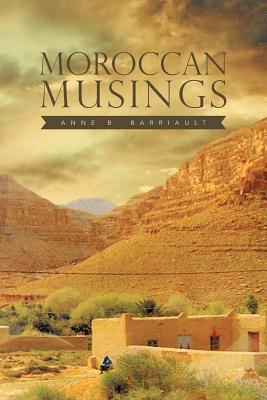
  • MOROCCAN MUSING by Anne B. Barrialut – Non-Fiction/Memoir/Travel/Morocco

    MOROCCAN MUSING by Anne B. Barrialut – Non-Fiction/Memoir/Travel/Morocco

    Anne B. Barriault fell under the spell of Morocco on a tour of Moorish ruins in Italy. She joined an organized museum group excursion called “Moroccan Discovery” and later would return on her own for an 8-day stay in Fes under the caring eye of a resident family. Morocco, she says in her rich recollections of those journeys, is “sensuous, intoxicating, spiritual, and earthbound.” Here is the memoir-travelogue of Barriault’s, a museum professional, visits Morocco, recording colorful impressions in prose with accompanying pencil sketches by illustrator Shawna Spangler.

    In the first part of this rhapsodic tribute to the country, Barriault describes the various, sometimes chaotic events of the group tour: a first glimpse of the storied mirages of the desert, camel rides in the sand dunes that magically change color, a somber visit to Chellah, the sacred ruins outside Rabat where storks and eels guard the spirits of the dead.

    A scholar as well as author and observer, Barriault explains the meaning and history of the harem, where men protect their women by isolating them, and the hajiba, the ancient laws that require women to enter the homes of their husbands and never again step outside. She examines the veil in all its significant stages through the ages and contemplates the compromises that women must make, whether Muslim or not, veiled or not. She recalls the stares of young Moroccan girls and women at her unveiled freedom, circumspect looks that may hide disapproval or envy. Boys, too, are an important part of her writing. She describes the young men hanging about in city streets and shops, sometimes selling something or simply hoping for some recognition of their open, friendly chatter and attempts to speak English and teach a few Arabic words to the gaggle of foreigners.

    In the second part of the book, she visits on her own, in Fes, where she can immerse herself ever more deeply into the Moroccan culture. Having come to the city particularly for a sacred music festival, she finds herself forgetting all about her concert tickets on an afternoon when her hosts  — an ancient patriarch and his eight grown children all living together — treat her to a homely feast. Dish after dish –salads, couscous, roasted beef, fruits and finally fresh mint tea served with the aroma of incense — are brought forth, climaxed by a gift of a bracelet made of green glass bead, “the color of Islam.”

    She constantly reminds the reader that the Moroccan people, whose history and political life she carefully details, are friendly, open and sincere, happy in the happiness of their visitors, whether tourists on a short trek through the souk (shops) or coming for a longer stay, as she did, to plumb the depths. 

    Barriault writes with verve and emotion, almost poetic at times in her wish to convey the mystical beauty of this North African Muslim civilization. Illustrations by artist Shawna Spangler provide visual souvenirs drawn from the lush, illustrative narrative. Later the reader feels Barriault’s frustration as she realizes that, owing to the continued upheaval in the region, she will not soon be able to return to the Moroccan she loves.

    5 Star Best Book Chanticleer Reviews round silver sticker

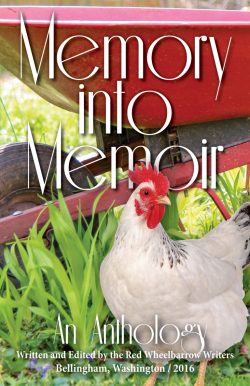
  • MEMORY into MEMOIR: An Anthology by The Red Wheelbarrow Writers – NonFiction, Memoir, Anthology

    MEMORY into MEMOIR: An Anthology by The Red Wheelbarrow Writers – NonFiction, Memoir, Anthology

    This curated anthology shows the collective creative effort that the Red Wheelbarrow Writers have dedicated to “Memory into Memoir,” each one a nugget of remembrance cloaked in the wisdom of time’s perspective and expressed in well-chosen words and memorable well-crafted story telling that will capture your heart and expand your soul.

    Below are a few samples of the superb writing in this anthology.

    The collections start with author (Beyond the Scope – Truth Turns Deadly in the Congo) and former US Embassy staffer Nancy Adair, who recounts, in “Just Say No,” being called upon to provide “community control” for a planned visit from Nancy Reagan to her post in Malaysia. Disaster follows disaster as plans fall through, the weather refuses to cooperate, and Reagan’s anticipated speech is four words long. Adair learns that far from being “one of those introverts who doesn’t like to disappoint people” as she initially imagined herself to be, she is secretly feisty, feisty enough to say “no” to the First Lady when the situation requires it.

    Blogger Sky Hedman’s “The Chosen Day” examines a distraught family trying to reconnect on a mountain picnic. The narrator, her Alzheimers-ridden mother and silently suffering sister Martha barely dodge tragedy on that outing, only to face it days later, along with an acknowledgment of fractured relationships: “The time to know Martha better had passed.”

    In “Thank You, Grace Paley,” aspiring Novelist Barbara Clarke recalls her remarkable personal meeting with the feminist icon over a late-evening cup of tea. Discouraged with her attempts at writing, she asks for and gets en-heartening advice from the famous author: “Just keep going.”

    University instructor Kate Miller’s “Elemental” is the memory of her eleven-year-old self, happily receiving a much-desired chemistry set, then balking at using it when she discovers the many vials containing poisonous substances: “What if I spilled two chemicals that weren’t supposed to mix?” Her escalating concern sparked by an active imagination causes her to stow the set away; later in life she is diagnosed with panic disorder, but still sometimes dreams of the chemistry set and its many messages.

    In “Leaving the Roman Lands,” world-wanderer Kenneth W. Meyer recreates his adventures overseas when in 1976 he and a traveling buddy agree to drive four wealthy students from Istanbul to Pakistan. In those days, foreign travel, the author states, “was like walking in space: you detached from the capsule, fed out your line, and enjoyed the spectacular view.”

    The final piece in Memory into Memoir, “The Great Moratorium,” is the fascinating story of a young woman “busting out of the beige life” at age 18, only to find herself in a highly abusive relationship. Escaping that, she later becomes a therapist for victims of domestic violence and embarks on a one-month experiment in “relationship moratorium” that stretches out to eighteen elucidating years.

    Superb writing styles blend with ease in The Red Wheelbarrow Writers’ first anthology of thirty-two non-fiction works that are a pleasure to read. Offering something for most everyone to appreciate makes this anthology a wonderful gift and a welcome addition to any writer’s library as an inspirational read. A consortium of writers has produced this engaging collection of life’s vicissitudes remembered.

    The Red Wheel Barrel Writers

    According to members Cami Ostman and Laura Kalpakian, the Red Wheelbarrow Writers in Bellingham, Washington, call themselves a “loose collective of working writers” who have “monthly Bored meetings (yes, that’s the correct spelling)” and eschew formal designation as a club or non-profit (“when we need money we pass a hat”). The writers have conspired to inspire with this array of 32 short memoirs.

    The group takes its name from a poetic work, XXII, by William Carlos Williams:

    So much depends
    upon
    a red wheelbarrow
    glazed with rain
    water
    beside the white
    chickens.

    Underscoring this theme, each memoir begins with a quotation from Williams chosen by the individual writer.

    5 Star Best Book Chanticleer Reviews round silver sticker

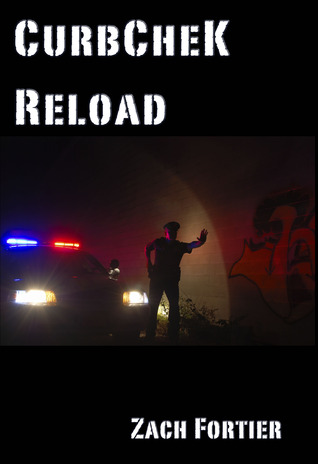
  • CURBCHEK RELOAD by Zach Fortier – True Crime/Police Memoir

    CURBCHEK RELOAD by Zach Fortier – True Crime/Police Memoir

    Interspersed with surprising moments of dark humor, fervent police pranks, and told with unchecked language, CurbChek-Reload by Zach Fortier is an expose’ of the challenging and graphically violent situations that are reflections of his day-to-day experiences of his thirty-year career as a city police officer.

    Fortier’s CurbChek-Reload is the third installment of his true-crime trilogy, The Curbchek Collection and takes readers on another ride through the arduous physical and emotional tribulations he experienced as a veteran police officer.

    Fortier does not temper his prose when he describes the depth of indifference, cruelty, malice, and depravity people inflict upon themselves, their loved ones, or someone in the wrong place at the wrong time without regard to the consequences of all involved.

    From the first sentence, the reader is positioned as a civilian who desires to witness the real underbelly of the mean streets and rides along in the patrol car. Fortier, who professes he hates ride along’s, recounts each story to you without emotion and in straightforward, curt exposition as if you’re watching over his shoulder. He articulates the benefits, downsides, and hazards of working the night shift, day shift, and with a four-legged partner armed with razor sharp teeth and a nasty independent streak.

    The stories take place in an undefined location called Central City and do not have a time sequence. The book is somewhat of a hybrid as it does not follow the usual conventions of true crime or memoir and contains some minor craft issues. However, it shines in its representation of the hazardous and complex challenges faced by the police. Fortier admits that if the public actually knew how thinly spread the police department was at times (six officers for an entire city), there would have been absolute panic.

    Fortier’s attitudes concerning some members of an apathetic society, duplicitous city leaders, inept police department management, and other officers are quite telling. He calls the people who drive into the city each morning to work Daywalkers.

    Conversely, Fortier provides examples where he relied upon his ability to communicate to de-escalate dangerous situations such as domestic disturbances, suicidal gestures or attempts, a potential melee, insatiable drug abusers, and so on.

    There is no overall plot or chronological framework to this story; rather, it’s a collection of episodic scenes without a story arc that occurred during the author’s law enforcement career. The writing style contains gives the impression this book is a transcription of the author’s recorded recollections of some of his intense situations that he experienced in his thirty-year career as a policeman.

    Nevertheless, as written, this collection contains some indomitable, funny, freakish, sad, outlandish, and bizarre accounts that vividly reflects one police officer’s complex experiences that occur all in his line of duty to protect and to serve.


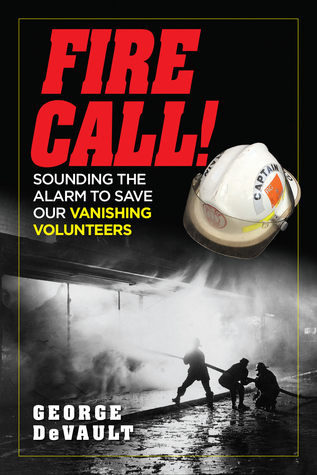
  • Fire Call! Sounding the Alarm to Save Our Vanishing Volunteers by George De Vault – Memoir/Fire Science

    Fire Call! Sounding the Alarm to Save Our Vanishing Volunteers by George De Vault – Memoir/Fire Science

    In his first job as a newspaper reporter, DeVault attended many emergencies – and firefighters were always on the scene. Gradually he discovered that the vast majority of America’s firefighters are volunteers, often leaving their regular jobs by prearrangement or rushing out from home in the middle of the night to respond to every conceivable crisis, from a simple kitchen fire to a multi-car crash to the cataclysmic events of 9-11-01.

    With the encouragement of empathetic wife Melanie, also a reporter, De Vault joined the firefighting ranks as a volunteer in Emmaus, Pennsylvania, while fully immersed in his journalistic career with Rodale Inc. He answered every call, about 5,000 over a thirty year period, no matter what else was going on in his life – even on a day when Melanie was in the hospital dealing with her own emergency.

    He describes such harrowing experiences as realizing that the blazing floor he was standing on was about to collapse, to loading corpses into body bags after the mid-air crash of two small planes, to rescuing many traumatized victims, their children, and their pets from burning homes. One of the more memorable and terrifying incidents described did not involve fire: the author was called upon to pull out a man stuck in a pond drain, battling pressure that threatened to suck him and the man he was rescuing into watery oblivion. Some events involved animals, notably the blaze in a pet store where volunteer firefighters gave mouth-to-mouth resuscitation, chest compressions, and oxygen to puppies and a chimpanzee.

    DeVault, most recently the local Fire Chief and an eco-conscious family farmer, uses this action-packed memoir to make us aware that if a fire or other disaster should strike our home or place of work, the people who rush to our rescue will almost certainly be volunteers. They will have gone through exceedingly rigorously training, including chopping a log with a 14-pound sledgehammer, carrying a fifty-pound weight 400 feet, and “wrestling a 100-pound rescue dummy out a second-floor window and down a ladder by yourself, while wearing bunker gear and an air pack.”

    Unfortunately, it has become nearly impossible to attract young people into this work that involves great personal sacrifice; many of our first responder volunteers now are over 50.  DeVault hits us with the facts: every 23 seconds, there’s a fire call somewhere in our country, or about 1.6 million calls a year. He lists at least 16 jobs that we can perform voluntarily to assist the firefighters in their valiant and valuable efforts, from grant writer to cook to performing the duties of a chaplain. Or, he suggests, “write a bigger check the next time your fire department has a fundraising drive.”

    George DeVault is a former reporter/writer who has turned his volunteering into a full-time job and now, a one-man crusade to fire up national interest in our firefighters – who they are, what they do, and why they merit our support. Readers will be thrilled, and at times chilled, by this up-close view of the sacrifice, guts, and skill displayed on an everyday basis by volunteer firefighters who perform their duties with no thought of recognition or reward. Professionally composed, fast-paced and thought-provoking, Fire Call! has already garnered the Charles A. “Chet” Henry Fire Service Advocacy Award in recognition of the book’s important message.

  • Love, Loss, and Awakening: (Mis)adventures on the Way Back to Joy by Dennis Freed – Non-Fiction/Memoir

    Love, Loss, and Awakening: (Mis)adventures on the Way Back to Joy by Dennis Freed – Non-Fiction/Memoir

    A heartfelt and profound account of confronting the death of a beloved spouse, Love, Loss, and Awakening combines pathos, humor, and gutsy truth from a survivor’s direct vantage point.

    When Dennis Freed married Hope, they were young. They had two sons, lived in the same house for years, and weathered many crises—until Hope contracted cancer and after several years of struggle, passed away. This is Freed’s frank, heart-rending tale of bereavement and recovery, and as such, it is also a paean to his devotion to Hope.

    As can be seen, even the names are charged with significance. Hope was a person with a positive nature who enjoyed helping others; who was determined to avoid discouragement even as her body was ravaged by disease, and who after her passing seemed able to advise and comfort her grieving spouse. But Dennis knew that in order to be truly “freed” he must, somehow, move on.

    At first, he battled with suicidal ideations, bouncing from despair and loneliness to anger–why did his wife “leave” him? Tormented by memories of Hope, he seized, perhaps prematurely, perhaps to excess, on the notion that other women could save him from his hellish grief state. This wasn’t easy for him because he’d met Hope at age 21 and married her soon after; he had to relearn the art of dating. He took on the search for women like a job. He visited dating websites, studied how to create a profile, and took pictures of himself in various poses and outfits. He had problems with his sexual apparatus and sometimes turned to a certain kind of female to relieve his aches and longings. He experimented with hair removal products to re-image himself for dating.

    Yet, as he remembered Hope, he knew what he wanted: not just a date – but a real partner. He went through all the recommended rituals: writing a letter of apology to Hope and burning it, scattering her ashes, connecting with his old memories and new aspirations through music and meditation, attending focus groups.

    In an especially poignant segment, he describes in vivid detail his wife’s one last tear. At times he even believed he had “seen” Hope, or “heard” her counseling him. But widower Freed finally realized that he had to take life as it came at him, not try to orchestrate the next moves; it was then that he found a new companion, someone he could accept and love fully, without guilt or regret.

    Freed, a developer, construction executive, and part-time university lecturer displays a remarkable gift for creating rich, emotionally tinged prose. Anyone who’s been through, or envisions ever having to go through, even a small part of what Freed experienced, will be moved because his story elicits vividly painful and, ultimately, a broad redemptive spectrum of emotions.

    Too personal to be a how-to manual, Love, Loss, and Awakening is more akin to a vivid portrayal of someone desperately stumbling in the dark desperately fumbling for a light switch, a flashlight, even a match to show the way out despair and hopelessness, and, then after a lot of bumps and scrapes, finally finding what he was seeking–happiness.

    5 Star Best Book Chanticleer Reviews round silver sticker

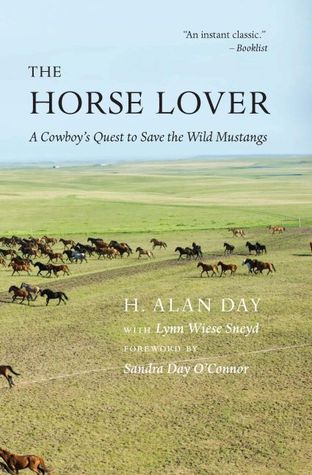
  • The Horse Lover: A Cowboy’s Quest to Save the Wild Mustangs by H. Alan Day with Lynn Wiese Sneyd – Non-Fiction/Memoir

    The Horse Lover: A Cowboy’s Quest to Save the Wild Mustangs by H. Alan Day with Lynn Wiese Sneyd – Non-Fiction/Memoir

    Thousands of wild mustangs now have a sanctuary to call home thanks to one man: H. Alan Day. This is his story.

    Perhaps you’ve heard of a horse whisperer: a person who gently and patiently communicates with an animal. Multiply that by 1,500 and you have H. Alan Day, a cattle rancher from the southwest turned horse herder who takes on what would seem to be an unimaginably huge project.

    The Horse Lover: A Cowboy’s Quest to Save the Wild Mustangs, is Day’s story of Mustang Meadows Ranch in the Sand Hills of South Dakota, the first government-sponsored wild horse sanctuary established in the United States.

    In beautifully vivid prose, Day transports us to the prairie, as in this passage: “The sun highlighted the horses, now twelve hundred strong, creating a canvas of golds, bronzes, beiges, blacks, and deep browns that stretched out before me.”

    Day’s youth played a critical role in his success and interest with horses as he grew up on a 200,000-acre cattle ranch straddling the high deserts of southern Arizona and New Mexico. After college, he returned to manage Lazy B, the family ranch, for the next 40 years. Later, he (hesitantly) purchased 35,000 acres in South Dakota and dedicated it as a horse preserve for 1,500 wild mustangs. Relying on a herd medication program he used at Lazy B, he trained the group of mustangs, those considered unadoptable, to follow a lead horse from the wild through the gates and into the horse meadow.

    However, it wasn’t always easy. Initially, Day scoffed at the idea. “Come on, wild horses? I was a cattle rancher…”

    Thanks to a heartfelt and informative introduction by his sister, Sandra Day O’Connor (the first female US Supreme Court Justice who retired in 2008 after 25 years on the bench), we learn that wild mustangs, formerly running free, breeding and multiplying, were being captured, sold, or destroyed. The Bureau of Land Management (BLM) took care of many of them; however, the remainder was considered unadoptable.

    Day remained stalwart facing dangers, frustrations, and heartbreak and had to deal with government red tape. Through his eloquent and moving story, he shows us the resolve and passion required for undertaking South Dakota ranching.

    It’s no surprise Horse Lover is well written and poignant; in 2002, Day partnered with his sister to co-author the family memoir, “Lazy B: Growing Up on a Cattle Ranch in the American Southwest,” which went on to become a New York Times bestseller.

    Horse lovers will not want to miss this book – and witness the magic of thousands of horses running wild. The rest of us will marvel at what Day was able to accomplish in this story of loyalty and hope.