Tag: Medieval Historical Fiction

  • The VALLEY (The Druid Chronicles Book Two) by A.M. Linden – Medieval Historical Fiction, Alternate Religions Historical Fiction, Ancient Civilizations Historical Fiction

    Herrwn, Chief Priest of a secret Druid community, has spent his entire, privileged life in Llwddawanden, a secluded valley kept separate from the spread of Christianity from both Saxon and Celt alike, in A.M. Linden’s The Valley (The Druid Chronicles, Book Two).

    Nonbelievers of the Great Mother Goddess threaten inevitable persecution. But Herrwn has maintained the traditional practices passed to him by his own father. As an orator in charge of repeating the legends and beliefs of his people, he knows the importance and the heavy responsibility required by his sacred office. With the decrease in believers outside of the valley, he understands the precarious position of the community and the difficult balance he must maintain.

    Over the course of his long life, he has come to rely on his cousins, Olyrrwd (Chief Healer) and Ossiam (Chief Oracle). Still, as the years pass, his loyalties become torn when what starts as simple gibes between the two priests morphs into unspoken fear of what the other might do to gain favor with the various priestesses chosen as the Goddess Incarnate. Having lost his beloved wife and young child, Herrwn grows closer to Olyrrwd and becomes the peacekeeper between the priests to keep what remaining family he has left.

    When a promising young man, Caelym, the son of a former Goddess Incarnate, becomes the sole priest-in-training, the cousins further divide on the right course of action for the clan. At each turn, dissension and sedition threaten every belief and tradition that holds the people together, and Herrwn will have to make decisions that could change the course of his community forever.

    One notable strength of this prequel lies in Linden’s character development.

    Herrwn becomes real as his life story unfolds. The tragic loss of both Lothwen, his consort, and Lillywen, his young daughter, forge him into a contemplative and thoughtful character. The reader will feel his grief through his shared memories of their time together and the depth of the love that ran deep enough to keep him from ever becoming the consort of any other woman nor the father of any more children.

    The remembrance of his doting and proud father’s advice and the love of a mother long gone will resonate with readers. We witness his strength and forethought as he tries to soothe the growing tensions and tread the choppy waters of change surging through his once-tranquil life. However, Herrwn is only one of many such characters so well developed that they seem to leap from the pages into real life.

    Olyrrwd, the physician combining herbal and ritual healing, is another such character.

    His charm and humor will make him a reader-favorite with his sarcastic, albeit pithy comments. As the novel continues, the two become closer than just their familial bonds of cousins. Each is a sounding board for the other, and their relationship is reminiscent of that one friend every person has–the one who understands without words and knows us better than we know ourselves.

    However, the mixture isn’t complete without a bit of chaos, and that is where their cousin Ossiam takes the stage.

    The reader will love to hate him as much as Olyrrwd does in that classic villain way, second-guessing his every move and questioning his every motive. With his charismatic control over the young Goddess Incarnate and his scheming to gain more than her favor, he is a perfect catalyst to the majority of the boat-rocking that disturbs both cousins’ lives. This collision of values causes Herrwn’s peacemaker qualities to emerge.

    The ongoing battles between Olyrrwd and Ossiam create a palatable tension and serve to drive the force within the plot itself. It also reminds the reader that although millennia separate Herrwn, Ossiam, and Olyrrwd from the modern world, people are essentially the same. Fear, anger, love, hate–the emotions that make us human are the same as those of every human, creating a surprising connection to these pagan Druids.

    A theme within this frame story prequel revolves around change and its impact on human relationships and cultures.

    Right from the start, the Druid clan fights a dramatic shift within the Saxon kingdoms surrounding their valley. Set during the spread of Christianity and the turning away from pagan gods and goddesses, the sacred shrines and villages retreated into an even more secluded region.

    For many years, their isolation kept away the influences brought by Roman occupation; however, as more and more Saxons converted, the worshipers of the Mother Goddess began to follow suit, including members of Herrwn’s own family. Believers begin to defect and lose faith.

    For a Chief Priest set to educate future priests to pass on their very heritage, these changes literally show the end of an ancient religion. He must watch the foundation of his life shift and begin to crumble.

    Every choice and every thought is consumed with rituals that are fast becoming meaningless. Reconciling–much less accepting–these changes will cost Herrwn more than a sleepless night. Not only is the clan facing a loss of faith, but the mature priest must also learn to live with a younger generation that seems to disregard many of the traditions he is fighting so hard to save.

    From a Goddess Incarnate chosen for her beauty rather than wisdom to her blood-thirsty consort challenging better trained and better equipped Saxon enemies, the generation set to lead poses a change to the somber, thoughtful people of Herrwn’s youth.

    With the attention to detail, explanation of ancient rituals, and the mythology within the clan’s legends, this novel builds a community, exploring a people about which little is actually known. It’s an extraordinary portrayal, breathing life into a long-dead civilization. Readers feel Herrwn struggle as he endeavors to keep a secret Druid community alive, fracturing from within, persecuted from without by the spreading Christian church. Highly recommended!



    5 Stars! Best Book Chanticleer Book Reviews


  • SAXON HEROINES: A Northumbrian Novel (Women of Determination and Courage, Book 3) by Sandra Wagner-Wright – Medieval Historical Biographies,

    Sandra Wagner-Wright’s Saxon Heroines is a three-part historical fiction work that transports readers to seventh century Northumbria, exploring the lives of several women and their important title roles in recorded history. Here she uncovers the powerful influence of queens over kings, their relationships with sons and daughters, the movement of Christianity across the region, and the significant role of abbesses and their religious holds throughout the land.

    Whether Queen Ethelberga intent on converting her husband King Edwin to Christianity; her daughter, Enfleda, who must accept marriage to King Oswy; or granddaughter, Elfleda, who will be trained to become an abbess, following in the footsteps of Hildeburg, the king’s niece; such women, capable of negotiating a united church between royalty and religious leaders, prove decisive and dedicated contributors to a traditionally male-dominated society. Wagner-Wright gives each woman a voice in important matters.

    In the audio version, Deepti Gupta’s mildly accented narration sets the stage for an ancient, medieval storyline capturing a particular time frame (624 – 706 AD). Her diction is well-suited to the material in a mixture of quiet tones and firm directives.

    In a chronological format, events of the day are intricately detailed. Against a landscape where Anglo Saxon states attempt to assert dominance and gain power, listeners will absorb and visualize the likes of plans against the enemy, illustrious banquet halls, wedding celebrations, marital beds, the use of a birthing chair, baptisms, battles, and death.

    While the narration informs us of character changes, and vocal inflections help distinguish the individuals, these can sometimes be a bit too subtle. Some listeners may be challenged with key character names, which are pretty similar. This often occurs within a family lineage, thus making it particularly hard to distinguish within the realm of a generational saga. Name pronunciation, itself, can also prove a tricky.

    As chapters play out in a timely fashion, the title notations provide the year and the focal event happening within that time frame.

    While listening time is nearly 8 hours (7 hours and 57 minutes), pausing throughout the narrative will help listeners absorb the information, allowing them a chance to recognize and place characters within the context of the story. Wagner-Wright’s final notes include facts about the characters and subsequent eighth-century events in Northumbria. An initial visual reference chart of names, places, and dates that a listener could access on their device would be of tremendous use.

    Saxon Heroines audiobook will greatly appeal to those who enjoy the medieval history of the mid to late seventh century, including its religious conflicts, and particularly those interested in the role of critical female figures involved in the spreading of Christianity. While primarily research-based, Wagner-Wright aptly weaves human interest elements into the story and laces the narrative with descriptive characteristics that color and bring life to these inspiring heroines in history.

    Sandra Wagner-Wright is an impressive historian who brings these forgotten women into the 21st-century limelight. For those who wish to read the book along with the audiobook, follow this link to our review of Saxon Heroines.


    Chanticleer Book Reviews 4 star silver foil book sticker

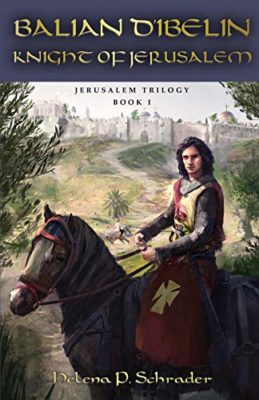
  • BALIAN d’IBELIN: Knight of Jerusalem (Book 1 of the Jerusalem Trilogy) by Helena P. Schrader – Biographical Historical Fiction, Medieval Historical Fiction, Crusader States

    BALIAN d’IBELIN: Knight of Jerusalem (Book 1 of the Jerusalem Trilogy) by Helena P. Schrader – Biographical Historical Fiction, Medieval Historical Fiction, Crusader States

    Welcome to the Outremer, where fealties are solemn, rivalries deadly, and intrigue is served up daily along with the wine. Here, well-connected women are worth their weight in gold, and the rules of primogeniture, along with the whims of a king or mandates from the Church can determine a person’s fate.

    In Balian d’Ibelin: Knight of Jerusalem (Book 1 of the Jerusalem Trilogy), Helena P. Schrader has re-created people, places, and events in the latter 12th-century kingdom of Jerusalem for the reader’s edification and enjoyment. With an elegance of language, detail, and setting rivaling that of Doctorow’s Jazztime or Tolstoy’s War and Peace, Schrader takes the reader on location to savor the world of Balian d’Ibelin in the times before he emerged as a pivotal player in the politics of the Crusader states.

    Young Balian d’Ibelin, while possessing the pedigree, social graces, and knightly skills of one raised to rule, has few prospects when his eldest brother, Hugh, dies unexpectedly.  Although Hugh’s stated desire that the Lordship of Ibelin title and holdings go to Balian, they fall to Balian’s next older brother, Barry, through rights of succession.

    Barry, Lord of Ramla, offers Balian only the position of Constable of Ibelin. Rather than accept this powerful, but subservient post, Balian seeks a future serving Amalric, the King of Jerusalem. The king, who owes Hugh a debt of honor, proffers a court position with some risk – tutor his son Baldwin in the arts of horsemanship, swordsmanship, and sport, as the debilitating infirmity of leprosy, has put the boy behind in this training.

    Accepting this offer moves Balian into the spheres of William, the Archdeacon of Tyre, Baldwin’s academic tutor, and Queen Maria Comnena, the boy’s young, educated, and savvy step-mother, people destined to be essential parts of his life.

    When Amalric dies young, and Balian swears fealty to Baldwin as the new king, the die is cast.  While honoring his oath, he earns the love of the queen, experiences the power of commitment, and learns the cost of honor.

    Balian d’Ibelin: Knight of Jerusalem (Book 1 of the Jerusalem Trilogy) is a joy to read. As in all of Schrader’s novels, the forward to this story is a must-read that serves to ground the reader in the time, place, and cultural multiplicities of the period. By interpreting, hypothesizing, and imagining motivations, actions, conversations, and events that may have occurred as Balian stepped forward into his future, Schrader has turned a narrow slice of history into a panoramic virtual reality that will surely delight fans of historical biographies and Crusader states – and give us something to look forward to in the release of books 2 and 3.

    Readers, brew a pot of tea and snuggle in, for Helena P. Schrader has cast her spell of intrigue and sent her invitation wide. In other words, prepare to get hooked!


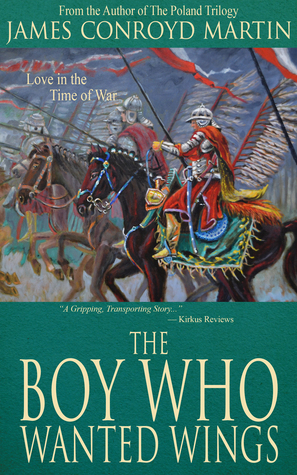
  • The BOY WHO WANTED WINGS by James Conroyd Martin – Medieval Historical Fiction, War/Military, European

    The BOY WHO WANTED WINGS by James Conroyd Martin – Medieval Historical Fiction, War/Military, European

    A suspenseful and often overlooked chapter in history, the siege of Vienna in the late 17th century is the subject of James Conroyd Martin’s masterful novel, The Boy Who Wanted Wings.

    Although Poland’s involvement in the protection of the city from the invading Turks is the mainstay of the book, Martin widens the breadth of his study to underscore the multinational effort undertaken to halt the spread of Islam, providing meticulously researched details about the allied forces of the Saxons, Franconians, and Bavarians uniting to halt the siege of the Ottomans and Crimean Tatars*.  Although this is a work of fiction, to the author’s credit, the wealth of historical information provided is beyond impressive.  Most helpful is the glossary of Polish cultural and military terms of the time at the outset of the book.

    The reader navigates this chapter in Europe’s past with Aleksy Gazdecki, a boy on the verge of manhood whose personal past and present circumstances present no end of identity issues.  A Tatar by birth, he was orphaned as an infant and raised by a Polish peasant family, tenants of Lord Halicki.  Aleksy’s swarthy complexion and dark, almond-shaped eyes cause him to stand out amongst the Poles and ultimately be treated with suspicion.  He longs to join the Winged Hussars, the elite branch of the Polish military whose legendary skills with seventeen-foot-long lances are announced by a uniform that includes “wings.”  Although he trains with a former soldier, currently a stablemaster, Aleksy knows how futile his dream is since only men of noble birth can become Winged Hussars.

    Amidst the military drama is, of course, personal drama.  Aleksy has a chance encounter with the beautiful Krystyna, Lord Halicki’s daughter, and the two engage in a dangerous, secretive romance, jumping the hurdles presented by her family, who are determined to see her married to a wealthy noble, as well as confronting the escalating war at hand. Krystyna’s brothers, the sweet Marek and the haughty, vengeful Roman, will cross paths with Aleksy again and again since he follows them into battle as Marek’s “retainer.”

    Just as Aleksy sought to overcome the circumstances of his birth in his romantic life, he will do so also on the battlefield. Ironically, his Tatar heritage gives him the opportunity to save a life, a very important life, and the resulting events put Krystyna within his reach. Martin takes no shortcuts and keeps the reader guessing with a long list of characters and numerous plots twists all carried out with exquisite pacing.

    Despite the triumph of the Poles, Martin deftly explores the addictive nature of bloodlust and the true consequences of war. Aleksy is exhausted and saddened by the killing and able to transcend nationalistic feelings.  He has killed men, regardless of where they’re from or what faith they practice. It’s an apt observation from a Tatar who has lived his life amongst a people other than his own, a Tatar who has tried to be the most loyal subject of Poland.

    This is a novel with staying power.  Given the geopolitical situations in the world today, the author reminds us that war has a long and bloody history, and political alliances are intricately tied to this history. James Conroyd Martin’s The Boy Who Wanted Wings will make one most glad for the opportunity to spend time in the 17th century.

    *Alternate spelling: Tartar

    This book is also available in Softcover (ISBN-13: 978-0997894509) and Hardcover (ISBN-13: 978-0997894516)

    5 Star Best Book Chanticleer Reviews round silver sticker