Tag: Medieval Fiction

  • The CHAUCER Awards for Pre-1750s Historical Fiction – 2017 Official List of Winners

    The CHAUCER Awards for Pre-1750s Historical Fiction – 2017 Official List of Winners

    Pre 1750 Historical Fiction AwardWe are excited and honored to officially announce the Grand Prize Winner and the First Place Category Winners for the 2017 CHAUCER Book Awards for Pre-1750  Historical Fiction Novels at the fifth annual Chanticleer Authors Conference and Chanticleer Book Awards Ceremony. This year’s ceremony and banquet were held on Saturday, April 21st, 2018 at the Hotel Bellwether by beautiful Bellingham Bay, Wash.

    We want to thank all of those who entered and participated in the  2017 Chaucer Book Awards, a division of the Chanticleer  International Book Awards.

    When we receive the digital photographs from the Official CAC18 photographer, we will post them here and on the complete announcement that will list all the genres and the Overall Grand Prize Winner for the 2017 Chanticleer International Book Awards. Please check back!

    Click here for the link to the 2017 CHAUCER Shortlisters! An email will go out within three weeks to all Shortlisters with links to digital badges and how to order Shortlister stickers.

    Congratulations to the 2017 CHAUCER SHORTLISTERS!

    Janet Oakley, the author of the 2016 GOETHE Grand Prize Winner, The JØSSING AFFAIR,  announced the First Place Award Winners and the Grand Prize Winner for the 2017 Chaucer Book Awards at the Chanticleer Awards Banquet and Ceremony.

    Congratulations to the First Place Category Winners of the 2017  CHAUCER  Book Awards. 

    An email will go out to all First Place Category Winners and Grand Prize Winners with more information, the timing of awarded reviews, links to digital badges, and more by May 21st, 2018 (four weeks after the awards ceremony). Please look for it.

    2017 CHAUCER Book Awards First in Category Winners for pre-1750s Historical Fiction Novels are:

    • The  Serpent and the Eagle by Edward Rickford
    • Slave to Fortune by DJ Munro
    • The Traitor’s Noose by Catherine A Wilson and Catherine T Wilson
    • Feast of Sorrow: A Novel of Ancient Rome by Crystal King
    • Call to Juno: A Tale of Ancient Rome  by Elisabeth Storrs
    • The Chatelaine of Montaillou by Susan E Kaberry
    • Guillaume: Book Two of The Triptych Chronicle by Prue Batten         

     And now for the 2017 CHAUCER Grand Prize Book Award Winner for pre-1750 Historical Fiction Novels:

    The Traitor’s Noose: Lions and Lilies Book 4

    by Catherine A. Wilson and Catherine T. Wilson


    This post will be updated with photos from the awards ceremony. Please do visit it again!

    The deadline to submit to the 2018 Chaucer Book Awards is June 30, 2018.

    Our next Chanticleer International Book Awards Banquet will be held on Saturday, April 20th, 2019, for the 2018 winners. Enter your book or manuscript in a contest today!
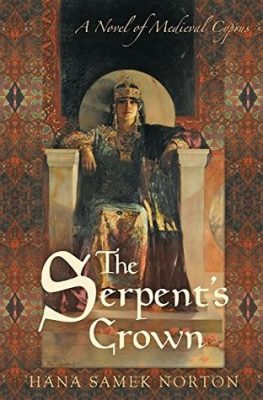
  • The SERPENT’S CROWN: A NOVEL of MEDIEVAL CYPRUS by Hana Samek Norton – Medieval Cyprus, Historical Fiction, Literature

    The SERPENT’S CROWN: A NOVEL of MEDIEVAL CYPRUS by Hana Samek Norton – Medieval Cyprus, Historical Fiction, Literature

    Hana Samek Norton begins her epic and engrossing novel of historical fiction, The Serpent’s Crown; A Novel of Medieval Cyprus, with this quotation:  “It sometimes happens that exploits, however, known and splendidly achieved, come, by length of time, to be less known to fame, or even forgotten among posterity.” (Itinerarum Peregrinorum et Gesta Regis Ricardi) How fortunate for readers, then, that the author brings to life a captivating chapter of history that occurred in Cyprus and Jerusalem in the early thirteenth century.

    While many may be familiar with the main players of the royal Lusignan and Ibelin families, dynastic houses that feuded and intermarried during medieval times, Samek Norton proves that the characters waiting in the wings often play covert but essential parts in history. Had they not been there, events may have played out very differently. Much is owed to these minor characters who were discounted or overlooked, characters who utilized that obscurity to accomplish what their more famous peers didn’t or couldn’t because their lives were too public.

    The Serpent’s Crown is a ringing endorsement of the idea that the personal is political. This is not a novel of battles and treaties, although they are referenced often with explanatory details. Instead, this novel is a stunning examination of how history is forged through the relations between husbands and wives, parents and children, siblings and every configuration of blended families. Spouses were lost to illnesses, pirates, poisons, accidents, and every other possible cause of death. Kings and queens had to have consorts, however, so marriages kept occurring with elaborate step-relations resulting.

    Families were fertile ground for stirrings of love and loyalty, but also betrayals and extortions.  The Lusignans and the Ibelins conspired to gain political power, but these families were often openly hostile towards each other. Juliana often contemplates family matters and specifically “what makes a marriage.” She is married to Guerin de Lasalle, a nephew of King Aimary de Lusinan, King of Jerusalem and Cyprus. Lasalle has a far less grand title, Lord of Parthenay. He had been betrothed to another as a child, a fact that unsettles Juliana and causes her to worry that her marriage is not valid, that in the eyes of the church, she is an adulterer. While she wants for nothing, she is often exasperated by her husband’s absolute loyalty to his uncle, his readiness to do whatever is necessary to assure the stability of the King’s realms. Juliana, a former nun used to a quiet life of piety and religious devotion, springs to action when her father-in-law kidnaps her infant daughter, Eleanor, and takes her to France. Nothing will deter her from recovering the child, but her quest is a long one, comprising several years and many events.

    Samek Norton’s prose is vibrant and evocative. Her detailed descriptions of the ornate, often layered gowns worn by queens and their ladies make one long for a Project Runway of medieval fashions. The sumptuous descriptions of food and the fleshing out of time, of locales, of palaces, of Mediterranean sunlight, provide an exquisite backdrop for the action of the novel.

    The book is thick with details, testimony to the author’s in-depth research, and keeping the many royal relations straight can be a challenge at times. The Cast of Characters listed at the outset of the novel is a great help. Even servants of households are noted because, again, this is a book that shines a light in dusty corners in piecing together events that affected outcomes noted in history books. In this regard, there are no insignificant characters. Samek Norton proves that the broad events of history rest on the shoulders of ordinary men and women.  She gives them their long overdue recognition.

    5 Stars! Best Book Chanticleer Book Reviews

  • The CHAUCER Awards for Historical Fiction Pre-1750s First Place Category Winners 2016

    The CHAUCER Awards for Historical Fiction Pre-1750s First Place Category Winners 2016

    Pre 1750 Historical Fiction Award

    The Chaucer Awards writing competition recognizes emerging new talent and outstanding works in the genre of pre-1750s Historical Fiction. The CHAUCER Awards is a division of the Chanticleer Awards International Writing Competitions.

    Congratulations to the 2016 Chaucer Awards First In Category Award Winning Historical Fiction Novels:

    • Award Winning Authors – Bruce Gardner and Carol Cram

      The Towers of Tuscany by Carol M. Cram

    • Envoy of Jerusalem: Balian d’Ibelin and the Third Crusade by Helena P. Schrader
    • The Gilded Crown by Catherine T and Catherine A Wilson
    • Hope of Ages Past by Bruce Gardner
    • 1381: The Forgotten Revolt by Gina M. Bright
    • The Serpent’s Crown: A Novel of Medieval Cyprus by Hana Samek Norton

    CONGRATULATIONS to Carol M. Cram, author of the CHAUCER Awards Grand Prize Winner — The Towers of Tuscany! 

    The CHAUCER First Place  Category award winners competed for the CHAUCER Grand Prize Award for the 2016 Historical Fiction Novel. Grand Prize winners, blue ribbons, and prizes were announced and awarded on April 1, 2017 at the Chanticleer Authors Conference and Awards Gala, Bellingham, Wash.

    We are now accepting entries into the 2017 Chaucer Awards. The deadline is June 30, 2017.  Click here for more information or to enter.

    Congratulations to those who made the CHAUCER Awards 2016 FINALISTS and Official SHORTLISTERS!

    More than $30,000 worth of cash and prizes will be awarded to the 2018 Chanticleer Novel Writing Competition winners! Fifteen different genres to enter your novels and compete on an international level.