Tag: Medieval

  • THE MERCHANT From SEPHARAD by James Hutson-Wiley – Historical Fiction, Medieval, Jewish History

    blue and gold badge recognizing The Merchant from Sepharad by James Hutson-Wiley for winning the 2023 Chaucer Grand PrizeJoshua Ibn Elazar, the eager son of a Jewish merchant, travels to al-Andalus (the Iberian Peninsula under Muslim rule) to prove himself in his father’s business. But he finds an unwelcoming, degrading society waiting for him, and begins a journey of misfortune and anger in James Hutson-Wiley’s historical fiction novel, The Merchant from Sepharad.

    Shortly after arriving in the city of Lishbunah, al-Andalus, Joshua is tricked out of the gold for his living expenses. Worse yet, he learns that Jews in Lishbunah suffer under oppressive laws, holding far less status than Muslim citizens. He can only find help in Lishbuna’s Jewish community, meeting Rabbi Hiyya al-Daudi and his son Yaish, who house and feed him.

    They tell him that his father’s colleague, Essua, who was to help Joshua manage a shipment of flax and sugar, has been arrested. Though Essua is eventually released, Joshua fails to secure storage for his goods, as the makhzan (warehouse) he rented is given to a Muslim merchant instead. In his fury at the city’s prejudice, he sets fire to the makhzan, and is forced to flee.

    Thankfully, Rabbi al-Daudi has secret connections to Alfonso Henriques, the Christian King of Portugal.

    Joshua travels with Blazh, a Slav who was enslaved as a boy when his village was raided. They deliver a message of Lishbunah’s weaknesses to Alfonso, who plans to march on Lishbunah with the help of the Crucesignati (crusaders). Al-Daudi hopes that Alfonso’s conquering of the city would be better for the Jews in Lishbunah than the encroaching threat of the Almohad, a Muslim power that demands either conversion or death.

    Joshua travels on to the city of Qurtuba and becomes a student of Rabbi Maimon ben Joseph. However, Joshua’s troubles have only begun. He becomes involved with Karaites, Jews who reject Rabbinical authority, and shares in their far-off dream of retaking Yerushalayim (Jerusalem). Together they leave Qurtuba, only to suffer at the hands of a band of Christian soldiers. Joshua’s fury at the world of Muslims and Christians grows with each misstep in his journey, as he watches friends be killed, loses his father’s respect, and is told over and over again to accept these pains as God’s plan.

    He travels through al-Andalus, across the Mediterranean to Sicilia (Sicily) and Al-Misr (Egypt), and down the Red Sea as he tries to redeem himself in his father’s eyes. He can’t forget the cruelties he suffers, and they weigh on his shoulders. But so too does each kind act keep his spirit alive. As he sees more and more of the world, he measures his desire for retribution against the ideals of his faith.

    The Merchant from Sepharad offers an in-depth, fascinating look into twelfth-century Iberia, the Mediterranean, and the Red Sea.

    From Lishbuna to Qurtuba to al-Yaman, Joshua encounters the subtleties of social life amongst peoples with vastly different histories. Rather than taking a broad view of the dynamics between different cultures in al-Andalus and al-Misr, author James Hutson-Wiley fills this book with specific struggles and clashes. A helpful glossary at the end of the book explains the terms and language of this time and place.

    This dedication to detail makes each new city feel unique, as they were in real life. The people speak and treat each other differently, the pains and joys are weighed out in different amounts, and the ever-turning wheels of history threaten to crush one people while enriching another. As a Jew, Joshua remains an outsider along much of his journey, giving him a fascinating view of the conflicts in his world. Readers will learn much about the power struggles of the twelfth century as they follow him from region to region.

    Joshua becomes an engrossing protagonist through his struggle to succeed as a merchant – and often just to survive.

    His anger drives him to make rash, but understandable, choices. Despite all of the social forces arrayed against him, he hopes to make some kind of change in the world. But when his very life is threatened, more than once, how can he hold on to his ideals and his rage at the same time?

    Friends and teachers on Joshua’s journey show a more hopeful side of humanity. The kind Blazh, patient Maimon, passionate Simon, stalwart Wallo, and others help to shape Joshua’s emotional path. He comes to understand that oppression is shared amongst many people, and one of the few strengths they have is solidarity with one another. Without the generosity of others, Joshua would never have survived. But, of course, the cruelty of the world stings worst when it takes good people from him.

    At the heart of the story lay Joshua’s faith, and sometimes lack thereof.

    He learns from Rabbis, explores the Karaite philosophy, and tries to take solace in his beliefs. Much of his life is shaped by being a Jew, how could it not be in a place like al-Andalus? But while teachers like Maimon urge him to be patient and understanding of God’s plan, others like Simon insist that God demands them to act against their oppressors. He struggled to believe that God could want him to accept all of the pain and death he’s seen. Should he not take up his sling against the forces of Amalek?

    As he learns of new people and their struggles, he considers what unity there is in faith. While his hope of taking Yerushalayim remains far out of reach, perhaps there are still some ways that he can help those who share his hardships?

    The Merchant from Sepharad not only provides lessons on history, but an exploration of Jewish philosophy and scripture. Fans of historical fiction and religious history will adore this story, the third installment in the Sugar Merchant series.



    5 Stars! Best Book Chanticleer Book Reviews

  • The TRAITOR’S NOOSE, Lions and Lilies, Book 4 by Catherine A. Wilson – Historical Fiction, Medieval, Romance

    The TRAITOR’S NOOSE, Lions and Lilies, Book 4 by Catherine A. Wilson – Historical Fiction, Medieval, Romance

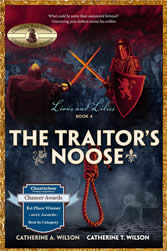
    Chaucer Grand Prize Winner Badge for The TRAITOR'S NOOSE by Catherine A. WilsonFans of this widely admired and masterfully written series, Lions and Lilies, will not be disappointed with its concluding, volume, The Traitor’s Noose. The impressive scholarship, riveting dramatic scenes, and sweet romances that characterized the previous books are on full display here as well. The co-authors note, “…this is not a historic account but a ‘medieval adventure with a dash of romance, using history as its background. We have tried at all times to remain faithful and accurate to that history, but it is a fictional story.”  Nonetheless, the reader need only review the lengthy bibliography included to gain a sense of the breadth of work the authors undertook to put this magnificent story on the page.


    Set mainly in England and France during the 14th century, the main characters are Lady Cecile de Bellegarde, Catherine Marshall, and their husbands. Catherine and Cecile, twin sisters separated at birth, have forged a bond that no person or event can break. While they live in different nations, Catherine in England and Cecile in France, their lives have many parallels. They are both married to courageous but unjustly maligned knights. Simon Marshall and Gillet de Bellegarde love their wives deeply, seek to protect them at all costs, and avenge any harm or cruelty done to them. That does not mean that they will readily divulge their fears to their spouses or recount the horrifying episodes they have survived, however.

    Catherine is aware that Simon is under suspicion for murder, she knows her husband’s melancholy and reserve are caused by deeper worries. While Gillet experiences traumas on and off the battlefields from his involvement in the campaign to reclaim Brignais and rid France of routiers (mercenary soldiers.)

    The husbands have their secrets and the sisters will share their marital woes with one another via a correspondence that beautifully dovetails the major events taking place in England and France. When finally apprised of what their husbands have been facing – blackmail, extortion, incarceration, and torture – they not only stand by their spouses but play key roles in extricating them from the darkest of situations. Amongst royals and routiers, there is no end of conniving, jealousy, brutality, and treason. One must understand the game to outplay enemies, and the sisters will do whatever is necessary to have their husbands by their sides. But who is the true traitor and whose neck should be lassoed with the noose? The authors weave a rich and intricate plot, every strand shimmering with suspense and romance.

    Along the way, readers will delight in the details provided of everyday medieval life. The authors’ attention to dress, food, architecture, and language bring the late Middle Ages alive as the main characters experience opulence during the heralded era of knighthood and chivalry. (Oh, to be attired in an exquisitely embroidered gown, hair held in place by a headdress and veil! Or to be lifting a goblet of wine at a sumptuous feast held in lavish quarters in Windsor Castle or Orthez Castle!)

    The darker side of medieval life is also examined, however; details of incarceration and of torture via racks and pins in fingers will likely send shivers down readers’ spines. A fascinating section of the book deals with apothecary science, the wonders, and horrors that can be wrought with oils and herbs. Anyone with a love for all things medieval must read this book and, indeed, the entire series.

    While the ending of the novel is most satisfying, it’s also bittersweet. It’s hard to say good-bye to these captivating characters and close the book on the 14th century. How wonderful, then, to turn the page and discover that the authors have provided a sneak peek of the first volume in their second series! Stay tuned for Roar of the Lion. The adventure continues!

    Traitor’s Noose, Book 4 of the Lions and Lilies series won Grand Prize in the 2017 Chaucer Awards. 


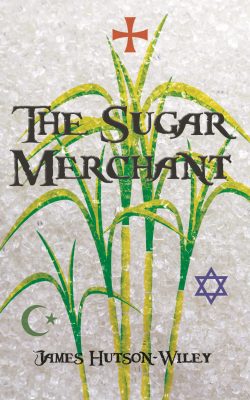
  • The SUGAR MERCHANT by James Hutson-Wiley – Medieval, Historical Fiction, Spy & Church

    The SUGAR MERCHANT by James Hutson-Wiley – Medieval, Historical Fiction, Spy & Church

    Narrated by a boy who grows up in a monastery and is trained to be a spy, The Sugar Merchant is set in the late 11th Century when the Great Crusades were on the verge of erupting in Europe and the Middle East.

    When Thomas is forced to flee after rebels attack his family, he is finally discovered, ragged and starving, by a giant of a man named Leofric. Taken under the wing of the monks at Eynsham Abbey, Thomas is educated while accepting the strict discipline of the Benedictine order. In his late teens, he is surprised and disappointed to learn he will not join the Order but will be employed as an agent and spy. His task will be to find, secretly copy and send back manuscripts written by Islamic scholars. These documents contain knowledge that the Catholic Church needs to maintain its control.

    Accompanied by Leofric, who taught him the arts of war based on his own checkered past as a mercenary, Thomas travels to Spain, to the city of Granada (called Gharnatah at the time). His travels will take him through the known Catholic realms and beyond, and, paradoxically, afford him the chance to meet, befriend and be aided in the abbey’s mission by good men of other faiths, both Muslim and Jew. As a cover for his work for Eynsham, he adopts a persona as a merchant of sukkar, or sugar, a commodity that will soon have excellent trading value. When a beautiful Muslim girl crosses his path, all that he has been taught will come into question as he strives to do what he believes to be right.

    James Hutson-Wiley writes about places he knows, having traveled in the Near East and Europe in his career in international finance. And he has obviously done extensive and intensive historical research to compose this multi-layered story. The plot, and Thomas’s peregrinations through it, encompasses subjects as vast and diversified as the burgeoning sugar trade to the hierarchy of the Catholic Church.

    The author paints a vivid picture of such ancient places as Lundenburh (London), Al Mariya (Almeria) and Granada. But he has also created an empathetic hero in the young Thomas who, without the burden of bias though mindful of his moral duty, is able to see beyond religious differences and choose genuine friendships with people of other beliefs.

    The Sugar Merchant combines medieval lore with adventures on land and sea, stirring romance, arcane information about daily life in Europe in with the time frame, and all-encompassing religious tolerance that has significance for today’s world.


  • The BOY WHO WANTED WINGS by James Conroyd Martin – Medieval Historical Fiction, War/Military, European

    The BOY WHO WANTED WINGS by James Conroyd Martin – Medieval Historical Fiction, War/Military, European

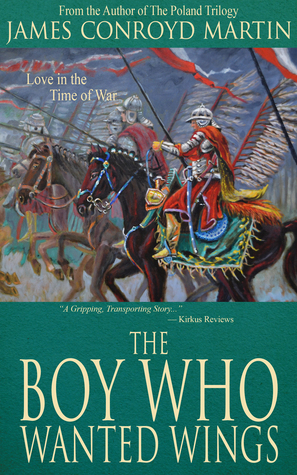
    A suspenseful and often overlooked chapter in history, the siege of Vienna in the late 17th century is the subject of James Conroyd Martin’s masterful novel, The Boy Who Wanted Wings.

    Although Poland’s involvement in the protection of the city from the invading Turks is the mainstay of the book, Martin widens the breadth of his study to underscore the multinational effort undertaken to halt the spread of Islam, providing meticulously researched details about the allied forces of the Saxons, Franconians, and Bavarians uniting to halt the siege of the Ottomans and Crimean Tatars*.  Although this is a work of fiction, to the author’s credit, the wealth of historical information provided is beyond impressive.  Most helpful is the glossary of Polish cultural and military terms of the time at the outset of the book.

    The reader navigates this chapter in Europe’s past with Aleksy Gazdecki, a boy on the verge of manhood whose personal past and present circumstances present no end of identity issues.  A Tatar by birth, he was orphaned as an infant and raised by a Polish peasant family, tenants of Lord Halicki.  Aleksy’s swarthy complexion and dark, almond-shaped eyes cause him to stand out amongst the Poles and ultimately be treated with suspicion.  He longs to join the Winged Hussars, the elite branch of the Polish military whose legendary skills with seventeen-foot-long lances are announced by a uniform that includes “wings.”  Although he trains with a former soldier, currently a stablemaster, Aleksy knows how futile his dream is since only men of noble birth can become Winged Hussars.

    Amidst the military drama is, of course, personal drama.  Aleksy has a chance encounter with the beautiful Krystyna, Lord Halicki’s daughter, and the two engage in a dangerous, secretive romance, jumping the hurdles presented by her family, who are determined to see her married to a wealthy noble, as well as confronting the escalating war at hand. Krystyna’s brothers, the sweet Marek and the haughty, vengeful Roman, will cross paths with Aleksy again and again since he follows them into battle as Marek’s “retainer.”

    Just as Aleksy sought to overcome the circumstances of his birth in his romantic life, he will do so also on the battlefield. Ironically, his Tatar heritage gives him the opportunity to save a life, a very important life, and the resulting events put Krystyna within his reach. Martin takes no shortcuts and keeps the reader guessing with a long list of characters and numerous plots twists all carried out with exquisite pacing.

    Despite the triumph of the Poles, Martin deftly explores the addictive nature of bloodlust and the true consequences of war. Aleksy is exhausted and saddened by the killing and able to transcend nationalistic feelings.  He has killed men, regardless of where they’re from or what faith they practice. It’s an apt observation from a Tatar who has lived his life amongst a people other than his own, a Tatar who has tried to be the most loyal subject of Poland.

    This is a novel with staying power.  Given the geopolitical situations in the world today, the author reminds us that war has a long and bloody history, and political alliances are intricately tied to this history. James Conroyd Martin’s The Boy Who Wanted Wings will make one most glad for the opportunity to spend time in the 17th century.

    *Alternate spelling: Tartar

    This book is also available in Softcover (ISBN-13: 978-0997894509) and Hardcover (ISBN-13: 978-0997894516)

    5 Star Best Book Chanticleer Reviews round silver sticker