
Tag: #MasterWritingClasses

  • MOOD – the Soundtrack of Fiction Works from Jessica Morrell’s Editor’s Desk – A Chanticleer Writers Toolbox Post

    Just as every dark and stormy night, dinner party, holiday gathering, or bustling office on payday are infused with mood, so are scenes in the best fiction.

    Mood affects, resonates, and reinforces the reader’s emotions, aids in understanding key moments, and enhances his or her immersion into the story events.

    Mood is the feel or atmosphere or ambience of a story or scene.

    ALL writing should evoke a mood.

    A tense mood is in the room as Miranda makes a toast to her soon-to-be cheating husband in Station 11
    Miranda at “that” dinner party that takes place in the STATION ELEVEN series. The tension is palpable.

    Mood is the Soundtrack of Fiction aka Mood as Backdrop

    Mood is omnipresent in the best books much like the soundtracks of notable films. As with movies without a soundtrack, fiction is not complete and captivating without having moods as a backdrop. Mood makes readers worry about heroines stranded in lonely castles and fog-bound moors. It feeds suspense and tension, and is in fact inseparable from them. It is essential to genres like horror, thrillers, and action, but is necessary to every moment in every story where you want a reader to feel a certain way. You can stage your characters in dramatic events but without setting up the proper mood, the characters’ actions will fall short.

    Mood is What Readers Feel While Reading Your Story.

    Mood is what the reader feels while reading a scene or story. It’s not the reader’s emotions, (though mood is designed to influence them) but the atmosphere (the vibe) of a scene or story. It’s the tornado heading for Dorothy Gale’s Kansas farm. In the film, once the viewers spot that towering tunnel and witness winds lashing the countryside, fear sets in. Will Dorothy make it to cellar in time?

    It’s what the reader notices, what gets under his or her skin. Not all readers will experience/perceive the same mood from a scene, although the writer tries to achieve a particular feel common to every reader.

    A quick example from everyday life–candlelight is soothing and soft; overhead fluorescent lights are harsh and even irritating.

    Tip: Mood should change and vary as the story moves forward. Moods in subplots should vary from the main storyline.

    Why Mood?

    • Deepens the reader’s experience.
    • Creates cohesion.
    • Enhances tension and suspense.
    • Evokes emotions, creates emotional connections to the characters and their situations.
    • Works with reader’s nervous system.
    • Underlines themes.
    • Mood helps fiction become more immersive, alive, lifelike and creates a backdrop for drama.

    Mood is Created by a Range of Literary Devices:

    • Setting
    • Conflict
    • Imagery
    • Sensory Details
    • Characters Reacting and Responding in Scenes.

    Diana Gabaldon’s Outlander series is an exemplary example of infusing mood into scenes: joy, fear, longing, betrayal, expectation, disappointment, and so on.

    Evoking mood in fiction – Outlander by Diana Gabaldon

    Use Descriptive Language to Induce Moods

    While setting is most commonly used to induce moods, descriptive language is a potent tool and that decreases or amps up tension. In Dean Koontz’s psychological thriller The Face, a horrific storm lashes Los Angeles a few days before Christmas adding a delicious shiver of danger and tension. The weather is referred to in each scene, causes things to happen and creates an ominous, the ‘world-is-askew’ mood. For example, he writes, “In the witches’ cauldron of the sky, late-morning light brewed into a thick gloom more suitable to winter dusk.”

    • Mood is created on a word-by-word basis by choosing sensory details that stir emotions, but also by orchestrating pacing. Slow down for important moments, places readers need to savor. Pacing naturally speeds up when excitement is high, conflict is intense, action is nonstop. Short sentences and paragraphs communicate excitement, urgency, panic, anger, shock, and violence. Short sentences land a gut punch and demand readers keep zipping through the text.
    • While most stories, especially short stories,  have an overarching atmosphere, the ambience or vibe of a story will change over time and change in intensity.
    • Examples of mood: spooky, light-hearted, gothic, sexy, peaceful, ominous, brooding, funny, suspenseful.
    • Mood is linked to tension and suspense and getting under your reader’s skin.
    • Use mood to foreshadow.

    Remember that a  vague or pallid setting will create vague and pallid emotions/reactions in your readers. – Jessica Morrell

    Example as Mood as Backdrop

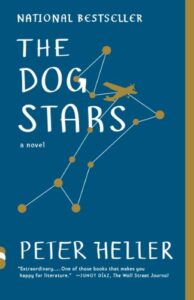
    Peter Heller’s brilliant novel The Dog Stars takes place in a future where the world has been ravaged by a pandemic that’s killed off most of the population. If that wasn’t bad enough, the natural world is dying off too. He wrote it in 2012. I’m a sucker for a post-apocalyptic novel, even when they’re shockingly prescient. I cannot recommend enough this beautiful, compelling, heart-wrenching story that invaded my thoughts for days while reading it. This backdrop to the state of affairs the protagonist Hig exists in, is dropped in on page 6.

    “In the beginning there was Fear. Not so much the flu by then, by then I walked, I talked. Not so much talked, but of sound body—and of mind, you be the judge. Two straight weeks of fever, three days 104 to105, I know it cooked my brains. Encephalitis or something else. Hot. Thoughts that once belonged, that felt at home with each other, were now discomfited, unsure. Depressed, like those shaggy Norwegian ponies that Russian professor moved to the Siberian Arctic I read about before. He was trying to recreate the Ice Age, a lot of grass and fauna and few people. Had he known what was coming he would have pursued another hobby. Half the ponies died, I think from heartbreak for their Scandinavian forests, half hung out at the research station and were fed grain and still died. That’s how my thoughts are sometimes. When I’m stressed. When something’s bothering me and won’t let go. They’re pretty good, I mean they function, but a lot of times they feel out of place, kinda sad, sometimes wondering if maybe they are supposed to be ten thousand miles from here in a place with a million square miles of cold Norwegian spruce. Sometimes I don’t trust my thoughts not to bolt for the brush. Probably not my brain, probably normal for where we’re at.”

    “I don’t want to be confused: we are nine years out. The flu killed almost everybody, then the blood disease killed more. The ones who are left are mostly Not Nice, that is why we live here on the plain, why I patrol every day.”
    Example of Mood Setting  the Stage

    “Stop that you’ll fall.”

    A week’s worth of snow has compressed into ice, each day’s danger hidden beneath a nighttime dusting of powder. Every few yards my boots travel farther than my boots intended, and my stomach pitches, braced for a fall. Our progress is slow, and I wished I’d thought to bring Sophia on a sled instead.

    Reluctantly, she opens her eyes, swivels her head owllike, away from the shops, to hide her face in her sleeve. I squeeze her gloved hand. She hates the birds that hang in the butcher’s window, their neck iridescent feathers cruelly at odds with the lifeless eyes they embellish.

    I hate the birds too.

    Adam says I’ve given the phobia to her, like a cold or a piece of unwanted jewelry.

    “Where did she get it from them?” he said when I protested turning to an invisible crowd, as if the absence of answer proved his point. “Not me.”

    Of course not. Adam doesn’t have weaknesses.

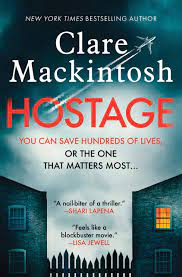
    This is the opening salvo for Hostage written by Clare Mackintosh, a ‘locked room’ thriller. The locked room in this story is a London to Sydney flight. It feels like a thriller doesn’t it? Those creepy dead birds, dangerous snow, and the husband-wife conflict signal something bad is going to happen.
     

    Keep writing, keep dreaming, have heart. Jessica


    Jessica Page Morrell
    Jessica Page Morrell

    Jessica Morrell is a top-tier developmental editor and a contributor to Chanticleer Reviews Media and to the Writer’s Digest magazine. She teaches Master Writing Craft Classes along with sessions at the Chanticleer Authors Conference that is held annually along with teaching at Chanticleer writing workshops that are held throughout the year. 


    Jessica Morrell’s Classes and Workshops at CAC22

    June 23 – 26, 2022 at the Hotel Bellwether, Bellingham, Wash.  In Real Life and Virtual!

    • Using Film Techniques for Fiction Writers – Camera angles, method acting for getting into a character’s pov, and creating subtext and tight dialogue
    • Your Brain on Writing
    • Captivating Co-Stars that add depth to your work-in-progress
    • Word Nerd Kaffeeklatsch with Kiffer Brown 
    • And more TBD!
    Don’t Delay! Register Today!

  • The Eyes Have It – From the Editor’s Desk of Jessica Morrell – a Chanticleer Writer’s Toolbox blog post

    The Eyes Have It – From the Editor’s Desk of Jessica Morrell – a Chanticleer Writer’s Toolbox blog post

    Into every writer’s life problems rear their snaggley heads.

    At times we lapse into dullness, we lean on crutch words, we make typos and gaffs. We write with clichés.

    Punch Almanack 1885

    Our plots wander, our characters confuse, and our endings fall flat.

    Because writing is hard. Yep.

    And writers are at a natural disadvantage  because we use computers and the familiarity of our words on the screen breeds a kind of blindness. Sometimes the more often you read your own words, the less you’re able to identify their strengths and weaknesses.

    With that in mind, I want to call your attention to a simple technique in writing fiction:

    Using characters’ eyes to reveal emotion and  meaning.

    This is a reminder to  pay more attention to how your characters look, stare, and express emotions. If eyes are the windows to the soul, then match your characters’ expressions  to the exact emotion or reaction needed. – Jessica Morrell

    Here are some suggestions for getting your characters’ eyes to reveal emotion and meaning:

    1. Figure out your crutch phrases and go-to moves. A few that appear too often  are eyes widening, teary eyed, blank stares,  blurred vision, stared straight ahead, watched like a hawk, she looked him straight in the eye, eyes darting, piercing stares, blinking back tears, eyes narrowing, smoldering looks, deep-set eyes, and steely-eyed. Avoid also cliched colors like baby blue, emerald, and chocolate.
    2. Make certain that the character’s eyes are appropriate to the scene. Too often characters gaze down at the floor or at their hands. Now, these gestures typically indicate discomfort or avoidance, but sometimes writers just sow them into a scene when that’s not the intended effect.
    3. Don’t. Feature. All. Your. Characters. Reacting. The. Same. Way.
    4. Avoid strangeness and viewpoint slips such as His eyes smiled at me or Her face fought against tears. Three words to keep in mind – POINT OF VIEW.
    5. Ditch the hobbit staring. Hobbit staring is a term I learned from a movie buff friend. He coined it from the Lord of the Rings films when the camera lingers too long on stares between two characters as if that demonstrates some deep meaning or message. Because often it does not. We’ve all seen this in films. Imagine how this will have your readers skimming the pages.
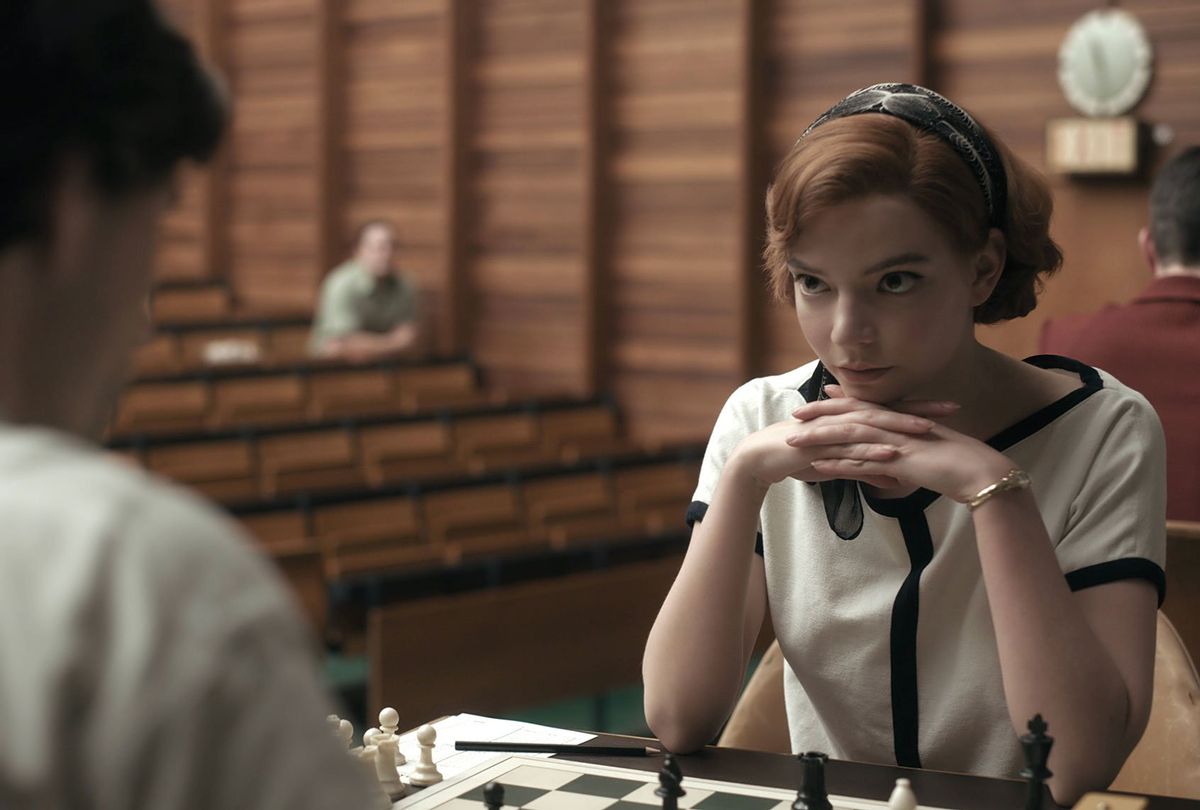
    6. If you’ve watched the delightful and deservedly popular series The Queens Gambit you’ll notice characters staring at each other a lot. Because it’s appropriate.
      THE QUEEN’S GAMBIT (L to R) MATTHEW DENNIS LEWIS as MATT and ANYA TAYLOR-JOY as BETH HARMON in episode 102 of THE QUEEN’S GAMBIT Cr. PHIL BRAY/NETFLIX © 2020

      Because they’re seated a few feet across from each other in earnest and sometimes excruciating combat.  Because they’re often trying to psych each other out. And the onlookers are staring intently at the board trying to guess the next moves of the two players.

    7.  Question every tear. I sometimes ask writers to count every scene where a character ends up weeping, wet-eyed, or with tears leaking down wet cheeks. This request comes from noticing how weeping and sobbing are overused resulting in melodrama, excess sentimentality, or depicting a character as too emotional for her own good. And the good of the story. Too much weeping and the story gets soggy and dull. And please, just forget single tears. Please.
    8.  Mix it up. Often a writer’s most used crutch words are look and see. However, in real life people gape, squint, spot, gander, gawk, ogle, stare, gaze, study, inspect, scan, scout, spy, study, inspect, notice, note,  peek, peep, peer, and rubberneck.
    9. Expand  your repertoire of descriptions: haunting, beckoning, steady, stormy, mocking, mournful, lifeless, sultry, goopy, teasing, pitiless, glassy.
    10. Stir in a little weirdness. Many people have mismatched eyes. Then there are droopy eyes, people with different colored eyes, bloodshot eyes, Rasputin eyes, lazy eyes, buggy eyes, one working eye, wandering eyes, piggy and close-set eyes.
    11.  Study how and when successful authors use close-ups. If you never focus the camera lens on a character’s face during an emotionally-charged scene, then readers cannot enter the moment and feel what the characters are feeling.
    12. Study actors. Notice how their eyelids raise a bit to show interest or droop to indicate the lack of interest. Note how they leer, seduce, flash anger, hide their true feelings.
    Beth Harmon knows she will win several moves out in this scene of Queen’s Gambit

    If you’re serious about writing, you must notice subtext and how to convey it. And that often begins with the eyes.

    Keep writing, keep dreaming, have heart. Jessica

    Jessica Page Morrell

    Jessica Page Morrell

    Jessica Morrell is a top-tier developmental editor and a contributor to Chanticleer Reviews Media and to the Writer’s Digest magazine. She teaches Master Writing Craft Classes along with sessions at the Chanticleer Authors Conference that is held annually along with teaching at Chanticleer writing workshops that are held throughout the year. 

    Don’t delay. Register today!

    This year the CAC21 will be held virtually. Registration will include access to video recordings of the conference.

    April 21- 25, 2021.   Multichannel Marketing for Authors and Intermediate and Advanced Writing Craft


    Chanticleer Editorial Services – when you are ready

    Did you know that Chanticleer offers editorial services? We do and have been doing so since 2011.

    Tools of the Editing Trade

    Our professional editors are top-notch and are experts in the Chicago Manual of Style. They have and are working for the top publishing houses (TOR, McMillian, Thomas Mercer, Penguin Random House, Simon Schuster, etc.).

    If you would like more information, we invite you to email Kiffer or Sharon at KBrown@ChantiReviews.com or SAnderson@ChantiReviews.com for more information, testimonials, and fees.

    We work with a small number of exclusive clients who want to collaborate with our team of top-editors on an on-going basis. Contact us today!

    Chanticleer Editorial Services also offers writing craft sessions and masterclasses. Sign up to find out where, when, and how sessions being held.

    A great way to get started is with our manuscript evaluation service. Here are some handy links about this tried and true service: https://www.chantireviews.com/manuscript-reviews/

    And we do editorial consultations. for $75.  https://www.chantireviews.com/services/Editorial-Services-p85337185

    Writer’s Toolbox

    Thank you for reading this Chanticleer Writer’s Toolbox article.

    Writers Toolbox Helpful Links: 

    The INCITING INCIDENT: STORY, SETBACKS and SURPRISES for the PROTAGONIST – A Writer’s Toolbox Series from Jessica Morrell’s Editor’s Desk

    ESSENCE of CHARACTERS – Part One – From the Jessica Morrell’s Editor’s Desk – Writer’s Toolbox Series  

  • LEARN FROM THE BEST at VCAC 20 – J.D.Barker, Bob Dugoni, Chris Humphreys, Don Maass, Jessica Morrell

    Learn from the Best at VCAC 20

    Join us at the Virtual Chanticleer Authors Conference

    Tuesday – Sunday, Sept 8 – 13, 2020 

    9:30 a.m. to 4:30 p.m. PST

    VIRTUAL LIVE SESSIONS via ZOOM

    The New ERA of Content Creation in All Its Forms

    J.D. Barker, Robert Dugoni, Chris Humphreys,

    Donald Maass, Jessica Morrell,

    Scott Steindorff

    Read more about the VCAC faculty, by clicking here. 

    Sessions will be recorded and available later viewing through VIMEO exclusively to all registered participants.

    Only one session will be presented at a time so YOU select which ones you want to see LIVE and which ones you will want to view later via VIMEO or revisit the session. Master Classes and Workshops will be held the following week starting on Wednesday, Sept 16, 2020. 

    Tuesday – Sunday, Sept 8 – 13, 2020 – VCAC Sessions

    9:30 a.m. to 4:30 p.m. PST

    Click here for the VCAC Schedule

    Headliners Include: 

    JD Barker
    Robert Dugoni
    Chris (C.C.) Humphreys
    Scott Steindorff

    Technical Workshops with Hindenburg Systems Experts

    Wed. Sept 16, 2020

    Audiobook Creation with Jonathan Hurley

    Podcast Nuts and Bolts with Anita Michalski

    Click here to learn more about the Hindenburg Workshops

    Master Writing Classes to Take Your Works to the Next Level 

    with Donald Maass

    Sunday, Sept 20, 2020 (9:30 – 4:30 PST with breaks, lunch breaks and Q & A)

    and Jessica Morrell

    Jessica Page Morrell

    Thursday and Friday mornings, Sept 17 & 18, 2020 (9:30 a.m. – 12:30 p.m. PST with breaks)

    Click here to learn more about the Master Writing Classes

    Don’t Delay! Register Today!   You may register for Workshops and Master Classes separately

    Click here for the VCAC Schedule of Sessions

    Topics at VCAC 20

    • Virtual Author Events: How To Pivot from LIVE to VIRTUAL for Book Launches, Book Clubs, and Book Events with Janet Oakley, Sean Dwyer, & Gail Noble Sanderson
    • Book to Film Panel Discussion with Scott Steindorff, Robert Dugoni, and J.D. Barker. Moderator is Chris Leibig
    • It Takes a Village to Make a Film – Authors, Actors, Screenwriters, Producers, & Directors  a Discussion with Tina Sloan, Scott Steindorff, & Kaylin McFarren, and Talk to Crows Production Company 
    • The Critical Role Authors Play in Fostering a Better Society – Janice S. Ellis, Ph.D. 
    • Exploration of New and Revolutionary Ways of Storytelling including Delving into Immersive, Mixed Reality, and Digital Art – Scott Steindorff 
    • How to Have 1,048 Readers Requesting Your Book in the 1st Day of a 100 Book Giveaway – Kaylin McFarren shares her Goodreads and Amazon Secrets to increasing book sales. 
    •  Writing and Selling Children’s Books – Children’s Book Authors Share Their Tips & Tools – Denise Ditto Satterfield, Barbara Jean Hicks, M.J. Evans, 
    •  Voice Driven Technology and the Future of Publishing – Paul Cutsinger 
    • Why Amazon Alexa Should Be Telling Your Story – 3 Sessions– Amy Stapleton and Wayne Richard
    • How to Create a Sustainable and Compelling Series – Panel : Diane Garland, Wendy Delaney, Pamela Beason, J.D. Barker 
    • 5 Reasons Why You Should Publish Your Epubs on  Bookchain – Simon-Pierre Marion
    • Your Story World: Beyond Eye Color and the Weather – Diane Garland
    • Don’t be Left OUT and OFF the Airwaves – Intro to Podcasting with Hindenburg Systems’ expert Anita Michalski
    • Historical Fiction–Chris Humphreys will examine how to both fictionalize real characters and realize fictional ones. 
    • Just Call Out My Name – Collaborating with Other Authors – Janet Shawgo & Sean Dwyer
    • Writers: Improve Your Productivity and Your Health by  Correcting Posture with Tana Hope
    • 5 Reasons Why You Should Publish Your Epubs on  Bookchain – Simon-Pierre Marion

    And more …

    Click here to read more about the VCAC presenters and panelists! 

    Don’t Delay. Register Today for these LIVE ZOOM SESSIONS! 

    Sessions Start in just 7 Days! Tuesday, Sept. 8, 2020! 

    The 2019  CIBA Awards First Place Awards Winners will be announced  every day (Tuesday – Saturday, Sept 8 -12, 2020) starting at 5 p.m. PST at the CIBA Virtual Ceremonies.  All 2019 CIBA Finalists will be recognized during VCAC!

    The 2019 CIBA Grand Prize Division Winners and the Overall Grand Prize for Best Book will be announced and recognized on Sunday, Sept 13, 2020 starting at 5: 30 p.m. PST ceremony.

    All announcements are LIVE and we will have a Virtual Celebration Party after each day! 

    Have your favorite bubbly ready to cheer on your favorite authors! LIVE and INTERACTIVE! 

    See YOU at VCAC 20!

  • TIPS for POTENT DIALOGUE by Jessica Morrell – a Writer’s Toolbox Series

    TIPS for POTENT DIALOGUE by Jessica Morrell – a Writer’s Toolbox Series

    “Dialogue is Action. Action is Dialogue. ” – Robert Dugoni, Amazon Bestselling Author

    Make sure that yours sizzles! 


    Dialogue electrifies and ignites fiction. It brings characters and conflicts into focus, especially when characters argue, coerce, and threaten. Here are a few reminders about how to keep dialogue sizzling:

    Skip the throat clearing, greetings, and pleasantries.

    Don’t warm up; jump right in.

    Ditch the names.

    Write dialogue that creates consequences.

    If there are no consequences, question why you’re including it.

    Justify every repetition. 

    Dialogue Reveals Characterization 

    Dialogue reveals the inner person. Distinguish your characters from each other by nailing their primary personality traits and bearing before you sketch the scene. Distinguished, serious type? Witty? Argumentative?  Shy? Eccentric? Commanding presence? Their word choices will reflect this.

    Dialogue reveals the characters’ emotions, even when characters try to hide them. Know where they stand on the topic before, during and after the exchange. Some examples: defensive, guarded, nervous, furious, torn.

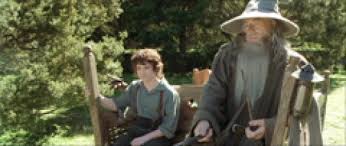
    LOTR setting the relationship between Gandalf and Frodo.

    Subtext

    Speaking of topics up for discussion, don’t be afraid to allow the convo to shift directions or uncover hidden motives–the real reason they’re talking.

    Dialogue works best if at least one character is uncomfortable, off-balance, guarded, or unsure.

    Subtext is part of dialogue. A particularly powerful subtext trick is for a character to hedge, avoid answering, try to change the subject.

    Typically dialogue is adversarial; it’s about characters vying for power, dominance, or control. Give at least one character an agenda.

    If you’re not using dialogue to reveal the truth of relationships, you might want to analyze writers who do.

    Dialogue zings when characters are saying no to each other.

    Know the dynamic that exists between the characters. 

    Sometimes just nailing the essence or context of an exchange makes it easier to write. Ask yourself what lies beneath the scene. A refusal? Subterfuge? Prying or demanding answers? Explaining a situation? Asking for something that’s hard to ask for? Is this a power play?

    As in real life sometimes characters interrupt.

    Take Care with Beats

    Take care with beats–the small inclusions of gestures, actions, reactions. Too many eye rolls, gazing off in the distance, gazing into each other’s eyes, fighting back tears and the like, can annoy the reader. You want readers to imagine many of these reactions.

    Be Aware of the “White Room” Syndrome

    Add small actions or activities for a natural flow–fixing dinner, washing dishes, walking, shopping, getting dressed.  In my editing gig, I’ve seen too many characters sitting across from each other staring unblinkingly into each other’s eyes far too often. It’s not the way most of us talk most of the time.

    Know When to Break “The Rules” 

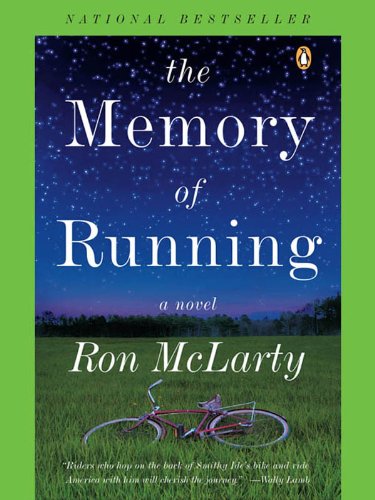
    Don’t be afraid to include weird or inappropriate dialogue if it makes sense for the overall plot. Ron McLarty’s The Memory of Running is one of my favorite novels. It’s essentially the story of a family who is forced to cope with a daughter and sister’s mental illness–schizophrenia. It’s a sad, hilarious, and poignant story with one of the best character arcs around for Smithy Ide the protagonist. The absurdity of Smithy’s uncle’s comments and jokes help balance out the bleakness and unpredictability of Bethany’s illness. Uncle Count is the kind of guy who always has a dirty, racist, or offensive joke no matter the occasion and is clueless about how inappropriate he is, how unwelcome his jokes are. He usually starts with, “Have you heard the one about the two priests who walked into a bar?”

    If you’re staging an argument it needs to escalate. Words need to land like blows. – Jessica Morrell


    The BASICS

    Avoid lengthy answers, exchanges to keep the pace perking along. The whole conversation can go on for several pages, but keep each of your characters’ back-and-forths to 3 sentences (or so) or under.

    Keep tags simple. The she said, he said parts of fiction should appear invisible or natural.

    Say no to chortles, rejoinders, retorts, and demands. Allow the dialogue to inform the reader about the speaker’s tone.

    I’m going to be adding examples of effective dialogue here, so stop back.

    In case you haven’t read this beautiful book,  The Memory of Running. I cannot recommend it enough. And yes, I realize I’ve recommended it before.

    Editor’s Note: The Memory of Running by Ron McLarty was first published as an Indie by the author because it was rejected repeatedly by agents and publishing houses. It went on to get picked up by Penguin  and became a national bestseller.


    Writer’s Toolbox


    POTENT DIALOGUE TIPS by Jessica Morrell – a Chanticleer Writer’s Toolbox Series post


    Jessica Page Morrell
    Jessica Page Morrell

    Jessica Morrell is a top-tier developmental editor and a contributor to Writer’s Digest magazine, and she teaches Master Writing Craft Classes at the Chanticleer Authors Conference that is held annually along with teaching at Chanticleer writing workshops.

    Jessica will teach a Writing Master Class and advanced writing craft sessions at CAC19.

    Keep writing, Keep dreaming, Have heart. – Jessica


    Jessica understands both sides of the editorial desk–as a highly-sought after content development editor and an author. Her work also appears in multiple anthologies and The Writer and Writer’s Digest magazines. She is known for explaining the hows and whys of what makes for excellent writing and for sharing very clear examples that examines the technical aspects of writing that emphases layering and subtext. Her books on writing craft are considered “a must have” for any serious writer’s toolkit. For links for her writing craft books, please click on here.

    Chanticleer Reviews and OnWord Talks will interview Jessica for more of her writing tips and advice. Stay tuned! ~ Chanticleer (who hails from Chaucer’s Canterbury Tales).


  • Rhythm and Cadence and Beats, Oh Yes! by Margie Lawson – Taking Your Writing to the Next Level

    Rhythm and Cadence and Beats, Oh Yes! by Margie Lawson – Taking Your Writing to the Next Level

    Rhythm Cadence and Beats
    Note from Kiffer Brown:  Margie Lawson is a psychologist-turned-editor. She uses her psychological expertise to analyze more passages and chapters than most people read in ten lifetimes. She developed deep editing techniques that help writers add power to each paragraph.

    Reading a book with flat-lined cadence is like watching a movie on mute. – Margie Lawson


    Most writers know about the power of rhythm and cadence and beats. But most don’t use that power in every sentence.

    A compelling cadence is more than varying sentence lengths. More than using ­­­­­standalone words.

    A compelling cadence carries power on the page. It propels readers through paragraphs and passages and pages.

    Read your work out loud, with feeling, and you’ll hear what beats work well, and what beats are missing.

    Many rhetorical devices are cadence-driven. Knowing which rhetorical devices boost cadence, pick up pace, make the read imperative, and 947 more cool things, loads your writing toolbox with super-powered tools.

    Check out these cadence-driven examples.

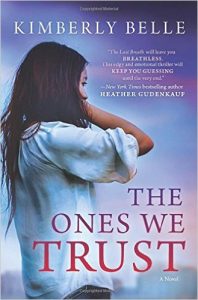
    The Ones We Trust, Kimberly Belle, Award-Winning MIRA Author, Multi-Margie-Grad

    1. Gabe’s good looks are real and rugged and raw, and now that I’ve seen both brothers up close, I’d choose Gabe over Zach any day.

    RD Combo: Polysyndeton (multiple conjunctions, no punctuation) and Alliteration

    2. The silence that spins out lasts forever. It’s the kind of silence that wraps around you like a shroud, the kind that turns the air thick and solid, the kind that makes you want to hear the answer as much as you dread it.

    Kimberly Belle could have written: The room went silent.

    I’m glad she decided to empower that emotionally-loaded scene dynamic.

    Rhetorical Devices: Amplification (silence) and anaphora (the kind, the kind, the kind)

    3. My heart races and my skin tingles and my blood pressure explodes like a grenade.

    Rhetorical Devices: Three visceral responses are powered with polysyndeton (multiple conjunctions, no punctuation) and a simile.

    The Blessing of No, Megan Menard, Multi-Margie-Grad

    1. Luke had a machine-gun laugh that fired about every third word.
    1. I picked up a French fry. It was a slender blonde, tall and weepy. I named the fry Tanya and chomped off its head.

    Those examples carry interest and power and are perfectly cadenced. The second example uses a metaphor and structural parallelism. It reveals a truth in a humor hit that could make us laugh or cry.

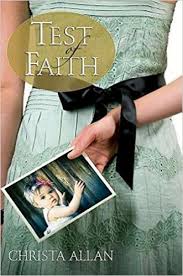
    Test of Faith, Christa Allan, Award-Winning Author, Multi-Margie-Grad 

    1. “If. Faith. Can. Come. Live. With Me?” I heaved every word out of my brain and into my mouth. I felt like someone regaining consciousness in an unfamiliar room or house or life.

    Christa Allan stylized that dialogue by using a Period. Infused. Sentence. That’s what I named it. Her dialogue cue is amplified, amplified, amplified stellar.
    She used an RD combo in the last sentence: polysyndeton and zeugma.

    What’s zeugma?

    I’ll SHOW not TELL. I know you’ll get it.

    My teaching-zeugma sentence:

    Margie grabbed her purse, her keys, and her steely resolve.

    You got it!

    This 2-point version is an example of zeugma too:

    Margie grabbed her purse and her steely resolve.

    Now you know the rhetorical device zeugma.

    1. This dinner was the Indy 500 version of returning to the track after a pit stop, except that the finish line was Logan, and there was only one first place.

    Ah… Metaphors and power words and hope all themed, propelled by a compelling cadence.

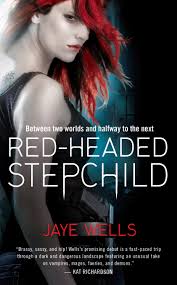
    Red-Headed Stepchild, Jaye Wells, USA Today Bestseller

    Jaye Wells wrote this paragraph when she was in a full day workshop I taught for Dallas Area Romance Authors in 2007. I asked all the participants to write an example of anaphora.

    Anaphora — Repeating a word or phrase at the beginning of three or more successive phrases or clauses or sentences. The first three must be in a row.

    The paragraph she wrote in class became the first paragraph in the first chapter of Red-Headed Stepchild, her debut Urban Fantasy.

    Digging graves is hell on a manicure, but I was taught good vampires clean up after every meal. So I ignored the chipped onyx polish. I ignored the dirt caked under my nails. I ignored my palms, rubbed raw and blistering. And when a snapping twig announced David’s arrival, I ignored him too.

    Deep Edit Analysis:

    Anaphora: I ignored, I ignored, I ignored, I ignored

    Three Humor Hits:

      • Digging graves is hell on a manicure
      • good vampires clean up after every meal
      • I ignored him too

    Power Words — Words that carry psychological power: graves, hell, vampires, clean up, ignored, ignored, dirt, ignored, raw, blistering, arrival, ignored him

    What does the reader learn in those 53 words?

    1. She’s digging a grave. We can infer she killed someone.
    2. She’s a vampire.
    3. She gets manicures.
    4. She’s Goth.
    5. She’s been digging that grave for a while.

    She’s not concerned about David catching her digging a grave.

    In that one short, opening paragraph, Jaye Wells deepened characterization, shared a strong and fun voice, and made the reader want to read more. That’s smart writing. The kind that impresses agents and editors and readers and reviewers.

    Every example in this blog carries a compelling cadence. That pleasing cadence speaks to the reader’s subconscious. Cadence has the same impact on the reader that a movie sound track has on a viewer.

    Read the first sentence of this blog OUT LOUD:

                Reading a book with flat-lined cadence is like watching a movie on mute.

    Do you hear those perfect beats?

    I could have written:

                It is critical to pay attention to cadence.

    No cadence-driven power.

    Deep Editing Caveat:  Most of the examples I shared in this blog were amplified. I’m not suggesting that every sentence should be powered up, or made special in some way. That would be gag-ifying

    Not a word. But it carries the punch I wanted to share.

    We need plain writing. Writing that does it’s job without any amplification.

    We need fun, quirky, deep, stylistic, and tug-your-heart writing too.

    I teach writers how to add psychological power to their writing in hundreds of ways. No hype. No hyperbole. I’m just sharing what I do.

    I teach writers how to empower emotions.

    • How to avoid clichés and clichéd phrasing.
    • How to write fresh faces and voices and visceral responses.
    • How to use advanced stimulus-response patterns.
    • How to use my Four Levels of Powering Up Emotion. How to have the right emotional intensity in the right place.
    • How to create emotional authenticity on the page. How a character can act in an out-of-character way, and get the reader to buy it.
    • How to use six rhetorical devices to finesse backstory. Succinct, un-skimmable, beautifully cadenced backstory.
    • How to use my 20 Point Checklist for Openings, my 15 Point Checklist for Endings, my 12 Visceral Rules for Fiction Writers, my 10 Gems for Not Writing Your Mama’s Character Descriptions, and more.
    • How to deep edit analyze your scenes. I developed The EDITS System so writers can see what’s working, what’s not working, and what’s missing.

    I used to teach college. Graduate level psychology courses. I back up every teaching point with plenty of examples from a variety of genres.

    I shared a few of the twenty rhetorical devices I teach fiction writers here. I’ll cover all twenty in about 75 minutes in my full day master class. Some, like polysyndeton (…photographed and bagged and carried away…, The Last Breath, Kimberly Belle) may be new to you, but they’re easy to learn, and use. Handouts help.

    I’m looking forward to having fun in my Master Class on March 30. Join me, and you’ll leave with deep editing tips and techniques that will add power to your WIP.

    FIND OUT HOW TO ENTER Margie Lawson’s Contest to WIN a LECTURE PACKET by clicking here!