Tag: Master Writing Classes

  • LEARN FROM THE BEST at the Chanticleer Authors Conference – April 2023 – Kiffer Brown

    LEARN FROM THE BEST at the Chanticleer Authors Conference – April 2023 – Kiffer Brown

    LEARN FROM THE BEST AT CAC23

    It exactly two months before

    the annual Chanticleer Authors Conference!

    Chanticleer Book Reviews 2023 Authors Conference is April 27-30, 2023

    LEARN from the BEST!

    As many Chanticleerians have learned over the years, we rarely can list our presenters six-months or even four-months, two-months in advance. Why? Because many of the experts we have had the honor and privilege of them presenting at the annual Chanticleer Authors Conferences are contingent upon us being flexible with our schedules and accommodating with their schedules.

    This year is no different, especially with everything opening back up. We are thrilled to have Maggie Marr along with Eric Lucas and Reenita Mohltra Hora presenting at CAC23 as well as a few more other surprise presenters that we are awaiting confirmation.

    So, please stay tuned for more info! Meanwhile, REGISTER TODAYSeats are limited! 

    Book to Film Workshop – presented by Maggie Marr, Atty, Creative Representation

    Maggie has negotiated deals and has worked with Netflix, HBO, Amazon Prime, Universal, Warner Brothers, Disney, Paramount, Hallmark Channel, Universal, BET, and Hulu.

    We are thrilled to announce that Maggie Marr will teach a three-hour workshop on Books to Film & TV on Thursday, April 27, 2023 at CAC23. Along with the workshop, she will also present several sessions during the conference (Friday and Saturday) on copyright law, contracts, entertainment and publishing representation, and more during CAC23. 


    Eric Lucas standing next to flowers in the Swiss AlpsEric Lucas is a long-term professional writer and editor; former Associate Editor at Alaska Airlines Magazine. His work is published in venues with millions of readers each month, around the world. He has eight books to his credit, including Michelin Travel Publications, MSN.com, and other travel guides.

    He is presenting sessions at CAC23 on:

                  • Essentials of Good Writing for Professional Contributors
                  • How to Successfully Approach Magazine Editors
                  • How to Use Magazine Features as Incredibly Useful Springboards to Books
                  • Travel Writing Kaffeeklatsch
                  • Copy Writing – Editing Tips
                  • and more!


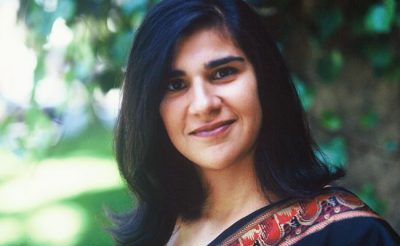
    REENITA MALHOTRA HORA – Podcaster & Broadcast Journalist & Contributor
    Reenita Malhotra Hora is the CEO of Chapter by Episode Productions. She has years of experience growing organizations from startups to medium-sized businesses through storytelling, creative marketing and business strategy. Hora has also written seven books.

    She has contributed to Reuters, the South China Morning Post family section, the Wall Street Journal, New York Times, CNN, Asian Investor, Times of India, Business Line, Bloomburg on-air news reporter, writer, and producer, Rolling Stone, and the Economic Times.

    Reenita will present sessions on podcasting, finding your audience, how to write interesting content to expand readerships, marketing tips and tools for authors, and more.


    Stay tuned for more info!


    Handy Links

    CAC23 Registration

    Lodging Options 

    Maggie Marr Books to Film Workshop 

    FACULTY 

    Please do not hesitate to contact Kiffer at KBrown@ChantiReviews.com or David (Author Outreach) at DBeaumier@ChantiReviews.com with any questions or concerns.

    Hope to see you soon! – Kiffer


  • It’s Not Too Late! Join Us this Weekend – In Real Life or Virtually – an invitation from Kiffer

    It’s Not Too Late! Join Us this Weekend – In Real Life or Virtually – an invitation from Kiffer

    We are doing it!

    The 2022 Chanticleer Authors Conference

    and the

    2021 Chanticleer Int’l Book Awards Banquet & Ceremony

    After much pivoting and then some more pivoting due to Covid’s impact, we are having (knock-on-wood, fingers-crossed, throwing salt over our left shoulders) our first In-Real-Life conference since 2019!   And we are so excited!

    Exciting plans for this weekend:

    Master Writing Class – Film Techniques for Writing Fiction

    Thursday, June 23,  1 – 4:30  p.m. Jessica Morrell presents.

    How film techniques can be translated onto the page from viewpoint to mastering props and subtext. It begins with making powerful choices and identifying key moments that need emphasis, when to whisper and suggest, and when to stage and let the camera roll.

    This class is being offered In Real Life and ALSO will be ZOOMED LIVE from the Hotel Bellwether’s Compass Room on June 23rd from 1 – 4:30 p.m. The recording will be available for seven days for later viewing for those who have registered for the Master Writing Class In Real Life OR Virtual. 

    Click here to register Virtually or IRL.

    Chanticleer Authors Conference

    A few spots are available (we had some cancellations due to Covid) for IRL.

    To see the SCHEDULE,    please click here.

    To see the five different REGISTRATION OPTIONS, please click here.

    IRL will feature two luncheons, two cocktail parties, two seated dinners, and two After Dinner Gatherings — All in the Bellwether Ballroom along with photo sessions, book fair, kaffeeklatsches, and great sessions on unlocking the secrets to successful publishing.

    IRL registrations include access to the Zoom recordings for seven days.

    But that’s not all!

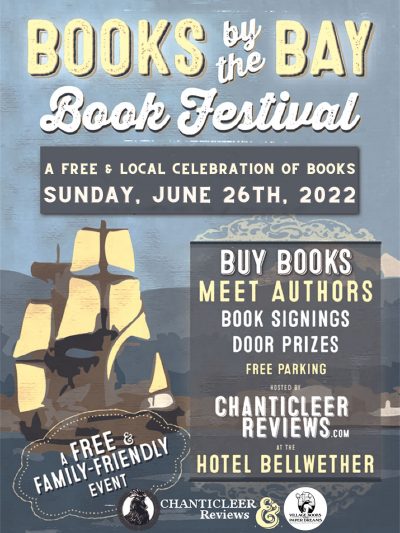
    BOOKs By the BAY Book Fair – Saturday and Sunday (Sunday is open to the general public).

    2021 CIBA Banquet and Ceremony on June 25, 2022

    The excite builds! Who will take home the Overall Grand Prize for the Chanticleer Int’l Book Awards?

    VIRTUAL CAC22

    And, last but not least, VIRTUAL Registration is available for the Master Class and the CAC 22 Sessions and includes the 2021 CIBA awards ceremony. These Zoomed sessions will be available for seven days for you to view at your leisure.

    Click here to register for VIRTUAL CAC22

    We hope to see you IRL or VIRTUALLY at CAC22

    A little backstory:

    Our 2020 CAC was virtual (VCAC20 held in September 2020). We were hoping that 2021 would be IRL, but alas, it was virtually held also – in two parts: a virtual conference (VCAC21) in April and the 2020 CIBA Ceremonies in June. We were at least able to have a few of our local Chanticleerians to join us at the Hotel Bellwether here in Bellingham where we broadcasted (Zoomed) the events.

    Now, we are finally able to gather IRL (In Real Life). CAC22 was originally scheduled for early April, but Covid numbers ramped up (extremely so) in January and February. We decided to err on the side of prudence with moving the conference to June — the only weekend that the Hotel Bellwether had available. Pivot. Pivot. Pivot.

    And, now, the weekend is upon us! Due to many requests, we are offering the conference virtually along with the IRL conference. If any of you have had to offer HYBRID events, you will know how challenging it is logistically and technology-wise. Thank goodness for Argus Brown, Kiffer’s husband and IT guy to make the virtual-hybrid-live conference take place.

    The 2021 CIBA Banquet and Ceremony is sponsored and hosted by CAC22. It can be confusing, since the awards program runs a year behind the actual conference year. We are now accepting 2022 CIBA entries. The CIBA 2022 awards will be presented at CAC23. July 15th, 2022 we begin accepting 2023 entries in several divisions as submission deadlines are met. 2023 CIBAs winners will be announced at CAC24. And, so on.

    We hope that you will join us!

    SAVE THE DATES:  CAC 23 is scheduled for April 26 – 30, 2020!

  • Closeups in Fiction – from Jessica Morrell’s Editor’s Desk – A Chanticleer Writers Toolbox post

    Closeups in Fiction – from Jessica Morrell’s Editor’s Desk – A Chanticleer Writers Toolbox post

    Studying and Borrowing Techniques from Filmmakers

    Let’s discuss using closeup “shots” of your characters in fiction. Filmmakers have a large repertoire of techniques that writers are wise to study and borrow. Closeup camera angles are powerful in film and an important technique fiction writers need to emulate throughout their stories.

    When to Use a Wide Angle in Your Scenes

    I write many, many notes and suggestions to my editing clients, some within the pages of the manuscript, some included in a long, detailed memo. At times I suggest a wide angle or establishing shot to introduce setting and atmosphere–especially helpful when a character arrives at a new place or when major action is about to go down.

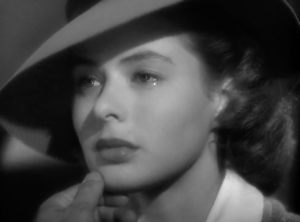
    “We’ll always have Paris.” Casablanca Original Book: Everyone Comes to Rick’s by Murray Bennett and Joan Alison in 1940.

    When to Use Closeups

    However, I’m certain that every story I’ve worked on needed more ‘closeup’ shots of characters, so I suggest when to bring the viewpoint– fiction’s camera lens–closer. In film or television the director and cameraman have lots of choices about how to use distance to achieve drama. There are full shots, medium, long, POV, closeup and extreme closeups. A closeup shot tightly frames the actor’s face and signals significance. They’re typically used to portray deep emotions and create connection between audience and actor. There are also ‘extreme close-ups’ where the camera lingers on a subject, usually the actor. But close-ups can also focus on hands and body parts, props, jewelry, or other objects of interest.

    Be Cognizant of What You Are Revealing to Your Readers in Your Closeups

    Obviously closeups are intimate because they’re revealing. They showcase significant emotions, realizations, decisions,  and important moments or actions.  They also reveal when characters have something to hide.

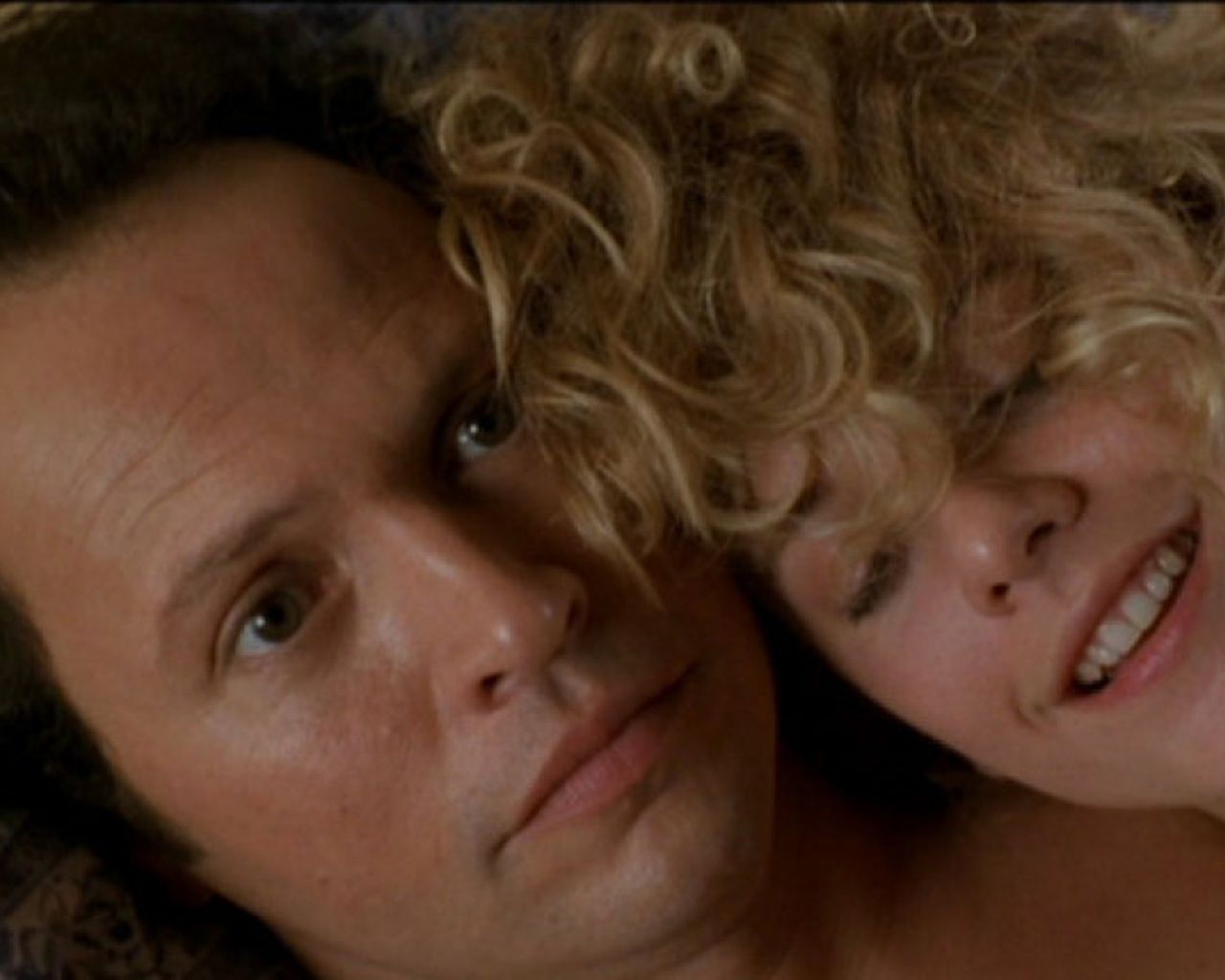
    Why When Harry met Sally is the greatest romcom of all time - BBC Culture
    When Harry Met Sally – The SCENE that set the story. By Nora Ephron

    Romance films and dramas employ these shots especially when characters are surprised, shocked,  filled with dread, or when feelings shift. Closeups, naturally,  are often used in horror and suspense films to increase the audience members’ heartbeat. Alfred Hitchcock was fond of using them, such as in the grisly shower scene in Psycho. You know the one.

    • Convey important moments, reversals, revelations.
    • Enhance threat and danger.
    • Enhance evil and malevolence.
    • Shock value as when a monster or villain is in the frame.
    • Focus on, reveal a character’s state  of mind.
    • Slow the pacing.
    • Portray damage, pain, the cost paid by characters.
    • Allow readers to see the world through the character’s eyes. * See The Eyes Have It post link below.
    • Reveal closeness, intimacy, estrangement, coldness between characters.
    • Suggest or define character arc.
    • Show other ‘sides’ of a character, including subtler traits.
    • Illustrate a character’s emotional bandwidth, as in how she or he handles the best of times and the worst of times.
    • In scenes that contain violence, brutality, or horror, a closeup amplifies the dangers as in the ‘here’s Johnny’ moment in The Shining when Jack Torrence, played by Jack Nicholson is terrorizing his family. Notice how it’s clear that he’s sunk into madness.
    The unforgettable “Here’s Johnny” scene in The Shining.

    As you’re revising, make sure that during the most poignant moments in the story, readers are pulled in. Allow your readers to witness emotions flickering across the character’s face. Let them sense what’s churning beneath a character’s exterior.

    Notice Beth’s hands, her eyes, her posture. The juxtaposition of the watch she wears versus the clock on the wall. Her black and white dress adjacent to the black and white chess board. See how she is capturing the white pawns.

    Beth Harmon knows she will win several moves out in this scene of Queen’s Gambit

    Here is the link to the Eyes Have It Post  

    Keep writing, keep dreaming, use your voice


    Jessica Page Morrell
    Jessica Page Morrell

    Jessica Morrell is a top-tier developmental editor and a contributor to Chanticleer Reviews Media and to the Writer’s Digest magazine. She teaches Master Writing Craft Classes along with sessions at the Chanticleer Authors Conference that is held annually along with teaching at Chanticleer writing workshops that are held throughout the year. 

    Jessica Classes and Workshops at CAC22

              • Using Film Techniques for Fiction Writers – Camera angles, method acting for getting into a character’s pov, and creating subtext and tight dialogue
        • Your Brain on Writing
        • Captivating Co-Stars that add depth to your work-in-progress

    Don’t Delay! Register Today!

  • The 2021 Chanticleer Authors Conference, the 2020 CIBA Announcements, and an Update – by Kiffer Brown

    The 2021 Chanticleer Authors Conference, the 2020 CIBA Announcements, and an Update – by Kiffer Brown

    Happy Spring to our Northern Hemisphere Chanticleerians!

    Happy Autumn to our Southern Hemisphere Chanticleerians!

    What a crazy and challenging past year it has been! We are certainly looking forward to warmer and longer days here in the Pacific Northwest!

    Spring here brings tidings of the Chanticleer Authors Conference (CAC)!

    But, alas, this spring CAC will be VCAC once again due to Covid.

    However, we have an exciting line-up of ACE Presenters for VCAC 21.

    The VCAC 21 Sessions will be LIVE and INTERACTIVE! 

    Learn from the Best at VCAC 21! 

    VCAC21 laurel wreathThe Virtual Chanticleer Authors Conference will take place April 21 – 24, 2021 via ZOOM webinar.

    VCAC will feature bestselling international crime and mystery author Cathy Ace.

    VCAC 21 and the 2020 CIBA Finalists Announcements will be broadcasted over ZOOM live from the Hotel Bellwether’s Admiral’s Room. Please scroll down for more information.

    WEDNESDAY, April 21, 2021 (you may register for these separately from VCAC or combine) Registration is Required for the Master Class and the Workshop.

    • 9:10 a.m. until noon — Book Distribution/Production WORKSHOP by Paul Hanson, Village Books
      • How to get Your Books on Independent Booksellers Shelves across North AmericaThe WHY, WHAT, and HOW with Paul Hanson, Village Books

    • 1 – 4:30 p.m.Master Writing Class with Jessica Morrell
      • Story People: The Good, the Bad, the Ugly as taught by Jessica P. Morrell

    We’ll discuss the many roles for your story people from protagonist to minor characters, and delineate their impact on the plots and protagonist. However, we’ll also cover the outliers in fiction and the chaos, conflict, zest, and realism they add to your story world. To further expand our discussion we’ll also cover immersive, intimate viewpoint and narrative distance. Please bring your favorite imaginary folks to the workshop.

    Click here to Register for Jessica’s always in demand Master Writing Class.

    Click here to learn how to navigate getting your books on the shelves of Indie Bookstores with Paul Hanson, Village Books. 

    You may register for one or both of these without registering for VCAC21.

    Click here to Register for VCAC 21 and check out Jessica’s always in demand Master Class and Paul’s workshop on how to get into national distribution to Indie Bookshops.


    April 22, 23, & 24 Sessions  – 9:10 a.m. – 5:30 p.m. PST.

    VCAC21 Registration is Required for Attendance

    The next three days, Thursday, Friday, & Saturday, will offer the VCAC Sessions. These sessions will be held one at a time through out the day. These one hour-long sessions will be LIVE and Interactive with Q & A periods and discussion.

    The day sessions will include Cathy Ace, crime and mystery author sharing her writing craft and marketing tips along with other stellar presenters.

    Learn from the Best at VCAC21!

    Click here for more information about VCAC 21 Faculty.

    Click here for the VCAC 21 Schedule. 

    Click here to register for VCAC 21


    The 2020 Chanticleer International Book Awards Announcements

    The 2020 CIBAs FINALISTS

    We will announce the titles and authors whose works advanced from the 2020 CIBA Semi-Finalists position to the Premier Finalists Level starting at 6 p.m. on April 22, 23, & 24 according to the following schedule:

    Thursday, April 22, 2021 at 6 p.m. PST  

    • CYGNUS – Science Fiction
    • Paranormal – Supernatural Fiction
    • OZMA – Fantasy Fiction
    • Mystery & Mayhem – Cozy and Not-So-Cozy Mysteries
    • CLUE – Suspense & Thriller
    • Global Thrillers – High Stakes and Lab Lit
    • Dante Rossetti – Young Adult Fiction

    Click here to Register to Attend this 2020 CIBA Finalists Announcement Event. A confirmation will be sent you from ZOOM for this Chanticleer CIBA  Event held on Thursday, April 22, 2021 at 6 p.m.

    Friday, April 23, 2021 at 6 p.m. PST

    • Laramie – Americana & Western Fiction
    • Goethe – Post 1750s Historical Fiction
    • Chaucer – Pre 1750s Historical Fiction
    • Chatelaine – Romantic Fiction
    • Mark Twain – Satire, Allegory, and Humor Fiction
    • Somerset – Literary and Contemporary Fiction
    • Gertrude Warner – Middle-Grade Readers

    Click here to Register to Attend this 2020 CIBA Finalists Announcement Event. A confirmation will be sent you from ZOOM for this Chanticleer CIBA  Event held on Friday, April 23, 2021 at 6 p.m.

    Saturday, April 24, 2021 at 6 p.m. PST – Non-Fiction Divisions

    • Hearten Book Awards – Uplifting, Humorous, Inspirational
    • Harvey Chute – Business, Enterprise, and Finance
    • Mind and Spirit Book Awards
    • Nellie Bly – Investigative and Long Form Journalism
    • Instruction & Insight Book Awards – How – To and Guides, Cookbooks
    • Journey Book Awards – Memoir, Survival and Trauma accounts
    • Little Peeps –  Early Readers and Picture Books

    Click here to Register to Attend this held on Saturday, April 24, 2021 at 6 p.m.2020.  A confirmation will be sent you from ZOOM for this Chanticleer CIBA  Event.

    The 2020 CIBA Finalists announcements will be on FACEBOOK LIVE and on ZOOM webinars. Attendance is Free but Registration is Required for Each Day that you want to attend. 


    2020 CIBA 1st Place and Grand Prize Winners

    and the

    2020 Winners of the SHORTS and FICTION SERIES

    The 2020 CIBA First Place and Grand Prize Winners along with the SHORTS and FICTION Series Winners will be announced on June 5, 2021 at the HYBRID CIBA Ceremony and Dinner.

    The CIBA Ceremonies will be ZOOMED LIVE and on FaceBook LIVE Events.

    Attendance is FREE, but Registration is Required. All VCAC registered attendees will automatically be registered and will be sent the ZOOM Link.

    We will broadcast via ZOOM and FaceBook LIVE the 2020 CIBA WINNERS Announcements from the Hotel Bellwether on JUNE 5, 2021 starting at 3 p.m. PST

    After VCAC 21 and the FINALISTS announcements, we post the link on how to register for this FREE Event. The link and registration from will be posted by May 1, 2021.

    After the announcements, we will host a HYBRID VIRTUAL/LIVE Happy Hour for the virtual and in-person attendees at the Hotel Bellwether.

    Because our  Chanticleer Team and Local Chanticleer Authors will be vaccinated, we are having  small  dinner event to  celebrate VCAC21 and the 2020 CIBA Winners.

    It will be our first gathering since the initial Shelter-In-Place orders of early March 2020. And we are EXCITED. If you have been fully vaccinated and live within driving distance or want to fly in, we invite you to join us for an evening of camaraderie and celebration. If you would like more information about attending and participating, please email KBrown@ChantiReviews.com


    SAVE the DATE for CAC 22

    We have

    2022 Chanticleer Authors Conference

    and the

    2021 CIBA Book Awards Gala & Banquet

    Scheduled for April 7 – 10, 2022

    at the luxurious Hotel Bellwether in Bellingham, Wash.


  • TIPS for FICTION WRITERS – from Jessica Morrell’s Editor’s Desk and Kiffer Brown – Chanticleer Writers Toolbox Series

    TIPS for FICTION WRITERS – from Jessica Morrell’s Editor’s Desk and Kiffer Brown – Chanticleer Writers Toolbox Series

    Get off my plane! Air Force One (1997)

    Sometimes we all need reminders to keep us on track and focused while writing. We hope that you will find these tips handy.

    • Make certain that a major crisis, reversal or twist occurs at the midpoint to send the story skittering in a new direction and creating new motivation for the protagonist.
      • Kiffer:  It doesn’t matter if you are writing a lighthearted romance or a thriller or middle-grade fiction, keeping your readers guessing will keep them entertained and turning the pages.
    • Make certain that your protagonist is struggling with internal conflict as well as external conflict.
      • Kiffer: Jessica has contributed some excellent posts on creating complicated protagonists. See links below.
    • The reader’s first glimpse of the protagonist should evoke sympathy.
      • Kiffer: Think of Celie of The Color Purple, Harry Potter, Tom Ripley in the The Talented Mr. Ripley, James Bond in Casino Royale, Anne Shirley of Anne of Green Gables, Dana of Kindred, Katniss in the Hunger Games, Bella Swan in Twilight.

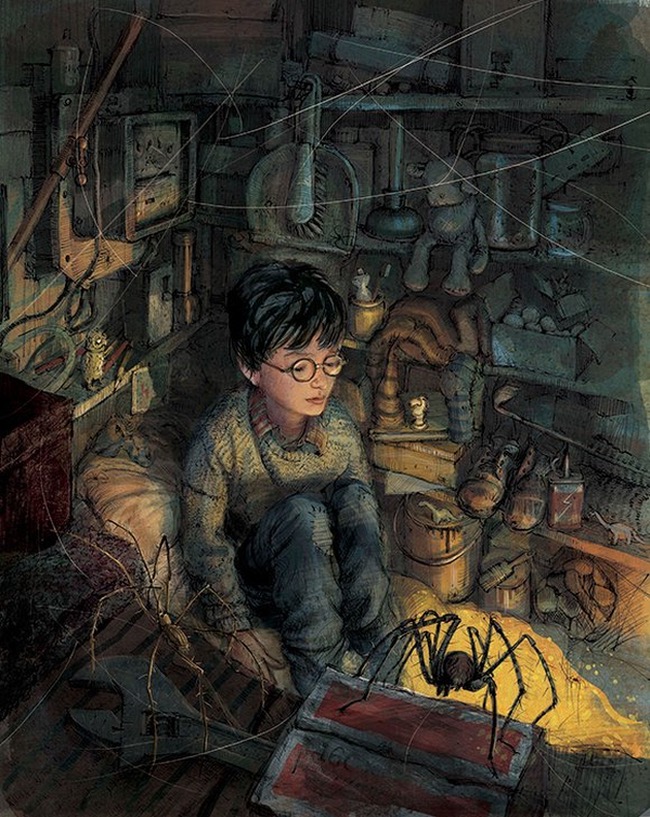
        The Cupboard Under the Stairs Artwork by Jim Kay, Illustrator for the Harry Potter series.
    • Base fiction around a single dramatic question.
      • Kiffer: This will become your log-line or pitch. See link below.
    • Remember always that you are a storyteller first. Stories are not merely about issues or themes. Fiction is about how threatening events affect fictional people.
    •  While a storyline requires a series of crises, surprises and reversals, do not use violence, sex, sin, gore, or murder to enliven a sagging plot.
      • Kiffer: This is known as lazy writing in the publishing biz. Don’t ever let yourself get labeled as a “lazy writer” by taking the easy way out.
    •  Don’t launch a story with too many characters for the readers to track in the opening.
      • Kiffer:  This is something that we see often when evaluating manuscripts–too many story lines cramped into one work when they should be divided out into a series or other story arcs.
    •  Keep dialect to a minimum and don’t write it without thorough research or intimate knowledge.
    • Dialogue immediately reveals a writer’s skills. Use it sparingly  and effectively by understanding that it is inherently dramatic. Avoid long sections of endless dialogue. Also avoid long sections where there is no dialogue. Eliminate mundane exchanges and repetitions. Limit using dialogue to reveal backstory.  Keep attributions short.
    •  Remember that the opening has much to accomplish including establishing the voice, viewpoint, tone, and pacing.
      • Kiffer: Most readers will determine if they want to invest time in reading a work by the opening.
    •  Characters are revealed while acting, talking, making choices and decisions. People are what they do.
    •  Make certain that there is a visual element on every page.
      • Kiffer: Scenes that are void of sensory input have a writing craft problem known as  “white room” syndrome. White room syndrome is where the characters float around the scene without visuals, noise, smells, atmosphere, or tactile experiences. There is nothing to anchor the reader into the scene.
    •  Create a vibrant and quirky cast of secondary and minor characters to enliven the story and reveal several sides of the protagonist.
    •  Don’t start major edits or rewrites until you finish your first draft.
      • Kiffer: As award-winning author Michelle Rene advises: “Pour your heart and soul into the rough draft with reckless abandon.” In other words, don’t start nitpicking and ripping into your work until you have a story idea that is fully formed. Let yourself be creative! Get the story down and then go back to fill in the blanks or to do research. Enjoy the creativity of following in love with your story and characters.

        Head Over Heels in Love with Your Story Idea!
    •  Each major character has an agenda and purpose.
    •  Avoid problems being solved by another character or force of nature.
      • Kiffer:  Avoid Deux Ex Machina (aka dragons, lottery winnings, Prince Charming, etc.). However, there are few times when it works (these tend to be in works that explore the human psyche) such as in the Wizard of Oz when it was all a dream for Dorothy or in Shakespearean works that tend incorporate human psyche archetypes.
    •  Beware of digressions that follow your interests or research, not the story. Rein yourself in.
      • Kiffer: This means that you should not use all that research that you gathered. However, all that research could become subtext and subtle undercurrents of your story. Use research as you would spice—as needed. Just because you have it (research/spice) doesn’t mean that you should use it all. #justsaying
    •  Nothing should happen at random, all fiction is causal. Fiction is storytelling.
    •  Structure scenes around scene goals and opposition to these goals.
      • Kiffer: This is the story current—imagine that your story is a river. Does it flow straight at a constant speed? Or does it bend and twist so that the readers do not know what is just around the corner? Does it have eddies? Does it have turbulence caused by huge obstacles to overcome? Does it run deep? Or shallow? Or both? Shallows can be very dangerous…

    Keep writing, keep dreaming, have heart. Jessica

    Keep creating magic! Kiffer 


    Chanticleer’s Writer’s Toolbox

    Handy Links to More Chanticleer Writers Toolbox Series blog posts

    Will Your Story Idea Work? by Jessica Morrell

    Writing Protagonists by Jessica Morrell

    How to Write Your First Draft in Four Weeks by Michelle Rene, award-winning author

    Prepping to Write: Plotting, Inciting Incidents, Atmosphere, Characters by Jessica Morrell and Kiffer Brown with advice from Chelsea Cain, Robert Dugoni, Stephen King…

    Inciting Incident: Story, Setbacks, and Surprises for the Protagonist – Jessica Morrell

    Minor Characters – the SPICE of FICTION by Jessica Morrell  (Part 1 & 2) 

    Part Two

    Essence of Characters Part One by Jessica Morrell

    Essence of Characters Part Two by Jessica Morrell


    Jessica Page Morrell
    Jessica Page Morrell

    Jessica Page Morrell is a top-tier developmental editor for books and screenplays. Her articles have appeared in Writer’s Digest and The Writer magazines. She is known for explaining the hows and whys of what makes for excellent writing and for sharing very clear examples that examine the technical aspects of writing that emphases layering and subtext. Her books on writing craft are considered “a must have” for any serious writer’s toolkit.

    Jessica will teach the Master Craft Writing Classes at the Chanticleer Authors Conference VIRTUAL Conference that will be held from Tuesday, Sept 8 – Sunday, Sept. 13, 2020. She will present sessions and Master Classes during the conference. She and Kiffer will also host a fun kaffeeklatch for Word Nerds at CAC20.

    Did you know that Chanticleer offers editorial services? We do and have been doing so since 2011.

    And that our professional editors are top-notch and are experts in the Chicago Manual of Style. They have and are working for the top publishing houses (TOR, Macmillan, Thomas Mercer, Penguin Random House, etc.) and award-winning independent presses. If you would like more information, we invite you to email Kiffer or Sharon at KBrown@ChantiReviews.com or SAnderson@ChantiReviews.com.

    Click here to read more about our Editorial services: https://www.chantireviews.com/services/Editorial-Services-p85337185

    A great way to get started is with our manuscript evaluation service. Here are some handy links about this tried and true service:

    https://www.chantireviews.com/manuscript-reviews/

    We work with a small number of exclusive clients who want to collaborate with our team of top-editors on an on-going basis. Contact us today!

    Writer’s Toolbox

    Thank you for reading this Chanticleer Writer’s Toolbox article. 

  • Spring Cleaning Reminders – Writing Tips by Jessica Morrell, Senior Editor

    Spring Cleaning Reminders – Writing Tips by Jessica Morrell, Senior Editor

    We all, probably, know these writing tips, but if you are like me, I can always use a reminder to rid my writing of “spiderwebs,”  “dust bunnies,” and the “clutter” that can gradually accumulate in my writing.

    It is time to Spring Clean our writing habits with precise, fresh language. Jessica Morrell suggests searching for these culprits that can easily sneak into our writing.

    Add this checklist to your Writer’s Toolbox. 

    1. Said exclamations: Today’s readers are sophisticated and understand when characters are talking and that at times the character’s voices and emotions change. The notion is the ‘he said, she said’ parts of fiction appear invisible. Readers understand that a character might sound shrill by the circumstances and dialogue spoken so you don’t need to proclaim, Mary Ellen shrieked shrilly. Never write Jason emoted, pleaded, bantered, snarked, smirked, blasted, bleated, peeped, groused. Now occasionally in the midst of a horror story, you might want to underline how terrified a character is, but consider dabbing these attributions in only for the most terrifying or surprising moments.
    2. ClichésOh how, I hate thee. Eliminate all your I took a deep breath. Ditto for eyes widened, out of the corner of my eye, jaw dropped, raven locks, and steely blue eyes. Then there is:  Each and every, knife to my heart, piece of cake, fire in the belly, he/she took my breath away. And before you write about your characters staring into each other’s eyes, think about how often it happens in real life and how often it happens in your stories.
    3. Mind matters, especially in the first person. You don’t need to report on how the character is reviewing things in his/her mind because this distances the reader and reminds her there is a narrator instead of the reader living amid the story world. So eliminate ‘mind raced‘ ‘thoughts raced‘ ‘mind’s eye‘ (a truly lame term), and ‘searching her mind.
    4. I saw. If you’re writing in close first person you don’t need the I saw or I looked part of the sentence. Example: I saw ahead of me three leprechauns frolicking merrily in the grass. Instead: Ahead three leprechauns frolicked merrily in the grass. Why? The reader wants to pretend that he or she is spotting the leprechauns along with the character. Also describing the leprechauns implies the narrator or character is seeing or observing. No need to state it.
    5. Prepositional phrases. Prepositions are the carbohydrates of language. Of course, we need them for clarity but use with care. Instead of a book of poetry, use poetry book. Instead of a tower of flames, use towering flames.

    So here’s the trick: Don’t always use the first word or phrase that pops into your head because you might be using rusty, old clichés. Or fix these dullards when you edit. Like stock still, fast asleep, choking back tears, stirred up a hornet’s nest, did a double take, under the radar, and never in her wildest dreams.

    Keep writing, keep dreaming, have heart. Jessica Morrell


    Jessica Page Morrell
    Jessica Page Morrell


    Jessica Morrell is a top-tier developmental editor and a contributor to Writer’s Digest magazine, and she teaches Master Writing Craft Classes at the Chanticleer Authors Conference that is held annually along with teaching at Chanticleer writing workshops.

    Jessica will teach a Master Class and advanced writing craft sessions at CAC19

    There are a few more seats available for her Master Class on Thursday, April 25.


    Master Class: Revision & Editing: Secrets of The Dark Arts

    Jessica P. Morrell ©

    Once you’ve finished a draft of your novel it’s time to buckle down. Because writers need to learn how to revise and edit themselves. Period. Revision skills are what separate amateur writers from polished and publishable writers.

    It’s not easy, and yes it can seem daunting. But then, it’s a learned skill like many others, so we’re going to dig in with a four-step program. Why four steps you ask? You cannot work effectively at all levels of a novel or memoir at the same time. You need to work first with the structure and straighten out the big problems, then move down to the next level. It’s pointless to become preoccupied with single paragraphs or sentences if the whole structure is shaky. After all, some of those paragraphs you’re obsessing over might not make it to the final draft. In fiction, you’re assuring that each of the three acts—intro or set up, adding complications, resolving the conflict, all exist in the right proportion and contain the appropriate twists and reversals. In the same way, you need to tackle each chapter, section, subsection, paragraph, and sentences.

    This workshop is designed for fiction writers and memoirists to refine your first draft in thoughtful, organized steps.

    Workshops and Sessions Jessica will teach at the 2019 Chanticleer Authors Conference: 

    During the Conference:

    Immersive Fiction in 3 Sessions:

    Writing Fiction so Readers Land Amid Your Story and Don’t Want to Leave. Ever.

    We live in a clattering, distracting world that pulls at readers’ attention and senses. To compete your fiction needs be immersive, as in an alternate reality that your reader can enter into. Thus your readers are experiencing it, not simply reading it. An immersive story is an intimate, sensory story. It takes place in a world that a reader can see, smell, feel, and hear and it’s based on characters readers come to know and care deeply about. With the opening pages, readers are swept into a world that is so resoundingly real and intricately constructed that they leave their ordinary lives to venture forth and live daily along with the characters.

    Immersive Fiction Part 1:  Atmospherics

    Readers want to feel as if they’re part of a story world interacting with viewpoint characters. Fictional worlds that are immersive are nuanced, intricate, and alive with significant details. We’ll sort through what makes details significant and necessary. Plan to delve into atmosphere and tone, often under-appreciated techniques in a writer’s toolbox, yet they can be so effective to heighten suspense, create reality, and underline emotions and key moments. We’ll highlight how to use weather, lighting, interiors, unsafe places, and what I call “surround sound.” Finally, we’ll also discuss the key elements needed of world build in realistic genre fiction such as historical, sci-fi, and fantasy, and to make your stories memorable and immersive.

    Immersive Fiction Part 2: Your Sometimes Heart-breaking, Sometimes Messed-up, Sometimes Heroic Fictional Cast

    For many writers, the most fun of creating a story is fleshing out characters who battle, grow, and plop into heaps of trouble. Because readers need relatable, yet irksome, yet potent story people to follow and fret over. Their flaws and mistakes drive us crazy, their choices and moral dilemmas worry us sick, their triumphs feel as sweet as our own.
    Characters first need to be intriguing and readers need to meet them at a pivotal, irreversible moment. From there they’ll tread where we dare not, fall in love with losers and sometimes winners, and take on monsters when we’d be cowering. But still characters, including secondary characters, need a vivid essence and need to be bigger than life. And by story’s end they need to grow, also called an arc. This workshop will delve into the more intricate aspects of character building and creating arcs, the art of creating characters who will live in the reader’s heart and memory.

    Immersive Fiction Part 3: Stakes and Motivations

    One major reason that people ‘buy into’ storytelling of all types is that there are serious stakes involved. Readers need to feel as if they also have a stake in the story. Stakes create tension, but most of all dread in a story because a character’s happiness, perhaps even his life, depends on them. The stakes might mean saving a vulnerable child snatched by a creepy predator, or saving the galaxy, or defeating Voldemort and his Deatheater.

    Motivations are the reason characters attempt any action in a story. You’ll learn that motivations are deeply felt, drive a story, and will require a character’s chief personality traits to fulfill. We’ll discuss how motivations reveal backstory and a character’s inner world, create goals, and will exact a cost as the story progresses. We’ll discuss a variety of stakes, motivations, and goals so that you’ll learn clear examples of how all are entwined with plot and character.

    If you would like to learn more about the sessions and Master Writing Craft Workshops please click on this link that goes to https://www.chantireviews.com/chanticleer-conference/

  • Deep Editing Power with Margie Lawson, CAC17 Master Class Presenter, Editor, and International Speaker

    Deep Editing Power with Margie Lawson, CAC17 Master Class Presenter, Editor, and International Speaker

    Have you registered for our #CAC17 Master Class yet?
    Margie Lawson will present a full day Master Class on March 30th, the day before the conference. Make sure to plan to come early for this special session and REGISTER NOW.
    Enrollment is limited, and seats are starting to fill up.
    Margie has presented over a 150 full day master classes in the U.S., Canada, Australia, and New Zealand. Writers credit her innovative deep editing approaches with taking their writing to publication, awards, and bestseller lists.

    Margie took time out of her busy schedule (teaching around the world) to write a guest post on some of the topics she will cover in the #CAC17 full day Master Class.

    Do you have a question, a comment, or an editing experience to share? Post a comment and you have TWO CHANCES to WIN a lecture packet! 

    Scroll down below the related posts, and you’ll see the comments section.


    Rhythm and Cadence and Beats, Oh Yes!

    By Margie Lawson Editor, International Presenter

    Reading a book with flat-lined cadence is like watching a movie on mute.

    Most writers know about the power of rhythm and cadence and beats. But most don’t use that power in every sentence.

    A compelling cadence is more than varying sentence lengths. More than using ­­­­­standalone words.

    A compelling cadence carries power on the page. It propels readers through paragraphs and passages and pages.

    Read your work out loud, with feeling, and you’ll hear what beats work well, and what beats are missing.

    Many rhetorical devices are cadence-driven. Knowing which rhetorical devices boost cadence, pick up pace, make the read imperative, and 947 more cool things, loads your writing toolbox with super-powered tools.

    Check out these cadence-driven examples.

    The Ones We Trust, Kimberly Belle, Award-Winning MIRA Author, Multi-Margie-Grad
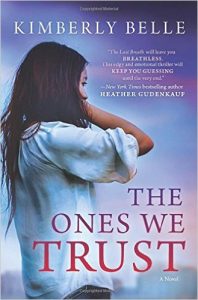
    1. Gabe’s good looks are real and rugged and raw, and now that I’ve seen both brothers up close, I’d choose Gabe over Zach any day.

    RD Combo: Polysyndeton (multiple conjunctions, no punctuation) and Alliteration

    2. The silence that spins out lasts forever. It’s the kind of silence that wraps around you like a shroud, the kind that turns the air thick and solid, the kind that makes you want to hear the answer as much as you dread it.

    Kimberly Belle could have written: The room went silent.

    I’m glad she decided to empower that emotionally-loaded scene dynamic.

    Rhetorical Devices: Amplification (silence) and anaphora (the kind, the kind, the kind)

    3. My heart races and my skin tingles and my blood pressure explodes like a grenade.

    Rhetorical Devices: Three visceral responses are powered with polysyndeton (multiple conjunctions, no punctuation) and a simile.

    The Blessing of No, Megan Menard, Multi-Margie-Grad

    1. Luke had a machine-gun laugh that fired about every third word.
    1. I picked up a French fry. It was a slender blonde, tall and weepy. I named the fry Tanya and chomped off its head.

    Those examples carry interest and power and are perfectly cadenced. The second example uses a metaphor and structural parallelism. It reveals a truth in a humor hit that could make us laugh or cry.

    Test of Faith, Christa Allan, Award-Winning Author, Multi-Margie-Grad 
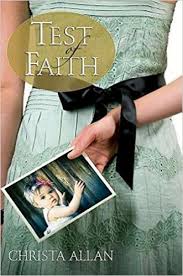
    1. “If. Faith. Can. Come. Live. With Me?” I heaved every word out of my brain and into my mouth. I felt like someone regaining consciousness in an unfamiliar room or house or life.

    Christa Allan stylized that dialogue by using a Period. Infused. Sentence. That’s what I named it. Her dialogue cue is amplified, amplified, amplified stellar.
    She used an RD combo in the last sentence: polysyndeton and zeugma.

    What’s zeugma?

    I’ll SHOW not TELL. I know you’ll get it.

    My teaching-zeugma sentence:

    Margie grabbed her purse, her keys, and her steely resolve.

    You got it!

    This 2-point version is an example of zeugma too:

    Margie grabbed her purse and her steely resolve.

    Now you know the rhetorical device zeugma.

    1. This dinner was the Indy 500 version of returning to the track after a pit stop, except that the finish line was Logan, and there was only one first place.

    Ah… Metaphors and power words and hope all themed, propelled by a compelling cadence.

    Red-Headed Stepchild, Jaye Wells, USA Today Bestseller
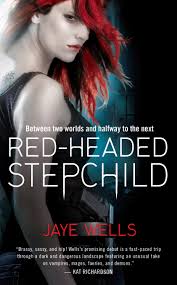
    Jaye Wells wrote this paragraph when she was in a full day workshop I taught for Dallas Area Romance Authors in 2007. I asked all the participants to write an example of anaphora.

    Anaphora — Repeating a word or phrase at the beginning of three or more successive phrases or clauses or sentences. The first three must be in a row.

    The paragraph she wrote in class became the first paragraph in the first chapter of Red-Headed Stepchild, her debut Urban Fantasy.

    Digging graves is hell on a manicure, but I was taught good vampires clean up after every meal. So I ignored the chipped onyx polish. I ignored the dirt caked under my nails. I ignored my palms, rubbed raw and blistering. And when a snapping twig announced David’s arrival, I ignored him too.

    Deep Edit Analysis:

    Anaphora: I ignored, I ignored, I ignored, I ignored

    Three Humor Hits:

      • Digging graves is hell on a manicure
      • good vampires clean up after every meal
      • I ignored him too

    Power Words — Words that carry psychological power: graves, hell, vampires, clean up, ignored, ignored, dirt, ignored, raw, blistering, arrival, ignored him

    What does the reader learn in those 53 words?

    1. She’s digging a grave. We can infer she killed someone.
    2. She’s a vampire.
    3. She gets manicures.
    4. She’s Goth.
    5. She’s been digging that grave for a while.

    She’s not concerned about David catching her digging a grave.

    In that one short, opening paragraph, Jaye Wells deepened characterization, shared a strong and fun voice, and made the reader want to read more. That’s smart writing. The kind that impresses agents and editors and readers and reviewers.

    Every example in this blog carries a compelling cadence. That pleasing cadence speaks to the reader’s subconscious. Cadence has the same impact on the reader that a movie sound track has on a viewer.

    Read the first sentence of this blog OUT LOUD:

                Reading a book with flat-lined cadence is like watching a movie on mute.

    Do you hear those perfect beats?

    I could have written:

                It is critical to pay attention to cadence.

    No cadence-driven power.

    Deep Editing Caveat:  Most of the examples I shared in this blog were amplified. I’m not suggesting that every sentence should be powered up, or made special in some way. That would be gagifying. 

    Not a word. But it carries the punch I wanted to share.

    We need plain writing. Writing that does its job without any amplification.

    We need fun, quirky, deep, stylistic, and tug-your-heart writing too.

    I teach writers how to add psychological power to their writing in hundreds of ways. No hype. No hyperbole. I’m just sharing what I do.

    I’m a psychologist-turned-editor. I used my psychological expertise to analyze more passages and chapters than most people read in ten lifetimes. I developed deep editing techniques that help writers add power to each paragraph.

    I teach writers how to empower emotions.

    How to avoid clichés and clichéd phrasing.

    How to write fresh faces and voices and visceral responses.

    How to use advanced stimulus-response patterns.

    How to use my Four Levels of Powering Up Emotion. How to have the right emotional intensity in the right place.

    How to create emotional authenticity on the page. How a character can act in an out-of-character way, and get the reader to buy it.

    How to use six rhetorical devices to finesse backstory. Succinct, unskimmable, beautifully cadenced backstory.

    How to use my 20 Point Checklist for Openings, my 15 Point Checklist for Endings, my 12 Visceral Rules for Fiction Writers, my 10 Gems for Not Writing Your Mama’s Character Descriptions, and more.

    How to deep edit analyze your scenes. I developed The EDITS System so writers can see what’s working, what’s not working, and what’s missing.

    I created seven online courses for writers:

    1. Empowering Characters’ Emotions
    2. Deep Editing, Rhetorical Devices, and More
    3. Writing Body Language and Dialogue Cues Like a Psychologist
    4. Defeat Self-Defeating Behaviors
    5. A Deep Editing Guide to Make Your Openings Pop
    6. Visceral Rules: Beyond Hammering Hearts
    7. Fab 30: Advanced Deep Editing, A Master Class

    The first four classes each have 250+ pages of lectures. The next three classes have 180 – 230 pages of lectures.

    I used to teach college. Graduate level psychology courses. I back up every teaching point with plenty of examples from a variety of genres.

    I shared a few of the twenty rhetorical devices I teach fiction writers here. I’ll cover all twenty in about 75 minutes in my full day master class. Some, like polysyndeton (…photographed and bagged and carried away…, The Last Breath, Kimberly Belle) may be new to you, but they’re easy to learn, and use. Handouts help.

    I’m looking forward to having fun in my Master Class on March 30. Join me, and you’ll leave with deep editing tips and techniques that will add power to your WIP.


    About Margie

    Margie Lawson —editor, and international presenter – teaches writers how to use her psychologically-based editing systems and deep editing techniques to create page-turners.

    Margie has presented over a hundred fifty full day master classes in the U.S., Canada, Australia, and New Zealand. Writers credit her innovative deep editing approaches with taking their writing to publication, awards, and bestseller lists.

    Margie developed seven online courses she teaches through Lawson Writer’s Academy on her website. LWA has over 30 instructors and offers five courses most months.

    Margie also teaches fifteen 5-day Immersion Master Classes a year. Enrollment is limited to seven. In 2017 she’s teaching Immersions in Atlanta, Denver, Dallas, Amarillo, Calgary, Washington D.C., and in Melbourne, Sydney, Brisbane, Coffs Harbour, Canberra, and Hobart, Australia.

    What’s the Buzz? 

    Randy Ingermanson, Ph. D., award-winning author of Writing Fiction for Dummies:

    In the twenty years I’ve been writing fiction, two teachers have astounded me with their insights and taught me something radically new: Dwight Swain and Margie Lawson. Margie taught me new ways to empower my writing.

    Melanie Milburne, USA Today Bestseller

    I had 40 books published before I met Margie Lawson. It wasn’t until I started using her deep editing techniques that I won several writing awards. I have a library of how-to books, but none top Margie’s expertise.

    Laura Drake, RITA Winner, The Sweet Spot

    When I took my first Margie Lawson class, the paradigm shift I experienced was more like an earthquake — I saw everything differently. I took more of her classes and I got a three book deal with Grand Central. A few months later I got a contract for a fourth book. Several months after that, I got contracted for three more books! I sold seven books in fifteen months—before my first book was released. I have Margie to thank for teaching me how to deep edit to get power on every page.

    Allison Brennan, NYT Bestseller:

    Margie Lawson, a brilliant psychologist, teaches a class on editing that, ahem, truly tested me. She uses color-coding to dissect writing in order to empower your stories. I learned from Margie how to fix my prose. I think about her editing system and techniques, ways to add power, finding the emotional key of the scene. I use her lessons to add power to my writing.

    Romily Bernard, RITA Winner, Find Me

    Your classes (both online and at the Georgia writing conference) changed my life!! My YA debut sold in a three-book, pre-empt to Harper Collins. Phoebe was so very complimentary about the way I render emotion and tension on the page and I know I have you to thank!

    Alex Ratcliff, Daphne Finalist

    Margie’s online courses and Immersion Master Class have strapped me into a skill-building machine for writers. With her help, in one year I moved from a can’t-write-a-fresh-line beginner to a Daphne finalist. Wow!

    Karin Tabke, Bestselling author

    I had so many epiphany moments Saturday my head was twitching. It’s still twitching! I wish I had attended Margie’s Empowering Characters’ Emotions master class earlier. My writing is stronger, more vivid, more emotional. The effects of the workshop were immediate. I highly recommend if you have the opportunity to take Margie’s workshop in person, do it.

    Colleen Coble, CEO of ACFW and Bestselling author

    “The workshop I went to last month was the best I’ve ever been to, bar none. And I’ve been to plenty. Margie’s workshop was so awesome, I’m going over my notes from what she taught before I start my next book. She’s a genius, pure and simple.”

    Elizabeth Essex, RITA Finalist, The Danger of Desire

    I’ve attended one of Margie’s all-day seminars, taken all her online classes; attended her workshops at RWA conferences, flown to Colorado to attend her four-day Immersion class, and hosted an Immersion class in Dallas. Margie taught me to challenge and push myself to make the hard changes from the first page of a manuscript until the very last. Working with Margie, you’ll have the tools to make every single word count.

    Comment Contest Details

    Post a comment and you have TWO CHANCES to WIN a lecture packet!

    You’ll win the lectures (250+ pages) from one of Margie Lawson’s online courses listed here:

    1. Empowering Characters’ Emotions
    1. Deep Editing, Rhetorical Devices, and More
    1. Writing Body Language and Dialogue Cues Like a Psychologist

    The drawings will be Sunday, Feb. 5th, 8:00 PM Mountain Time.  

    Drawing reschedule due to SUPERBOWL! Time extended until Thursday, Feb. 9, 2017 at 6 p.m. PST.

    The winners names will be posted here.

    See you on the blog!

    KEEP SCROLLING DOWN UNTIL YOU GET TO THE COMMENTS SECTION ON THIS PAGE (the place to leave your comments for Margie’s  contest).  

    All smiles…………….Margie

  • Jumpstart Your Novel – Masters Workshop

    Jumpstart Your Novel – Masters Workshop

    Chanticleer Master Workshops  assist serious writers who are continuously striving to perfect their craft and reach their publishing goals.  

    iStock_000027605672MediumHow do bestselling authors write so many books each year?

     Their Secret: Many top authors gather in groups to brainstorm the framework of their next novels.


    Here’s your chance to do just that! 

    → Jumpstart Your Novel – a Master Workshop

    With the guidance of our staff, you will flesh out your story idea with:

    • characters & character traits
    • precise story goals and conflicts
    • summaries of your major plot points and story arcs
    • knowledge of how to use and create backstory without info dumping
    • a master document/template to jumpstart your next novel

    A detailed schedule and worksheets will be emailed to all attendees before the workshop. You’ll leave this intense brainstorming workshop with handouts and checklists, new friends and colleagues, and crucial information for finishing the first working draft of your novel.

    Dates:  Friday, May 16 – Sunday, May 18, 2014 ( Three Full Days)

    Location: Charming La Conner, Wash., conveniently located between Seattle and Vancouver, B.C.

    Workshop Cost: $275 (3 jam-packed days of instruction, all handouts, worksheets,  advice, and refreshments)

    This workshop is limited to 10 participants.                        
    Register Now

    All participants must begin with a story concept that they want to work on.  When you register for this workshop, you will need to type or paste your story idea/concept (maximum of 100 words) in the text box on the Workshop Services check-out page.

    Examples of succinct story concepts:
    • A young journalism student is determined to reveal the truth about a series of murders in the past, despite evidence that the killer may be a member of her own family.
    • A big-city detective stuck in a gossipy small town struggles to solve the mystery of a baby’s disappearance, despite the fact that a signing gorilla appears to be the only witness to the crime.
    • A biologist fights the rugged wilderness terrain, the worsening weather, and mounting media pressure to find a missing child and save the lives of her beloved cougars.

    Workshop Staff

    [fusion_builder_container hundred_percent=”yes” overflow=”visible”][fusion_builder_row][fusion_builder_column type=”1_1″ background_position=”left top” background_color=”” border_size=”” border_color=”” border_style=”solid” spacing=”yes” background_image=”” background_repeat=”no-repeat” padding=”” margin_top=”0px” margin_bottom=”0px” class=”” id=”” animation_type=”” animation_speed=”0.3″ animation_direction=”left” hide_on_mobile=”no” center_content=”no” min_height=”none”]

    Pamela Beason
    Pamela Beason

    Pamela Beason

    Learn from the author of the Summer Westin Mysteries (Penguin/Berkley Prime Crime), the Neema Mysteries (WildWing Press), Shaken and Call of the Jaguar (romantic suspense – WildWing Press), and various nonfiction books. She is also is a private investigator and a screenplay collaborator.

    Pam has worked as a ghost writer and “book doctor” (manuscript editor) for private clients and major publishers. She frequently shares her experiences in traditional and indie publishing with writers groups around the Pacific Northwest, and has taught writing and editing courses and workshops for a variety of organizations. Her author website is http://pamelabeason.com.

    Winner of the Daphne du Maurier Award for Mysteries & Chanticleer Book Reviews Grand Prize.


    Kiffer Brown, President of Chanticleer Book ReviewsKiffer Brown

    Media scout for literary agents, publishing houses,  movie producers, and industry professionals, along with folks seeking a good read, Kiffer is known for her instinct for picking winners. Reader Extraordinaire, she reads thousands of works a year searching for today’s sparkling gems that will become tomorrow’s best sellers.

    Kiffer is also the founder of Chanticleer Book Reviews & Media. CBRM Discovers Today’s Best Books with Editorial Reviews and Writing Competitions. 

    You will leave with a framework for your novel idea – ready to begin work with a clear plan along with specific objectives and goals to move your writing career forward!    

    Register Now

    The Jumpstart Your Novel Brainstorming Master Workshop will take place at La Conner–a  favorite Washington State get-away location with antique shops, fine dining & casual pubs, wine tasting rooms, and boutiques & specialty shops.

    iStock_000013192852Medium

    We have selected the La Conner Channel Lodge as our Brainstorming Headquarters.  The Channel Lodge  boasts Northwest styling, water views, and an ideal location for exploring the charming town of La Conner located on the Swinomish Water Channel. It is just steps away from the La Conner Marina and is home to diverse mix of artists, writers, craftsmen, fishermen, and farmers.

    La Conner Channel Lodge is offering special rates to all workshop attendees:

    • Queen Room with View: $169 per night/double occupancy.
    • King Parlor Suite with View:  $229 per night (sofa sleeper included)

    These rates are valid until Sunday, April 13, 2014.

    • Attendees are responsible for making reservations and paying for accommodations.
    • Call for reservations: 360-466-4113. Ask for the Chanticleer Writers Workshops discount rate.

    La Conner Channel Lodge accommodations include:

    • WiFi
    • Continental breakfast
    • In-room gas fireplace and sitting area
    • Writing table and chairs
    • Parking is included with rate
    • In-room gourmet coffee and tea
    • Mini-refrigerator
    • Luxurious linens & comforter
    • Flat Screen TV and DVD player

    Your workshop staff will organize no-host dinners, outings, and mixers for those who would like to participate.

    If you would like more information, please do not hesitate to contact us at: info@ChantiReviews.com.  Please type Brainstorming Workshop in the subject line of your email.

    Register Now

    REFUND POLICY:

    • We apologize, but we are not able to refund workshop fees after noon Monday, April 14, 2014.
    • Workshop refunds prior to April 13, 2014 are subject to a 30% administration fee.
    • Hotel refund policy is through the hotel where lodging reservations were made.

    All workshop refund requests must be submitted in email to: Admin@ChantiReviews.com.

     [/fusion_builder_column][/fusion_builder_row][/fusion_builder_container]