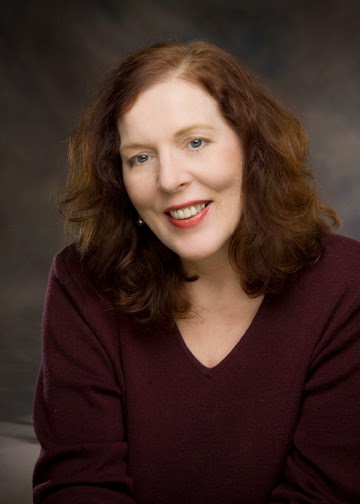
The inimitable, always-in-demand, Jessica Morrell will be joining us at the Chanticleer Authors Conference
Jessica Page Morrell – Editor Extraordinaire!
We are delighted to welcome Jessica Morrell to VCAC21! One of the primary contributors to the Chanticleer writing blog, Jessica’s tips and advice are invaluable lessons that benefit all authors.
Each year we offer writing craft sessions from the best editors and authors in the publishing industry. This year we are excited to announce that we haveJessica Page Morrellas a teacher of theMaster Writing Class Sessions.
It sometimesdoestake a village to bring a story to life. With that in mind, we’ll discuss the many roles for your story people from protagonist to minor characters, and delineate their impact on the plots and protagonist. However, we’ll also cover the outliers in fiction and the chaos, conflict, zest, and realism they add to your story world. So we’ll be covering anti-heroes, oddballs, wretches, naughty, pain-in-the-butt types, innocents, along with villains and bad and bad ass women.
We’ll touch on other topics—how to differentiate characters via voice, creating characters based on backstories and main traits, and the importance of secondary characters to make things happen. Because living, breathing characters come from readers experiencing them through a specific emotional lens supplied by viewpoint, voice, and a character’s observations.
To further expand our discussion we’ll also cover immersive, intimate viewpoint and narrative distance. Please bring your favorite imaginary folks to the workshop.
If you are not registered for VCAC21, but would like to take Jessica’s Master Writing Class,please click here.
Conference Session: Saturday, April 24, 2021 at 10:15 a.m.
Power Writing, Word by word, sentence by sentence using language to create tension, emotion, action and resonance.
Jessica understands both sides of the editorial desk–as a highly-sought after developmental editor and author. Her work also appears in multiple anthologies andThe WriterandWriter’s Digestmagazines. She is known for explainingthe hows and whysof what makes for excellent writing and for sharing very clear examples that examines the technical aspects of writing that emphases layering and subtext. Her books on writing craft are considered “a must have” for any serious writer’s toolkit. Read some of Jessica’s writing here.
Click here for more information about the 2021 Chanticleer Authors Conference and Int’l Book Awards Banquet and Ceremony.
A Chanticleer Editorial Services Writing Toolbox Series
While rules and techniques are not written in stone, most of the basic guidelines of fiction stem from logic and an understanding of dramatic structure. Don’t break the rules until you know them, or better yet, until your first novels have sold. – Jessica Morrell
The Developemental Editing Checklist by Jessica Morrell
VOICE
From the opening paragraphs, is there a clear, distinct and engaging voice? The writer’s voice should have authenticity, individuality, or originality.
Log-Line aka Elevator Pitch
Is there a single, simple conflict that drives the action? Can your plot be summed up in a single sentence? (Log-line aka The Elevator Pitch). Keep your log-line visible and in plain sight whenever you are editing your work-in-progress to remind you of your story’s focus.
Opening – is it grabbing?
Does the story begin with a change or threat in the protagonist’s life? Or the loss of something important? Or an action happening that should be prevented.
The opening should contain a hook or inciting incident that creates stress, unease, questions, or opens a can of worms. The story needs to start in the first sentence.
Is the story driven?
Does each scene provide a sense of momentum, or narrative drive pushing the story forward? Does each description? Or are the words there for the writer?
Is the story immersive?
Is the story highly visual? Can your reader imagine “seeing it” while reading or listening to it?
Ticking Clock?
Is there a sense of time running out or another driving factor that creates tension? Even light-hearted or humorous stories should have tension.
Weather or Atmosphere
Does the story contain weather? What is the environment or the atmosphere like? Make sure that your story doesn’t have the “empty room” syndrome.
Is Backstory on a need to know basis?
Have you worked at weaving data, description and backstory into the narrative so that it doesn’t interrupt the forward movement of the story?
Did You SHOW and TELL?
Have you dramatized the action in scenes or have you summarized?
“Show, don’t tell” is a useful guideline for writers, but fiction is actually ‘told’ and ‘shown.’ A combination of both techniques creates the most effective fiction.
Scenes are most effective when you’re revealing complicated interactions between characters and emotions change via the scene.
Exposition is most effective when you’re filling in background information or moving quickly between two scenes. Too much showing or too many scenes make the story too drawn out just as too much exposition makes it static.
Setting
Are the settings interesting, unique, memorable?
Does the setting have the potential to teach readers about a place, a profession, a way of life?
Or does it overshadow the story?
Conflict
Is the conflict weak or boring or not enough to sustain a manuscript of a particular length?
Or does the conflict seems contrived?
Or begins too far into the story? This happens far too often.
Pacing
Often writers apply the same level of speed or word count to everything in the story from a major heartbreak or ride across town. Sagging middle is another pacing problem so that the reader feels like it takes too long to reach the end.
Other times, the story plods along only to barrel past the most interesting moments in the story.
Do the chapter endings make your reader want to keep reading?
Have you ended scenes (chapters) with thrusters, surprises or cliffhangers?
Readers need a reason to keep turning the page and all stories need growing intensity until the climax or resolution.
Flashbacks
Have you relied on flashbacks to relate to the protagonist’s backstory? If so, is the information necessary and do the flashbacks disrupt the momentum of the story?
Are your characters recognizable?
Have you repeated some physical characteristics, descriptions of the characters throughout the story so the reader is reminded of their physical attributes and personality?
Is each character consistent? Are his or her dominant traits in evidence throughout the story?
Transitions
Are your transitions brisk and do they serve to keep the reader moving through time, space and mood?
Do you quickly slip in and out of scenes?
Story Arc
Are there a series of setbacks, mini-crisis, and complications along the way?
Does the protagonist have a goal in each scene? Or something that will affect the protagonist is taking place?
Have you added unexpected events midway in the story?
Have you deftly handled your theme and premise, or are you on a soapbox preaching or shouting at the reader with an overreaching message pushing an agenda? This happens more often than one would think.
Dialogue
When you read the dialogue out loud, does it sound natural?
Do you trip over words when you read the dialogue out loud?
Does the dialogue contain tension?
Does each character sound distinctive?
Be aware of these problems: overly long exchanges; characters giving speeches, or the dialogue contains no tension or conflict.
Does each character sound distinct?
The Ending
Is the protagonist the person in the story most involved in the action, most likely to be changed by events in the story?
Does the ending provide the most emotional and dramatic scenes?
Does the ending tie up most of the subplots?
Does the ending deliver? Does it satisfy?
The best endings are not contrived or convenient. They are the logical and highly dramatic culmination of the proceeding events. The climax is the highest emotional pitch of your story, a decision, a collision of forces, and settling of scores. Also in this category are too many loose ends and subplots dangling, and questions unanswered.
The ending is what makes your work “go viral.” Take special care with the ending. –Kiffer
RULE #1 from Jessica
While rules and techniques are not written in stone, most of the basic guidelines of fiction stem from logic and an understanding of dramatic structure. Don’t break the rules until you know them, or better yet, until your first novels have sold.
Editor’s Note: Often it is hard for the author to objectively read her or his work for the above issues. Authors often “hear and see” their story in their minds’ eyes. The trick is to have someone else hear and see the story from words on the page from outside of the author’s mind. This is where the author’s agent or the publisher’s editor comes into play by doing a close read of the work for these top-level issues before editing begins.
We, at Chanticleer Reviews Editorial Services, see that it is at the point where authors make the mistake to start copyediting their works when they should have their manuscript evaluated by an editor, agent, or publisher.
The power of a manuscript overview makes it one of the best tools that traditional publishing houses and literary agents make available to their authors.
Best-selling authors receive great editing and feedback from agents and senior editors on early drafts, which most self-publishing authors never receive. When feedback comes early in a work’s progress it allows the author to not only create a more polished final product, but also publish more works.
It can be very difficult for the author to discern the above issues because it takes fresh eyes and perspective to evaluate the manuscript aka work-in-progress. The entire manuscript should be read and then commented on and evaluated. To learn more about Chanticleer’s Manuscript Overview and Evaluation Service can save you time and money, please click here.
Click here to download the handy WORD file that you can print out of the above points on Developmental Editing.
Jessica Page Morrell
Jessica Morrellis a top-tier developmental editor and a contributor to Writer’s Digest magazine, and she teaches Master Writing Craft Classes at the Chanticleer Authors Conference that is held annually along with teaching at Chanticleer writing workshops.
Jessica understands both sides of the editorial desk–as a highly-sought after content development editor and an author. Her work also appears in multiple anthologies and The Writer and Writer’s Digest magazines. She is known for explaining the hows and whys of what makes for excellent writing and for sharing very clear examples that examines the technical aspects of writing that emphases layering and subtext. Her books on writing craft are considered “a must have” for any serious writer’s toolkit. For links for her writing craft books, please click on here.
Chanticleer Reviews andOnWord Talkswill interview Jessica for more of her writing tips and advice. Stay tuned! ~ Chanticleer (who hails from Chaucer’sCanterbury Tales).
Click here for more information about the 2019 Chanticleer Authors Conference!