Thursday morning, April 18th. Registration Required. Seating is Limited.
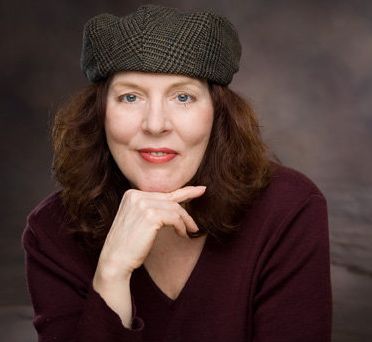
Morning Master Class will address Advance Writing Craft with D.D. Black, Amazon Best-selling Author
“D.D. Black evokes comparisons to John Grisham’s finest —The Firm and The Pelican Brief— with a touch of Woodward and Bernstein’s All the President’s Men.” ROBERT DUGONI – #1 Amazon and New York Times Bestselling Author of My Sister’s Grave“
Incorporating Mystery and Suspense Techniques Into Any Genre—Fiction OR Memoir
Learn How to Create Tension, Pacing, and Interest in your works no matter the genre by incorporating Mystery and Suspense Elements along with elevating Scene Level Craft Elements in your writing.
Using examples from best-selling literary fiction, mysteries, fantasy, and even memoirs, you’ll learn professional techniques for weaving compelling mystery and suspense into your book, regardless of genre. In the class we will:
Discuss how to incorporate the mystery novel structure into non-mystery genres, such as literary fiction, memoir, sci-fi, and fantasy
Study the use of the elements of mystery in wildly different award-winning and best-selling books, such as: “The Round House” by Louise Erdrich, “Harry Potter and the Sorcerer’s Stone” by J.K. Rowling, and “Dreams from My Father” by Barack Obama
Learn to ask questions both big and small to keep readers intrigued
Talk about how to craft clues, red herrings, plot twists, and cliffhangers for maximum intrigue
“Mystery is a whisper, not a shout.” – Kate Atkinson, best-selling literary crime novelist whose works have been adapted to a BBC One Series
Adam is a full-time author with more than 30 published books under two different names — A.C. Fuller and D.D. Black. Previously, he was an adjunct professor of journalism at New York University and has taught writing and book marketing at conferences and libraries all over the country and internationally. He lives with his wife, son, and three dogs in Kitsap County.
Click here to register for D.D. Black’s Master Writing Craft Class, CAC24, Thursday morning at 9:15 – 1 p.m., Coffee, tea, and drinks will be provided in class.
“Children understand that ‘once upon a time’ refers not only – not even primarily – to the past, but to the impalpable regions of the present, the deeper places inside us where princes and dragons, wizards and talking birds, impassable roads, impossible tasks, and happy endings have always existed, alive and bursting with psychic power.” ~ Stephen Mitchell
From the first must-be-transporting words to the shattering conclusion, readers demand layers of fantastical invention. It all begins with a captivating opening salvo.
“Once upon a time” or “A long, long time ago” makes a promise to your readers. Open these pages and you’ve been wrested from your 21st century sphere. You are about to enter a kind of dream world, encounter wonderment, and find age-old conflicts wearing fantastical guises.
While fantasy is untethered from our current world, as in real life, don’t make promises you cannot keep. You’ve got to deliver an adventure so potent it invades the reader’s senses and alters his or her heartrate. Your adventure needs a diverse cast, a clash of titans, and the wondrous–dragons soaring overhead, ancient spells and curses, night walkers, or battles fought over lands or pride or brute necessity.
Khal Drugo – Game of Thrones
Opening sentences are everything
They start the whole transporting apparatus to assure readers they’ve landed in a faraway time and place. Amid a world of richly embroidered textures, sights, tastes, smells, and sounds all while entanglements with a fascinating cast of characters are underway. A world that has a carefully built history, scenes unfolding in distinct reality replete with atmosphere, tension and mood.
Is Your Opening Delivering:
Characters tossed off balance somehow by a force outside themselves.
A nettling question emerges that demands answers.
Something is amiss. The opening acts typically create threats. Humans are biologically programed to respond to threat, but will go along for the ride anyway. Because, after all, the threat is long ago and far away.
Introduce story people we’ll never meet in the real world. Story people we just can’t quit. People we can follow up close. So close we can hear their laughter or scorn, smell the stink from their terror, or experience what has lit their fierce desires.
Readers need to care about who is threatened. Some aspect of the main characters need to be identifiable, possibly pitiful, worrying, or vexing. Has life already handed your protagonist near-starving rations or brutality? Or has a royal family member longed to escape to an ordinary life?
No matter if dreaded, or later regretted, a choice must be made. {Excuse the almost-rhyme.”}
Note from Kiffer: This is where I paused to reread the opening lines of A Song of Fire and Ice by George R. R. Martin, Pride and Prejudice by Jane Austen, and The Flight Attendant by Chris Bohjalian. Yes, each one delivered!
“Perfect words in perfect places”
Which brings us to oh-so important first lines with those perfect words. Let’s forget about first person or third person for now.
Start with a powerful moment.
Don’t be afraid to startle the reader.
Always create a mood and perhaps a stirring dread.
As in these examples:
“The island of Gont, a single mountain that lifts its peak above the storm-racked Northeast Sea, is famous for wizards.” Ursula K. Leguinn,A Wizard of Earthsea
“Logen plunged through the forest, bare feet slipping and sliding on the wet earth, the slush, the wet pine needles, breath rasping in his chest, blood thumping in his chest. He stumbled and sprawled onto his side, nearly cut his chest open with his own axe, lay there panting, peering through the shadowy forest.” Joe Ambercrombie, The Blade Itself
“The children were playing while Holston climbed to his death; he could hear them squealing as only happy children do.” Hugh Howey, Wool
“Sometimes, I fear I’m not the hero everyone thinks I am.” Brandon Sandborne,Mistborn:The FinalEmpire
“When Lilia was four years old, her mother filled a shallow dish with her blood and fed it to the boars that patrolled the thorned fence.” Kameron Hurley,The Mirror Empire
Something is surely amiss, right? I’m especially struck by the opening ofThe Blade Itselfbecause I’ve hiked many a wet forest living here in the Pacific Northwest. But not barefoot. Never barefoot.
And what is a felling night?Feeding a child’s blood to boars? Shiver. Make that an icy shiver.
I need to know more, don’t you?
Take care. Have heart. Jessica
Jessica Page Morrell
Jessica Morrell is a top-tier developmental editor and a contributor to Chanticleer Reviews Media and to the Writer’s Digest magazine. She teaches Master Writing Craft Classes along with sessions at the Chanticleer Authors Conference that is held annually along with teaching at Chanticleer writing workshops that are held throughout the year.
Jessica Morrell’s Classes and Workshops at CAC22
June 23 – 26, 2022 at the Hotel Bellwether, Bellingham, Wash.
You can register for her Master Writing Class here – Using Film Techniques for Writers
Using Film Techniques for Fiction Writers– Camera angles, method acting for getting into a character’s pov, and creating subtext and tight dialogue
Your Brain on Writing
Captivating Co-Starsthat add depth to your work-in-progress
Antagonists are the main force that shapes the protagonist’s character arc.
Sometimes the antagonist isn’t as important as the protagonist; in some stories, the antagonist is a threat so potent that he/she shapes the trajectory and tone of the story.
But let me clarify before we go further:
The antagonist isn’t necessarily a bad guy or villain, though he/she can be.
Is Darth Vader an Antagonist? or a Villain? or Both?
A villain is a subset within the antagonist role, identified by his values, morals, and methods, along with direct antipathy toward the protagonist.
The villain is the most potent threat to the protagonist and perhaps even to the antagonist.
A villain’s actions will always have huge ramifications and create hardships and danger. A villain in the story means it has a darker tone and aura.
The antagonist doesn’t have to be a villain in the story.
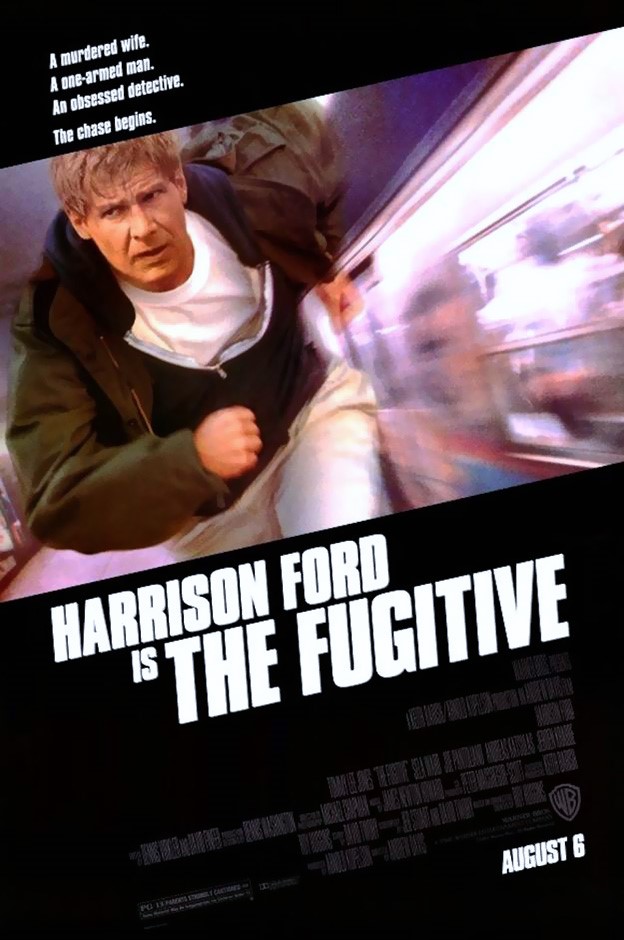
Editor’s Example: a great example of the statement above are the characters in The Fugitive storyline by author David Twohy starring Harrison Ford and Tommy Lee Jones.
Richard Kimble, the wrongly accused doctor who was charged with murdering his wife, is the protagonist. He escapes while being transported to prison to receive the death penalty. Kimble believes that he is the only person who can prove his innocence of the crime.
The protagonist’s antagonist is the unrelenting US Marshall Samual Gerard who is intent on doing his job of tracking down an escape who was convicted for murder. He is relentless in his pursuit of Kimble, but he is not a villain, but he sure makes Kimble’s life a nightmare.
The villain is the true murderer of Kimble’s wife – the elusive one-armed man named Sykes.
U.S. Marshall Gerard is not a villain. he is the one that is doing his job and chasing down the escape convicted murderer, Kimble, making Kimble a wanted outlaw fugitive on the run. The villain, Sykes, is always lurking trying to kill Kimble before he is exposed as the murderer of Kimble’s wife (and probably to fulfill his contract). The clock is ticking.
The Differences between Villains and Antagonists
The Villain
The main difference between villains and antagonists is that the villain’s presence in the story will always cause fear and apprehension in the reader. If the reader is not afraid of him/her, then the character is not an effective villain. Fear in humans is much more complex and unsettling than it is in animals. It has many degrees, physical reactions, and can be linked with other emotions that are activated while reading. Fear is unpleasant and yet thrilling, and a villain’s role in the story is to stir these emotions to the boiling point.
The Antagonist
The antagonist is the person who forces your protagonist to change in the way he or she most needs to change. Antagonists are the main force that shapes the protagonist’s character arc. They teach the protagonists the lessons needed to grow and they accomplish this via conflict and opposition.
Here are some suggestions for writing the all-important antagonist:
Introduce the antagonist with flair. From the first words, this character must be memorable, charismatic, and intriguing.
The first quarter of your storysets your antagonist in motion. This means his or her first moves create consequences and a messy aftermath. These actions further push the plot rolling along or set up therising action–events leading up to the climax.
Theantagonist also exists to reveal as much about the protagonist as possible, showcasing the protagonist’s primary traits in events that force him to act in specific ways. So while revealing the protagonist’s flaws and weaknesses, the antics of the antagonist also reveal his strengths and over the course of story events serves as the catalyst that reshapes the protagonist’s self-concept. The main antagonists in the Harry Potter series–Malfoy and Snape—and Voldemort is a villain and an antagonist—are great examples while Voldemort’s death-eaters are villains.
The antagonist also exists as a contrast to the protagonist, to provide an opposing or at least different morality, viewpoint, and values. When an antagonist starts messing with your main character, then questions arise: Will the protagonist rise to the occasion, muddle through despite doubts and misgivings, falter, or succeed despite flaws and fears?
The more potent your antagonist, the more youneed to know what makes him or her tick. As in backstory, motives, and goals. All need to add up to a seemingly unstoppable, unbeatable force and serious opposition.
You aresetting the stage for a showdown or stand-offbetween the antagonist and protagonist. This is the major component ofrising action.
You can create more than one antagonist.A good example of this is found inThe Fault in our Stars. It has three: cancer and its grim realities, Peter van Houten, an author who has lost his daughter to cancer and wrote a novel about it, and Augustus Waters who shows Hazel how to love and really live with a fatal illness.
They all force Hazel, the protagonist, to rethink her values, outlook, and concerns. In other words, they force her character arc to unfold.
Keep writing, keep dreaming, have heart. ~ Jessica
Jessica Page Morrell
Jessica Page Morrellis a top-tier developmental editor and a contributor to Writer’s Digest magazine, and she teaches Master Writing Craft Classes at the Chanticleer Authors Conference that is held annually along with teaching at Chanticleer writing workshops.
Jessica will teach Master Writing Classes and advanced writing craft sessions at CAC19. Click here to learn more.
Jessica understands both sides of the editorial desk. She is known for explaining the hows and whys of what makes for excellent writing and for sharing very clear examples that examines the technical aspects of writing that emphases layering and subtext. Her books on writing craft are considered “a must have” for any serious writer’s toolkit. For links for her writing craft books, please click on here.
Chanticleer Reviews andOnWord Talkswill interview Jessica for more of her writing tips and advice. Stay tuned! ~ Chanticleer (who hails from Chaucer’sCanterbury Tales).
Chanticleer: Give me a little bit about your background – Who is Jessica Morrell?
Jessica Morrell: I’m the author of six traditionally-published books, five which teach authors how to write. I’ve written hundreds of columns, articles, blog posts, and my work appears in 8 anthologies about writing. I’ve been teaching writers for more than 25 years and work as a developmental editor. This means a writer or author sends me a manuscript and I dissect it and then help him or her put it back together so it’s publishable. I bring a discriminating, ruthless eye to manuscripts, and fix plot holes and wayward dialogue and everything in between. I learn each time I work on a manuscript and some days my brain feels close to bursting. I love what I do.
Chanticleer: Tell me a little bit about the Master Class you will be offering next Sunday during #CAC18, Learning from the Greats. Who would benefit most from taking this class?
Jessica Morrell: Any fiction writer can benefit from this workshop. Writers have 2 main tasks: writing whenever possible and reading often. But reading as a writer requires a special focus and analysis. You need to understand why authors make choices and decisions along the way; why their details are important, how the ending resonates or doesn’t quite satisfy. Close reading teaches us narrative and scene structure, how to create authentic dialogue, how to insert tension and subtext, and how themes underscore drama.
Chanticleer: This is going to be an important class for all authors. Tell me, what’s the best way to prepare for this class?
Jessica Morrell: The workshop will open by outlining the many techniques that writers have at their disposable. From there we’ll be discussing Harper Lee’s To Kill a Mockingbirdand 3 contemporary short stories (Silver Water, Amy Bloom, For Something to Do, Elmore Leonard, and Stone Mattress, Margaret Atwood.)
Chanticleer: At the end of this article, Jessica has provided us with titles and links to these stories. It would be wise to familiarize yourself with these works before class next Sunday. So, Jessica, why these authors? Why these books?
Jessica Morrell: Mockingbird, also a film, has remained a beloved American classic over the decades. We’re going to dissect why it’s so esteemed and memorable. The other authors Elmore Leonard, Amy Bloom, and Margaret Atwood are simply fabulous writers with techniques we can all emulate. Or at least try to.
Chanticleer: Jessica, our attendees will learn so much from your workshops. Your classes are unlike any other I’ve seen. You really do put authors to work – and the payoff is exponential!
Jessica Morrell: To paraphrase Stephen King, reading is your job. Or a big part of your job. If you breeze through stories without thought or analysis, you’re missing both the joys of insider knowledge and the lessons you’ll always need. Reading inspires and is a cheap, private pleasure. And because writers never stop learning.
Learning from the Greats
A Master Writing Craft Class taught by Jessica Morrell
To succeed as a writer you need to write a lot and read from a writer’s perspective. Without this level of analysis writers simply don’t have all the tools at their disposal. In this workshop, we’ll work together to uncover the secrets of great authors, reveal the intricacies of craft, and trace authors’ influences and habits. We’ll further analyze how great authors reflect their time period and find fresh ways to manipulate language.
Amy Bloom has been a fresh, urgent voice in American fiction since her first collection of short stories; Come to Me was published in 1998. Bloom is also a novelist, but her short stories are particularly insightful in their brevity and often track marginalized people and uncomfortable issues like sexual identity and mental illness. A former psychotherapist, she brings keen insights into her characters, imbuing them with tiny, yet penetrating brushstrokes that nail their struggles and psyches. Writers can learn her art of compression, her authentic character voices, featuring flawed but fascinating characters.
An American classic, To Kill a Mockingbird is the story of a Southern family and small-town embroiled in a racially-charged scandal and trial. Readers can learn so much from the story—a searing history lesson, how to teach your kids valuable life lessons, how outsiders and kids see society. Through analysis, writers can learn how to capture a child’s sensibility, how to teach morality without being preachy or gooey, and how to stage a surprise ending. Other techniques we’ll study: the role of the narrator POV, writing a compelling static character, and how coming-of-age meets character arc with young characters.
Elmore Leonard was a wildly popular writer who wrote more than 40 novels, dozens of short stories, movie adaptations, and a popular TV series including, Justified. Stephen King called him, “The great American writer,” and The New York Times called him, “The greatest crime writer of his time, perhaps ever.” He’s known for tightrope tension, crackling, realistic dialogue, and memorable, bad ass characters up to their ears in serious trouble. But a closer look reveals other techniques worthy of emulating: how to depict pathos in a character, how honor and morality can found in unexpected places, how subtext works in a dialogue scene, how to stage twists, and how conflict is layered and always simmering.
Besides her many novels, some now turned into televisions series, Atwood is a prolific short story writer. In this story, a woman meets an old friend 50 years after their high school days, she plots his murder. Or will she go through with it? We’re going to analyze this story for its delicious use of details, suspense, and subtext, along with her deft inclusion of backstory, and an overall tone of disquiet. We’ll discuss how Atwood pulls us in from the first sentence: “From the onset, Verna never intended to murder anyone. What she had in mind was a vacation, pure and simple.”
Jessica Page Morrell, Developmental Editor for Books and Screenplays
Jessica Page Morrell is a top-tier developmental editor for books and screenplays. Her articles have appeared in Writer’s Digest and The Writer magazines. She is known for explaining the hows and whys of what makes for excellent writing and for sharing very clear examples that examine the technical aspects of writing that emphases layering and subtext. Her books on writing craft are considered “a must have” for any serious writer’s toolkit.
She is sharing her handy Writing Craft Checklist with us because we all can use reminders. We advise that you make sure that your manuscripts do not have any of the following issues prior to submitting them to agents and acquisition editors. If you are too close to a work to evaluate it, you may want to consider having an objective and unbiased manuscript overview to catch these issues.
Editors and agents are word people, most were English majors in college and have a great love and respect for the written word. They will notice your level of craft within the first sentences, so your efforts must be polished, vivid and exceptional.
Your manuscript lives or dies on your opening sentences and each word must be perfect, precise, and weighted with meaning.
Editors notice and are turned off by passive voice and wimpy verbs.
Editors notice when the viewpoint jumps or shifts within a scene.
Editors notice too much telling (reporting or summary) and not enough showing in all types of writing including essays and memoir.
Editors notice when emotions are announced instead of dramatized.
Editors notice frequent use of names in dialogue. Generally, leave out names.
An editor notices sloppy punctuation such as the excess use of exclamation points, quote marks around inner thoughts, improper use of semicolons and ellipsis.
Editors notice protagonists who are not proactive, heroic in some way, and bigger than life.
Editors notice characters with a limited emotional range and expression.
Editors notice large and small inaccuracies and inconsistencies—when the character has blue eyes on page 23 and green eyes on page 57; when a character drives an old, beat-up, pick-up truck that is inexplicably equipped with airbags; when an animal, plant, or species of any sort is misnamed or shows up in the wrong region of the country.
Editors notice when technical details don’t ring true—such as in a mystery when police don’t follow standard arrest procedure; when a yacht sinks from a single bullet hole; or explosive materials are used haphazardly.
Editors notice vague descriptions (plant instead of ivy, tree instead of oak) and generalities instead of details that bring the reader into a specific time and place.
Editors notice when writers don’t write for all the senses, especially leaving out smells.
Editors notice small confusions such as misusing it’s and its, that and which, affect and effect, compliment and complement, lay and lie.
Editors notice overly long paragraphs and a general lack of white space. Generally, paragraphs are five or six sentences long and as taught in grade school introduce a topic, develop a topic, then conclude or lead on to the next paragraph.
Editors notice a lack of transitions—the words and phrases that announce a change in mood or emotion, time, and place so the reader can easily follow. They also know excess transitions as when you follow your characters across every room and along every sidewalk.
Editors notice excess modifiers, purple prose, and too much description. The best writing is lean and economical and every word in every sentence has a job to do.
Editors notice a voice that is flat, inappropriate, or boring. Voice, whether it is the writer’s voice in an essay or the viewpoint character or narrator in fiction, must breathe life into the piece and hint at the person behind the words.
CAC18 Writing Craft Sessions and Workshops presented by Jessica Page Morrell to take your writing craft to the next level. #SeriousAuthors
Click hereto read more in-depth descriptions of the sessions.
Learning from the Greats – Sunday Master Morning Writing Craft Class – Intermediate to Advanced Levels
The Anchor Scenes of Fiction – Sunday Afternoon Master Writing Class – Fiction, Film
How High Concept Really Works – Regular Session – Friday Regular Session – Fiction, Film
Subtext: The Quiet River Beneath the Story – 1.5 hours Regular Session on Saturday – Writing Craft
KaffeeKlatch Session – What’s in a Title? – Book Promotion Tools & Tips





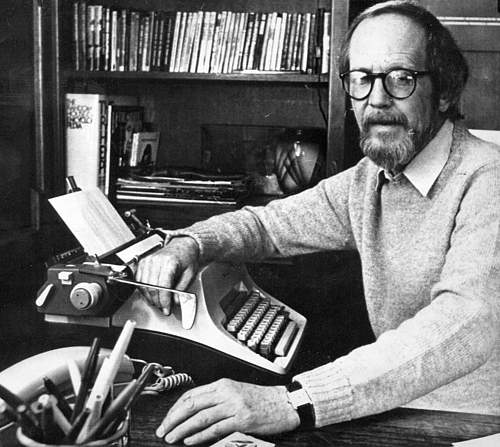
 For Something to Do, Elmore Leonard
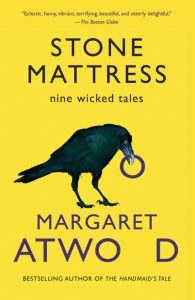 Stone Mattress, Margaret Atwood