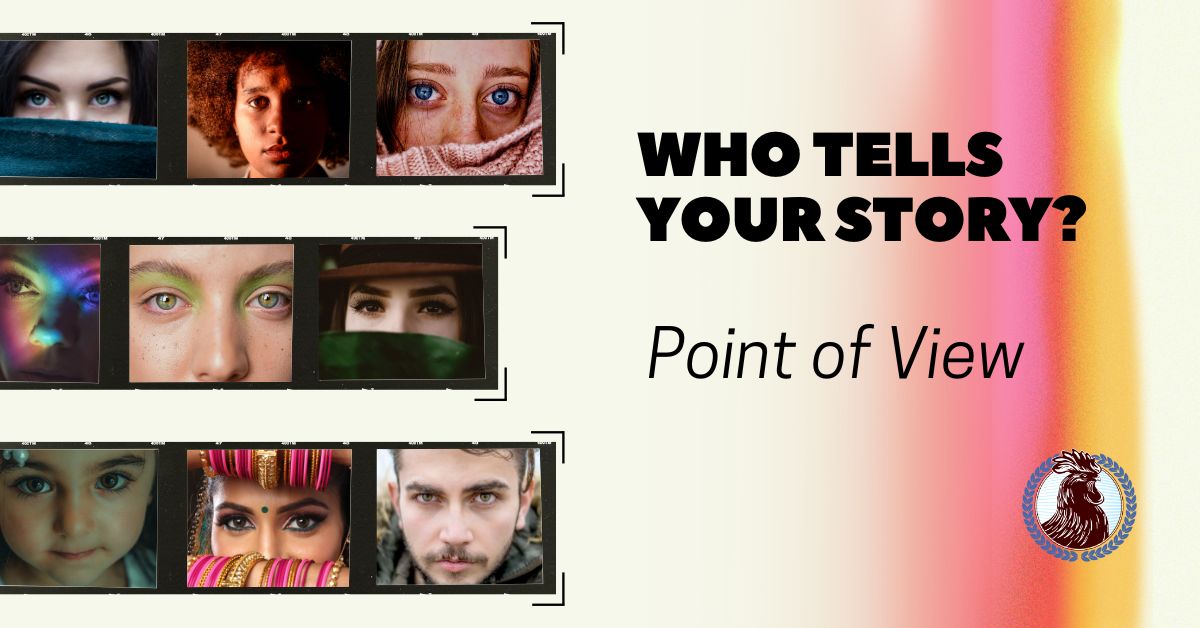
Your story’s point of view affects one thing above all else — description.
Simply put, Point of View (POV) determines through what eyes we see, what ears we hear, what skin we feel, what nose we… well, you get it.

Readers tend to get invested in description that makes them think— about the characters, the setting, what will happen next. Different POVs have different limitations in what you can show, and how you can show it. But so too do they have particular strengths. So, how can we work with our chosen POV to make mentally-engaging prose?
Let’s take a look at a few descriptive techniques that flourish within and illuminate the strengths of different POVs: First person, Third Person Limited, Third Person Omniscient, and Second Person.
First Person — the Motivated Storyteller
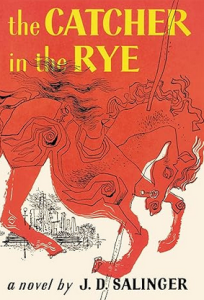
In this novel, Holden Caulfield takes him time revealing what’s bothering him. Slowly, his painful teenage life unfolds itself before the reader. He’s an untrustworthy narrator, so be careful with what you believe.
There’s a special kind of intimacy in First Person. A vulnerability on both our parts. You’re the audience of a storyteller— me! And because it’s my story, surely I’m most qualified to decide on which details are important, right?
Every smell on the wind, little shifting of another person’s posture, texture beneath my fingertips, it’s here because I want it to shape my tale. This is not the objective world, but a carefully-cut slice of it steeped in my thoughts. So, you should be able to put together my motivations and even beliefs based on how I describe my rival’s wine-stained manor, with its air of mismatched perfumes no doubt imported from some overworked farmland on the Rouge Isles, and fine fat jewels resting so brazenly in his family’s recently-designed crest.
First Person and Third Person Limited — the Revealing Vision
These two POVs share much in common, sometimes being nearly identical except for the pronouns. And while these narrators can be intentional with their descriptions (even unreliable), sometimes the details in the prose can reveal more about them than they would ever choose to tell.
What sensory information the POV character notices will say something about who they are, how they feel, and even their connections to other characters. Fear might draw their eyes to the heavy doors, the arched roof with its fingers of shadow scratching at the beams, the way the thick walls seem to snuff all sound to a breathless mumble. A former musician, finished with their old craft, might walk down a long tunnel with their footsteps bouncing through the air in soft, irrepressible vibrato rhythm. Someone who spends all day cooped up in an office might bask in the cardinal feathers of a sunset — or fail to notice them at all, as the asphalt presses a growing soreness up through their back.
Third Person Limited — the Reframed Importance

Harry Potter is a classic example of third person limited. Everything happens from Harry’s perspective and is colored by his opinion, but sometimes the reader has a chance to catch view of something beyond what Harry sees.
One way that Limited often varies from First is in its use of multiple perspectives. Not all Limited books have these, of course, but those that do can employ a powerful means of recontextualization.
How does one character experience a setting, event, or interaction as opposed to how the next character does? Do they see each other differently than they each see themselves? Can they plant a question in the reader’s mind?
A ‘sweet smile and warm handshake’ from the mountain guide might show Francis to be merely trusting in her own perspective, but that same guide’s ‘wolfish grin and cloying grip’ from Gabriel’s perspective would reframe Francis’s trust to actually be naiveté. Or, perhaps Gabriel has some paranoia eating away at him. Guess you’ll have to keep reading to find out.
Third Person Omniscient — the Two-Faced Medium
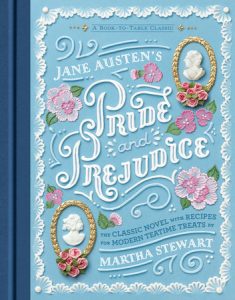
In Pride and Prejudice the narrator moves easily from person to person, showing you what everyone feels and thinks. You know what Mr. Darcy’s opinion is when it’s important, and you know what Elizabeth Bennett’s opinion is almost all the time.
Finally, the objective truth of things. Where First Person is a personal storyteller, this narrator is like that of a Greek play, come to reveal all the narrative’s most interesting corners — no matter how well hidden.
Omniscient prose has a powerful ability to indulge in two opposed modes.
On the one hand, the narrator can use their voice to match information and detail to the sincere experience of the characters, keeping readers close. A spacefaring diplomat might walk down a quiet observation deck, cool glass soothing the tension out of his fingers, an endless crowd of stars looking on in support of his mission of peace with a strange alien species. But elsewhere, deep in the space station, a bomb ticks down.
This contrast of perspective can radically alter the tone of descriptions, even so much as to invert them completely — a slow, contemplative walk becomes dreadful, every detail the narrator lingers on meaning a few more ticking seconds.
Second Person — What do You Have to Do with It?
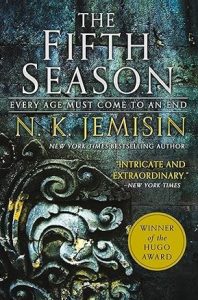
The Hugo Award winning start to the Broken Earth Trilogy has one third of the story told in the second person. The story follows a “you” named Essun who goes on a journey to save her daughter.
Second Person is more commonly used in instructional or how-to guides. “You should then add peanut butter” would be an example. This is an uncommon point of view in prose writing as it can invite the reader to identify with someone who shares very little in common with them. That sharing of identities can disconcert the reader, but it can also make them more receptive to even more creative styles of storytelling.
Locating the reader in Second Person gives them a chance to experience and imagine a world totally outside of their own realm of understanding.
These techniques are useful beyond POV
Unreliable narrators don’t have to speak in first person, and dramatic irony can easily be used with multiple limited POVs. These are guidelines, not rules. But, when you’re working through your writing — editing a passage or trying to tease out exactly how to paint a mental picture — consider how you can use the inherent abilities of your chosen perspective to get the sparks flying in your readers’ minds.
Thank you for joining us for this Writer Toolbox Article

There is so much to learn and do with Chanticleer!
From our Book Award Program that has Discovered the Best Books since the early 2010s to our Editorial Book Reviews recognizing and promoting indie and traditional authors, Chanticleer knows your books are worth the effort to market professionally!
When you’re ready, did you know that Chanticleer offers editorial services? We do and have been doing so since 2011.

Our professional editors are top-notch and are experts in the Chicago Manual of Style. They have and are working for the top publishing houses (TOR, McMillian, Thomas Mercer, Penguin Random House, Simon Schuster, etc.).
If you would like more information, we invite you to email us at info@ChantiReviews.com for more information, testimonials, and fees.
We work with a small number of exclusive clients who want to collaborate with our team of top-editors on an on-going basis. Contact us today!
Chanticleer Editorial Services also offers writing craft sessions and masterclasses. Sign up to find out where, when, and how sessions being held.
A great way to get started is with our manuscript evaluation service, with more information available here.
And we do editorial consultations for $75. Learn more here.