Tag: Marriage

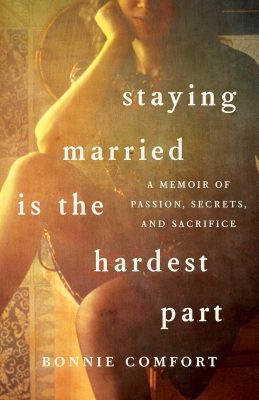
  • STAYING MARRIED Is The HARDEST PART: a Memoir of Passion, Secrets and Sacrifice by Bonnie Comfort – Memoirs, Marriage, Family

    In her stunning and intimate memoir Staying Married is the Hardest Part: A Memoir of Passion, Secrets and Sacrifice, Bonnie Comfort takes readers on a decades-long journey of deep love, laughter, and the challenges of a long-term marriage, from first meeting her husband Bob in the late 1970s until his death in 2010.

    Throughout their life together, Bonnie and Bob have their fair share of disagreements—including where to live—but the main conflict within their marriage centers around their conflicting sexual needs and preferences.

    As a professional psychologist, Bonnie shows the highs and lows of her marriage to Bob, contrasted by her job of helping others with their emotional and relationship problems. Bonnie and Bob’s committed love for one another makes staying married both the hardest and easiest part of their lives regardless of what challenges come their way.

    Staying Married is the Hardest Part also follows the complicated relationship between a mother and a daughter, and how it intersects with Bonnie’s marriage.

    Bonnie’s mother struggles to come to terms with her own decision to move from her beloved Southern California home to Canada in 1934 for the sake of her marriage. The disappointment Bonnie’s mother feels in her life choice creates conflict when Bonnie moves to Los Angeles as a young adult to follow her own dreams.

    Over the years, mother and daughter come to slowly understand each other, especially when Bob decides he wants to move and Bonnie fights to stay in LA. When the move doesn’t happen, Bob spends more and more time in a small town in Oregon.

    Bonnie recounts both marriage and maternal bonds beautifully in a way that touches many families’ experiences.

    The passages on Bonnie’s relationship with her mother are extraordinarily moving, as any child can relate to comparing their life to a parent’s, and the sacrifices made to follow a dream.

    Bob comes off as quite the character, fitting someone who worked in Hollywood. His infectious humor and love for life fill the pages with engaging levity. But what Bonnie illustrates throughout the memoir is that everyone has flaws, and the choice to stay with someone means asking yourself if you can accept those flaws for the sake of the love and laughter that comes with them.

    Bonnie Comfort’s Staying Married is the Hardest Part: a Memoir of Passion, Secrets and Sacrifice navigates the wild seas of married life to reveal its profound rewards. Avid readers of memoirs and contemporary fiction will find much to love about this engaging journey.

    Also available at: Simon & Schuster, Barnes & Noble, Target, Bookshop.org and Apple Books



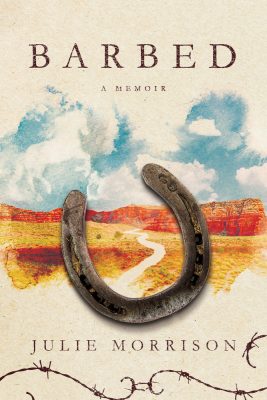
  • BARBED A Memoir by Julie Morrison – Women’s Biographies, Memoirs, Ranching

    BARBED A Memoir by Julie Morrison – Women’s Biographies, Memoirs, Ranching

    blue and gold badge recognizing Barbed: A Memoir by Julie Morrison for winning the 2023 Journey Grand PrizeJulie Morrison saddles up to take us for a ride through the harsh dry mountains of northern Arizona and beyond in her memoir, Barbed.

    Readers visit the ranch where Julie’s parents try to keep the family legacy alive. Julie reveals a cowboy’s world where she meets walls instead of doors but never gives up.

    Barbed opens with Morrison living in the rainy Seattle area with her husband. But the lure of a cowboy’s life on the range working cattle and riding horseback beckons them both. Julie needs salvation like this for her marriage, now distant and cold.

    Reality turns their idealistic, romantic fantasies into a daily grind of working the land. Julie and her husband fight the losing battles of finding enough water and grassland for the cattle and keeping recreationalists from cutting their fence lines. And worse yet, who would have thought mud would be a problem in arid Arizona? Readers learn about the workings of a cattle ranch as Morrison tries one fix after another to save the property.

    Morrison realizes that the operation hemorrhages money.

    To move the budget from red to black, she must make some significant changes. But the cowboys she works with as a manager meet these changes with resistance at every step. The cowboys ride the horses until their joints are out of alignment and their feet are bruised and lame. Julie’s attempt at proper horse husbandry becomes another leak in the ranch’s finances, and she struggles between the money problems of the ranch and what she can do for these poor animals. Morrison soon reaches the breaking point.

    Morrison’s exploration of self bolsters her in this harsh world. She sees the success of other ranch women and a select few men, people who support her efforts and encourage her even when she wants to drop from exhaustion and self-recrimination.

    This memoir does not pussy-foot around complex issues that women experience in business or marriage.

    Morrison never lets conflict stop her, though she acknowledges that depression can hold her back. Her bravery will inspire readers who might not have to stand toe-to-toe with hardened cowboys or encounter rattlesnakes during an average workday. As she works through the problems of the ranch, she also works through her own self-discovery.

    She sees her father, a man she loves, as so pressured to continue the family legacy without incurring more expenses that he perpetuates problems rather than helping her solve them. Until her arrival, his deference to “the cowboy way” had gone unchallenged as something acceptable. In addition, the similarity between the cowboys who work her family’s ranch and her husband shines too bright to ignore. Morrison pulls the cover off the lies we tell ourselves as women to remain in the security of failed relationships and not seek the path of healing and strength.

    This memoir opens the book on a fascinating, nontraditional life filled with adventure and mishap.

    Morrison, alone, supports her ideas and dreams of a better world for the horses she cares for and for herself. However, the harsh life she lives and the disappointments she suffers do not break her. They move her forward toward the healing she needs.

    Barbed abounds with sagacity and affirmations that ring true for readers who may never set foot on a ranch or ride a horse. This tough, savvy woman shows us how to persevere and survive in the harsh climate of a failing business and a failing marriage. She teaches us how to let go of what doesn’t work and find what does, and how to keep trying even when all doors seem to be firmly shut. Morrison keeps on knocking.

    Julie Morrison’s aptly titled memoir, Barbed, connects her myriad of encounters into one cohesive tapestry. She faces the difficulty of not backing down or taking the easy path of giving up and embraces what happens when she reaches the other side. Does she find Nirvana? Morrison finds a life worth living, and she moves forward to contentment. She saddles a new horse and rides a new path, and in the end, she finds herself.

    5 Star Best Book Chanticleer Reviews round silver sticker

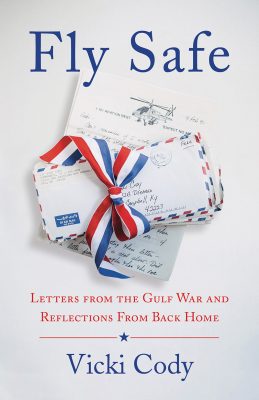
  • FLY SAFE: Letters from the Gulf War and Reflections from Back Home by Vicki Cody – Operation Desert Storm Military History, Military Families, Marriage

    FLY SAFE: Letters from the Gulf War and Reflections from Back Home by Vicki Cody – Operation Desert Storm Military History, Military Families, Marriage


    Not many people can capture the emotions that coincide with war, but Vicki Cody joins the ranks of those who do in her wartime memoir, Fly Safe: Letters from the Gulf War and Reflections from Back Home.

    This powerful memoir shows us the behind-the-scenes lives of the women, children, and families left at home while their soldiers set off for war, bringing us close to their raw vulnerability. Fly Safe fascinates as it informs readers of what one wife experiences as her commander husband leads his battalion to the middle east.

    Cody takes us back in time to the early 1990s when the first President Bush called up troops in an operation called “Desert Shield,” which turned into Desert Storm. She captures the events that led up to our first conflict in the middle east, but far from being strictly pedantic and historical, centers on the warmth, love, and fears that most of the wives were experiencing. Her letters from her husband – and her journal entries read like daily affirmations and blend well in telling this story.

    The memoir shines as a first-person account of the ins-and-outs of a military family’s life during war.

    Cody succeeds 99% of the time in duties that correspond to her husband’s, and she knows how to help other wives and her community. But in this memoir, we are privy to the times she falters.

    We can’t be strong all the time. We can fake it – suppress, deny, and avoid our emotions – for only so long. Eventually, there is a trigger, a tipping point, and it all comes pouring out.

    The reader becomes witness to the terror and fear of war, born from the first “real-time” news reporting of such a conflict. She expertly relays her first shock at seeing the footage of skirmishes on TV before her husband’s letters have reached her. It’s difficult for the contemporary reader to imagine a time before cell phones, WiFi, and constant connections. Her experience was marked by waiting for letters to arrive through the mail. Deployment into battle meant weeks of delays in postal delivery, and the not knowing would gnaw at your confidence until your mind almost breaks.

    Through all the days and nights without her husband, the love story between them lies at the heart of the memoir.

    Difficulties arise for most returning troops: the power struggles, the reconnection after the war, the acclimation to ordinary home life after battle – and the author does not hide these issues. What she shows us most of all is a brave man’s journey to war and a brave woman’s support and love to keep the home fires burning.

    Military wives will recognize the feminine side of war shown here. The memoir is not about women going into battle in the literal sense, rather, what it is like for the wives as they navigate the real dangers of losing soulmates and the fathers of their children. Cody never loses sight of her obligations and considers them an honor to bear. In fact, her role in the war effort gives us a glimpse of how deployed troops’ wives coped.

    The father’s military tradition continues as their sons grow up to follow in his footsteps.

    The boys’ deployments to the middle east provide a glimpse into the role that a mother plays as her children are put in harm’s way to protect their homeland and our freedoms. Cody’s pride is evident in every word and line of this well-crafted memoir. We see it all through the eyes of the wife and mother, who relays her husband’s and son’s exploits with all the love, honor, respect, and pride that she holds in her heart.

    This book is a boon to military wives and mothers whose sons go to battle for our country. It is also a boost of patriotism for those readers who do not have that connection to military life. It shows readers the raw emotions that drive the women left behind, and it does so with humor, tact, and most of all, love.

    Chanticleer Book Reviews 5 Star Best Book silver foil sticker

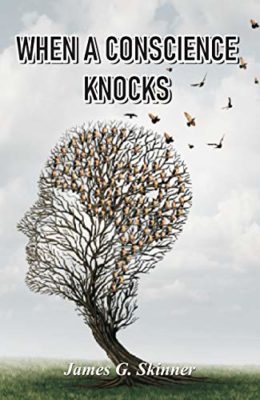
  • WHEN a CONSCIENCE KNOCKS by James G. Skinner – Romantic Literature, Marriage/Relationships, Alzheimer’s disease

    WHEN a CONSCIENCE KNOCKS by James G. Skinner – Romantic Literature, Marriage/Relationships, Alzheimer’s disease

    One woman’s life follows a roller-coaster ride of love, political turmoil, and tragedy in James G. Skinner’s novel When a Conscience Knocks.

    Jenny Robinson enters a confessional and falls apart. Sensing her distress, the Catholic priest encourages her to divulge her story, which she does. In 1976, at the age of twenty-two, Jenny left her hometown of Richmond, England, and took a teaching job in Iran.

    It’s during this time where she meets Juan Miguel Ochoa, a Gallaecian. A diplomat at the Spanish Embassy, Juan is near twenty years her senior. Romance ensues, and within less than two years, Jenny and Juan marry.

    Jenny has no idea what she’s getting into as she blindly trusts Juan’s lead throughout his diplomatic career. During their marriage, Juan’s work takes them to numerous trips through Europe, Central and South America, and the USA amid political tensions, wars, and terrorism. But as they approach their twenty-fifth anniversary, life throws a disturbing curveball. Juan’s erratic behavior heralds the early onset of Alzheimer’s. While Jenny’s life abruptly fills with uncertainty, the last thing she expects is to be involved in an affair.

    New author James G. Skinner opens with a conflicting scene as his principal character, Jenny Robinson Ochoa, confesses to committing adultery. At the same time, her husband slowly succumbs to Alzheimer’s disease in a nursing care facility. What follows in the twenty-plus chapters is the account she discloses to a Catholic priest.

    Jenny’s feelings and thoughts about her husband’s involvement with the chaotic global events surrounding them dominate Skinner’s first-person British narrative. Her continual ponderings, covered within a chronological list of backstories, capture her personality’s development amid the ebb and flow of their marriage, travels, and political upheavals. Conversations between Jenny and Juan focus on explanations of world history and Juan’s diplomatic involvement to a politically uninterested wife. Although the many dialogue scenes that present facts tend to be a bit dry, Skinner does a decent job weaving in historical events.

    As stated in the Dedication, the purpose of When a Conscience Knocks is to provide readers with an example of how Alzheimer’s affects intimate relationships. No one would dispute that Alzheimer’s disease is devastating to both victims and loved ones, and Skinner’s fictional character is not exempt. Rather than placing the debilitating disease front and center, Skinner pivots the attention upon the partner. Indeed, this is a coming-of-age tale—one’s woman’s struggle to find her identity, her voice amid conflict and relational codependency.

    When a Conscience Knocks takes an alternate route, describing the pain and torment those on the sidelines experience when their partners succumb to Alzheimer’s disease’s devastation.