Tag: Manuscript Overviews

  • The Art of Critique from the Desk of David Beaumier

    Understanding Peer Review and Feedback

    A Crucial Critique Skill for Authors

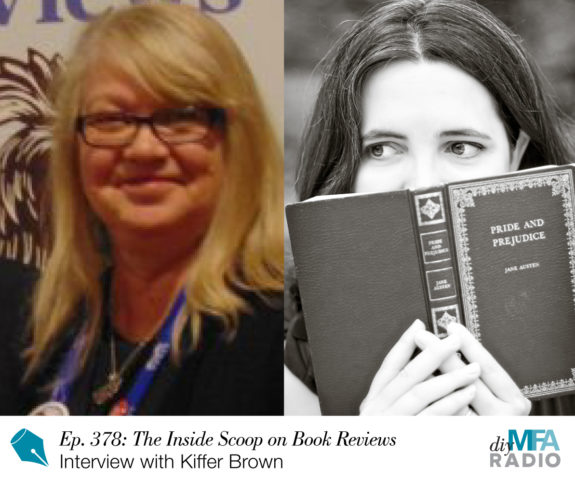
    Oftentimes when someone joins a critique group, it’s not because they’re in dire need of a free proofreader. They are looking to learn if their writing is any good, as Kiffer Brown says “Does it have a beat? Can you dance to it?”

    If you’d like to start your self-editing journey first, you can start here! Plus we have a secret solution to really get the feedback you need as an author! Read on to the end to learn what it is!

    While a work can be written in such a way that the errors make it unclear what the author wants to communicate. So, let’s get started.

    Ikebana is the Japanese art of arranging flowers. It can have more to do with writing than you would expect!

    What are the Guidelines for Critique?

    While every writing group will have extraordinarily varied suggestions for offering feedback, they often have a few golden rules:

    • Stay positive. We are critiquing, not criticizing.
    • Remember that suggestions should enhance the story through the author’s voice, rather than stating a variant of “this is how I would write it.”
    • We critique the work rather than the author. Look at what in the writing doesn’t work for you and address that.

    Let’s talk about each of those suggestions in greater detail.

    Staying Positive

    Not quite what we mean…

    No one wants to be in the group where people simply say “it was good, I liked it.” That’s not what we mean by positivity.

    The reason this rule is so common is that almost everyone who has ever submitted to a writing group has had at least one person thoroughly eviscerate a piece, calling it offensive, a waste of time, and of completely zero worth. This kind of feedback is about as helpful as “it was good I liked it,” because it doesn’t actually tell the author anything about the work.

    A sad looking Indian man in a blue shirt
    This guy isn’t getting actionable feedback!

    The best critiques often focus on direct observations or questions regarding the work. Pointing out contradictions and plot holes, or saying when a line rings true and why it rings true. For example, if your character is a member of the Canadian Royal Mounted Police, but doesn’t know how to ride a horse, there might be some questions as to why that is. Basics in Non-Violent Communication can really help get started in giving observational feedback (and hearing critique generally). You can read more about that here. For a less intensive and more focused look at just critique (as opposed to overall lifestyle), you can see this article by author and professor Brenda Miller here.

    In the end, the best critiques follow through and explain why the reader had the reaction to the text that they did.

    “Well, this is how I’d write it”

    Hopefully your critiques aren’t overwhelming the author

    Hopefully your critiques aren’t overwhelming the author

    Unless the reader is a co-author on the work in question, this statement is probably not geared toward helping the author’s voice come through.

    When writing my first book at around age ten, I tentatively showed it to my father. He added quite a bit to the first chapter, which focused on a tornado coming and whisking the main character away to a magical world where animals talked. Every place where he made a change stood out like someone had attempted to jam two different polaroids together with the hope no one would notice. –David

    Again, a focus on questions and observations can often help the author come up with the solution on their own.

    Friends, women, books, computer, smiling

    For example: “I noticed that there wasn’t a lot of setting description in this scene. Would there be a way to describe where the characters are having their conversation, both to add to the atmosphere of the story and to offer some beats that break up the dialogue?”

    This will let the author make the change instead of adding a new POV of the main character’s mother doing dishes and listening to smooth jazz in the background.

    We critique the Work, not the Author

    At this point, it seems clear that the focus is on the text. A character does things, and the author simply records them. However, while it’s always good to give the people critiquing work feedback, this is a crucial place to offer suggestions to the author.

    Remember that, as the author, people are not giving feedback as an attempt to sabotage the story or to make it worse. While all feedback isn’t useful, it is given with the intention of helping, and hearing it as something intended to help often makes listening to a critique easier.

    As such, here are a couple tips when receiving critique on your work.

    • Listen. Interrupting or arguing with the person giving you feedback means you have less time to receive a critique.
    • Remember that the work is yours. No one can force you to change your work, so there’s no need to quibble about what a reader sees as a must-have change that you won’t implement.
    • Ask questions. As you hear your critique, track places where you don’t understand where the reader is coming from or if you’re not sure you understand the motivation behind what they’re saying.
    • Say thank you. The best critiques are to improve your work, not review or judge it, and the reader’s work should be appreciated.

    Not sure how to get started on a group? Check out this article here to learn the ins and outs of forming a critique group!

    The Secret to get the Most out of your Critiques!

    The Secret to Successful Publishing

    Are you ready for this? The best thing you can do to guide the critique you receive is…

    Include specific questions and instructions for what you would like for your readers.

    The Number 1 request I get as an editor is to “Tear my work apart.” This guidance is about as helpful for an editor as “It was good” is helpful to a writer. – David

    By the time work is being submitted for critique, writers will hopefully have a good understanding of their own weaknesses. Setting, plot, and dialogue are common areas of focus. If you’re just getting started and not sure what to ask for, that’s alright! As you receive feedback, be sure to write down common feedback suggestions, like too many movie references that distract from the flow of the story, or not enough Star Trek references in your blogpost.
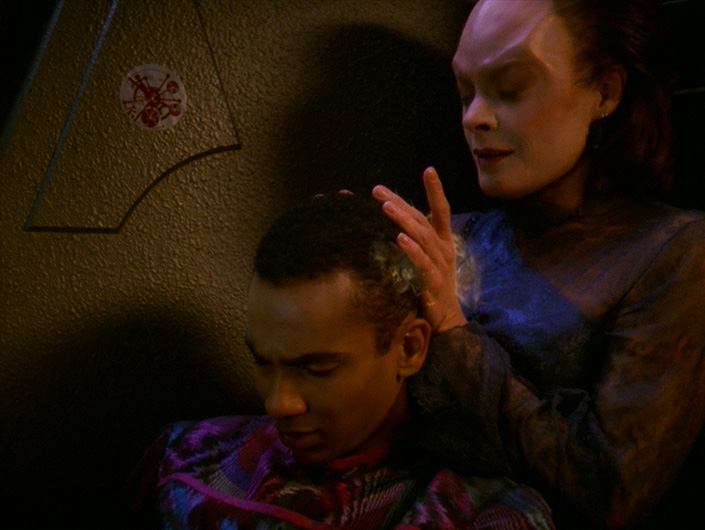
    We don’t recommend sacrificing all your creative energy at once to finish your work. Cirroc Lofton and Meg Foster as Jake Sisko and Onaya in the Deep Space 9 episode Muse

    Regardless of what your weaknesses might be, no editor is a mind reader. Many will be able to help, but the only way to guarantee you receive feedback on the craft elements you are most concerned for is to ask for it directly. Using a service like an MOV can be a great start to begin orienting your work to get the nitty gritty feedback of a Line Edit from a group before you commit to a professional Line Edit.

    Read Responsibly

    With that, you’re ready to go off and take a more active role in your writing community. We believe in you and know that you’ll do great!


    Thank you for joining us for this Writer Toolbox Article

    A red toolbox with the words "What's in your toolbox

    There is so much to learn and do with Chanticleer!

    From our Book Award Program that has Discovered the Best Books since the early 2010s to our Editorial Book Reviews recognizing and promoting indie and traditional authors, Chanticleer knows your books are worth the effort to market professionally!

    Helpful Toolbox Articles:

    When you’re ready,did you know that Chanticleer offers editorial services?We do and have been doing so since 2011.

    Our professional editors are top-notch and are experts in the Chicago Manual of Style. They have and are working for the top publishing houses (TOR, McMillian, Thomas Mercer, Penguin Random House, Simon Schuster, etc.).

    If you would like more information, we invite you to email us at info@ChantiReviews.com for more information, testimonials, and fees.

    We work with a small number of exclusive clients who want to collaborate with our team of top-editors on an on-going basis. Contact us today!

    Chanticleer Editorial Services also offers writing craft sessions and masterclasses. Sign up to find out where, when, and how sessions being held.

    A great way to get started is with our manuscript evaluation service, with more information available here.

    And we do editorial consultations for $75. Learn more here.
  • Top Revision Tips Before a Manuscript Overview from the desk of David Beaumier

    You’ve arrived at the last page of your story and written those crucial, beautiful words: “The End.”

    A young Asian woman leans back from her computer, done with her work in a generic room.
    Finished at last!

    Well done! You deserve some time to rest before you dive into the next step of editing your story.

    Now, one key piece of advice here is there isn’t a wrong time to put your work in front of a professional for feedback. While this article will take you through steps that will bring your book to be as strong as you can possibly make it on your own, we all are of different skillsets, so if something isn’t for you, that’s when you bring in a professional editor.

    To start out with, what is a Manuscript Overview?

    Someone hard at work on a Manuscript Overview

    Perhaps the easiest definition can be pulled from our page on providing Manuscript Overviews (MOVs).

    It is an objective evaluation of a story idea that is fully formed with a beginning, middle, and end, but still in an early draft stage. The MOV comes before Line Editing and Copy Editing.

    No matter who you pick to perform a Manuscript Overview for your book, you should get one. The amount of time and money it saves on editing by being more general and help you go further with your own writing is on thing, but the most important part is it helps keep your book focused and your narrative strong. Traditional Publishing Houses use them, and it makes sense to follow suit.

    Typically, an MOV will cover

    • compelling nature of story
    • dialogue
    • character development
    • does the scenery and setting work with the story
    • backstory issues
    • professionalism of editing & formatting
    • continuity of storyline
    • plotting and plot-hole issues
    • writing craft

    So, the question remains, how do you get your book to that point: fully formed with a beginning, middle, and end. How do you get it to the best point you can do on your own?

    The Reverse Outline

    A Red Uno Reverse Card

    Once you’ve finished your manuscript, even if you already have an outline, you can create one that reflects the actual book you’ve written. From this point, you can edit that outline of your book as is. Working within the outline to create a roadmap to revision often feels much more approachable.

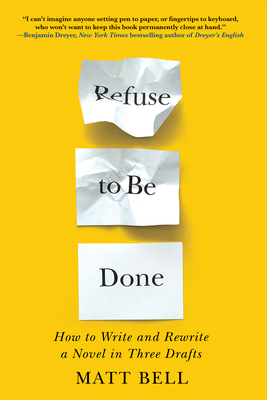
    Next off, we have a recommendation from Matt Bell, author of Refuse to Be Done.

    Rewrite your book.

    You can have the draft you wrote printed out, off to the side, on a separate monitor, whatever feels comfortable, but rewrite it using your new outline as a guide.

    Refuse to Be Done has a yellow cover with the title written out across 3 pieces of paper

    Bell’s theory behind this is that you will copy and paste a bad line (or duplicate scene). But you won’t rewrite a bad line.

    Not sure where to start in creating your outline? Jessica Brody’s beat sheet from Save the Cat! Writes a Novel can help. Brody breaks down the story into actionable beats you can aim for to keep your book flowing along. Check out her breakdown of story beats here!

    Once you’re done rewriting the book, it helps to go through and check to see if you’ve met the goals of a new outline. Ask yourself if your story has a beat and if you can dance to it.

    After all that work, you’re probably ready for a Manuscript Overview.

    What to do while you wait

    A standard Chanticleer MOV takes 6-9 weeks to finish. While that’s going on, we recommend following D.D. Black’s critical advice whenever you’re in writing limbo: Write the next thing.

    D.D. Black presented at CAC24! Check out his incredible series here!

    Not only will that get you out of your head and allow you to be more objective with your manuscript when it comes back, but it will put you ahead of the game for the next book.

    What do our authors say about our MOVs? Read recent testimonials here!

    Wow, huge thank you for this second review! It’s so detailed and very much what I was hoping for. The specifics about moving content and clarity are spot on. I knew it needed structural improvements but I was too close to do it. Please pass on my sincere thanks for this work! I’ve only started some of it & already feel a better flow. I’m hoping to possibly even cut about 10k words to make it tighter. – Sheridan Genrich author of REWIRED: Optimise Your Genetic Potential


    I’m writing to gratefully acknowledge receipt of the Manuscript Overview of my book. I am so pleased to have this close reading and incredibly helpful insights. These comments are far more beneficial than anything I had expected. It will be a pleasure addressing the editor’s critiques and trying out his concrete suggestions. Please extend to him my genuine gratitude. Chanticleer crows again! – John Feist, author of Edged in Purple and many more


    I finally got this copied and read. It’s just what I wanted it to be—a skillful job. I knew there were the kind of holes the editor mentioned, but he’s given me a plan for the revisions. Please pass on my thanks. – Linda Brugger, columnist and accidental author


    Please thank the reviewer for a very relevant and detailed review of my manuscript, ANKANAM. I plan to incorporate all his notes! – Vee Kumari, author of Ankanam.


    This was just what I needed. I am looking at the book with a new focus and have already started working up the suggested changes. The first thing I did was remove those items the editor mentioned should be deleted. It was a bit painful but necessary. There was plenty of meat in his review, which took me a while to digest, but changes are on the way. These will take some time, but I will likely be interested in the Manuscript Reconciliation process. I can tell the editor spent quite some time researching some of the issues raised in the book, which I greatly appreciated. It helped me see the book more from the reader’s perspective than mine. Please pass along my sincere thanks. – Jim Leonard


    Thank you for joining us for this Writer Toolbox Article

    A red toolbox with the words "What's in your toolbox

    There is so much to learn and do with Chanticleer!

    From our Book Award Program that has Discovered the Best Books since the early 2010s to our Editorial Book Reviews recognizing and promoting indie and traditional authors, Chanticleer knows your books are worth the effort to market professionally!


    When you’re ready, did you know that Chanticleer offers editorial services? We do and have been doing so since 2011.

    Our professional editors are top-notch and are experts in the Chicago Manual of Style. They have and are working for the top publishing houses (TOR, McMillian, Thomas Mercer, Penguin Random House, Simon Schuster, etc.).

    If you would like more information, we invite you to email us at info@ChantiReviews.com for more information, testimonials, and fees.

    We work with a small number of exclusive clients who want to collaborate with our team of top-editors on an on-going basis. Contact us today!

    Chanticleer Editorial Services also offers writing craft sessions and masterclasses. Sign up to find out where, when, and how sessions being held.

    A great way to get started is with our manuscript evaluation service, with more information available here.

    And we do editorial consultations for $75. Learn more here.  

    Writer Toolbox Helpful Links: 

    The traditional publishing tool that indie authors can use to propel their writing careers to new levels?  Check it out here!

  • The Twelve Days of Christmas! On the Second Day, Chanticleer Brings to me…

    Celebrating the Twelve Days of Christmas – A Day at a Time

    “But Jiminy Crickets, it is the 27th of December! Is it not too late for the 12 Days of Christmas?” you say.

    Not to fear, Chanticleerians! The 12 Days of Christmas begins on December 26th! And it continues to the 6th of January – Three Kings Day. The four weeks leading up to Christmas is known as the Advent.

    Some say that December 25th is the first day of Christmas, but we are going with the medieval date of the 26th because revelry could not take place on the 25th as it was a holy day. And the Twelve Days of Christmas is about revelry!

    So if you haven’t finished wrapping presents, sending out those cards, and baking cookies—don’t worry—you’ve got an extra 11 days!

    The second day of Christmas, my true love sent to me

    Two turtle doves 

    And a partridge in a pear tree

    Two Turtle Doves are a representation of love and loyalty and friendship.

    Image

    Which brings us to why in Japan, Christmas is considered the holiday for lovers (rather than family time). Couples plan romantic dates, special dinners out, and engagement promises. 

    Click on the link below to enjoy PENTONIX’s version of The Twelve Days of Christmas.  Pentatonix is a fabulous international a cappello singing group.


    Happy Holidays to You from the Chanticleer Team! 

    On the Second Day of Christmas, Chanticleer brings to me…

    Two Essential Reviews

    Editorial Reviews

    5 Stars! Best Book Chanticleer Book Reviews

    Everyone knows about the Editorial Review. It’s best to start submitting for these once your book is at the Proofreading stage, and once you have a publication date in mind. These are powerful tools filled with blurbs that you can use to market your work.

    Of course, the Editorial Review should go on your book’s Amazon page, and every blurb you can pull out can be put everywhere else your book should be marketed. Those different blurbs should appear here at a minimum:

    • Your website
    • Goodreads
    • Barnes & Noble

    Beyond that, you can post to places like StoryGraph, and you can use each blurb as a new post on social media. The reason you rotate your blurbs is to make them always feel fresh and engaging to the audience who follows you. The Review can also be used in publishing packets, press releases, and any other way you can imagine!

    Manuscript Overviews

    Less well-known, the Manuscript Overview (MOV) provides a birds-eye view of your work. This service catches plotholes, character inconsistencies, and those big ideas that authors need feedback on once they feel confident in the story as a whole. The best part is the way a MOV can save authors time and money in the long run by helping them to create the most polished work they can before turning to the next round of editing services.

    Stay Tuned for the Third Day of Christmas, and Happy Holidays to all! 

  • The Myth of the Unlikeable Character – A Chanticleer Toolbox Article By David Beaumier

    The Myth of the Unlikeable Character – A Chanticleer Toolbox Article By David Beaumier

    “No one likes my characters”

    You’re handing your precious book over to a beta reader to see if it’s worthwhile, ready, perhaps, for a Chanticleer Book Review or to be entered into the Chanticleer Int’l Book AwardsThey look at you over the cover that you worked so many long hours on with your designer and say with all the authority of fate: “I just don’t think your main character is very likeable,” they say. “Can’t you make them more likeable? All characters should be likeable.”

    A grumpy older white man
    Are your grumpy readers right?

    Writer, they are wrong

    You can of course have an unlikeable main character! If they were only willing to read for ten minutes though, you may have a more difficult problem on your hands than whether or not your character is someone they want to be friends with. Some of the most compelling characters in literature aren’t someone I’d want to share a hotel room with anytime soon. 

    A creepy character peering into a room
    We can sleep in separate bedrooms. Really, it’s okay.

    The key isn’t to worry about whether or not your protagonist is “likeable” (which is a tricky word to define), but about whether or not they are interesting.

    • Are the actions they take moving the plot forward while engaging the reader at the same time? Those two things must be true of anything that happens in your story. 

    Manuscript Overviews and Editing

    Now, if the majority of your readers are coming back to you and letting you know these early drafts aren’t working, we highly recommend a Manuscript Overview. A manuscript overview (MOV) is a broad overview of your manuscript – what’s working and what isn’t from all aspects of your story: structure, plot, pacing, character development, dialogue, etc. We are here to offer our guidance on what you need next. Save time and money by honing your work before you begin the editorial process.

    Here, we’ll go through a few basic checks to make sure that your character is compelling. 

    A person writing in a journal

    On Writing Compelling Characters

    There are a few questions you’ll want to ask to see if your complex character is someone who will grab your reader’s attention. 

    • What is the Status Quo your character inhabits? 
    • What is your character’s Desire?
    • How does the Conflict impede the character’s Desire?
    • Cats

    If you simply need help developing your character, consider reviewing this article on Secondary Characters here. Otherwise, read on!

    Speaking of Secondary Characters, Severus Snape, Professor of Potions from the Harry Potter series is a prime example of uncompelling compelling character.

    Severus Snape

    Status Quo

    This is the classic way you engage readers with your story. The story is introduced, and something happens to break the status quo. One story where this jumps to mind is Neal Stephenson’s Seveneves. With cannibalism and the end of the world, there’s no lack of unlikeable characters in this book, but all the characters rivet your attention. 

    Seveneves begins with the moon blowing up. Well, more accurately, with it being split into four pieces. Up until the catalyst (the breaking of the status quo), the four chunks of the moon are a point of fascination, friendly enough to have one chunk named “The Bean.” Then the status quo changes when one of the moon chunks hits another and they start to fragment even more. This gives all the characters a goal to work for: Save the Human Race. Having a strong focus for your characters will help readers empathize with them and want to know what’s happening.

    Our favorite editor Jessica Morrell has an excellent article detailing even more ways to stir up trouble for your characters here.

    Character Desire

    Similar to the breaking of the status quo, your characters will all want something different out of the world you’ve written them in. Of course, like the breaking of the status quo, this problem won’t be easy for them to solve. 

    An artful rendition of Tom Ellis as Lucifer with the words "What is it you truly desire?"
    Tom Ellis as Lucifer from Netflix

    There are two common methods of frustrating your character’s ability to achieve their desire. The first is simply to make it difficult to do. Anything that takes a lot of work and will make them struggle. The other excellent choice is to have them try to solve the wrong thing. So often characters misunderstand what will make them happy or they struggle to find the correct solution to their problem. By having them do the wrong thing, the reader will be able to enjoy a much more interesting story than an unlikeable person succeeding at everything they do and never growing or developing. 

    Cats

    Who doesn’t love cats? We love cats at Chanticleer, that’s for sure!

    Two kittens sleeping while spooned together
    The newest additions to the Chanticleer family: Tiefen and Biscuit at 15-weeks-old

    Now the connection between cats and what to do with your unlikeable character might not be immediately clear, and it might sometimes be a metaphor rather than an actual cat. The tried and true advice is you have a character who might be a little rough around the edges save a cat early on in the story. This shows that, despite their flaws, they do care about the world around them, and they will help a creature in need. Of course, this doesn’t have to be a literal cat, but it’s something sweet the character chooses to do without being pressured. 

    For those of you in The Roost, Chanticleer’s online community, you know that we have been reading SAVE THE CAT, WRITES a NOVEL by Jessica Brody (based on the screenwriting books by Blake Snyder) in our Writing Craft Book Group. There is even a reading guide by Chanticleer’s David Beaumier uploaded to the  activity feed.

    The opposite can happen too! In Lower Decks, the irreverent Star Trek cartoon that’s currently playing on Paramount+, Beckett Mariner kills a holographic character to establish herself as the villain in a fantasy program she designed. 

    Mariner dressed as Vindicta dressed as an intergalactic pirate
    Beckett Mariner as Vindicta in “Crisis Point” from Star Trek Lower Decks

    It’s fairly easy to flip through the first pages of your book to see if there’s a cat who your narrator can save in the early pages of your work, and then see if you can find a few beta readers to poll on their feelings. 

    To consider more of the timing and development of plot in relation to your characters, review this article here.

    “There’s no such thing as writer’s block or plotter’s block. There’s only perfectionist’s block.” Jessica Brody

    Go forth and write!


    When you’re ready, did you know that Chanticleer offers editorial services? We do and have been doing so since 2011.

    Our professional editors are top-notch and are experts in the Chicago Manual of Style. They have and are working for the top publishing houses (TOR, McMillian, Thomas Mercer, Penguin Random House, Simon Schuster, etc.).

    If you would like more information, we invite you to email Kiffer or Sharon at KBrown@ChantiReviews.com or SAnderson@ChantiReviews.com for more information, testimonials, and fees.

    We work with a small number of exclusive clients who want to collaborate with our team of top-editors on an on-going basis. Contact us today!

    Chanticleer Editorial Services also offers writing craft sessions and masterclasses. Sign up to find out where, when, and how sessions being held.

    A great way to get started is with our manuscript evaluation service, with more information available here.

    And we do editorial consultations for $75. Learn more here.  

    If you’re confident in your book, consider submitting it for a Editorial Book Review here or to one of our Chanticleer International Awards here.

    Also remember! Our 10th Anniversary Chanticleer Authors Conference (CAC22) will be April 7-10, 2022, where our 2021 CIBA winners will be announced. Space is limited and seats are already filling up, so sign up today!  CAC22 and the CIBA Ceremonies will be hosted at the Hotel Bellwether in Beautiful Bellingham, Wash. Sign up and see the latest updates here!

    Writer’s Toolbox

    Thank you for reading this Chanticleer Writer’s Toolbox article.

    Writers Toolbox Helpful Links: 

    AMPLIFY, MAGNIFY, & STIR UP TROUBLE for Your Main Characters – by Jessica Morrell

    Supporting Cast – Taking Risks with Your Secondary Characters – by Jessica Morrell

    Character Development, Dialogue, and Beats – by David Beaumier

    The traditional publishing tool that indie authors can use to propel their writing careers to new levels?  The Seven Must-Haves for Authors – Unlocking the Secrets of Successful Publishing Series by Kiffer Brown

  • Get the Inside Scoop on Book Reviews — Chanticleer in the News! Kiffer Brown Interviewed on DIY MFA

    Get the Inside Scoop on Book Reviews — Chanticleer in the News! Kiffer Brown Interviewed on DIY MFA

    Interview with Kiffer Brown on DIY MFA

    Chanticleer is in the News!

    Chanticleer steps up to the mic

    If you haven’t heard the news, Kiffer was interviewed on DIY MFA where she and Gabriela Pereira discuss

    • Why now is the best time to be an author
    • The difference between a write-up and a review
    • The Four Types of Reviews
    • How advance reviews help to promote your book
    • When you should start sending your book out for reviews
    • Plus, Kiffer’s #1 Tip for Writers

    You can listen to the full interview on Chanticleer’s under the hood technology that gets increases the digital footprint of each book review published on Chanticleer’s website here or wherever you get your podcasts. Kiffer also gives quick and easy tips about how to get more “Amazon Love” to your book’s Amazon selling page. Below is a quick synopsis of the interview, but tune in to get the full scoop!

    Kiffer Brown

    So what does all this mean? We have the inside scoop!

    The Best Time to be an Author

    With millions of books being published every year, it’s harder for an author to be noticed than ever! So why is now the best time to be an author?

    Simply put, the number of resources available to authors now are greater than ever before. Not only can Chanticleer help you navigate this vast ocean of publishing, but we provide many of the tools directly. A brief list of our formidable resources are:

    A bitmoji of someone's mind being blown

    Overwhelmed? You can always email us at info@ChantiReviews.com for assistance, or message us directly on Facebook. Of course, one of our primary services is the Editorial Review.

    A Write-Up vs A Review

    The proof is in the pudding for write-ups vs reviews. A write-up, as said on Merriam-Webster is a review that is intended to be “flattering.” While there’s nothing wrong with one of these, readers will wisely be wary of them as they have a biased tone. By contrast, Editorial Reviews are unbiased and objective, referring to what a text specifically does or does not do – it focuses on the quality of the work. Editorial Reviews are an excellent way for readers to gauge their actual interest in a book, instead of having to read between the lines to see if it’s actually something they’ll enjoy. Both happen and can help with book sales, but an Editorial Review will be more versatile. Let’s dig into that!

    The Four Types of Review

    Editorial Reviews

    Short Stories

    These reviews are unbiased and objective, the standard by which readers measure if they’ll want to read a book or not. Chanticleer Editorial Reviews are a professional avenue for your book to be fairly assessed and get people talking about it! We keep up with the latest in Search Engine Optimization technology to maximize the digital footprint of our clients, including cross-posting across social media.

    Chanticleer’s Marketing Kits are given to authors whose books receive a 4 or 5-star CBR review. Our kits include personalized Shelf Talkers you can use wherever your print book is sold, as well as samples of our silver-foil Book Review stickers designed to catch readers’ attention.

    Typically, the best time to begin submitting your work for an Editorial Review is when you reach the proofing stage. Your reviewer will understand that the book is approaching its final form, and that minor changes will still be made. Your book will be evaluated, not on minor typographical errors, but on how well you’ve realized your story.

    Reader Reviews

    Man reading book on a yellow background

    Close kin of the write-up, these are the kinds of reviews you’ll find everyone on Amazon and Goodreads letting you know how someone who read the book liked it. While some are helpful and provide real insight on the book, many are just a rating from 1-5, and the information relating to your book varies. You can’t be sure this reader is in your audience, even if they read your book! There’s no denying that reader reviews help your book do well, and it’s more of a question of quantity over quality, but they’re tricky to maneuver and guarantee.

    Peer Review

    One of the most difficult reviews to obtain is that of the peer review, or, as it’s commonly known, the book blurb. This describes an author or someone else in your circle of influence who readers will listen to. J.D. Barker, a regular presenter at The Chanticleer Authors Conference, has networked to have Stephen King blurb his thriller novels, and you can believe that King’s readers sit up an pay attention to that!

    Circle of Influence is how Kiffer describes those who surround you that can directly contribute to your success as an author. If you aren’t sure who your circle includes, try writing down ten people who you know you can turn to for advice or support. Each year, you’ll want to grow this circle by another ten people. Kiffer and Sharon Anderson wrote an excellent article about this that you can read here.

    JD Barker presented at CAC19 and VCAC21!

    While you will, of course, reach out to authors on your level, it’s always good to have a few authors who are doing better than you blurb your book. Obviously, writers at the top of their game will be inundated with blurb requests, so be gentle and patient when asking, even if you never hear back.

    The Manuscript Overview

    This one is always unexpected, because a review of your manuscript doesn’t come after your book is done (or close to it). However, Kiffer recommends that you do a Manuscript overview around the second of third draft of your book. It’s before you’ve paid someone to painstakingly line edit and proofread your book, but after you feel comfortable with knowing the core of the story, and you know the ideas you want to convey are on the paper. That’s when you’re ready for your overview.

    A manuscript overview (MOV) is a broad overview of your manuscript – what’s working and what isn’t from all aspects of your story: structure, plot, pacing, character development, dialogue, etc. Chanticleer can offer guidance on what you need next. Using a manuscript overview before you begin the editorial process will not only save you money in terms of editorial services down the road, but it also will save you time by clarifying where you are in writing your story right now. 

    A person writing in a journal

    Now that we’ve covered the four types of reviews, let’s continue to dig deeper into how you can use your Editorial Reviews

    How Advance Reviews Can Support Your Book

    So often when authors receive their Editorial Review, instead of inspiration lighting up the night sky telling them what to do next, there’s a strange buzzing sound that surely isn’t dread and uncertainty.

    A Neon buzz against a night sky

    It’s okay! Of course, you’ll want to test bits of your Editorial Review as blurb material for you book. Feel free to be selective and grab multiple sound bites that you like to describe your book. Workshop them with friends and fellow writers in your circle of influence. For the other potential blurbs, you can use those on Amazon, Goodreads, Barnes  Noble, and Kobo. Each one of those places has a special location for Editorial Reviews that the author can upload. The reason you use different quotes from you review for these is so that readers who come across your book on multiple platforms have something new to read in each spot. Editorial Reviews used in this way can really help drive presales.

    If your book hasn’t been published yet, but is a manuscript that you are sending to agents and publishers, then the Editorial Review can still be used in the same way to market it to those you query regarding your book.

    The other big thing is link to your review! Adding links on blog posts and websites increase your SEO rating, and having your digital footprints over a wide path with help readers come across your book online.

    When Should you Solicit Reviews?

    At least six months in advance. In times where shipping is not being impacted by a global pandemic, it takes about two weeks to receive a shipment of books. And that’s in the best case scenario. Remember, even if all you have left to do is proofreading, your book will still have the following to go through before it can go to print:

    • Interior Formatting
    • Cover Design
    • Proof Copies

    The interior formatting and cover design time varies greatly, and the time it takes to receive a galley or proof of your book will be another two weeks for shipping. Six moths will be the minimum amount of time you’ll want to make sure the blurb can appear somewhere on your book and then will be sent out in marketing packages. Bestselling books are often sent out a year or more in advance to receive reviews.

    Thanks DIY MFA for the Interview!

    Gabriela Pereira is the founder of DIYMFA.com, the do-it-yourself alternative to a Masters degree in writing. She is also a speaker, podcast host for DIY MFA Radio, and author of the book DIY MFA: Write with Focus, Read with Purpose, Build Your Community (Writer’s Digest Books, July 2016).

    The cover of DIY MFA, with the three rules of the book, Write, Read, Build

    The book is a wonderful tool for someone interested in an MFA, but sitting on the fence. It walks you through the essentials of what an MFA program provides, and the dives into how to create a similar situation, while providing craft tips on par with the latest advice from top-tier editors. Highly Recommended!


    The Chanticleer Authors Conference CAC22

    Save the Dates! April 7 – 10, 2022! Register Today!

    Seating is Limited. The esteemed WRITER Magazine (founded in 1887)  has repeatedly recognized the Chanticleer Authors Conference as one of the best conferences to attend and participate in for North America.

    Join us for our 10th annual conference and discover why!

  • BEATS & CONFLICT: The Engine for Your Book — A Chanticleer Writing Toolbox Primer Article by David Beaumier

    BEATS & CONFLICT: The Engine for Your Book — A Chanticleer Writing Toolbox Primer Article by David Beaumier

    Structure, Conflict, & Beats — Bringing it All Together

    Conflict is key to any story. Even if the stakes are low and the show is purportedly about nothing, like in Seinfeld, the characters are motivated and pushed through new changes. As writers continually produce work, we are always revisiting the ways in which we understand writing.

    Kramer, George, Elaine, and Jerry from the TV show Seinfeld
    The Cast of Seinfeld – A Series about Nothing

    One of the newest, most popular writing craft books is Jessica Brody’s Save the Cat! Writes a Novel, which promises to be the last book you’ll ever need for novel writing, but one can never have too many books, especially on craft.

    At Chanticleer, We Love to See Story Come to Life

    The biggest feedback we give to authors in our Awards or for our Editorial Reviews is that, while the story was well-written and error-free, there was not much actual story that happened in it. For that reason, we always recommend that authors commit to a Manuscript Overview to make sure they’re heading in the right direction with their Work in Progress. Read more about those here.

    So We’re Talking About Dialogue Beats Here?

    If you’re interested in making your dialogue sing, that’s wonderful, and we recommend you do work to make sure all that interstitial tissue in your book is doing what it needs to do, but this toolbox article will focus on the overarching structure questions in terms of beats. If you’re interested in reading more about dialogue mechanics this article here from Margie Lawson has some great suggestions on language and beats!

    Beats not beets!
    Beats not beets!

    We Are Talking About Conflict

    Conflict is the engine that motivates a book. It doesn’t need to be zombies coming to destroy the world, but it has to be your main character’s desire for change (which often isn’t really their true desire at the start of the story). What we’re going to look at here is the way characters are motivated and approach the ending theme as they move through the book.

    Save the Cat really shines in the way it points out that characters are often given the answer to all their life’s troubles early on, but they resist it throughout the story. One great example is Benjamin Sisko at the start of Star Trek: DS9.

    When Sisko arrives on Deep Space Nine to take command of the station, all he wants is to keep running from the past with his son Jake. He doesn’t realize that this assignment is the beginning of his journey to healing from the terrible trauma of losing his wife two years ago. All the tools are there for him to create a home where he is, but he doesn’t understand this until maybe Season 5 of the show, and by that point, his desires have totally morphed in response to the environment he found himself in.

    At least Season 4 Benjamin Sisko sitting at his desk in his Starfleet Uniform
    Captain Benjamin Sisko of Deep Space Nine (of the Star Trek Universe)

    As Sisko moves from season to season, we see each point of growth and story structure as beats from which he grows and changes.

    Story Structure as Beats

    First off, what are beats?

    Think about white space in a sketch for a painting. All the lines that make up the body of the work are the dialogue of your piece–it gives the plot, characters, and conflict a structure to work within. The beats are the color that fills it in, showing the reader a complete picture of what’s taking place. As you write, ask yourself if you’re better at overwriting and then trimming back or underwriting and fleshing out. Play to your strengths for your first draft, and then come back ready to adjust for any areas you know you’ll be weak.

    Worth Repeating

    As you write, ask yourself if you’re better at overwriting and then trimming back or underwriting and fleshing out. Play to your strengths for your first draft, and then come back ready to adjust for any areas you know you’ll be weak. David B.

    Let’s look at the overall structure of a book

    Let’s start out with Save the Cat. In this book, Brody breaks out most plots to follow the following Structure:

    • Opening Image
    • Theme Stated
    • Catalyst
    • Break into 2
    • B Story
    • Midpoint
    • All is Lost
    • Break into 3
    • Final Image

    Each of these big sections is subdivided into categories based on how many scenes move it forward, which are further defined as multi-scene beats or single scene beats. Some of them are obvious, like the Opening Image and Closing Image tend to be a single scene beat where we get in and fulfill that need for the writing, and then get out. While most of these make sense just by glancing at them (or you can figure out that Catalyst is another way of saying The Inciting Incident), here’s a quick guide to some of the wonkier names from Save the Cat.

    Cove a Save the Cat, orange background with yellow lettering and an orange cat clinging to a dangling rope

    Break Into 2 & Break Into 3

    This refers to Acts 2 and 3 of your story. Brody focuses on the 3 Act structure for novel writing, which does fit the majority of work out there. For differing ideas on how to structure a book, be sure to check out our article here.

    The focus for the Break Into parts is on marking a clear delineation between your Acts. An example Brody uses is Jane Eyre, with Act I being her mistreatment and time at school, Act II being her role as governess for Mr. Rochester, and Act III being her escape from St. John and return to Mr. Rochester as an independent woman.

    B Story

    Often the introduction of B Story introduces the character who will help your protagonist learn the theme or lesson that they will need in order to grow properly by the end of the story. They are a helper-character who represents the new world of Act II that your main character enters. Keeping with Jane Eyre, Mr. Rochester is a foil to Jane’s meekness that forces her to stand up for herself and push back against his rude brashness, pushing her to change.

    Jane Eyre and Mr. Rochester about to kiss
    Mia Wasikowska and Michael Fassbender in the 2011 Jane Eyre film – Charlotte Bronte 1847

    Clear as Mud?

    Rather than write out all of Save the Cat, Jessica Brody has already mostly done it for you here. And Brody isn’t alone in having great ideas of how to look at the intersection of conflict and structure!

    Click on the link above to read more about Brody’s 15 Beats of Story Telling. We are not affiliates of Brody or Wolf 359, but we are passionate about sharing the best tools with Chanticleerians. Kiffer

    There is a wonderful breakdown of story structure that is quite similar written by Gabriel Urbina to describe the story structure for the brilliant SciFi podcast Wolf 359, written by Urbina, Sarah Shachat, and Zach Valenti. You can read his breakdown of the story structure here and learn more about Wolf 359 here.

    Our own Jessica Morrell, of course, has a brilliant take on Story that focuses more on different aspects such as character, structure, and plot which can be found here.

    Beat Sheets Will Meet You Where You Are

    The great thing about this tool is you can use it to plot out the work you’re planning or to analyze the work that you have. Brody’s cheat sheet linked above even offers general percentages on how long each section of the Save the Cat structure should take. Remember that different genres have different typical lengths, and keep those lengths in mind as your write and plot. And, as always, the work is yours; these are just guidelines, not hard and fast rules for success.

    Be sure to get more than your eyes on the work! Beta readers and friends are great, but nothing beats a professional Manuscript Overview you can get from Chanticleer.


    Chanticleer Editorial Services – when you are ready

    Did you know that Chanticleer offers editorial services? We do and have been doing so since 2011.

    Tools of the Editing Trade

    Our professional editors are top-notch and are experts in the Chicago Manual of Style. They have and are working for the top publishing houses (TOR, McMillian, Thomas Mercer, Penguin Random House, Simon Schuster, etc.).

    If you would like more information, we invite you to email Kiffer or Sharon at KBrown@ChantiReviews.com or SAnderson@ChantiReviews.com for more information, testimonials, and fees.

    We work with a small number of exclusive clients who want to collaborate with our team of top editors on an ongoing basis. Contact us today!

    Chanticleer Editorial Services also offers writing craft sessions and masterclasses. Sign up to find out where, when, and how sessions being held.

    A great way to get started is with our manuscript evaluation service. Here are some handy links about this tried and true service: https://www.chantireviews.com/manuscript-reviews/

    And we do editorial consultations. for $75.  https://www.chantireviews.com/services/Editorial-Services-p85337185

    Writer’s Toolbox

    Thank you for reading this Chanticleer Writer’s Toolbox article.

    Writers Toolbox Helpful Links: 

    Rhythm and Cadence and Beats, Oh Yes! by Margie Lawson

    Understanding Story Structure by David Beaumier

    How to Write Your Novel Using the Save the Cat Beat Sheet

    10 Point Story Structure

    COMPONENT LAYERS of SUCCESSFUL FICTION by Jessica Morrell 

    The traditional publishing tool that indie authors can use to propel their writing careers to new levels?  https://www.chantireviews.com/2016/05/15/the-seven-must-haves-for-authors-unlocking-the-secrets-of-successful-publishing-series-by-kiffer-brown/

  • Part One WRITING FICTION GUIDELINES — by Jessica Page Morrell – Writers Toolbox Series

    Part One WRITING FICTION GUIDELINES — by Jessica Page Morrell – Writers Toolbox Series

    Rule #1 for Developmental Writing Tips Guidelines by Jessica Page Morrell

    While rules and techniques are not written in stone, most of the basic guidelines of fiction stem from logic and an understanding of dramatic structure. Don’t break the rules until you know them, or better yet, until your first novels have sold.

    Editor’s Note: Often it is hard for the author to objectively read her or his work for the following issues. This is where the author’s agent or the publisher’s editor comes into play by doing a close read of the work for these top-level issues. We, at Chanticleer Reviews Editorial Services, see that it is at the point where authors make the mistake to start copyediting their works when they should have their manuscript evaluated by an editor, agent, or publisher.

    The power of a manuscript overview makes it one of the best tools that traditional publishing houses and literary agents make available to their authors. Best-selling authors receive great editing and feedback from agents and senior editors on early drafts, which most self-publishing authors never receive. When feedback comes early in a work’s progress it allows the author to, not only create a more polished final product but also publish more works.

    It is very difficult for the author  to discern the following because it takes fresh eyes and perspective to evaluate the manuscript aka work-in-progress. The entire manuscript should be read and then commented on and evaluated. To learn more about Chanticleer’s Manuscript Overview and Evaluation Service can save you time and money, please click here.

    Writer's Toolbox
    Writer’s Toolbox

    Now for the DEVELOPMENTAL FICTION TIPS and GUIDELINES by Jessica Page Morrell

    Chanticleer Reviews Editorial Services  WRITER’S TOOLBOX SERIES


    1. While rules and techniques are not written in stone, most of the basic guidelines of fiction stem from logic and an understanding of dramatic structure. Don’t break the rules until you know them instinctfully.
    2.  Nothing should happen at random and all fiction is causal.
    3.  Plot stems from adversity.
    4.  Each major character has an agenda.
    5.  Foreshadow all important elements.
    6.  The protagonist is proactive, taking charge of events, formulating goals and plans.
    7.  Plot dramatizes character.
    8.  Avoid gimmicky openings—whatever happens in the opening scene needs to provide a big payoff.
    9.  Don’t create an ordinary problem for your protagonist to face or overcome. If this problem is not solved, it should destroy something important in his life.
    10. Although a protagonist’s problems are the basis for fiction, don’t throw in a pile of unrelated or extraneous problems simply to complicate the plot.
    11. Avoid problems being solved by another character, a rescuer, or a force of nature.
    12. Remember that major fictional characters always evolve, including antagonists and villains.
    13. Minimize or eliminate transitions between scenes and chapters when you can. Contemporary readers are able to jump locations and time zones in the story with little direction.
    14. Make certain that details and descriptions are included for a reason, to contribute to the overall plot and create a vivid, brimming world. Details are chosen chiefly to stir the reader’s emotions, characterize and push the story forward.
    15. Do not use last-minute rescues, the cavalry arriving to save the protagonist or coincidences to end a story.
    16. Avoid needless flashbacks. Flashbacks are vital to the overall plot, vivid and brief if possible. Because they stop the forward momentum of a story, the writer needs a good reason to leave the straight-ahead chronology.
    17. Do not include characters without names.
    18. Each scene and chapter should somehow ratchet up the tension.
    19. Write about the most important or interesting segment in a protagonist’s life, not birth to death biography.
    20. Do not depict the villain screwing up in order for the protagonist to win. The protagonist needs to be more desperate or have a stronger will or desire to win.
    21. Watch out for car chases, earthquakes and other acts of nature, bombs, explosions and other incendiary devices to end the story.
    22. If the story contains a victim, such as a murder victim in a mystery, make certain that the reader can feel loss and empathy for him or her.
    23. Remember that major fictional characters evolve.
    24. A plot is designed to reveal the protagonist taking on goals and overcoming opposition.
    25. Nothing in fiction happens at random; everything is causally related.
    26. Beware of digressions that follow your interests or research, not the story. Rein yourself in.
    27. Write an ending that the reader cannot see coming.
    28. Allow readers to understand why villains do what they do by providing some backstory and motivation.
    29. Make certain that all your characters do not sound the same.
    30. Write about the most important or interesting segment in your character’s lives—not a birth to death biography.
    31. Structure scenes around scene goals.
    32. Beware of digressions that follow your interests rather than the plot.
    33. Write an ending that the reader cannot see coming.
    34. Allow readers to understand why villains do what they do by providing some backstory and motivation.
    35. Make certain that all your characters do not sound the same.
    36. Write about the most important or interesting segment in your character’s lives—not a birth to death biography.
    37. Structure scenes around scene goals.
    38. Beware of digressions that follow your interests rather than the plot.

    And, finally, Rule Number 1 again:

    While rules and techniques are not written in stone, most of the basic guidelines of fiction stem from logic and an understanding of dramatic structure. Don’t break the rules until you know them, or better yet, until your first novels have sold.

    Click here to download the handy WORD file for Jessica Page Morrell’s 

    DEVELOPMENTAL FICTION TIPS that you can print out.


    Jessica Page Morrell
    Jessica Page Morrell

    Jessica Morrell is a top-tier developmental editor and a contributor to Writer’s Digest magazine, and she teaches Master Writing Craft Classes at the Chanticleer Authors Conference that is held annually along with teaching at Chanticleer writing workshops.

    Jessica will teach a Master Class and advanced writing craft sessions at CAC19.

    Jessica understands both sides of the editorial desk–as a highly-sought after content development editor and an author. Her work also appears in multiple anthologies and The Writer and Writer’s Digest magazines. She is known for explaining the hows and whys of what makes for excellent writing and for sharing very clear examples that examines the technical aspects of writing that emphases layering and subtext. Her books on writing craft are considered “a must have” for any serious writer’s toolkit. For links for her writing craft books, please click on here.

    Chanticleer Reviews and OnWord Talks will interview Jessica for more of her writing tips and advice. Stay tuned! ~ Chanticleer (who hails from Chaucer’s Canterbury Tales).

    https://www.chantireviews.com/chanticleer-conference/

  • Top Eleven Reasons Why a Manuscript is Rejected by Jessica Page Morrell

    Or  “Why your manuscript did not make it past the “SLUSH PILE” [Chanticleer’s Editor’s Note]

    © Jessica P. Morrell

    1. The writing style is flowery, cluttered with modifiers, or sloppy.  Overuse of modifiers is one of the most obvious indicators of an unsophisticated or sloppy writer at work. The simple solution is to limit your use of modifiers and use them only when they contain information that a noun or verb cannot.

    2.  Mechanical errors such as spelling mistakes, grammar slip-ups, poorly constructed sentences, or punctuation problems.  In an increasingly competitive marketplace, these errors will knock you out of the running. Editors and agents are only interested in professional, polished and error-free writing.

    3. The conflict is weak or boring. Conflict ignites and powers a story. Your protagonist must be up against powerful opposition at every turn and must fight these forces with an all-out offensive.

    4. The opening does not contain a hook. The opening of a story is a gathering of forces to be unleashed. Stories always open with a change in the protagonist’s circumstances and this change is usually threatening. Openings also introduce a question that needs answering.

    5. The story and the individual scenes do not have a sense of tension building and suspense. Readers need a reason to keep turning the page and all stories need growing intensity until the climax or resolution. A story where the tension does not rise, without unanswered questions and a series of surprises and reversals, won’t captivate readers.

    6. The manuscript is plagued with dialogue disasters: overly long exchanges; characters giving speeches; or, the dialogue contains no tension or conflict. Other problems: each character does not sound distinct, characters talk about mundane topics not relevant to the story, or speech tags are distracting and filled with adverbs. Properly utilized dialogue defines characters, provides information and pushes the plot forward.

    7. There is too much telling, not enough dramatization. Whenever appropriate bring the story to your readers in scenes, where they can witness it unfold in real time. “Show, don’t tell” is a useful guideline for writers, but fiction is actually ‘told’ and ‘shown.’ A combination of both techniques creates the most effective fiction. Scenes are most effective when you’re revealing characters or complicated interactions between characters. Exposition is most effective when you’re filling in background information or moving quickly between two scenes. Too much showing or too many scenes makes the story too drawn out just as too much exposition makes it static. The best stories usually move back and forth between scene and description.

    8. Characters are underdeveloped. In the best fiction the reader has a sense that the characters have existed before the story began and will carry on after it ends. Memorable fictional characters are richly drawn, consistent, with dominant traits throughout.

    9. The ending doesn’t deliver or satisfy. The best endings are not contrived or convenient. They are the logical and highly dramatic culmination of the proceeding events. The climax is the highest emotional pitch of your story, a decision, a collision of forces, and settling of scores.

    10. The point of view is muddled or inconsistent. The point of view is the filter or lens which we see the story through. It is crucial that you understand who is telling the story and why. Viewpoint characters are generally those who will be most affected by the events of the story. If you’re using a multiple point of view, strive for a logical and consistent pattern.

    Another note from Kiffer Brown,

    One way to make sure that your work is the best that it can be before LINE EDITING and COPY EDITING, is to have a professional manuscript evaluation or manuscript overview assessment of your work-in-progress. This assessment will alert you to any of the above issues before you have your work edited.

    Click on this link or the one above for more information about manuscript overviews. 

    and finally, Number 11 – FORMATTING ERRORS and Erroneous Submissions

    11. The manuscript format is inappropriate or contains errors. There are no exceptions to the guidelines for manuscript submission. Margins, line spacing, fonts, and formats must be adhered to or your manuscript will be ignored.

    11a. The manuscript has been sent to the wrong person or house. For example, you send a category romance to a publisher that only publishes mainstream. Submissions require meticulous research and care. Whenever possible, make contacts in the industry and in general, send brief inquiries before sending any manuscript pages.


    Jessica Page Morrell

    Jessica Page Morrell is a top-tier developmental editor and a contributor to Writer’s Digest magazine,  and she teaches Master Writing Craft Classes at the Chanticleer Authors Conference that is held annually.

    Jessica understands both sides of the editorial desk–as a highly-sought after content development editor and an author. Her work also appears in multiple anthologies and The Writer and Writer’s Digest magazines.  She is known for explaining the hows and whys of what makes for excellent writing and for sharing very clear examples that examines the technical aspects of writing that emphases layering and subtext. Her books on writing craft are considered “a must have” for any serious writer’s toolkit.

    Chanticleer Reviews and OnWord Talks will interview Jessica for more of her writing tips and advice. Stay tuned! ~ Chanticleer

    We are planning a writing craft workshop soon that will be taught by Jessica.

  • The Seven Must-Haves for Authors – Unlocking the Secrets of Successful Publishing Series by Kiffer Brown

    The Seven Must-Haves for Authors – Unlocking the Secrets of Successful Publishing Series by Kiffer Brown

    I was asked by Orna Ross of Alliance of Independent Authors to share what I consider to be the “Seven Must-Haves for Independent Authors” at  UPublishU event that was held at the Book Expo of America 2016 held in Chicago. Of course, I agreed!

    However, the Seven Must-Haves are applicable for all authors whether they are self-published, small press published, traditionally published, or hybrid published. I formed the talk based on the following questions:

    What are the Seven Must-Haves?

    1. What is the traditional publishing tool that authors can implement to propel their writing careers to new levels and to earn an income from selling their books?
    2. What is the single most important publishing tool for first-time authors?
    3. What is the cornerstone of any author platform?
    4.  What should every author know about communicating and marketing in the Digital Age?
    5. How can an author set her books apart from the millions of titles that launch each year?
    6. How can an author expand readership?
    7. What should continue to grow and never disappear in today’s new era of publishing?

    Each of one these questions will be answered in the Seven Must-Haves blog-post series.

    1. What is the traditional publishing tool that authors can implement to propel their writing careers to new levels and to earn income from their books?

    Have you ever wondered how best-selling authors can churn out a book or two each year? 

    How they can continue to hit “home-runs” with each new title? 

    They use the tried and true tools that have built the publishing industry. Authors will benefit from taking the best tried and true methods of traditional publishing and combining them with today’s best publishing practices.

    One of the best tools that traditional publishing houses and literary agents make available to their authors is the power of a manuscript overview. Most best-selling authors have great editing and feedback from agents and senior editors from the very beginning of a work. This feedback comes in very early in a work’s process and allows for the author to publish more works and not as an afterthought.

    The Editing Process (when one is working with a literary agent and/or publishing house) goes like this:

    The author works on a rough draft – the early drafts of a novel. He creates the theme, the characters, the setting, the tone, the story, the plot lines, the dialog style, and selects the genre and has an audience in mind (YA or mystery fans, fantasy or Science Fiction readers, etc.). After the author creates the story with a beginning, middle, and end, he then sends this early unedited draft of the story to his editor or agent to read and to get feedback.

    Authors who work within this editing system then begin scratching out the next inklings of story ideas, or they will resume working on other drafts that are further down the editing schedule, while waiting for feedback about the manuscript overview from their agent/editor. Once the feedback (manuscript overview) is received, then the author decides what to incorporate and which suggestions to implement in the next drafts. He then reworks the draft while another work’s manuscript is being over-viewed or is in a separate stage of editing. Some authors who write within this system will have two or three works “in play.”  Also, some authors write in different genres while as the works are in different stages of the editing process.

    Have you ever wished that someone would give you objective feedback about your manuscript? Or that someone would give you the feedback that will take your work from good to great?  

    What is a Manuscript Overview: It is an objective evaluation of a story idea that is fully formed with a beginning, middle, and end, but still in an early draft stage. The MO comes before LINE EDITING and COPY EDITING.

    What is the process:  The entire manuscript is read and evaluated by a top editor for the following:

    • Does the work have a compelling story?
    • Is there more than one story in the manuscript? It is quite common for a manuscript to have two, three, or more storylines.
    • Are the characters engaging? Interesting?
    • Are there too many characters? See above.
    • Are the characters pathetic, sympathetic, or empathetic?
    • Is there inconsistent character development?
    • Are there plot holes? Smoking guns?
    • Does the story wander?
    • Is there “head hopping” or unplanned POV changes?
    • Does it take to long too engage the reader?
    • Does the story stay within its world construct?
    • Does it follow the “laws” of the setting?
    • Does the story sag in the middle?
    • Is the ending satisfying?
    • Does the beginning intrigue?
    • Is the dialog appropriate?
    • Is there too much backstory? Too many details?
    • Does the scenery and setting work with the story?
    • and so forth
    • Or is it spot on and ready for a Line Edit?

    The editor then writes a brief and honest evaluation of the work that addresses the above questions.

    If you do not have an agent or editor, you can still get this type of brutally honest feedback with a manuscript overview from Chanticleer Reviews.

    Remember, that a manuscript overview is NOT a Line Edit or a Copy Edit. It consists of broad sweeping strokes of feedback for the author to consider for the next round of drafts. Incorporating line-editing suggestions can typically shorten a manuscript by at least twenty percent, thereby paying for itself with the savings on copyediting.

    The editor then sends his comments, suggestions, and concerns about the work back to the author in a manuscript overview. It is up to the author to take these recommendations and decide whether or not to incorporate them in the next draft of the manuscript.

    Many of the authors who have used Chanticleer’s Manuscript Overview service have found that their writing was greatly improved and have discovered that the feedback has enabled them to be able to take their next works to a higher level.

    I’m incredibly appreciative of the many positive and helpful things the reviewer had to say in the manuscript overview. The feedback is terrific and more comprehensive than any other I’ve received… Many thanks, again! Brian L.

    All of her suggestions were right and I hope to make them to the best of my ability. It’s like taking a powerful and quick course in advanced writing. Please thank her for me….Working with someone of her caliber would take my writing to another level. – L.V.

     Please thank the editor  for her insightful and pinpoint comments as to how I can make the book better. They were very good and I’ve already incorporated many into the manuscript. –D.S.

    When the author decides that the story is ready (and the lit agent and/or publisher agrees), she may send it off for another manuscript overview with either the same editor or get a second opinion. Or the author may decide that the work is ready for a Line Edit.

    Line Editing is defined as a thorough and focused reading of the manuscript  on a line-by-line basis with suggestions, comments, and remarks noted for the author to consider. For more information about what line-editing encompasses, please visit our Editing Guide.  

    After the author incorporates the line edits, the work then moves to a Copy Edit.

    Copy Editing is a very technical read of a work for flaws in grammar, punctuation, syntax; consistency in spelling, numerals, hyphenation, etc.; flagging any inconsistencies that have made it past the Copy Edit such as eye color, name spelling, location, timing from point A to point B; and tracks any internal inconsistencies in the story (conflicting abilities or inabilities, location inconsistencies), etc.

    After Copy Editing, the work then goes to Final Proofing.

    The manuscript then goes back to the author for final approval to begin the publishing formatting for digital and print.

    To circle back around to the first question:

    What is the traditional publishing tool that authors can implement to propel their writing careers to new levels and to earn income from their books?

    This is how: Each time a work goes back to an editor for evaluation and editing takes time. During these interludes, the author continues to write new works or continues to work on other manuscripts that are further down the editing chain.

    Fundamentally, the manuscript overview allow authors to WRITE and CREATE rather than rework and reword a story idea again and again while trying to get it “right.” The honest feedback gives the author an advantage of the traditional publishing houses where authors continuously get feedback and are under contract to produce. Manuscript overviews allow the author to spend creative time developing stories, characters, unique language, and new plot twists rather than trying to dissect their own works. They also allow for the author to gain fresh perspective.

    The manuscript overview saves the author time and energy, and if the author is self-published, then money in editing fees.

    Each stage of editing brings an entirely new set of fresh eyes and fresh perspective to a work. Imagine the kind of polish that will bring to your work.

    Put the power of traditional publishing’s collaborative expertise behind your work. Begin with a manuscript overview. Our clients, who have taken advantage of the Chanticleer Reviews Manuscript Overview service, swear that they will never go back to writing another novel without first having a manuscript overview conducted on early on.

    How much is the fee for this powerful editing tool?

    $425 for 2,000+  word overview/evaluation from one of Chanticleer’s senior editors for a work under 110,000 words.

    Get objective, honest, and brutal feedback from one of Chanticleer’s top editors who edit for New York Times and Amazon best-selling authors.

    Order your manuscript’s overview today! 

    *If you publish with a hybrid or cooperative publishing house, we can work with their Style Sheets. We work with many authors who publish in a variety of ways, but want honest and objective feedback regarding their manuscripts before they submit them.