What’s My Genre?
or
A Primer On Genre
One of the most frequent questions we hear at Chanticleer is “What division should I submit my story to?” All our divisions are divided by genre and sub-genres. Some can be pretty tricky to parse. For example, is your mystery novel a Not-So-Cozy Mystery, a Thriller, or a Global Thriller?
First a breakdown on our Awards program genres, and then let’s talk about why it’s important for authors to understand their own genre.
The Chanticleer Int’l Book Awards (CIBAs)
We currently have 24 different divisions! Six of those are Non-Fiction, and the other 18 are some flavor of Fiction. You can see all of our Awards Divisions here. We’ll start with a focus more on the general sections on our website which are as follows:
- Speculative Fiction
- Mystery, Suspense, Thriller
- Young Adult or Children’s Literature
- Historical Fiction
- Literary and Contemporary
- Romantic Fiction
- And, of course, Non-Fiction

Remember we have the Shorts and Series Awards, too, but both of those focus within these genres above. There’s a huge swath of other genres, hence each of the above categories being broken into at least three different genres, but that’s a good place to start.
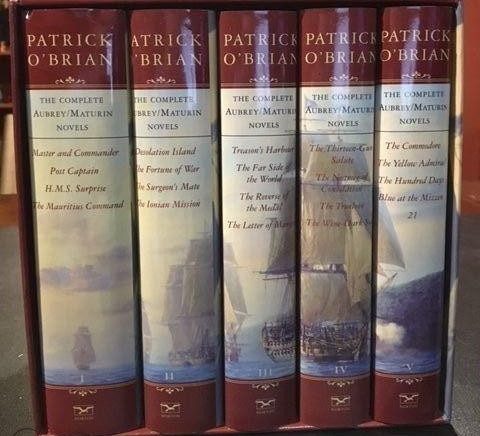
Patrick O’Brien’s Jack Aubrey and Stephen Maturin series crosses many genres: Historical fiction, action/adventure fiction, romance (yes, romance), military fiction, etc.
The series starts in 1800 with the Napoleonic Wars and carries through to the Battle of Waterloo in late 1815.
Some say Aubrey and Maturin are the inspiration for “inseparable fictional duos” such as Kirk and Spock of the original Star Trek TV series (79 episodes) by Gene Roddenberry, Holmes and Watson sixty stories by Arthur Conan Doyle, Joe Leaphorn and Jim Chee of the award-winning Navajo Nation mystery series by Tony Hillerman, and Walt Longmire and Henry Standing Bear of the Longmire novel series.
Understanding Genre:
When writing in general, it helps to think of your work in terms of different points of view. Often English teachers will refer to this as the Rhetorical Situation of your writing, which comes in the following parts:
- Audience: Who will be reading it? This is more than people who buy your book, but also your writing group, beta readers, professional editors you pay, agents, publishing editors, bookstore employees, and then the specific people to who your book will appeal.
- Medium: Quite literally what is it written on and how it is delivered. Paper, ebook, audiobook, graphic novels, hybrid.
- Message: What it says
- Genre: The conventions and context regarding how this information is typically presented
- Purpose: The intention of the writing
Naturally, we’re going to focus on Genre here.
Take a moment and consider this question: What is Genre? It may even be worth pausing to write down your thoughts before continuing.

In “Dukes, Deaths, and Dragons: Editing Genre Fiction” from What Editors Do, Tor Executive Editor Diana Gill Diana Gill asks the same question, and she provides her own answer:
“What is genre? Merriam-Webster defines it as ‘a category of artistic, musical, or literary composition characterized by a particular style, form, or content.’ Genres of fiction include mystery, science fiction, romance, fantasy, westerns, erotica, and horror. Genre fiction can be commercial, it can be literary—and it can be both.”
A quick internet search shows that there are typical standards for most genres when it comes to word count, which can help when plotting or editing your work. Let’s look at that genre list from before, but add in word counts:
You can read up on some more of the general rules of genre in this older, but still worthwhile blog from Ruth Harris here.
Standard word counts for different genres are important to keep in mind as knowing how long your novel is affects your storytelling!
- Speculative Fiction 90,000-120,000
- Mystery 70,000-90,000
- Young Adult 50,000-80,000 (much shorter for Early Readers and Middle Grade)
- History 100,000
- Literary 100,000
- Romance, 50,000 + (shorter is usually better for romance)
Non-Fiction is a little too varied to put a fine point on it. George Saunders tells his reader in A Swim in a Pond in the Rain that he received “the Cornfeld Principle” from movie producer Stuart Cornfeld, which states:
“[E]very structural unit needs to do two things: (1) be entertaining in its own right and (2) advance the story in a non-trivial way.”

If your story is excessively long, it may be worth it to look at entire chapters and ask yourself that question. At best, you may find out you have two books, or as we have seen here at Chanticleer, three books instead of one, but no matter what happens your story will probably be stronger for it.
A reminder from Kiffer: Remember each chapter should have its own story arc and should end in such a way that the reader can’t wait to indulge in the next chapter as the story develops its overall arc.
Each story within a series should contain a portion of the overall arc of the series.
This works for whatever genre or genre’s you are working in—even those with fractured time-lines.
What is the point of genre, or, put another way, who uses genre?
This goes back to the question of Audience when we consider a book. Remember who we said might be reading this with an eye toward genre:
- Your Writing Circle
- Beta Readers
- Professional Editors
- Agents
- Publishing Editors
- Bookstore employees
- Distributors (the gauntlet of a successful sales strategy)
- ISBN – & Cataloging
- Library of Congress
- Copyright
- Your Readers!
While understanding the genre can help you with narrative conventions and writing decisions, writing in a genre also establishes an unspoken contract between you and the reader. If you break the contract, your readers might be a little frustrated with you. That said, common forms of genre blending can be found in Young Adult Fiction, Middle Grade Fiction, and Romance Fiction.
You might be asking why on earth you would need to even bother with a genre when all you want to do is reach your readers directly. Well, there’s a simple answer…
Marketing! Marketing! Marketing!

Knowing your genre not only helps you understand the conventions (like length) for what you are writing, but it also helps readers find your book. Think about when you go into a bookstore. Is there a section you automatically beeline for? Do you look to see if they’ve separated out Horror from SciFi and Fantasy instead of putting it all in Speculative Fiction? Are you a frequent peruser of the Local Author shelves? Having clear sections and genres (even more abstract ones like Local Authors) helps to orient your reader to best find your book!
In spite of how having a clear genre can help book sales, we often hear is that someone’s book defies genre, or it can only be described as the most literary fiction around, or it just doesn’t fit one of the 24 Awards divisions we offer. Well, those authors aren’t alone in that feeling.
An interesting example of this is Kazuo Ishiguro’s book The Buried Giant. Ishiguro seemed to be reluctant to call the book fantasy, and indeed you’ll find it in the general fiction section of most book stores. (The same is true for his book Klara and the Sun, which is narrated by a robot, but somehow not science fiction.) Ursula K. LeGuin, a fervent champion of genre fiction, had this to say:
“Familiar folktale and legendary ‘surface elements’ in Mr Ishiguro’s novel are too obvious to blink away, but since he is a very famous novelist, I am sure reviewers who share his prejudice will never suggest that he has polluted his authorial gravitas with the childish whims of fantasy.” (Read the full Guardian article detailing this here)

So What Does Genre Do?
Genre is a form of categorization that helps people sell your books. Ishiguro, as the winner of the Nobel Prize in Literature can sell work on his name alone. And using a genre isn’t so bad! Think about times that you’ve queried for your manuscripts or even when you see people pitching their work on Twitter’s #pitmad event. You see books advertised saying:
- The next Harry Potter!
- Jack Reacher fans have found their new series!
- Friends of Tolkien fantasy will be happy here!
- Perfect for Star Trek and Star Wars fans alike!
While these claims may be less original than agents and publishers would like, they get the idea of genre across, and if you’re familiar with those titles you know exactly the kinds of books being described without even reading a summary.

Then there is the advice of J.D. Barker, Master of Suspense
CROSSING GENRES and WHY YOU SHOULD DO IT!
J.D. Barker asked his attendees at his presentation at a Chanticleer Authors Conference session, “What do you write? Thrillers? Mysteries? Paranormal?”
Hands were flying up. Then he asked, “Horror?” Sharon Anderson’s hand flew up. He looked at her for a couple of seconds and said, “I guess you’ll be happy with not making much money, then.”
Say What?
He went on to explain how authors limit their audiences when they use certain words. Horror, it turns out, is one of those words. Many people read thrillers, quite a few read mystery novels, and who doesn’t like a good paranormal? But when you say “horror,” people tend to shy away. Sure, you’ll get your fans. But, as Barker adroitly pointed out, you may not get those readers who love the other genres – and would most likely love what you have to offer, too.
This is important because your horror novel may contain elements of a thriller – why wouldn’t it? Likewise, your novel probably has a storyline that needs solving. The point J.D. was making is this – don’t scare away your readers by telling them your novel is only one thing. Think carefully about your marketing and promote your work in such a way as to garner the largest appeal. (Read the full interview with J.D. in our magazine.)
Having a flexible genre that fits into a more popular one (consider paranormal and horror or paranormal and romance) has the potential to greatly expand your readership.
If you’re having trouble identifying your genre and need another pair of eyes on your work, you can always sign up for one of our Manuscript Overviews here.
Keep an eye out!
Did you enjoy this article? We’re planning on doing a series breaking down the ins and outs of different genres in a series of Genre Deep Dives to help you know if your work is a police procedural or a cozy mystery – or whatever else you might be writing!
Thank you for spending part of your writing day with Chanticleer Reviews!
Chanticleer Editorial Services – when you are ready
Did you know that Chanticleer offers editorial services? We do and have been doing so since 2011.

Tools of the Editing Trade
Our professional editors are top-notch and are experts in the Chicago Manual of Style. They have and are working for the top publishing houses (TOR, McMillian, Thomas Mercer, Penguin Random House, Simon Schuster, etc.).
If you would like more information, we invite you to email Kiffer or Sharon at KBrown@ChantiReviews.com or SAnderson@ChantiReviews.com for more information, testimonials, and fees.
We work with a small number of exclusive clients who want to collaborate with our team of top editors on an ongoing basis. Contact us today!
Chanticleer Editorial Services also offers writing craft sessions and masterclasses. Sign up to find out where, when, and how sessions being held.
A great way to get started is with our manuscript evaluation service. Here are some handy links about this tried and true service: https://www.chantireviews.com/manuscript-reviews/
And we do editorial consultations. for $75. https://www.chantireviews.com/services/Editorial-Services-p85337185

Writer’s Toolbox
Thank you for reading this Chanticleer Writer’s Toolbox article.
Writers Toolbox Helpful Links:
Five Essential Book Cover Elements by Kiffer Brown
Know Your Genre: Tips and Secrets from the Experts for Writing Bestselling Genre Fiction
Kazuo Ishiguro thinks his fantasy novel is not a fantasy novel. Are we bothered?
The traditional publishing tool that indie authors can use to propel their writing careers to new levels? https://www.chantireviews.com/2016/05/15/the-seven-must-haves-for-authors-unlocking-the-secrets-of-successful-publishing-series-by-kiffer-brown/
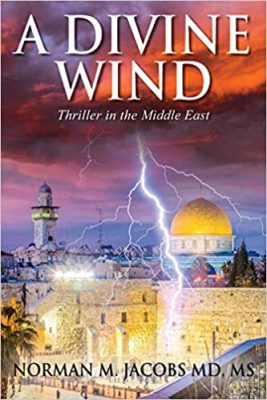
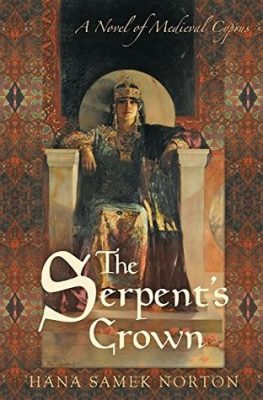
 Hana Samek Norton begins her epic and engrossing novel of historical fiction, The Serpent’s Crown; A Novel of Medieval Cyprus, with this quotation: “It sometimes happens that exploits, however, known and splendidly achieved, come, by length of time, to be less known to fame, or even forgotten among posterity.” (Itinerarum Peregrinorum et Gesta Regis Ricardi) How fortunate for readers, then, that the author brings to life a captivating chapter of history that occurred in Cyprus and Jerusalem in the early thirteenth century.