Tag: Literary

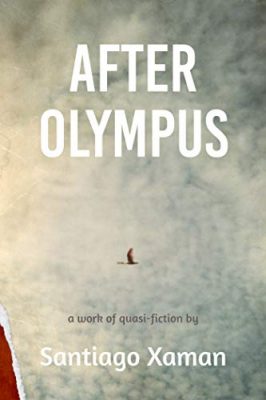
  • AFTER OLYMPUS: A Work of Quasi-Fiction by Santiago Xaman – Magic Realism, Literary Fiction, Multi-Cultural

    AFTER OLYMPUS: A Work of Quasi-Fiction by Santiago Xaman – Magic Realism, Literary Fiction, Multi-Cultural

    Reviewers note:  Consider the term, “quasi-fiction” in the subtitle of this novel by Santiago Xaman. It’s key to reading and understanding this deeply compelling and innovative work. The book begins with two definitions of quasi-fiction:  1. A narrative combining fictional characters with published facts of minor historical significance. 2. The form of realism evoked by quasi-fictional content. Having completed the book, I find I must smile at the term, “realism,” as used in the second definition.

    In this groundbreaking novel, what is real – and what isn’t – is always the heart of the matter. There are elements of reality in the fantastical, and there are elements of magic realism in the rather ordinary. After Olympus is a novel about characters who don’t just think outside the box; they are outside the box.

    Intrigued? You should be. We don’t see novels like this every day, but this one will find its way into the hands of the most discerning readers.

    After Olympus is arranged into six sections: Alpha, Beta, Gamma, Delton, Epsilon, and Omega. Yes, Greek letters, very appropriate for a work laced with mythic associations, associations that will take the reader, as the title notes. Santiago Xaman tells his story via a manuscript found on his property in California. We learn of his childhood in Guatemala in the 1950s and early 1960s, his plea to Xaman Ek, the North Star, for the power of invisibility. We meet his sister who wants to fly like the Mancho bird that nests where the rainbow ends. A fire will change the tide of Santiago’s life, eventually bringing him to the United States, where adoptive American parents raise him.

    Throughout his adult life, he will live with a Russian woman raised in the communist Soviet Union and who has burdensome secrets that will impact Santiago’s life in ordinary and extraordinary ways. One night, Santiago witnesses what he thinks is a falling star but is fuselage falling from a Soviet spacecraft. The event brings two international Stanford scientists to his door and a puzzle of a quest begins, one that will encompass the themes of schism and reconciliation, myopia and sight, and inequity and prosperity.

    Gus, a businessman with a dream to be the “Yahoo of the medical world,” will join this group that Santiago comes to refer to as “magicians.” They will accomplish things that might seem magical, but just as one must carefully observe a magician for sleight of hand, the reader should follow the words of this enigmatic narrative with complete focus.

    The magicians’ projects include designing new frameworks to analyze and make use of neuropsychological testing, intersections of social and political media, employment opportunities for young women with small children, and a gamut of concepts intended to make the world a better place through the removal of hurdles and the dissolving of problems. If technical innovation can be decapitalized and the profits realized by those most deserving of them, the economy can be reinvented. But there are villains on the scene as well and what they do to counter the magicians’ is astounding.

    The ultimate triumph of After Olympus is that it’s not just one book. It will be different books for different people. Included in it is the old and classic story of the blind men who describe an elephant in entirely different ways. What one brings to this book may influence what one thinks they’re reading. The ending alone will make readers wonder if they really know the difference between tusk and tail.

    After Olympus is a superb selection for any book group interested in a novel that is so thoroughly outside the box, so uncaged, that it’s a bit wild, in the best of ways.

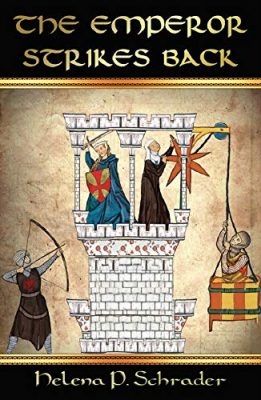


  • The EMPEROR STRIKES BACK: Frederick II’s War Against His Vassals by Helena P. Schrader – Medieval Historical Fiction, 13th Century Politics, Early Historical Fiction

    The EMPEROR STRIKES BACK: Frederick II’s War Against His Vassals by Helena P. Schrader – Medieval Historical Fiction, 13th Century Politics, Early Historical Fiction

    Welcome to the 13th century Beirut, Kingdom of Jerusalem, where chivalry is alive and well—along with treachery, greed, and the lust for power and control.
    The Emperor Strikes Back has a cast that would put Cecile B. DeMille to shame. Helena P. Schrader has successfully fleshed out historical characters and events, bringing them to life in the reader’s mind. She depicts a conflict that occurred in the Outremer during the first third of the 13th century when Frederic II, the ambitious Holy Roman Emperor, sought to usurp John d’Ibelin, the Lord of Beirut, and lay claim to his fiefdom.

    Schrader breathes life into the resulting, historically documented events, using the multiple voices of the Ibelin family, cohorts, and supporters, each of which reflects his or her own social status, belief system, and loyalties. As these characters share their experiences, the reader can almost smell the offal and blood, feel the pain of wounds, the effects of hunger, hardship, and fear, the taste of stale bread and sullied water, and the bittersweet taste of victory. Schrader’s detailed rendering of the ill-fated first marriage of Balian, Ibelin’s eldest son, and heir, to Eschiva de Montbéliard, a cousin by marriage, will capture readers hearts.

    In order to marry, Balian and Eschiva must receive a papal dispensation, which their family friend, Gerold of Lausanne, Patriarch of Jerusalem and Papal Legate, provides. The trouble comes when Pope Gregory learns of this from an Ibelin political rival whose support he seeks, and the pope excommunicates the young couple. The effects create emotional and social rents in the fabric of their lives and the lives and fortunes of their family and supporters in unimaginable ways.

    The Emperor Strikes Back gifts readers with a careful account of actual recorded events as told by the players involved, and at times utilizing their very own words. The wealth of details, characters, and situations, while true to life, can be confusing to those who have not read the foreword, research notes, and familiarized themselves with the glossary. In other words, we recommend familiarizing yourself with these fascinating additions to the novel before you dive right in. You will be greatly rewarded!

    A good book for a long winter weekend—put the teapot on, stoke the fire, and plan on spending some time in the 13th century. Odds are, you will find yourself searching for Schrader’s previous works to read in this series while impatiently waiting for the next installment. Here are just a few that we adore: Envoy of Jerusalem, Defender of Jerusalem, Knight of Jerusalem, and The Last Crusader Kingdom.


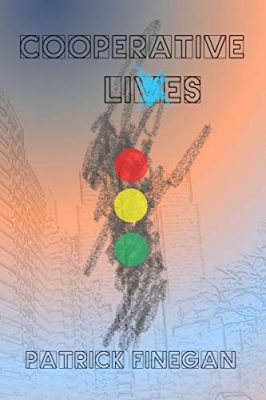
  • COOPERATIVE LIVES by Patrick Finegan – Literary Fiction, Mystery, Thriller & Suspense Literary Fiction, Romance Literary Fiction

    COOPERATIVE LIVES by Patrick Finegan – Literary Fiction, Mystery, Thriller & Suspense Literary Fiction, Romance Literary Fiction

    How well do people really know their neighbors? More importantly, or perhaps more sinisterly, how well do those neighbors know each other – and each other’s secrets?

    Cooperative apartment buildings may exist everywhere, but in the U.S., they are frequently imagined as a distinct creation of the densely populated New York City landscape – the location of Cooperative Lives.

    This is the story of one particular co-op on Central Park South, a desirable address that is home to a number of seemingly affluent, mostly middle-aged and older residents who look as if they lead rather comfortable and downright dull lives.

    Of course, there wouldn’t be a story if that were the case.

    As the novel shifts from apartment to apartment, from resident to resident, readers glimpse the secret hurts, the poorly hidden grievances, and the deeply held griefs that inhabit each resident – and the ways that these seemingly casual acquaintances are linked by suddenly exposed lies.

    We are drawn into the maze of interconnectedness, slowly but inexorably, beginning with one lonely tenant sleeping on a park bench during one of New York City’s infamous blackouts. From this one life derailed by divorce, the story spirals outwards to the couple whose seemingly perfect life slalomed out of control after a skiing accident that links the first resident’s ex-wife to the one who may spend the rest of hers in a wheelchair.

    Who is, in turn, saved from a fatal bus collision by yet another tenant who lapses into a coma and, in his delirium, imagines events that he and his caregivers come to believe must really have happened. This winds up embroiling the cooperative in a shocking televised scandal.

    Cooperative Lives is a story told in multiple shifting perspectives, as each resident links to another, to another, and to another. The changes in point of view are often abrupt, but the reader who follows from person to person, lie to lie, and secret to secret will find themselves at the heart of a dark web that stretches well beyond the building to a case that almost seems ripped from the headlines of the late 2000s and early 2010s when this story takes place.

    While the author describes this work as extremely recent historical fiction, this character-driven story is most definitely a work of exquisite literary fiction that uses the exploration of its characters to drive the narrative. As the story opens, readers are introduced to the status quo of the residents, mundane lives that, on the surface, are not terribly interesting. But this is far from the case.

    Finegan does an excellent job of drawing us inside these seemingly tiny lives, and the deeper we go, the more significant these lives seem, and the greater the impact they have on each other as well as those who have been drawn into their well-written and extremely sticky web.


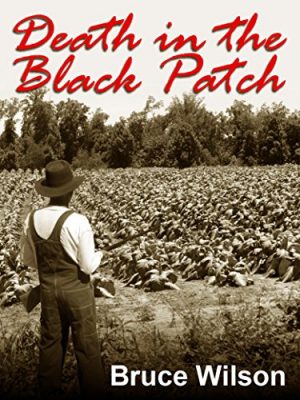
  • DEATH in the BLACK PATCH by Bruce Wilson – Historical Fiction, Tragic Plays, Family Saga

    DEATH in the BLACK PATCH by Bruce Wilson – Historical Fiction, Tragic Plays, Family Saga

    Drawing on fact, fable and inherited lore, author Bruce Wilson has created an imaginative, at times unsettling view of upheaval in southern American history and its effects on local culture, economy and family ties.
    With a large brood to care for, Wes Wilson grows tobacco in a region known as the Dark Patch, a cluster of counties in Kentucky and Tennessee. Their way of life suddenly comes under threat when the greedy reach of the newly burgeoning American Tobacco Company seeks a monopoly on the crop.

    In a powerful pushback, zealous local farmers form an Association sworn to combat ATC’s grip on their livelihood. To join the Association, or to ally with ATC, becomes Wes’s obsessive dilemma. Day by day he calls on his brother, cousin, and friends to see which way they are tending. Night by night he and his son Anthie keep vigil with firearms, lest their property becomes one of the targets of the Association, which menaces, even destroys, farms whose owners, like Wes, are still uncommitted in their loyalties. Wes’s steadfast wife Zora carries on the ceaseless round of women’s tasks, worrying and praying as she sees Wes more likely to take comfort from whiskey than from the Lord. The situation grows daily more perilous until Wes realizes that someone he believed he could trust with his secrets has turned traitor, and hell finally breaks loose.

    Author Wilson, a History Teacher by trade, has pieced his novel together from tales told by his father and a few snippets of evidence detailing his forebears’ involvement in what became known as the Black Patch Tobacco Wars of 1904-1909. Wilson’s settings and dialog are well rooted in the time and region. His ability to delve into the minds of his characters is a notable strength.

    Wes is introspective but gutsy—willing to step outside the comfort of his culture to examine all sides of the questions he faces while defending his homestead and family at any cost. Zora is the long-suffering partner who knows her husband as both a hard-drinking man with a deep well of anger and a hero who will put himself at risk to maintain his responsibilities. Their oldest boy, Anthie, is in love, and, seeking more time to pursue romance, often resents his father’s domination, while stolidly obeying him. Others add to the suspenseful plot creating depth and intrigue that will likely thrill readers.

    Wilson’s Death in the Black Patch is historical fiction at its best, melding a little- known patch of the big American picture with an exploration of one man’s willingness to fight corruption, destruction, and greed with the few weapons at his disposal—weapons that include a dogged determination to do what is right.

    Death in the Black Patch by Bruce Wilson won 1st Place in the 2017 CIBAs for American Western Fiction, the Laramie Awards.


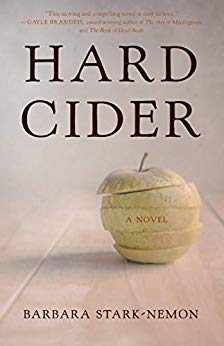
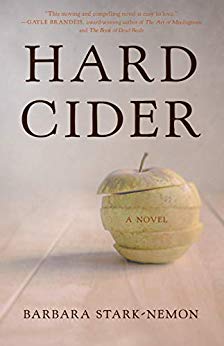
  • HARD CIDER by Barbara Stark-Nemon – Women’s Literature, Literary, Women’s Fiction

    HARD CIDER by Barbara Stark-Nemon – Women’s Literature, Literary, Women’s Fiction


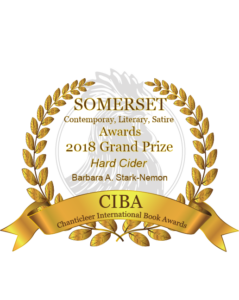
    Somerset Grand Prize Winner Badge for Hard Cider by Barbara A Stark-Nemon

    Abbie Rose Stone is a woman determined to follow her newly discovered dream of producing her own craft hard apple cider while navigating the ups and downs of family life with her grown sons and husband.

    Abbie Rose knows how to deal with adversity, and dives headfirst into this new chapter of her life with energy and passion. She describes her early adulthood years of infertility struggles and the hardscrabble way she built her young family through invasive medical procedures, a surrogate attempt, and adoption barriers.

    After finishing a successful career in education and raising her three sons, Abbie Rose now sees an opportunity to create a new segment of her life’s work in a blossoming business venture. She’s set to take on this new venture by herself, determined to succeed, with or without her husband’s support. Yet, while she lays out her meticulous plans for her cider business, life keeps happening around her, attempting to derail Abbie Rose at every turn.

    Hard Cider is a well-researched second novel for Stark-Nemon, providing intricate details on everything from orchard planning and cider creation to knitted handicrafts. Stark-Nemon leaves no stone unturned and is meticulous with her descriptions of the lands and seasons of Michigan. So much so, that readers may leave this story ready to travel to this Midwest region and will find familiarity in the real-life scenes based on her elaborate imagery.

    The story builds slowly, relying upon richly descriptive settings to create the Stone family and the world in which they live. The tidbits of information presented about infertility, a shocking house-fire, parenting a troubled child, and marital woes are intriguing, and some may find, too brief, leaving the reader wanting more. Which isn’t altogether a bad thing. In fact, the strength of this work is that the reader is left wanting more, imagining what might happen next for this cast of characters we’re not quite ready to leave behind.

    A central theme of this down-to-earth story is the word new. New business ventures, new life changes, new family mixed with old, and new lives for the Stone family. Abbie Rose handles each of these life-altering adaptions with courage and a reflecting thoughtfulness. She teaches those around her what it means to manage life with a grace we can all hope to emulate.

    All in all, Hard Cider is a thoughtful literary novel of one woman and her ambitions to rise above what life has handed her to create an experience of beauty, one that is formed not void of hardship, but despite it. Recommended.

    Hard Cider won Grand Prize in the CIBA 2018 Somerset Awards for Literary Fiction.


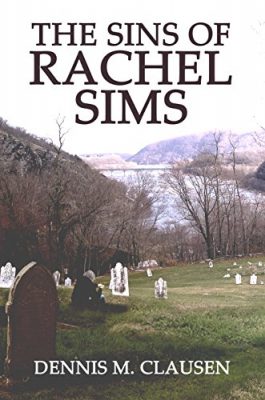
  • The SINS of RACHEL SIMS by Dennis M. Clausen – Absurdist Fiction, Historical Fiction, Psychological

    The SINS of RACHEL SIMS by Dennis M. Clausen – Absurdist Fiction, Historical Fiction, Psychological

    With a nod to Nathaniel Hawthorne and the accused adulteress Hester Prynne in his renowned literary classic, The Scarlet Letter, Dennis Clausen sheds a familiar light on the central character in the multi-faceted psychological tale The Sins of Rachel Sims. In this intriguing two-fold drama, a desperate young woman searches for her own true identity while simultaneously unraveling the mystery behind a woman’s disappearance from decades in the past.

    In May of 1952, the dark-haired Midwestern beauty Rachel Sims mysteriously disappears from the haunting riverbanks of Hodges Island. While gossip mongers spout that the immoral young wife ran off with a well-dressed gentleman from Iowa, the local cemetery caretaker, “Crazy Charlie,” insists he sees Rachel, aka “The Lilac Lady,” walking the island on quiet spring evenings.

    Some twenty years later, Laura Fielding, a graduate student at the University of Minnesota, begins to question who she really is when she stumbles upon an incriminating letter that suggests the couple that raised her are not her biological parents, and the three have been living with stolen identities. The startling information gives Laura a pause and reasons to question her broken relationships and a diagnosed bonding disorder.

    The upheaval triggers her obsessive need to uncover the truth. With the help of eccentric psychiatrist Ned Finley and his friend Aurther Schlepler, a proven psychic who’d helped police with difficult cases – though now a patient in the Farmington Mental Hospital – Laura attempts to find answers about her past and explore the secrets of her childhood memory. Through a combination of regressive hypnosis, a psychic’s intuition, professional insight, and Laura’s own detective work, a winding journey leads her to the area of Point Tyson and reveals plausible a connection to the vanishing Rachel Sims.

    Far beyond a typical cloak-and-dagger rendering, Clausen weaves a more subtle, yet palpable essence of evil lurking in the shadows of this double-edged story. From threatening messages warning characters to “stay away” to the heated glow of a lit cigarette in the dark, Clausen expertly gives his readers nuances of suspense that serve to heighten the drama and keep us glued to the page.

    Through a detailed narrative, Clausen creates an artful balance of people and place. Here Laura’s investigation takes her on a circuitous path showcasing both beauty and danger, from the natural Hodges Island environment where fragrant lilacs bloom amidst an overgrowth covering hidden death traps.

    Legend maintains Hodges Island was inhabited by warrior spirits and “Heaven’s Outcasts” and Laura needs help to unravel this mystery along with the deep secrets of the puritanical church community and the self-righteous male-dominated religious enclave attempting to hide its own sins. To Laura’s benefit, an eclectic group of die-hard locals including – but not limited to – record clerks, diner patrons, and gravestone cutters offer bits of information to help her piece the puzzle together.

    The plot is moved at a steady pace, with action going back and forth between the past and present. A recurring dream from Laura’s childhood serves as an essential connector for these two timeframes. While she contemplates old photographs or finds hidden Bible inscriptions, the feelings of déjà vu are always with her and enhanced in the text with Laura’s italicized thoughts and feelings about her past and the meaning behind the newly found discoveries.

    Like the regressive therapy used to tap into Laura’s childhood, Clausen’s tale revisits a once-thriving rural community ensconced in a history shadowed by lies and deceit. Above all, it proves a well-crafted, compelling read for those drawn to intricate layers of mystery that confront long-buried secrets.

    The Sins of Rachel Sims by Dennis Clausen was Shortlisted in the 2017 CIBAs, in the M&M  Awards for Mystery Novels.


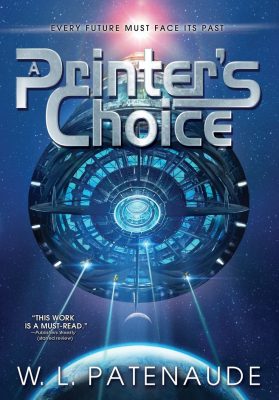
  • A PRINTER’S CHOICE by W. L. Patenaude – Sci-Fi/Cyber-Tech, Mystery, Literary

    A PRINTER’S CHOICE by W. L. Patenaude – Sci-Fi/Cyber-Tech, Mystery, Literary

    W. L. Patenaude’s suspenseful and philosophical novel, A Printer’s Choice, opens in the near future, 2088, and not all is well in the universe.

    Earth is plagued with famine, war, and violent religious extremism. Oceans have risen to deadly levels, and wildfires and storms continue unabated. The world’s resources are being strained and no recovery is in sight. In fact, things are so dire that parents can opt to have themselves euthanized in exchange for the government’s providing for their children’s health and education.

    Elsewhere in the cosmos, a murder has rocked “upside,” a conglomeration of locales in space that are being rapidly developed through a tense and volatile collaboration between engineers and builders. This murder is a first in the “New World” and the circumstances surrounding it set the stage for an investigation that will not only uncover the murderer but also will cause readers to ponder the very essence of human existence.

    Enter Father John Francis McClellan, a Roman Catholic priest in this thirties with a military background. He has been summoned by the Archbishop of Boston and the Vatican to travel to the New World to investigate the homicide. From the outset, the case presents enigmatic details. For example, the victim, Father Tanglao, a Dominican priest, had inexplicably been working as a laborer in the orbits.

    Like everyone else, Father McClellan wonders why a priest was upside where any expression of any faith is strictly prohibited. Was Father Tanglao’s murder connected to one of the engineers or a fellow builder? Could there be a connection to the murderous zealot with a messianic complex, Juan Carlos Solorzano?

    McClellan does know that Father Tanglao had dealings with a high-tech 3D printer, a machine with recesses of “Deep Intellect.”  McClellan has his own history with these sentient machines, encounters that have given him the experience necessary to delve into relations between people and devices possessing artificial intelligence.

    The printers have the ability to design their own upgrades as well as reproduce themselves. “New Athens” was built easily and rapidly by the printers and, given the disasters on Earth, there is an imminent need for worlds to be built in space as quickly as possible.

    The engineers argue that the checks and balances those in charge wish to implement will only hold progress back because they believe they can regain control over the machines down the road. The question will arise, what separates a human programmer from a mechanical one capable of critical thinking? And who “programmed” people? What transpires between McClellan and a specific machine includes a riveting and deeply thought-provoking discussion of trust and free will.

    Clearly, Patenaude is well versed in the readings of Aristotle, St. Thomas, St. Augustine, and Descartes, for starters, and likely a host of philosophers and theologians. His ability to draw upon multiple disciplines and to weave religious and philosophical allegories into characterization and plot put him at the forefront of literary thinkers. Suffice to say, this novel is profoundly deep and thought-provoking.

    While this book will appeal to sci-fi lovers and anyone game for a murder mystery in outer space, it should also spark the interest of anyone interested in grappling with theories of existence and the ultimate power of free will. A priest traveling to an entirely new world in the cosmos and finding that it’s still necessary to wrestle with the age-old questions of faith make for a powerful tale.


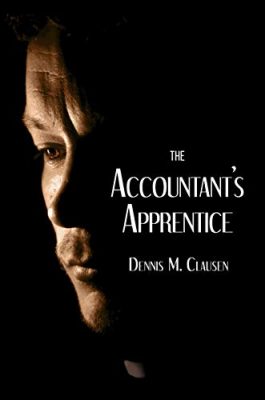
  • The ACCOUNTANT’S APPRENTICE by Dennis M. Clausen – Magic Realism, Mystery, Philosophical/Apocalyptic

    The ACCOUNTANT’S APPRENTICE by Dennis M. Clausen – Magic Realism, Mystery, Philosophical/Apocalyptic

    Philosophically sophisticated, the supernatural mystery of Dennis M Clausen’s The Accountant’s Apprentice is reminiscent of the classic apocalyptic comedy Good Omens while bringing its own unique and serious take on the fight against good and evil.

    Justin Moore is a priest on leave after witnessing a murder in his parish office. He is haunted by the events and struggles with making sense of what happened and why the assailant spared him.

    Living in a small rundown studio apartment, Justin makes ends meet by becoming the driver of a mysterious neighbor who calls himself A.C. and claims he is an accountant. But Justin quickly becomes suspicious of his new employer when he fails to find any information about A.C or his company. To make matters worse, Justin attracts the attention of local police after not one, but two neighbors die while living in the apartment across the hall from him.

    As Justin investigates the strange events he is connected to, he begins to question his state of mind, unable to pinpoint the agenda and motives of his mysterious employer. Whenever Justin finds answers, several more questions appear as more and more people connected to him end up dead. In the end, Justin learns that there are forces at work above his understanding and that he has an important part to play in it all.

    Dennis M Clausen is a masterful writer that creates a full and multi-faceted story in a relatively small package. In what starts out as a mystery with a spiritual backdrop, the plot quickly brings in philosophical questions about the good and evil of our capitalistic society and what effects artistic genius has on the world. There are also touches of the supernatural that come into play as Justin tries to make sense of the mysteries around him.

    Clausen develops Justin Moore with a level of mystery to the character, who can arguably be seen as an unreliable narrator. Not much is known about Justin and his life before the traumatic incident he witnesses, and the details of that event change ever so slightly every time he goes back to those memories. These changes and other events cause Justin to question his reality and make him an interesting narrator. Even less is known about the characters A.C. and Ilsa, but they both undergo their own satisfying character development by the story’s end.

    A compelling novel, The Accountant’s Apprentice, leaves many areas of the story unexplored and underdeveloped in a way, perhaps to maintain a mysterious atmosphere. Certainly, its effect will leave readers longing to know what happens next. Perhaps a sequel? (We hope!)

    Clausen employs multi-genre storytelling here, and this approach makes the book a screaming success. In that complexity, there is a literary feast. It is spiritualistic, philosophical, supernatural, mysterious – and apocalyptic. In other words, this story has a charismatic appeal for everyone.


  • The SOMERSET Book Awards for Contemporary, Literary, Satire Novels – Grand Prize and First Place Category Winners – CIBAs 2018

    The SOMERSET Book Awards for Contemporary, Literary, Satire Novels – Grand Prize and First Place Category Winners – CIBAs 2018

    We are excited and honored to officially announce the Grand Prize Winner and the First Place Category Winners for the 2018 SOMERSET Book Awards at the annual Chanticleer Authors Conference and the 2018 Chanticleer International Book Awards ceremony. This year’s ceremony and banquet were held on Saturday, April 27th, 2019 at the Hotel Bellwether by beautiful Bellingham Bay, Wash.


    We want to thank all of those who entered and participated in the  2018 Somerset Book Awards for Contemporary, Literary, Satire Novels, a division of the Chanticleer International Book Awards (the CIBAs).

    Judith Kirscht, the author of the 2014 SOMERSET award-winning Home Fires announced the 2018 Somerset Award Winners at the Chanticleer International Book Awards Banquet and Ceremony.

    PublishDrive and Hindenburg Systems awarded additional prizes to the 2018 Somerset Book Award winners. Thank you!

    Congratulations to the 2018 SOMERSET Book Awards for Contemporary, Literary, Satire Novels First in Category Winners!


    • Night Jasmine Tree by Debu Majumdar
    • Secrets of Innocence by V. & D. POVALL
    • Cowboy by Bob Holt
    • Wishes, Sins and the Wissahickon Creek by PJ Devlin
    • Silent Echo by Beth Burgmeyer
    • Some Kind of Ending by Conon Parks
    • Summer Girl, A Novel by Linda Watkins
    • Hard Cider – a novel by Barbara A. Stark-Nemon
    • Disowned by Tikiri
    • Mourning Dove by Claire Fullerton

    And now for the 2018 SOMERSET Book Awards for Contemporary, Literary, Satire Novels:

    Hard Cider – a novel by Barbara A. Stark-Nemon

    took home the Somerset Grand Prize Ribbon


    An email will go out to all First Place Category Winners and Grand Prize Winners with more information, the timing of awarded reviews, links to digital badges, and more before May 31st, 2019 (approximately four weeks after the awards ceremony). Please look for it in your email inbox.

    When we receive the digital photographs from the Official CAC19 professional photographer, Dwayne Rogge of Photo Treehouse, we will post the photographs of Somerset award winners on this page.

    Click here for the link to the Somerset Semi-Finalists.

    This post will be updated with photos and more information. Please do visit it again!

    The deadline for submissions into the 2019 Somerset Book Awards is November 30, 2019 Midnight (PST).

    Our next Chanticleer International Book Awards Ceremony will be held on Saturday, April 18th, 2020, for the 2019 CIBA winners.

     Enter your book or manuscript in a contest today!


  • The TRIAL of CONNOR PADGET by Carl Roberts – Legal Fiction, Literary, Fiction

    The TRIAL of CONNOR PADGET by Carl Roberts – Legal Fiction, Literary, Fiction

    When is murder justified?

    If you ask the district attorney of this affluent Louisiana community where a man has shot and killed another man, and the murder captured live on TV, there is no justification.

    Jack Carney sees it differently. An affluent middle-aged civil attorney, he considers the killing to be the result of a man pushed beyond his limits by another who seemingly destroyed his marriage, kidnapped his son, and might have been planning a horrible fate for the boy he stole.

    There are real-world consequences to Jack’s taking the case. The shooter, a childhood friend, has no money, so Jack volunteers to take the case free of charge. Jack’s law firm is dismayed, his wife is unhappy with his decision, but Jack’s conscience, his religious convictions, and his military honor will not let him ignore his troubled friend.

    There is no question about whether Connor Padget committed the crime. The real suspense is whether Jack can still lessen the charge of murder to manslaughter when the DA is determined to show no mercy to the defendant; when Connor’s wife and Connor himself put obstruction after obstruction in front of Jack in his determination to have the law do right by his friend.

    While the crime story is suspenseful, it is nearly matched by other nuances that lift this novella well beyond the usual legal procedural.

    Rarely does a book about the law take you this close into the mindset of an attorney. Carney isn’t a criminal attorney but his ability to think “legal” demonstrates how a well-trained mind can work even in a foreign territory like criminal law. His familiarity becomes our familiarity. This is not a blockbuster case; no mob bosses will fall; no bombastic courtroom duels await. What is showcased here, however, is good lawyering, legal competence, and a writer’s commitment to sharing his love of the law with his readers.

    Familiarity also extends to the book’s Louisiana setting. With small but well-crafted touches, you are introduced to the writer’s south, not so much of a bus tour as a first-person sharing of the places where the characters live. You know he knows and loves his south and brings you along for a first-person ride.

    Two marriages—the client’s and the lawyer’s – are central to understanding the fates of both Connor and Jack. Neither is happy nor conventional. Jack’s marriage is particularly at odds: his wealthy wife plans to build a home in an affluent neighborhood and live there whether Jack joins her or not. Their sexuality flourishes, but will the marriage survive? As for Connor’s marriage, the fact that the murdered man played a part in the dissolution of his marriage is clear, but what part remains an open question. Unlike the portrayals of the law and the south in this novel, the path ahead for both marriages remains mysterious throughout.

    This reader can only hope the author rescues Jack Carney from the obscurity he seems determined to want and bring him back for another round or two of tussling with the law and his conscience.