Tag: Literary

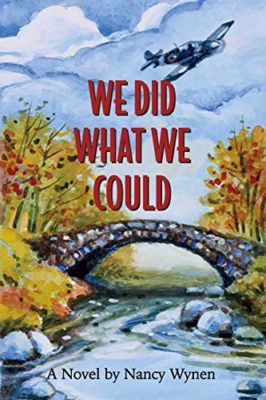
  • WE DID WHAT WE COULD by Nancy H. Wynen – Historical Fiction, WWII Women’s Fiction, Literary Fiction

    WE DID WHAT WE COULD by Nancy H. Wynen – Historical Fiction, WWII Women’s Fiction, Literary Fiction

    Nancy Wynen’s We Did What We Could is a well-conceived, smart, character-driven novel set across a grand European landscape. Here a formidable trio of young women, groomed for mere social status, demonstrate their strength, endurance, and courage as they move beyond the walls of academia to experience careers. The three must also deal with relationships, family expectations, and life issues amidst the often devastating and upending climate of war.

    Lady Archer is a widow from the Great War. As Assistant Head Mistress at St. Martin’s School, she feels girls should receive solid educations and prepare for real professions. With her high level of social ties, Archer looks for “future perfect leaders” within each new graduating class, possessing ideal traits of intelligence and creativity. In May of 1936, Archer sets her sights on three such proteges whose memorable antics foretell their potential for more significant life accomplishments.

    In this three-part literary work, Wynen moves the narrative between the interconnected lives of these central characters. In the mind of their individual goals, natural-born leader Maggie Shelford obtains a job at the London Times, Agnes Fletcher heads for nursing school, and creative Ellie DeWever prepares to join the Netherlands foreign services. Ellie’s kindred spirit Gran, another select alumna of St. Martin’s, offers up smart advice to the tune of, “Be prepared, and then you can adjust to whatever happens … Improvise as you go along.”

    From royal debutante ceremonies where these three friends sneak an outsider into high society’s ranks to Agnes’ innate ability to bluff her advancement through nursing school, imagination and talent help these women forge ahead. With the continuing influence of Lady Agnes, Maggie finds herself a member of the RAF (Royal Air Force), reporting for the Union Jack, and ultimately a chief press camp officer. Events of the day fill the storyline. With Ellie the first in the group to marry and start a family, Maggie and Agnes begin to contemplate their own destinies and opportunities to find love, romance, and a “real deal” relationship.

    As expected, the backdrop of war predominates in a story playing out within a 1936-1945 timeframe. During this uncertain time, life is likened to a ballet where each step was delicate, and “losing one’s balance was costly.” Here towns are destroyed, families are forced from their homes, secrets are buried, and love and loss are intertwined. But the narrative isn’t always frayed with hardship. Wynen aptly weaves humor throughout her work that serves well to balance tension and storyline.

    When a significant twist in the plot occurs, Lady Archer’s hard work with her proteges pays off. Here Wynen cleverly brings the story full circle with the re-enactment of an ingenious prank incorporated from their school days. A detailed wrap-up highlights these characters’ futures and leaves Lady Archer hoping for post-war generations instilled with equally creative and indomitable spirits.

    For those readers drawn to stories filled with the harsh realities of a war era and the emotional triumphs and tragedies of those involved, We Did What We Could proves a lively and entertaining exploration that showcases the fine art of determination and will power during the best and worst of times.

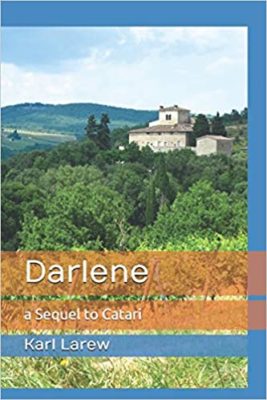


  • DARLENE by Karl Larew – Literary Saga, Mystery, Romantic Literature

    DARLENE by Karl Larew – Literary Saga, Mystery, Romantic Literature

    In a propelling follow-up to Karl G. Larew’s captivating novella Catari, where love, history, and family drama become intertwined within an investigative murder mystery, the story continues in Darlene, an artfully crafted literary sequel.

    Having uncovered the mystery of Catari’s death, inquisitive BFFs and comrades Maxwell Roux and Darlene Wolfe reunite to deal with the conflict-driven wrath of Catari’s stepfather, Hugh Fontane, and her half-brother Jeffrey. They seek to gain control over the Fontano family estate, as well as Catari’s reputation. However, the historic Italian villa and burial crypt have been left in Max and Darlene’s hands, as per the wishes and dictum of Catari’s baronial grandfather’s will.

    Early on, readers learn that Max had a former relationship with Catari. Bisexual Darlene, who lives as a lesbian, was also involved with Catari. Clearly, the unique friendship delivers an interesting trio, though now with Catari’s passing, the remaining duo seems duty-bound to keep their relationship at a platonic level, because Darlene wishes to remain a committed lesbian; however, desires undoubtedly bubble beneath the surface. Initially, Larew weaves charming hand-holding and shared beds, with Darlene robed in oversized PJs, to suggest proper, old-fashioned decorum, yet the sensation of underlying lust and desire prevails.

    Catari’s family members’ intentions are brought to light via written correspondence, agitated encounters, and lively meetings that reveal the father and son desire to turn the villa and family crypt into a tourist rental site and attraction for ghost hunters. The Fontanes levy their plans with threats to expose Catari’s romance with Darlene and slander her reputation with untruths regarding risqué photos, problematic drinking, and “casting couch” insinuations.

    Larew’s sophisticated narrative style quickly draws readers into the story. He allows Max to break the fourth wall and ask the audience difficult questions about ESP, ghosts, and sex. From the straight-forward opening directive that asks, “Do you believe in precognition?” to admonishments to readers hoping to glimpse Max and Darlene’s potential sexual interludes, Larew also allows Max to go further with intimate asides. The use of these creative tropes helps create a tangible atmosphere and hook readers immediately.

    There is a certain air of old-world formality in Larew’s language and intonation that speaks directly to these central characters’ refinement. With Max’s love of music and Darlene’s career in the field, classical and operatic references are well placed throughout the story. From Caruso’s “Pour un Baiser” (For a kiss) announced as a bookend in Max’s life, to the strains of “La Bohème,” music suggests itself as a fitting landscape for the Catari, Darlene, Max three-fold drama. Indeed, such melodies offer a complimentary balm for the emotional upheaval of these characters and their situations.

    Against detailed backdrops of New York apartments, shared meals at ethnic eateries, and the sprawling estate in Italy, Max and Darlene navigate their way through the mire of tensions, threats, questions, and concerns in their effort to preserve the sanctity of the villa, and uphold the legacy of their beloved Catari.

    Darlene is clearly a provocative and arresting work that can stand freely on its own. With notable characters and well-defined interactions, the familial drama proves a delightful and compelling read. Those who want more may wish to pick up Catari, the novella that started it all.


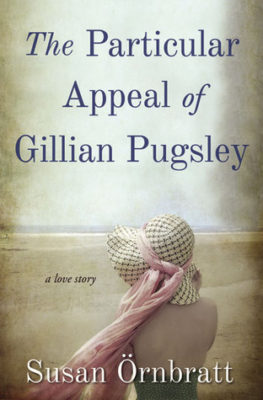
  • The PARTICULAR APPEAL of GILLIAN PUGSLEY by Susan Örnbratt  – 20th Century Historical Fiction, Coming of Age Fiction, Historical Romance

    The PARTICULAR APPEAL of GILLIAN PUGSLEY by Susan Örnbratt – 20th Century Historical Fiction, Coming of Age Fiction, Historical Romance

    Irish-born Gillian McAllister knew she was meant for bigger things than a quiet life among her large extended family. Leaving home at seventeen against her protective father’s wishes, Gillian is looking for adventure – and that’s exactly what she finds. She was a nanny for a maharaja, a caretaker for WWII internees, and a nurse on the Isle of Man before finally becoming a wife, mother, and grandmother in London, Canada, where she spent the majority of her eighty-nine years.
    However, with only weeks to live after being stricken by cancer, she knows her time with her beloved granddaughter and namesake is truly precious. Before she goes, she wants to pass on the poems that capture her long, adventurous life to the junior Gilly in hopes the girl will use the poems to write about her adventure – her hidden love story.

    While on vacation in Canada, the teenage Gillian meets and falls madly in love with Christian Hunter. Her love of Christian consumes her, but she leaves him at the cusp of a war that soon alters the world’s course. Destiny isn’t finished with the pair, and they reunite after the carnage to find their love is as fiery and fierce as ever. However, even a love this strong can’t outrun fate, and Gillian is determined to find a way to show her beloved granddaughter the truth before it is too late.

    The character relationships between Gillian and others is a perfectly developed part of the novel. Gillian’s attachment to her granddaughter is more than just a name. Young Gilly is an aspiring novelist. Both women understand the importance of storytelling and the impact of words. From the moment Gilly was born, Gillian felt the connection between them and believes only Gilly can breathe life into her adoration of Christian Hunter. She entrusts her poems to Gilly without disclosing the story, allowing the girl to uncover the secret hidden for over fifty years. Watching their last days together unfold is touching and reminiscent for any reader who has shared a bond with a grandparent.

    Gillian’s secret love, Christian, is another meaningful relationship. From the time she was young, Gillian knew someone was waiting for her, someone drawing closer with each day, someone staring at the same moon and longing for another. When she meets Christian, she just knows as does he, and though, ultimately, Gillian comes to realize that devoting herself to one man when the world is waiting may not be what she truly wants. But Gillian cannot deny the connection between them. The two are the epitome of opposites attract with his easy-going, unrushed personality, but he immediately sees the effect she has on others, her zest for life. No matter how hard either tries to drown out the thought of the other, they can’t escape their entwined destinies, and their contrary natures create a perfect balance. The dance of fate between Christian and Gillian is thrilling and will keep the reader wondering until the end.

    The gorgeous settings of Gillian’s life are an integral part of her history. The richly painted scenes are beautiful and inspiring for the character as well as the reader. From the sweeping sea cliffs to the serenity of Gillian’s cottage on the Isle of Man, the setting becomes its own character. Gillian both embodies and is affected by the scenery. In the quiet of a winter-draped meadow and the countryside teeming with life, Gillian sees herself and the many lives she’s lived.

    A beautiful theme within this novel is the simple notion of loving life. Even before she steps out into the adult world and leaves Ireland, Gillian knows that life is for living. She wants to squeeze every drop of adventure possible from the time she is given and feast on all that it has to offer. Her ingenuity, spunk, and spicy attitude create an unquenchable need to travel, to meet people, and, most importantly, to make the world a better place. She refuses to settle for a mediocre life and rejects the moderation others preach and try to instill in her. Her “magnificent obsession” isn’t diminished by anything – not heartbreak, a world war, or even death. She lives with passion and gusto, fostering the belief in others that love and laughter, stories and adventures, make life worth living. Her sprawling life’s story is more than just survival and lost love. It’s about finding joy and purpose amongst death and destruction.

    The Particular Appeal of Gillian Pugsley won 1st Place in the CIBAs 2015 CHATELAINE Awards in the category of 20th Century Historical Fiction.


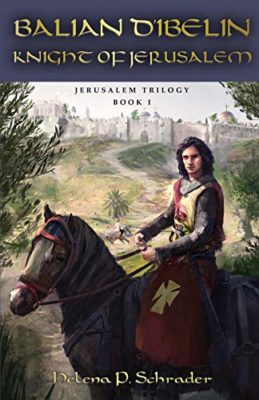
  • BALIAN d’IBELIN: Knight of Jerusalem (Book 1 of the Jerusalem Trilogy) by Helena P. Schrader – Biographical Historical Fiction, Medieval Historical Fiction, Crusader States

    BALIAN d’IBELIN: Knight of Jerusalem (Book 1 of the Jerusalem Trilogy) by Helena P. Schrader – Biographical Historical Fiction, Medieval Historical Fiction, Crusader States

    Welcome to the Outremer, where fealties are solemn, rivalries deadly, and intrigue is served up daily along with the wine. Here, well-connected women are worth their weight in gold, and the rules of primogeniture, along with the whims of a king or mandates from the Church can determine a person’s fate.

    In Balian d’Ibelin: Knight of Jerusalem (Book 1 of the Jerusalem Trilogy), Helena P. Schrader has re-created people, places, and events in the latter 12th-century kingdom of Jerusalem for the reader’s edification and enjoyment. With an elegance of language, detail, and setting rivaling that of Doctorow’s Jazztime or Tolstoy’s War and Peace, Schrader takes the reader on location to savor the world of Balian d’Ibelin in the times before he emerged as a pivotal player in the politics of the Crusader states.

    Young Balian d’Ibelin, while possessing the pedigree, social graces, and knightly skills of one raised to rule, has few prospects when his eldest brother, Hugh, dies unexpectedly.  Although Hugh’s stated desire that the Lordship of Ibelin title and holdings go to Balian, they fall to Balian’s next older brother, Barry, through rights of succession.

    Barry, Lord of Ramla, offers Balian only the position of Constable of Ibelin. Rather than accept this powerful, but subservient post, Balian seeks a future serving Amalric, the King of Jerusalem. The king, who owes Hugh a debt of honor, proffers a court position with some risk – tutor his son Baldwin in the arts of horsemanship, swordsmanship, and sport, as the debilitating infirmity of leprosy, has put the boy behind in this training.

    Accepting this offer moves Balian into the spheres of William, the Archdeacon of Tyre, Baldwin’s academic tutor, and Queen Maria Comnena, the boy’s young, educated, and savvy step-mother, people destined to be essential parts of his life.

    When Amalric dies young, and Balian swears fealty to Baldwin as the new king, the die is cast.  While honoring his oath, he earns the love of the queen, experiences the power of commitment, and learns the cost of honor.

    Balian d’Ibelin: Knight of Jerusalem (Book 1 of the Jerusalem Trilogy) is a joy to read. As in all of Schrader’s novels, the forward to this story is a must-read that serves to ground the reader in the time, place, and cultural multiplicities of the period. By interpreting, hypothesizing, and imagining motivations, actions, conversations, and events that may have occurred as Balian stepped forward into his future, Schrader has turned a narrow slice of history into a panoramic virtual reality that will surely delight fans of historical biographies and Crusader states – and give us something to look forward to in the release of books 2 and 3.

    Readers, brew a pot of tea and snuggle in, for Helena P. Schrader has cast her spell of intrigue and sent her invitation wide. In other words, prepare to get hooked!


  • EVERYONE DIES FAMOUS by Len Joy – American Literature, Small Town Saga, Literary

    EVERYONE DIES FAMOUS by Len Joy – American Literature, Small Town Saga, Literary

    Tornadoes and bomber strikes rival one another in the destruction they leave behind, except that bombers have a predefined target, and tornadoes follow an opportunistic path—one that even experts cannot predict. Len Joy deftly shows what happens when a tornado hits the town of Maple Springs, Missouri, on July 18, 2003.

    A vicious whirlwind storm cuts a narrow path of destruction, sometimes turning one side of a street into rubble while leaving the other unscathed. Needless to say, the people of Maple Springs are changed forever in a matter of minutes.

    The stage is set with considerable color and evocative language. Joy breathes life into his characters of all walks of life: land developers, car dealers, teachers, police officers, military veterans, a couple of basket weavers, a tattoo artist, and even a former baseball legend turned jukebox restorer. The kind of people you find in small towns. They all know each other and often help each other. But they also hurt one another. They marry, they divorce, or maybe they don’t bother to divorce, and they gossip. Oh yes, they gossip. In Maple Springs, one can certainly see more than a little flavor of “Peyton Place.” That’s life in the ‘small town.’

    Dancer Stonemason is trying to manage the jukebox restoration business started by his son Clayton, recently killed in a car accident. Having already lost his wife to cancer, Dancer now lives alone in Clayton’s house. His other son, Jim, owns the successful Stonemason Chevrolet dealership and doesn’t find much time to visit, but does find time enough to sell his brother’s house.

    Dancer has to move out—jukeboxes and all, which he is trying to do with the help of a recent Iraq War veteran, Wayne Mesirow, who owns a truck big enough to carry the jukeboxes. No longer living with his wife Anita and their two children, Wayne hopes to join a touring rock group.

    Meanwhile, Anita is dating land developer Ted Landis, who bought an 1880s riverboat that is now docked at Landis Landing on the Caledonia River. Having spent a fortune repairing The Spirit of St. Joseph, Landis is throwing a major party, with music by the Confederate Pirates, the group Wayne hopes to join. But as the townspeople head for the river, thunder and lightning erupt, the clouds taking on an eerie yellow cast. The suspense begins to build.

    Back in town, the Stonemasons are transforming the Chevy showroom into a ballroom for a reception.

    Daughter Kayla is marrying Barry on Monday. With the work almost done, Jim and Paula head home. Minutes later, the wind hits the glass door so hard that Barry can barely close it. He and Kayla head for the parts storeroom, but then hear a banging on the door. People are calling out for help. They return to let a teenage boy and girl in—then go out to help a man and three women reach the showroom.

    Barry sees a “swirling white spiral…hovering over the mall like an alien spacecraft…” It “pinballs down Main Street…chewing up the Tastee-Freeze, leaving chunks of concrete, twisted rebar, pickup-stick configurations of aluminum siding…” The huge Stonemason sign is ripped down. Then a car skids into the drainage ditch. Barry and Kayla know they must help the father holding his young son and the mother with an infant in her arms clambering out of the car.

    Dancer, at home, is surprised when he calls Russell for dinner, and the dog doesn’t come. He finds Russell perched on a log in the river, which is now a torrent of water. Dancer has to rescue Russell; he’s Clayton’s dog. Held by a rope tied to his belt loops, he slides into the river.

    Soon the sun comes out, and the sky is blue once again. The tornado has left town. And this is just the beginning of the book. What happens to the town – and its inhabitants, make this a story you won’t quickly put down. Highly recommended.


  • ALL THINGS GOETHE! June 2020 SPOTLIGHT on Post-1750 Historical Fiction

    ALL THINGS GOETHE! June 2020 SPOTLIGHT on Post-1750 Historical Fiction

    Post 1750s Historical Fiction Award


    Welcome to the SPOTLIGHT on post-1750 Historical Fiction novels… in other words,
    Welcome to the GOETHE Book Awards!


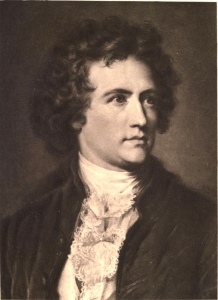
    Why do we like Johann Wolfgang von Goethe so very much? It’s simple! He’s the guy who wrapped up everything we believe in with this simple sentence:


    “Whatever you can do or dream, you can begin it. Boldness has genius, power, and magic in it.” – Goethe


    Of course, this was also said about Goethe (Super Goethe by Ferdinand Mount) that “…[his] company could be exhausting. One minute he would be reciting Scottish ballads, quoting long snatches from Voltaire, or declaiming a love poem he had just made up; the next, he would be smashing the crockery or climbing the Brocken mountain through the fog.”  

    So…, moving on… Goethe was also a very cool guy. In his lifetime, he saw the beginning of the Industrial Revolution in 1750 through Mary Shelley’s publishing of Frankenstein in 1818 – and everything in between! Check out the list of what happened during those nearly seventy decades at the end of this post – you will be A-Mazed!

    Goethe Book Awards Semi-Finalist Badge


    Now, Welcome to the GOETHE Hall of Fame!

    We wish to congratulate 2018’s Goethe Book Awards Grand Prize Winner –

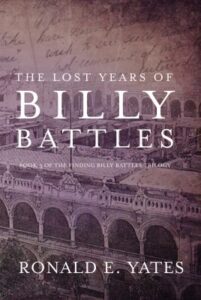
    The Lost Years of Billy Battles by Ronald E. Yates

    Billy Battles is as dear and fascinating a literary friend as I have ever encountered. I learned much about American and international history, and you will too if you read any or all of the books. Each is an independent work, but if read in relation to the others, the reader experiences that all too rare sense of complete transport to another world, one fully realized in these pages because the storytelling is so skillful and thoroughly captivating. Trust me; you’ll want to read all three volumes. Chanticleer Reviewer’s Note

    Mr. Ronald Yates not only won Grand Prize in the CIBAs 2018 GOETHE Awards – he won OVERALL GRAND PRIZE!


    To learn more about Ronald E. Yates, please click here.


    Congratulations to the 2018 Goethe Book Awards First Place Category Winners! 


    The GOETHE Book Awards for post-1750s Historical Fiction Grand Prize is awarded to:


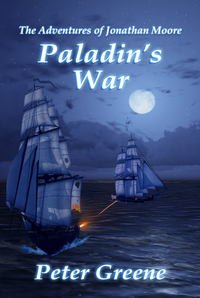
    Paladin’s War: The Adventures of Jonathan Moore by Peter Greene

    Congratulations to the 2017 Goethe Book Awards First Place Category Winners! 


    The Goethe Grand Prize Ribbon for Historical Fiction Post 1750s 2016 was awarded to:

    The Jøssing Affair by J.L. Oakley

    Congratulations to the 2018 Goethe Book Awards First Place Category Winners! 

    • Women’s Historical: A Seeping Wound by Darryl Wimberley
    • Manuscript World Wars and Other Wars: In Their Finest Hour by Duncan Stewart
    • North American Turn of the Century: The Depth of Beauty by A.B. Michaels
    • Regency, Victorian, 1700s/1800s: A Woman of Note by Carol M. Cram
    • British/Europe Turn of the Century: Silent Meridian by Elizabeth Crowens
    • Historical Fiction Manuscript: Running Before the Wind by Carrie Kwiatkowski
    • 20th Century: The Boat House Cafe by Linda Cardillo


    Post 1750s Historical Fiction AwardThe deadline for entering manuscripts and recently published works into the 2020 Goethe Book Awards is coming up fast! JUNE 30, 2019 is the deadline!

    For more information, please click here!


    Submit your manuscript or recently released Historical Fiction (post-1750s) to the Chanticleer International Book Awards!


    Want to be a winner next year? The deadline to submit your book for the Goethe Awards is June 30, 2020. Enter here!

    Grand Prize and First Place Winners for 2019 will be announced during our 2020 conference, #CAC20.

    The Grand Prize and First Place for 2020 CIBA winners will be held on April 17, 2021.

    Any entries received on or after June 30, 2020, will be entered into the 2021 Goethe Book Awards that will be announced in April 2022.

     As our deadline draws near, don’t miss this opportunity to earn the distinction your historical fiction deserves!  Enter today!

    The GOETHE Book Awards is a division of the Chanticleer International Book Awards – the CIBAs.

    The 2020 winners will be announced at the CIBA  Awards Ceremony during #CAC20. All Semi-Finalists and First Place category winners will be recognized, the first-place winners will be whisked up on stage to receive their custom ribbon and wait to see who among them will take home the Grand Prize. It’s an exciting evening of dinner, networking, and celebrations! 


    Goethe

    Some events that occurred during  Goethe’s lifetime:

    1750 – The Industrial Revolution began in England
    1756 – Wolfgang Amadeus Mozart was born in Salzburg Austria
    1761 – The problem of calculating longitude while at sea  was solved by John Harrison
    1765 – James Watts perfects the steam engine
    1770 – Ludwig van Beethoven was born in Bonn, Germany
    1774 – Goethe’s romantic novel, The Sorrows of Young Werther, propels him into European fame
    1774 – Goethe’s play Gotz von Berlichingen, a definitive work of Sturm und Drang premiers in Berlin
    1776 –  America’s 13 Colonies declare independence from England. Battles ensue.
    1776 – Adam Smith publishes the Wealth of Nations (the foundation of the modern theory of economics)
    1776 –  The Boulton and Watt steam engines were put to use ushering in the Industrial Revolution
    1783 – The Hot Air Balloon was invented by the Montgolfier brothers in France.
    1786 – Le Nozze di Figaro by Mozart premiered in Vienna
    1789 – George Washington is elected the first president of the United States of America
    1780 – Antoine Lavoisier discovers the Law of Conservation of Mass
    1789 – The French Revolution started in Bastille
    1791 – Thomas Paine publishes The Rights of Man
    1792 – Napoleon begins his march to conquer Europe
    1799 – Rosetta Stone discovered in Egypt
    1802 – Beethoven created and performed The Moonlight Sonata
    1802 – A child’s workday is limited to twelve hours per day by the British parliament when they pass their first Factory Act
    1804 – Napoleon has himself proclaimed Emperor of France
    1808 – Atomic Theory paper published by John Dalton
    1811 –  Italian chemist Amedeo Avogadro publishes a hypothesis, about the number of molecules in gases, that becomes known as Avogadro’s Law
    1811 – Jane Austen’s Sense and Sensibility was published anonymously. It was critically well-received
    1814 – Steam-driven printing press was invented which allowed newspapers to become more common
    1818 – Mary Shelley publishes Frankenstein
    1832 – Goethe’s Faust, Parts 1 & 2 are published posthumously (March 22, 1832)

    In 1830, Eugene Delacroix  created Liberty Leading the People to epitomize the French Revolution. The movement officially began with the Storming of the Bastille on July 14, 1789, a day that is still celebrated in France.  The French people were rebelling against the extreme wealth of the French royal family who overtaxed and underpaid the people of France to the point where they could not even feed themselves and had nothing to lose by going to battle. They were starving to death.  The uprising of 1830 was featured in Victor Hugo’s Les Miserables (1862)

    Claude-Michel Schönberg and Alain Boublil’s (1980s) musical can look at Delacroix’s Liberty Leading the People and hear the lyrics of the song that serves as a call to revolution:
    Do you hear the people sing? Singing a song of angry men? It is the music of a people. Who will not be slaves again.
    Liberty Leading the People by Eugene Delacroix, 1830. On display at the Lourve, Paris.


    Resources 

    *Britannica Encyclopedia 

    ** Oxford Reference

    ***New Yorker Magazine

  • STAZR The World of Z: The Dawn of Athir by Dr. Anay Ayarovu – Teen & Young Adult Sci-fi Adventure, Epic Fantasy, Russian Literature

    STAZR The World of Z: The Dawn of Athir by Dr. Anay Ayarovu – Teen & Young Adult Sci-fi Adventure, Epic Fantasy, Russian Literature

    STAZR The World of Z: The Dawn of Athir, is the opening of a grand quest into the origin of this world, the history it has suppressed, and most important of all, a journey to open the legendary gates that will lead its people back out into the wider galaxy. Or at least that’s what the powers that be in the city of Trebarad believe when they uncover a prophecy about a “Chozen One” who can open the gate at the heart of the town.

    The story begins with the finding of that Chosen One, the scholar Radatat Lael, living in self-imposed isolation far from the city – or anywhere else. Lael seems to be unique among the people of this world. He was born on Arisam and did not merely arrive, adult and ignorant, from the other side of the world. What also makes him unique is he actually had and remembers his childhood. This perspective will give him the insight required to open the mysterious and mystical “gates.”

    Lael’s isolation has also given him a sense of wonder about the world that he has explored in books but never seen, as well as a bit of an overinflated sense of his own intelligence and consequence.

    On his journey to Treebarad, he experiences wonders and dangers that he’s dreamed about, only to face decisions that mirror his visionary dreams. Disturbing visionary dreams – and far more dangerous.

    This story is only the beginning of Radatat Lael’s story. As this opening volume in the series ends, Lael and his companions are on the cusp of moving out into the greater universe – but only after learning that much of what they believed about their world is not entirely true.

    Lael’s story is a mix of science fiction and fantasy. Lael’s dreams of the STAZR Maiden, his visions that come true, the prophecy that sets the story in motion, and the saarum that gives the “Greats” of this world power – all read as fantasy. Lael’s journey itself reads like mythmaking and legend – although the legend being created is about himself and told from his first-person perspective. And Lael is just a bit full of himself much of the time.

    But this is just the beginning of the STAZR world. Author, Dr. Anay Ayarovu a former Russian national is starting something new, building something rather admirable. She’s inviting all who feel they don’t belong (because, as she says, they are meant to create new ways of being) to contribute art in all forms to add to the expansive universe called Stazr. The book is just the foundation from which gaming, television series, and movies may spring. Authors of all skill levels are also invited to submit their short stories about the STAZR universe for consideration to be included in the series.

    STAZR The World of Z: The Dawn of Athir as a whole is a bit of a tease. In Lael’s journey and the people and beings he meets, the reader gets the sense of a fascinating world just waiting to be discovered. Readers should know that this first installment is a chewy read. It takes patience and opens the gates of creativity and development within the reader. In short, the STAZR universe has the very real potential of becoming something far greater than what we see at this moment in time. There is a long list of questions about the fundamentals of this world as the story draws to a close, and given the author’s mission, this perhaps is a very good thing.

    A new way of storytelling opens the doors for those with vision and drive to dive in. And what a brilliant way of going about it! Artists and authors alike will want to dig into this universe and explore the possibilities.


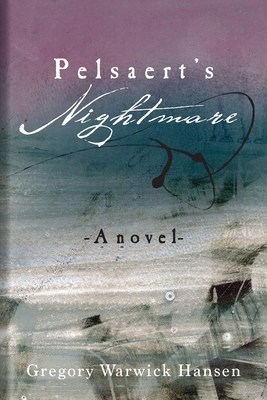
  • PELSAERT’S NIGHTMARE by Gregory Warwick Hansen – Maritime Historical Fiction, Mutiny & Shipwrecks, Biographical Historical Fiction

    PELSAERT’S NIGHTMARE by Gregory Warwick Hansen – Maritime Historical Fiction, Mutiny & Shipwrecks, Biographical Historical Fiction

    To fully understand this rich immersive novel about a 17th Century mutiny and its murderous aftermath – a prime candidate for a “crime-of-the-century” label – it’s best to understand the true story of what happened in 1629 off the coast of what is now Indonesia.
    The Batavia was a treasure-laden fleet ship of the powerful Dutch East India Company, the global Amazon of its time, with more than 300 men, women, and children on board. But the Batavia’s fate was sealed by a greedy captain and a mysterious pharmacist who hijacked the ship for its booty and crashed it on a speck of an island off the Australian coast.

    When survivors of the shipwreck landed, Jeronimus Cornelisz the pharmacist, and his followers were said to have murdered upward of 100 of them. Historians believe that some were brainwashed to kill one another, take women survivors as sex slaves, and slaughter several children. Some individuals place Cornelisz in the same evil company as serial killers Charles Manson, Ted Bundy, and Jeffrey Dahmer.

    The most complete historical record of the massacre came from Francisco Pelsaert, the Company’s senior representative on board the wrecked ship. His diary, written shortly after the Batavia tragedy occurred, is the basis for this novel.

    We are taken deep into Pelsaert’s story who is dying as the book opens. We get to know him as a Company man, no less dedicated to commerce than any globe-traveling corporate soldier of our own times. But as the story of the Batavia unfolds, we also see the politics of the era, an understanding of the competing political forces in the 1600s ransacking the world for treasure and spices – the Dutch, Spanish, and English – entities no less complicated but far more vicious and venal than today’s international trade warriors. The truth be told, these times were hellish. Deaths, almost unimaginable tortures, and barbarism were rampant in this era, and the novel spares the reader few details of them.

    Even as Pelsaert provides us with a detailed accounting of the Batavia disaster, written in graphic and often profane language, he also stares deeply into his own complex past, jumping in time from past to present and back again. We see how a road warrior of those times thought and acted, as unsparing of himself as he is of his contemporaries. You may not ultimately like the Company man, but he will treat you to a reading experience of a world both far removed from our own and yet sadly familiar.

    Pelsaert’s Nightmare won First-Place in the CIBAs 2018 Chaucer Book Award for pre-1750s historical fiction.

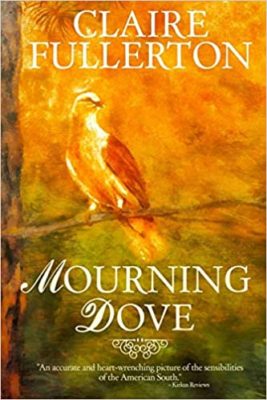
  • MOURNING DOVE by Claire Fullerton – Southern Fiction, Contemporary Literary Fiction, Saga Fiction

    MOURNING DOVE by Claire Fullerton – Southern Fiction, Contemporary Literary Fiction, Saga Fiction

    Camille Crossan appears to be living an idyllic life in Claire Fullerton’s poignant, evocative novel, Mourning Dove.  Living in a superbly appointed mansion in “magnolia-lined and manicured” Memphis during the 1960s and 1970s, Camille’s family life shimmers with Southern charm.  Her mother, Posey, usually outfitted in a Lily Pulitzer shift, Pappagallo shoes, and a signature shade of pink lipstick, is a beauty with the wryest sense of humor and steel determination.

    As a young girl, Camille, known as Millie, sees how those in her mother’s social orbit are captivated by her aura, how men are easily seduced by her flirtatious charm. Society is a game played by those who know its rules, and Posey means to win. Every time.  She, however, isn’t even the charismatic one in the family – that’s Finley, Millie’s older brother, who brims with intelligence, startling good looks, and messianic magnetism. A peek beneath the shiny surface of gracious Southern living, however, reveals enormous cracks in the foundation of the Crossan family.  One of the first things the adult Millie tells us about her brother is that he is dead.  She takes the reader back, though, to their childhood and coming of age, a tumultuous journey that both binds and separates the siblings.

    During her first decade, Millie’s family was living in Minneapolis with her tender-hearted, intellectual father who succumbed to alcoholism. Loss of money and, worse, the accompanying loss of social status, motivates Posey to uproot her children and move them to her childhood home in Memphis, a palatial mansion filled with antiques and portraits of forebears. It’s a volatile time, inside and outside the house, as centuries-old Southern traditions clash with the youth counterculture.

    Millie watches as her mother holds court during daily cocktail hours, a prospective second husband soon on the reel, and Finley, a gifted guitarist, plunges into the local music scene. But what role will she play? It’s difficult for her to see herself entirely separate from her brother for whom she has, “…a love devoid of envy, tied up in shared survival and my inability to see myself as anything more than the larger-than-life Finley’s little sister.”  Millie will grapple with her identity and question her destiny, whether she’ll be a bride in the Southern belle mode of her mother or if she’ll be the blossom that falls far from the magnolia tree. Meanwhile, Finley’s charisma both explodes and implodes in shocking and dangerous ways as he becomes revered by a group of people with no connection to the gentrified life. Like Millie, the reader is transfixed and apprehensive about where this less-traveled road will take Finley. Although the reader knows his grim fate from the outset of the book, his storyline is so engrossing that no drama is lost.

    Author, Claire Fullerton, is an enchantress with prose. The writing in this novel will cause you to stop, reread sentences, savor them, and note their architecture. Scenes sparkle as she masterfully summons moods and atmosphere. The reader can see Millie’s lovely but haunting home, and smell the rich fragrance of dogwood on a soft spring day. Fullerton has a keen ear for witty, authentic dialogue, and she deftly reveals much about personalities via conversation. It’s difficult to take leave of such a vivid, fully realized world. Fortunately for readers, Fullerton has written several books, opportunities to spend more time in her richly crafted worlds.

    Mourning Dove won First Place in the CIBA 2018 Somerset Awards for Literary Fiction.

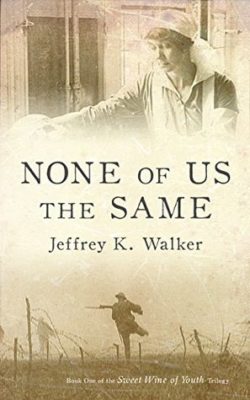
  • NONE OF US THE SAME by Jeffrey K. Walker – Literary, WWI, Friendship

    NONE OF US THE SAME by Jeffrey K. Walker – Literary, WWI, Friendship

    Five young friends from then-English Newfoundland and Ireland together join a regiment to serve in the war, as does a young nurse from Dublin. At first, a reader might be lulled into thinking this is a light-hearted Irish dialect-filled romp a la Finian’s Rainbow, but the novel takes us deep into the lives of its characters as they serve in the bloody trenches, convalesce, and try to live normal lives despite the physical and emotional damages they suffered.

    Diedre, the tough but emotionally scarred nurse, Jack, who left “bits” of him on the battlefield, Will, with his invisible yet no-less devastating wounds—these are a few of the complex yet wholly identifiable characters who become alive through this novel’s pages. These are no simplistic people. Their humanness, their frailties confronted by the awfulness of the war, gives the book its special heart.

    As much as we live through the late 1910s and early 1920s, there are few strictly historical passages. The characters live in those times, not declare them. There are no “war is over” scenes, only the heartbreaking aftermath of the war’s end on the characters. Yet, the book ends with the central characters’ futures well in hand, moving through the post-war era with the 1920s, Prohibition, and the foreshadowing of “the Troubles” beginning to play a part in all their lives.

    Above all, the book is about enduring friendships and the nature of being human. The author compels us with his characters and how they rally together in times of crises and stand up for one another when the going gets tough. There is no sugar-coating what happens to them, and yet their long-standing bonds are what pulls them through for readers to form a special connection with one and all of them. The reader may be better for having met them all. Certainly, None of Us the Same will stay with the reader long after the book is put down.

    None of Us the Same is the first of three novels in the series entitled “Sweet Wine of Youth,” and won First Place in the CIBA 2018 GOETHE Awards for Historical Fiction.