Tag: Literary

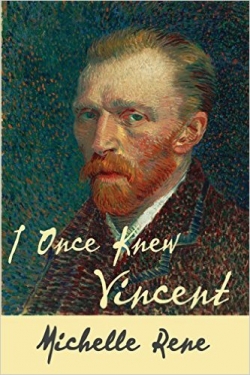
  • I ONCE KNEW VINCENT by Michelle Rene, a historical fiction novel

    I ONCE KNEW VINCENT by Michelle Rene, a historical fiction novel

    Seven-year-old Maria Hoornik already knows more about life than she should, hiding in a curtained alcove whenever her alcoholic prostitute mother, Sien, brings customers home. One day, Sien brings home a different kind of man—an unknown artist, Vincent Van Gogh.

    Vincent, longing for stability amidst his frustrations and failures, is determined to create a cock-eyed semblance of family life with Sien, who is pregnant with another man’s child, and her daughter Maria, with whom he immediately bonds, admiring her critical honesty and calling her “Little Cat.”

    The three, and then Sien’s baby Wilhelm, form a fascinating ménage in new author Michelle Rene’s speculative novel based on considerable historical fact. Rene depicts Maria as a prodigy who comprehends her mother’s self-destructive habits all too well. Rene elucidates, through Maria’s curious gaze, the made-up family’s grinding poverty, Vincent’s stubborn insistence on doing his art his way despite his lack of economic success, and the constant quarrels over money and morals.

    The child unwillingly absorbs the distress when Vincent’s arrogant parents refuse to continue supporting their son’s liaison with a known whore, forcing Sien to revert to her old ways to provide food. Maria’s maturity is underscored in troubling vignettes: she sells her hair so they can all have one Christmas dinner, sacrifices a piece of cake to make a “soup” to feed baby Wilhelm when Sien’s milk runs dry, and rushes home in a thunderstorm to try to stop Vincent from discovering that Sien is once again up to her old tricks.

    Rene has designed Maria’s story with verve, splashing colorful images across a well-planned canvas: “Silence crept into the room and pulled up a chair for a nice long visit.” She deftly conveys a child’s perception of Van Gogh’s mental miasma: “Knowing what mood he would be in became a fine art in itself. I quickly became a master of that art.” The text is satisfyingly interspersed with the artist’s actual sketches and paintings of Sien, a notably ugly woman, and Maria, a serious, self-contained little girl rocking a cradle or sitting quietly while her mother sew; a little girl who, like Vincent, clearly wishes for the security of a real family.  

    Told through the eyes of a child, I Once Knew Vincent offers an imaginative study of a tormented genius who would create some of the world’s most recognized artworks. ​ ​
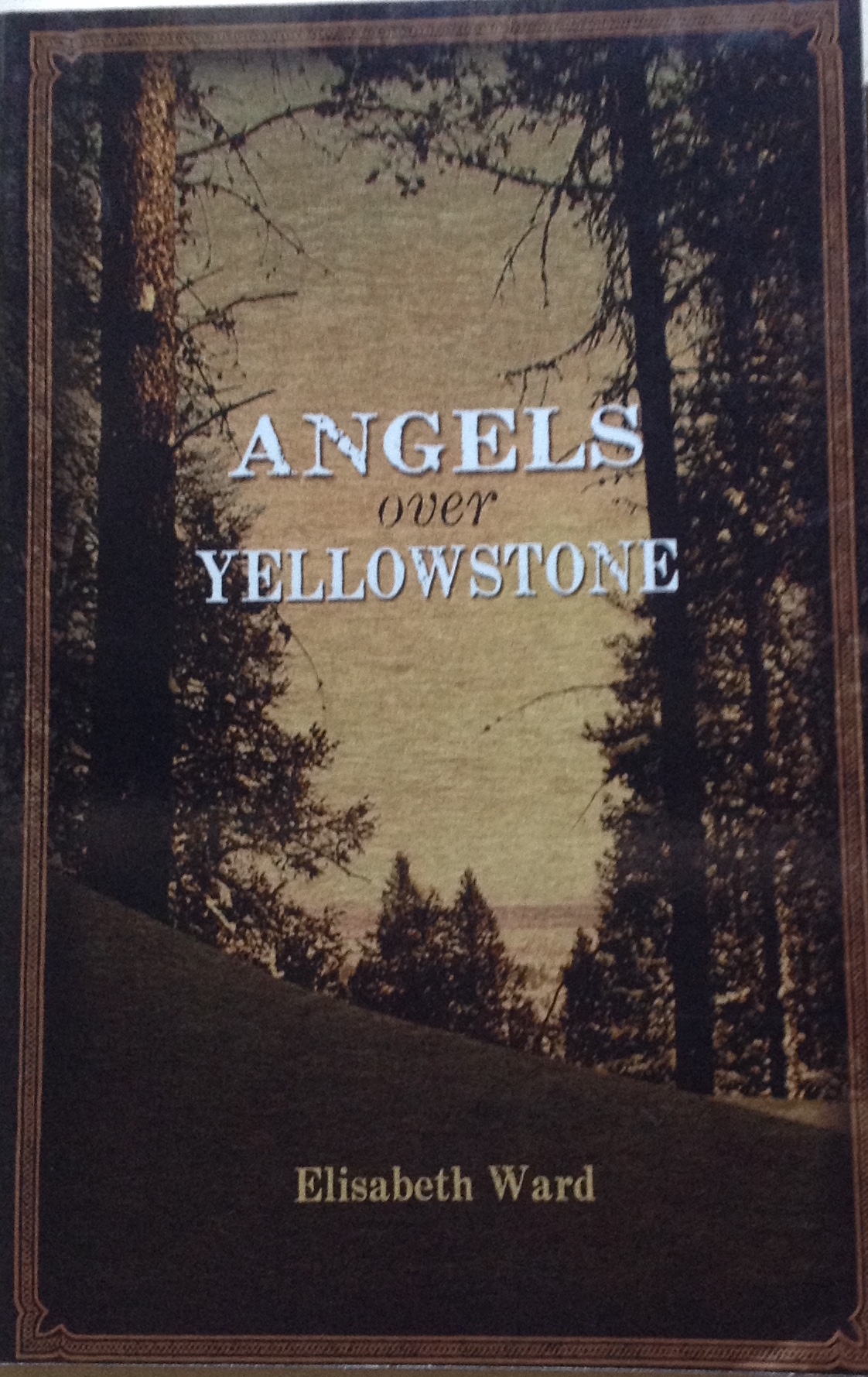
     

  • ANGELS OVER YELLOWSTONE by Elisabeth Ward – a richly drawn saga

    ANGELS OVER YELLOWSTONE by Elisabeth Ward – a richly drawn saga

    An atmospheric picture from American frontier history, Angels over Yellowstone explores larger societal issues through the lens of one small family’s experience as their lives are dramatically affected by the demands of a growing young nation.

    In the 1890s in Wyoming, the United States government has decided to fully claim lands in the Yellowstone region that were earlier designated as national parkland. The American Women’s Suffrage movement was in full swing, the Sierra Club was founded, the Boston subway being built, and the Wounded Knee Massacre had just taken place—these were just a few of the events that were shaping this young nation at this time.

    In poet/author Elisabeth Ward’s  paean to pioneer life, a young woman, Casey Potter, will be especially affected by this news, when soldiers arrive at her cabin one morning to announce that she, her trapper husband Lang, and their little girl Ginger, must move away so that the land around them can be viewed by tourists, untouched by human influence.

    The simple life they share will be sacrificed to the greater good, to national domain and the preservation of pristine nature.

    Living so remotely from civilization, barely able to think in terms of national agendas, Casey understands only that she and her family have to leave the cabin home they love, forced off the hunting grounds whose bounty has fed their family. But knowing that the soldiers will return soon to burn down their precious homestead, they acquiesce.

    Accepting their fate, the three vacate their hearth and home as they are forced to set out and start anew. However, Casey and Lang return to report their moving on to a fellow trapper. It is their return that brings about fatal consequences. Coming to terms with the loss of her home and then the loss of her husband is almost more than Casey can bear. Casey considers the notion of suicide until she finds solace in simple rituals, what she calls “service” or the simple rituals of everyday life.

    Ward’s characters are lyrically and powerfully drawn as are her evocative images of the time and place of this young nation at the turn of the new century. The author deftly juxtaposes Casey’s reluctant departure from her secure landscape with Lang’s earlier expedition when he met the girl with rust-colored hair: “…After seeing Casey McGregor’s hair he felt everything was dull.” The author interweaves poetry into the story, intensifying the emotional content. The pulse of her plot is unwaveringly strong, holding the reader to the page.

    To some, Ward’s concentration on one white family’s tribulations may seem somewhat skewed, since the biggest losers in the opening of the national parklands were undoubtedly the Native American peoples. Nevertheless, Ward’s tale underscores some larger truths about our twin American conflicting aspirations, to conquer and to conserve.

    Angels over Yellowstone combines a richly drawn saga of personal love and loss with some provoking philosophical questions about the American ethos.

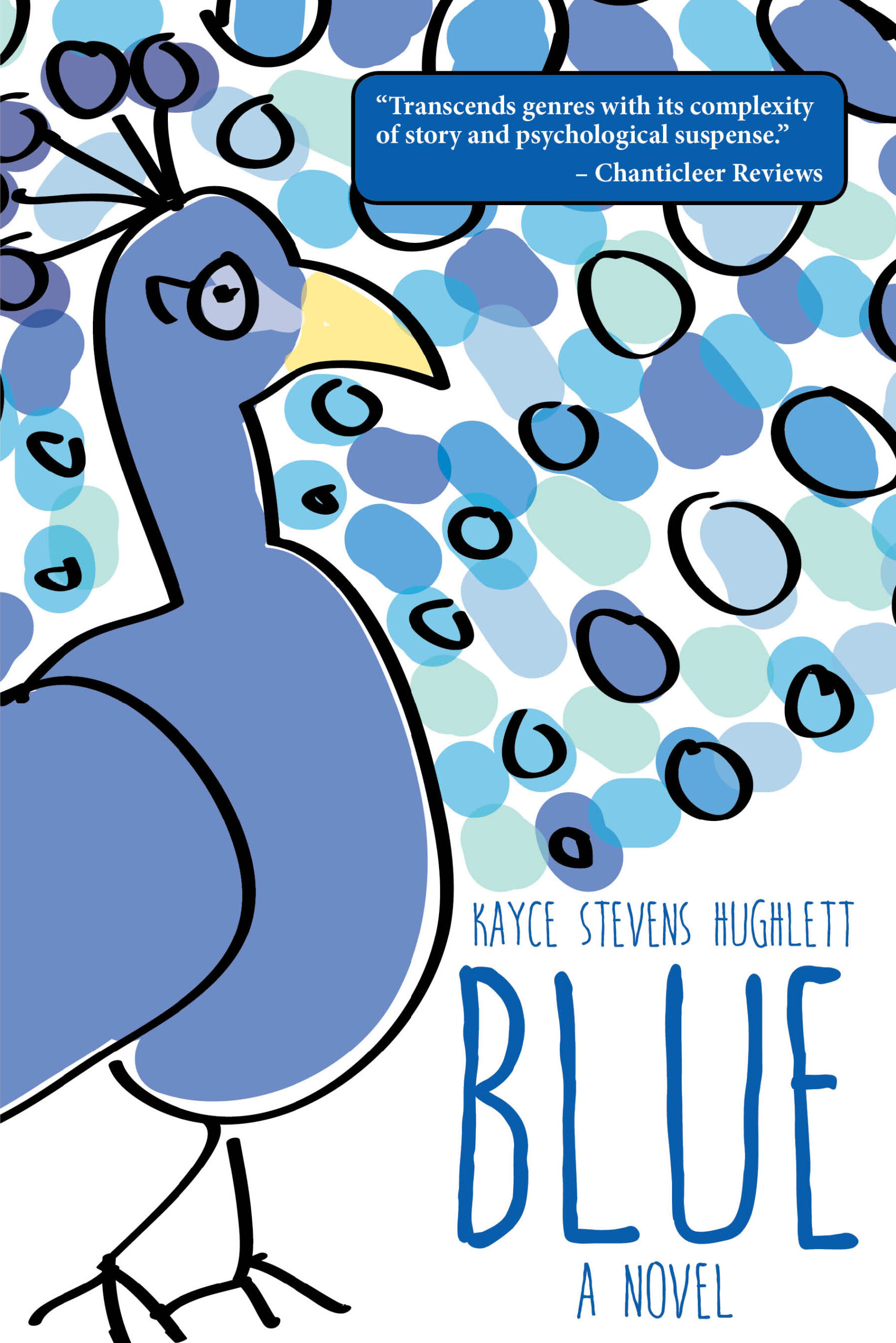
  • BLUE: a novel by Kayce Stevens Hughlett – transcends genres with its complexity of story and psychological suspense

    BLUE: a novel by Kayce Stevens Hughlett – transcends genres with its complexity of story and psychological suspense

    This lyrically written, beautiful story of three emotionally broken yet connected women begins in present day, illustrating the current struggles each faces to simply hold it together and get through each day. The tale then slowly unravels—as these women’s lives unravel—to reveal the mystery in their past that connects them.

    We meet Izabel—a young woman who arrived on Shaw Island in Washington State without any memory of her life up to that point. Taken in and cared for by the nuns, she then trained as a doula, a birthing coach. Izabel now lives on Orcas Island and is a valued member of the community, but it soon becomes apparent that she is struggling with the re-emergence of repressed memories.

    As those memories surface, her current life begins to deteriorate: She dreams of a teenage girl, experiences birthing pains after a particularly difficult night with one of her clients, and almost melts down in a coffee shop when a name mentioned by a friend sounds horribly familiar. Izabel knows that she must deal with whatever is happening to her and turns to a close friend and mentor for help.

    Not far away in Seattle, we meet Monica, a single, clinically depressed woman with a closeted addiction. Her life is unraveling, and she has no idea how to put it back together. Through a sequence of events she meets Jack, a psychotherapist, who cares deeply about her and supports her as she grapples with overcoming her problems.

    And Daisy dreams in shades of blue about the fantastical world of Tausi in which creatures talk about philosophy and an evil master is plotting her demise. Is she having a near death experience? Or is she really dreaming? Where is she?

    Kayce Stevens Hughlett has used her extensive background in therapy and as a life coach to create a novel about the deeply rooted psychological connections between all of us. Blue is a story that is at times wonderfully whimsical, and at others, poignant, heartfelt, and even suspenseful.

    But most of all, it is an uplifting tale about how three women who have spent years only half alive and struggling, and who, with the help of a supportive network of friends, eventually deal with past traumas and are able to find their way back to each other.

    Blue transcends genres with its complexity of story and psychological suspense. It would not be a surprise if it appears on Oprah’s Book Club list. A poignant, inspiring tale of three women, emotionally damaged by the events of their lives, who ultimately find their way back to each other.

  • The SOMERSET 2014 AWARDS First Place Category Winners for Literary and Blended Genre Fiction

    The SOMERSET 2014 AWARDS First Place Category Winners for Literary and Blended Genre Fiction

    Chanticleer Book Reviews is honored to announce the First Place Category Winners for the SOMERSET  AWARDS 2014 for Literary and Blended Genre Fiction, a division of Chanticleer Blue Ribbon Writing Competitions.

    SomersetThe SOMERSET Awards recognize emerging new talent and outstanding works in Literary and Blended Genre Fiction. The First Place Category Winners will be recognized at the Chanticleer Authors Conference and Awards Gala held in late September 2015.


    Congratulations to The SOMERSET FIRST PLACE Category 2014 Award Winners:

    • Social Issues:  Thomas McNeely for Ghost Horse
    • Satire: Steve Lundin for The Manipulator, a Private Life in Public Relations
    • Literary: Tom Glenn for No-Accounts, Dare Mighty Things
    • Contemporary: Judith Kirscht for Home Fires
    • New Adult: Tanya Fife for Lost and Found in Missing Lake 
    • YA/Juvenile Fiction:  E. F. Winters for Memeloose, The Island of the Dead
    • Adventures/Suspense: Jim Hennigan  for Recording a Kill
    • International Intrigue: Rian Everest for The Tangerine Trio
    • Mainstream: Nancy Adair for Soon Coming
    • Women’s Fiction: Jessica H. Stone for The Last Outrageous Woman
    • Blended Literary Fiction: Michael Olin-Hitt for The Homegoing 

    Honorary Mentions:

    • Enid Harlow for Good to Her
    • Thomas Whaley for Leaving Montana
    • Kate McKenna for True Stories of Local Heroes
    • Angela Brackeen for Lark, in Her Element
    • Laurie Fitzpatrick for Niello
    • Michael Hurley for The Vineyard
    • Ken Swarmer for Family of the Year

    CONGRATULATIONS!

    To view the 2014 Somerset Finalists whose works made it to the short list, please click here.

    Good Luck to the Somerset First Place Category Winners as they compete for the Somerset AWARDS 2014 GRAND PRIZE position!

    The 1st Place Category Winners compete for the SOMERSET AWARDS 2014 GRAND PRIZE position. The 2014 SOMERSET category winner was announced at the Chanticleer Authors Conference and Awards Gala in September 2015. See the Grand Prize Winners.

    The deadline for The SOMERSET Awards 2014 was November 30, 2014.
    The deadline for The SOMERSET Awards 2015 is November 30, 2015.

    GRAND PRIZE Overall SOMERSET  Awards 2013 Winner was:

    Jeremy Bullia for Individually Wrapped

    The OVERALL CHANTICLEER GRAND PRIZE WINNER for 2013 came from the Somerset Awards: Michael Hurley for The Prodigal

    To view the 2013 SOMERSET Award Winners, please click here.

    To enter the 2015 SOMERSET  Awards, please click here. The deadline is November  30, 2015.

    To enter your work into a Chanticleer Writing Competition, please click here. 

    CBR’s rigorous writing competition standards are the reason literary agencies seek out our winning manuscripts and self-published novels. Our high standards are also another reason our reviews are trusted among booksellers and book distributors.Chanticleer Book Reviews & Media, L.L.C. retains the right to not declare “default winners.” Winning works are decided upon merit only. Please visit our Contest Details page for more information about our writing contest guidelines.

    Please do not hesitate to contact Info@ChantiReviews.com with any questions, concerns, or suggestions about CBR writing competitions. Your input and suggestions are important to us.

    Thank you for your interest in Chanticleer Book Reviews international writing competitions.

  • DEFENDER of JERUSALEM by Helena P. Schrader, second book in historical series

    DEFENDER of JERUSALEM by Helena P. Schrader, second book in historical series

    Defender of Jerusalem is the second novel in Helena P. Schrader’s historical series about Balian d’Ibelin, a twelfth century crusader who rose from his position as a landless second son to become one of the most powerful figures in the kingdom of Jerusalem.  In Schrader’s previous novel about Balian d’Ibelin, readers watched his young adulthood and rise to power at the side of the young leper king, Baldwin.

    Now the Baron of Ibelin, a nobleman in his own right, Balian is married to Maria Comnena, the dowager Queen of Jerusalem and King Baldwin’s stepmother.  Balian proves to be a dichotic leader as he was a forged-in-battle warrior and a supremely capable diplomat.

    Thus, Schrader’s story becomes one about Balian’s family life, focusing more on an ensemble cast of characters than just on Balian himself. As the Christian kingdom of Jerusalem struggles to maintain order and fend off the advances of Salah-ah-Din’s forces, the characters are scattered throughout the kingdom.  This makes for a more fragmented plotline than in the previous installment, thereby reflecting the internal and external political conflicts of the time along with the clash of cultures.  There are several time jumps and switches in perspective throughout the work that may make it feel less cohesive, but they add to the authenticity of the era’s fractured communications.

    The story at the center of the novel is King Baldwin’s desire to find an appropriate heir before his inevitable demise due to leprosy.  With no clear path of succession, there is much court intrigue around this decision.  It often comes down to the women in his life to influence his decisions or make their own way, and it is here that Schrader’s work really shines.

    The author presents her female characters, notably Maria, her daughter Isabella, and Balian’s niece, Eschiva, as powerful, independent women unwilling to let the constraints of the time keep them from helping the kingdom. Maria even commands troops and keeps her people safe during a siege.  These vibrant women make what could be a strictly dry, historical narrative leap off the page.

    Schrader clearly knows her history, so devotees of medieval history will enjoy her occasional indulgence in the details of her research, focusing on troop movements or treaties rather than the characters.  Schrader effectively strikes a balance between the need for historical accuracy and readability in the dialogue.  Nevertheless, her writing deftly portrays the gamut of emotions of this turbulent time.

    Defender of Jerusalem is a well written biographical novel about a little known hero of the Crusades, Balian d’Ibelin, as he attempts to maintain power and order in the face of invading armies and the internal conflicts within Christendom.

    Schrader brings interesting and vivid historical characters to life by adding emotion and valor to her storytelling. Overall, readers who enjoy learning about the intricacies of the Crusades and prefer serious and well-researched historical fiction will relish Schrader’s novels.

  • The SOMERSET AWARDS for Literary and Contemporary Fiction 2014 Official Finalist Listing

    The SOMERSET AWARDS for Literary and Contemporary Fiction 2014 Official Finalist Listing

    The Somerset Awards writing competition recognizes emerging new talent and outstanding works in the genre of  Literary and Contemporary Fiction. The Somerset Awards is a division of the Chanticleer Awards International Writing Competitions.

    SomersetWe are pleased to announce the SOMERSET  Awards Official Finalists List for 2014, otherwise known as the “Short List.” The Official Finalists Listing is comprised of entries that have passed the first three rounds of judging from  the entire field of entrants. To pass the first three rounds of judging, more than sixty pages of the works below  have been read and have deemed worthy by the CBR judges of continuing in competition for the SOMERSET Awards FIRST IN CATEGORY positions and their prize packages.

    Congratulations to the SOMERSET AWARDS 2014 FINALISTS:

    • Steve Lundin  for The Manipulator: A Private Life in Public Relations  
    • Emily Ruth Verona for Steady is the Fall
    • Ken Swarner  for Family of the Year 
    • Nancy Adair for Soon Coming 
    • Nathan Smith Hips for The Misfit’s Companion
    • Patrick M. Garry  for Finding Flipper Frank
    • Jim Musgrave for Freak Story: 1967 – 1969
    • Thomas H. McNeely for Ghost Horse
    • Michael A. Smith for Lightening’s Child
    • Kate McKenna  for True Stories of Local Heroes 
    • Ian Bull  for The Picture Kills
    • Jim Henniger for Recording a Kill
    • Laurie Fitzpatrick  for Niello
    • Michael Olin-Hitt for The Homegoing
    • Rian Everest for The Tangerine Trio
    • Michael Hurley  for The Vineyard
    • Jodie Bain for Inside the Walls of Matacalli City Zoo
    • Janet K. Shawgo  for Find Me Again 
    • Thomas Whaley for Leaving Montana
    • Faith McCune for Duffy’s World
    • Angela Brackeen for Lark, in Her Element
    • Rebecca L. Matthews for The Light Within 
    • Judy Kelly for That Ever Dies So Young
    • Tanya Fyfe for Lost and Found in Missing Lake
    • Drew O’Brien for The Sin of Mother Mary
    • Jessica H. Stone for The Last Outrageous Woman on Earth
    • Tom Glenn for No-Accounts
    • Maren Higbee  for Lana Fray and the Grand Plan
    • Jacab Larison for The Ones We Leave Behind
    • E.F. Winters for MEMELOOSE: The Island of the Dead
    • Enid Harlow for Good to Her
    • Kenneth Stokes for His Father’s Eyes, His Father’s Words, & His Father’s Ways 
    • Ginger Cucolo for The Knoll
    • Judith Kirscht  for Home Fires 
    • Roni Teson for Twist
    • Nicki Royall Peet for The Shaman’s Daughter
    • Diane Finfrock Farrar for The Door of the Heart
    • Jim Gillian for The SADM Project

    Good luck to all the Somerset Awards Finalists who made the Short List as they compete for the First In Category Positions!

    More than $30,000 dollars in cash and prizes will be awarded to Chanticleer International Blue Ribbon Awards Winners annually.

    cac3The SOMERSET First Place  Category award winners will compete for the SOMERSET Grand Prize Award for Best Literary  and Contemporary Novel 2014. Grand Prize winners, blue ribbons, and prizes will be announced and awarded on September 29th at the Chanticleer Authors Conference and Awards Gala, Bellingham, Wash.

    The First In Category award winners will receive an award package including a complimentary book review, digital award badges, shelf talkers, book stickers, and more.

    We are now accepting entries into the 2015  SOMERSET Awards. The deadline is November 30, 2015. Click here for more information or to enter.

    More than $30,000 worth of cash and prizes will be awarded to the 2015 Chanticleer Novel Writing Competition winners! Ten genres to enter your novels and compete on an international level.

    Who will take home the $1,000 purse this September at the Chanticleer Awards Gala and Banquet?

    Last year’s Chanticleer Grand Prize winner was Michael Hurley for The Prodigal.

    Last year’s SOMERSET GRAND PRIZE Award winner was Jeremy Bullian  for Individually Wrapped.

  • LADIES in LOW PLACES by Mary Ann Henry, a collection of short stories

    LADIES in LOW PLACES by Mary Ann Henry, a collection of short stories

    Mary Ann Henry’s debut short story collection, Ladies in Low Places, paints a vivid portrait of multiple generations of Southern Women examining where they fit in with today’s rapidly changing world. Deeply imbued with a sense of place, most of the stories in this captivating collection are set in or around Charleston, South Carolina, a city where the past bleeds dramatically into the present.

    Henry succeeds at creating 18 unforgettable characters from very different walks of life in the South, while she subtly weaves universal themes throughout the collection that will resonate with readers. The setting’s Lowcountry nuances are enchanting and serve to tie all of the stories together seamlessly.

    Each story is a refreshing portrait of a woman bucking convention or finally deciding to forego the traditional path. Among them, “The Basket Maker” and “Blood Orange” are standouts. “The Basket Maker” depicts the life of Charleston’s most powerful wedding planner as she is discovering that perhaps she is not as satisfied with her life as she might have believed. With just a dash of magical realism, the story is deeply emotional.

    In some of the stories, Henry writes with a powerful, authentic voice about characters not often seen in contemporary fiction: older women. One of these is “Blood Orange;” a lighter tale about a woman’s sixtieth birthday party and the travails one could face when dating at that age. Some of the stories focus on younger women, with a particularly hilarious story about a beauty pageant with three unlikely contestants titled “Hell Hole Swamp Queen.”

    The collection has deep undercurrents running just below the surface that allow profound glimpses into the tension between the grounding pull of traditional ties and the forces of modernity that many women must come to terms with as their own stories unfold.

    Even still, each one of the stories is a delightfully entertaining and poignant read that will linger and leave you wanting more.

    Ladies in Low Places is a passionately crafted collection that makes for an insightful, but humorous and uplifting, read. A wonderful sense of place, authentic voice, and vividly drawn characters make this work stand out from others about contemporary Southern women.

    Henry’s next project is a novel length expansion of the collection’s final story. Titled “The Wayward Daughter,” the longer format should give her leave to explore some of the tantalizing ideas and quirky characters presented in this collection.

  • NO GOOD LIKE IT IS, Book One by McKendree Long, a post-Civil War Western

    NO GOOD LIKE IT IS, Book One by McKendree Long, a post-Civil War Western

    In his meticulously researched, debut historical Western, McKendree Long takes the reader on a journey to the Civil War era, as experienced by homesteaders and soldiers in the far-flung outposts of the Old West. A must-read for fans of the genre!

    Second Lieutenant Thomas “Dobey” Walls, a West Point Graduate, and Corporal Jimmy Melton, a non-commissioned soldier, meet at the military outpost of Fort Gibson, just off the Arkansas River, in 1859. As they work side-by-side to protect wagon trains traveling through their territory, fighting off roaming bands of raiders and Kansas “Jayhawkers,” the two men become fast friends.

    No Good Like It Is  follows the daily lives of these men as they work at the Old West outposts, journey to Texas to join up with the famous Texas Terry’s Rangers during the Civil War, and ultimately search for the remaining members of a Wall’s homesteading family in the wilds of Texas Panhandle country.

    Long’s gifted ear for the true vernacular of the time and his detailed descriptions of the Old West place the reader right in the middle of the action along with these two men and the colorful characters they encounter during their adventures.

    Walls and Melton embody the best of human values, exemplified through the valor of their actions, their honesty, and their determination to fight for what they believe to be just and right. These men leap off the page, remaining memorable long after the reader finishes the book.

    But above all, this is the story of men who meet and become friends, and whose characters are shaped by a series of dramatic historical events that defined our country.

    This novel goes beyond the typically simplistic view of the Civil War, delving into the divided loyalties of the homesteaders in the American West who found their families and friends fighting on opposite sides of the war. Long accurately portrays the dangers and shifting alliances of the Old West during the war, exposing the reader to a very different view of the war’s effects on the western states.

    No Good Like It Is, the first of three gritty action-packed novels that follow the adventures of Dobey Walls and Jimmy Melton, well written with historical accuracy and authentic dialog.  Readers will be eager for the sequels.

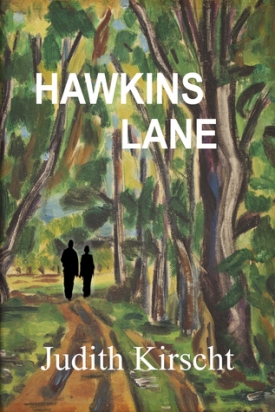
  • HAWKINS LANE, by Judith Kirscht, a literary romantic mystery

    HAWKINS LANE, by Judith Kirscht, a literary romantic mystery

    Judith Kirscht has penned a poignant story of two good people who struggle to escape their past and carve out a fulfilling life together. At its very core, this novel asks the compelling question of whether you can overcome the influences of family, and also, whether you can survive the consequences of your own actions.

    As far as the people of the small town of McKenzie Crossing are concerned, Ned Hawkins is from the wrong side of the tracks. And that’s putting it mildly—his father is a convicted murderer, his brother an alcoholic with a violent streak. Ned has spent his entire life feeling trapped and attempting to outrun his family’s legacy.

    As Hawkins Lane opens, Ned has escaped on his daily trek into his beloved Cascade Mountains to find peace and solace.  By chance, he comes upon a young woman, Erica Romano, fishing in a creek far from town. Erica is also escaping from the demands of her family, though their circumstances are very different: Erica is the daughter of the town’s new physician and related to the rich and powerful McDonald family, owners of the local mill.

    For both, it is love at first sight. Ned has grave reservations about exposing Erica to his family and wants to protect her by keeping his distance. Erica persists, convincing him that she needs him as much as he needs her.

    Unfortunately, family almost always finds a way to impact one’s life, and depending on the family, that impact can lead to tragedy. Ned’s brother, who has been spiraling out of control ever since their father was sent to prison, ends up in trouble with the law. Erica, who is by nature a risk-taker, places herself in danger far too often, and the mountains are not always a forgiving place. However, when Ned’s father is released from jail he spreads his own brand of poison, driving deep wedges and creating divided loyalties. Erica and Ned are challenged in ways that even they could not predict nor expect.

    Hawkins Lane is an excellent and, ultimately, a redemptive story about the heart-wrenching tragedies a family can survive, and about the healing powers of nature and friendship. The characters and the story will linger long after the last page is read and you will be captivated from the first page.

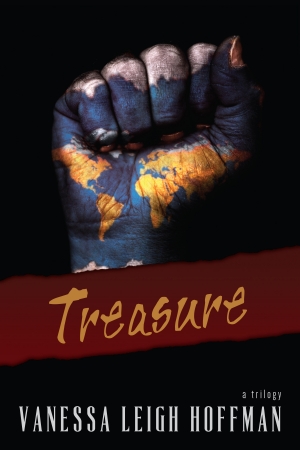
  • TREASURE: A Trilogy by Vanessa Hoffman

    TREASURE: A Trilogy by Vanessa Hoffman

    In the 1930s, a homeless, pregnant teenager dies in a New York shelter after giving birth to twin, golden-haired boys, identical in every respect except for a disfiguring birthmark. One child is adopted into a wealthy family; the other one ends up in an orphanage. Kenneth grows into a handsome, privileged, and self-absorbed man; Francis lives a hardscrabble life, raging against his fate and determined to one day balance the scales.

    Years later, Camille, a forty-something woman who has grown up in a loving family but has received more than her share of hard knocks in life, decides to spend the afternoon drinking in a tavern. There she meets a distinguished gentleman in his 60s, who introduces himself as Kenneth. They chat, and something clicks.

    Kenneth, a retired general from the military, owns a huge ranch and has made a vast fortune off cattle and citrus groves. For seven months, Camille dates the man of her dreams, believing that her luck has finally changed. Or has it? Is Kenneth who he says he is? For that matter, is Camille the woman Kenneth believes her to be?

    Thus begins a trilogy of absorbing stories, interconnected by fascinating characters and united by theme. Long after readers finish the book, they may find themselves reflecting on the questions Vanessa  Hoffman asks about how we lead our lives.

    Are our important life decisions the product of how we were raised by our parents? Or are they more heavily influenced by the instinct to survive? And once we make unethical choices, do we rationalize them and ignore any feelings of guilt? Ultimately, will we pay for our bad decisions, or will we skate through life, able to ignore the damage done to others?

    The people who populate Hoffman’s novel are neither wholly good nor wholly bad; but are merely victims of life’s vagaries. They are ordinary people, innocent, vulnerable victims, the self-absorbed and privileged, Irish Mafia bosses, and criminals in league with Jihadists. They have—in some cases—lucked out by an accident of birth, but in other cases, had to struggle to overcome daunting obstacles. All have made questionable, life-altering choices.

    Time and again, Ms. Hoffman draws a picture of a person who, had circumstances been different, might’ve made different decisions. In each case, Ms. Hoffman asks the question; will they suffer the consequences of their actions? Some readers may find Hoffman’s tone occasionally a tad preachy. However, the intriguing characters and the interwoven stories of suspense and political intrigue will remain with readers long after they finish the book.  Treasure: A Trilogy  raises important questions about the ways in which we live our lives. An engrossing and fascinating novel!