Tag: Literary

  • HEART-SCARRED by Theo Czuk – Literary Western, Coming of Age

    HEART-SCARRED by Theo Czuk – Literary Western, Coming of Age

    Author Theo Czuk provides a refreshing wave of storytelling in his award-winning literary Western debut novel, Heart-Scarred.

    Rory Casso works as a shotgun freighter with the Pinkerton Detective Agency alongside his partner, Juke Bauque, running capital (i.e., money, furs, gold) up and down the Platte for the Reynolds Savings and Loan payroll. Because bandits lay traps along the way, the partners travel separately. Rory, who lived among the Hunkpapa Indian tribe when he was a boy, uses his skill of trail scouting to keep away from the gang. Juke may be part Native American, but he isn’t familiar with indigenous skills since he was “privately tutored and socially cultured.”

    Enter Bronwyn Mason, a childhood friend of Rory’s who plans to open the first one-room school house in Rawlings. Although she hasn’t seen Rory in years, Bronwyn is relieved to meet Rory’s partner, Juke so that she can hire him to be one of her drivers to transport three wagon loads of school material. Bronwyn’s joy about establishing a school house quickly turns to sorrow when she hears that the Thompson gang murdered her father, the esteemed Marshal Isham Mason. Even though she is grief-stricken, she is determined to fulfill her mission. Bronwyn’s traveling band faces various calamities en route, especially when they get held up by Indian warriors. What she doesn’t expect is that the person who comes to the rescue is none other than Rory. Romance blooms between the childhood friends and all appears to go well until the Thompson gang catches up with them.

    Western enthusiasts in search of a refreshing take on their favorite genre have much to look forward to in Czuk’s award-winning novel. Czuk adds verisimilitude to his story by incorporating a host of realistic characters. Veering away from stereotypes, Czuk presents protagonists that mimic the educational and societal waves taking place during the mid to late 1800s.

    Czuk creates three different people from three different educational backgrounds. Rory is a white man whose comes from a dysfunctional home but finds stability living among Native Americans. Juke, who is half black and half Native American, is brought up in the cultural surroundings of Boston—the antithesis of what would traditionally come out of western tribes. Bronwyn—who learned everything she needed to know about life through her father—in many respects reflects an “Annie Oakley” figure, but much more feminine.

    There is more to the Old West than being chock-full of rough and tough characters. Much of the gruff personas came from merely surviving day to day. Czuk aptly weaves in plenty of historical information that shines a light on the differences of what life was like between the eastern and western territories. While pointing out Native American history (including connections with Ireland during the Great Potato Famine), Czuk gives attention to education, or the lack thereof, especially in the West, and thus Bronwyn’s desire to develop a one-room schoolhouse.

    Czuk offers a well-balanced mix of storytelling, history, engaging dialogue, and thought-provoking themes that go beyond the good, bad and the ugly in his novel, “Heart-Scarred.”
  • THE LAST OUTRAGEOUS WOMAN by Jessica Stone – Contemporary Women’s Fiction

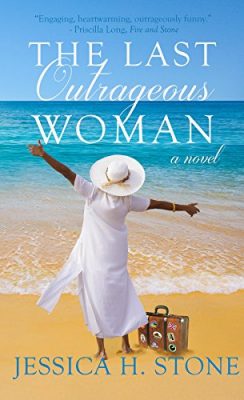
    THE LAST OUTRAGEOUS WOMAN by Jessica Stone – Contemporary Women’s Fiction

    Life is meant for living – outrageously in Jessica Stone’s latest novel, The Last Outrageous Woman.

    Eighty-six-year-old Mattie’s life is dwindling away at Florida’s Restful Palms Retirement facility but she has a plan—an outrageous plan. And it just might work. Taking advantage of a crisis situation, Mattie tricks a staff member into signing a release paper that will be their ticket out.

    Each woman has a secret longing to be fulfilled. For Mattie, it’s a sea voyage as described to her by a long-lost lover; food-obsessed Dolores wants to honor her Irish heritage by kissing the Blarney Stone; quiet, easily dominated Edna has a dream of riding a camel—in Egypt; Rose never got to say goodbye, her way, to her deceased brother buried somewhere in Wisconsin; and Helen remembers how her two sons, both killed in military service, loved Australia, leaving her with the desire to go there and pet a kangaroo.

    To accomplish their mad scheme, the women who will become known to the world as “the grannies” enlist the help of Edna’s young bohemian niece Katie, who will make connections for them—not just on flights, but with people in all the places they touch down. Sneaking out of Restful Palms with passports and very little luggage (they share necessities and take only one change of clothing each) the grannies head first for Wisconsin.

    By the time they reach Ireland they have become a phenomenon on Facebook, and once their trek takes them to Australia, they have hundreds of thousands of “friends” who watch their exploits and cheer them on via YouTube. They become so admired by global social media fans that a dance is invented in their name, hoisting them to overnight Facebook fame—even though none of them quite understand what Facebook is, or even exactly how to use a cell phone.

    But not all their adventures are fun. The grannies are hunted by a pair of greedy sisters trying to make sure their aging mother does not waste “their” inheritance and are swindled by con men who see them as easy marks. Their ramblings wind down in Cairo, but the reader senses that for Mattie, the “last outrageous woman,” the trip will never really end.

    Each woman finds what she seeks, but in ways very different than anticipated, in this rollicking tale of spirit and spunk. One of them enjoys true love for the first time; one will get long-sought revenge; one will find herself while getting lost; one will let the experience of reunion with her departed loved ones carry her away; and Mattie will discover that the sea can have a far different look and meaning than she had expected.

    Told by best-selling author (Doggy on Deck) Jessica H. Stone, The Last Outrageous Woman transports the reader along with the grannies, to exotic locales that Stone herself has explored. Both a skilled and imaginative writer, the author surely knows that her own exploits, borrowed for this amusing, fast-paced yarn, would give her the well-earned title of “outrageous woman.”

    She also deserves extra kudos for showing that older folks are still fully human—capable of dancing, loving and celebrating life—while not side-stepping some of the undeniable pitfalls of aging—aches, fears, and memory loss.

    Five run-away grannies prove that dreams are worth pursuing, life is worth celebrating, and you’re never too old for true love in Jessica H. Stone’s engagingly fun and poignant tale of women pursuing their hopes and dreams in spite of society’s so-called best intentions.

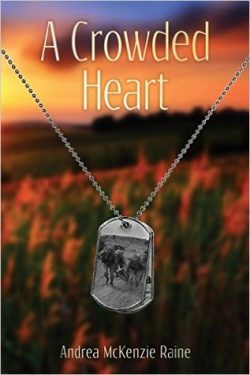
  • A CROWDED HEART by Andrea McKenzie Raine – Literary, Historical Fiction, Veteran/PTSD

    A CROWDED HEART by Andrea McKenzie Raine – Literary, Historical Fiction, Veteran/PTSD

    Willis Hancocks survives fighting in Western Europe during World War II but faces continuing battles of the mind at war’s end in Andrea McKenzie Raine’s poignant study of the plight of the former soldier in her historical novel, A Crowded Heart.

    Willis decides to remain in London rather than return to his native Canada where his parents and sister live near Vancouver. Eager to put the war behind him, he marries Ellie, an intelligent young woman who has studied art at Cambridge University. Her affluent parents approve of Willis, and her father offers to finance his new son-in-law’s study of law at Cambridge. The newlyweds’ future could not look rosier.

    This is, however, the story of a man who is haunted by the terrors of the battlefield. Life cannot proceed smoothly for someone who wakes from sleep in terror, who is plagued by survivor guilt, anxiety, and depression. Willis struggles to find his footing but repeatedly fails as he fights personal battles with alcohol, infidelity, and deception.

    Admittedly, these are poor weapons of choice to face the daily struggle of postwar life, and although he has periods of relative calm and sobriety, his sins and regrets continue to multiply. He recognizes his inadequacies as a husband and a father of two sons, one born out of wedlock to a mistress. Although Willis manages to earn his degree in law and launch a practice with his war buddy, Sam, he is never victorious at achieving inner peace.

    Raine wisely expands the narrative of the novel to reveal the wide net of war. Willis is not the only victim; the people in his life experience the after-shocks of fighting as well. Ellie is a dutiful wife but she is alone in her marriage, painting in secret because she can’t share her work with her emotionally remote, often absent husband. Willis spends years away from his family in Canada, neglecting them, and returns only when summoned after his mother’s death. He doesn’t engage with either of his sons and arranges to abandon the younger one altogether. It’s clear that the war will leave its mark on the next generation as well.

    The ending of the novel is not surprising, but it is powerful and deeply affecting. One is left thinking of all the soldiers who escape death but are nonetheless robbed of their lives. Standing beside them are loving, distraught family members and friends, people who fervently hope for a cure – some miracle that will return traumatized veterans to their former selves. Not to give up on those who have already given up on themselves is the challenge. Raine reminds us that doing so requires a full heart, indeed, a crowded heart.

    5 Star Best Book Chanticleer Reviews round silver sticker

  • ASTROLOGER’S PROOF by David John Jaegers – Metaphysical Techno-Thriller Fiction

    ASTROLOGER’S PROOF by David John Jaegers – Metaphysical Techno-Thriller Fiction

    David John Jaegers’ Astrologer’s Proof is all about the steps leading to utopia, involving both ephemeral and cosmic mechanisms, balancing on the edge of an ethical paradox.

    The science fiction/fantasy author Orson Scott Card wrote a book titled “Characters & Viewpoint” in which he posited that all novels divide broadly into four different story types: Milieu, Idea, Character, and Event. He dubbed these categories the “MICE” Quotient, and each sets up specific expectations in the reader.

    Within that framework, Astrologer’s Proof qualifies as an Idea novel. It is Book 2 of the Astro-theologian Series, a metaphysical techno-thriller trilogy in which a Big Idea is explored.

    What’s the Big Idea? Simply put, it’s the search for an empirical proof that astrology is a valid science that defines and guides human nature and destiny, dovetailing with all religions into a unified cosmic truth that can positively change the world.

    That’s a lofty promise which author David John Jaegers delivers.

    Of course, proving the premise takes serious work – and a lot of illegal maneuvers to gather the necessary data. Astrologer’s Proof thus becomes an end-justifies-the-means story, where honest, moral, well-intentioned philanthropists break laws, invade privacy, deceive their loved ones, and establish front organizations, all to gather the information they need to demonstrate they’re right—in scientific, indisputable terms.

    Some series fiction forms the continuing adventures of one or more characters. Astrologer’s Proof, conversely, is the middle segment of a grand epic covering the Big Idea. Book 1 (Astrologer’s Apprentice) establishes the situation and players; Book 2 (Astrologer’s Proof) describes the process of making the Big Idea happen, and Book 3 (A Virtual Life) will reveal the repercussions. In other words, this book is the fat juicy middle of a delicious Po-boy, worth every bit of effort to digest.

    In Astrologer’s Proof, Jaegers unfolds the Big Idea and patiently tells us how it is transformed into action. Here the author demonstrates his depth of knowledge with the material and impresses the reader with the story’s thoroughness, technical veracity, rationality, and fascinating possibilities.

    In many ways, this book is an experimental novel, with the traditional elements of storytelling over-arching the trilogy, spreading across multiple characters in the telling. Jaegers brings his skill to the forefront here and invites his audience deeper, into a complex world that he skillfully weaves.

    For sophisticated readers who yearn for a multifariously inspired scenario that stretches the psychic mind and challenges beliefs, look no further. Astrologer’s Proof is your perfect match. This is a story with exceptional intelligence and visionary quality. It cleaves to the author’s heart, and those who read the book will be affected by its positive energy.

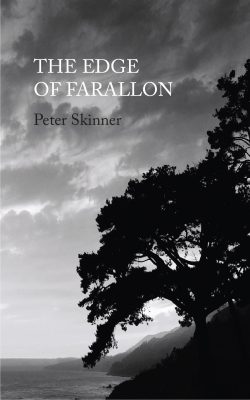
  • The EDGE of FARALLON by Peter Skinner – Literary, Thriller/Suspense

    The EDGE of FARALLON by Peter Skinner – Literary, Thriller/Suspense

    Sam came to Jade Cove to kill someone. The question is who.

    A mountain lion refuses to leave Big Sur’s ferocious coast while a family on the brink of foreclosure clings to their land. But the real danger might not be what Lulu Willis or her uncle Angus expects. Enter Sam a man with a checkered past, a significant stint in the military, and, at present, marred with PTSD and alcoholism. Lulu suspects that Sam is there to kill her ailing uncle and she will do anything to stop him, even if it means killing Sam.  However, as the wind continues to shift along the coast, it becomes apparent that Lulu’s volatility and past issues might bring everyone, including Sam, further to Farallon’s edges.

    As a playwright, Skinner (The Bells of Moses Henry, White Buffalo) uses words and dialogue in an undoubtedly poetic way. The dialogue, in particular, is intricately varied—snappy one minute and lyrical the next. It provides each character with their own unique thumbprint, with each fighting a different set of demons. Angus’s dementia, Sam’s grapple with humanity, and Lulu’s struggle toward forgiveness all tie together in a tangled mosaic that makes any type of resolution seem improbable.

    In addition, Skinner’s skillful use of imagery and metaphor gives both his characters and setting a delicious complexity. This is especially true in the descriptions of local flora and fauna, including “wandering micro-plates,” “tide pools ripe with purpose,” “a Steller’s Jay with deep blue feathers” and even a “phalanx of rusty mailboxes.” Readers will completely immerse themselves in these textures, especially since Skinner reintroduces plot threads with just enough variance to keep readers guessing.

    From a suspense standpoint, Skinner includes just enough detail to keep readers intrigued, while not revealing too many clues at once. This sprinkling of detail ratchets up the tension and makes it impossible for the reader to put the book down. And while the language and implications can become a bit esoteric at times, the twists and turns, shifting points of view, and varying textures will keep readers engaged.

    With traces of Gothic flare, Peter Skinner’s The Edge of Farallon is a brilliantly dark and satisfying read, exposing truths about family, life, and death. A story for those looking for complex character development, unique imagery, and a breathless plot.

    Additional Note from Reviewer: Those interested in the dialogue might also think about reading the play version, available on Skinner’s website.

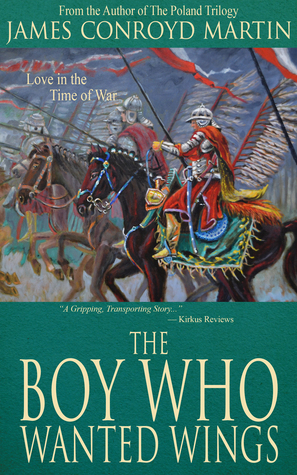
  • The BOY WHO WANTED WINGS by James Conroyd Martin – Medieval Historical Fiction, War/Military, European

    The BOY WHO WANTED WINGS by James Conroyd Martin – Medieval Historical Fiction, War/Military, European

    A suspenseful and often overlooked chapter in history, the siege of Vienna in the late 17th century is the subject of James Conroyd Martin’s masterful novel, The Boy Who Wanted Wings.

    Although Poland’s involvement in the protection of the city from the invading Turks is the mainstay of the book, Martin widens the breadth of his study to underscore the multinational effort undertaken to halt the spread of Islam, providing meticulously researched details about the allied forces of the Saxons, Franconians, and Bavarians uniting to halt the siege of the Ottomans and Crimean Tatars*.  Although this is a work of fiction, to the author’s credit, the wealth of historical information provided is beyond impressive.  Most helpful is the glossary of Polish cultural and military terms of the time at the outset of the book.

    The reader navigates this chapter in Europe’s past with Aleksy Gazdecki, a boy on the verge of manhood whose personal past and present circumstances present no end of identity issues.  A Tatar by birth, he was orphaned as an infant and raised by a Polish peasant family, tenants of Lord Halicki.  Aleksy’s swarthy complexion and dark, almond-shaped eyes cause him to stand out amongst the Poles and ultimately be treated with suspicion.  He longs to join the Winged Hussars, the elite branch of the Polish military whose legendary skills with seventeen-foot-long lances are announced by a uniform that includes “wings.”  Although he trains with a former soldier, currently a stablemaster, Aleksy knows how futile his dream is since only men of noble birth can become Winged Hussars.

    Amidst the military drama is, of course, personal drama.  Aleksy has a chance encounter with the beautiful Krystyna, Lord Halicki’s daughter, and the two engage in a dangerous, secretive romance, jumping the hurdles presented by her family, who are determined to see her married to a wealthy noble, as well as confronting the escalating war at hand. Krystyna’s brothers, the sweet Marek and the haughty, vengeful Roman, will cross paths with Aleksy again and again since he follows them into battle as Marek’s “retainer.”

    Just as Aleksy sought to overcome the circumstances of his birth in his romantic life, he will do so also on the battlefield. Ironically, his Tatar heritage gives him the opportunity to save a life, a very important life, and the resulting events put Krystyna within his reach. Martin takes no shortcuts and keeps the reader guessing with a long list of characters and numerous plots twists all carried out with exquisite pacing.

    Despite the triumph of the Poles, Martin deftly explores the addictive nature of bloodlust and the true consequences of war. Aleksy is exhausted and saddened by the killing and able to transcend nationalistic feelings.  He has killed men, regardless of where they’re from or what faith they practice. It’s an apt observation from a Tatar who has lived his life amongst a people other than his own, a Tatar who has tried to be the most loyal subject of Poland.

    This is a novel with staying power.  Given the geopolitical situations in the world today, the author reminds us that war has a long and bloody history, and political alliances are intricately tied to this history. James Conroyd Martin’s The Boy Who Wanted Wings will make one most glad for the opportunity to spend time in the 17th century.

    *Alternate spelling: Tartar

    This book is also available in Softcover (ISBN-13: 978-0997894509) and Hardcover (ISBN-13: 978-0997894516)

    5 Star Best Book Chanticleer Reviews round silver sticker


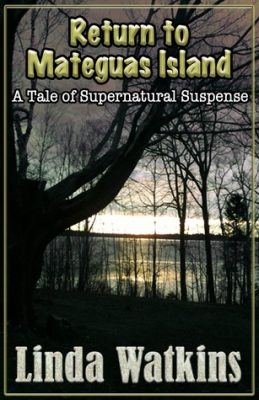
  • RETURN to MATEGUAS ISLAND by Linda Watkins – Literary Thriller/Paranormal/Occult

    RETURN to MATEGUAS ISLAND by Linda Watkins – Literary Thriller/Paranormal/Occult

    Return to Mateguas Island picks right up with the same intrigue, suspense, drama and mystery that Mateguas Island contained. A page turner from the beginning, this is a tale you will not want to walk away from. The story begins years later with, Karen Anderson along with her new husband Dex and her two teenage daughters returning to the island. Karen goes quite reluctantly, but daughters, Sophie and Terri, are on a mission to find out the truth about their father who went missing and subsequently declared dead.

    Return to Mateguas Island would fit nicely in the supernatural genre but has enough suspense throughout to lean toward this genre as well. This mixture of the two genres makes the story more complex and holds the reader’s interest throughout.

    In this second novel, author Linda Watkins has already established and developed her characters and yet goes deeper into development within these pages. The books do stand alone, but to get a full picture, it is advised to start at the beginning with Mateguas Island to fill in backstory and ascertain each character’s story arch as the tale continues.

    This story answers many of the questions from the first book. By the end of Return to Mateguas Island, however, you are left with just as many new questions and just as hungry for a third installment.

    Upon their return, Karen and the girls find the island relatively unchanged from the day they had left it behind. A day Karen hoped would have been the last they would see of this mysterious venue. The memories were too painful and too jarring for Karen and this quickly bubbled to the surface. As with the previous book, there is something just beneath the surface of things that happen on the island, subsequently, as readers dig into the second book, they will find themselves in a familiar environment.

    The story unfolds rather quickly as Karen once again displays odd behavior as the family returns to their old home. The intense story continues as a well-paced read with many twists and turns. The book holds its own next to the first novel and carries the tale, skillfully and smartly weaving in events that serve to whet readers appetites for the third book.

    High suspense and flashes of horror beckon American Gothic readers to Return to Mateguas Island, the second book in Linda Watkins trilogy –a stunning success leaving readers posed in anticipation for the next installment.

    5 Star Best Book Chanticleer Reviews round silver sticker

  • The SOMERSET Awards for Contemporary & Literary Fiction 2016 First Place Category Winners

    The SOMERSET Awards for Contemporary & Literary Fiction 2016 First Place Category Winners

    The SMainstream Contemporary Fiction Awardsomerset Awards Writing Competition recognizes emerging new talent and outstanding works in the genre of  Contemporary and Literary Fiction. The SOMERSET Awards is a division of Chanticleer International Novel Writing Competitions.


    Congratulations to the 2016 SOMERSET Awards First In Category Award Winning Contemporary/Literary Fiction Novels:

    • SOMERSET AWARD WINNERS: Meghan Clancy, Justin Bog, Annaliese Darr, Debu Majumdar, Fire Chief John J. Mandeville Alexander Boldizar, Bernard Manheim, M.D.

      Social/Psychological Themes: Wake Me Up by Justin Bog

    • Women’s Fiction: Believe by Annaliese Darr
    • Manuscript: Chhori by Megan A. Clancy
    • Adventure/Suspense: Sacred River by Debu Majumdar
    • Satire/Allegorical: The Ugly by Alexander Boldizar
    • Literary: Everydoctor by Bernard Mansheim
    • Connections: The Fox, Mike, Hilda, and the Green Emerald Cafe Inferno by Chief John J. Mandeville
    • Action/Adventure: The Improbable Journeys of Billy Battles: Book 2, Finding Billy Battles Trilogy by Ronald E. Yates

    CONGRATULATIONS to  Alexander Boldizar author of the SOMERSET GRAND PRIZE winner — The Ugly!

    And UBER CONGRATULATIONS to Alexander Boldizar for The UGLY taking home the OVERALL BEST BOOK for the 2016 Chanticleer International Writing Competitions – The Overall Grand Prize Winner!

    This is the second time that the Somerset Grand Prize Winner has taken home the Overall Grand Prize Ribbon!

    The 2016 SOMERSET Short-Listers competed for these First Place Category Positions. These First Place Category Award Winners’ novels have competed for the SOMERSET Grand Prize Award for the 2016 Contemporary and Literary Fiction. These winners were announced and recognized at the annual Chanticleer Authors Conference and Awards Gala, Bellingham, Wash., on April 1st, 2017.

    The First In Category award winning titles will receive an award package including a complimentary Chanticleer Book Review of the winning title, digital award badges, shelf talkers, book stickers, and more.

    Congratulations to those whose works made the SOMERSET Awards 2016 FINALISTS and SHORT-LISTERS lists.

    We are now accepting entries into the 2017 SOMERSET Awards. The deadline is November 30th, 2017  Click here for more information or to enter.

    More than $30,000 worth of cash and prizes will be awarded to the 2017 Chanticleer Novel Writing Competition winners! Fifteen different  genres to enter your novels and compete on an international level.


  • The Other La Bohème by Yorker Keith – Contemporary, Literary, Opera

    The Other La Bohème by Yorker Keith – Contemporary, Literary, Opera

    Life is as complicated as an opera performance in Yorker Keith’s new literary work, The Other La Bohème. The setting is modern-day Manhattan, complete with a café that showcases singing wait staff and doubles as an art gallery, studio apartments full of painters and poets, and surprise performances are sung in Italian.

    The Dolci Quattro, a group of four friends intent on making it in the challenging world of professional opera, is determined to stage a different version of this well-known work, doing everything they can to support each other when motivation is hardest to find. Luckily for them, wealthy patrons and loving family are always closer than they imagine.

    Keith takes his novel into the realm of opera itself in many ways. The most obvious how the book is formatted – and the reader will notice this quickly, with each chapter heading listed as a “scene” and the book itself divided into “Acts.” And like any good opening scene, we meet the major characters immediately.

    Four singers have been friends since college days and have dubbed themselves The Dolci Quattro, the sweet four. It’s through their singing, often in Italian and always translated, that readers who have no familiarity with this art form will be able to see its enduring legacy and relevance to modern life. Whatever personal situation arises, at least one of the four has an aria to help express the emotion.

    By Keith using this technique opera, itself, takes center stage. Dialogue often swirls around what it means to sing or be a singer, becoming technical at times, yet exploring the emotional and physical demands of the profession, while descriptive passages can encompass many of the main characters at once, mimicking the most enlightening program notes.

    Similarly, the main story line of The Dolci Quattro’s attempt to successfully stage a lesser version of the most famous opera performed in America, Puccini’s La Bohème, by performing the work of the same name composed by the lesser known Leoncavallo, echoes their frustrations as individual vocal artists. They are starting from near obscurity, each working in poverty–what was once referred to as Bohemia– but with passionate and undeniable talent.

    Their gamble of performing a nearly unknown variation of the opera mirrors the often-difficult choices and explanations each character faces about their futures and their professional careers. Like many an opera production as well, the reader is asked to accept life for the Dolci Quattro in all of its most broad and painted strokes.

    Tragedies are short-lived, triumphs universal, offering us all a glimpse into the unique world of lead singers and understudies and what it takes to make it to the top in a competitive field.  In the repeated refrain of The Dolci Quattro, Keith’s work urges all of us to “Sing On!”

    5 Star Best Book Chanticleer Reviews round silver sticker

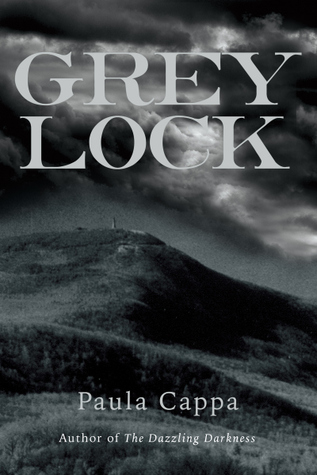
  • Greylock by Paula Cappa – Mystery/Thriller/Paranormal

    Greylock by Paula Cappa – Mystery/Thriller/Paranormal

    What’s in the music we create? When we say it lives – when we say it breathes – when, for one fleeting moment it seems to bridge the gap between one soul and another – what kind of existence does it assume? What does it feel? What does it think? What does it want? Such questions may reside in theory for most, but not for piano virtuoso Alexei Georg in Paula Cappa’s Greylock.

    Hot off the release of what will surely be his magnum opus, October, Alexei has achieved the level of success found only in his wildest dreams. Hailing from a Russian family steeped in musical artistry, he has transcended all those before him and become something they never could: a legend. And that’s all thanks to October.

    There’s only one problem: he didn’t compose it.

    And that would have been fine for him, taking credit for pages found in an antique chest belonging to one of his ancestors, if it weren’t for the demons it conjured every time he plays those chords. If it weren’t for the shadowy figure haunting him, punishing him, coming for him. October may have surfaced through the Georg bloodline, but there is something far more sinister and mysterious hidden in each note that is threatening to break free from Alexei’s control.

    Alexei wants nothing more than to move on, but the past will not let him. Add to his troubles the threat of fraud exposure from those he’s closest to and a string of grisly murders within the Boston music community that brings the police knocking on his door, he can only come to realize just how much October is at the center of it all. He’ll have to confront three generations worth of Georg family demons to overcome this evil before it claims everything he has and hopes to achieve.

    Using music as a central motif and life force to drive the narrative, Paula Cappa defies the limitations of the written word and adds a new dimension in storytelling through the personification of music. The descriptions being so richly layered and animated, one might just imagine these nightmares dwelling in the punctuation, awaiting their chance to come alive themselves.

    With just enough integral characters in place to create conflict, Cappa creates a compelling mystery that allows the reader to virtually hear the machinations of the plot grind away before they inevitably crank up to a satisfying crescendo.

    5 Star Best Book Chanticleer Reviews round silver sticker