Tag: Literary

  • The ONE APART by Justine Avery – Metaphysical & Visionary, Literary, Family Saga

    The ONE APART by Justine Avery – Metaphysical & Visionary, Literary, Family Saga

    A perfect blend of realism, fantasy, and deep spirituality awaits those who open Justine Avery’s novel, The One Apart. It is what readers bring to the novel – faiths, belief systems, philosophical dilemmas – that will influence and shape their perceptions of this fascinating and compelling read. Avery’s book, like life, is full of instruction for those who want to be fully aware.

    Aware of what?

    Everything—including awareness itself.

    This is certainly the case for the main character, Aaron, a remarkable boy who lives with his mother, Sancha, and his grandmother, Maria. Although she’d planned to give Aaron up for adoption, Sancha bonds so deeply with her son at birth that she can’t fathom life without him. His grandmother realizes his uniqueness, too, as the newborn communicates with her through blinking his eyes. He makes astonishing progress through developmental milestones, walking and reading within the first months of life.

    As a toddler, he speaks with the wisdom of a timeless soul. Maria suspects that these physical and mental feats indicate that her grandson is chosen for a special purpose, but she hopes he’ll live as normal a life as possible. He’s distracted, however, by a malevolence that only he can see.  As Aaron comes of age, he strives to act normal and blend in, but his very few close friends and girlfriend notice his preoccupation, his never being fully present in this world.

    There’s a reason for Aaron’s constant distraction, for his never feeling a part of this life; he is connected to “the Apart,” the other-worldly dimension that is both removed from human existence, “corporeality,” but ever at hand. Since childhood, he has sensed that his true name is Tres and that his existence as Aaron is somewhat play-acting. His hyper-awareness alerts him to his “OnLooker,” a sort of guardian angel who’s a liaison between Aaron and the sagacious luminary beings of the Apart that consult and advise on Aaron’s tutelage.

    Much of the book involves Aaron learning, with the instruction of his OnLooker, how to fully experience awareness, to understand that every moment is this moment despite previous lives and the variety of life’s experiences. At a critical juncture in the novel, Aaron is given a choice, one that will impact his own existence dramatically but also that of all other beings. The author adroitly merges Aaron’s worldly existence and his relation to the realm of the Apart in a poignant and satisfying conclusion to the novel.

    This is a quiet book, one that allows the reader the time and space to experience life with its main characters. The stillness is at times deeply peaceful, at other times eerie and ominous. The novel illustrates the power of compassion and empathy, but also the chilling consequences when power is exercised for self-serving purposes.

    While the character of Aaron has similarities to various religious and mythic figures, the author has also imbued him with a uniqueness and a relevance to our times. This book will stay with you long after you finish it, a hallmark of excellent literature. Justine Avery’s The One Apart inspires deep contemplation of self, community, and individual and collective purpose.


     

  • SACRED RIVER: a HIMALAYAN JOURNEY by Debu Majumdar – Mystery, Literary, Multicultural, Spiritual Journey

    SACRED RIVER: a HIMALAYAN JOURNEY by Debu Majumdar – Mystery, Literary, Multicultural, Spiritual Journey

    A tour de force of India’s history, religion, culture, philosophy, anthropology, sociology, and politics are neatly packaged as a mystery, await the lucky readers of Debu Majumdar’s latest novel, Sacred River: A Himalayan Journey. All elements of this foundational novel are experienced through a well-developed cast of characters, wealthy and poor, educated and illiterate, as they make pilgrimages to the source of Ganges River.

    The River itself is a character in that it exerts the greatest influence on those who travel to its origin in the Himalayan mountains. In its waters, truths are revealed, and those who ponder its depths must acknowledge how they have lived their lives. The Ganges is the great equalizer; she washes the indigent and the affluent alike. Characters learn that money cannot buy enlightenment, and those who have lived the simplest lives may be much further down the spiritual path than those who’ve had every material advantage.

    Majumdar does a splendid job of giving each character a complete history before individual plots merge into a full and rich narrative. It’s as if he has taken tributaries of a river and studied their routes before entwining them with the flow, force, and beauty of a majestic river. From bonded servant to landed gentry, foreigner to outcast, all will be deeply affected by their journeys.

    This is the set up to a fascinating mystery. It unfolds as the reader learns about the SMS, the Sarva Mangal Society, a philanthropic organization that advocates education for all Indians and the removal of social barriers. Its staff believes that implementing the ancient ideals of India will lay the foundation for a new society, one in which the constant injustices done to the poor will finally halt. Its chief financial officer, Sevanathan Chetti, despairs, however, as to whether enough funds can be raised to continue its important work. He and his associate wonder where the wealth of India has gone. As speculation of a golden hoard hidden in the sacred temples arises, Chetti and his associate scheme to locate and plunder treasure for a noble cause.

    An engrossing and tense subplot unfurls, one that will ensnare a temple swami along with some of the pilgrims to the Ganges. This adventure, which culminates in an enormously suspenseful climax, is an effective counterpoint to the serene and meditative aspects of the novel.

    Majumdar’s prose is rich and spectacularly vivid. Locations are very important in this novel, and his descriptive writing is superb. Readers will feel they are in a marketplace, on the side of the mountain, in a temple, and bathed in light and water. Especially lovely are the passages noting religious rituals and the spiritual significance of the Ganges. The author weaves in Indian legends and morality stories, artfully juxtaposing parallels between ancient tales and his characters’ modern lives. There’s such a breadth of consideration for every aspect of Indian culture that it’s easy to imagine this novel being included on college syllabi for classes related to Hinduism.

    This book is a must-read for anyone with interest in Indian life and culture. Indeed, the author joyfully admits that one could read the book as a travelogue, and we agree! When readers finish this novel, we predict they will experience a deep longing to journey to the Himalayas to see “the maiden in the mountains,” that most sacred river, the Ganges.


    “Money cannot buy enlightenment, but for those who struggle to reclaim one nation’s equality, gold is the currency that will drive two overzealous men on a journey to uncover hidden treasure for the benefit of all. A rich and spectacularly vivid, multi-faceted literary mystery for seekers and skeptics alike.”  – Chanticleer Reviews

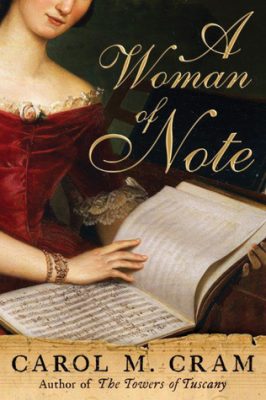
  • A WOMAN of NOTE by Carol Cram – Historical Fiction, Literary, Vienna

    A WOMAN of NOTE by Carol Cram – Historical Fiction, Literary, Vienna

    Isabette Gruber is in a panic. If only her sister were still with her to steady her hands on the keyboard as she plays Beethoven’s Eighth Sonata, known as the “Pathetique,” in her first public concert at Vienna’s Hofburg Palace. Then she hears Johanna’s voice in her head, and her poise and confidence return. The nineteen-year-old Isabette raises her hands, shapes her fingers above the keyboard, and launches into the “Pathetique.” Her powerful performance thrills the audience, whose applause continues through a third bow, and does honor to its composer, Ludwig van Beethoven, whose funeral took place in Vienna that very day, March 29, 1827.

    Filling Isabette’s heart more than the applause, however, are the words of praise from her beautiful, new American friend, eighteen-year-old Amelia Mason, who received four bows for her extraordinary vocal performance. Afterward, Amelia asks the young virtuoso pianist to become her accompanist. Isabette is eager to hear more about this enticing proposition, but Mama arrives with her cloak. Herr Dietrich (her indecorous manager) is waiting with their carriage. “Hurry, Isabette!”

    In A Woman of Note, Carol Cram has crafted a second brilliant female artist, this time a pianist and composer in 19th-century Vienna. Isabette must fight to establish her position in the male-dominated European world of classical music, much as Cram’s Sofia had to do in 14th-century Italy’s world of painting, in The Towers of Tuscany (2014). Cram’s precise, colorful writing enables us to hear the young Isabette playing the “Pathetique” in Hofburg Palace, see her enjoying a stroll with Amelia in the Prater, feel her pain over the loss of father and sister, and appreciate her determined efforts to convince music publisher Herr Weissel to accept her compositions, under the pseudonym of Anson Kruetzer. (Weissel roars with laughter, but agrees!)

    Once home from the Hofburg, Isabette thinks back to her practice session that morning in the small, dusty parlor of the apartment where she lives with her mother. With a heavy heart, she remembers what a happy home this had been when her sister Johanna and she shared both a talent and a love for music and were skillfully taught to play and compose by their proud father. Now Papa is dead, Johanna is in an asylum, and Mama seems to think of Isabette more as a means to an income than as her younger daughter. The tall, lanky girl with a plain face and dull, straight hair never gives a thought to her social life or the possibility of marriage and children. Her every moment is devoted to practicing. Tonight, though, she thinks of a new life with Amelia in it. Soon, they are together every day practicing, but also developing their friendship as they go for long walks around Vienna.

    When piano teacher Josef Hauser, who fancies himself a superior composer, meets the two young women, the story’s complexity grows. Josef is enamored with Amelia’s beauty but enthralled with Isabette’s talent. (In fact, he agrees to become her teacher if she revises his compositions so they will be accepted for publication.) Isabette treasures every minute she spends with the vibrant, cheerful Amelia, but feels uncomfortable when Amelia strokes her arms and kisses her neck. Amelia is jealous of Josef’s attention to Isabette during her piano lessons. Isabette realizes she could love Josef but knows that he is passionate about Amelia and could never feel that way about her. Then Josef’s flutist/poet friend Daniel Leitner joins the threesome. Gentleman that he is, he maintains a discreet distance from the ladies at least for a time.

    Readers will love Carol Cram’s colorful writing and attention to the minute details of daily life at this time in European history. Even more enjoyable, however, will be finding out where her intertwining love stories lead as the characters mature. The book never loses its pace. and readers will be rapidly turning the pages until the very end.

    While the cameo appearances and mentions of such famous musicians as Johann Hummel, Carl Czerny, Franz Schubert, Fredric Chopin, Robert Schumann and his wife Clara, and Louise Farrenc are of course fictional, they add drama and reality to the story, which is based on Cram’s meticulous research. An Author’s Note provides background on actual women composers of the time and place.

    A young virtuoso pianist rises above the many musicians of her time, blazing a path of passion for music and love that is hers and hers alone in nineteenth-century Vienna.

    5 Star Best Book Chanticleer Reviews round silver sticker

  • The HARRIET CLUB: A NOVEL of SAN FRANCISCO by Kathe Maguire – Literary, Y/A Mystery/Thriller, Romance

    The HARRIET CLUB: A NOVEL of SAN FRANCISCO by Kathe Maguire – Literary, Y/A Mystery/Thriller, Romance

    In 1999, 13-year-old Virgil McCormick disappeared without a trace while waiting for the 43 Masonic bus. Thus, the Harriet Club was born, with 8-year-old Harriet, and her friends Nikki, Dahlia, and Casey, each longing to find out what happened to Virgil. Especially Harriet.

    Ten years later, new leads in the cold case have emerged, including suspicious sketches by city graffiti artist Blinky, and the “Spatterer,” someone eager to erase all Blinky’s creations. Harriet’s obsession with the case hasn’t waned, even amid her life with her two moms, two dads, and their sometimes unpredictable lifestyle. The question now is whether The Harriet Club is up to the task of closing the Virgil McCormick case once and for all, as the teenagers face college applications, neglectful parents, substance abuse, and sexual advances from older men. With a complex and diverse cast of characters and incongruous developments at every turn, The Harriet Club definitely has their work cut out for them.

    Kathe Maguire brings a dark, twisted humor to this mystery/thriller, demonstrating that in seemingly idyllic San Francisco, the city’s shadows can run deep and sinister. Maguire also does a great job of inserting local culture and color through realistic settings and dialogue. For example, Virgil’s fictional mystery is intertwined with San Francisco’s real-life cases of kidnapped children in the area, including Kevin Collins, Jaycee Dugard, and others, adding a dark and suspenseful element.

    This is a well-written and well-paced novel that will capture readers from the opening pages all the way until the end. With exquisite description and visceral imagery, the story definitely tends more on the literary rather than the commercial side, but the break-neck pacing won’t leave genre readers disappointed. There are lots of moving pieces and plots that Maguire skillfully weaves together into a compelling read.

    Although the main players in this story are teens, each with different shades of diversity, a much-needed trait in YA literature, this is not a typical YA mystery, and parents should be cautioned that the inclusion of graphic language, talk about sex, scenes of drug use, and themes makes this gritty story a selection for teens at least 16 and older. Dog lovers should also be cautioned of certain scenes involving animal violence. Regardless, this is a must-read for those looking for a compelling mystery that incorporates razor-sharp wit. Those from and in Northern California, and those who wish they were, will also relish in the book’s authentic setting and textures.

    Obsession and dedication go hand in hand in Kathe Maguire’s The Harriet Club, a hard-core Y/A mystery thriller set in the shadow of San Francisco.

    5 Star Best Book Chanticleer Reviews round silver sticker

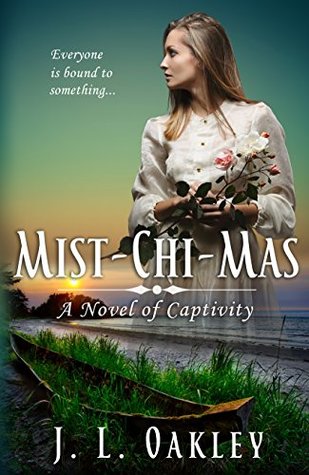
  • MIST-CHI-MAS by J.L. Oakley – Historical Fiction, Pacific Northwest, Literary

    MIST-CHI-MAS by J.L. Oakley – Historical Fiction, Pacific Northwest, Literary

    A masterful work of historical fiction that charts a deeply compelling romance set in the Pacific Northwest during the fascinating but under-reported second half of the nineteenth century. Award-winning author, Janet Oakley brings us another exceptional work from her heart, Mist-chi-mas: A Novel of Captivity.

    It is 1860 and Washington Territory is rich with a diversity of cultures. British and American military camps are posted on San Juan Island, both groups awaiting the decision of an international committee as to which country will be awarded the land. It will take more than a decade for the committee to determine what is to be the water boundary between Washington and British Columbia.

    Although a previous incident involving a shot pig almost instigated a war, at the start of the Mist-chi-mas, the two military encampments are respectful of the other’s turf and co-exist well.  There’s a bit of society in the area, ladies’ teas and picnics take place, and plenty of business dealings due to the ubiquitous presence of the Hudson Bay Company.

    In addition to the relative newcomers to the Pacific Northwest are the native peoples, a number of Indian tribes, the Haida, the Saanich, and the Songhees peoples, as well the “Kanakas,” the Hawaiians who have been here since the early nineteenth century. Attitudes toward the native peoples vary, with some being appreciative of their contributions to the shipping, trading and lime works industries, and others being condescending or outright violent towards them.

    The history of this area comes vividly to life through the romance of a widow, Jeannie Naughton, and Jonas Breed. Jeannie is the niece of the Scotsman, Archibald Campbell, a major representative of the Hudson Bay Company in the Pacific Northwest, and has arrived from England with her young son. Her reasons for beginning life anew in a foreign land are mysterious and mired in scandal.

    In contrast, everything is known about Jonas Breed, a man whose ethnic heritage and experiences reflect the geography and culture of the region. The orphan of an American trader in the South Pacific and a Welsh mother, he grew up speaking English and Hawaiian. As a youth, he was captured by the Haida and was made a “mist-chi-mas,” a slave.  After several years of servitude, he saves the life of his captor and his status changes.   He is grateful for all he has learned from the Haida, and when he asks for his freedom, it is granted. The Haida respect and trust him.

    Breed’s closest companions and friends are members of the tribal peoples, and he will prove his love and loyalty to them repeatedly. He’s as at home on land as he is on water, reads Ralph Waldo Emerson, and is certainly the most self-reliant character in the book. He may remind some of Natty Bumpo, James Fenimore Cooper’s hero in The Last of the Mohicans.

    The Americans and the British generally regard Breed with great admiration, although there are those who envy him and seek his downfall. In turn, someone threatens Jeannie with his knowledge of her hidden past. Despite this, Jeannie and Jonas find love but also tremendous danger at every turn. Jeannie comes to understand the truth of Breed’s words, “We are all mistchimas.” Some are enslaved by external forces, some by inner forces. Their relationship will prove to be as complicated and compelling as the historical events of the novel.

    J.L. Oakley deserves tremendous recognition for the clearly exhaustive and meticulous research she did in writing Mist-chi-mas. With writing so clear and vivid, Oakley brings time and place to life leaving readers captivated by her craft. She invokes the mountains and the waters with such descriptive beauty and fully creates her characters against this panoramic landscape that challenges and shapes them.

     Can love blossom between the most unlikely pair in a multi-cultural, tension-ripe environment? Author J.L. Oakley breathes life into an often forgotten part of Pacific Northwest history in her beautifully penned novel, Mist-chi-mas: A Novel of Captivity–destined to be a regional classic.

    5 Star Best Book Chanticleer Reviews round silver sticker


  • THE RABBI’S GIFT by Chuck Gould – Ancient Historical Fiction, Heartwarming Romance

    THE RABBI’S GIFT by Chuck Gould – Ancient Historical Fiction, Heartwarming Romance

    Faith and fact weave together in a beautifully rich tapestry of fiction and fantasy set in ancient times that presents plausible answers to long-standing mysteries in Chuck Gould’s The Rabbi’s Gift.

    When the wealthy merchant Eli encounters master builder Yakob and his impetuous son Yusuf in a dispute with the despotic ruler Herod, he intervenes, saving them by employing them to work on a project of his own. They will help construct a new mansion for Eli’s son, Aban, who is soon to be married.

    But what will become of Aban’s twin, Miriam? Miriam is the first-born and as custom demands, should marry first, but what man would want her? With her quick-wit, unconventional bent, and a strong rebellious streak, everyone knows she is unsuitable for the position of dutiful wife. Besides, every suitor her father presents to her, she stubbornly rejects.

    Yusuf and his father work diligently for Eli. Yusuf constructs stunning mosaic courtyard imbued with astrological and scientific significance. As the work continues, Miriam clandestinely assists Yusuf and before long, the two fall in love. Of course, such a match could never be. Miriam is wealthy, and Yusuf is only a humble tile setter. But, some prophecies and priestly visions are far more powerful than worldly considerations. What obstacles must be overcome to allow twists of faith, fate, and fortune to fall into place and open the door for the couple’s true and epic love?

    Author Chuck Gould has created a remarkable blend of Biblical characters, legends, and speculations in this star-crossed romance between Miriam and Yusuf. He depicts Miriam as a healer whose remedies are nothing short of miraculous, and Yusuf as an unschooled savant in mechanical, scientific, and philosophical knowledge. Gould also draws on a myriad of dramatic players – some of whom are firmly set in historical accounts, which serves to create a multiple viewpoint story, widening the scope of his novel without distracting the reader.

    Gould’s handling of this grand drama shows a true grasp of the writer’s craft. He deftly combines various elements from lore throughout his storytelling making The Rabbi’s Gift a powerfully rich tale. Using older spellings and secular text, along with Gould’s strategic planting of clues along the way, fortifies the story and draws the reader in.

    Babylonian astrology and Jewish mysticism combine with Roman history to create a timeless story of passion and fate in Chuck Gould’s The Rabbi’s Gift.

    5 Star Best Book Chanticleer Reviews round silver sticker

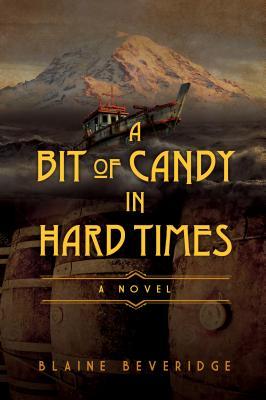
  • A BIT of CANDY in HARD TIMES by Blaine Beveridge – Historical Fiction, Political, Prohibition, Pacific Northwest

    A BIT of CANDY in HARD TIMES by Blaine Beveridge – Historical Fiction, Political, Prohibition, Pacific Northwest

    It’s midnight in May and Prohibition is the law of the land. A boat packed with Canadian liquor is racing through the waters off Portland, Maine, and a heavily-armed US Coast Guard Cutter is in hot pursuit—hungry for another kill. The smugglers are about to get paid for their sins—one way or another.

    Emmett Dougal has a penchant for working on boats the Coast Guard loves to shoot at. As he hits bottom and realizes he’s out of options, he returns to his home turf near Seattle weighed down by an identity crisis—Emmett’s a wanted man. Even his brother, a county sheriff, swears out a warrant against him. It’s hard to survive when you’re always looking over your shoulder, or your only skill sets involve fishing and smuggling. To make matters worse, he doesn’t even have a boat.

    Blaine Beveridge’s initial foray into the world of fiction is a winner with his smooth, confident, and engaging writing style. A Bit of Candy in Hard Times is set in a time where alcohol was illegal, but people wanted it more than ever and were willing to pay handsomely for it.

    Beveridge’s clever yet restrained use of syntax and vocabulary is smart, entertaining, and brings the settings, characters, and story alive, grabbing the reader immediately and never lets go. He displays real talent for crafting vivid, yet measured descriptions of the Puget Sound area, boats, fishing styles and equipment, residences of the poor to the affluent, and other items that resurrect the Prohibition era. Of note is his solid and consistent artistry crafting bright, vibrant scenes ranging from a ride at Coney Island, to a seedy bar where a man can buy bootleg beer, attending an opulent holiday celebration, or the grittiness of a dark, waterside warehouse filled with illegal liquor and suspicious clientele.

    The well-crafted characters are compellingly believable. As Beveridge trowels on the conflict his characters act, react, or rebel accordingly, adding delicious texture and tension to the story. Trust between parties can sometimes be measured in what remains in the bottle. The usual concrete line between right and wrong is about as real as the yellow brick road. Characters stagger between moral and immoral guided only by the immediate situation, mood, relationships, or the amount of money or liquor involved.

    Beveridge is an award-winning screenwriter, an alumnus of The Writer’s Program at UCLA, former Program Administrator for Film and Television at UCLA Extension, served as an executive board officer of the Pacific Northwest Writers Association, and a US Army Vietnam Veteran.

    A Bit of Candy in Hard Times starts with a bulls-eye and enthralls to the last page. It’s tough to put down, so arrange your schedule accordingly. You’ll be waiting for Beveridge’s next book.

    5 Star Best Book Chanticleer Reviews round silver sticker

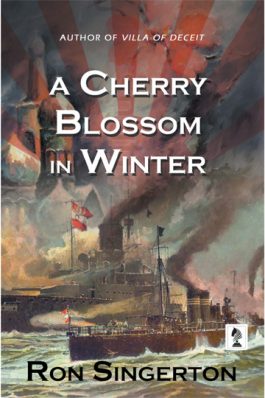
  • A CHERRY BLOSSOM in WINTER by Ron Singerton – Historical Fiction, Literary, War/Military, Romance

    A CHERRY BLOSSOM in WINTER by Ron Singerton – Historical Fiction, Literary, War/Military, Romance

    The story behind any war is a difficult one to tell. A Cherry Blossom in Winter by Ron Singerton takes us into not just one, but two, cultures at the turn of the last century in an attempt to show us both sides of a decisive naval conflict that would shape both countries and people for years to come.

    Alexei Brusilov is a young man destined for a talented future. He is bright and courageous, lightning-quick with a saber, and longs to join the Russian Naval Academy at the turn of the 20th century.  Like his father before him and many nobles of the Russian court of Tsar Nicholas II, Alexei sees his path as a military one, full of honor and discipline. Trouble always begins at home, however, as Alexei’s best friend becomes involved with Marxist revolutionaries ready to overthrow the Tsarist regime. Luckily, elements beyond his youthful control are in motion and before he can be caught for treason, Alexei will find himself in another world, another culture, and called upon to use all of his wits for the sake of love.

    Ron Singerton’s book, A Cherry Blossom in Winter, is a blending of historical and romantic fiction as we follow the young Russian Alexei to Japan and his first true test of manhood. He is there to accompany his father, Count Brusilov, a man of violent temper who disdains all things Japanese. But politics are politics, and all hints are pointing to a coming war between their two countries. It could be strategically important for young naval officers to understand Japanese in the near future, but Alexei’s goals are of a more personal nature. Readers will struggle with him as he attempts to make friends and learn the language, absorbed by the beauty and culture he sees. High Society, Religion, and Honor will all have different definitions by the time Alexei unexpectedly returns home.

    Yet the Moscow court and the Tsar have not been idle. A violent peasant revolution seems closer to reality all the time, as Alexei enters the Academy on the cusp of a family crisis. Everything seems to be on the verge of great, though not necessarily peaceful, change as the young man, now a brave naval cadet, attempts to finish school.

    In this way, Singerton’s book does a great job in presenting this pre-war time as one of both personal and national conflict.  History buffs need only go to the official record to discover the facts, the dates, and the battle locations of the Russo-Japanese war, but A Cherry Blossom in Winter works hard to make it a visceral experience. By pulling in the geopolitics of the beginning of the last century, along with developments such as the introduction of Marxist ideology, the near-collapse of Russian court nobility, anti-Jewish pogroms, the mistreatment of Russian peasants, and widespread anti-Asian sentiment, the overall effect is a slow-build to the climatic and brutal naval battle. Singerton’s use of the actual historic names for places, battle ships, and generals on both sides of the conflict also help the reader to feel right in the middle of that dangerous time. And yet the wartime reality is carefully balanced with not just one, but several love stories. Passion, whether for love or war, is keenly portrayed.

    Complex in its historical scope and list of characters, A Cherry Blossom in Winter is more successful in understanding men at war than the background love stories. This book won’t be for every romance reader as the plot points issue from exceptionally visceral entanglements – however, history buffs and those who love wartime epics will devour the read. Reminiscent of Puccini’s Madame Butterfly, readers will journey through an emotional landscape as dangerous as the raging battles themselves.

    5 Star Best Book Chanticleer Reviews round silver sticker

  • A MATTER of JUSTICE by Keith Tittle – Mystery & Suspense, Thriller

    A MATTER of JUSTICE by Keith Tittle – Mystery & Suspense, Thriller

    2016 Grand Prize Clue Awards Badge for Keith Tittle's A Matter of JusticeWhen Jefferson Dawes is called in on a cold case, he will be forced to revisit his past – both professional and personal. His old friend and former workmate Alex Burwell, now deceased, was sure that Jeff was the right man to investigate a series of suspicious “accidental” deaths, all linked directly to a trial that took place three years ago. Those deaths now include Burwell’s own mysterious demise.

    Three years ago, a nice young man with no blot on his name was imprisoned when circumstantial evidence piled up to convict him of a brutal, sexually tinged killing. He never denied the crime. He died in prison. Now the judge who tried the case, the jury foreman, and several others connected to the conviction are also dead, each lost to freak happenings: a boat explodes; a man jumps off a bridge; a body is found in a rental car.

    Tough-minded District Attorney Cynthia Orbison, who sees bonds of coincidence between the current killings and a vicious Latino drug lord she is trying to bring down, hires Jeff away from his job with a security firm and sets him up in his former workplace among her staff. He’s tasked with using his investigative skills to go through the evidence Alex compiled before he suddenly passed away. Cynthia gives Jeff a team: Samantha, or Sam, young, smart and anxious to prove herself; and Paul, a little older, seasoned and cautious. Their lives are at risk despite measures taken to keep the case under wraps. And even as they plug away at a solution, a methodical killer is stalking and slaying more hapless victims.

    Tying all the threads together will be Jeff’s job, as he examines a jumble of apparently unrelated facts. He discerns links to the Russian mafia, Latin drug cartels, and some sad but very human motivations that have remained hidden over the years. As the team gathers testimony from various witnesses, Dawes sees the circle tightening around one suspect whose deviant brilliance may yet prevent the hoped-for apprehension.

    Author Keith Tittle rings all the challenges in this complex, gripping mystery. His story combines diverse elements lending the story opportunity for multiple mayhem. Jeff Dawes is a believable hero – determined, diligent, dogged by past failures that spur him to try harder. The setting – Portland, Oregon, with its scenic natural environs makes for a variety of well-staged scenarios.

    A gripping, page-turning novel poised to entertain thriller fans across a wide spectrum. A Matter of Justice by Keith Tittle provides the lead-in for a new series from a promising new author.

    5 Star Best Book Chanticleer Reviews round silver sticker

  • The TOWERS of TUSCANY by Carol Cram – Literary, Historical Fiction, Pre-Italian Renaissance

    The TOWERS of TUSCANY by Carol Cram – Literary, Historical Fiction, Pre-Italian Renaissance

    Powerful written and richly depicted, historical fiction novel, The Towers of Tuscany by Carol Cram brings to life 14th century Sophia, a talented artist who must find a way to continue her art in secret or have her life put in danger.

    “The bells for nones caught her by surprise…,” drawing Sofia’s mind away from the panel of the Nativity she is painting. She rises, steps over to the narrow tower window, and gazes out across the towers of San Gimignano, in central Tuscany. It is mid-afternoon of a day in March 1338.

    In little more than a page, Carol Cram’s expertly crafted prose transports us across time and space to Sofia’s world. But what we find is not exactly what we might have expected—at least, not I. Sofia is assailed by the pounding of hammers and clanging of iron tools deriving from the endless construction in this rapidly growing town. The air is filled with dust, causing her to squint. Her tower view is so filled with other towers that she has but a tiny, oblique view of the countryside beyond the city walls. She longs to escape the cacophony.

    Hearing her husband below, Sofia does not smile. He was once her Romeo, but not after their marriage. Now she longs to escape Giorgio’s brutish sexual assault on her body night after night, as well as his rigid control over her daily life. At this moment, his angry voice assaults her sensibility: “Wife! What the devil are you doing up there?” She gasps, fearful that Giorgio will learn she is painting and destroy her work! (In the fourteenth century, well-married women were forbidden to engage in “manual” activities.) She hurriedly wipes her hands and scrambles down the tower ladder.

    Thus begins the saga of Sofia, daughter of a master painter who, behind closed doors, taught her from early childhood how to draw and paint. Still in secret, she now works as his apprentice. While Maestro Antonio Barducci is often overtly critical of her work, he is aware that her skill might one day surpass his own, though how she could continue to employ it after he is gone is a quandary contemplated by both. That time arrives sooner than either expected when local political violence leads to Barducci’s death.

    Her father’s dying words reveal a way forward for Sofia, though it turns out to be not an easy one. Leaving Giorgio through subterfuge, she escapes to Siena disguised as a boy (named Sandro, from Alessandro), and her artistry continues in the painting workshop of her father’s friend, Maestro Manzini. Sofia/Sandro lives with few amenities and no small danger of discovery, which could end her life. But, she is painting again, and nothing else matters—at least not for the time being.

    Cram cleverly takes advantage of the workshop setting to share with us some of the techniques and practices of pre-Renaissance painting, which was usually done on wooden panels (carefully smoothed and prepared with gesso), rather than canvas. Paints were made with pigments from natural substances—usually plants—mixed with urine and other materials, some of them poisonous. Painting in 14th century Italy could be dangerous work! Certain techniques are described by Maestro Barducci, whose fatherly voice Sofia often hears in her head, guiding her work as well as her life.

    The best and worst parts of this dramatic, spellbinding work of historical fiction, with its many intriguing characters, deserves of your private reading—every word of it. Readers will find delight in a delicious love story, horror in a representation of the deadly bubonic (black) plague that decimated a large part of the European population of that time, and, in the end, a hint of peace and hope for the future.

    Carol Cram, the author of The Towers of Tuscany and A Woman of Note, is lauded for her skillful and colorful writing, intricate weaving of a many-faceted plot, and minute attention to the details of daily life in a Europe approaching the Renaissance—all in a read you’ll not forget.

    One woman clandestinely practices her art, risking not only her reputation but her life, in pre-renaissance Italy. Carol Cram presents a masterpiece in prose with historical fiction novel, The Towers of Tuscany. A must read!

    5 Star Best Book Chanticleer Reviews round silver sticker