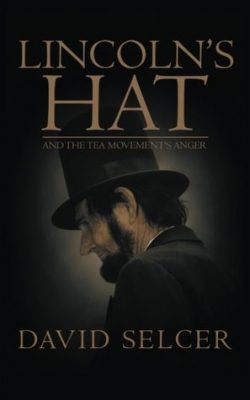
 Set in the chaotic era of the American Civil War, Lincoln’s Hat provides an intelligent look at the many streams of thought that make up our political framework today, and how they may clash in times of upheaval.
Harlan Pomeroy is a young Kentuckian setting off for college in 1855 when he encounters Sally Hairston, a free black girl who will later bear him a child. Pomeroy never forgets her. He will use his education to become a journalist, joining a political movement known as the “Know- Nothings,” a group that despises President Lincoln in part because of his loose immigration policies that draw Germans, Irish, Jews and atheists into the country. When the Know-Nothings attempt to assassinate Lincoln, they end up with his hat, which they give to Pomeroy for examination. Tucked in it he finds a letter of support to Lincoln from the author of the Communist Manifesto, Karl Marx. This adds further fodder to Pomeroy’s hatred of the President whom he now sees as a supporter of socialism, an ideology he believes will “rot the country from within.”
Pomeroy has allies who share his views and plot yet another assassination attempt that also fails. Leading a new movement called The Enlightened Americans, or TEA party, Pomeroy joins forces with actor John Wilkes Booth in a scheme to kidnap Lincoln. But after Booth’s bold assassination of Lincoln, Pomeroy will become a target for the Pinkerton agency and flees west to escape their investigations.
Lincoln’s Hat captures the imagination while presenting a character, fully believing in the rightness of his actions, yet unable – or unwilling – to fully contemplate the consequences of them; a problem that always makes for good story-telling. The Know-Nothings anti-immigration stance demonstrates their sense of nationalism, even though some understand their propaganda as racially motivated. Pomeroy and his friends little realize that their “exaltation of the rights of individuals,” as Selcer puts it, will result in endangering the general good.
In driving home these points, Selcer makes use of long, complicated conversations among his central characters and a blend of real and imagined events relevant to the story. His behind-the-scenes depiction of Lincoln as both high-minded and no-nonsense are an engaging addition to his story. Selcer has done extensive research on the historical period during and following Lincoln’s presidency which is admirable.
With a fast-moving plot and political intrigue, Lincoln’s Hat gives us history with a human face.






 Here is a novel of utmost despair, but also the determination of the human spirit to do what is right and survive in the face of grave danger. Set in Northern Florida in the 1920s, A Seeping Wound by Darryl Wimberly centers on the nefarious activities of the Blue Turtle Turpentine Camp, one woman’s life in that camp, and a young veteran’s search for his missing sister.


 Mae Keaney is looking for a way back to her childhood, back to safety, and finds it in a property on Chappaquiddick Island. A wind-tattered cottage and an old boathouse she envisions as a café will be her haven, as long as she can keep her regrets and sorrows hidden.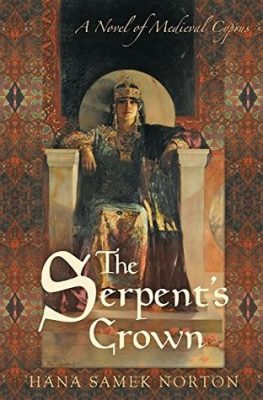
 Hana Samek Norton begins her epic and engrossing novel of historical fiction, The Serpent’s Crown; A Novel of Medieval Cyprus, with this quotation: “It sometimes happens that exploits, however, known and splendidly achieved, come, by length of time, to be less known to fame, or even forgotten among posterity.” (Itinerarum Peregrinorum et Gesta Regis Ricardi) How fortunate for readers, then, that the author brings to life a captivating chapter of history that occurred in Cyprus and Jerusalem in the early thirteenth century.