Tag: Literary

  • INFANTS OF THE BRUSH – A Chimney Sweep’s Story by A.M. Watson – Historical Fiction, Chimney Sweep/Child Labor, Georgian Era

    INFANTS OF THE BRUSH – A Chimney Sweep’s Story by A.M. Watson – Historical Fiction, Chimney Sweep/Child Labor, Georgian Era

    A little boy is sold into an apprenticeship as a chimney sweep in eighteenth-century London, and soon learns the horrors of that profession.

    Six-year-old Egan lost his father from an accident at sea, and now, may lose his little sister from illness. The only way his penniless mother can save her daughter is to sell Egan into an apprenticeship in order to purchase medicine. As a small boy, he will make an ideal “broomer;” a businessman named Armory gladly takes Egan into the fold. Under Armory’s absolute dictatorship he will sleep with other wretched boys on soot sacks, eat gruel, get bloody beatings for the slightest infraction, and risk his life almost daily.

    One small comfort is an older boy named Pitt who empathizes with the new boy’s homesickness and instructs him, strictly but not unkindly, in the tricks of the trade. The lads find ways to cheat Armory when possible, striving to save up money to buy themselves out of his domination. But the dangers are real and terrifying. Broomers work inside chimneys and on rooftops, sometimes naked to make themselves even smaller in order to fit inside flues as confining as nine by nine inches. Many a boy, Egan learns, has been burned to death or horribly disfigured, crippled for life or asphyxiated inhaling poisonous gasses.

    The only protection the boys receive is a periodic bath with brushes and brine to “toughen” their skin. When Egan finds a valuable piece of jewelry, he believes he has a way out. But to make it happen he must deal with a larcenous silversmith, and in the end, finds himself dependent on the greedy Armory for assistance.

    Debut novelist Watson was drawn to compose this gripping tale when she studied a 1722 legal case – Armory v. Delamirie – on which she has based Infants of the Brush. She felt compelled to examine the conditions endured by chimney sweeps, most of them children, in that era; her fictional hero Egan and his cohort emerged from that research. She depicts the London street scene with an ear for the dialect and an eye for the unsavory aspects that made life for all poor people at the time depressing and disastrous. An occasional visit by the sweeps to a grand home shows the contrast; Watson writes of an instance when a rich boy sees Egan and runs screaming from the room. There are some kind faces, though, such as the church folk Egan encounters one lonely Christmas and a sympathetic sea captain who is able to change his circumstances for the better.

    Watson, a teacher and an attorney, has clearly made a serious investigation into the general conditions of London in 1720, regulations regarding chimney cleaning, monetary values and other vital elements needed to construct this vibrant story. The characters of Egan, Pitt, Armory, and others are skillfully drawn, and the harrowing images of young children forced into brutal, life-threatening labor are unforgettable.

    Infants of the Brush offers a disturbing but elucidating glimpse into a time and place when, even in a civilized country, poor children’s lives were shockingly undervalued, and their labor exploited. In the author’s skillful hands, though, there is a welcome ray of hope shining through to the conclusion of this haunting saga.


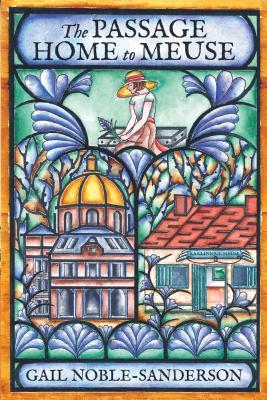
  • PASSAGE HOME to MEUSE by Gail Noble-Sanderson – Historical Romance, Post-WWII, Literary

    PASSAGE HOME to MEUSE by Gail Noble-Sanderson – Historical Romance, Post-WWII, Literary

    It’s 1923 and character Marie Durant Chagall is now 27 years old as she tells about her life-altering events in The Passage Home to Meuse, thanks to author Gayle Noble-Sanderson. This is the second historical novel in the Meuse Trilogy. The world around Marie is still reeling from the devastation of World War I. She and the other characters in the book are learning how to continue living, and perhaps more importantly, wishing to find joy once again in life.

    Marie is at home in France, seeking peace within, as well as for those around her. She looks for ways to help others who are in need, and her nursing skills come in handy to help this farming community. Nearby she’s found a sense of belonging with the Sisters at the Chapel, and her friendships continue with Henri and others.

    Under pressure of a persistent letter campaign from her father and her sister Solange, Marie consents to take a voyage from France to New York to visit them, not realizing she’ll discover a secret that awaits her there. Sailing on the incredibly luxurious SS Paris is an exciting trip filled with unexpected experiences, interesting people, and new friends. The author takes the time to engage the reader in the beauty of this voyage. Upon arrival in New York, the contrast of post-war Europe and America is striking, skillfully portrayed, and thought-provoking. After a visit filled with surprises, the journey home propels Marie into grand plans for her future, but will she be able to turn those into reality?

    The author’s extensive research of this historical period permeates every page. Additional notes from her research at the end of the book present fascinating insights into the period. The writing in the novel is charming, and the expansive descriptions of both settings and events ignite the reader’s imagination. All the characters jump off the pages with their hopes and dreams, and even their fears bringing great dimension to their personalities.

    Author Gail Noble-Sanderson is a speech-language pathologist who has published many educational programs for children with special needs. Fortunately for historical fiction readers, she decided to turn her attention to this genre.

    The Passage Home to Meuse is an epic journey back to the post-war world of the 1920’s. Wistfully Marie wonders, “What might have been, what would have been had the war not torn us all apart, rupturing the very soul of our lives?” Somehow she and those around her must find meaning in life again. Every aspect of human nature and the desire to rebuild is explored in this novel, including rebuilding family, whether blood or chosen. Ultimately, Noble-Sanderson explores whether love can indeed conquer all.

    Gail Noble-Sanderson won 1st Place in the 2017 CHATELAINE Awards for The Passage Home to Meuse.


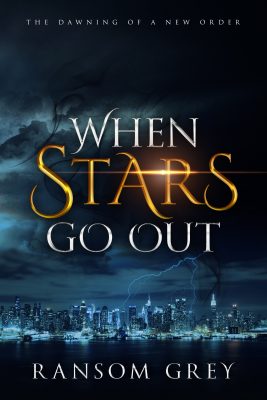
  • WHEN STARS GO OUT by Ransom Grey – Y/A Dystopian Thriller, Fantasy, Christian

    WHEN STARS GO OUT by Ransom Grey – Y/A Dystopian Thriller, Fantasy, Christian

    Welcome to the new America, the one where everyone who reaches age 18 is shipped off to heavily controlled (albeit, dark and oppressive) compounds to work. Don’t worry, your meals and your housing are already taken care of. We’ll pay you, too. Sure, there’s a curfew and some rules… but that’s the price you pay for order.

    What’s that? You don’t want to follow the rules? You don’t want to work in our compounds?

    Guards!


    When Reed turns 18-years-old he’s shipped off to one of several heavily controlled compounds, part of a new national order known as the Great Reorganization Operation, or GRO. Once there, he spends his days as an involuntary worker at “The Hill” where he lives in a dorm and works in a factory. He receives reasonable pay, is fed and housed, and has some hours before curfew each day to mingle with other entrapped young people. There is no choice in the matter. Suddenly, Reed’s life is not his own.

    At first, he’s furious. He longs to live without the heavy-handed discipline those who fall out of line endure. His roommates, Riley and Reagan, warn him that the ruling clique known as the Council has brutal methods of treating those who speak out against their governance. Better to keep your head down, they tell him. Better to stay alive.

    But then Reed notices Nathan, a guy that never seems to have a bad day. Reed wants to learn his secret. At great risk, he joins with Nathan and other young people who meet covertly. To his surprise, the group’s focus centers around how to oppose the Council, the GRO, and everything those institutions stand for. Elijah, their leader, gives Reed a radically new perspective. But nothing is perfect and soon Reed is forced into a position where he must choose to sacrifice his own safety for another’s well-being. His decision sends him on a path he could’ve never anticipated.

    Debut author, Ransom Grey, offers an adventurous mix of speculative and dystopic vision for the Y/A audience. In fact, his futuristic dystopia is unnervingly close to current day America. When Stars Go Out echoes the totalitarian overlord vibe of George Orwell’s 1984 with a cast of characters who are brave and honorable pitted against the machinations of a society gone very wrong. Grey’s prose is solid, with compassionate leads and a few scenes of violence to underscore the hatefulness of the GRO and the Council.

    A dark dystopian fantasy, When Stars Go Out posits a credible projection from today’s current reality of a nation led by a dark and dreadful class of elitists, with the young people secretly meeting at the GRO facility as the only ones who have the guts to save it. Mr. Grey’s work is published with Defiance Press.

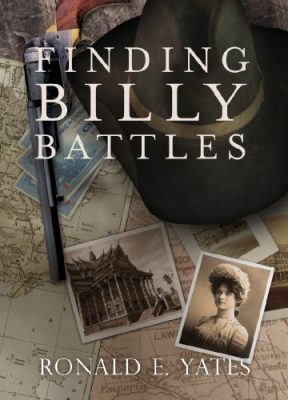
  • The LOST YEARS of BILLY BATTLES, Book 3 in the Finding Billy Battles Trilogy by Ronald E. Yates – Historical Fiction, Literary, Action/Adventure

    The LOST YEARS of BILLY BATTLES, Book 3 in the Finding Billy Battles Trilogy by Ronald E. Yates – Historical Fiction, Literary, Action/Adventure


    Congratulations to Ronald E. Yates for winning the 2018 CIBAs

    OVERALL GRAND PRIZE – BEST BOOK of the YEAR

    for The Lost Years of Billy Battles!



    Reviewer’s Note: I’ve begun few books as eagerly as I did this one. Having read the first two volumes of Ronald E. Yates’ extraordinary trilogy, Finding Billy Battles, I couldn’t wait to continue his story in the final volume, The Lost Years of Billy Battles. The third installment lived up to the exceedingly high standard set in the first two volumes. Billy Battles is as dear and fascinating a literary friend as I have ever encountered. I learned much about American and international history, and you will too if you read any or all of the books. Each is an independent work, but if read in relation to the others, the reader experiences that all too rare sense of complete transport to another world, one fully realized in these pages because the storytelling is so skillful and thoroughly captivating. Trust me; you’ll want to read all three volumes.
     

    Overall Grand Prize Best Book Award for The Lost Years of Billy BattlesFor those not familiar with the series, Yates presents his books as works of “faction,” a story “based in part on fact” but also “augmented by narrative fiction.” The protagonist, William Fitzroy Raglan Battles, born in Kansas in 1860, lives a full 100 years and takes part in some of the most significant events of his time. He encounters key figures of the day (Bat Masterson Wyatt Earp, President Wilson, Francisco “Pancho” Villa, among others), gives us their backstories, and quietly appraises them.

    Yates, a journalist with a keen eye for nuance and subtlety, has created a protagonist with superb critical thinking skills. William, a journalist, and occasional soldier examines people and transactions from every angle. Just as at ease in a Kansas saloon as he is at the captain’s table on a grand ocean liner on the Pacific, Billy Battles is also ruthlessly honest about his shortcomings and feels tremendous guilt when he acts impulsively or inadvertently causes harm to others. Yates has crafted a fully human character who is easy to admire, perhaps because he is admirably cognizant of his own flaws.

    This installment of the trilogy opens with William enjoying middle age in Chicago with his second wife, his beloved Katharina, a former German baroness, and his daughter, Anna Marie, now a student at Northwestern University. It is 1914 and World War I is raging in Europe. Germany, late to the spoils of colonialism, is seeking to make up for lost time with its policy of Weltpolitik that advocates for imperialist expansion.

    When William is contacted by his friend and former military associate, General Freddy Funston, who informs him that a German merchant ship is bound to Mexico to deliver arms and munitions to its dictator, General Victoriano Huerta, William and Katharina travel to Mexico and pose as tourists while trying to find out as much as possible about the shipment. They learn that in addition to weapons, the ship is carrying a fortune in gold and silver bars. Further investigations reveal that Germany hopes to convince Mexico to engage in skirmishes along the U.S. border, creating enough havoc that America will sit out the war in Europe and thus allow Germany expansionist gains there.

    Although in Mexico at the behest of the U.S. military, William and Katharina readily understand why Mexicans feel hostile to Americans; a significant portion of the Southwest used to belong to Mexico. However, President Wilson does not recognize Huerta and is all too eager to engage in big stick diplomacy when he chooses. Also, many Mexicans are desperately poor, the Campesinos working as virtual slaves on haciendas for no pay. It’s not surprising that they cheer on Venustiano Carranza, leader of the Northern opposition Constitutionalists charismatic lieutenants, the intense, intelligent Zapata who yearns to bring about land reform for the poor, and the wild but charismatic Pancho Villa who sparks outrage when his men murder 17 Texas mining engineers.

    The U.S. military decides to intervene and, once again, William is impressed into service, this time with General Pershing and the General’s aide-de-camp, George S. Patton. While the U.S. Army has the latest in weaponry and travels with motorized vehicles and untrustworthy aircraft, the new technology causes a lot of noise, making it difficult to sneak up on Villa and his light-footed army, one that’s thoroughly familiar with the terrain and beloved by the people. William’s observations and reporting on all of this for his Chicago newspaper are riveting and wryly amusing.

    Following this Mexican adventure, William barely has time to catch his breath when his past once again catches up with him. Mason Bledsoe, the son of the man William killed due to complex circumstances when he was just nineteen, abducts Katharina. With the help of his cousin, William determines his wife’s whereabouts and attempts to free her, as well as seek vengeance on those who kidnapped her. The results of his actions necessitate his leaving the country for his safety and, more importantly in his mind, the safety of his family. Over the next decades, he will spend time in the Philippines and Indochina, where he will again grapple with the blatant injustices of colonialism, aggrieved by the plight of native men working 16-hour days on French rubber plantations in intense heat, their flesh bitten and eaten by mosquitoes, oxflies, and army ants.

    While abroad, William’s personal life takes some shocking turns that motivates him to return to the U.S. in 1936. His final years in Kansas, his birthplace, are the quietest of his life. Billy often muses on all he has seen and experienced. When he meets his great-grandson, Ted Sayles, he decides to bequeath him his guns, uniforms, journals, and correspondence. In the Epilogue, Ted addresses the reader and shares his thoughts about some shocking surprises he finds amongst William’s papers. It’s a most satisfying conclusion to an extraordinary trilogy.

    At his behest, William’s grave includes the simple statement, “He did his best.” The same is undoubtedly true of the author, Ronald E. Yates. The research involved in putting William’s story on the page had to have been immense. In addition to a careful plotting of history, the details he weaves into his prose regarding fashion, food, weather, social class, and technology make this the richest account of a life imaginable.

    Ronald E. Yates won 1st Place in the SOMERSET Awards for The Improbable Journeys of Billy Battles: Book 2, Finding Billy Battles Trilogy of this extraordinary series.

    5 Stars! Best Book Chanticleer Book Reviews

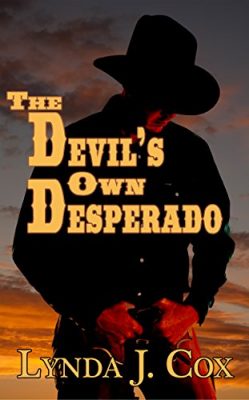
  • The DEVIL’S OWN DESPERADO by Lynda J. Cox – Western Gunslinger, Romance, Literary

    The DEVIL’S OWN DESPERADO by Lynda J. Cox – Western Gunslinger, Romance, Literary

    Can a gunfighter ever truly hang up his guns and settle down in one place? When Colt Evans is wounded in a fight, he flees – as far away as he can get – searching for a place to heal. What he finds has the potential to change his life forever and make him yearn to settle down. But, will his past stay behind him?

    Injured and on the run, Colt Evans stumbles upon a remote homestead owned and operated by Amelia McCollister and her two siblings. The orphaned siblings have strong feelings about gunfighters as their parents were shot to death by outlaws several years earlier. Due to this sad fact, when the well-known gunfighter arrives at the homestead, Amelia is reluctant to open her home to the man.

    Despite this, she follow her nature to heal rather than harm the wounded Colt against the warnings of the doctor and Marshall of the town. As she nurses Colt back to health, Amelia’s strong misgivings about this stranger seem to disappear.  Colt finds that the longer he is with Amelia, he doesn’t want to leave. However, he knows that someone will eventually come looking for him. He does not want to stay and bring trouble to Amelia and her siblings; however, the longer he remains on the homestead, the stronger his feeling for Amelia grow.

    As Colt had feared, his enemies find him. The danger is just too severe for Amelia and her brothers, so Colt leaves. However, once a gunfighter, always a gunfighter – at least in reputation. When Colt is ambushed and left for dead, the only thing that keeps him alive is his last drive to find Amelia, the love of his life.

    Lynda J. Cox has crafted an enjoyable novel of the Old West. Nelson’s writing is engaging and flawless as she weaves the needs and desires of her two main characters against the brutal reality of the 1880’s into the story. This is a classic romance set-up, and it works to the readers’ delight. The book presents a well-balanced mix of romance and gritty 1887 Wild West action. This combination makes for one page-turning Western epic.

    The Devil’s Own Desperado by Lynda J. Cox won First Place in the 2015 LARAMIE Awards!

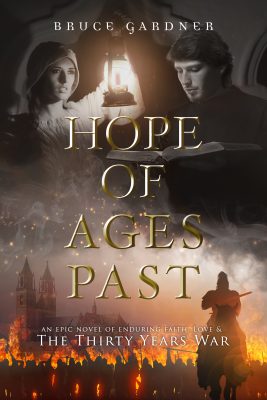
  • HOPE of AGES PAST by Bruce Gardner – Historical Fiction, Thirty Years War, Historical Romance, Family Saga

    HOPE of AGES PAST by Bruce Gardner – Historical Fiction, Thirty Years War, Historical Romance, Family Saga

    A saga writ large on the stage of 17th Century Central Europe,  Hope of Ages Past portrays the deeply personal impacts of religious faith and love amidst the brutality of war.

    Peter Erhart and Hans Mannheim are teenagers when they first meet in the Bohemian capital city of Prague at the outbreak of the Thirty Years War in 1618. These are two of the three central, fictional, characters in Bruce Gardner’s noteworthy interweaving of fact and reasoned conjecture set during the first half of the war. The boys represent the two religious factions in that conflict: Peter is Protestant; Hans, Catholic. The meeting in Prague, based on a real event including actual historical participants, provides the backdrop for a fictional drama that is set in motion when Peter reaches beyond the sectarian divide to help Hans at a moment of deep disgrace. Hans will never forget that kindness.

    As rebellion and conquest fire up across Europe, Peter, in his twenties, becomes a contentedly married Lutheran pastor in Magdeburg, Germany. Opposed by powerful rivals and threatened by the Catholic imperial army now approaching the city, he encounters Anna Ritter – a country peasant girl of uncommon beauty and inner strength who has secretly admired him for years and who is destined to share his trials. Each must fight bravely for the survival of their families and friends when local villains invade countryside cottages and the army, led by an awe-inspiring Black Knight, besieges the city. At the pinnacle of their trial, unthinkable tragedy brings Peter and Anna together and links their fates with Hans, now a grown man with a reputation to prove. Events eventually bring the three together in the siege’s aftermath, and a strange and unexpected reconciliation occurs — one that is put to the ultimate test in a final, horror-filled ordeal.

    Gardner, delving deeply into the philosophical issues at the core of the Thirty Years War, very deftly maintains an over-arching theme of religious differences – and similarities – in the midst of a thrilling, continually evolving panorama of warfare, intrigue, and romance. Interlocking the two storylines – interpersonal and international – is the repeated possibility for human compassion to emerge despite deep religious disagreements. Gardner’s skillfully drawn characters, both Catholic and Protestant, are confronted with choices – to kill, to help, or to ignore their fellow human beings in times of terrible suffering. Gardner fairly and intelligently presents the positions of both groups.

    Love conquers hate and uplifts two great faiths in Bruce Gardner’s Hope of Ages Past, contrasting romance, religion and family cohesion with the upheaval of battle and blood, all balanced by a thought-provoking, well-considered overview of the western world’s Christian heritage.

    Ultimately, Gardner has gifted us with an epic novel of enduring faith and love set amidst the brutality of the Thirty Years War in Europe. A very good read.


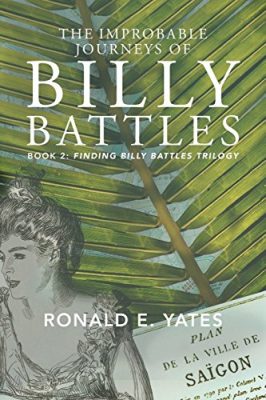
  • The IMPROBABLE JOURNEYS of BILLY BATTLES: Book 2, Finding Billy Battles Trilogy by Ronald E. Yates – Action/Adventure, Historical Fiction, War, Literary

    The IMPROBABLE JOURNEYS of BILLY BATTLES: Book 2, Finding Billy Battles Trilogy by Ronald E. Yates – Action/Adventure, Historical Fiction, War, Literary

    Blue and Gold Somerset First Place Winner Badge for Best in CategoryRonald E. Yates continues the robust adventures of a lawman, gunslinger, and journalist in The Improbable Journeys of Billy Battles, the second volume in his trilogy about the title character.
    As in the first volume of the trilogy, William “Billy” Battles addresses the reader, but Ted Sayles, Billy’s great-grandson, is the one who compiled Billy’s life story through studying his great-grandfather’s journals, letters, newspaper articles, tapes, and other materials. And what an adventurous life it is! Living a full one hundred years, William Fitzroy Raglan Battles was born in Kansas in 1860 but eventually travels the world. Readers familiar with the first volume will no doubt want to continue William’s journey with the second book which begins in 1894. The Improbable Journeys, however, can function as a stand-alone volume because Yates takes great care to bring the reader up to speed with what has already taken place.

    The opening chapters of Book 2 find William aboard the SS China, bound for French Indochina although the ship will make stops along the way. He is grieving the loss of his beloved wife and seeks to assuage that grief with travel, leaving behind his mother and young daughter, Anna Marie. However, the Pinkerton Detective Agency is hot on his trail, investigating William’s part in the deaths of members of the Bledsoe family back in Kansas.

    His future is also set in play when he meets Baroness Katharina von Schreiber, a brilliant intellectual who, despite her aristocratic German title and surname, was born and raised in Chicago. Like William, her spouse is dead but the circumstances involving Rupert’s death are suspicious, and she takes great pains to avoid questioning by the authorities. William learns that some officials believe she’s in possession of top-secret German documents that she confiscated from her husband. There’s much political intrigue, but Katharina and William delight in each other’s company, and he feels the first stirrings of romance since his wife’s death.

    William’s journeys bring him face to face with the realities of late 19th-century colonialism. As an American traveler and journalist, native peoples expect that he will sympathize with their struggles against colonial powers. After all, America set the example for the rest of the world by throwing off the chains of England more than one hundred years earlier. In the Philippines, Katharina’s brother, Manfred, supports a secret organization that seeks to overthrow colonial rule and establish independence for the nation. And while William has great admiration for the Philippine revolutionary leader, Aguinaldo, William is coaxed into military service. He fights alongside American soldiers from Colorado and Kansas – even though he knows all too well that McKinley’s “Proclamation of Benevolent Assimilation” is not truthful; the U.S. ultimately annexes the Philippines not as “friends” but as invaders and conquerors.

    These fascinating chapters are narrated with an experienced journalist’s objective and encompassing eye. Yates, also a journalist, does an exemplary job of having William note every angle of the despotic nature of colonialism and the vast and complex difficulties involved in native peoples achieving independence.

    The book is not without humor. William is witty and candid, occasionally sliding into cowboy-speak, and he knows a cast of characters, real and fictional, who provide surprising hilarity throughout the book. Bat Masterson is on hand, as is Jefferson Randolph “Soapy” Smith. We leave William anticipating more dangerous exploits, one involving Francisco Villa, better known as “Pancho Villa.”  Thank heavens this is a trilogy because it’s clear Billy Battles adventures are far from over.

    Ronald E. Yates won first place in the 2016 Chanticleer International Book Awards for Somerset, Literary category.

    5 Stars! Best Book Chanticleer Book Reviews

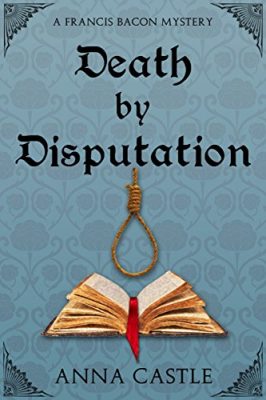
  • DEATH by DISPUTATION: A Francis Bacon Mystery by Anna Castle – Historical Mystery, Suspense/Thriller, Literary

    DEATH by DISPUTATION: A Francis Bacon Mystery by Anna Castle – Historical Mystery, Suspense/Thriller, Literary

    Bartholomew Leeds interrupts the young men’s studies at Corpus Christi College, Cambridge University in 1587 when he is found hanging from a roof beam. Is it suicide or murder? He sent warnings to His Lordship about the rising Puritan rebel underground. Were his communications intercepted somehow? Thomas Clarady, a spy in their midst assigned to investigate the Puritans, must now ponder and debate this Death by Disputation by author Anna Castle. Fascinating suspects abound at the college, and beyond its borders.

    Philosopher, statesman, orator, and spymaster Francis Bacon is anxious to determine and jail the instigator, the suspected head of the Puritan rebels, as well as track any connection to “Barty” Leeds untimely demise. He’s impatient for resolution and demands daily, written updates from Tom Clarady, his recruited spy. Posing as a student, Tom methodically follows clues while chased by three enamored women, dogged by well-meaning friends, diligently turning in his homework, and risking his own life more than once. Tom is enthusiastically determined to catch a killer, and to solve the mystery, as he plunges into this grand adventure. But this mystery has ominous layers, uncovering one leads to a more dangerous set of clues.

    As Tom follows leads, he finds that the victim had interesting curricular and extracurricular activities, any of which could make him a target. Tom takes his undercover duties to heart as he masks himself as a student who is swayed by Puritan ways and infiltrates the local group. He decides “in order to stop them he has to become one of them.”  But will they discover his de facto assignment? He becomes such an ardent follower that the apparent changes in his personality and lifestyle concern his friends and even his spymaster. Tom treads carefully, but has he gotten in over his head? As he examines clues and analyzes suspects, the reader participates in working out theories and ultimately guessing a villain.

    The delightful dimension to this mystery is the fascinating characters the author showcases. Along with the smart spy who sleuths along a tightrope between warring factions, the highlight is the fictionalized historical figure of Christopher Marlowe, a treasured rogue. Marlowe’s loyalties are continuously in question, but his wry humor and dramatic actions hit their marks. The three romantic women also particularly surprise with their hidden skills, knowledge and vibrant personalities. References to the historical period setting naturally weave into the plot and dialog, and enhance rather than detract from the pacing of this thrilling spy tale.

    For author Anna Castle, writing fiction combines her lifelong love of stories and learning. She chose the Elizabethan period for her Francis Bacon series, seeing it as one of the most colorful periods of all times and places. Retired from one of the world’s great research libraries, the University of Texas at Austin, the author enjoys the extensive research she does for the series and the details of the historical period that she shares with her readers.

    There’s no debate – Anna Castle brings to life a page-turning thrill of a mystery where “there are hazards other than jail or bodily harm” in Death by Disputation.


    Death by Disputation is the 1st Place Winner in the 2015 Chanticleer International Book Awards in Chaucer, the Early Historical Fiction category.

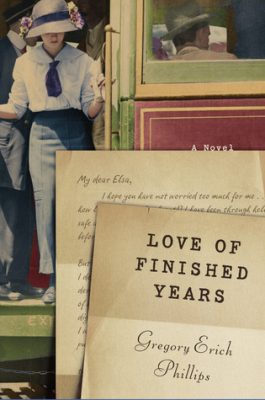
  • LOVE OF FINISHED YEARS by Gregory Erich Phillips – Historical Fiction, Literary, WWI

    LOVE OF FINISHED YEARS by Gregory Erich Phillips – Historical Fiction, Literary, WWI

    Overall Grand Prize Badge for Gregory Phillips's book The Love of Finished YearsAn immigrant’s journey, a forbidden love, a war to end all wars collide on the pages of a beautifully written historical fiction, Love of Finished Years by Gregory Erich Phillips.

    At twelve years of age, Elsa Schuller carries no expectations when she reaches Ellis Island in 1905. In fact, she has no idea why her father insists on leaving Germany for this supposed Land of Opportunity. Riddled with nothing less than challenges and hardship working in the sweatshops in lower Manhattan, Elsa’s only ray of hope is learning how to read and write English.

    Her studying pays off when she’s hired seven years later to work as a maid and translator for an upper-middle-class family, the Grahams, on Long Island. For the first time, Elsa begins to dream of something more than the ragged gray life she and her family have lived thus far.

    Elsa is not quite sure what to make of Dafne, the Grahams’ ebullient yet impulsive seventeen-year-old daughter, who disregards class distinction and is fascinated by Elsa. After a time, the maid and her mistress become good friends. A few years later, Dafne becomes engaged to a close friend to both Dafne and Elsa, Glenn Streppy.

    Unfortunately, their engagement is overshadowed by the war that is brewing. And to Dafne’s disappointment, Glenn enlists in the army. It doesn’t help that he unexpectedly catches her with his best friend when he tries to visit her while on leave from his military responsibilities.

    Glenn cuts off all contact with Dafne, which saddens Elsa as she misses his friendship. In a daring move, Elsa visits him at his stationing post just before his transfer to Europe. It is during this short visit she realizes that she is in love with him. Moreover, Glenn reciprocates her adoration. While Dafne successfully snubbed the social mores of the day, Elsa cannot. She is still just an immigrant from a poor family—a poor German family—and has no right to fall in love with a man of standing.

    While guarding her emotions, Elsa has something even worse to consider: the reality that this encounter may very well mark the last time she’ll ever see her dear friend, Glenn, alive.

    Award-winning author Gregory Erich Phillips produces a poignant early 20th-century plot. So much more than your typical love story, Love of Finished Years raises readers’ consciences and invites them to consider the realities of a time not too long ago (and in some ways, still relevant in today’s discourses on immigration) when people were divided not only by language but by the social mores and their class in American society, but also between rich and poor, “citizen” and “immigrant,” male and female.

    Incorporating various themes into his absorbing plot, Phillips highlights the importance of workers’ rights (Triangle Shirtwaist Factory) the Women’s Suffrage movement; and the plight of immigrants, especially during The Great War. Some examples include the use of propaganda against the American Germans (via Liberty Bonds); again, the use of propaganda to boost American support, and the immorality of war.

    Laced with a well-defined cast, Love of Finished Years opens at a critical moment in Elsa’s life before taking readers back in time to her arrival to America followed by a chronological lead up to her relationship with Glenn and Dafne. Key to Phillips four-part story line is his use of genteel dialogue—typical of that era—to build emotional tension not only between his primary characters but secondary characters as well.

    From the riveting opening that takes place in NYC’s Lower East Side’s sweatshops until its gripping conclusion, this enthralling novel vividly portrays the desperate times of German immigrants landing at Ellis Island in 1905 in search of a better life. A timely read, illuminating the issues we are still experiencing a century later, Phillips reminds us that love, light, and perseverance can help us find a way to overcome almost any obstacle.

    Love of Finished Years is destined to claim a spot alongside our favorite reads. Love of Finished Years was awarded the Chanticleer Grand Prize while still in manuscript form. It has since been published and is highly recommended!

    5 Stars! Best Book Chanticleer Book Reviews