Tag: Literary

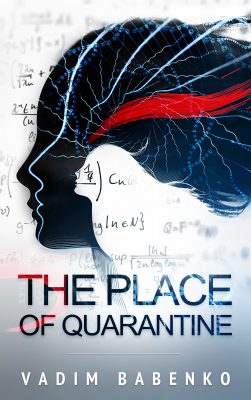
  • The PLACE of QUARANTINE by Vadim Babenko – Astronomy of the Universe, Russian Dramas/Plays, System Theory & Physics, Sci-Fi

    The PLACE of QUARANTINE by Vadim Babenko – Astronomy of the Universe, Russian Dramas/Plays, System Theory & Physics, Sci-Fi

    Theo awakens to a sound, which he likens to that of a trembling copper string. He finds himself midway up a stairway and realizes that the sound emanates from an ordinary fluorescent tube, about to burn out. He climbs to the next floor, where a door is open. A woman introduces herself as Elsa and welcomes him in.

    Not remembering anything, or knowing where he is, Theo asks Elsa. Her answer confounds him. He is in their apartment, in a place called Quarantine. In support of her response, she hands him a laminated paper that reads, “WELCOME. YOU HAVE EXPERIENCED CORPOREAL DEATH FOR THE FIRST TIME. THE DEATH OF THE BODY IS NOT AS SIGNIFICANT AS YOU MIGHT THINK. THERE IS NOTHING TO FEAR.” Really? Theo goes cold. Memories begin to emerge—a gunshot and terrifying pain, a woman in tears, the old streets of Bern. Then it all fades.

    Vadim Babenko, Russian-born physicist and businessman, left his former careers behind to become a writer of fiction—in The Place of Quarantine, thought-provoking fiction that begs us to consider what the reality of life truly is. In this effort, he draws on principles from the work of renowned researchers, such as Italian physicist Giuseppe Vitiello, to support the protagonist, Theo’s work, in particular, his concept of “the application of quantum field theory to the modeling of human memory and intelligence.”

    Yes, science plays a significant role in this book, but it’s a supportive role, a means to an end: our consideration of the possibilities of life beyond that which we experience on Earth, and of the regeneration of our knowledge and memories, and their further development to benefit the inhabitants of the place of a subsequent life. Theo is assigned an advisor/mentor/friend, called Nestor, to help him with the task of reviving the memories of his renowned, but uncompleted research on Earth. His knowledge and intelligence are needed in Quarantine and perhaps beyond. Since the particular vocabulary of physics and metaphysics is not familiar to many of us, a glossary of the terminology is at the reader’s fingertips.

    The science, however, is interwoven with the stories of characters from Theo’s very international first life—in particular, a beautiful young Asian woman, Tina, whom he met and loved in Bangkok and yearns for even in Quarantine; and a Russian businessman named Ivan Brevich, who is consumed with revenging the murder of his beloved wife, Nok. In Quarantine, his roommate Elsa adds a human element to his life, making his breakfast of coffee, fried eggs, and toast, and generally being his companion, although as phantom beings in a world of images. Nestor, who is but a face, with a voice, on the wall screen, is a friend as well as an advisor and research colleague.

    As Theo comes to believe in what his research is telling him, he becomes increasingly obsessed with finding Tina, if not in Quarantine, then in whatever life awaits him next, if indeed one does. Can he be satisfied with continuing his work for the benefit of Quarantine, or must he try to prove his belief by taking the chance to move on?

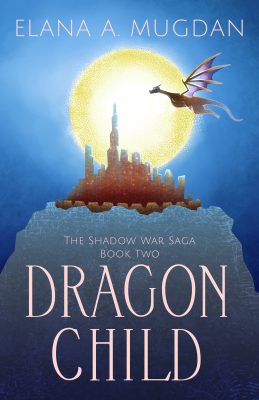
  • DRAGON CHILD, Book 2 of The Shadow War Saga by Elana A. Mugdan – Epic Fantasy, Myths & Legends, Y/A

    DRAGON CHILD, Book 2 of The Shadow War Saga by Elana A. Mugdan – Epic Fantasy, Myths & Legends, Y/A

    A young woman with more power than she realizes must confront the greatest evil in her cosmos in this richly conceived fantasy by Elana A. Mugdan.

    In Book I of The Shadow War Saga, Dragon Speaker, we met Keriya, a teenage girl who went from being “nameless” by nature of her low social status to being given a new name of high honor – Keriya Soulstar. Book II begins as she and her friends Roxanne and Fletcher and her faithful dragon Thorion are relaxing in a Galantrian infirmary. With the vile shadow demon, Necrovar, destroyed, Keriya and Thorion can play and rest while Roxanne recuperates from her injuries.

    Keriya, in fact, has never had it so good. She now has fast friends and allies, is regarded with great adoration by ordinary folk who see her as a magic-wielding warrior and has gained the respect she did not have in her early life. And to make matters even sweeter, there is a handsome young man, Max, who wants to get to know her a little more.

    Imagine the surprise when she is summoned to be tried for treason.

    Guided with telepathic messages from Thorion, Keriya answers her accusers and is acquitted, putting her archenemy General Tanthflame in the hot seat. It stands to reason, if she has told the truth, he must be the traitor. Now she must go to Noryk to meet with Lady Adelphia to testify in Tanthflame’s trial.

    The night before her departure, Keriya has a vision. In it, she meets with Necrovar and the great spirit Shivnath from whom she derived her ability to do battle with the hateful shadow beast. Her vision clearly shows that although Necrovar is weakened, he is by no means eradicated. Keriya must abandon her peaceful niche and join the struggle against this evil once again.

    Is she equal to that task? And where is her magic sword? Before her questions can be answered, Thorion is attacked and wounded, and flees, leaving no doubt where Keriya’s duty lies.

    Author and filmmaker Mugdan has devoted much of her time since adolescence to constructing this grand tale of dragons, demons and a heroine who scarcely knows or understands her own powers but acts with faith that she can conquer the dark forces besetting her world.

    Mugdan’s writing is charming and confident, revealing an expansive and delightful use of language. Also tucked neatly in this volume, Mugdan introduces Valerion of the Unknown Lands who has sworn to destroy Necrovar with a mystical spell and an enchanted sword. A possible love interest? Readers may expect to know more of him and his connection to Keriya in Book III, already planned for release.


  • CORONADO’S TRAIL by Carl and Jane Bock – Mystery, Thriller/Suspense, Literary

    CORONADO’S TRAIL by Carl and Jane Bock – Mystery, Thriller/Suspense, Literary

    M&M Grand Prize Winner Badge for CORONADO'S TRAIL by Carl and Jane BockAn ill-fated Spanish expedition in 1541 plays into present-day concerns about preserving Santa Cruz County’s (Arizona) heritage and environment. Along with an engaging yarn, Jane and Carl Bock offer the reader food for thought by presenting a microcosmic picture of the mindless destruction of time-honored customs, traditions, and mores in the pursuit of money and power.

    When deputy sheriff Calvin Creede of the Sonoita substation in Santa Cruz County receives a call from Maria Obregon, the widow of Calvin’s best friend, neither suspect where the call will lead.

    Maria has discovered the partially exposed remains of an old pickup in the San Carlos Wash, an arroyo near her goat farm on the 40,000 acres, Rocking M cattle ranch. The vehicle had not been visible before. Nothing new there, as frequent flooding reveals items previously buried in the sand. But this seems different because Maria’s dog, Boomer, is behaving as if there’s something still hidden inside the cab.

    Calvin’s investigation of the find, from running its license plate, unearthing it, and solving a 1995 missing person case, to determining that the driver had been murdered, has a domino effect. In winnowing facts from legend and gossip, he also unearths lifelong grudges, rivalries, and broken hearts that continue to impact families in the community.

    Concurrent with the murder investigation, Calvin must address the lawless behaviors of radical environmentalists, drug and human traffickers, and unethical antiquities hunters, which all, in varying ways, relate to the decades’ old murder. If this weren’t enough to sift through, he also must deal with his feelings for Maria, to whom he’s pretty sure he’s just become engaged.

    Coronado’s Trail contains multiple levels of storytelling and subplots, and in the Bock’s skillfully crafted narrative where everything fits like an intricate puzzle. In addition to a complex and compelling plot, the authors’ use of imagery adds a visceral dimension to the mood and tone that is sure to transport readers to experience the mountains shimmering in the heat, the rumble of thunder in the distance, the cooling monsoon rains… you get the picture. By the time the last page is turned and the novel complete, a kinship to Arizona’s high desert will be in your bones. All this to say, after vicariously traveling Coronado’s Trail, you may wish to walk it for yourselves.

    Coronado’s Trail took home the M&M Grand Prize for Mysteries in the 2017 CIBAs.


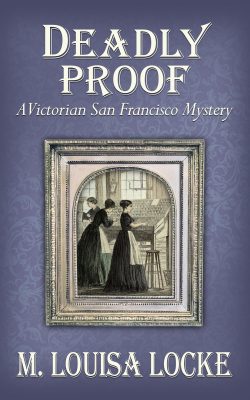
  • DEADLY PROOF: A Victorian San Francisco Mystery, Book 4 by M. Louisa Locke – Historical Fiction, Mystery, Thriller/Suspense

    DEADLY PROOF: A Victorian San Francisco Mystery, Book 4 by M. Louisa Locke – Historical Fiction, Mystery, Thriller/Suspense

    Annie Fuller, a part-time clairvoyant/landlady, is determined to improve her life. As the daughter of a financial investor, Annie knows a great deal about bookkeeping and investments. Putting her knowledge to good use with her fledgling accounting business, the pretty widow seems on-track again since moving to San Francisco, opening her home to boarders, and transitioning from her former job as the fortune-telling Madame Sibyl.

    Having agreed to marry attorney Nate Dawson, she can almost touch the happiness she deserves after her disastrous first marriage, but when Nate is hired to defend a woman accused of murdering her boss, Annie turns private investigator in an attempt to help her fiancé with his first solo criminal case. At first, Nate’s biggest obstacle is the client herself, Florence Sullivan, who refuses to even speak to him for several days. Soon the issue becomes the sheer number of suspects who wanted Joshua Rashers, the ruthless owner of a printing company, dead. But as Annie and Nate’s sister Laura begin to dig deeper into the lives of Rasher’s family and employees, they will soon face deadly dangers of their own.

    Strong personas form the nexus of this series, which features many of the same characters in both novels and novellas. Most of the characters have elaborate backstories that really “flesh out” the novel’s plot, but a familiarity with the previous stories isn’t a necessity for the reader. Readers will fall in love with Annie’s intelligence, Laura’s tenacity, Nate’s devotion, and Florence’s fortitude. Throw in the eclectic boarders and one feisty Boston Terrier, an unforgettable cast emerges that readers will adore.

    Though the dynamics between characters is interesting, the real value of the novel lies within its portrayal of the struggle for women in the late nineteenth century. Set in the 1880s, the events of the novel aren’t far removed from the Civil War that ravaged the country, and while that war was fought for the equality of all men, subjugation of women would continue for another fifty years. And though the plot makes use of actual suffragette Emily Pitts Stevens, the novel covers much more than women’s suffrage. It explores all aspects of prejudice against women, including the rights of female workers and business owners as well as a woman’s place in the marriage relationship. From Annie’s financial independence to Laura’s dream to become a lawyer, the women fight for a place in a literal man’s world. Even Annie’s upcoming nuptials bring questions of propriety over personal enjoyment, and every woman in the novel–married or single–feels the bite of mental bondage in some way and none more than Florence who is being tried in the media based in part because of the sensationalism of her gender.

    Deadly Proof: A Victorian San Francisco Mystery, Book 4 won First Place in the 2017 M&M Awards.

  • The SUGAR MERCHANT by James Hutson-Wiley – Medieval, Historical Fiction, Spy & Church

    The SUGAR MERCHANT by James Hutson-Wiley – Medieval, Historical Fiction, Spy & Church

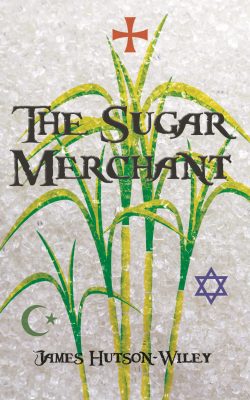
    Narrated by a boy who grows up in a monastery and is trained to be a spy, The Sugar Merchant is set in the late 11th Century when the Great Crusades were on the verge of erupting in Europe and the Middle East.

    When Thomas is forced to flee after rebels attack his family, he is finally discovered, ragged and starving, by a giant of a man named Leofric. Taken under the wing of the monks at Eynsham Abbey, Thomas is educated while accepting the strict discipline of the Benedictine order. In his late teens, he is surprised and disappointed to learn he will not join the Order but will be employed as an agent and spy. His task will be to find, secretly copy and send back manuscripts written by Islamic scholars. These documents contain knowledge that the Catholic Church needs to maintain its control.

    Accompanied by Leofric, who taught him the arts of war based on his own checkered past as a mercenary, Thomas travels to Spain, to the city of Granada (called Gharnatah at the time). His travels will take him through the known Catholic realms and beyond, and, paradoxically, afford him the chance to meet, befriend and be aided in the abbey’s mission by good men of other faiths, both Muslim and Jew. As a cover for his work for Eynsham, he adopts a persona as a merchant of sukkar, or sugar, a commodity that will soon have excellent trading value. When a beautiful Muslim girl crosses his path, all that he has been taught will come into question as he strives to do what he believes to be right.

    James Hutson-Wiley writes about places he knows, having traveled in the Near East and Europe in his career in international finance. And he has obviously done extensive and intensive historical research to compose this multi-layered story. The plot, and Thomas’s peregrinations through it, encompasses subjects as vast and diversified as the burgeoning sugar trade to the hierarchy of the Catholic Church.

    The author paints a vivid picture of such ancient places as Lundenburh (London), Al Mariya (Almeria) and Granada. But he has also created an empathetic hero in the young Thomas who, without the burden of bias though mindful of his moral duty, is able to see beyond religious differences and choose genuine friendships with people of other beliefs.

    The Sugar Merchant combines medieval lore with adventures on land and sea, stirring romance, arcane information about daily life in Europe in with the time frame, and all-encompassing religious tolerance that has significance for today’s world.


  • CATARI: A Novella by Karl G. Larew – Mystery, Psychological, Literary

    CATARI: A Novella by Karl G. Larew – Mystery, Psychological, Literary

    Maxwell Roux introduces us to his story with a Prologue, beginning with a minds-eye picture of a grand house in New Orleans. It is a soft, blossom-scented spring evening. From his hiding place behind a tree, he sees Catari step out on the wrought-iron balcony, fan in hand. Her gown is unbuttoned at the top, revealing her pale complexion glowing in the moonlight, contrasted by her dark-brown eyes and hair. Max had flown down from New York late that afternoon to surprise her, but he chooses to enjoy her beauty from the solitude of the dark garden for a moment before their blissful reunion ensues—marred only by the unpleasant gaze of her step-father.

    This sketch is now a memory of what had been a happy engagement—until Max unforgivably accused Catari of having an ungrateful heart, as Enrico Caruso sang of in “Core n’grato,” a song both of them knew and loved.

    The story begins when Max is called to another grand house, in Fontano, Italy, the home of Catari’s beloved Gran’papa, Il Barone di Fontano. He hears the Requiem Mass sung by a local choir at the funeral of his beloved Catari—only 27 years old—and sees her casket placed in the Fontano Crypt on the grounds of the family villa. It is there that he hears the gossip that Catari was drunk when she fell into the pool at 2:00 AM, as well as the comment by her step-father, Hugh Fontane, that Max, as nothing but an “ex-boyfriend,” has no right to be present. But the Baron had invited him to come, and then to stay at the villa. Later that evening, he and Max talk as friends about their beloved Catari. Max had visited the villa with her several times, and the two men like and trust each other. Finally, fatigue sends them to bed—Max in the room where he had slept before.

    Max awakes at 2:00 AM, somehow urged to go to the pool. He senses Catari’s presence and hears her voice, “I did not want to die. I did not want to die like this.” He hears his own voice, “I’ll find out…how and why, Catari.”

    Thus is this sad love story transformed into a murder mystery, its solution sought by Max, Darlene (Catari’s close friend), and the Baron. Larew’s tale is filled with family history, dating back to the Fontane brothers who fought in Napoleon’s Army in the conquest of Lombardy and were rewarded with the land on which the villa stands; the Fontano brothers who served in the Italian Resistance during WWII; and the Fontano family’s current history in the making. The Three Musketeers, as they decide to call themselves, question the servants and several villagers and search the property inside and out. They engage the help of the family doctor, who had examined the body and found a lesion on the back of Catari’s head. The doctor does not believe that she was drunk. They work with the Chief of Police, who is intrigued when he learns about the pilfering activities of the servants.

    As he has done in previous books of greatly different natures—their characters ranging from WWII military families to Good and Bad vampires—Karl Larew skillfully brings his characters to life. In Catari, he artfully draws not just their natures, but oddities of their physical features, speech, and movement, such as town gossip Madame Cavalli, who finally runs out of words, and the rude and overbearing Hugh Fontane, bursting into the villa declaring that he will have the Baron declared incompetent, thereby revealing his own incompetence. Larew’s knowledge of military history stands him in good stead, as well.

    Max fulfills the poolside promise he made to the ghost of Catari, to “find out…how and why,” but I won’t spoil the how and why for the reader. Nor will I tell you what happens to the Three Musketeers. I’ll say only that, for many reasons, this book offers a good read.


  • The ONE APART by Justine Avery – Family Saga, Fantasy, Metaphysical/Visionary

    The ONE APART by Justine Avery – Family Saga, Fantasy, Metaphysical/Visionary

    A perfect blend of realism, fantasy, and deep spirituality awaits those who open Justine Avery’s novel, The One Apart. It is what readers bring to the novel – faiths, belief systems, philosophical dilemmas – that will influence and shape their perceptions of this fascinating and compelling read. Avery’s book, like life, is full of instruction for those who want to be fully aware.

    Aware of what?

    Everything—including awareness itself.

    This is certainly the case for the main character, Aaron, a remarkable boy who lives with his mother, Sancha, and his grandmother, Maria. Although she’d planned to give Aaron up for adoption, Sancha bonds so deeply with her son at birth that she can’t fathom life without him. His grandmother realizes his uniqueness, too, as the newborn communicates with her through blinking his eyes. He makes astonishing progress through developmental milestones, walking and reading within the first months of life.

    As a toddler, he speaks with the wisdom of a timeless soul. Maria suspects that these physical and mental feats indicate that her grandson is chosen for a special purpose, but she hopes he’ll live as normal a life as possible. He’s distracted, however, by a malevolence that only he can see.  As Aaron comes of age, he strives to act normal and blend in, but his very few close friends and girlfriend notice his preoccupation, his never being fully present in this world.

    There’s a reason for Aaron’s constant distraction, for his never feeling a part of this life; he is connected to “the Apart,” the other-worldly dimension that is both removed from human existence, “corporeality,” but ever at hand. Since childhood, he has sensed that his true name is Tres and that his existence as Aaron is somewhat play-acting. His hyper-awareness alerts him to his “OnLooker,” a sort of guardian angel who’s a liaison between Aaron and the sagacious luminary beings of the Apart that consult and advise on Aaron’s tutelage.

    Much of the book involves Aaron learning, with the instruction of his OnLooker, how to fully experience awareness, to understand that every moment is this moment despite previous lives and the variety of life’s experiences. At a critical juncture in the novel, Aaron is given a choice, one that will impact his own existence dramatically but also that of all other beings. The author adroitly merges Aaron’s worldly existence and his relation to the realm of the Apart in a poignant and satisfying conclusion to the novel.

    This is a quiet book, one that allows the reader the time and space to experience life with its main characters. The stillness is at times deeply peaceful, at other times eerie and ominous. The novel illustrates the power of compassion and empathy, but also the chilling consequences when power is exercised for self-serving purposes.

    While the character of Aaron has similarities to various religious and mythic figures, the author has also imbued him with a uniqueness and a relevance to our times. This book will stay with you long after you finish it, a hallmark of excellent literature. Justine Avery’s The One Apart inspires deep contemplation of self, community, and individual and collective purpose.


    The One Apart won First Place in both
    OZMA and SOMERSET Awards in 2017!


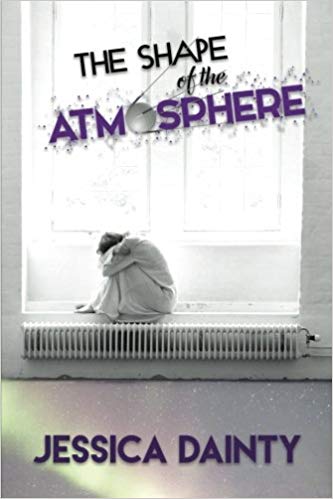
  • The SHAPE of the ATMOSPHERE by Jessica Dainty – Literary, Psychology, Women’s Fiction

    The SHAPE of the ATMOSPHERE by Jessica Dainty – Literary, Psychology, Women’s Fiction


    Jessica Dainty’s, The Shape of the Atmosphere is remarkable for its startling realism, its gritty young heroine, and its hopeful conclusion.
    When Gertie’s father and sister are killed in an accident on Gertie’s sixteenth birthday in 1957, she is left with one cherished memory: viewing the heavens with her father on the night of the world-changing Sputnik flight.

    After the funerals, Gertie wounds herself as a way of coping with her inner anguish, after which her alcohol-addicted mother commits her to an insane asylum. Such institutions were considered modern and scientifically advanced for their time, but as author Jessica Dainty frankly depicts, Gertie’s new home is a combination prison and torture chamber. The naïve but intelligent girl soon becomes acquainted with such therapies as immersion in icy cold water and electroshock (both designed to calm the inmates), as she gradually gets to know her fellow patients, the women on Ward 2.

    Gertie observes that some of her companions are not mentally ill at all: one has a speech defect that he is struggling on his own to correct, and another has Down Syndrome. Yet such people – anyone not wanted by family – are consigned to such asylums and often get lost in its labyrinthine system. Gertie slowly gains inner resolve, becomes an advocate for her rights and those of her companions, and starts an in-house newsletter that tells their stories. But when her compositions find their way outside the walls of the asylum, she is forced to take even bolder measures.

    Dainty writes this traumatizing tale as though she’d lived it, so starkly painful and remarkably poignant are her portraits of Gertie and her fellow sufferers. She portrays the doctors as caring only up to a point, mainly interested in maintaining a full house of captive mental “cases” to keep the income rolling in. One staff member is sympathetic toward Gertie, but most are cold and indifferent, strictly allowing only 3-minute bathroom breaks, a single towel at communal shower times, and almost no time spent unmonitored.

    Treatments such as electroshock (Electro Convulsive Therapy, ECT) are performed differently today for the treatment of severe depression, treatment resistant depression, severe mania, catatonia, and agitation and aggression in dementia patients (Mayo Clinic: https://www.mayoclinic.org/tests-procedures/electroconvulsive-therapy/about/pac-20393894), for example. But today, this treatment is done under general anesthesia and at reduced levels. This was not the case in the 1950s or in Dainty’s harrowing novel. ECT was conducted without any form of anesthesia and often without patient’s consent.

    Reminiscent of the less enlightened times also is the blatantly denigrating attitude shown towards people of color and other minorities. The author’s descriptions of daily life in a mental institution of the 1950s are filled with scenes of mistreatment tantamount to torture. But many readers will find the story inspiring, especially as Gertie, sustained by images of space travel, finds her own stars to aspire to and reaches out to help others. Debut novelist Dainty is a high school teacher with many points of contact with the teens she hopes to engage with this evocative coming-of-age saga.

    The Shape of Atmosphere won First Place in the 2022 Goethe Book Awards for Post-1750s Historical Fiction.

  • NOVEMBER SPOTLIGHT on SOMERSET Awards – Literary Works, Women’s Fiction, Contemporary Novels

    NOVEMBER SPOTLIGHT on SOMERSET Awards – Literary Works, Women’s Fiction, Contemporary Novels

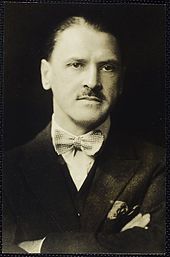
    The Somerset Book Awards are named for the prolific writer W. Somerset Maugham

    A quote from the Irish Times 

    Permeated with cynicism from a blighted childhood onwards, Maugham had few illusions about himself or his work. In his 1938 memoir, The Summing Up, he acknowledged: “I am a made writer. I do not write as I want to; I write as I can . . . I have had small power of imagination . . . no lyrical quality . . . little gift of metaphor I had an acute power of observation, and it seemed to me that I could see a great many things that other people missed.” W. Somerset Maugham

    Have you seen the films inspired by his books?

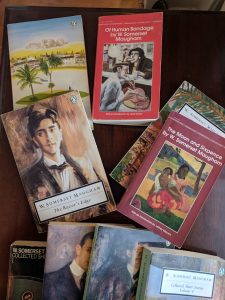
    Some of Kiffer’s collection of Somerset Maugham’s books

    With Bette Davis 1934

    Of Human Bondage

    with Kim Novak 1964

    Of Human Bondage

    A young medical student finds himself attracted to a beautiful but ambitious unfeeling waitress who ultimately may destroy them both. 


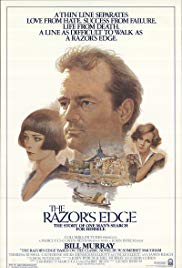
    The Razor’s Edge

    with Bill Murray 1984

    The Razor’s Edge 

    An adventuresome young man goes off to find himself and loses his socialite fiancée in the process. But when he returns 10 years later, she will stop at nothing to get him back, even though she is already married.

    He had everything and wanted nothing. He learned that he had nothing and wanted everything. He saved the world and then it shattered. The path to enlightenment is as sharp and narrow as a razor’s edge.

    The Moon and Sixpence debuting Lawrence Olivier  1959  Written 1919 at the end of WWI

    “The Moon and Sixpence is not, of course, a life of Paul Gauguin in the form of fiction. It is founded on what I had heard about him, but I used only the main facts of his story and for the rest trusted to such gifts of invention as I was fortunate enough to possess.” W. Somerset Maugham

    Maugham describes the idea for the book arising during a year that he spent living in Paris in 1904: “…I met men who had known him and worked with him at Pont-Aven. I heard much about him. It occurred to me that there was in what I was told the subject of a novel.” The idea remained in his mind for ten years, until a visit to Tahiti in 1914, where Maugham was able to meet people who had known Gauguin, inspired him to start writing.

    The film adaptions of W. Somerset Maugham’s works are too lengthy to list here. However, you can find them on the IMBD and on Wikipedia.

    Writing advice from Somerset Maugham

    Every writer hits now and then upon a thought that seems to him so happy, a repartee that amuses him so much, that to cut it is worse than having a tooth out. It is then that it is well to have engraved on his heart the maxim:  If you can cut, cut.


    William Somerset Maugham, better known as W. Somerset Maugham was a British author who wrote plays and short stories and novels. He was a dashing and daring man who did not wish to follow the other men in his family to practice law. Imagine, an individual in the Victorian Era… He was born January 25, 1874, in Paris (at the British Embassy) and died on December 16th, 1965, Nice, France. 

    During the First World War, our Somerset proved his valor by serving with the Red Cross in the ambulance corps (remember his earlier medical training) and was recruited by the British Secret Intelligence Service right before the October Revolution in 1917.

    Somerset dove into medicine and was fairly good at it until he wrote his first novel, Liza of Lambeth (1897) and all bets were off. The book flew off the shelves and people were reportedly wrestling in the streets for copies to gift their loved ones as gifts. (*Creative license at work – however, you don’t know that this did not happen…) He was known to say, “I took to it (writing) as a duck takes to water.”

    At the age of sixty-six, he had to flee with only a suitcase from the encroaching Nazis as they advanced across Europe. He escaped to England and then on to South Carolina, in the U.S. where he continued to work on the screenplay for Razor’s Edge. He moved to Hollywood and then eventually back to France.

    Did we mention that W. Somerset Maugham was repudiated to be the highest paid author of the 1930s?

    Is it any wonder why we chose Somerset to represent our Literary & Contemporary Fiction Awards?

    Oak Ridge High School Cheer Leaders 1946


    Somerset, Somerset,

    He’s our man!

    If you didn’t know him

    Now you can! 


    Somerset Cheer by Sharon Anderson


    Welcome to the Somerset Awards where we comb through entries dealing with contemporary stories, literary themes, adventure, satire, humor, magic realism, women and family themes. We will put them to the test and choose the best among them.

    You might notice that the connection between the works below is that they are commentaries on society. Time frames may differ, but the human condition is central to the story.

    Here is a listing of the Somerset Book Awards Hall of Fame Grand Prize winners!

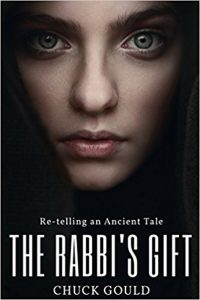
    The Rabbi’s Gift by Chuck Gould

    Somerset Grand Prize Winner

    Babylonian astrology and Jewish mysticism combine with Roman history to create a timeless story of passion and fate in Chuck Gould’s The Rabbi’s Gift.  Babylonian astrology and Jewish mysticism combine with Roman history to create a timeless story of passion and fate in Chuck Gould’s The Rabbi’s Gift.


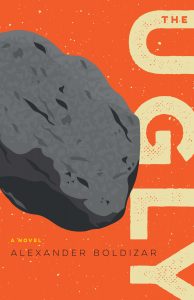
    The UglyThe Ugly by Alexander Boldizar 

    Words thrown as hard as boulders are easy to catch – if you’ve had practice. Just ask our hero, Muzhduk the Ugli the Fourth…In the great tradition of existentialism, Boldizar brings us a book that is hard to classify. It has aspects of the existential with a fair amount of satirical wordplay and a bit of theater of the absurd thrown in.


    Alexandrite by RIck LenzThe Alexandrite by Rick Lenz

    Marilyn Monroe, time travel, second chances – all steeped in mid-Century Hollywood history, culture, and magic.


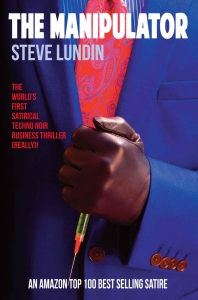
    The Manipulator by Steve LundinThe Manipulator by Steve Lundin

    With a fast-paced storyline and a rich cast of characters, this award-winning winning novel offers a uniquely hilarious, but scary, perspective on the how the businesses of public relations and marketing can take technology to its precipice to take advantage of a media addicted public.


    Individually Wrapped by Jeremy Bullian

    Individually Wrapped tells us the bizarre tale of Sam Gregory’s descent over the condensed course of a couple of days. Set in a 21st-century futuristic city, technology has permeated every aspect of the city dwellers’ lives… Self-delusion is an interesting state of mind because everyone can see it except yourself, as it propels you ever deeper into oblivion, where not even technology can save you.


    We would be amiss by not featuring and recognizing Judith Kirscht, our very own Pacific Northwest Somerset inspired author. Judith specializes in family sagas and societal issues.

    Judith was born and educated in  Chicago during the Great Depression and then WWII. She taught school during the upheavals of the Vietnam protests and the Civil Rights movement. Later in life, she found herself in California, divorced and with two daughters. Judith taught creative writing at universities of very different cultures: University of Michigan and U of California, Santa Monica. Her novels continuously are awarded CIBA First Place Category ribbons for the Somerset Book Awards for Literary and Contemporary Fiction.

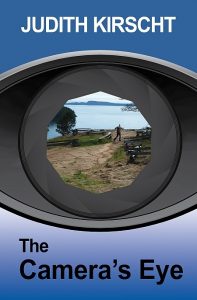
    The Camera’s Eye  by  Judith Kirscht

    In a world where too many rocks are thrown at those who represent anything other than the norm in middle-class white America, two friends decide to take matters into their own hands and stand up to the hatred with which they are targeted in order to save their home and ultimately their lives.


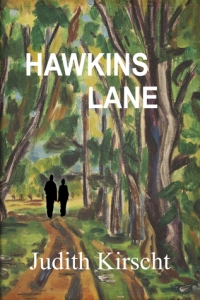
    Hawkins Lane CBR Review
    Hawkins Lane Cover


    Hawkins Lane by Judith Kirscht

    Hawkins Lane is excellent and, ultimately, a redemptive story about the heart-wrenching tragedies a family can survive, and about the healing powers of nature and friendship. The characters and the story will linger long after the last page is read and you will be captivated from the first page.


    The Inheritors   by Judith Kirscht

    “The Inheritors” by Judith Kirscht is a novel of one woman grappling to find her cultural and personal identity. Tolerance of others and the need for communication is required from each of us is an overriding theme in this latest work of Kirscht that explores the complexities of human nature and family bonds.


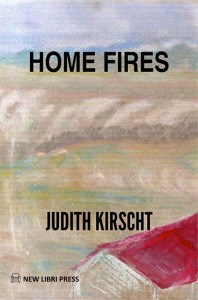
    Home Fires  by Judith Kirscht

    “Home Fires” is an intelligently written, fast-paced family drama that unfolds into a suspenseful page-turner. Although this novel masterfully renders the emotional hardships and tragedies that are sometimes part of dysfunctional relationships, it is not a depressing read.


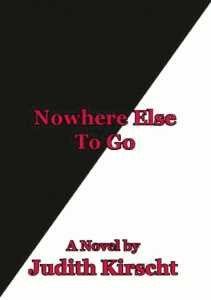
    Nowhere Else to Go by Judith Kirscht

    “Nowhere Else to Go” is a tightly woven and insistently engaging novel about racial prejudice and the blackboard jungle of the 1960s.


    LOOKING TO HAVE YOUR BOOKS RECOGNIZED? Submit them to the Chanticleer International Book Awards – Click here for more information about The CIBAs! 

    The last day to submit your work is November 30, 2018. We invite you to join us, to tell us your stories, and to find out who will take home the prize at CAC19 on April 27th.

     As our deadline draws near, don’t miss this opportunity to earn the distinction your literary novel deserves!  Enter today!

    The SOMERSET Book Awards is a division of the Chanticleer International Book Awards – the CIBAs.

    The winners will be announced at the CIBA  Awards Ceremony on April 27, 2019,  that will take place during the 2019 Chanticleer Authors Conference. All Semi-Finalists and First Place category winners will be recognized, the first place winners will be whisked up on stage to receive their custom ribbon and wait to see who among them will take home the Grand Prize. It’s an exciting evening of dinner, networking, and celebrations! 

    First Place category winners and Grand Prize winners will each receive an  awards package. Whose works will be chosen? The excitement builds for the 2018 SOMERSET Book Awards competitions.

    [fusion_builder_column type=”2_5″ last=”yes” spacing=”yes” background_color=”” background_image=”” background_repeat=”no-repeat” background_position=”left top” border_size=”1px” border_color=”#606060″ border_style=”solid” padding=”10px” class=”” id=””][fusion_text]

    Our Chanticleer Review Writing Contests feature more than $30,000.00 worth of cash and prizes each year! 

    ~$1000 Overall Grand Prize Winner
    ~$30,000views, prizes, and promotional opportunities awarded to Category Winners

    [/fusion_text][fusion_button link=”/services#!/Contemporary-&-Mainstream-Novel-Writing-Contest/p/21521214/category=5193080″ color=”darkgray” size=”” type=”” shape=”” target=”_blank” title=”” gradient_colors=”|” gradient_hover_colors=”|” accent_color=”” accent_hover_color=”” bevel_color=”” border_width=”1px” shadow=”” icon=”” icon_position=”left” icon_divider=”no” modal=”” animation_type=”0″ animation_direction=”left” animation_speed=”1″ alignment=”center” class=”” id=””]Enter Now![/fusion_button][/fusion_builder_column]

    Don’t delay! Enter today! 


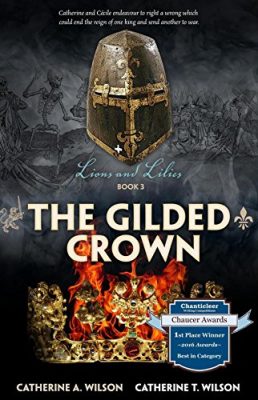
  • THE GILDED CROWN – Book 3, Lions and Lilies Saga by Catherine T. Wilson and Catherine A. Wilson – Medieval Europe, Historical Fiction, Romance

    THE GILDED CROWN – Book 3, Lions and Lilies Saga by Catherine T. Wilson and Catherine A. Wilson – Medieval Europe, Historical Fiction, Romance

    Cécile d’Armagnac and Catherine Pembroke first found each other through letters. The sisters then battled complications while on the run— Cécile, pregnant with a baby from Edward, the Black Prince, a relationship consummated to save her sister, fled with Gillet de Bellegarde, a disgraced knight she grew to love. Meanwhile, Catherine fell for the ever-shy Lord Simon Marshall of Wexford, and together, they managed to escape the Earl of Salisbury and his deadly schemes.

    Now, in The Gilded Crown, both sisters are happily married to their respective suitors. The mission that Gillet was presented in The Order of the Lily must now come to fruition while he resides in an English-occupied France. Meanwhile, Cécile strives to ensure the world, especially a mysterious woman named Adéle, does not find out baby Jean Petit is actually the rightful heir of Edward. Catherine, meanwhile, in Edinburgh after the safe return of Lady Scotland, is still fostering baby Gabriel, the son of her former maid, Anaïs. However, Catherine discovers a surprise of her own: she’s pregnant with Simon’s child.

    Like the other books in the series, the two sisters and their journeys, though taken separately, intertwine in unexpected ways. The Duc Jean de Berri, Cécile’s former suitor, hopes to convince Gillet to entice the Albrets of Bordeaux back to a French throne. Unfortunately, he also assaults Cécile as soon as Gillet leaves. Cécile’s misfortune continues on the way to Bordeaux–she nearly loses her cousin Armand-Amanieu d’Albret to the Black Plague, is captured by no other than the mysterious Adéle, who in turn, kidnaps Jean Petit and takes him to Scotland. In Scotland, meanwhile, Catherine has gotten to know Lady Agnes Dunbar (also known as Black Agnes) and discovers they share a common enemy. The question is whether this foe can be stopped—and if Jean Petit can be kept from danger.

    Catherine and Cécile are forced to further develop the maturity they sharpened in the previous books—but this time, with unexpected losses. Their paths remain uncertain, and it’s unclear where the next book in the series, The Traitor’s Noose, will take them.

    The authors are very skilled at weaving in authentic historical texture to an engaging plot with a lot of unexpected twists. The historical realities, including the treatment of women, like in the previous installments, is very brutal—particularly Cécile’s assault and capture. These parts of the plot can, at times, weigh the story down; however, they also add a visceral element of suspense. The book is not without its light-hearted moments either, particularly in the playful banter between brothers Roderick and Simon, and the very Scottish maid, dubbed, ‘English Mary.’ Readers will also delight in seeing pet antics between Cécile’s cats and an unprepared papillon—indicating that the authors’ authenticity stretches beyond historical accuracy.

    This series is suited to a historical fiction audience looking for an authentic dip into Medieval European life. However, to get the full impact of the overall story arc, readers will do well to start with the first two books in the series before getting their hands on this one.